Characteristics of Disciples Preaching
Dr. Ronald J. Allen
From our earliest days Disciples preaching has been characterized by differences in content, style, purpose, and cultural expression. Diversity has deepened over the last generation as the percentage of Eurocentric, heterosexual male Disciple preachers is decreasing and the percentages of women, LGBTQAI+ preachers, and preachers from communities of color is increasing. While there is no single Disciples way to preach, certain themes weave in and out of Disciples preaching. I briefly identify seven such themes. I wonder how others might perceive these things.
A Reformed Theological Center: The center of Disciples preaching echoes the center of Reformed preaching: justification by grace through faith. We do not always use that language. Disciples preachers more typically speak of the unconditional love of God, but in so doing we move in the Reformed stream. At the same time, originating in the United States, we are especially susceptible to the self-reliance that permeates this culture which so easily translates into works righteousness in both individual and social arenas. Indeed, I once heard an elder at the Table beseech God “to keep the door open a little longer so that we might work our way in.”
Conversation with the Bible: Although Disciples preachers are not required to preach from the Bible, our sermons often deal with the Bible. However, Disciples are diverse in our interactions with the Bible. Some regard the Bible as the authority in preaching while others think of the Bible as one important but not always determinative authority. Some Disciples aim to “preach the text” while others seek to bring the text into conversation with other sources. Some Disciples “preach against” an occasional text.
A Teaching Quality: Alexander Campbell distinguished between evangelistic and teaching sermons. The former offered the gospel to those who had not embraced it and the latter built up established congregations. As far as I can tell, Disciples today have little interest in evangelistic preaching as such. Our preaching often has a teaching element designed to help the congregation name the world in terms of the gospel and live in the light of the gospel.
An Emphasis on Reason: Born during the Enlightenment, Disciples preaching often places an emphasis on reason. The preacher seeks to help the congregation make sense of Christian faith in light of contemporary world views while simultaneously seeking to help the congregation make sense of the world in the light of Christian faith. This focus on reason is to help the congregation towards a logical and trustworthy understanding of God.
Leaning Toward the Unity of the Church: Disciples preaching once included the plea to restore the New Testament church as the basis for recovering the unity of the church. While the restoration plea faded, the impulse towards unity grew to the point in the twentieth century that many Disciples advocated a great ecumenical church. That dream has lost force, but the urge towards unity continues in a broader search for ways in which the church can represent the great community that God seeks among the many nations and peoples.
The Millennial Reign of God as Vision for the Social World: Many early Disciples subscribed to postmillennialism, believing that Jesus would return and establish the final Realm of God only after people had prepared the way by creating the millennium—a social world with conditions anticipating the Realm. Few Disciples today are postmillennialists, but Disciples preaching envisions a present world with the conditions of the Realm—love, justice, peace, mutuality, dignity, freedom and abundance.
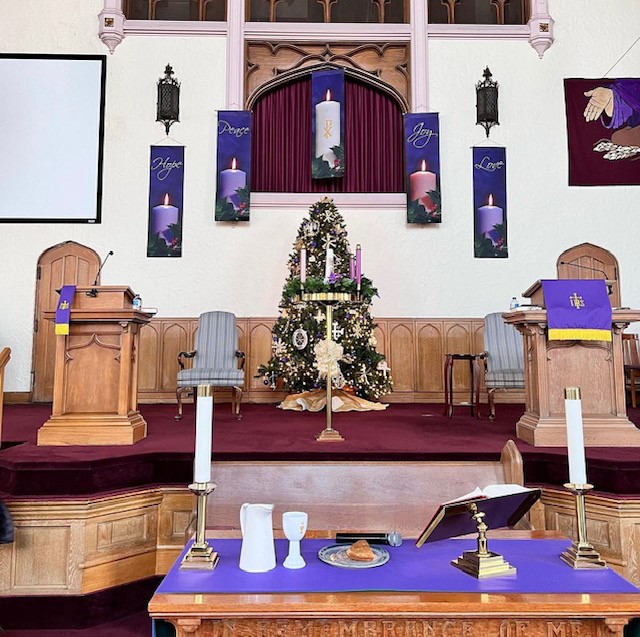
Awareness of the Table: Disciples preaching has often referred to the Table. Many Disciples see the Table as the center of our life with multiple meanings. In Reformed terms, God uses the loaf and the cup to assure the community of the divine love and presence. The elements bespeak God’s continuing redemptive activity for individuals and communities which includes welcoming those who have not experienced the fullness of life that God intends. Those who partake implicitly make a commitment to work for a world that foreshadows the Realm of God.
While these motifs are characteristic, they are not universal, nor is this list complete. We are independent thinkers: Disciples preachers sometimes go against these themes. Nevertheless, I think they are in our homiletical DNA. There may not be a formulaic way Disciples preach, but we often resonate with these themes even when we cannot name them. As I said at the outset, I wonder how others see these things.
|