|
INVASIVE SPECIES OF THE MONTH: WINEBERRY
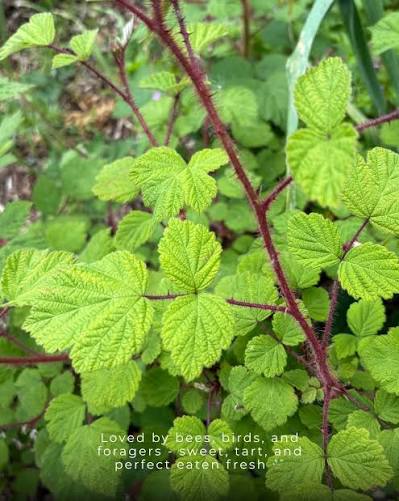
Japanese Wineberry is a tasty invasive that was brought to the East coast in the late 1800s to help produce new strains of berries. Related to the blackberry and raspberry, it is distinguished by its reddish stems that have fine hairs and thorns. Like its relatives, its sweet and tart fruit is used in baking, enjoyed as a fresh snack, and even used in cocktails!
They sound wonderful, so what’s the problem? Sadly, wineberries tend to come up earlier in the spring and last longer than native species, so are able to out-compete natives for growing area. They spread more aggressively than their native counterparts, and their thickets can get so dense and wide that they prevent native species of plants from growing in the area. In addition, though each plant lives only two years, they form arches up to 9 feet long, and can germinate a new plant at the end of each arch. Areas of wineberry can become a jumble of old and new plants that are thick and thorny, making it impossible to walk through the area. They grow well in all but the deepest shade, so have become a problem throughout the East coast. Additionally, their succulent berries are favorites of birds and many mammals, and actually germinate better after passing through these animals’ intestinal tracts.
Happily, one easy way we can slow wineberry spread is to eat as many berries as possible (so long as we don’t spread seeds a la the aforementioned birds and mammals!). Other control methods include pulling young plants up, making sure to get the roots and disposing of the plant, since branches left on the ground can grow roots. In addition, cutting at the stump and treating the base with an appropriate herbicide can be used for larger, more well established plants. The thorns can be painful, so make sure you wear gloves, long sleeves, and pants when working with wineberry.
What you can do:
1. Eat wineberries (Use a plant identifier app to make sure you have the correct plant!)
2. Pull up small plants and be sure to throw them into a bag for disposal.
3. Repeatedly cut older plants, or learn to use appropriate herbicides after cutting.
4. Don’t buy wineberry plants (yes, they are for sale on Amazon!)
5. Join FLIP (the Forest Lakes Invasive Plant group) by contacting John Oliver at johndoliver@comcast.net
Kathy Smyth, FLIP Member
|