Forthcoming U.S. Tariff Announcements

The International Trade Policy Sword of Damocles

February 7, 2025

Tariffs: International Trade Policy Sword of Damocles


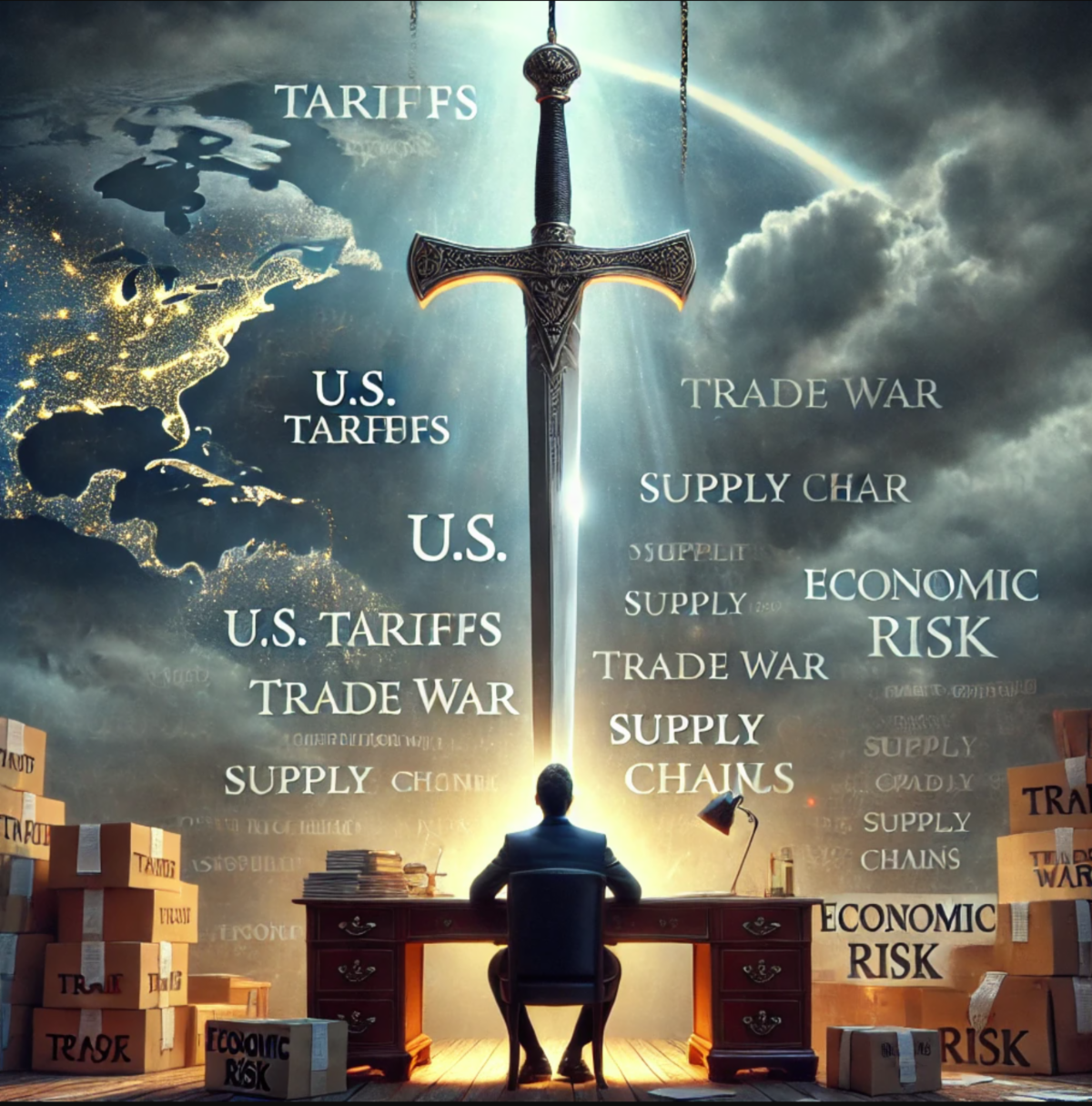
U.S. tariffs hang like an international trade policy sword of Damocles above major U.S. trade partners, creating an atmosphere of uncertainty in global markets. 


As a negotiation strategy, no deal is done until it's done, and no policy is enacted until it is enacted. Unfortunately, while this approach gives the U.S. leverage, it also makes business planning highly unpredictable for companies and global supply chains.


The goal behind using U.S. tariff threats is to yield concessions from trade partners to improve U.S. economic security and national security.


These U.S. policies appear to be a response to China's Cold War Two® geopolitical maneuvers, including its military posturing and threats to Taiwan, China's growing alliances through BRICS, the soft power projection of the Belt and Road initiative, and goods-dumping and tariff-evading trade policies that distort global markets and undercut U.S. industry.


By leveraging tariffs, the U.S. aims to counterbalance China’s economic influence and strengthen domestic supply chain resilience.


Because this has proven to be an effective negotiation strategy, we should expect to see more of it in the future.

In the original myth, the leader Damocles sat beneath a sword suspended by a single thread, symbolizing the precarious nature of power and the looming threat of disaster. Similarly, U.S. tariff threats designed to pressure trade partners into making tariff, economic security, and/or national security concessions also create potential risks for businesses and markets.

USMCA Tariffs Deferred


On Monday, it was announced that U.S. tariffs on Canada and Mexico were deferred. The tariffs that were announced on February 1 were part of a negotiation strategy designed to yield Canadian and Mexican policy changes to aid U.S. national security and economic security goals. In short, this strategy worked.


As such, we expect that as long as Canada and Mexico are making a concerted effort and meaningful progress toward supporting U.S. national security and economic security goals, tariff increases are likely to be postponed and may not ever materialize.


Future Tariff Accouncements to Drive Concessions


President Trump has promised to announce across-the-board U.S. tariffs next week. It remains to be seen if those tariffs are also being planned with an intent to encourage geoeconomic cooperation to clamp down on Chinese goods dumping and tariff evasion through the use of transshipments.


It may seem odd to think of President Trump as the Elliot Ness of international trade, seeking to stop Chinese tax evasion (i.e., tariff evasion), but here we are.


In addition to stopping Chinese tariff evasion, President Trump has voiced support for setting U.S. tariffs at reciprocal rates, which aligns with the Reciprocal Trade Act introduced in the House in January.

See the announcement here - https://rileymoore.house.gov/media/press-releases/congressman-moore-introduces-us-reciprocal-trade-act


We believe the end goal of these U.S. tariff announcements is not to generate U.S. tax revenue but to encourage U.S. trade partners to make concessions, which could include tariff, geopolitical, or geoeconomic concessions.


For this reason, we believe President Trump may postpone or otherwise defer tariffs for some countries even without reciprocal tariff reductions so long as other geopolitical or geoeconomic concessions that support U.S. national security or economic security aims can be gained.


Future Tariff Impacts Depend on Implementation


The size of the impact that U.S. tariffs (and resulting retaliatory tariffs) have on U.S. inflation and growth will depend greatly on the timing and duration of tariff implementation.


Any negative impacts on U.S. growth and inflation from U.S. tariffs and any reciprocal tariffs will hinge directly on when, if, and for how long they are implemented.


For now, the most significant economic and business risks stem from planning difficulty and business uncertainty against a backdrop of trade wars and geopolitical risks.


Read our USMCA trade report: https://conta.cc/3EgSDRx

Please feel free to email or call with questions.


Best,

Jason


Jason Schenker

- NACD Board Leadership Fellow

- CSIS Adjunct Fellow

- Joint Special Operations University Adjunct Faculty


President of Prestige Economics

Chairman of The Futurist Institute

4412 City Park Road #4

Austin, Texas 78730

Office: +1 512 425 0670

Cell: +1 512 592 8905


www.prestigeeconomics.com

www.futuristinstitute.org

www.jasonschenker.com

Jason Schenker is the President and Chief Economist of Prestige Economics. 


Mr. Schenker is currently an official LinkedIn Top Voice and a Forbes Contributor.


Bloomberg News has ranked Jason Schenker the #1 forecaster in the world in 27 different categories for his accuracy, including for economic indicators, foreign exchange rates, energy prices, metals prices, and agricultural prices.


Jason is also the Chairman of The Futurist Institute, which helps analysts, strategists, and executives become futurists.

- FOLLOW ONLINE -

LinkedIn  YouTube

Disclaimer: All commentary provided by Prestige Economics, LLC or any of its employees is commentary intended for general information use only and is not investment advice. Prestige Economics, LLC does not make recommendations on any specific or general investments, investment types, asset classes, non-regulated markets (e.g. FX, commodities), specific equities, bonds, or other investment vehicles. Prestige Economics, LLC does not guarantee the completeness or accuracy of analyses and statements, nor does Prestige Economics, LLC assume any liability for any losses that may result from the reliance by any person or entity on this information. Opinions, forecasts, and information are subject to change without notice. Reports do not represent a solicitation or offer of financial or advisory services or products and are market commentary intended and written for general information use only.


Unauthorized Distribution: Unauthorized distribution and dissemination of Prestige Economics, LLC commentary represents a violation of the Terms and Conditions of Prestige Economics, LLC retainers. Unauthorized distribution and dissemination of Prestige Economics, LLC commentary also represents a violation of copyright law for which damages may be sought by Prestige Economics, LLC.


Copyright © 2009 - 2025 Prestige Economics, LLC.