|
TLCI Friday Forum Series Highlight
Issue 2, February 2025
| | | |
|
|
|
Genetic Discoveries and Cancer Prevention: New Understanding, New Hope
Why do Latino children face higher risks of blood cancer? Critical genetic research presented at our September Forum reveals surprising answers that stretch back thousands of years. In Forum 2 of our 2024 series "Talking About Cancer Won't Kill Us, The Silence Will!", researchers unveiled how specific genetic variants traced to ancient indigenous American populations may help explain why Hispanic children are 1.4 times more likely to develop acute lymphoblastic leukemia (ALL) than their non-Hispanic white peers. This discovery follows our first Forum's revelations about genetic factors driving gastric and liver cancer risk in Latino populations.
| | | |
In this issue, we examine these critical findings that explored the genetic foundations of cancer risk in Latino populations ― from ancient genetic variants affecting blood cancers to modern gene-environment interactions driving liver disease. Understanding these connections ― how genetics and environment shape cancer disparities in our communities ― can help us transform prevention and treatment strategies. | |
Latino Blood Cancer Risks: Understanding the Genetic Connection
Research presented in Forum 2 revealed a crucial connection between specific genetic variants and blood cancer outcomes in Latino populations. Dr. Adam de Smith, USC Keck School of Medicine, and Dr. Noah Merin, Cedars-Sinai, highlighted:
| |
- Specific genetic variants found more commonly in Latino populations (GATA3, ERG Locus, and IKZF1) increase ALL risk.
- The newly discovered IKZF1 variant, present in about 20% of Latino populations but rare in non-Hispanic whites, appears to have been naturally selected over thousands of years.
- Present in 50% of modern-day indigenous American individuals
- Found in 18% of modern-day Hispanic/Latinos through genetic admixture
- Appears in less than 1% of Europeans
- Multiple risk factors interact to affect outcomes:
- Shared genetic factors increase both obesity risk and leukemia susceptibility
- Obesity not only raises leukemia risk but also complicates treatment and worsens outcomes
- These combined factors create particular challenges for the Latino population
| |
| |
|
Taking Research to Action: The Leukemia & Lymphoma Society (LLS) demonstrated how scientific discoveries can translate into community impact. Through their comprehensive approach combining bilingual education, community partnerships, and culturally sensitive services, they reached over 87,000 Spanish-speaking community members last year. Their work shows how bridging research and community can create real change in cancer outcomes. | |
Want to understand more about blood cancer challenges facing Latino communities? Watch Forum 2 for detailed insights into cutting-edge genetic research, clinical perspectives, and community support strategies providing a foundation for improving blood cancer outcomes in Latino populations. | |
| |
“I was able to share the information with family medicine interns, instructing them not to dismiss Latino patients because of language barriers and to establish trust by listening.”
― Laura Lawrence, Forum 2 attendee
| | |
|
Rising Cancer Trends We Can't Ignore
Cancer is now the second leading cause of death for Latinos in the U.S., accounting for 1 in 6 Latino deaths, according to the latest Cancer Facts & Figures for Hispanic/Latino People 2024-2026 from the American Cancer Society. Our recent Forum revealed critical trends that demand immediate attention, particularly in cancers where our communities face disproportionate risk.
| |
Gastric Cancer: Of the 27,000 new cases expected this year, Hispanic women face some of the highest rates. A bacteria called H. pylori is the primary cause, and it's much more common in our communities ― affecting 62% of Latin America-born Hispanics compared to 38% of U.S.-born Hispanics. The risk varies across Latin America, from 3% in Puerto Rico, to 15% in Peru, with a troubling new trend of increasing cases among younger patients. | |
Liver Disease: Affects 31% of individuals in North America and is the third leading cause of cancer death among Latino males. The PNPLA3 gene, which affects how the liver processes fat, plays a crucial role — Dr. Francisco Garcia's research showed that 77% of Mexican-origin individuals studied, carried this genetic variant. Having one copy of this variant doubles the risk of fatty liver disease, while having two copies (inherited from both parents) increases the risk four times. This genetic predisposition, combined with environmental factors, helps explain why Mexican-origin adults have higher rates of fatty liver disease compared to other groups. | |
Colorectal Cancer: While overall rates are lower than in other groups, this cancer has become the second most common cancer among Hispanic males, making up 11% of all cancers. At USC, Dr. Mariana Stern's innovative COPECC program is tackling this challenge from multiple angles — providing genetic testing to guide treatment while also training local community health educators to spread awareness about prevention. This "promotores" approach ensures that lifesaving information reaches our communities in culturally appropriate ways. | |
These experts emphasize that prevention and early detection can save lives. "Making changes in diet and lifestyle can reduce the instance of [colorectal] cancer by 50%," notes Dr. Stern. Dr. Garcia's work shows that conditions like fatty liver disease are reversible when caught early, while Dr. Camargo urges people to consult healthcare providers about H. pylori screening. Increasingly, healthcare is meeting communities where they are ― from mobile screening units to community health educators who understand local needs. The message is clear: don't wait to take action for your health. | |
| |
"There are persistent racial and ethnic disparities in gastric cancer incidence, mortality, and survival in the US."
– Dr. Constanza Camargo, National Cancer Institute
| | |
|
Prevention: Addressing Root Causes
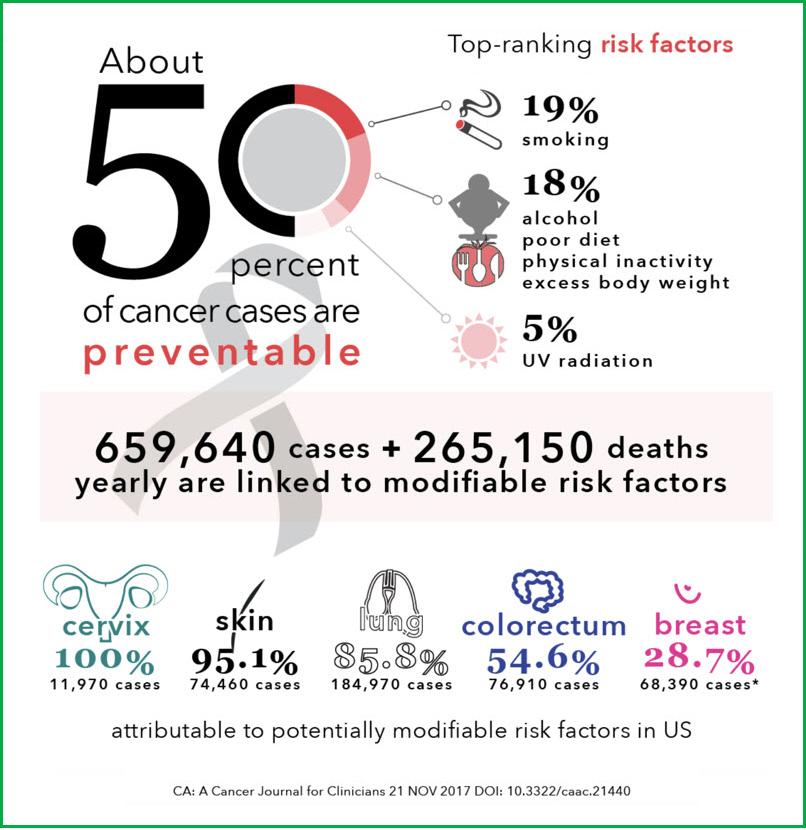
"About 50% of cancer cases are preventable," emphasized Dr. Noe Crespo. His research shows how social determinants of health ― from education access to environmental conditions ― drive cancer risk in Latino communities. Early intervention is crucial: adverse childhood experiences and environmental factors create cascading effects that influence cancer risk throughout life. However, promising interventions like USC's community health educator program show how combining scientific advances with community engagement can create effective solutions.
As we mark National Cancer Prevention Month, these insights remind us that effective prevention requires addressing both individual health factors and systemic inequities that impact access to care, screening, and treatment.
| |
|
|
"Poverty is a carcinogen."
– Dr. Noe Crespo, San Diego State University
| | |
|
- Increase genetic research and H. pylori screening in Latino communities
- Develop culturally sensitive education programs about genetic predisposition and risk factors
- Improve access to early detection and treatment services
| |
- Address upstream factors including education access, income stability, and environmental conditions
- Support community-based organizations bridging gaps between research institutions and Latino communities
| | |
|
Interested in learning more? Watch the complete Forum recording: Trends in Cancer We Can't Afford to Ignore Anymore!
Gain deeper insights into the latest cancer statistics, real-world patient education outcomes, and the critical role of obesity and stress as drivers of cancer risk.
| |
| |
Looking Ahead
Our March issue will focus on breast cancer disparities and examine the state of cancer research, leadership, and engagement within Latino communities.
| | |
|
|
TLCI Upcoming Engagements
How does culture impact cancer care? Ysabel Duron, Founder of The Latino Cancer Institute, will explore this critical question on the "The Big C in Cancer Care: Culture" podcast conversation at SXSW 2025. Join her and host Meredith Owen of Real Chemistry on March 9th at 2:30 PM CT. The discussion will cover everything from personalized treatments to technological advancements. Follow TLCI on social media or visit our website for updates.
| | |
|
|
Latino Men’s Health Forum - Cancer, An Unanswered Burden
The Latino Cancer Institute's 2025 Forum spotlights the serious intersection of Latino men's health and economic vitality. While Latino men drive unprecedented economic growth, they face mounting health challenges, including rising cancer rates and screening gaps. Join leading experts and community leaders for this free, virtual forum addressing cancer disparities, cultural barriers, and solutions. Spanish interpretation available. Save the date for September 12, 2025.
| | |
|
|
Upcoming Health Observances
March is a time for awareness, action, and positive change. Join us in observing National Colorectal Cancer Awareness Month, Kidney Cancer Awareness Month, Multiple Myeloma Awareness Month, and National Nutrition Month. Together, we can make a difference. We'll also be celebrating International Women's Day (March 8) and championing patient safety during National Patient Safety Awareness Week (March 9-15). Learn how you can contribute to these important causes in the coming weeks.
| |
|
Friday Forum Resources
Explore these resources to stay informed and take action in advancing Latino health equity.
Watch Forum Series Recordings
Revisit past discussions with leading voices in the field.
Access Presentation Slides
Download a PDF with links to all presentation slides.
Visit Our Forum Series Page
Your hub for all things related to the 2024 Forum Series, including the agenda, summaries, glossaries, and links to slides and videos.
| |  |
|
Stats on Cancer ― Data that Matters
Cancer Facts & Figures for Hispanic/Latino People (2024-2026) ― Published by the American Cancer Society, this report provides key insights on cancer prevention, risk factors, screening, treatment, and disparities. Visit the Cancer Facts & Figures for Hispanic and Latino People web page for additional data resources.
SEER Cancer Statistics (NCI) ― The National Cancer Institute’s Surveillance, Epidemiology, and End Results (SEER) Program offers reliable data on cancer incidence and survival. Explore SEER’s interactive tools, maps, charts, and the popular SEER*Explorer, which provides in-depth cancer statistics by race, age, sex, stage, and subtype, covering 48% of the U.S. population.
| | |
|
|
Moving Forward Together
Thank you for joining us as The Latino Cancer Institute advances Latino health equity. We depend on your support to continue driving impactful conversations and initiatives that address health disparities and improve lives.
| | | | |