|
Here at Foundations, we want to highlight our amazing staff across the district. Every employee group is impacted by local funding on a daily basis. Highlighting our hard-working staff and getting to know them is a priority.
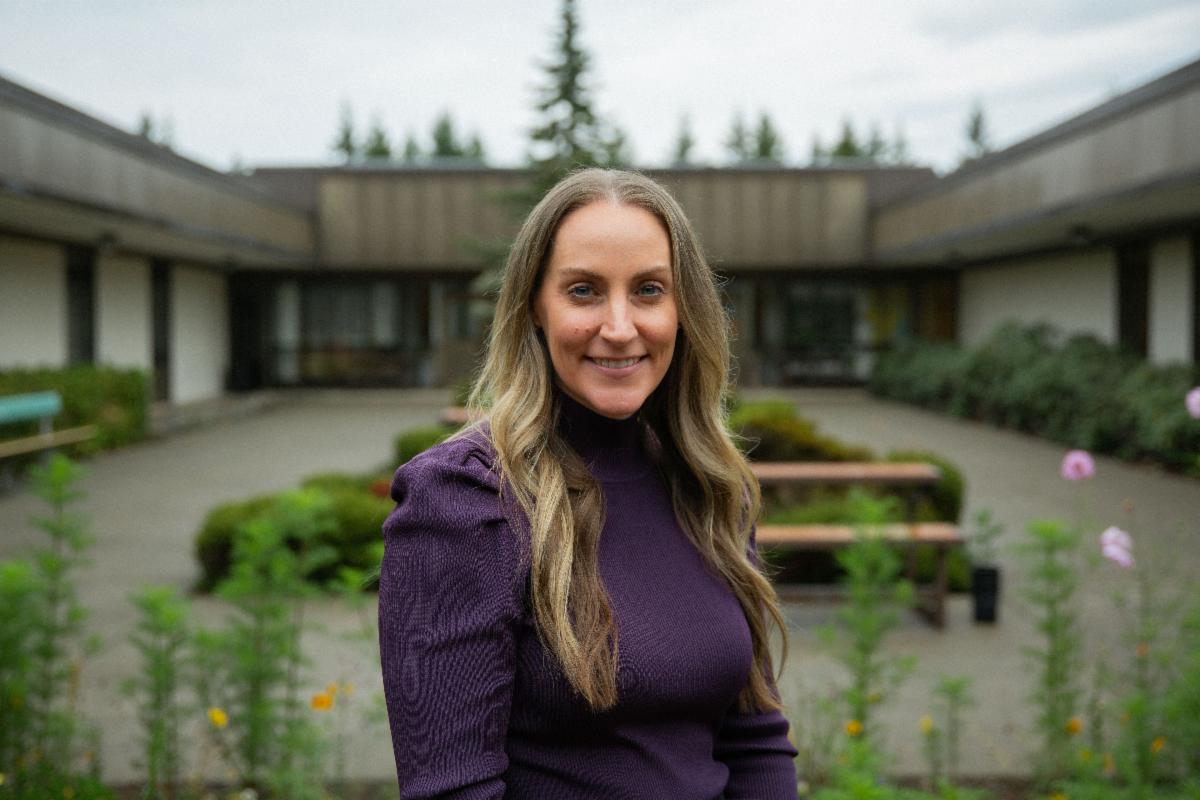
LeAnna Waldbauer is a Kentridge social worker who works extremely hard to serve her students. We are proud to have her on our KSD team and to highlight her this month!
Tell me a little about yourself in a personal as well as a professional capacity.
My husband and I just celebrated 12 years of marriage. We have two spunky daughters who are two and four years old. I recently retired from the United States Army Reserve after nearly 23 years of service. I am a Combat Vet who served in support of Operation Iraqi Freedom. I am a licensed clinical social worker who specializes in co-occurring mental health and substance use disorders. I love to travel, golf and work in my garden.
How long have you worked for the Kent School District and what's the journey that brought you here?
This is only my second year working in any school system. I began my career in social services working at Echo Glen Children’s Center in 2007. After graduate school, I received my clinical training in the Center of Excellence in Substance Abuse Treatment and Education at the Seattle VA Hospital and continued my work with Veterans for over 10 years. As fulfilling as it was to serve Veteran’s, I greatly missed working with youth. The COVID19 pandemic put a spotlight on what many of us already knew, and that is the rise in mental health disorders among adolescents. I could see efforts being made to provide resources and mental health support in academic settings. This seemed like the perfect time, and Kent seemed like the perfect place for me to make the shift back to my original passion of working with adolescents.
Was there a moment in life when you realized that you had an ambition to support people through social work?
After witnessing the devastating effects of combat exposure among my battle buddies while in Iraq, I knew that I had to respond and tend to the unseen wounds of war. This calling cemented my pursuit of higher education and my desire to become a Commissioned Officer in the United States Army Reserve. Social work was the perfect fit for me because social work ethics and values are steeped in empathy, social justice, and cultural competence. It is these values that guide me to support and empower students, families, and the Kent community.
In your opinion, what attributes or qualities should a social worker possess and how do they translate into your daily operations?
The best social workers should be the best listeners. When we, as humans, feel heard, we feel understood. Having our experiences validated translates into feelings of belonging and helps us manage stressful situations. The best social workers are also patient and celebrate small successes. Change is incremental and takes perseverance and compassion. Lastly, all social workers’ practice should be deeply rooted in the principles and standards laid out in the NASW Code of Ethics.
In your experience, what would you say is the biggest reward in being a mental health professional for students?
I love serving the students of Kentridge. Adolescents are struggling with historically unique psychosocial stressors. I may not be able to solve all their problems or take away their pain, but I can sit and be with them, so they are not alone in their suffering. I’ve seen many students implement the coping and problem-solving skills that I teach, and it fills my cup. Bearing witness to the resilience and healing that happens, is a true gift.
What is the impact on student success by having access to mental health resources?
The impact of access to mental health support is truly immeasurable. Psychological wellness has a direct effect on students’ academic performance. Breaking down barriers and streamlining access to mental health care is paramount to their success. The need for mental health professionals within the school system has never been greater. There are innovative ways in which mental health providers have been integrated into school settings, and the possibilities are reassuring.
Looking forward, what are you most excited about this school year?
I am most excited about building peer support networks throughout the student body. Peer support can foster a sense of inclusivity and belonging and reduce feelings of isolation and marginalization. Creating safe spaces for relational exchange of hardships is incredibly powerful. The students of Kentridge care deeply about one another and they have immense potential to support one another when given the opportunity. Helping provide an infrastructure for this is something I am really looking forward to.
|