|
s
Global warming seems to agree with the zucchinis in my garden which have reached sizes previously unimaginable. Folks here in Vermont reportedly lock their cars lest a neighbor offload a few of those baseball bat-sized vegetables in their back seat. But as we perspire through another 90+ degree day, a good book provides relief. Here are the ten books I read in July:
- The Control of Nature, John McPhee
- The Kill Artist, Daniel Silva
- Aflame: Learning from Silence, Pico Iyer
- Raft: Poems, Ted Kooser
- Vision: A Memoir of Blindness and Justice, David Tatel
- Rabbit, Run, John Updike
- The Fight, Norman Mailer
- Goodbye, Columbus, Philip Roth
- Second Hand Coat: Poems New and Selected, Ruth Stone
- Humboldt's Gift, Saul Bellow
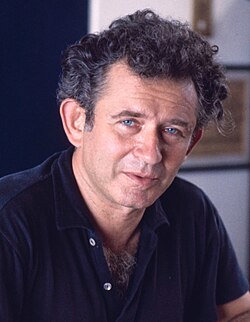
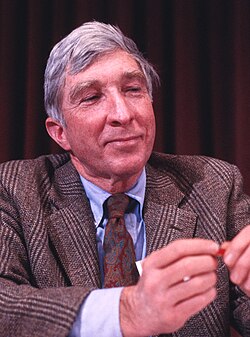
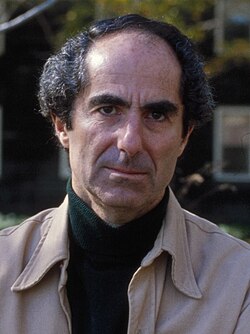
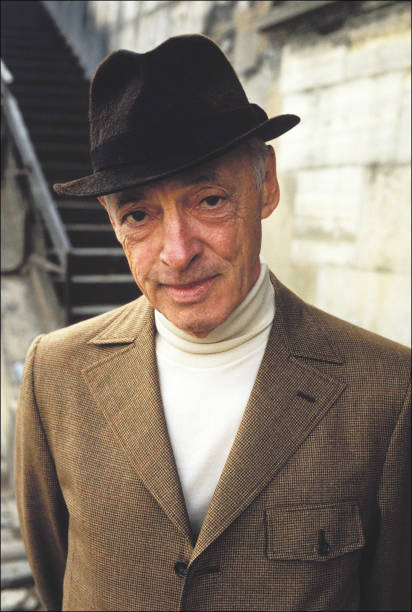
Before turning to those dead white male authors pictured above (I apologize up front for my male-oriented reading this month. Please recall that I grew up with Father Knows Best, the Donna Reed Show, and the other sexist classics of the 1960's. Since then, thanks to my dear wife and daughters, I have become more enlightened and some monthly updates have included mostly books written by women.), I'll share my excitement about the other six books starting with John McPhee's "The Control of Nature". I've managed to collect all of McPhee's extraordinary and eclectic non-fiction books beginning with his perceptive description of Bill Bradley's basketball skills while at Princeton to this book about man's pipe dreams about controlling nature. Examining the Army Corps of Engineer's futile attempt to manage the Mississippi River's delta, Iceland's attempt to save a town and harbor by dousing lava flows with sea water, and Los Angeles' extraordinary measures to contain the damage from landslides in the San Gabriel Mountains, McPhee is at his factual and insightful best. Anticpating by more than 50 years Elizabeth Kolbert's "Under the White Sky" which described how our interventions usually worsen natural challenges, this is an informative and prescient book. McPhee is one of the best non-fiction writers of our times, and he is still writing at 94!
For a change of pace, I read Daniel Silva's fourth Garbriel Allon novel, "The Kill Artist". As in the other 24 books in this series, Allon, a world class art restorer and Israeli intelligence agent, is in the midst of restoring a priceless Renaissance altarpiece when he is called upon to stop an assassin who has killed the Israeli ambassador to France and several other prominent Jews. After many twists and turns, Allon gets his man, and you, the reader, have gotten several hours of tense pleasure. This book is especially interesting because we witness Allon's wife's and son's death in a car bombing in Vienna and his early encounter with 9 year old Timothy Peel who years later turns up as a detective sergeant in Cornwall who like Allon, fights crime and evil. A good beach or airplane read.
Pico Iyer is a fascinating and prolific writer. Born to Indian parents, brought up in the US, married to a Japanese woman, and living in Japan and Santa Barbara, Iyer is difficult to categorize. Is he a travel writer, a literary critic, a novelist, an essayist, a philosopher, a Zen Buddhist monk, or a synthesis of all of them? In “Aflame; Learning From Silence”, his 17th book, all of these elements combine into a rich meditation on life, death, time, the tension between aloneness and community, and the need to find silence and solitude in order to understand one’s self. The book appears to float in time but is anchored in space at a monastery in Big Sur where Iyer retreats annually to find grounding and peace. There he channels important writers in his life including Dickinson, Pascal, Henry Miller, Marcus Aurelius, Thoreau, Thomas Merton, Robinson Jeffers, Milton, Camus, George Saunders, and especially the Zen Buddhist monk, singer, writer, and philosopher Leonard Cohen with whom he had a long-lasting friendship. Iyer quotes all of them as they are drawn into his contemplation of how to live this life. If you don't yet know Iyer's work, you will find him fascinating, and this book is an excellent place to start.
"Vision: A Memoir of Blindness and Justice" is one of those books I would never have encountered had it not been given to me by my dear sister. It's the memoir of David Tatel who served as a Circuit Court of Appeals judge for 30 years in D.C. Involved in many of the key decisions concerning the environment, voting rights, and free speech, Tatel was a consistent voice for judicial restraint, respect for precedent, and commitment to the Constitution and its separation of powers. Writing before Trump's second term, he expresses concern about how this Supreme Court is ignoring those three principles, and he anticipates some of the disastrous rulings that have recently been issued. Oh, by the way, did I forget to mention that Tatel has been blind since early adulthood? If so, it's because he never traded on that 'disability' and managed to lead a full life without sight, though not without vision. His love affair with his guide dog, Vixen, is a wonderful part of his story. The book is a readable and fascinating insider's look at how the courts function and how one distinguished and principled judge viewed his responsibilities and improved the world.
I read two books of poetry this month, by poets who could not be more different. Ted Kooser, a life long Nebraskan, writes accessible, plain poems which are suffused with optimism, community, and the quotidian. Ruth Stone's work, in contrast, is often abstract, somewhat inscrutable, and often grimly overshadowed by her husband's suicide 50 years ago. Both poets have been much honored, Kooser as U.S. Poet Laureate for two terms and Stone as the Vermont Poet Laureate for many years. Both are worth reading. In Kooser's poems, you will experience poetry's ability to draw our attention to the beauty in the every day. Through Stone's work, you can explore how poetry can help us try to understand the pain and loss inevitable in every life. I also highy recommend a documentary made by Stone's granddaughter, "Ruth Stone: The Vast Library of the Female Mind' which you can find on Prime. It has wonderful footage of the 90+ year old Stone reciting her poems by heart, some along with her granddaughters.
And that brings us to those four dead white men whose photos introduce this month's update. Mailer's non-fiction and the novels and short stories of Updike, Roth, and Bellow were a signficant part of my middle aged reading. Too busy to read much during the years of medical school and residency, I began to read in earnest in the late 1970's and early 80's, and these four writers along with Hemingway and Nabokov comprised my pantheon. I wanted to re-read their work and try to anticipate whether they will gradually disappear from reading lists or be canonized and their work become 'classics'.
Mailer exploded on the literary scene in 1948 at 25 when his "The Naked and the Dead" became a best seller. Still considered one of the best books about WWII, he went on to write 13 best selling novels and won Pulitzers in both fiction and non-fiction. I chose "The Fight" because I enjoy his non-fiction more than his fiction, and I can still remember the Rumble in the Jungle, the heavyweight boxing championship bout between Muhammed Ali and George Forman in 1974. Ali had been stripped of his title and blacklisted from fighting when he refused to serve in Vietnam when drafted, famously saying "No Viet Cong ever called me nigger!". Forman had won all 35 of his fights on his way to his championship title. The fight in Kenshasa, Zaire lived up to its hype, and Mailer's description of it was spellbinding. This is a fine example of the New Journalism that Mailer is credited with ushering in along with Didion, Wolfe, Talese. Worth reading especially if one, like me, remembers Ali's first fight against Sonny Liston in 1963. For a special treat, you can watch this entire bout onYouTube!
John Updike was a prolific writer of novels, short stories, literary and art criticism, and essays and one of only four American writers to win multiple Pulitzer Prizes for fiction. His territory was small town New England where Protestants struggled with religion, morality, infidelity, and mortality. I chose to re-read “Rabbit, Run” because it was one of his earliest novels and because it was the first in the four book series that included “Rabbit Redux” 1971, “Rabbit Is Rich” 1981, and “Rabbit At Rest” 1990, books which earned Updike his greatest honors. It’s the story of Harold, aka Harry aka Rabbit Angstrom, a former high school basketball superstar in the small New England town of Mt. Judge who at 26 is married, has one child and another on the way, works demonstrating kitchen appliances, and is sinking into the abyss of anomie. He runs out on his alcoholic, depressed, and pregnant wife, lives with a prostitute in the neighboring town, and returns for the birth of his daughter with tragic consequences. I found the tension in the book to be almost unbearable especially the chapter in which Updike shifts the narration from Harry to his wife, Janice, to convey the heart-breaking result of Rabbit’s inability to take responsibility. Rabbit is a vivid and powerful character whose life Updike continued to chronicle for 30 years.
Philip Roth, in contrast, found his literary home with the Jews of Newark and the New Jersey suburbs. Winner of a Pulitzer Prize, two National Book Awards, and only the second author to have their works collected by the Library of America while still alive, Roth addressed late 20th C. America's struggles with materialism, greed, and hate in 30 novels. When he wasn't defending himself from charges of misogyny, he was denying he was a self-hating Jew---not an easy man, but a great writer. I chose to read his first book, the novella "Goodbye, Columbus" which won the National Book Award in 1959. It's the story of Newark's Neil Klugman and his love affair with wealthy, suburbanite Brenda Potemkin. In cringe-worthy detail, we meet Brenda's family (including her brother Ron whose LP commemorating his graduation from Ohio State concludes with the refrain "Goodbye, Columbus") and endure the painful scenes from his wedding. In one delicious detail, we meet Brenda's uncle Leo, an unsuccessful light bulb salesman, a job I pursued with modest success to earn some money while a newly married medical student in Ann Arbor. Do Protestants cringe when they read Updike? Do Italians cringe when they read Mario Puzo? Or is it just we Jews with our outsiderness who can't stand our negative portrayal by Roth? This book is great, but my favorite Roths are still the Zuckerman series. He's fantastic.
The Nobel Prize winning, Canadian-American, my home town Chicago-loving, and Vermont-buried Saul Bellow is the only writer to have won the National Book Award three times. Bellow strode majestically across the 20th C literary scene with books exploring the individual's alienation and feelings of powerlessness in 14 novels and many short stories . An article in the "Guardian", listed Bellow's five best books, and having already read 1 through 3, I chose "Humboldt's Gift", the fourth on the list. Training and running three marathons was good preparation for finishing this long, dense, and complicated novel, but finish it I did. Charlie Citrine, a 50 something year old writer is contending with a divorce proceeding, an angry and violent mobster to whom he owes money, expensive lawyers, a much younger sexy woman who wants to be Mrs. Citrine, and a variety of academic friends and enemies when all he wants to do is to be left alone to contemplate what Whitman referred to as the main question, i.e. what happens when we die. Citrine has fallen under the influence of the cult of anthroposophy and feels that the soul continues to exist after the body dies, can be communicated with, and, returns in another form in the future. Underlying all of this is Charlie’s love for Von Humboldt Fleisher, an eccentric poet and philosopher who ‘adopted’ Charlie when he was still in college at a time when Humboldt was a major presence in Greenwich Village. The two of them spent time together on the faculty at Princeton, but as he aged, Humboldt became more garrulous, isolated, and crazy. When Humboldt dies, broke and broken in New York City, Citrine is afflicted with serious guilt, but Humboldt’s will surprisingly provides a ‘gift’ for Charlie that saves the day. This is a big book, worth reading, but not an easy trip.
So, having read Mailer, Updike, Roth, and Bellow, who do I think will fade and disappear and whose works might achieve "classic" standing and be read decades from now? The early returns don't look good for Mailer but Updike, Roth, and Bellow show promise.
To get an idea of how these four writers are viewed today, I leafed through some of the books in my Vermont library that recommend books. Harold Bloom in his "How to Read and Why", one of my favorite sources of reading ideas, failed to include any of the four authors in his suggestions of 16 novels and 18 short stories, though he did refer to Roth as one of the four greatest novelists of his day. (The others were Cormac McCarthy, Pynchon, and Don DeLillo.). A charming little book entitled "Unpacking My Library: Artists and Their Books, interviewed 14 writers, photographed their libraries, and listed their favorite ten books. Not a mention of Mailer but Roth and Bellow were listed. Finally, I leafed through "The Top Ten: Writers Pick Their Favorite Books", a quirky collection in which 125 writers listed their 10 favorite works of fiction. Again, Mailer was omitted, but four books by Roth and two by Bellow were included. Moreover, the book listed by the most writers was Updike's Rabbit tetrology. Updike was also the only one of our four who had a book in the Top Ten Works by Living Authors list though all four were alive at the time.
So where does all this sleuthing leave me. I think it's clear that Mailer will be remembered for "The Naked and the Dead" but perhaps equally for his colorful life----stabbing his wife with a penknife, running for Mayor of NYC, and engaging Gore Vidal in a fistfight during a TV interview, but I don't see his books on the Classics shelf. On the other hand, I'm pretty confident that Updike, Roth, and Bellow will still be read as the 22nd century rolls into view. What I'm sure of is that I won't be around long enough to know what ends up being a classic.
The Poetry on The Charles this month features Ruth Stone, a much honored Vermont poet but relatively unknown to the general reader. Stone, who died at her beloved farmhouse in Goshen, Vermont in 2011 at the age of 97 was awarded a National Book Critics Circle Award, a National Book Award, and the Wallace Stevens Prize for her 13 volumes of poetry. Often starkly grief-stricken, her life and her poetry were shaped by her husband's suicide leaving her with three young daughters and no money when she was 44. Living alone in relative poverty in rural Vermont, she was surrounded by her daughters and poets who held her in high esteem. One of those poets was Sharon Olds whose poem written after Stone's death is listed below. If you find Stone's poetry and life of interest, by all means watch the documentary made by her granddaughter, "Ruth Stone: The Vast Library of the Female Mind." The scene where Stone and her granddaughters recite "Metamorphosis" from memory is alone worth the time. That poem ends with the line, "The dancers that cannot sleep, and the sleepers that cannot dance." Beautiful!
- Suddenly, Sharon Olds
- Green Apples, Ruth Stone
- Metamorphosis, Ruth Stone
- The Tree, Ruth Stone
And here's a quote from another favorite writer, Joan Didion. It relates to the question of why she writes, but it could also just as easily refer to the question of why I read: "I write entirely to find out what I'm thinking, what I'm looking at, what I see and what it means. What I want and what I fear."
|