Best Lawyers Magazine named Lewitt Hackman a National Firm in Franchise Law*.

For more information, please visit our The Best Lawyers in America® awards page or the Our Firm page on our website.

*Ranked Tier 3 National Firm by Best Lawyers Magazine

October 2026


American Bar Association Forum on Franchising

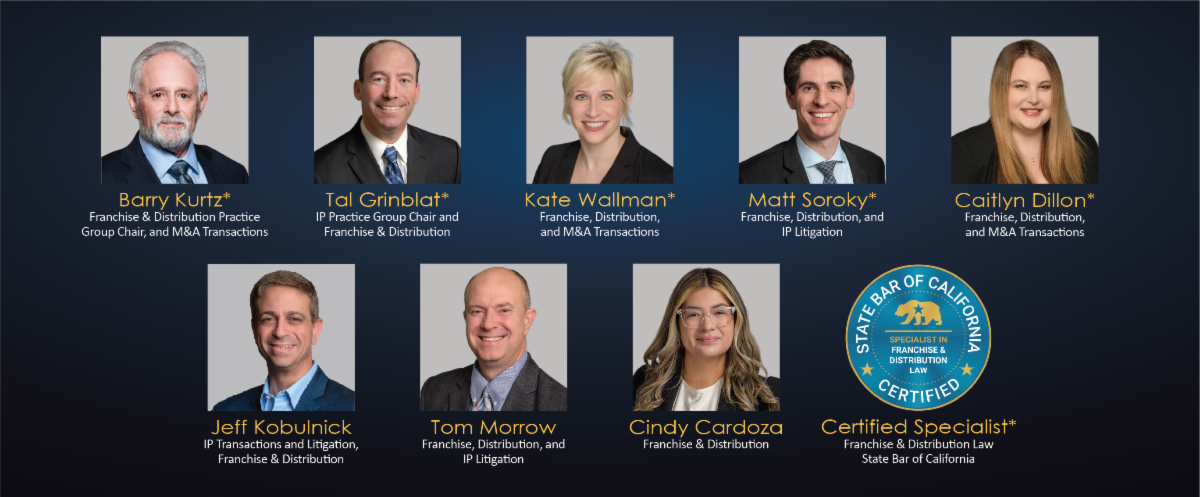
Barry Kurtz, Tal Grinblat, Matt Soroky, Caitlyn Dillon, Jeff Kobulnick, Tom Morrow, and Cindy Cardoza attended the 49th Annual American Bar Association Forum on Franchising in Toronto, Canada. During the event, the practice group participated in workshops exploring franchising fundamentals and emerging industry trends, gaining valuable insights to strengthen their knowledge and stay current on the latest developments in the franchising industry.

Franchisor 101: Thank God I'm a Country Brand

The Court of Appeals for the Eighth Circuit ruled that a hotel franchisor did not break its promise of territorial protection when it licensed a different hotel brand to operate near a current franchisee, because the franchise agreement protected only the franchisee’s own brand.


In 2011, franchisee, T&T Management, Inc. (“T&T”) signed a franchise agreement to operate a Country Inn & Suites hotel in Port Orange, Florida. The agreement gave T&T a “Protected Area,” a zone where the franchisor promised not to operate or license other hotels using the Country Inn & Suites (“Country”) trademarks.


Choice Hotels International, Inc. (“Choice”) acquired the Country brand in 2022 and assumed the franchisor’s obligations. Before acquiring Country, Choice had licensed Sunshine Fund Port Orange, LLC (“Sunshine”) to open a WoodSpring Suites hotel (“WoodSpring”) inside T&T’s Protected Area.


T&T sued, arguing that Choice’s other brands became part of Country’s system once Choice became the franchisor, so WoodSpring qualified as a Country trademark which was included in T&T’s Protected Area. According to T&T, Choice’s licensing of the WoodSpring mark to Sunshine within its Protected Area constituted breach of T&T’s franchise agreement.


The Eighth Circuit disagreed and found that T&T’s franchise agreement unambiguously permitted the franchisor to grant licenses for non-Country branded hotels within the Protected Area and held that the district court correctly dismissed T&T’s breach of contract claims against Choice. The court also noted the franchise agreement clearly defines “Marks” as the Country Inn & Suites trademark and the other identifiers for the Country System.


Additionally, the franchise agreement expressly granted Choice the right to license other entities, anywhere and at any time, to: (1) “use any trademarks, trade dress, trade names, reservation systems, or franchise systems that are acquired by [Choice],” and (2) operate “hotels using other systems and marks.” This language in the franchise agreement unambiguously authorized the WoodSpring license inside the Protected Area.


This decision illustrates how small drafting choices can decide major disputes. Franchisors, particularly those that own or plan to acquire multiple brands, should define territorial protections precisely and expressly reserve the right to operate or license other brands within a franchisee’s territory. Franchisors should consult franchise counsel to ensure franchise agreements are drafted to protect growth plans and reduce potential liability.


T&T Mgmt., Inc. v. Choice Hotels Int’l, Inc., 179 F.4th 1129 (8th Cir. 2026)

Franchisee 101: World's Worst Franchise Abandonment

A federal court in Detroit recently issued an emergency order barring a former franchisee from turning a shuttered Fat Boy’s Pizza restaurant into a competing pizza restaurant.


Gabriel Corchiani (“Corchiani”) founded Fat Boy’s Pizza in 2020. In 2024, Corchiani sold the brand to a new franchisor while staying on as a franchisee. By April 2025, Corchiani had ceded his remaining ownership interest in the franchisor, rendering him an independent franchisee.


His company signed franchise agreements for a co-branded Fat Boy’s Pizza and Savvy Sliders restaurant in Louisiana. Those agreements required the restaurant to stay open, treating a restaurant closing for two straight business days without permission as “abandonment,” and barred selling the business without the franchisor’s consent.


On August 6, 2026, the restaurant abruptly closed. A notice appeared on the door, printed on Fat Boy’s Pizza letterhead and bearing its logo, announcing that the location would reopen as Tommy’s Pizza, a competitor. The franchisor terminated the franchise agreements the next day.


The franchisor obtained a temporary restraining order enjoining the defendants from taking further steps to transfer the former franchised location to Tommy's Pizza. The court found the franchisor likely to prevail on its breach of contract claim, because the closure fit the agreement’s definition of abandonment.


It also found likely violations of the Lanham Act, since a former franchisee’s continued use of a brand’s logo is especially likely to confuse customers. The court reasoned that losing customer loyalty at the location could not easily be fixed with money, and that the franchisee had brought any hardship on itself.


For franchisees, the lessons are practical: know your agreement’s closure and “abandonment” rules, including your obligation to stop using the franchisor’s name and logo after the franchisor has terminated franchise rights. The franchisor must consent to sale or transfer of the franchisee’s restaurant, lease, or equipment. Generally, courts tend to move quickly to protect a franchisor’s brand from truly irreparable harm. When in doubt, consult franchise counsel.


Fat Boy’s Pizza Franchise, LLC v. FBP Covington, LLC, No. 2:26-cv-12814 (E.D. Mich. Aug. 13, 2026)

Previous Newsletters & Blogs

September 2026: A Committed Medical Group; and Out of The Closet Competition


August 2026: Challenging Every Shingle Claim; and A Multistate Twist


July 2026: A Rub in the Right Direction; and Side Hustles Can Bite Back


June 2026: A Taxing Move; and Trade Secrets That Tip the Scale


May 2026: No Parent Trap; and Leaving A Light On, For Withheld Funds

Need to Build a Strong Franchisor-Franchisee Relationship - Barry Kurtz


What Franchisors Need to Know About the Maryland Franchise Reform Act

- Matt Soroky


Stronger Franchisee Protections Emerging in 2026 State Laws - Barry Kurtz

Publications

2027 Best Lawyers in America, Best Lawyers Magazine - Barry Kurtz, Jeff Kobulnick, Tal Grinblat, and Matt Soroky selected


2026 Valley 200, Los Angeles Business Journal, Inside the Valley - Barry Kurtz selected


2026 Legal Visionary, Los Angeles Times Business Studios - Barry Kurtz selected


2026 Top 100 Lawyers, Los Angeles Business Journal - Barry Kurtz selected


2026 Legal Eagles, Franchise Times - Tal Grinblat selected