Issue 673 - June 27, 2026 | | |
IN THIS ISSUE
-
NEWS: House Sends Controversial Legislation to the Governor to Provide Free Drug Paraphernalia to Addicts
-
NEWS: Compromise Reached on Controversial Gun Bill as Session Draws to a Close
-
NEWS: Bill Prompted by Horrific Crime Heads to the Governor
-
NEWS VIDEO: Bill to Give Pharmacists Greater Authority Heads to Governor, Despite Safety Concerns
-
NEWS VIDEO: Proposed Constitutional Amendment on Marriage Defeated in House
-
NEWS: House Approves $6.996 Billion State Operating Budget
-
NEWS: Three House Republicans Oppose Passage of State Spending Plan
| | |
House Sends Controversial Legislation to the Governor to Provide Free Drug Paraphernalia to Addicts
On a tight vote Tuesday evening, Democrats controlling the House of Representatives approved a bill to provide free supplies to facilitate the use of illicit drugs by people suffering from substance addiction.
Senate Bill 249 (as amended) would require the Division of Substance Abuse and Mental Health to license public programs for distributing items used for “injecting, ingesting, inhaling, or otherwise introducing substances into the human body.” These supplies include “needles, syringes, cookers, cotton, tourniquets, clean water, mouthpieces, filters, and straws.”
These programs would be designed to encourage “peer-to-peer distribution” of state-supplied sterile drug paraphernalia. Participants would be granted anonymity, but would receive referrals for primary and behavioral healthcare and vaccinations, assistance with transportation and housing needs, and enrollment in public benefits programs.
The legislation would also decriminalize the possession of drug paraphernalia, but would maintain felony violations for selling, delivering, or manufacturing the same items.
Prime House sponsor of the bill, State Rep. Nnamdi Chukwuocha (D-Wilmington),
characterized the legislation as “just an extension of the needle exchange program,” which Delaware established under legislation enacted 20 years ago. The program was updated in 2023, dropping the requirement for a one-for-one needle exchange in favor of a needs-based approach, which this proposal would mimic. “This is the next step in harm reduction programs,” he told the chamber.
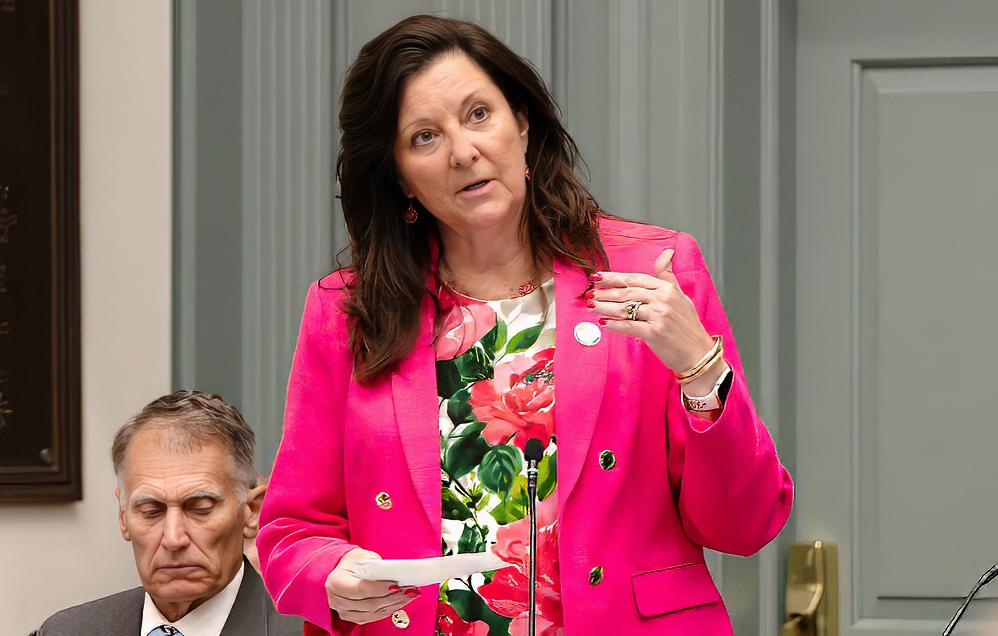
State Rep. Valerie Jones Giltner (R-Georgetown), in photo, a former nurse and a member of the House Health & Human Development Committee, said while the needle exchange program has been successful in its goals, she questioned the proposed distribution of paraphernalia.
“The syringe exchange program, which led to the syringe handout program, had tremendous results in reducing the harm of HIV,” she told the chamber. “We’ve seen those numbers drop and continue to drop.”
However, Rep. Jones Giltner noted that when the measure was before her committee last week, proponents stated its intention was to reduce overdose deaths. She said overdose deaths in Delaware are on the upswing and continue to increase, but that there is no data indicating this bill would help reverse that trend. In fact, she said it may increase it by providing the means to continue the rampant abuse of opioids and other controlled substances.
“We are basically engaging in malpractice,” she said. “We are taking the research from a research exchange program and translating it to mean that by giving them a cooker, cotton, and tourniquets, we’re going to reduce overdoses.”
Rep. Jones Giltner said the bill should be restructured to focus on what studies have verified as effective in reducing overdose deaths, including the distribution of drug test strips, Narcan, syringes, and the length of inpatient treatment. “Let’s stick with the science,” she urged her colleagues.
State Rep. Mike Smith (R-Pike Creek Valley) sounded a similar note. “My mother and my uncle both died of an overdose, he said. “I found both of them…I can understand the emotion behind wanting to support (this bill).”
But he said there is often a significant gap between feeling that something is the right thing to do and actually taking effective action. “So, I would just encourage this body to take this bill back and make it a pilot (program), he said. “It's the perfect bill to make a pilot, to try it and test that. This is the type of thing you want to be science-based. You want it to be data-driven before we make the decision, because we want that statistic to continue to go down. I don't want any more of my family members, your family members to have to go through that.”
Those suggestions were ignored, and the bill cleared the House 22-16, one more vote than it needed for passage. No member of the House Republican Caucus supported the measure. The legislation now heads to the governor for his expected signature.
Financing for the program will initially come from Delaware’s share of opioid settlement money collected from drug companies, distributors, and pharmacies for their role in aggressively marketing painkillers and contributing to the overdose crisis.
| | |
Compromise Reached on Controversial
Gun Bill as Session Draws to a Close
The House of Representatives on Thursday evening approved an amended version of a closely contested bill regulating firearms dealers, with supporters and opponents alike describing the measure as an imperfect but meaningful compromise.
Senate Substitute 1 for Senate Bill 300 (as amended), sponsored by Senate President Pro Tem David Sokola (D-Newark), would require anyone engaging in the sale or transfer of guns, including pawnbrokers and Federal Firearms License holders (FFLs), to obtain a new state firearms dealer license.
In its original form, the bill sought to impose a long list of requirements on dealers, including the installation of video surveillance systems to capture the identities of buyers and sellers, and the maintenance of a book or database containing the names and addresses of buyers, the firearms they purchased, and their serial numbers.
Supporters of the measure claimed that federal supervision of firearms dealers is lacking and that stronger regulations and oversight on the state level are needed to reduce the number of guns acquired by criminals.
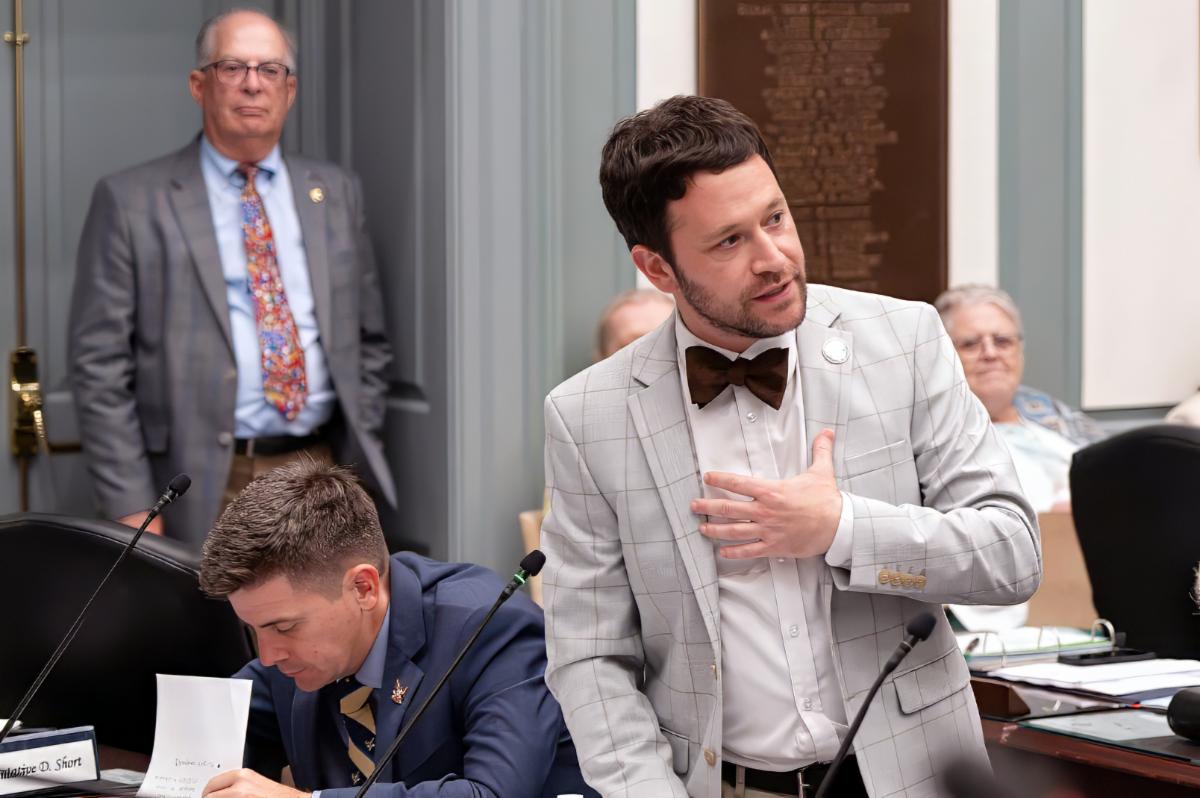
Opponents, like State Rep. Jeff Spiegelman (R-Townsend, Smyrna, Clayton), in photo, said that the original draft of SB 300 was an overreach to the point of being coercive. He said a similar statute enacted in Illinois led to about half of the state’s federally licensed firearms dealers leaving the business.
In a statement sent to members of the Delaware State Sportsmen’s Association (DSSA), President Jeff Hague said the original proposal was an attack on the state constitutional right of all Delawareans to keep and bear arms for lawful purposes and “to register every firearm purchase.”
The House sponsor of the bill, State Rep. Mara Gorman (D-Newark), worked with Rep. Spiegelman and firearm rights advocates to craft a compromise. The result of those talks led to two amendments, including the following changes:
-
The requirement for smaller firearms dealers and those working out of their homes to record video of their customers has been scaled back.
- A provision has been added to expand opportunities for licensed dealers to participate in gun shows, sportsman shows, outdoor shows, or similar events.
- The bill now mandates that the Delaware State Police (DSP) follow the Administrative Procedures Act when creating regulations to implement the legislation. The DSP will be required to engage with stakeholders, advocacy groups, and those with knowledge and expertise to develop ‘best-practice’ guidance relating to reducing straw purchases and theft.
- The minimum age requirement for employees, contractors, or volunteers to perform certain duties for licensed firearms dealers was reduced from 21 to 18.
- The minimum civil penalty for subsequent violations of the law has been reduced by more than half.
- All documents, data, images, and other information created or maintained by the Delaware State Police or the Department of Justice under the bill are confidential and may not be disclosed to any unauthorized person.
- The legislation now clarifies the prohibition on creating a firearms registry and does not allow any system of registration for firearm owners except for persons prohibited from receiving a firearm. It also specifies that firearm owner information held by a firearms dealer does not constitute a registry.
- Those holding Delaware Concealed Carry Permits are exempt from obtaining the initial background checks required under the bill.
Rep. Spiegelman praised Rep. Gorman for her engagement and willingness to address concerns expressed about that original bill. While he was still not entirely happy with the legislation, he said it was a much better measure than it had been initially.
“Stopping straw purchases, stopping guns (from getting) in the hands of bad guys, is not a pro-Second Amendment versus anti-Second Amendment thought,” Rep. Spiegelman said. “It's a universal thought. We all agree with that. We agree that there should be a best practices approach. We're just not sure that this particular way of doing it is the best way of doing it.”
The bill now heads back to the Senate, where it is expected to pass on the last day of the legislative session on Tuesday.
| |
|
Bill Prompted by Horrific Crime
Heads to the Governor
A violent assault and abduction of an elderly Seaford woman inspired legislation that now heads to the governor's desk after winning unanimous approval in both chambers of the Delaware General Assembly.
State Sens. Bryant Richardson (R-Seaford) & Stephanie Hansen (D-Middletown) and State Rep. Danny Short (R-Seaford) were the prime sponsors of Senate Bill 292, also known as the Grace Peterson Act.
Before the House approved the measure Wednesday evening, Rep. Short recounted the 2023 incident that led to the legislation.
“The Grace Peterson Act before us today…looks to close the gap on a situation that contributed to a violent attack in Sussex and Wicomico counties in 2023,” Rep. Short said. “The measure is named for a Seaford woman, a retired councilwoman, who was carjacked, kidnapped, robbed, assaulted, and driven over 30 miles south into Wicomico County in her own car. Left bound and thrown into the Wicomico River after being pistol-whipped. She was 80 years old.
“She survived this attack because she had the will to live,” Rep. Short said. “She actually bit through her bonds to reach the shore and get help. And she has advocated for this change for three years. The man who did this was convicted of the attack. The 26-year-old is now serving a life prison sentence plus 60 years behind bars.
“He was evicted from the House of Mercy…in Seaford before committing this attack. And, as stated by Senator Hansen in the Senate, a legal gap allowed him to go unhoused and without a formal discharge plan. He walked down Pine Street,…took a left-hand turn and saw Grace getting into her car. And that's how that story started.”
Rep. Short said Ms. Peterson has advocated for closing the legal loophole that created the circumstances leading to the crimes committed against her.
The bill would require landlords to assist tenants in developing a discharge plan before carrying out an eviction when the tenant's rent is paid in whole or in part with state funds for reentry services. The plan must include an effort to directly connect the tenant with shelter and another support arrangement to help ensure continuity.
The legislation also mandates that, in the event of an eviction, the landlord notify the entity making the housing payments and, if the tenant is under the supervision of the Department of Corrections, inform that agency and local law enforcement.
Nearly half of the General Assembly sponsored or co-sponsored the bipartisan bill.
| | |
Bill to Give Pharmacists Greater Authority Heads to Governor, Despite Safety Concerns
A bill that would expand the scope of medical authority for Delaware pharmacists is heading to the governor for his signature, despite concerns from House Republicans that the move could inadvertently endanger public health.
Proponents say Senate Bill 320 (as amended) would authorize pharmacists to practice to "the full extent of their education and training."
Under the proposal, pharmacists would be permitted to independently evaluate patients, identify health conditions, order and prescribe laboratory tests, and prescribe drugs or devices without reliance on statewide protocols, formularies, or specified lists of conditions.
Retired nurse, State Rep. Valerie Jones Giltner (R-Georgetown) took issue with the bill. Among her objections was that the legislation exceeds the scope of similar laws enacted elsewhere and that it grants pharmacists authority to prescribe new medications based on existing diagnoses.
"If we have somebody who has a cardiac arrhythmia, there are about six different diagnostic codes within that, and you could do a lot of damage (if you lack the appropriate detailed knowledge)," she said during the debate. "I take my mother to an electrophysiologist, and they are very specific about treating her very specific arrhythmia. The vagueness of [the wording of the bill] lends itself to harm."
State Rep. Jeff Hilovsky (R-Long Neck, Oak Orchard), a retired doctor of optometry, also expressed concerns. "I, too, favor expansion of scope when it's appropriate, with the underlying tenet that we do no harm," he told the bill's sponsor.
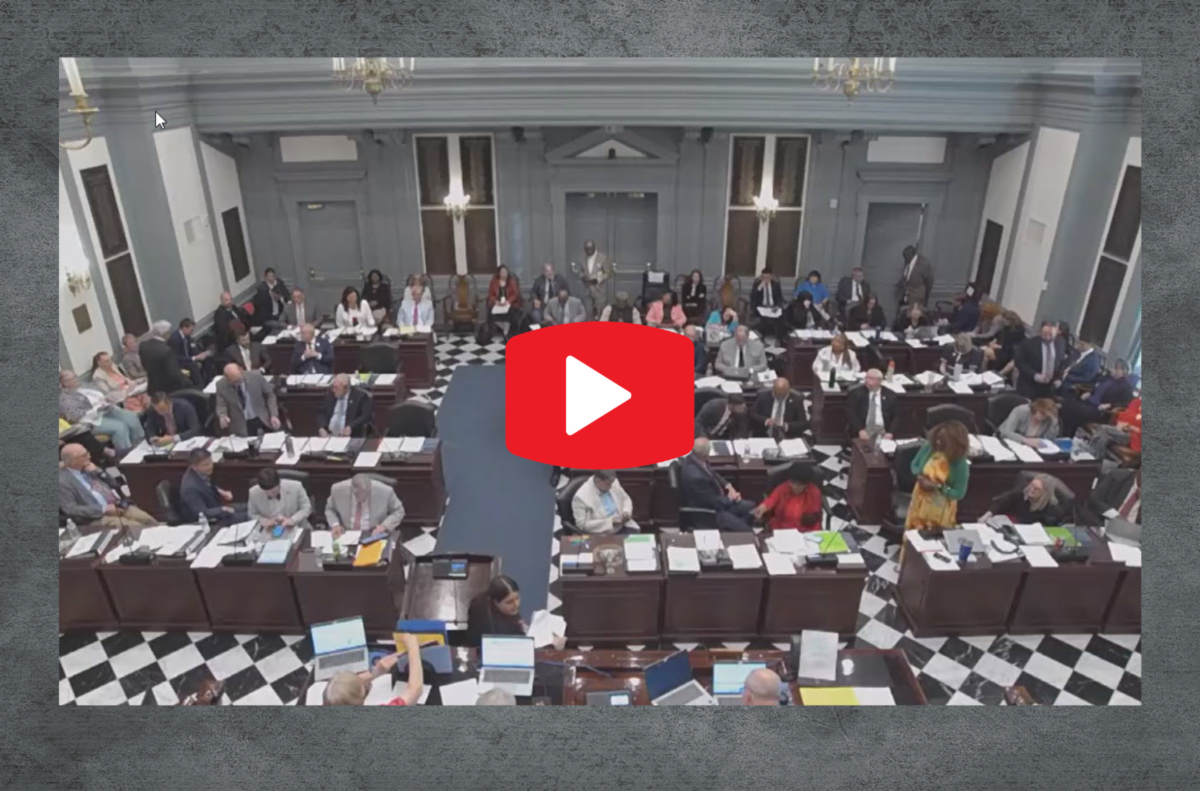
However, Rep. Hilovsky said allowing pharmacists to order and interpret lab tests was a step too far. Click here or on the graphic to see Rep. Hilovsky's comments on the House floor. (length 3:41)
Both Reps. Jones Gilter and Hilovsky urged caution and asked that the bill, which was introduced May 14, be tabled and reevaluated. House Democrats dismissed the concerns and passed the measure without Republican support.
| | |
Proposed Constitutional Amendment on Marriage Defeated in House
On Tuesday night, the House of Representatives refused to approve the first leg of a proposed constitutional amendment on marriage.
Senate Substitute 2 for Senate Bill 100 seeks to add marriage as a fundamental right in the state constitution, "that may not be denied or abridged on the basis of gender or any other legally protected criteria (i.e., race, color, national origin, and sex).
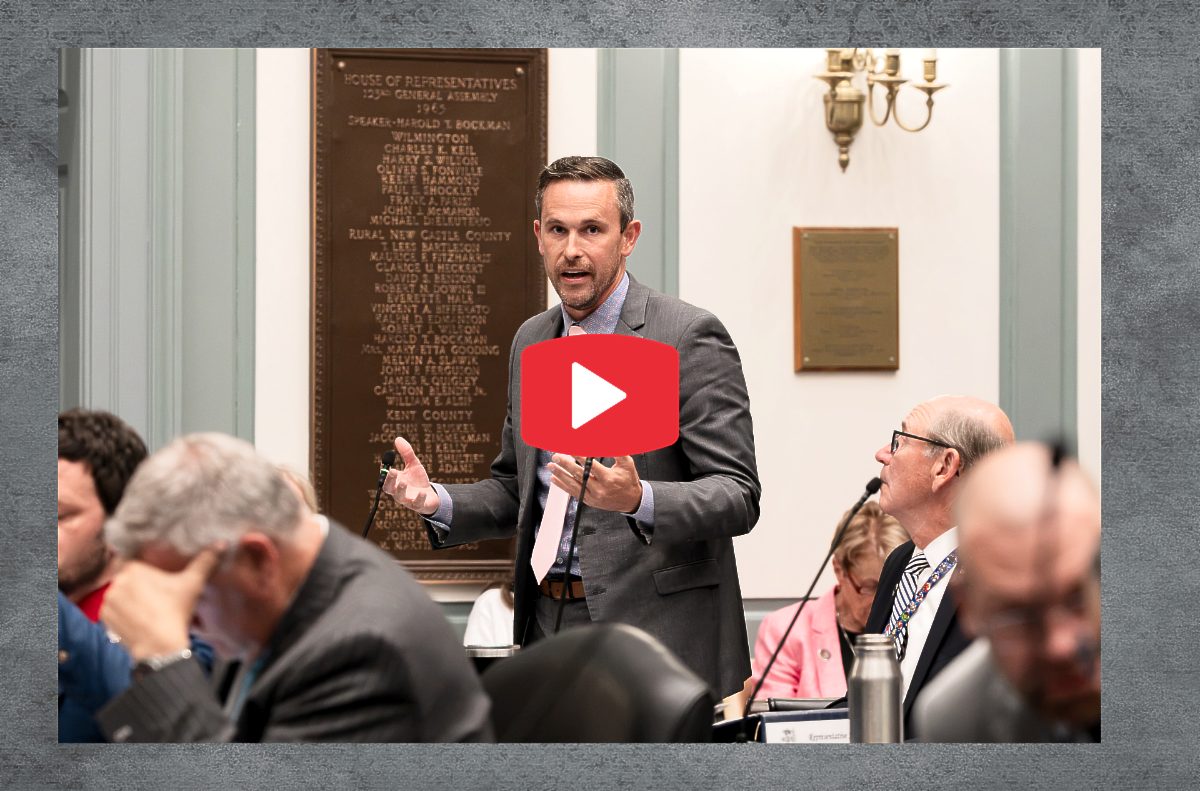
State Rep. Mike Smith (R-Pike Creek Valley), in photo, spoke for the House Republican Caucus, stating prior to the vote that the amendment was unnecessary because Delaware had legalized same-sex unions 13 years ago.
Most of the caucus's members went "not voting" on the proposal to emphasize that all Delawareans already have equal access to marriage, that this opportunity is well protected under the Delaware Code, and that the proposal appeared to be more motivated by the fall elections than any genuine concern about safeguarding something that is not under threat.
Constitutional amendments must win approval in two separate General Assemblies, securing a two-thirds supermajority in each chamber on both occasions to be enacted.
In the House, constitutional amendments must receive at least 28 "yes" votes for passage.
SS 2 for SB 100 failed by a vote of 24 yes, 3 no, and 14 not voting. The bill received no votes of approval from the 14-member House Republican Caucus.
The bill's prime House sponsor, State Rep. Claire Snyder-Hall, changed her vote from "yes" to "no" before the final tally--a procedural move that will allow her to recall the bill for another vote prior to the end of the legislative session on June 30th.
Click here or on the image to see the complete debate (length 10:42).
| | |
House Approves $6.996 Billion
State Operating Budget
On Wednesday night, the House of Representatives approved a $6.996 billion General Fund operating budget (Senate Bill 335) for the new fiscal year that begins July 1.
The new spending plan pays for the day-to-day operations of state government and is $416 million higher than the budget it replaces, an increase of 6.32%.
The proposed budget Governor Matt Meyer presented to the General Assembly in January had proposed keeping spending growth just below 5%.
Since then, the 12 budget-writing lawmakers of the Joint Finance Committee (JFC), consisting of 8 Democrats and 4 Republicans, have held weeks of budget hearings, incorporated the costs of new legislation they have passed, and modified the budget according to their own priorities.
In crafting the final state budget, the JFC made needed adjustments to align with state revenue forecasts. By law, the state may appropriate no more than 98% of the revenue that is expected to be generated from taxes, fees, and other sources.
State revenues have been rising, with the last four forecasts—issued in December, March, May, and June—all showing increases. Since last October, the amount of money available to state budget-writers has increased by more than $745 million.
The state’s two contingency funds remain intact. The Budget Reserve Account will grow to $386.4 million in FY 2027. The Stabilization Fund is expected to remain at the $469.3 million. These accounts do not include the unappropriated 2% state revenue buffer, which is currently about $140 million.
The top category for FY 2027 expenditures was public education. The state pays for about 70% of school operating expenses. Collectively, that will cost state taxpayers $2.518 billion, constituting 36% of the budget.
The second largest budget expenditure was the Department of Health and Social Services (DHSS), accounting for $1.948 billion, or 27.8% of the total. Medicaid and other medical assistance programs, which fall under the agency’s administration, were the lion’s share of that total, coming in $1.23 billion, or about 18 cents of every dollar spent. About a quarter of all Delawareans are enrolled in Medicaid.
| | |
Three House Republicans Oppose Passage
of State Spending Plan
The House of Representatives approved a $6.996 billion General Fund operating budget (Senate Bill 335) on Wednesday evening, but the decision to send the FY 2027 spending plan to the governor was not unanimous.
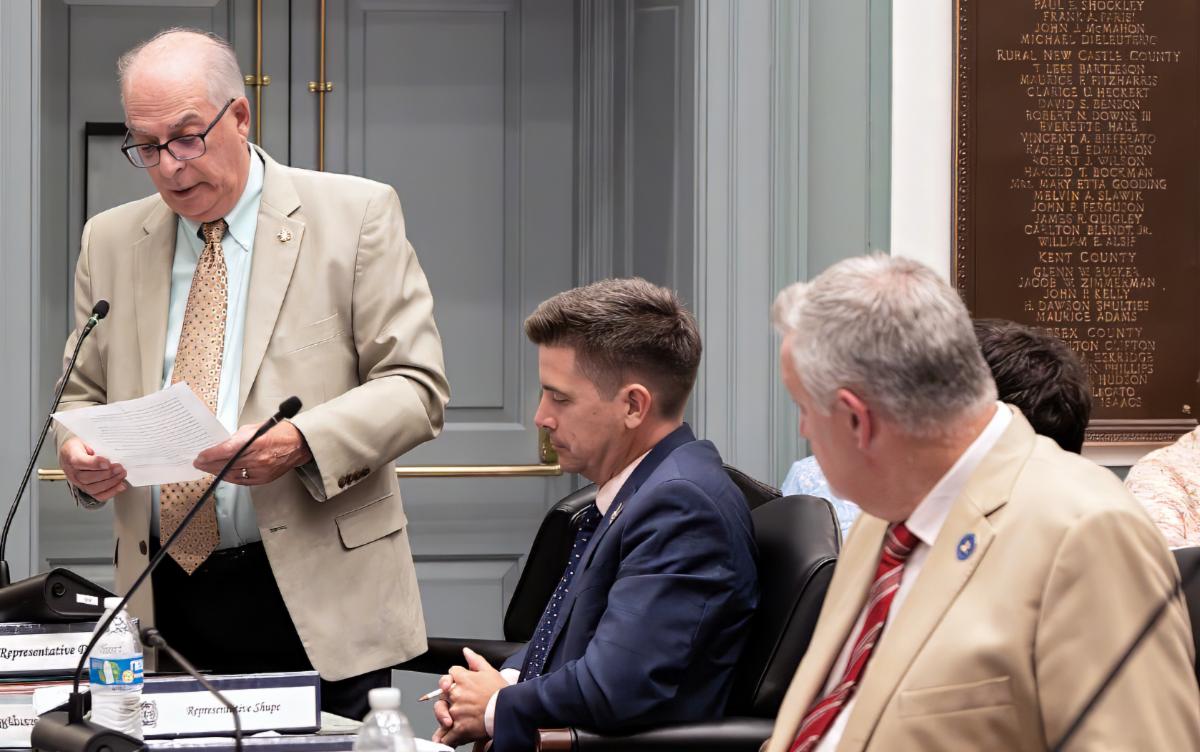
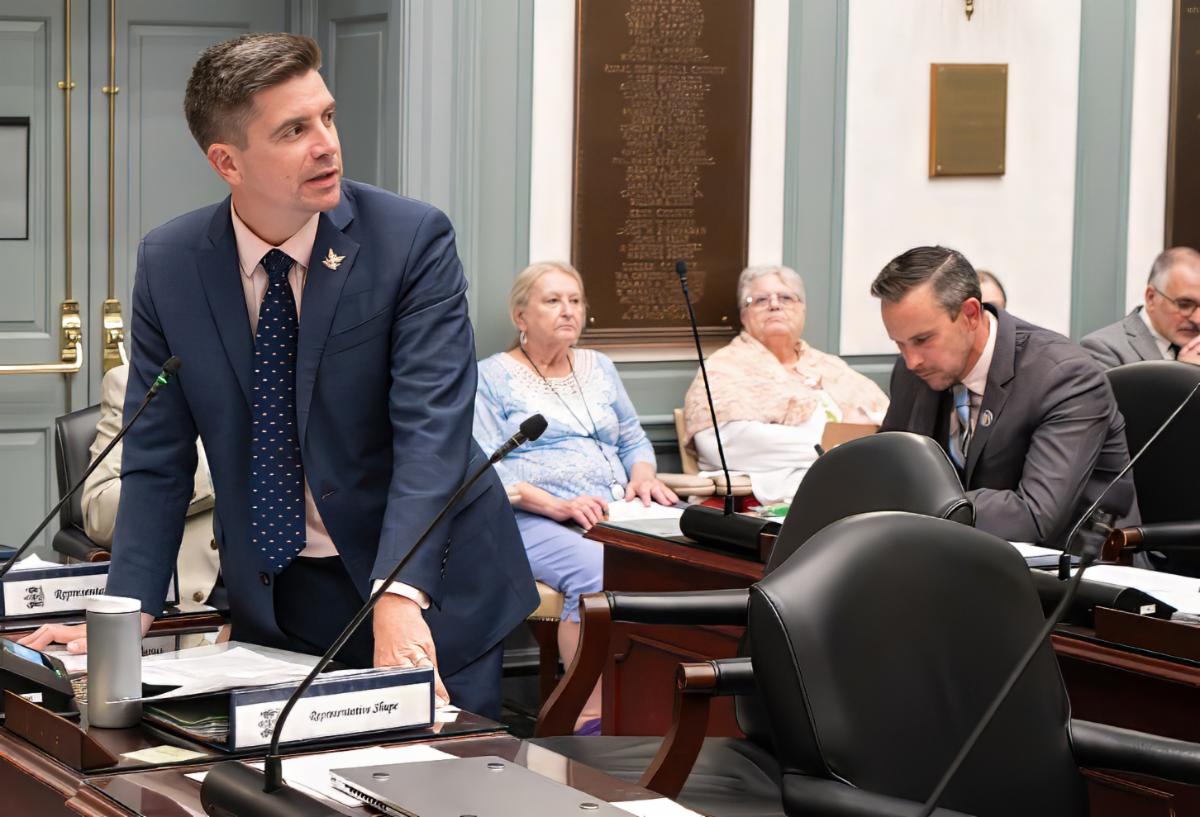
As he has done for several years, State Rep. Bryan Shupe (Milford South, Ellendale), in photo, voted against the omnibus measure, citing the continued rise in spending.
According to the Office of the Controller General, actual General Fund expenditures have risen from $4.519 billion in Fiscal Year 2021 to $7.117 billion (projected) for the current fiscal year (FY 2026), an increase of $2.594 billion, or more than 57%, over that period.
The new budget (FY 2027), starting on July 1, is 6.32% higher than the budget approved a year ago.
“This is a continuance of what we have seen in the State of Delaware in the past five years,” Rep. Shupe told the chamber, adding that the growth in spending has outpaced the revenue growth. “This is what leads to increased taxes, this is what leads to DELDOT and DNREC fees going up, this is what leads to...looking for more ways to take taxpayer money.”
State Rep. Charles Postles (R-Milford North, Frederica), a minority member of the budget-writing Joint Finance Committee, also addressed the chamber before the budget passed, saying that he could not, in good conscience, approve the measure.
Rep. Postles said he was deeply concerned about the lack of transparency involving revenue for corporate taxes and fees, which account for more than a third of the state’s annual proceeds. He cited rulings made in the Court of Chancery, legislation passed by the General Assembly, and the Meyer administration’s failure to provide data on the impact of large companies leaving Delaware to incorporate elsewhere — a trend sometimes referred to as "DExit."
“I feel like I am the canary in the coalmine,” he said. “All three branches of government, legislative, judicial, and executive, have taken actions unfavorable to business and will likely result in a loss of revenue…Understand this, capital, business investment, and entrepreneurship do not go where they are not welcomed and do not stay where they are not rewarded. In an unfavorable environment, investment in Delaware will collapse.”
Rep. Postles, who is leaving office in November, urged his returning colleagues to get answers on corporate revenue in the new 154th General Assembly. “We don’t know the implications of (corporate departure) because we don’t know the true, complete picture. That should not be acceptable to anybody in this room.”
State Rep. Rich Collins (R-Millsboro) joined Reps. Shupe and Postles in opposing the budget.
| | | | |