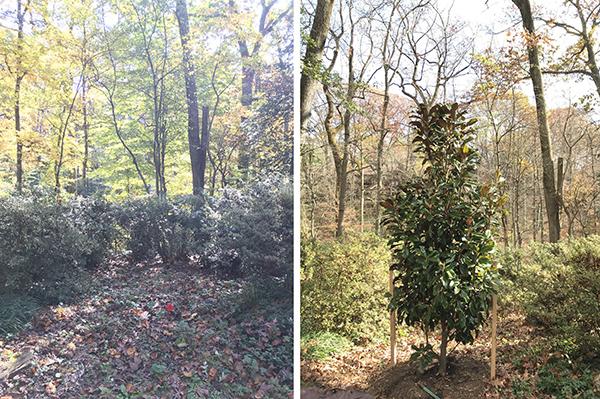
Our free shade tree application process has changed
Applications for free shade trees for our fall 2024 planting season will be open from this Thursday, February 1 to Thursday, February 8. While we will continue to give qualified properties in the county’s Equity Focus Areas preference, this year the remaining slots will be filled using a random drawing. This decision has been made due to the large numbers of applications we receive each year. Read more about our application process, and learn about the county’s Equity Focus Areas.
Check to see if your property is eligible, and apply here. Only one application per address or HOA common property will be considered. If you applied for a previous planting season and we were unable to accept your application, you will need to reapply for your application to be considered for Fall 2023. Applications received before February 1 or after February 8 will not be considered.
After you apply, our team will be in touch to let you know if your application is accepted by the end of February. If your application is accepted, we will reach out to schedule an initial site visit to your property to observe site conditions and make recommendations.
Questions about this or any of our other Reforest Montgomery programs? You can reach our team at reforest@montgomeryplanning.org.
| |
Invasives to know: English Ivy (Hedera helix)
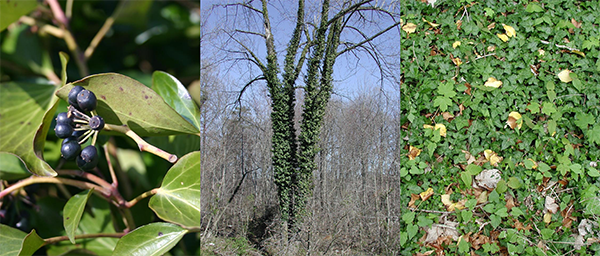
As other invasives die back for the season and most native plants lose their leaves, winter is the perfect time to focus your efforts on English ivy, an evergreen climbing vine that can grow multiple feet a year. English ivy is most often seen in its juvenile form, with 3 or 5 lobed, dark green, waxy leaves that alternate along the stem, though it can also be found in the area in its mature form with unlobed leaves, stems that can reach up to 5 inches in diameter, and small yellow flowers in the fall that are followed by dark purple berries in the late winter or early spring.
English ivy grows both on the ground as a dense groundcover and as a vine up trees, fences, and buildings. As groundcover, it outcompetes native grasses, flowers, and young shrubs. As a vine, English ivy causes damage and death to mature trees by loosening the bark and holding moisture against the trunk. The added weight of vines can also make trees more likely to fall in windy, snowy, and icy conditions. Vines can cause similar damage if allowed to climb infrastructure.
| |
Photos by Leslie J. Mehrhoff, University of Connecticut, Bugwood.org | |
To remove English ivy from trees, use clippers to cut the vines at the base of the tree and at about chest height, and remove the vines between your two cuts. Creating a window of this size will prevent the vines that remain in the tree from re-rooting and eventually kill them. For both your safety and the safety of the tree, never attempt to pull ivy vines off of trees above your head. Instead, leave the clipped vines in place to die and fall naturally. Keeping a 6 foot radius around the tree clear of ivy will help to prevent regrowth. | |
Nuestro proceso de solicitud de árboles gratuitos de sombra ha cambiado
Las solicitudes de árboles de sombra gratuitos para nuestra temporada de plantación de otoño 2024 estarán abiertas desde este jueves, 1 de febrero hasta el jueves, 8 de febrero. Si bien continuaremos dando preferencia a las propiedades que cumplen los requisitos en las Áreas de enfoque en la equidad del condado, este año las vacantes restantes se completarán por medio de un sorteo aleatorio. Esta decisión se ha tomado debido a la gran cantidad de solicitudes que recibimos cada año. Obtenga más información sobre nuestro proceso de solicitud e infórmese sobre las Áreas de enfoque en la equidad del condado.
Verifique si su propiedad es elegible y presente su solicitud aquí. Se considerará solamente una solicitud por dirección o propiedad común de la HOA. Si se inscribió en una temporada de siembra anterior y no pudimos aceptar su solicitud, deberá volver a presentar su solicitud para ser considerada para el otoño de 2023. No se considerarán las solicitudes recibidas antes del 1 de febrero o después del 8 de febrero.
Después de presentar la solicitud, nuestro equipo se pondrá en contacto con usted a finales de febrero para informarle si la solicitud es aceptada. Si es aceptada, nos comunicaremos con usted para programar una visita inicial a su propiedad para observar las condiciones del sitio y hacer recomendaciones.
¿Tiene preguntas sobre este o cualquiera de nuestros otros programas de Reforest Montgomery? Puede ponerse en contacto con nuestro equipo en reforest@montgomeryplanning.org.
| |
Reconocer invasores: Hiedra inglesa (Hedera helix)
A medida que otras especies invasoras se marchitan al final de la temporada y la mayoría de las plantas nativas pierden sus hojas, el invierno es el momento perfecto para enfocar sus esfuerzos en la hiedra inglesa, una enredadera trepadora de hojas perennes que puede crecer varios pies al año. La hiedra inglesa se ve con mayor frecuencia en su forma juvenil, con hojas de 3 o 5 lóbulos, verdes oscuras y cerosas que se alternan a lo largo del tallo, aunque también se puede encontrar en el área en su forma madura con hojas sin lóbulos, tallos que pueden alcanzar hasta 5 pulgadas de diámetro y pequeñas flores amarillas en el otoño que son seguidas por bayas moradas oscuras a fines del invierno o principios de la primavera.
La hiedra inglesa crece en el suelo como una cubierta terrestre densa y como una enredadera en árboles, cercas y edificios. Como cubierta terrestre, supera a los pastos nativos, las flores y los arbustos jóvenes. Como enredadera, la hiedra inglesa causa daño y muerte a los árboles maduros al aflojar la corteza y retener la humedad contra el tronco. El peso agregado de las enredaderas también puede hacer que los árboles sean más propensos a caer en condiciones ventosas, nevadas y heladas. Las enredaderas pueden causar daños similares si se permite que trepen en la infraestructura.
| |
Photos by Leslie J. Mehrhoff, University of Connecticut, Bugwood.org | |
Para eliminar la hiedra inglesa de los árboles, use tijeras de podar para cortar las enredaderas en la base del árbol y aproximadamente a la altura del pecho, y retire las enredaderas entre sus dos cortes. Crear una ventana de este tamaño evitará que las enredaderas que quedan en el árbol vuelvan a enraizar, logrando finalmente que mueran. Para su seguridad y la seguridad del árbol, nunca intente arrancar las enredaderas de hiedra de los árboles que están por encima de su cabeza. En cambio, deje que las enredaderas cortadas mueran en el lugar y caigan naturalmente. Mantener un radio de 6 pies alrededor del árbol libre de hiedra ayudará a prevenir el nuevo crecimiento. | |
|
About Reforest Montgomery
Reforest Montgomery, supported by the Forest Conservation Fund, plants trees and forests throughout Montgomery County. This program offers residents a variety of options to get involved with reforestation programs in Montgomery County and provides property owners incentives to plant trees within the county such as free trees and reforestation for property owners, discounts on native trees, and more.
| | | | |