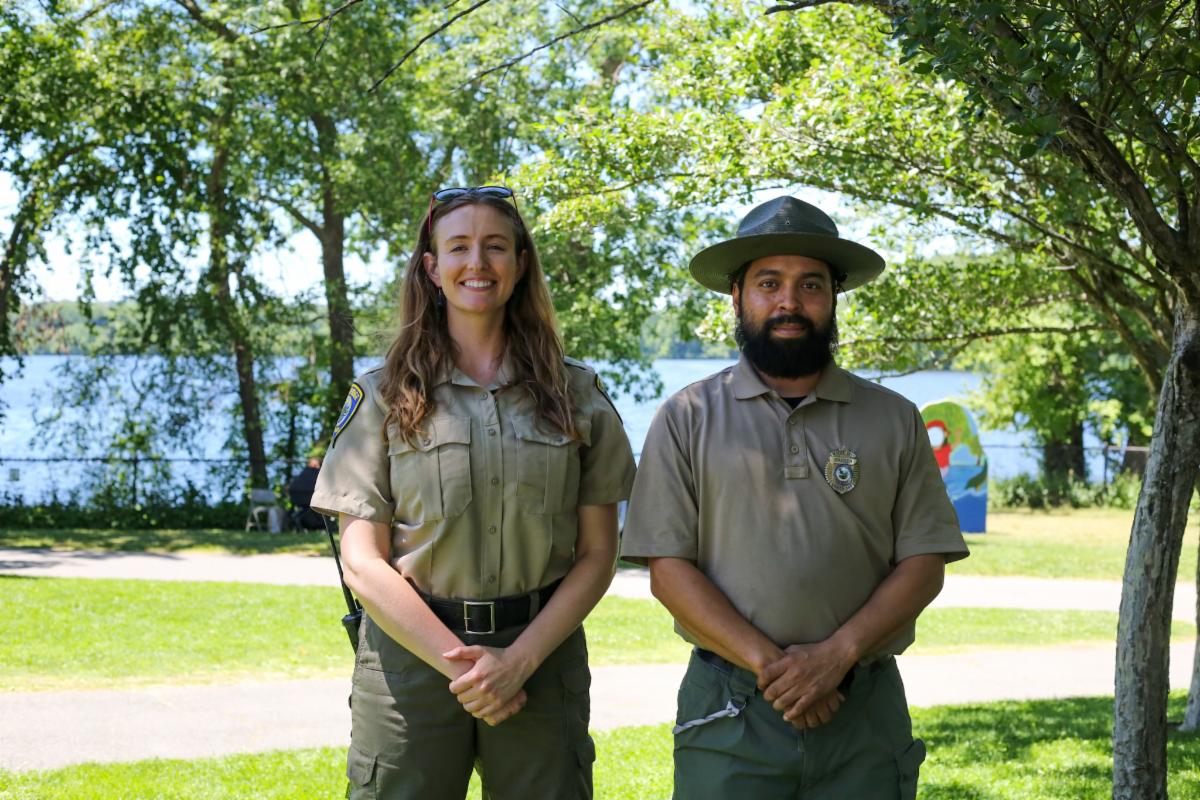
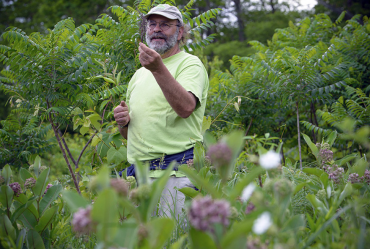
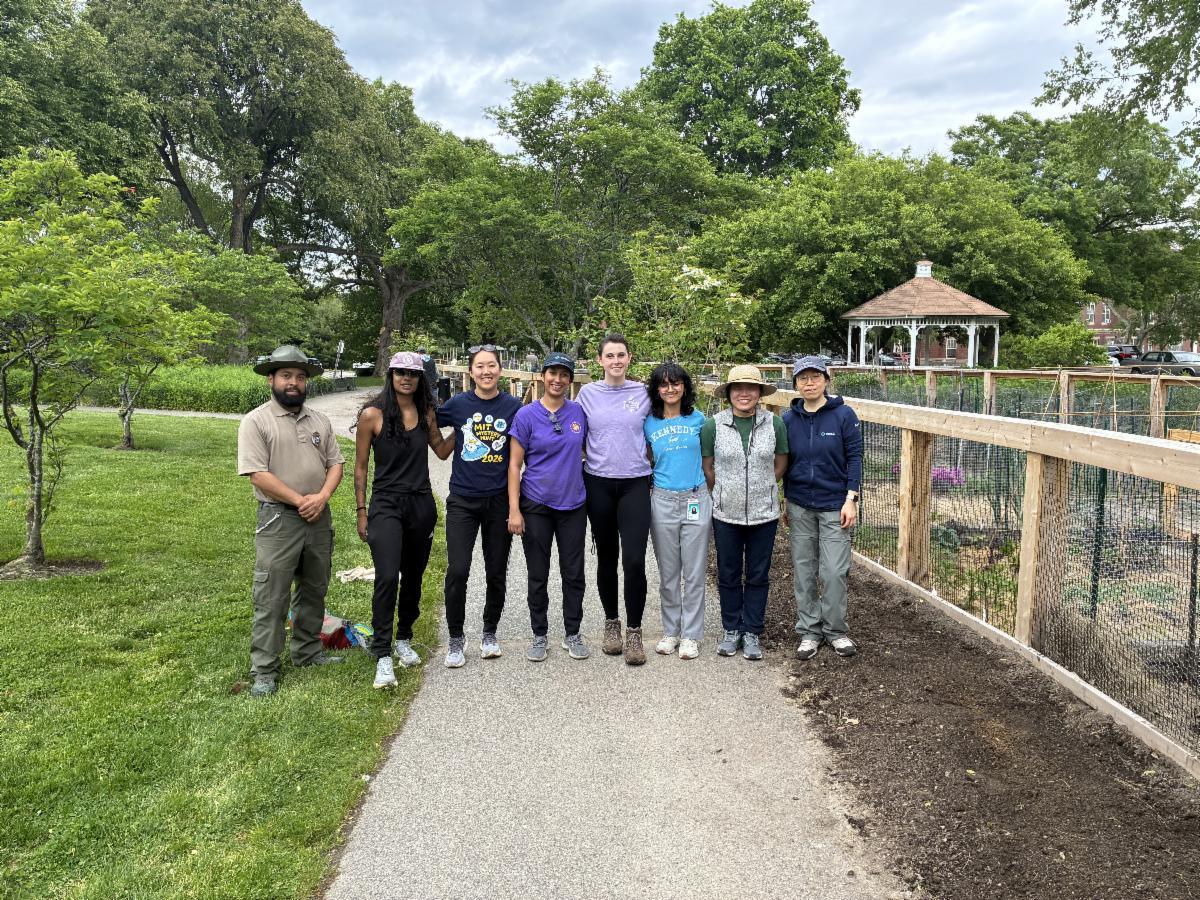
Summer is in full swing at Cambridge's Fresh Pond Reservation! Stay in the know regarding all our events including walks, runs, educational activities, and other relevant Cambridge events. This newsletter is brought to you by the Cambridge Water Department's Rangers Amanda and Omar (above). | |
|
|
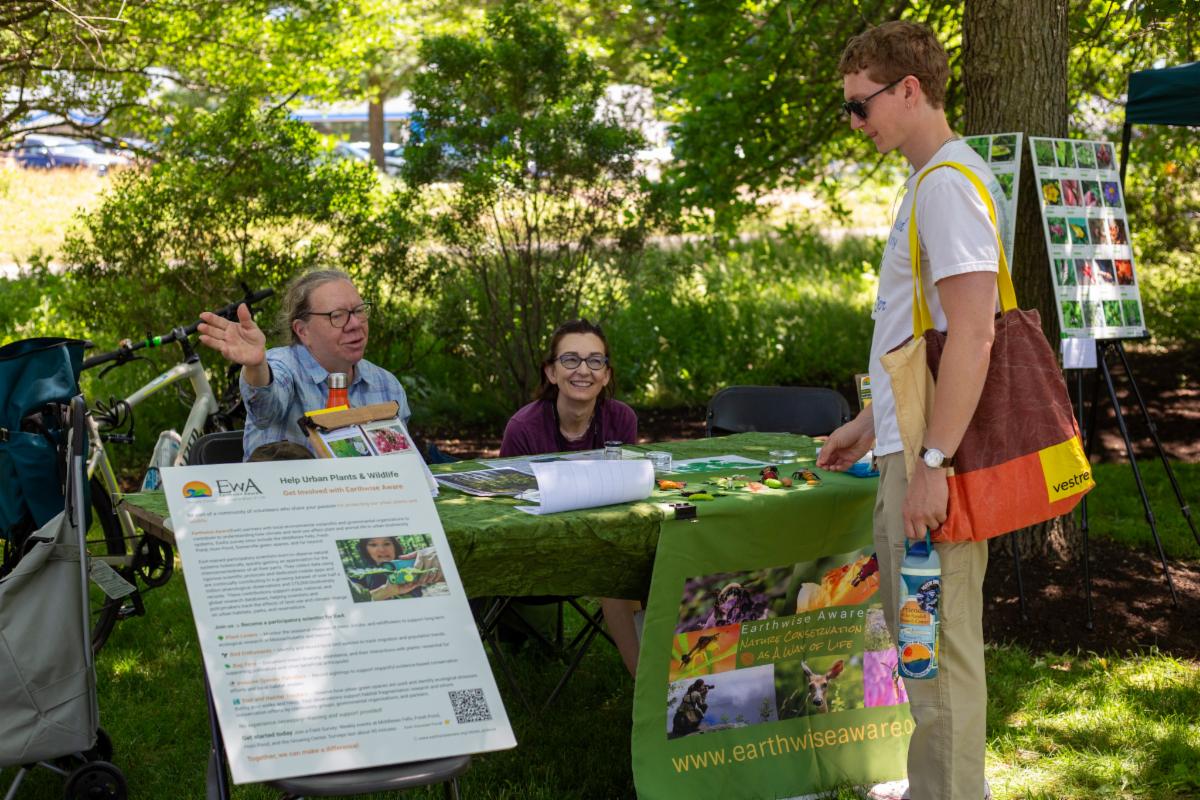
Fresh Pond Biodiversity & Climate Citizen Scientist Volunteering with Earthwise Aware (EwA)
EwA invites volunteers to contribute to national research on how climate change is reshaping the life cycles of plants, insects, and other organisms. We provide training, and no prior experience is needed, only an interest in the natural world. Using a smartphone app, log phenology, insect surveys, and species interactions to document how species shift in response to a changing climate.
| | | |
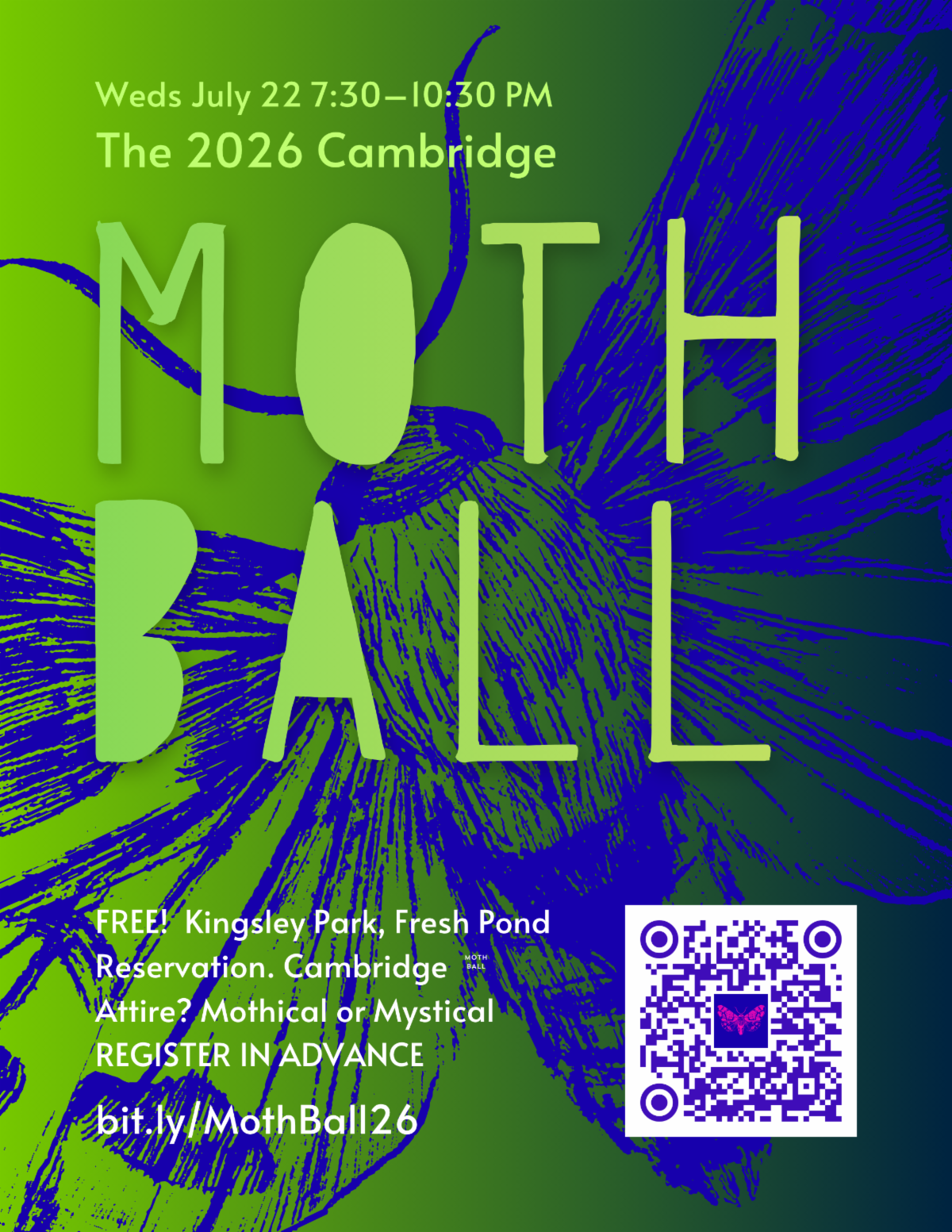
The Moth Ball
Wednesday, July 22
7:00-10:30pm
Kingsley Park Lawn
250 Fresh Pond Pkwy
Come and be dazzled by the extraordinary nighttime creatures known as Moths. Marvel at their mysterious habits, coloration, and special place in our ecology as you learn how to attract and ID moths. As part of National Moth Week, we will be exploring these fascinating woodland insects up close and share the data and photos we collect with researchers. If you are interested in insects, butterflies, moths or the wildlife of Cambridge, if you like nature or nighttime, this event is for you.
| |
| |
Photographers interested in creative moth portraits are especially encouraged to attend. Festivities include a talk by a local moth expert, moth lures, live moths, and more resources!
The is a collaboration with The Boston Birding Festival, Earthwise Aware, Native Plant Community Gardeners, Mystic Charles Pollinator Pathways Group, Biodiversity Builders, and Green Cambridge.
Mythical/Mothical attire recommended! Families can arrive at 6:30 to help with moth themed crafts for the festival. Register for this free event here.
| | | |
Ongoing Volunteer Opportunity: Garden Work Date
250 Fresh Pond Pkwy
Tuesdays through Fall
10:00am-1:00pm
The Habitat Restoration Area off the perimeter road between the community gardens and Lusitania.
| | | Come learn from expert naturalists how to restore our native communities by doing hands on work! Help transplant plants, weed invasives, mulch restoration areas, and learn about how a once invasive buckthorn forest has transformed into a native wildlife refuge in just over a decade. Started by the Friends of Fresh Pond in the late 2000's, the area has been transformed to a special hidden refuge and has been carefully curated ever since. Wear closed toed shoes & clothes ready to work in the garden! Drop by and stay for a bit or the whole time. | | | |
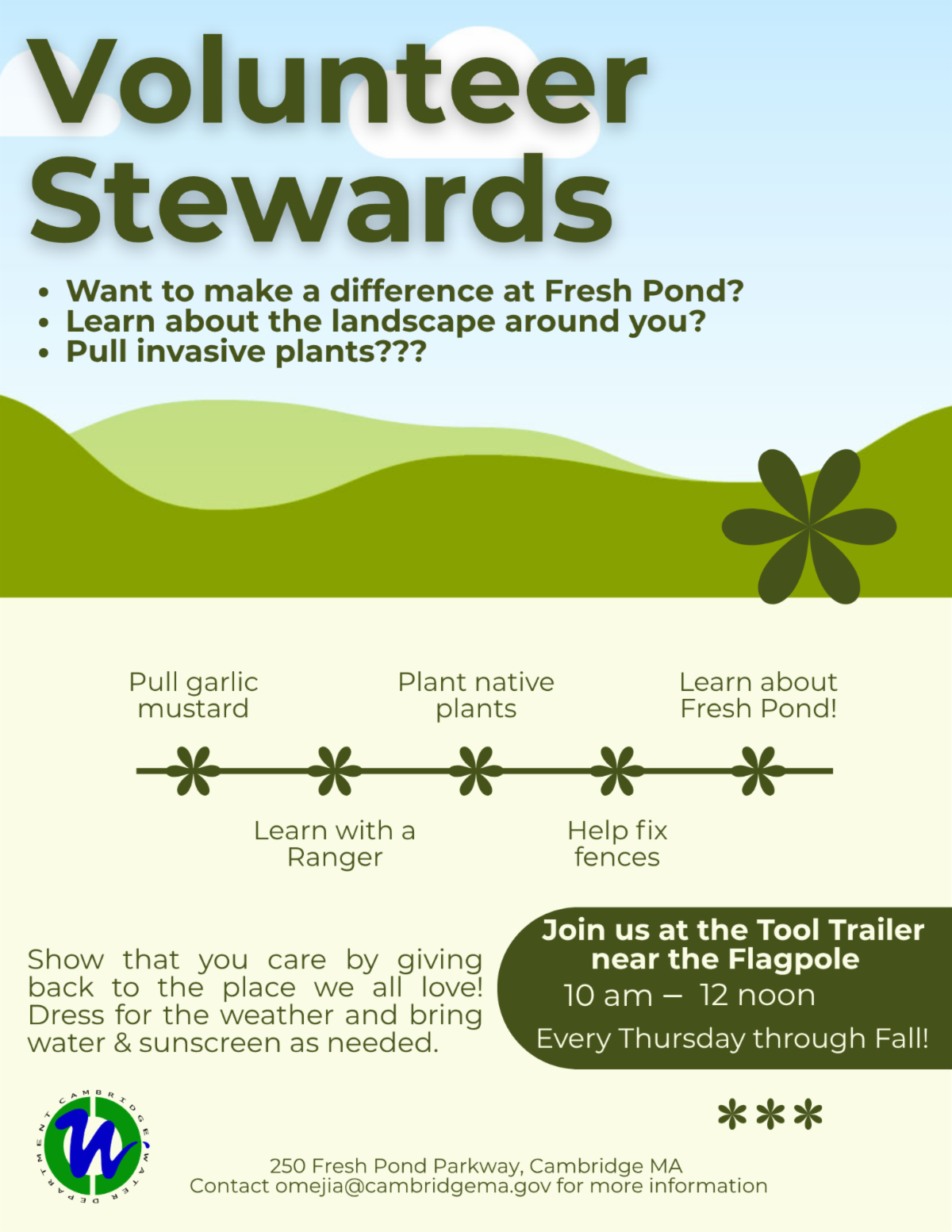
Volunteer Stewards
Thursdays through fall
10:00am-12:00 noon
Meets at the Tool Trailer outside the Ranger Station
250 Fresh Pond Pkwy
May through October, give back to the place you love by becoming one of our volunteer weed warriors! This is a weekly, open opportunity to volunteer. We have the tools, we have the training, we just need the hands! Every week is a different target area and a different task depending on the natural calendar’s seasonal needs. To learn more, contact omejia@cambridgema.gov.
| | | | |
Summer Reading:
Fresh Pond Wild Edibles Walk with Russ Cohen
Thursday, July 9,
5:00-7:30 p.m.
Meets at the Ranger Station
250 Fresh Pond Pkwy
| | | |
Cambridge is home to over 80 species of edible wild plants, some of which are more nutritious and/or flavorful than their cultivated counterparts. These include native species like Fox Grape and Shagbark Hickory; non-native weeds like Chicory and Burdock; and invasive species like Japanese Knotweed and Autumn Olive. Join expert forager Russ Cohen on a 2.5 hour ramble around Fresh Pond to learn about over two dozen species of edible wild plants
Please note that this program is for educational purposes only, and foraging or taking of any kind is not allowed at Fresh Pond Reservation. Registration is full for this event.
| | |
Fresh Pond Nature Walk
Collins Branch Library
Wednesday, July 29th
10:15 to 11:30 am
Meets at the Ranger Station
250 Fresh Pond Pkwy
Join us for a short walk of Fresh Pond Reservation with Ranger Amanda Garms and Library Associate Michael Roberson. We will observe seasonal changes in our environment, enjoy the fresh air, and get some exercise in nature. This walk is not on a paved path. We will walk on uneven terrain, down hills, and over roots. The meeting location for this walk will be at the Fresh Pond Ranger Station at 250 Fresh Pond Parkway. Registration is required for this event. Registration opens July 1st.
| | |
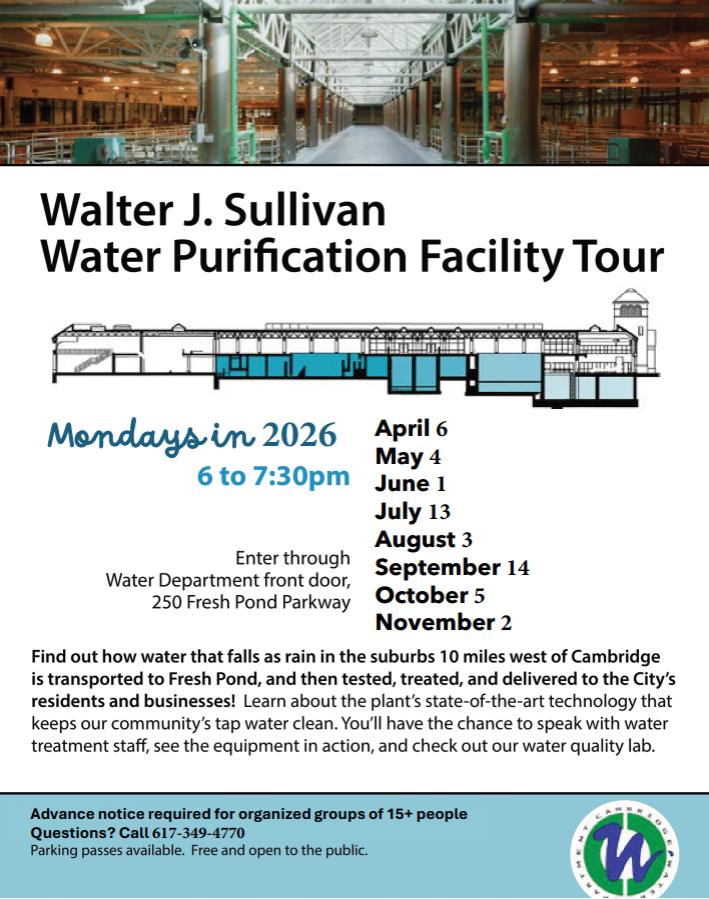
Walter J. Sullivan Water Purification Facility Tour
250 Fresh Pond Pkwy
Monday, July 13th
6:00-7:30pm
Meets at the Water Treatment Plant Front Door
Come learn how the Water Department purifies drinking water for your tap after it’s conveyed from nearby Fresh Pond into our facility. You’ll have the chance to speak with water treatment staff, see the equipment in action and check out our water quality lab!
| | |
Monarch Release
Sunday, August 23rd
1:00-2:00pm
Lusitania Meadow
See the butterflies up close, learn about their migration, complete an activity booklet for a Jr. Ranger badge, get your face painted, see storyteller Yumi Izuyama, add your crafted butterfly to our symbolic Oyamel Fir, and witness the release by one of our native meadows at 1:45pm! See what the flutter’s been about since this program began in 2014.
Migratory monarchs have been officially declared “endangered” by the IUCN, and we’ve lost 80% of the population since 1990. The chief factors of their decline are loss of milkweed, logging activity in Mexico, extensive pesticide use in the US, and extreme weather events. Because Monarchs migrate, we need a national effort. As an official “waystation” Fresh Pond is a wonderful place for adult monarchs and for their young to grow up!
| | | | News from the Reservation | | | |
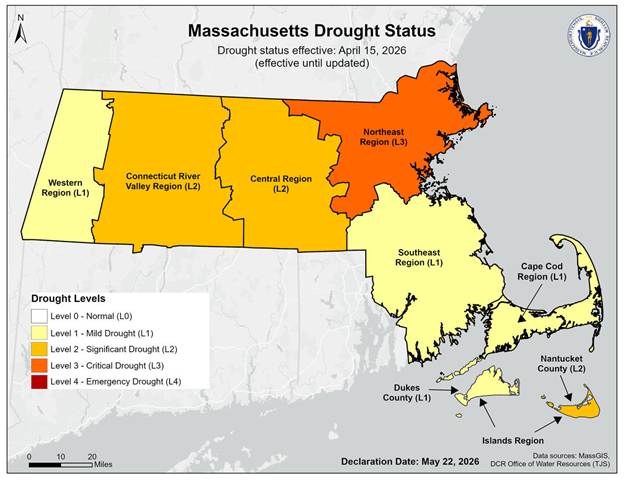
Severe Drought Warning
Cambridge is currently in Level 3 – Critical Drought
Minimize overall water use:
- Stop all non-essential outdoor watering
- Using dye tabs to check for toilet leaks
- Use dishwashers rather than handwashing dishes.
- Run the dishwasher only on a full load
| | |
Aggressively reduce indoor water use by:
- Taking showers and avoiding baths
- Reducing shower length
- Running washing machines only on a full load
- Not letting water run while brushing and shaving
- Replacing old fixtures and appliances with water-efficient ones.
- Make sure toilets, faucets, and showerheads are WaterSense labeled
|
|
Poison Ivy Control
This year we have stepped up our poison ivy control efforts including organic salt spray, manual spot removal, and most recently completed work cutting active poison ivy vines off the fence line during the growing season.
Only humans and some primates are allergic to poison ivy – no other animal or bird. Over 200 insects, animals, and bird species eat, depend on, or use this native plant in some way.
It is sometimes humans first instinct to kill or eradicate anything that can pose a threat to us or that we don’t understand. Instead of understanding it and learning to value it, we just want to get rid of it right away.
Poison ivy is an early successional native plant that contributes to the food web. It produces nutritious white berries that birds love to eat and are a critical food source in winter. It is a generalist plant that grows well in disturbed areas or edge habitat where other plants might struggle to establish, shading the ground. The robust root system stabilizes the soil and stops erosion - which benefits the water quality of Fresh Pond.
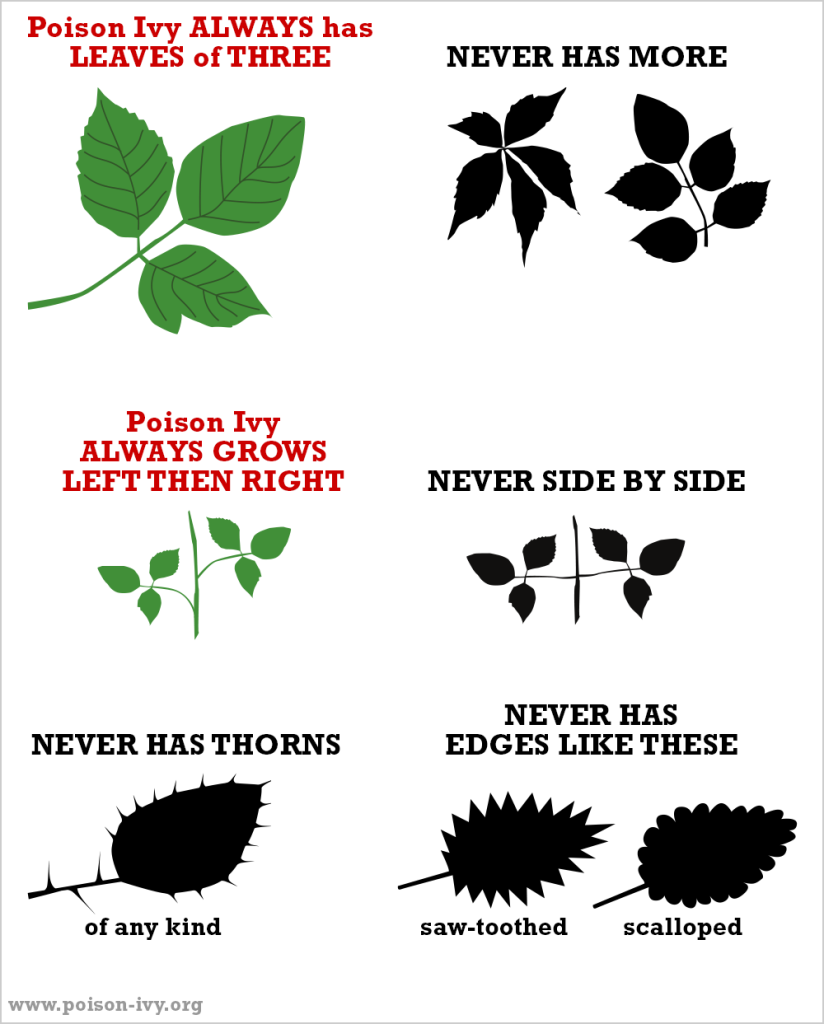
The best way to avoid getting poison ivy is to learn to identify the plant. Poison ivy is a shapeshifter, but the helpful always-never graphic above can distinguish some of its characteristics that are always present. Poison ivy will never have finely toothed or serrated leaf margins (edges), never has thorns, and always has an alternate branching pattern (never opposite / paired). While the leaf margins can feature a few irregular, jagged notches, teeth, or mitten-like lobes, the margins will primarily remain smooth. Also look out for the telltale aerial roots this plant uses to climb up trees!
| | |
Disappearing Portajohns
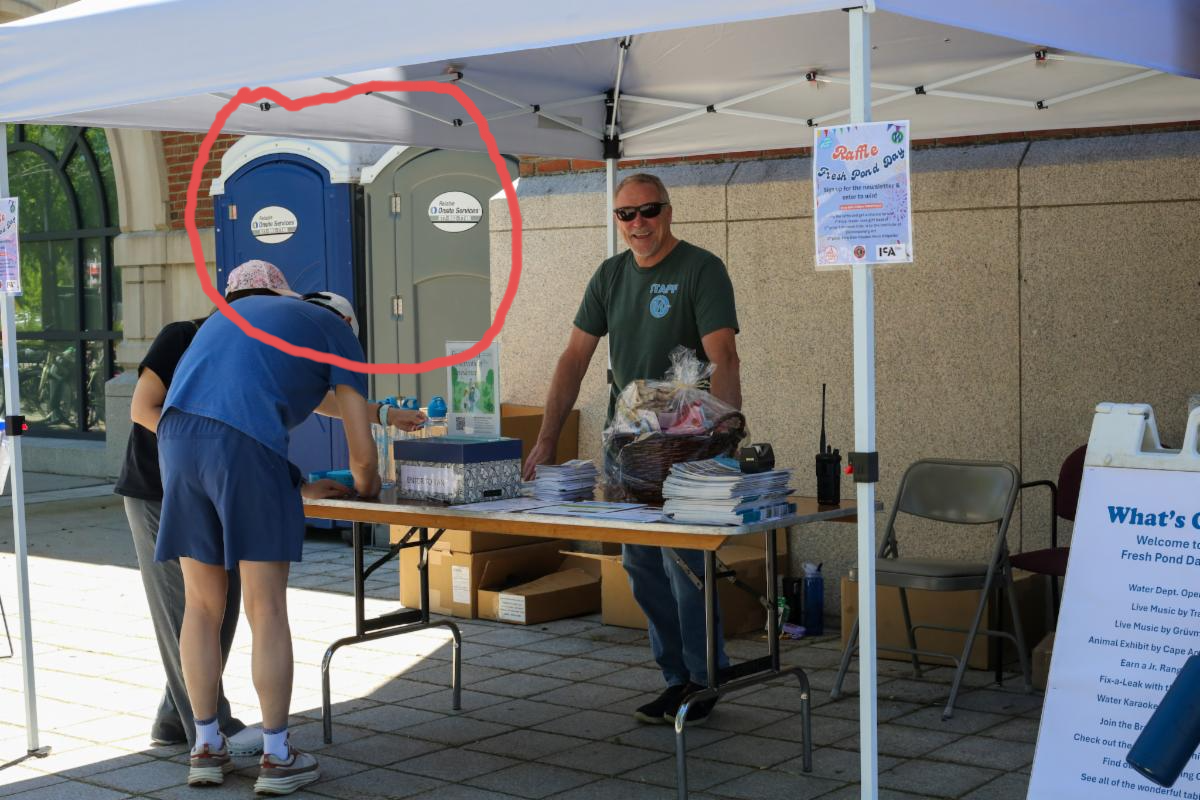
You may have noticed the portajohns placed outside the water treatment plant have been removed. These portajohns were put in place during covid as a temporary measure because the building was locked down to replace the public bathrooms. Though they are convenient, they were never intended to be permanent. During this past budget season, the City Manager required all city departments to cut their operating budgets by 2.1% for the upcoming fiscal year. During that process we had to make some tough decisions on where to cut expenses from our operating divisions. The portajohns were one of the items that eventually were selected as a way to cut expenses with the least amount of impact to our day-to-day operations and to continue to meet our obligations. The public bathrooms in the ranger station are open daily from 7am-7pm.
| | | |
New AEDs
You may have noticed there have been new, highly visible, locked Automated External Defibrillators (AEDs) installed by the City of Cambridge around the reservation for use during a cardiac event onsite. AEDs are life-saving devices that require no special training to operate. Many medical journals have cited the importance of AED availability, especially at youth practice fields in light of over 23,000 youth suffering from cardiac arrest per year.
| | |
Kingsley Park’s Shared-Use Switch-up in effect July 4th
Happy Fourth! As part of our “Shared-Use Plan”, the two fields of Kingsley Park shift in usage annually to allow for the most activities, and like crop rotation it keeps the grass growing in both areas. We are now entering the Summer/Fall Season. This means that the “Kingsley Bowl” (lower field) is now the dedicated off-leash play area until the end of the year and dogs must be leashed in the Upper Kingsley Knoll. Picknickers, walkers, and children playing are highly encouraged to use the on-leash Kingsley Knoll.
| | | |
Planting at Maher Community Gardens
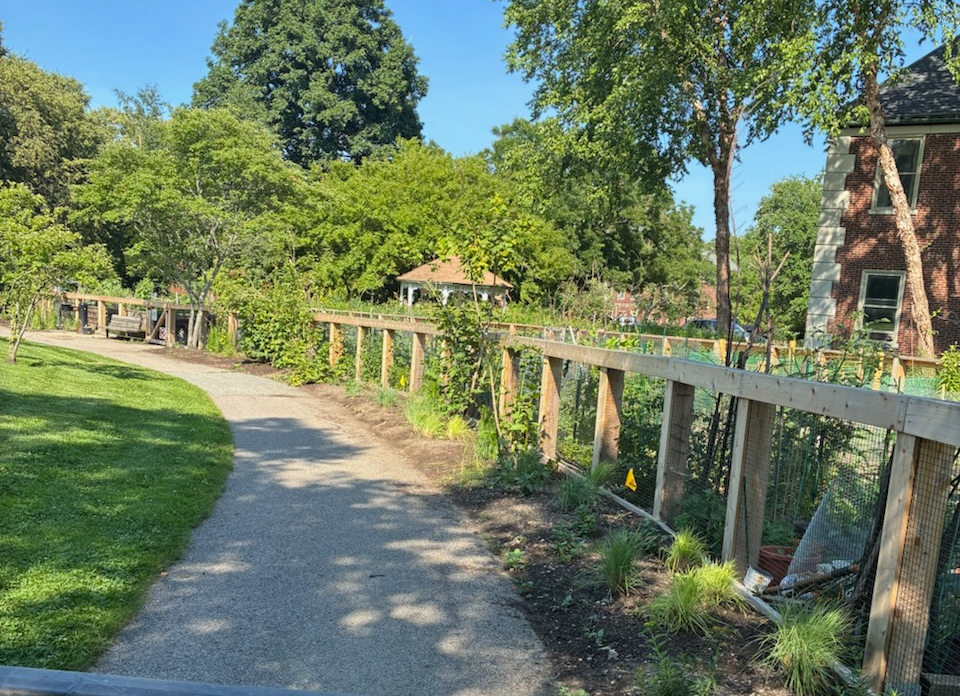
Along with a new fence, the Maher Community Gardens have also gotten new flower beds of native pollinator plants including butterfly milkweed, blazing star, foxglove beardtongue, swamp milkweed, and a variety of native sedges.
This was an effort completed through an MIT volunteer group led by Ranger Omar, with plantings done by Fresh Pond Site Supervisor Vinny and Groundskeeper Liam.
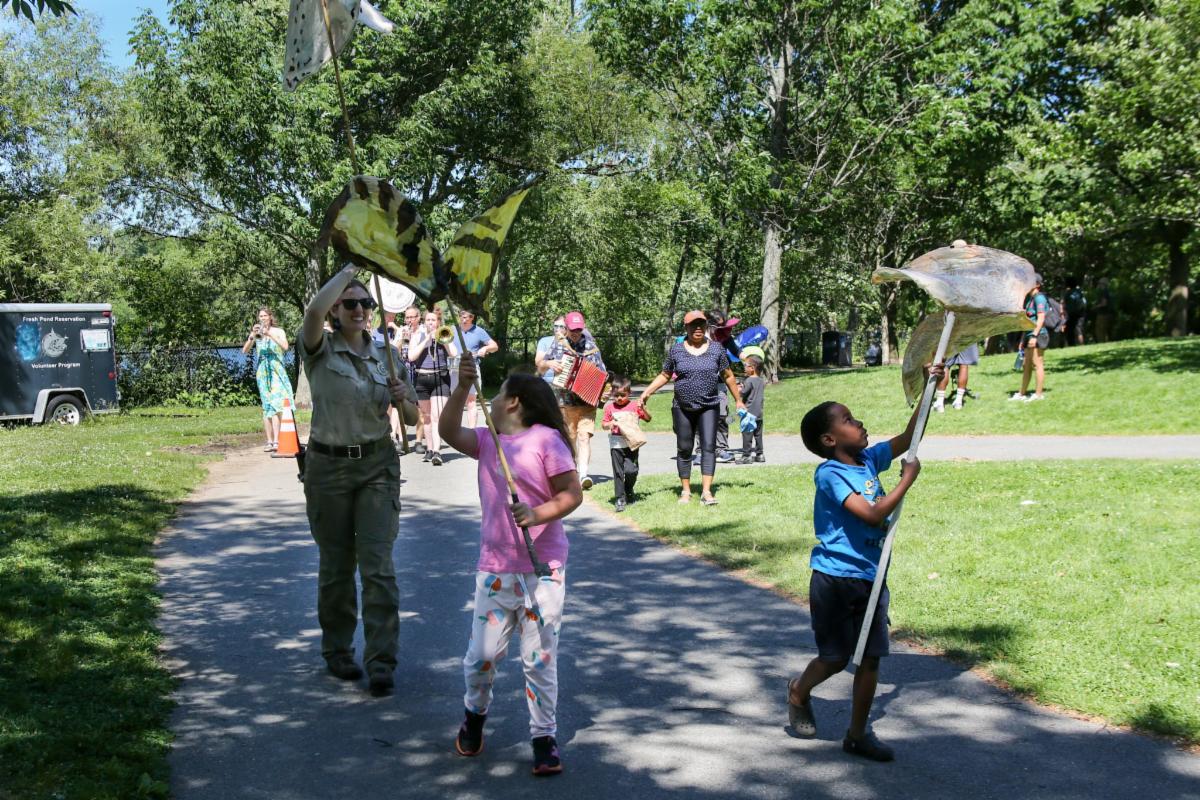
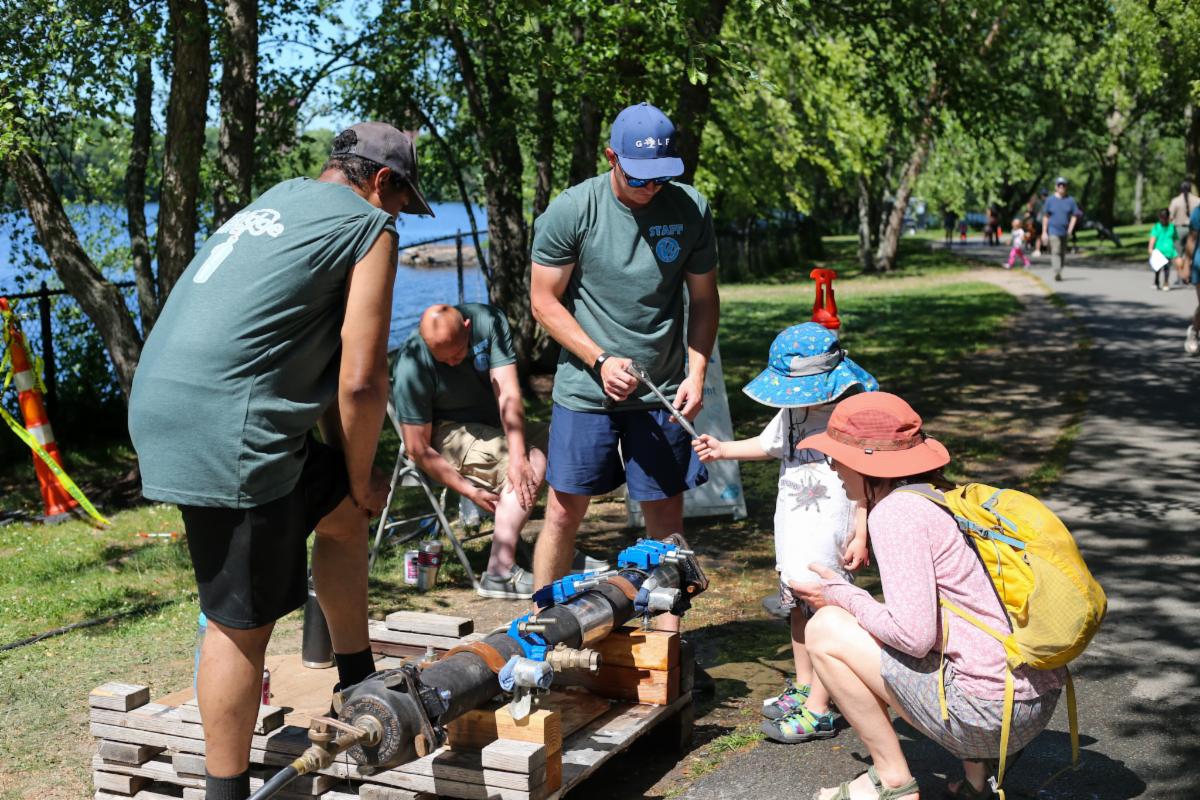
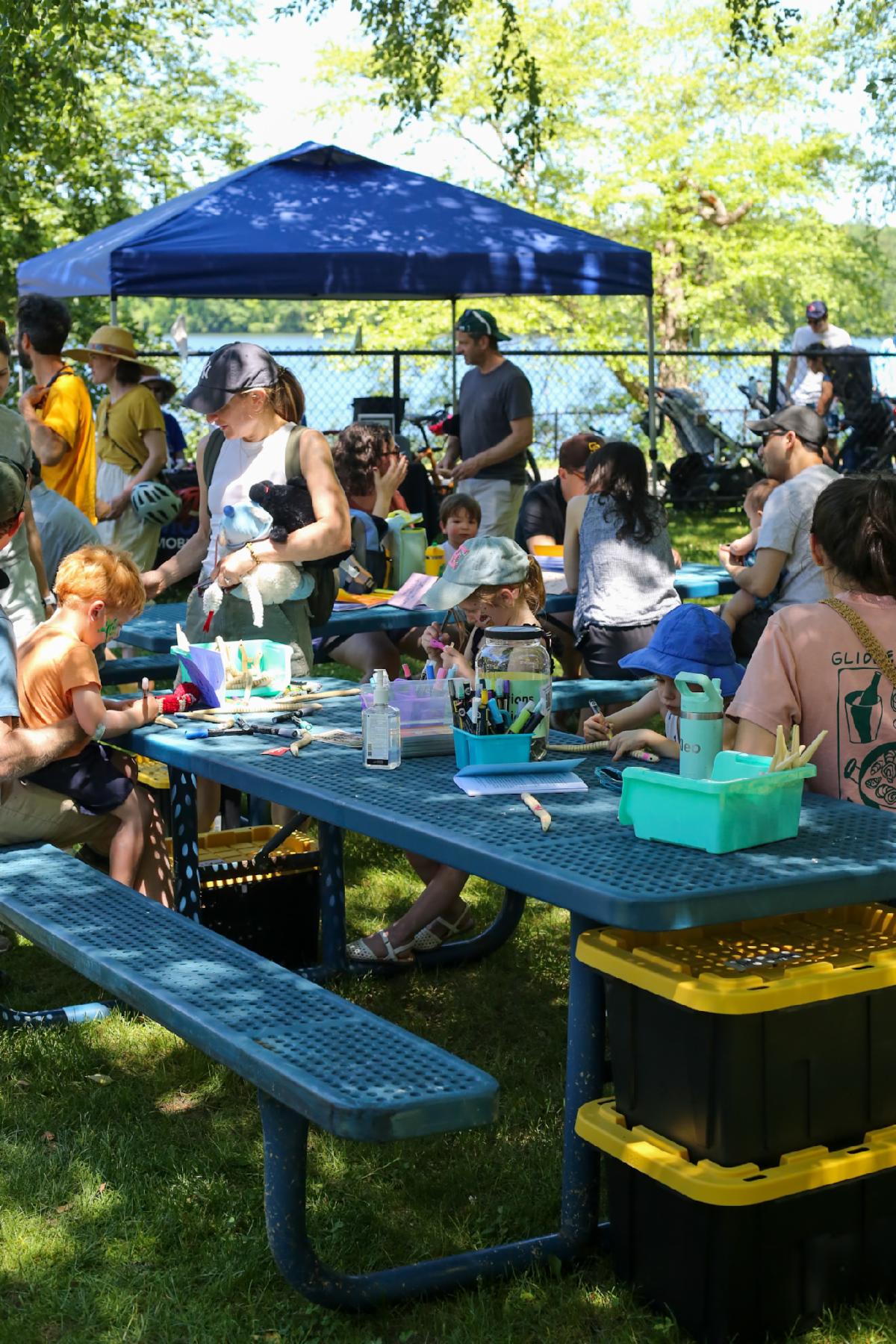
| | | Fresh Pond Day was a great success thanks to visitors like you! | | Thank you to all those who attended and contributed to Fresh Pond Day 2026, and all the amazing organizations that made this event possible! Grüvmeiners FaceArt Face Painting & Events, Wildlife Arts, Cape Ann Vernal Pond Team, Trailmix - Uncommon Folk, the Department of Public Works, and the Cambridge Water Department made the day unforgettable. | |  | A huge shout out to our sponsors: Neville Place, La Saison Cafe, Medford-Malden Elks Lodge #915, Chipotle Mexican Grill, The Institute of Contemporary Art, Dunkin' Donuts, Trader Joe's, VFW Post #8818, Piantedosi Baking Co & the City of Cambridge for making this all possible! We're already looking forward to next year. | | | | |
StoryWalk
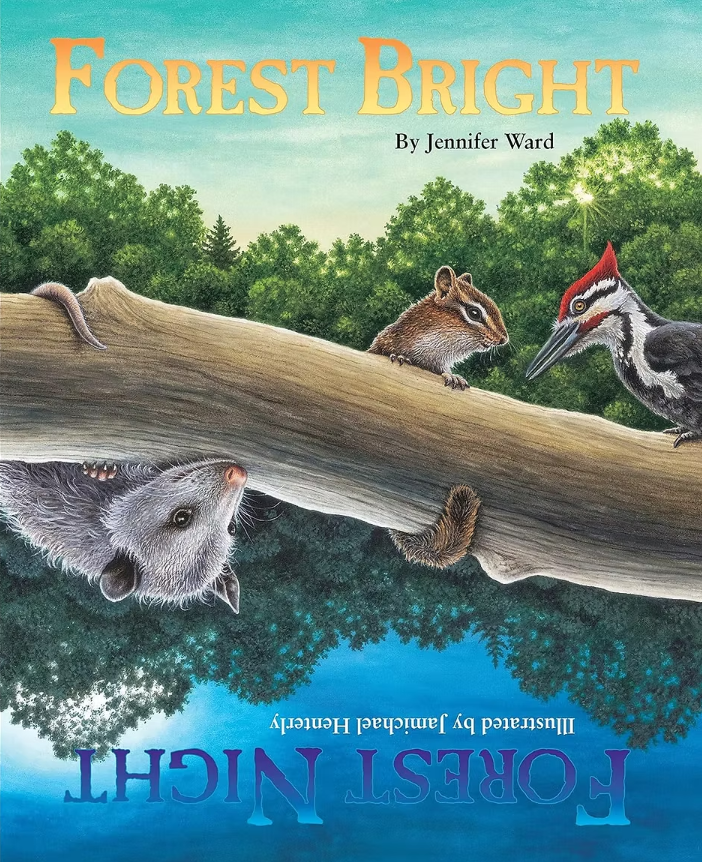
Enjoy the outdoors and a lovely nature related story while reading the StoryWalk at Fresh Pond Reservation's Kingsley Knoll! In collaboration with the Children's Literacy Initiative, Forest Bright, Forest Night by Jennifer Ward, winner of the 2009 Giverny Book Award, has been posted along the fenceline for visitors to enjoy with their families. The stories will be periodically rotated throughout the summer!
| | |
Pollinators have been growing wild on the native wildflowers at Fresh Pond!
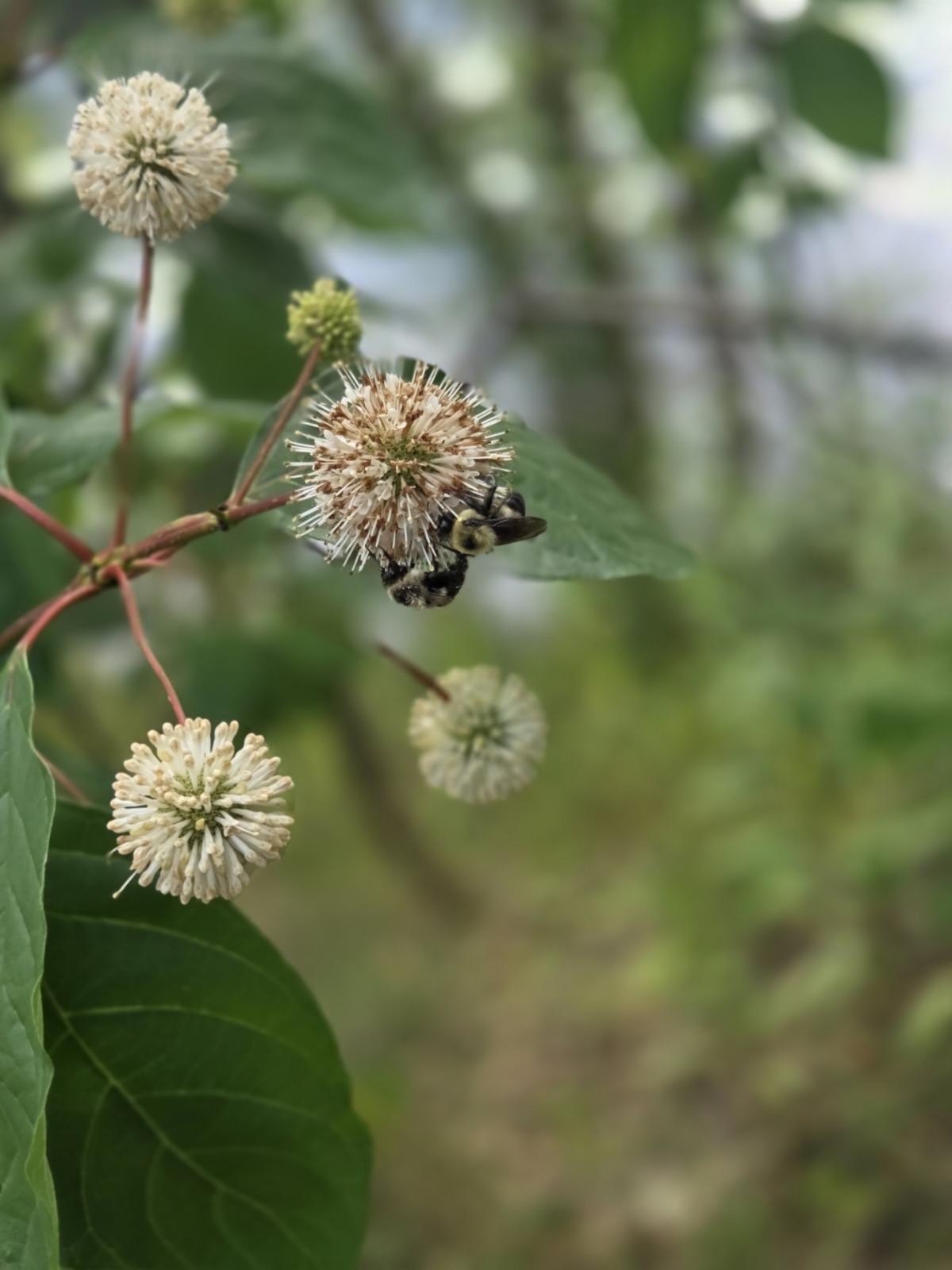
Each buttonbush flower cluster has dozens of tubular nectar-rich flowers that bees, butterflies, and hummingbirds love! They will bloom for many weeks which makes it an excellent food resource.
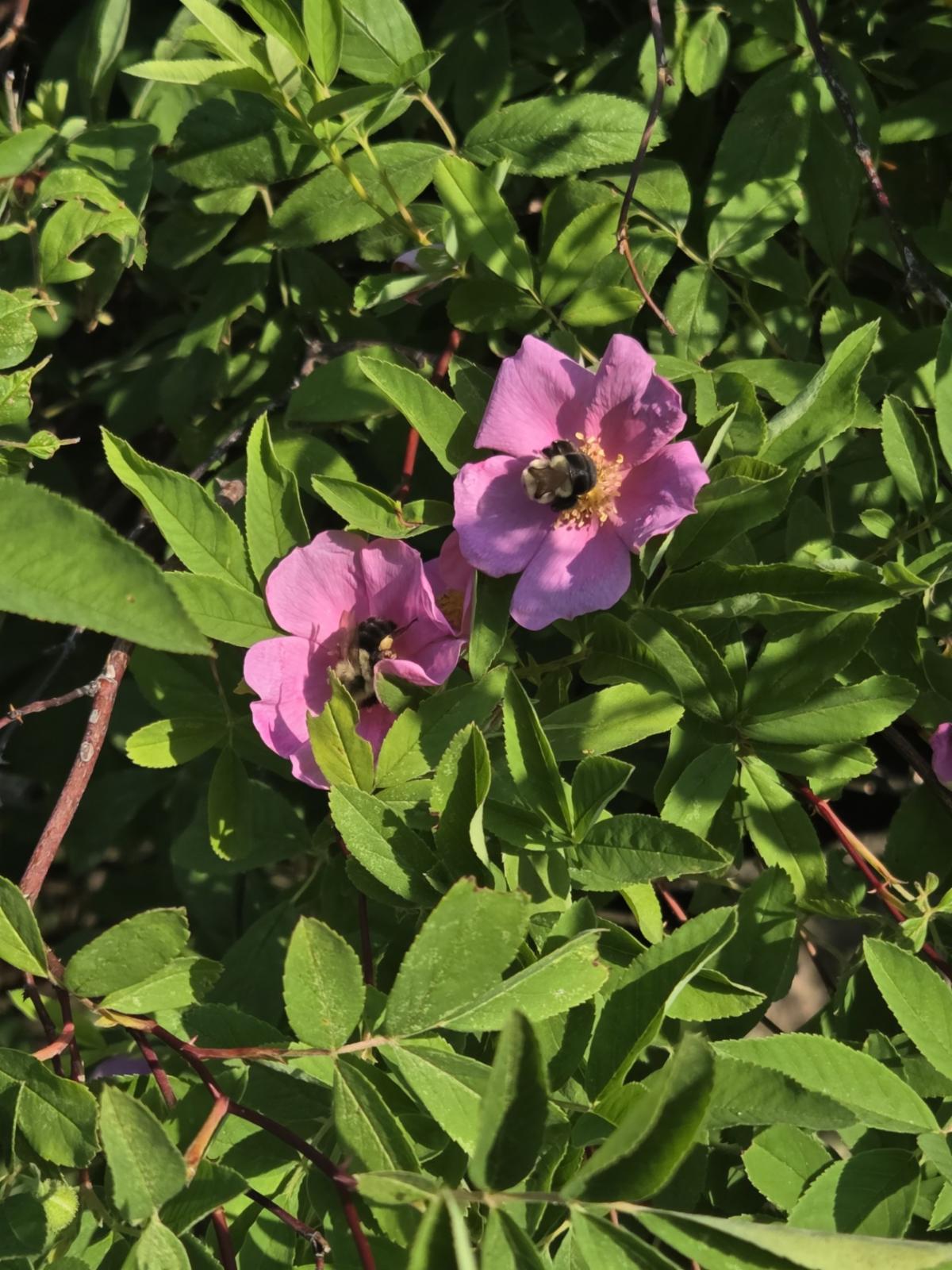
Virginia Roses produce fragrant pink flowers with abundant pollen, blooming June - August, after which it will make rose hips which are an excellent source of vitamin C and are edible to birds and mammals.
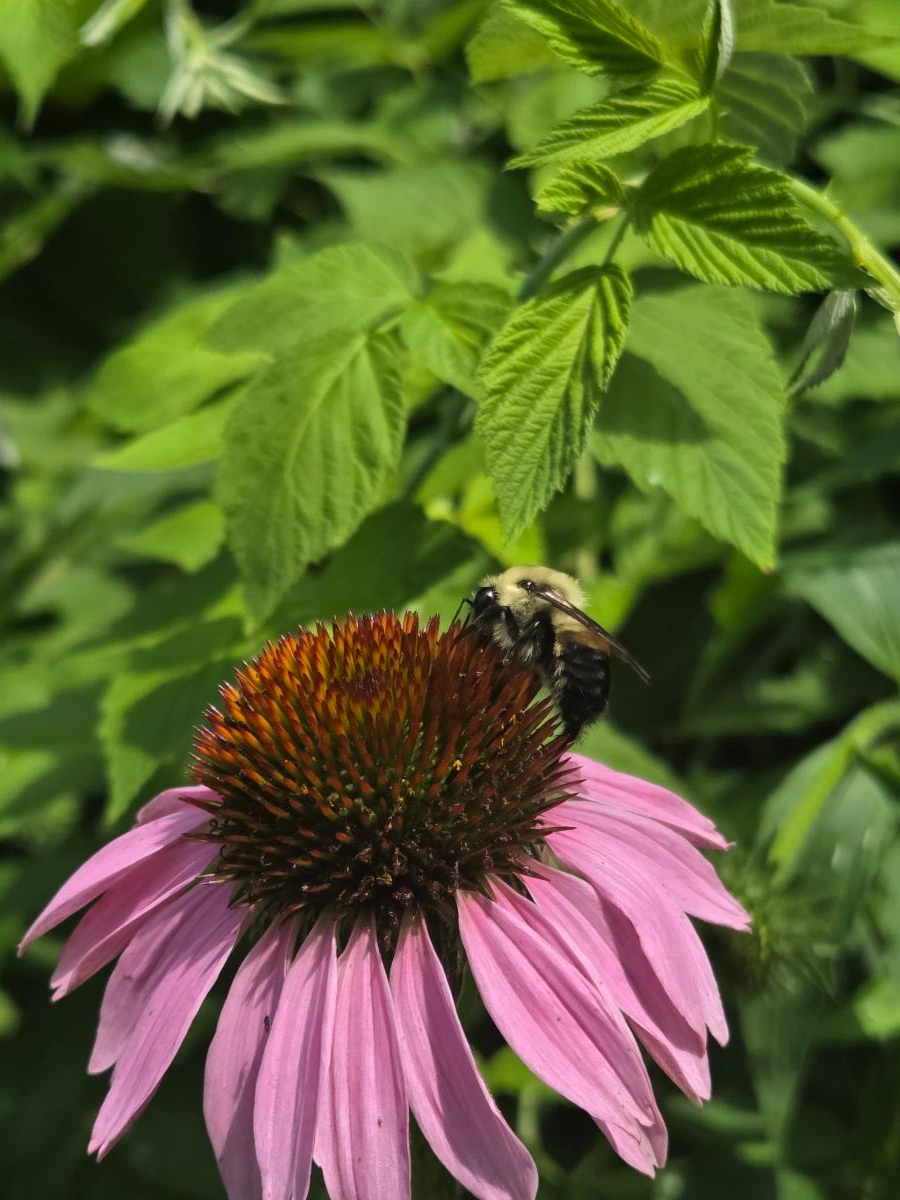
Purple Coneflowers are pollinator magnets - the spiky center cones (disc flowers) are nectar rich and provide a perfect landing pad for insects, with the purple ray flowers acting as an attractant! Bees can also overwinter in the hollow dead stems of this plant.
Interested in starting your own pollinator paradise? Make sure to plant straight native species instead of cultivars or crosses (nativars) which don't produce the same quality or quantity of nectar & pollen, can bloom at different times, and often can be harder for pollinators to identify as food sources.
| |
| |
Screech Owls
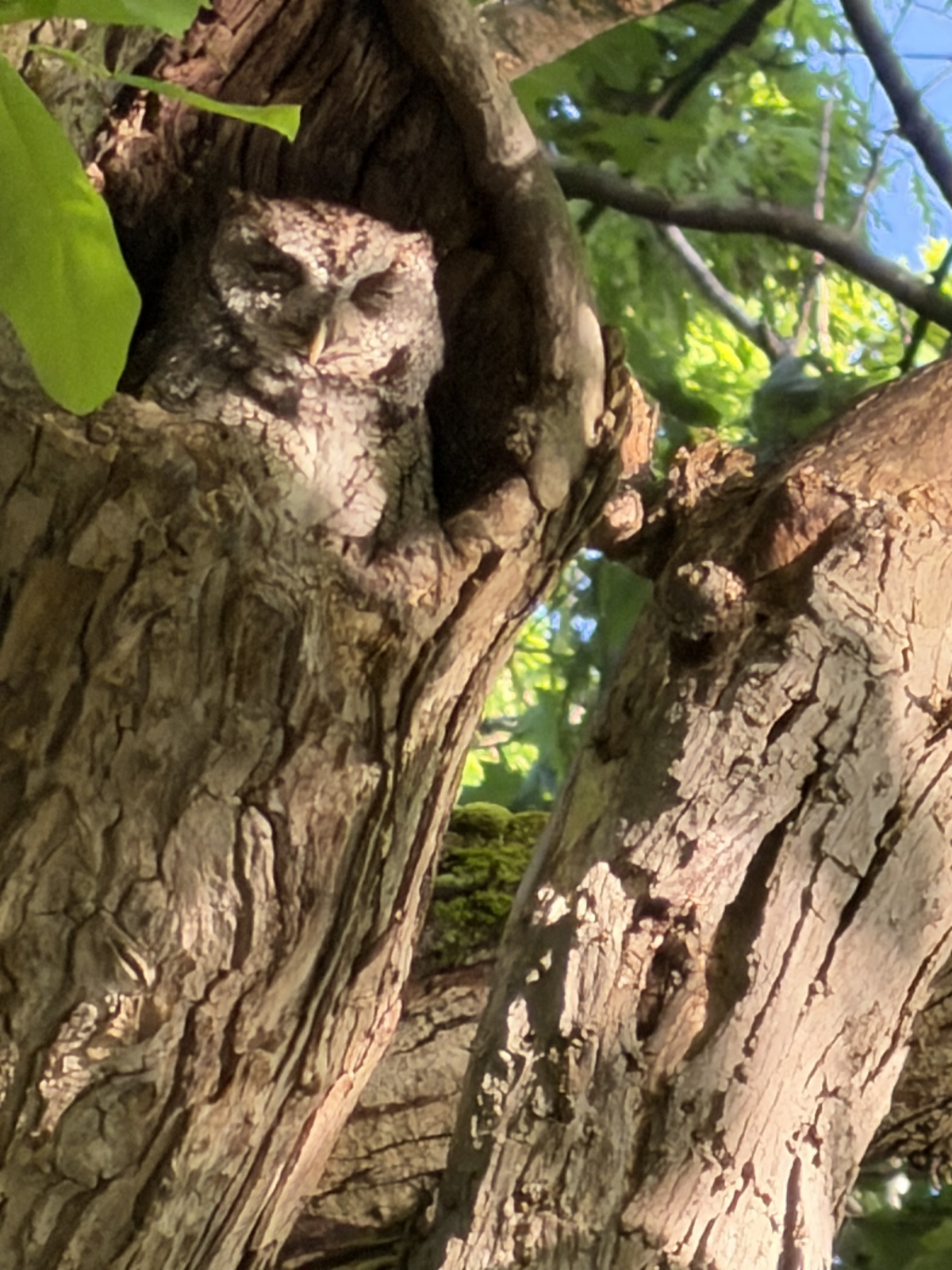
Screech owls are very active in July - fledglings are out of the nest and constantly begging for food! Ironically, they hardly ever screech except as a territorial call. They often produce a soft trill or a whinny. Screech owls themselves are fairly common, but seeing one is very rare as they are small and well camouflaged. This rare pic was taken at Fresh Pond Reservation by Jim Logan. These owls are highly monogamous and have strong nesting site fidelity. Likely the same pair has nested at Fresh Pond for many years!
| | | | |
|
Snapping Turtle Nesting Season
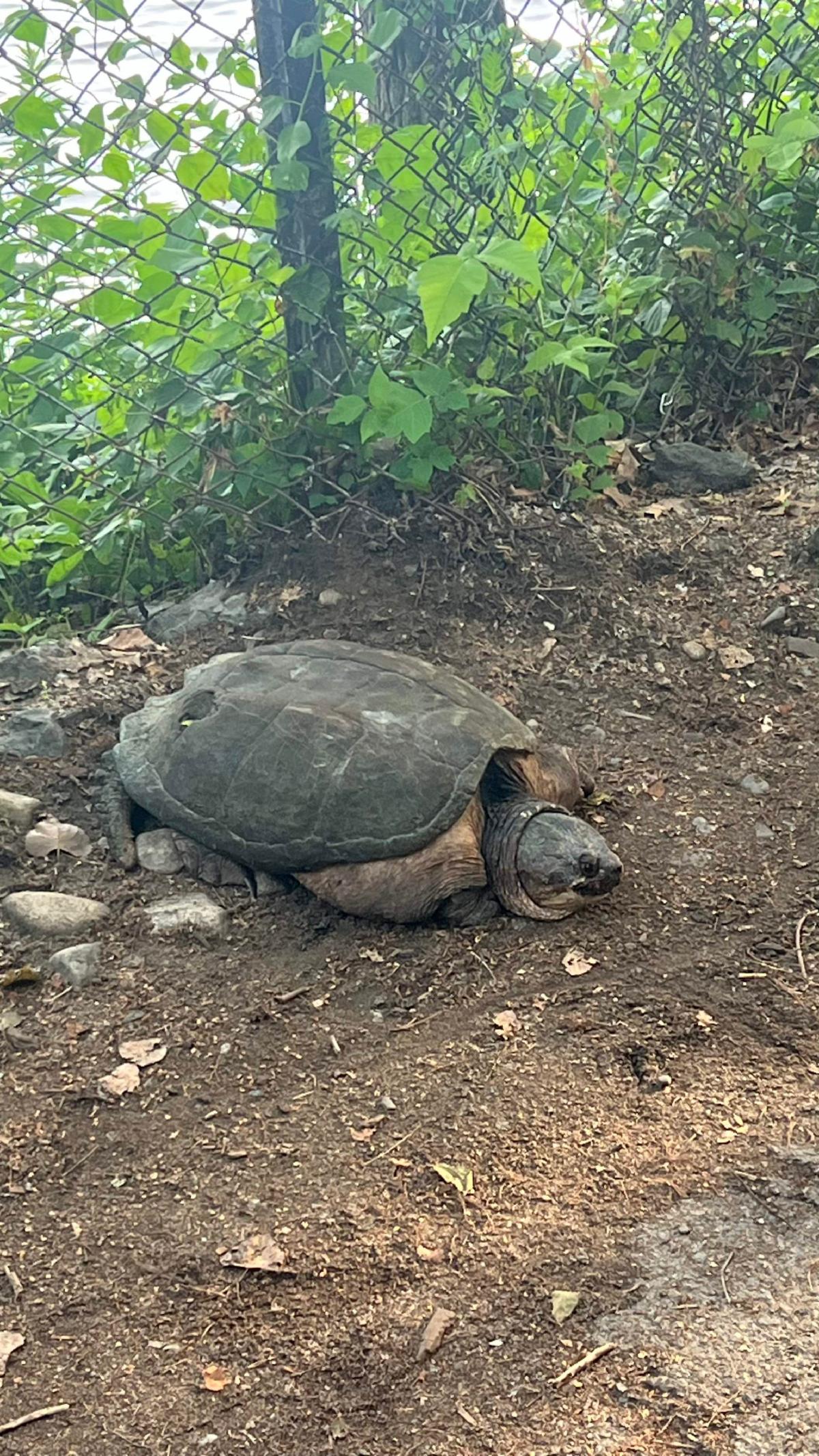
It is peak Snapping Turtle nesting season here at Fresh Pond. During the time they locate and dig out their nests, mama turtles are highly visible and vulnerable. Please give them their space as getting too close can stress them out.
It can take 1-3 hours for a turtle to successfully dig out a nest and lay all her 20-80 eggs. If you see a snapping turtle laying in a tough spot where she might be disturbed by dogs or bikes, please call the Fresh Pond Rangers at (617)-680-2418 or Cambridge Animal Control at (617) 349-4376.
If needed you may relocate a turtle that is not actively laying by holding the bottom 1/3rd of her shell and supporting her shell and plastron (bottom shell), as if you are holding a hamburger. Never move a turtle by the tail as you can break bones, or the upper 3/4th of their shell as they may bite you.
| | |
Common Milkweed in Bloom
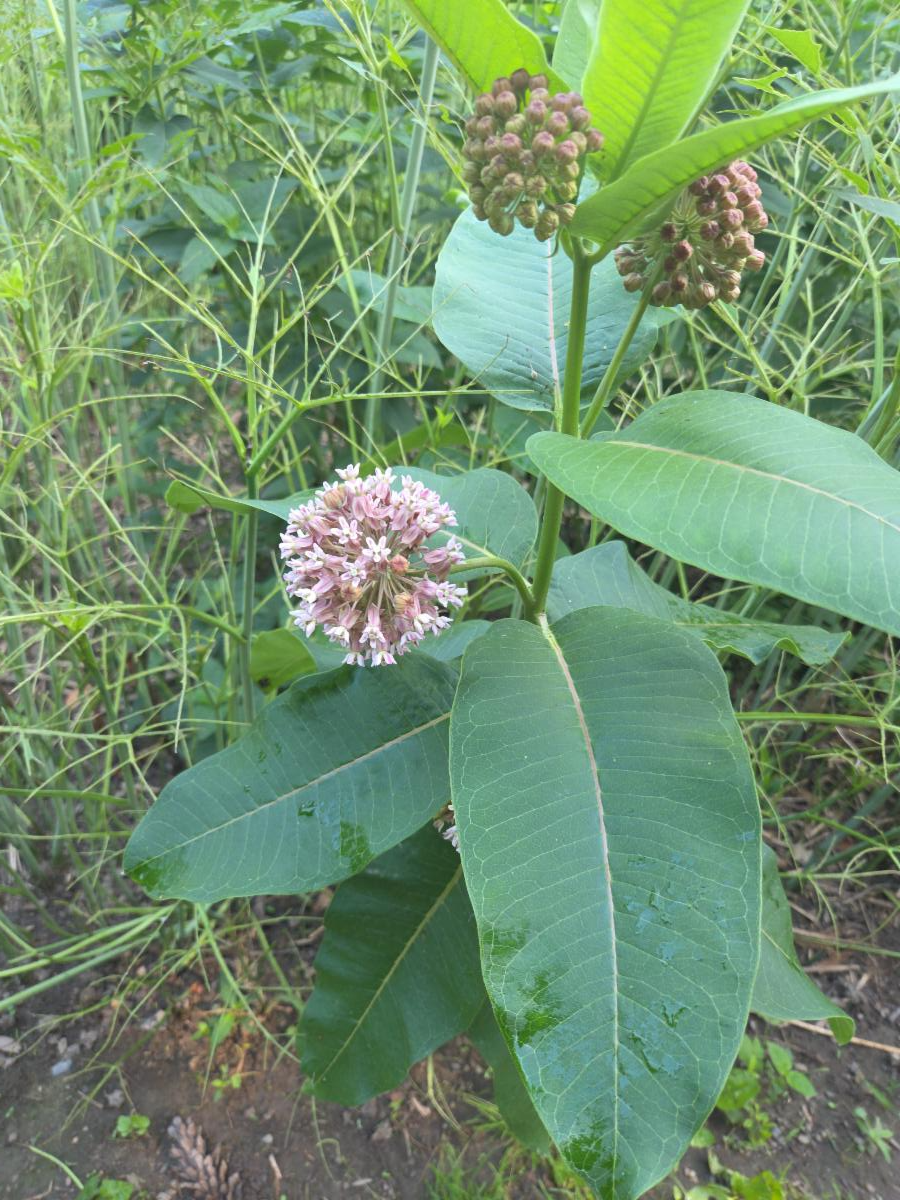
Common Milkweed produces fragrant, light pink flowers in a cluster known as an umbel. Large patches of Common Milkweed are incredibly fragrant - this is Ranger Amanda's favorite flower!
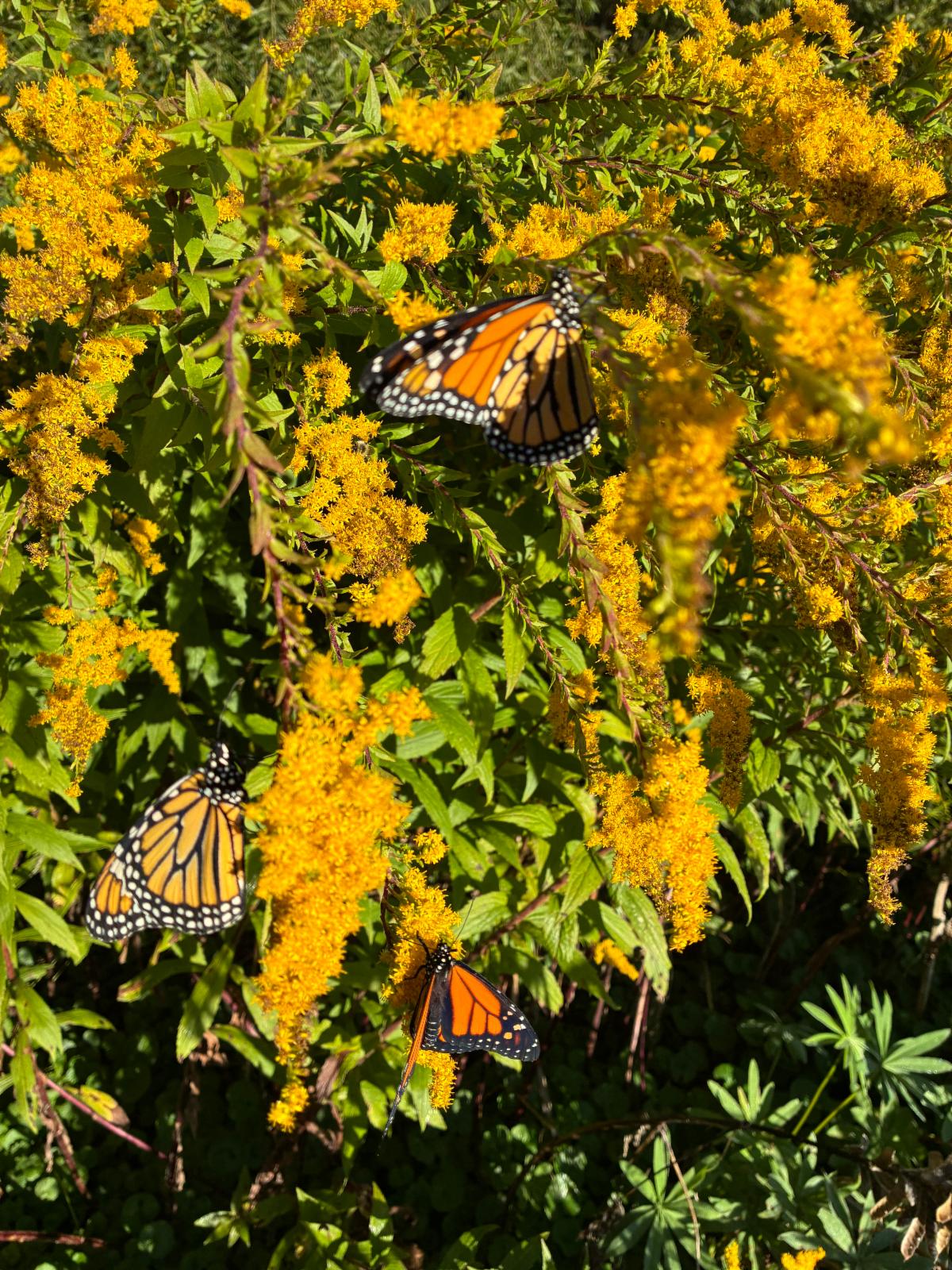
Milkweed is the Monarch butterfly's exclusive host plant, meaning it's the only plant that its caterpillars can eat. Adults can feed from any nectar flower, but the caterpillars can't survive without Butterfly Milkweed, Swamp Milkweed, or Common Milkweed. The plant produces a toxic, milky sap that makes the caterpillars unpalatable and confers some safety from predators, and also provides them the right nutrients they need to grow. Adult butterflies will lay one egg per plant!
| |
|
Invasive Plant Spotlight: Black Swallowwort
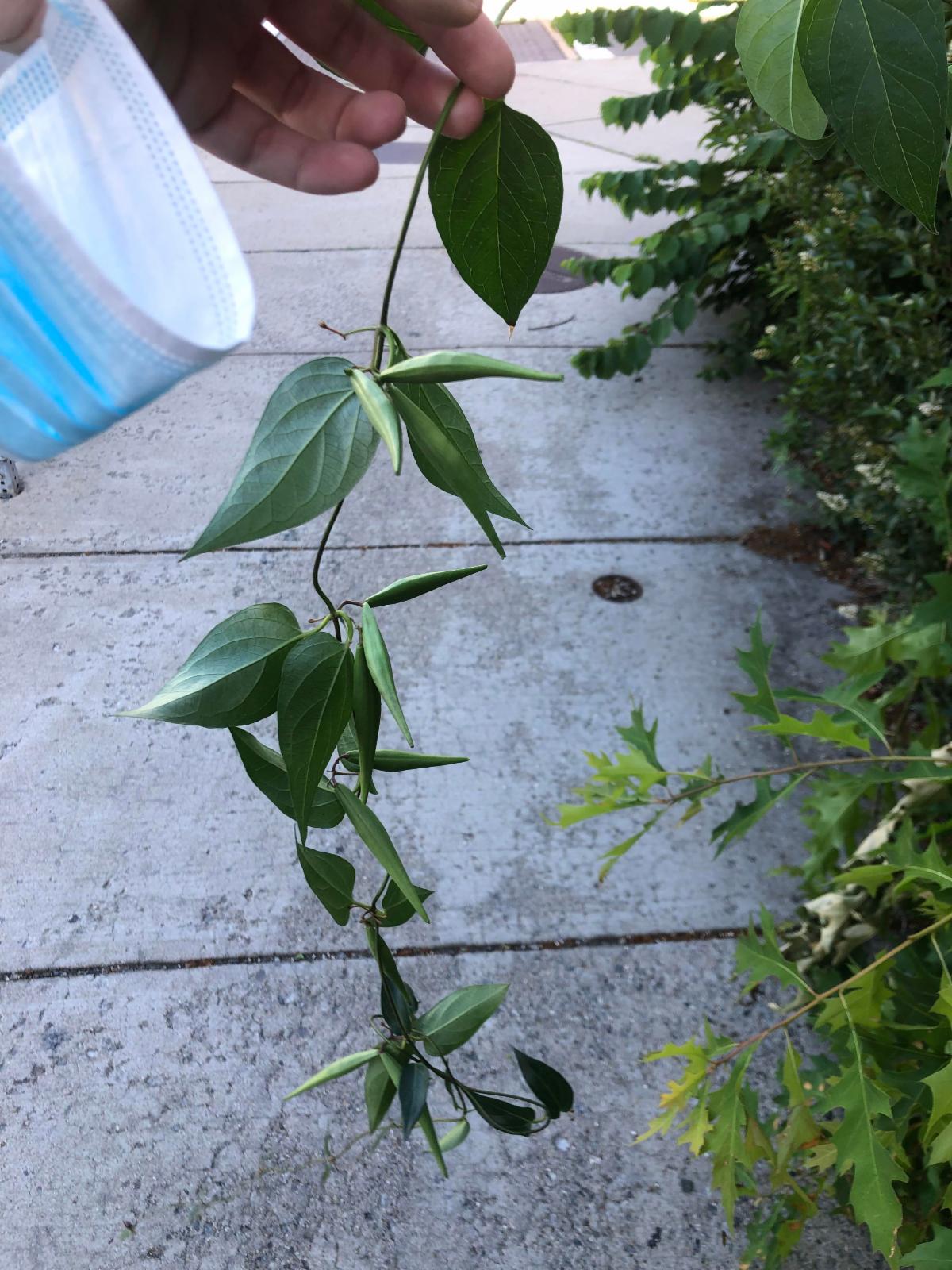
Black Swallowwort is a vine imported as an ornamental in the 1850s from its native range in Central Europe. Its identifiers are dark purple star-shaped flowers and seed pods that look like green beans, but open up with fluffy seeds.
The main problem with this plant is that it’s a close relative of Milkweed, so Monarch Butterflies get confused into laying an egg on Black Swallowwort, which is then doomed to starve and die.
If you’re visiting Fresh Pond or another park space, use a free dog waste baggie and fill it up on each walk! Become a member of the City’s guerilla “Pod Patrol” and encourage your neighbors to pick pods.
Each pod picked prevents dozens of new vines from sprouting!
| | | |
Scavenger Hunt Challenge
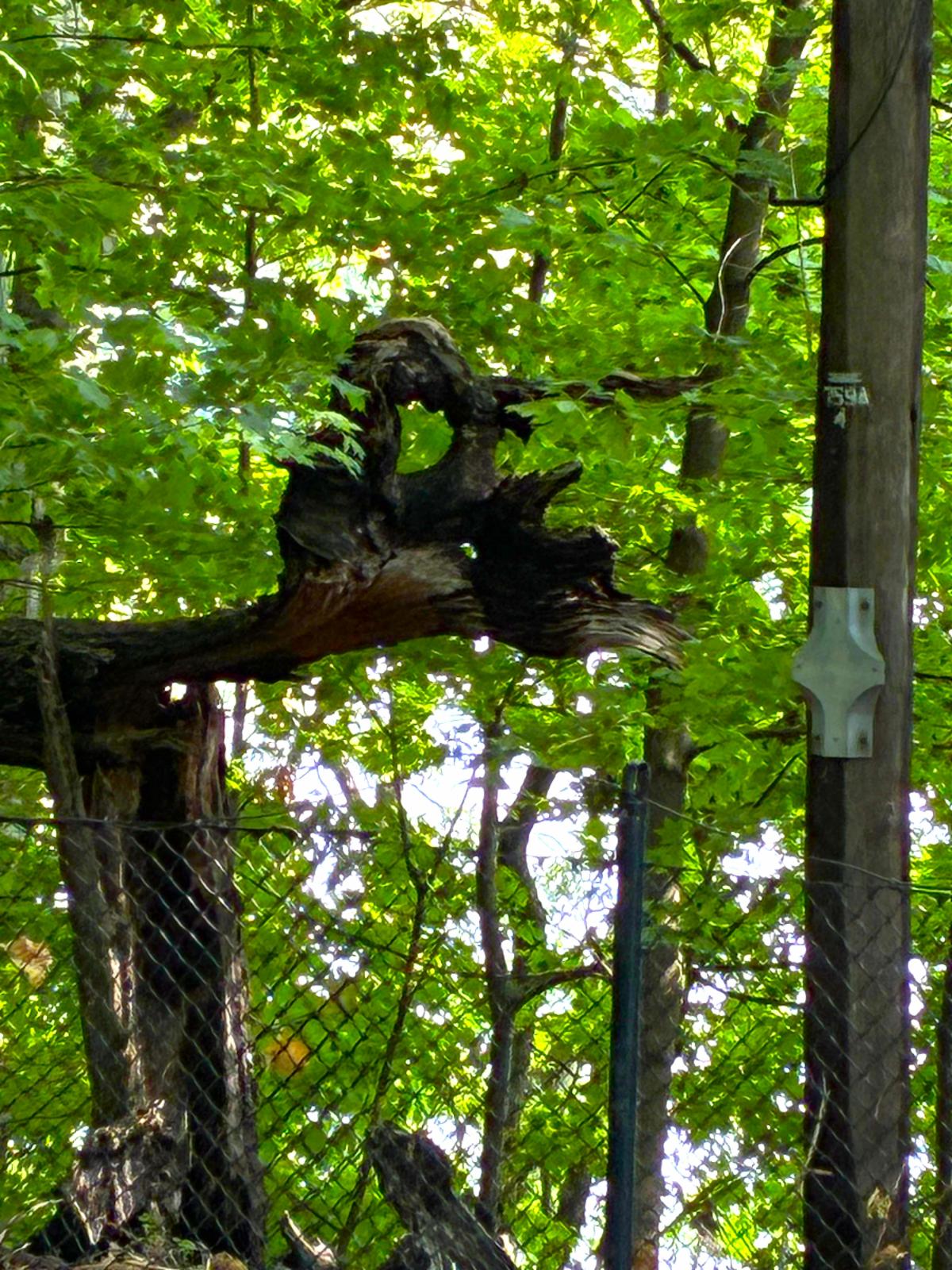
A spooky broken stump that looks like it could be a human face, the Rangers call this the Goblin Tree.
The trunk was likely severely damaged long ago from an event like losing a limb, mechanical injury, or some type of rot, and the tree continued growing around the injury. Finally, the stump broke from the base at the end of the life of the tree. The Goblin Tree is somewhere at Fresh Pond Reservation - can you find it?
| | |
The whole world is a series of miracles, yet we're so used to calling them ordinary things.
Hans Christian Anderson
| | | | |