|
A Message from the President
A Very Happy 2026 to Our Members, Supporters, and Friends,
| | |
Somehow time has ticked up another digit while we were still taking down Halloween decorations! Didn’t anyone else (besides my dedicated staff) feel that 2025 was the fastest, slowest year ever? There certainly were some parts we are glad to see only in the rear-view mirror and many more we will cherish.
I am going to greet the turning of the calendar with a deep breath, high hopes, and roller skates on (wouldn’t you all like to see that!) as a tremendous number of major anniversaries and happenings are already on deck to make the next twelve months unforgettable.
As Kearney Mansion turns 123 years of age, The Archive on Kern and your Fresno City & County Historical Society both are aging gracefully at 107. Read below to learn how you can help the FCCHS celebrate on March 27th at our annual Gala, themed quite appropriately I believe, as Stayin’ Alive.
The Winter Olympic Games, combining the elegance of figure skating with the heart-pounding thrills of Alpine sports, launch in just over a month. Officially called Milano Cortina 2026, the international competition will be held in Italy from February 6 to 22, 2026, co-hosted by Milan and Cortina d'Ampezzo, featuring traditional winter sports plus new events like ski mountaineering, with the Paralympics following in March. Events will spread across northern Italy, with Milan hosting ice sports and Cortina other mountain events, showcasing fashion, culture, and stunning Dolomite scenery.
In the meantime, campaigning for the primaries and the mid-terms will be at full throttle as an incredible, and historical, tug-of-war will likely continue until the final hours for redistricting at the national level, as well as dozens of local and statewide races that will heat up long before Fresno’s own thermometer returns to triple digits. How our domestic politics will influence global events will be, without question, newsworthy to say the least. The influential role Artificial Intelligence plays in news, real and fake, moving forward, will be noteworthy.
Additionally, within the next 12 months, the Wilson Theater turns 100, the Central Valley Community Foundation honors 60 years of service to the region, the Clovis Veterans Memorial District turns 80, and San Joaquin Valley Town Hall heads toward 90. All will be celebrated with well-deserved pride and commitment to our Valley for decades to come.
One of the most heart-stopping moments will undoubtedly be the realization that September 11, 2001, will have been 25 years ago – though none of us would believe it didn’t happen yesterday.
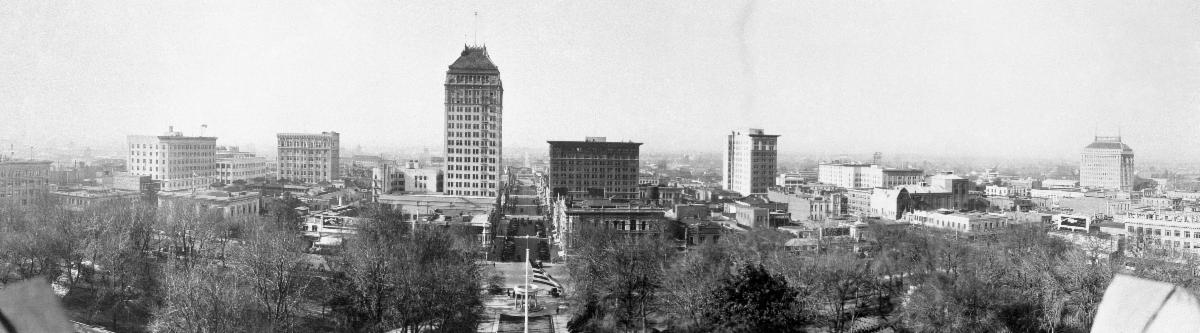
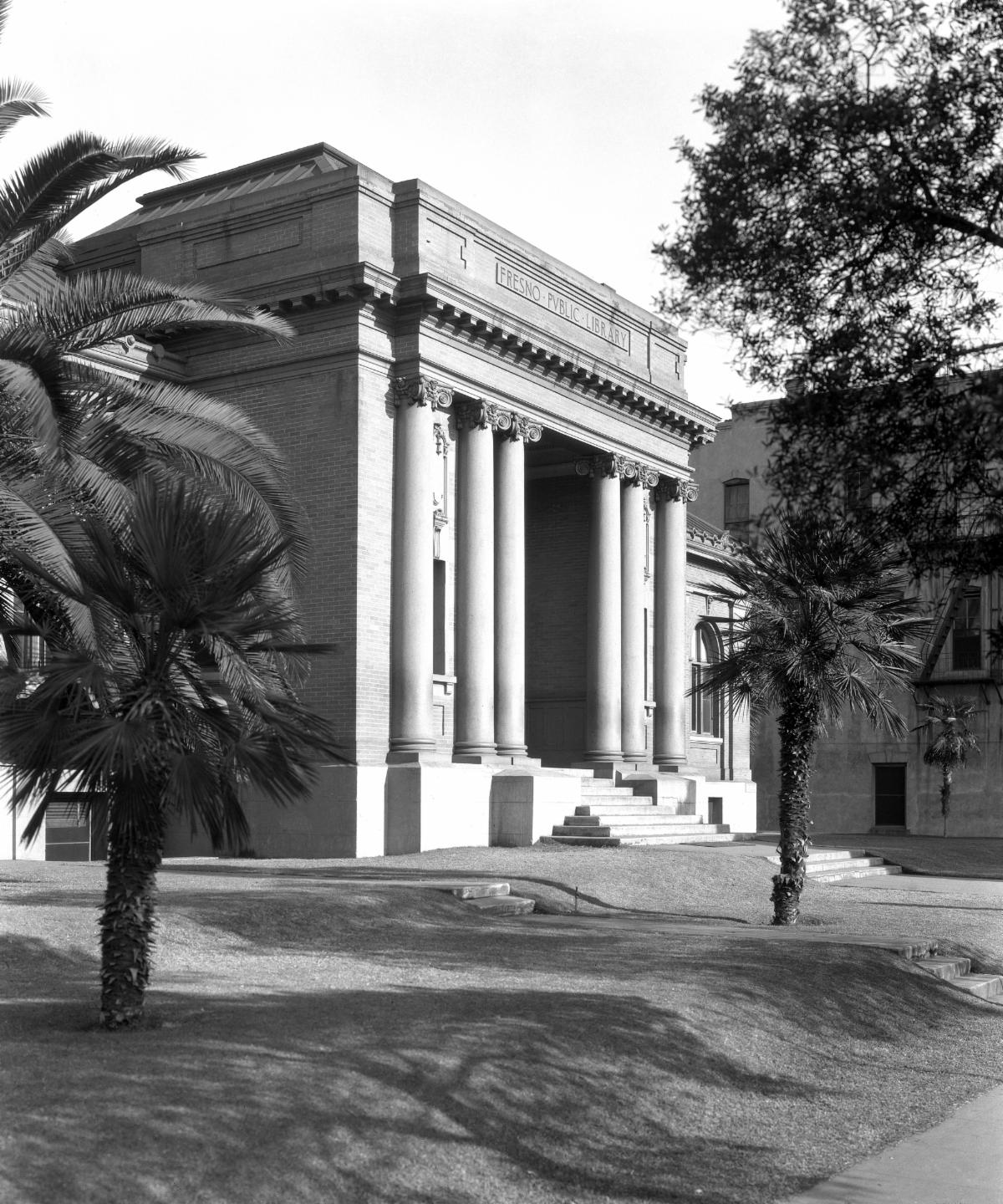
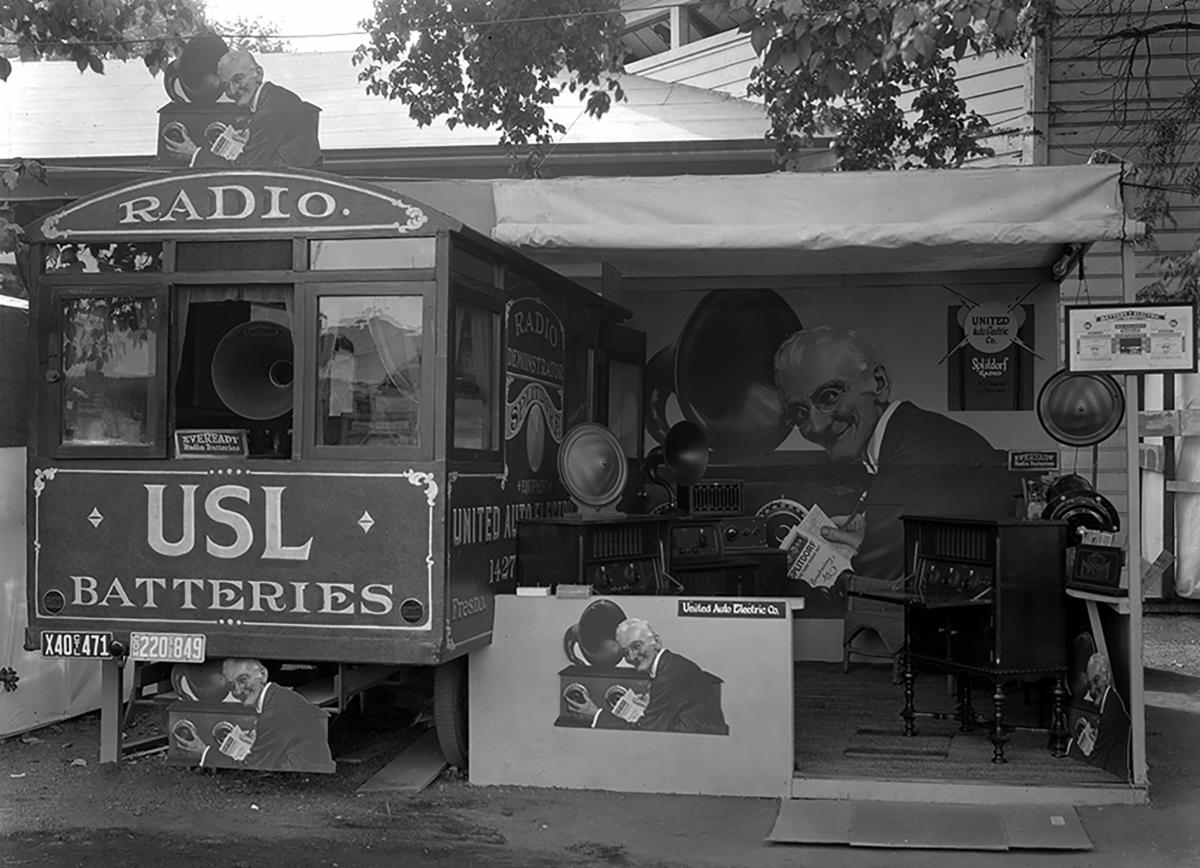
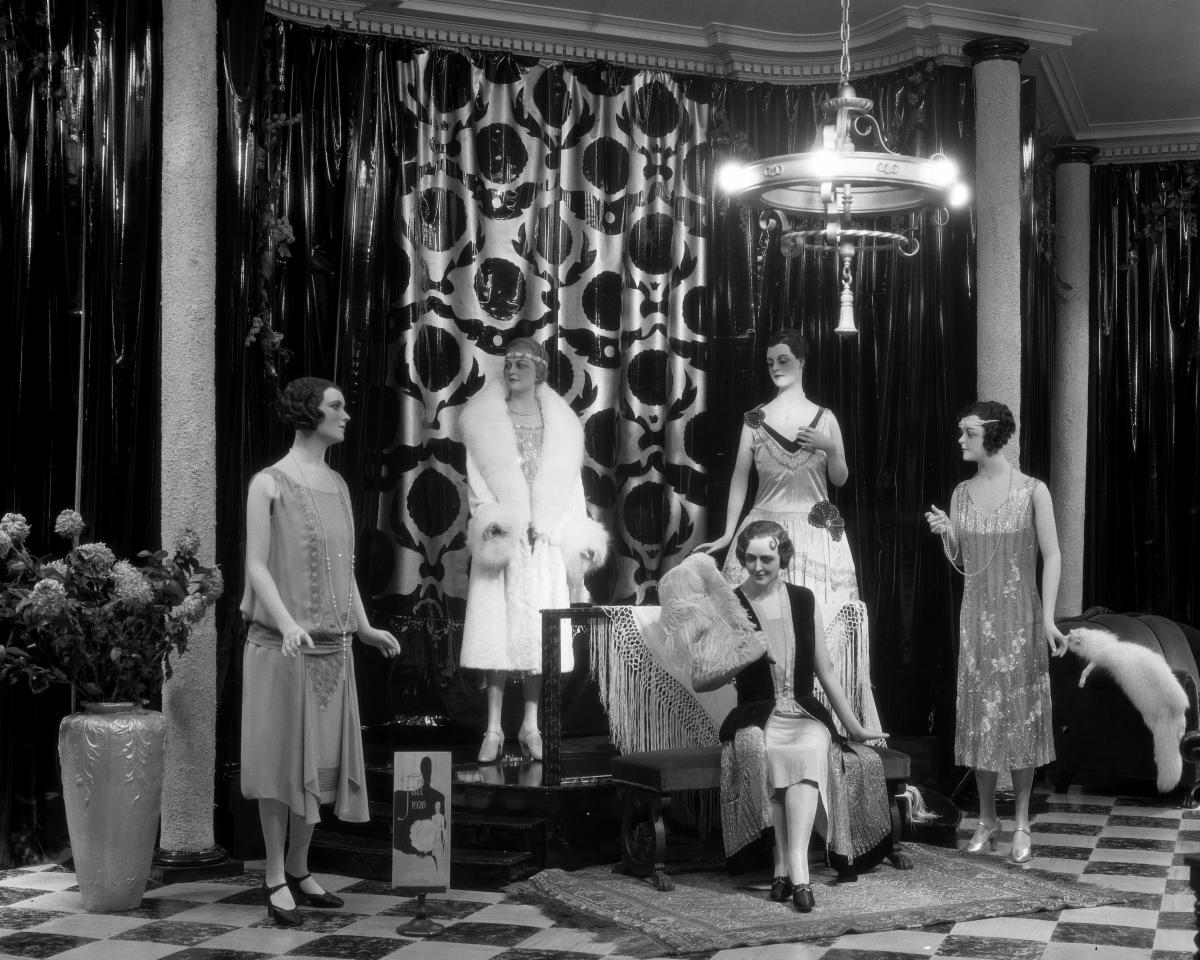
| | All of these events will be held against the backdrop of our country remembering its Semi-Quintessential – America 250. Some of us recall the amazing Bi-Centennial events of 1976 so I thought I would share a little about Fresno’s plans to commemorate the Sesqui-Centennial of the United States in 1926… | | |
“FRESNO ARRANGES STIRRING FOURTH OF JULY FESTIVAL”
“Courthouse Park Program Tomorrow To Include Speeches, Athletics”
“AMERICAN LEGION TO HOLD CEREMONY TO-DAY”
“Water Fight, Fireworks To Feature City's Free Program”
“Forming the prelude for the most glorious Fourth that Fresno ever has celebrated, a service will be held at 1 P. M. to in American Legion Hall commemorating the one hundred and fiftieth anniversary of the signing of the declaration of independence. Z. S. Deymel, commander of Fresno Post No. 4, American Legion, will preside. The program will be limited to reading the names of those who signed the notable document and the legion's American creed, and a section of the declaration of independence itself. The ceremony will be held here at 1 P. M which will correspond to 4 P.M., eastern time. The affair will be open to the public.
“The real celebration will start at dawn to-morrow morning when a salute of twenty-one bombs will wake the city.”
“Park Program”
“The Courthouse Park program, according to Harry Wishard chairman of the day, will begin with an invocation delivered by Rev. E. Dutt, followed by the singing of the Star-Spangled Banner by Miss Zaruhi Elmassian. The Declaration of Independence will be read by Walter McMillan. P. H. McMurtry, chairman of the Fourth of July committee, will make an address of welcome and introduce Henry Hawson, speaker of the day, who will give a patriotic address. The singing of America will conclude the program.
“The entertainment features of the day will begin at 2 P. M. when sports and contests will be held in Van Ness Avenue. The principal events will be a horseshoe pitching contest, an archery tournament, and a water fight in which local firemen will battle. At the conclusion of the sports a band concert will be held beginning at 4 P. M.”
“Water Fight”
“The two teams will advance towards a line midway between their two stations in Mariposa Street and Van Ness. The team that reaches and stays on line thirty seconds twice out of three attempts will win the contest.
“Other events will include:
“Sports for children between ages of 6 and 14, sports for children above 14 years, hoop rolling for children, walking race for either sex over 40 years of age, bicycle relay race. archery contest on Van Ness Avenue for the state championship, horseshoe throwing contest in Courthouse Park for San Joaquin Valley championship.”
“Fireworks Display”
“The pyrotechnic exhibition will take place at the Fresno District Fairground in front of the grandstand beginning at 7:30 P. M. and will be free the same as all the other entertainment arranged by the committee.
“The fireworks program as announced by J. C. Hinton, chairman of the committee in charge of this part of the entertainment will include eighteen set pieces of novel design and 160 shells and rockets that will burst in brilliant showers of sparks. The set pieces will consist of a moon wheel, two sets of Aztec fountain pieces, floral cascade, Yellowstone wonder, oriental cascade fountain, land of the midnight sun, shooting gallery, devil's wheel, monarch of the air, crazy wheel, Niagara Falls, 40 by 40 feet; exhibition fountain tree, electrical storm, bombardment of the Verdun, world in rotation device with thirty-foot spread, eight palm fountains, eight jewel fountains and American flag.
“The rockets and shells will include Gibson's peacocks, changing clouds, spiderland, silver mist. weeping willows, floating stars, devil's fork, fiery demons, hissing serpents, girandola parachute, gorgeous magneta, Mars of Orion, rainbow, shell of shells, living fire, Betelguese.
“The fireworks will be discharged by Harry Barthen and a number of experienced assistants.”
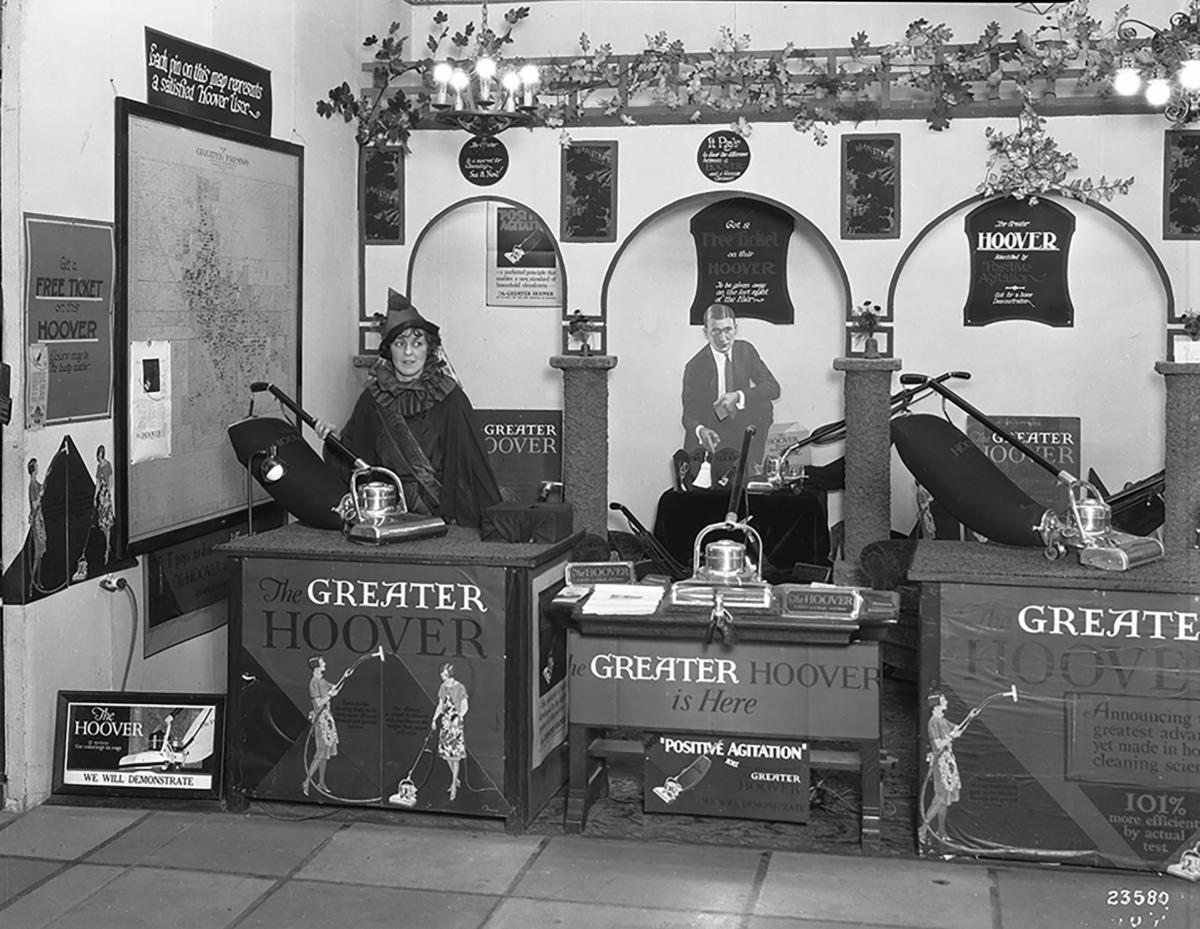
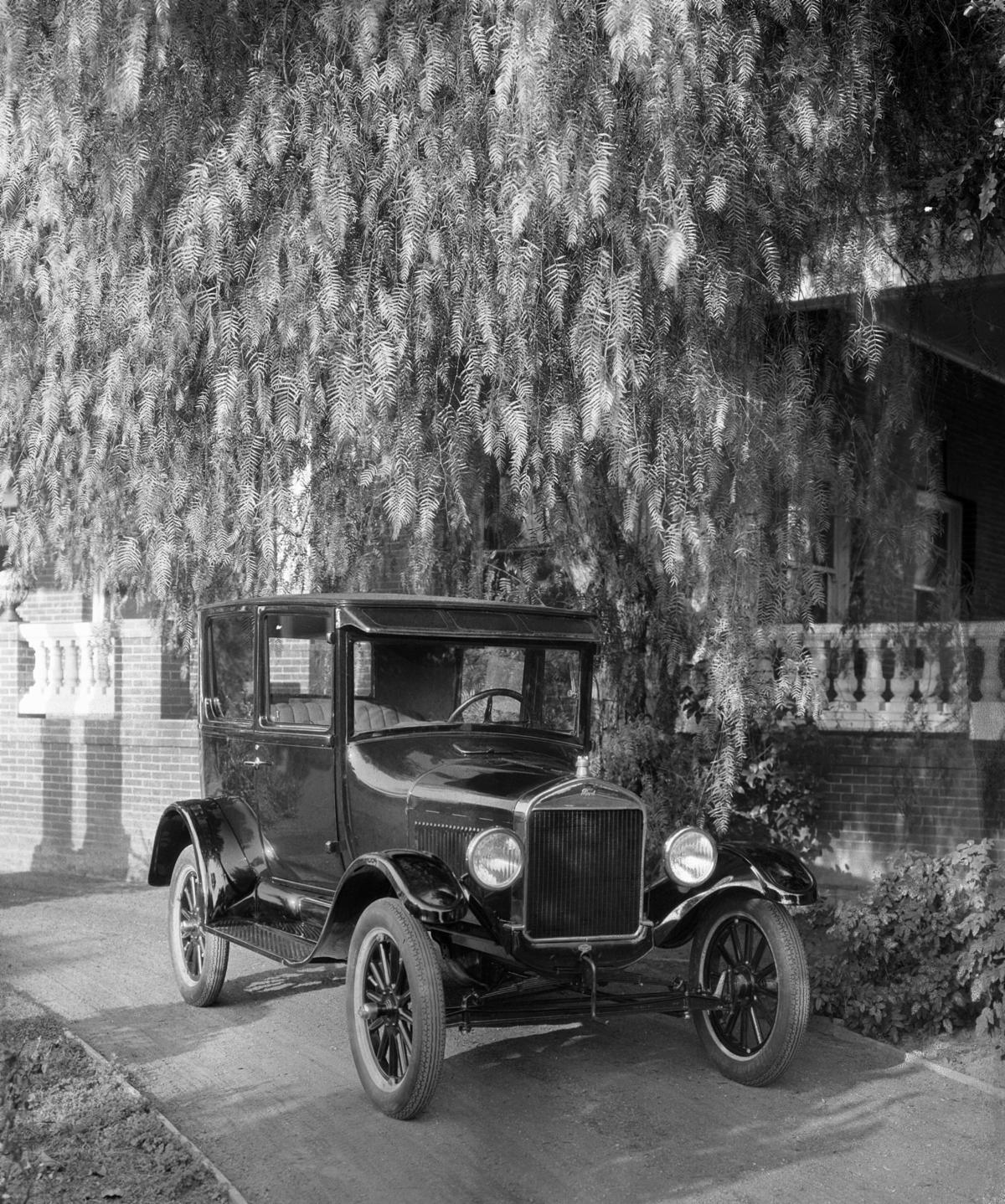
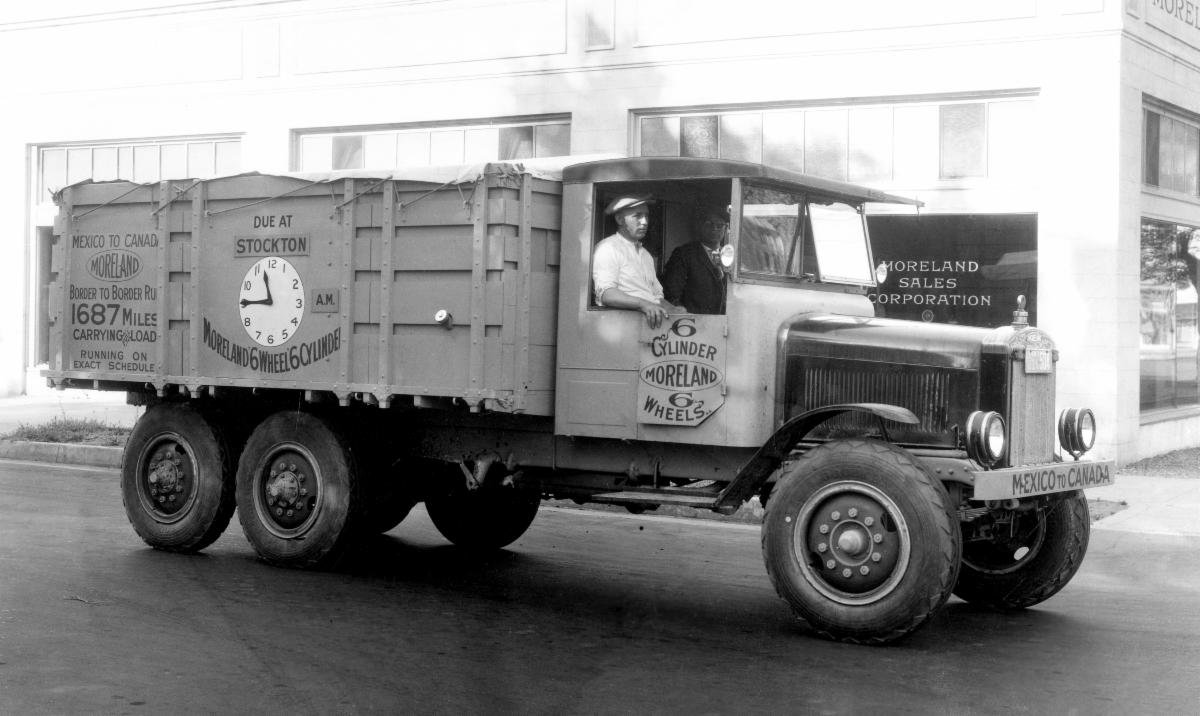
| | Fresno in 1926 photos all courtesy of the Pop Laval Foundation. | | |
Definitely expect some spectacular displays of our own as Mayor Dyer and the City Council fully intend to make certain our United States and Fresno are well-remembered this year.
With that, I send you all back to enjoy the rest of New Year’s Day – hmmm, that means the current millennium is one-quarter over….
With warmest wishes,
Elizabeth Laval
President
Fresno City & County Historical Society
| | TICKETS ON SALE NOW!
HISTORICAL SOCIETY GALA COMING MARCH 27, 2026 | |
On Friday, March 27, 2026 at 6:00PM you are invited to step back in time and celebrate at the 1970's Gala Event - Stayin' Alive! This annual birthday party for the Fresno City & County Historical Society, promises a night filled with nostalgia, lively music, and dancing under the disco lights.
Tickets include a welcome cocktail, four-course gourmet meal, a full concert performance from The Bee Gees Tribute - You Should Be Dancing, silent auction, and no-host bar.
For over 100 years, the Society has been dedicated to preserving the rich history of Fresno County, and this gala is no exception.
Join us for an unforgettable evening that honors our past while enjoying the vibrant culture of the 1970s. Don't miss this opportunity to support your Historical Society and indulge in a night of festive fun!
| | |
ARCHIVAL SPOTLIGHT
Looking Back, Looking Forward: A Year in the Archives
By Donald Spencer MSc., Archivist.
| |
Hello Friends of the Archives,
As we close out this year and look ahead to the next, I find myself reflecting on what has been a meaningful and reformative year in the Archives. This past year marked my first as Archivist for the Fresno City & County Historical Society, and it has been one defined by learning, discovery, and an extraordinary level of community engagement. First and foremost, I would like to extend my sincere thanks to the many community members, families, and organizations who entrusted the Society with their historical materials this year. Each donation, whether a single photograph or a large collection, represents care, memory, and a desire to see Fresno County’s history preserved for future generations. I am also deeply grateful to those who reached out with offers of donation that we were ultimately unable to accept. Even when an object does not enter the collection, the gesture itself speaks volumes about the community’s commitment to preserving its past, and those conversations are always valued.
| | |
One of the most important responsibilities of the Archives is to collect with intention. While there is always room for thoughtful growth, our mission requires us to evaluate each potential acquisition carefully. Fresno County’s history is vast, diverse, and layered, and our physical space and preservation resources are finite. Responsible stewardship means ensuring that every item we accept aligns with our mission, strengthens our collections, and can be properly cared for over the long term. With this in mind, I thought it fitting to explain here for our members and subscribers exactly what the criteria and thought process is, as to how we have accepted items to be placed in the archive in 2025 and will do so in the years ahead.
Our highest collecting priority is to strengthen areas where the archives already hold recognized and historically significant collections, especially materials that are at risk of being lost due to age, changing technologies, or shifts in industry and community life. This includes objects, photographs, and archival records that directly support exhibitions, research, or educational programming, as well as high-quality items that fill documentation gaps or replace lesser examples in our holdings. We also prioritize materials that represent Fresno County communities, industries, and places that are rapidly changing, disappearing or are long since gone.
| Our secondary focus would allow us to deepen the historical context of established collecting areas. These acquisitions may not stand alone, but they enrich the stories we are already telling, whether by complementing existing exhibits, expanding documentation of local neighborhoods, or illustrating the interconnected histories of neighboring agricultural, immigrant, or labor communities whose experiences overlap with Fresno County’s own. Examples of, but not limited to, this secondary collecting focus include ephemera, programs, and personal papers that expand existing exhibitions, such as items relating to the Fruit Vale Estates, materials documenting the daily work of Fresno firefighters beyond official records, or ephemera connected to long-running community festivals and public events. We also consider neighborhood-based documentation, including family photo albums, school materials, or small business records which helps flesh out the lived experience of areas already represented in the collection, such as West Fresno or downtown districts. In addition, materials from related agricultural, immigrant, or labor communities in the surrounding regions may be accepted when they help contextualize Fresno County’s history, illustrating shared industries, migration patterns, or social networks that shaped the Valley as a whole. |
| |  | Finally, we remain open to exceptional items of broader interest that meaningfully contribute to interpreting Fresno County’s history, even if they fall slightly outside of our core collecting areas. Such materials can help place local stories within wider state, national, or global contexts, offering researchers and visitors a fuller understanding of the forces that shaped life in the Valley. Examples of this tertiary collecting focus may include, but once again are not limited to, well-documented objects or archival materials that illustrate broader social, cultural, or technological trends experienced locally, such as consumer goods that reflect changing patterns of daily life, recreation, or communication in Fresno County. This category may also encompass materials created outside the immediate region when they directly relate to individuals, families, or businesses with strong Fresno County ties. A good example of this would be historical materials from the Bad Hamburg Gold Club in Hamburg Germany because M. Theo Kearney was a founding member of that club, illustrating a Fresnan's wider role in world affairs. In some cases, items connected to statewide, national, or international events may be accepted when they help contextualize local experiences, such as military service records, migration-related materials, or artifacts associated with major technological or cultural shifts that shaped life in the Central Valley.
There are also moments when important collections become available unexpectedly, often when individuals, families, or institutions can no longer care for them. These opportunities are considered with care and on a case-by-case basis, weighing historical value, relevance, long-term preservation needs, and available resources. Just as acquisition is a responsibility, so too is thoughtful deaccessioning, ensuring that our collections remain focused, usable, and aligned with our mission.
As we move into the coming year, I am excited to build on the momentum of this first year and continue streamlining workflows, strengthening relationships, and finding new ways to support the broader community. My goal is simple; to do this work better each year, to be of greater service, and to help ensure that Fresno County’s history is preserved with care, clarity, and respect. Thank you for being part of this journey, and I look forward to all that the next year will bring.
| | |
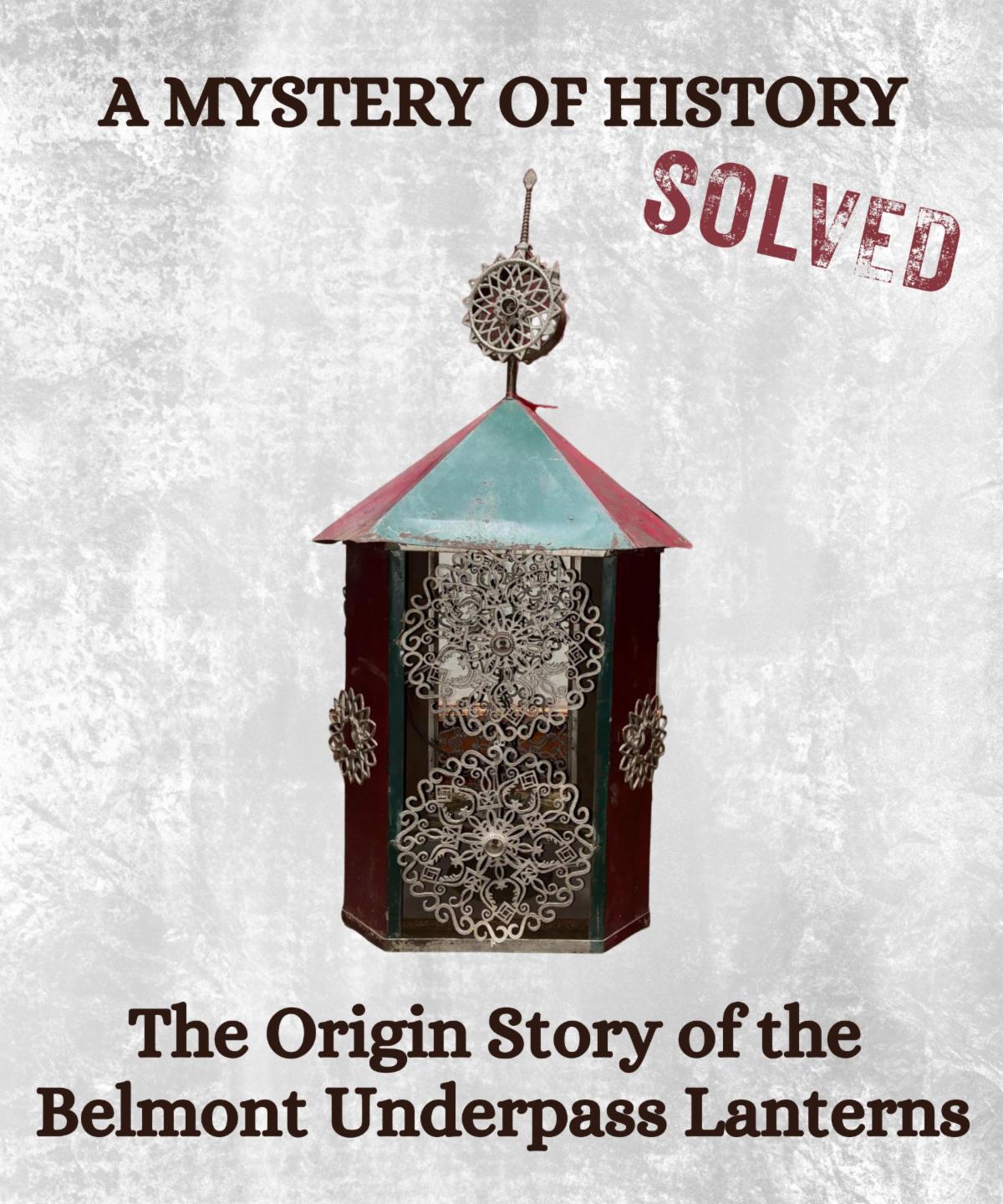
The Belmont Lantern Research Summary
By Donald Spencer MSc., Archivist
| | | | |
Upon seeing images of the lanterns supplied to me by the archaeologist earlier this year, there was little doubt that they were intended to be used during Christmas. By the quantity found in the underpass, it was apparent that they were not for private use but instead intended for a large public gathering. Based on the location where the Belmont Lanterns were found, within the Belmont Subway, I focused my search on what areas would have been used for Christmas events or celebrations in Fresno’s past. My early research, and what I knew about the size of the city in the early 1900s, showed me that the city of Fresno, along with its inhabitants, would have several Christmas celebrations in a season. The festive events were primarily focused at Roeding Park, Fulton Street, and Courthouse Park. All three of these were viable for the lanterns to be used because of their vicinity to the Belmont Subway. Roeding Park is located directly across the street, and the shopping center of Fulton Street, as well as Courthouse Park, are just under a mile away.
| | |
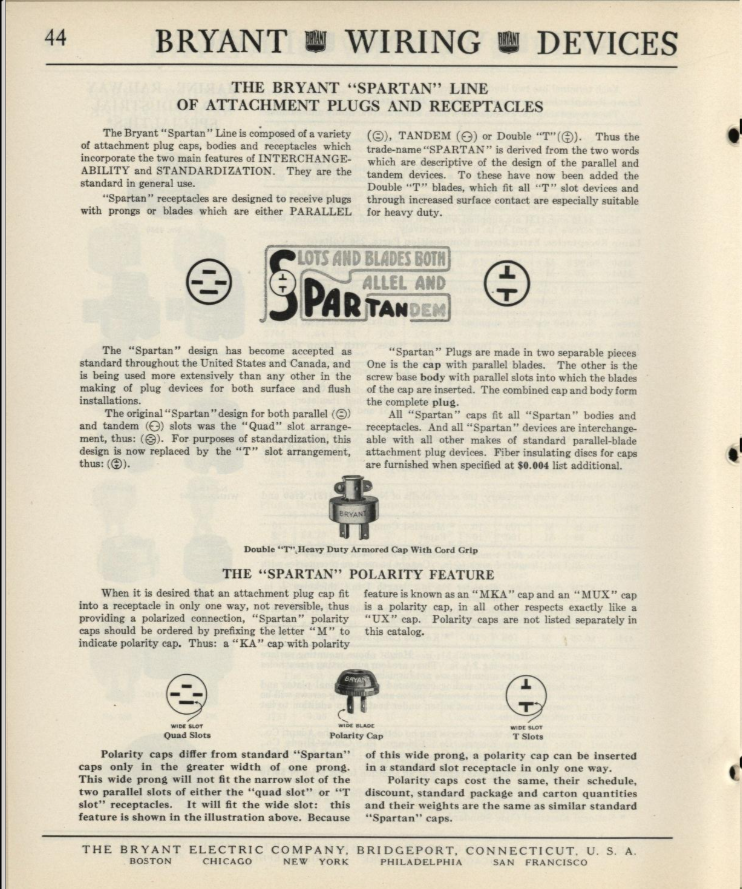
The first breakthrough that was afforded to me was being able to examine a lantern in person. The Lanterns, although visible in the original photos I viewed, had electrical components on the interior of the object. However, upon closer inspection I saw that each snowflake possessed an outlet for a light bulb and a cloth wire connecting each socket to a plug. Stamped on the plug was a manufacturer’s name, that being Byrant Spartan. The Bryant Electrical Company was founded in 1888 and created a wide variety of electrical components for commercial use. Yet, the spartan plug was only manufactured and used for an exclusive amount of years and predominantly for outdoor use. This afforded me a more specific window of time the lanterns could have been manufactured, and the fact that they were intended for outdoor use.
With this latest information in mind, I refined my research to the years of 1918 to 1940. Within these years, I learned about the various Yuletide festivals that had been held annually in Fresno during those years. I realized, given all the information, that the Fulton celebration was by far the largest, most attended, and was the most important of the festivities during Christmas. Knowing this, it insisted that the Fulton yuletide gathering had the highest probability of location for the lanterns to be employed. This celebration was ushered in by a parade and an open house hosted by the Merchants Association. The involvement of the Merchants Association was the second important puzzle piece to finding the provenance of the lanterns. Each year, the Merchants Association would hold “open houses” where denizens of Fresno could view what the stores on the strip of road had to offer for the holiday season towards presents. To add to the grandeur of the open house, the Merchants Association would fund the implementation of yuletide decorations to run up and down Fulton Street.
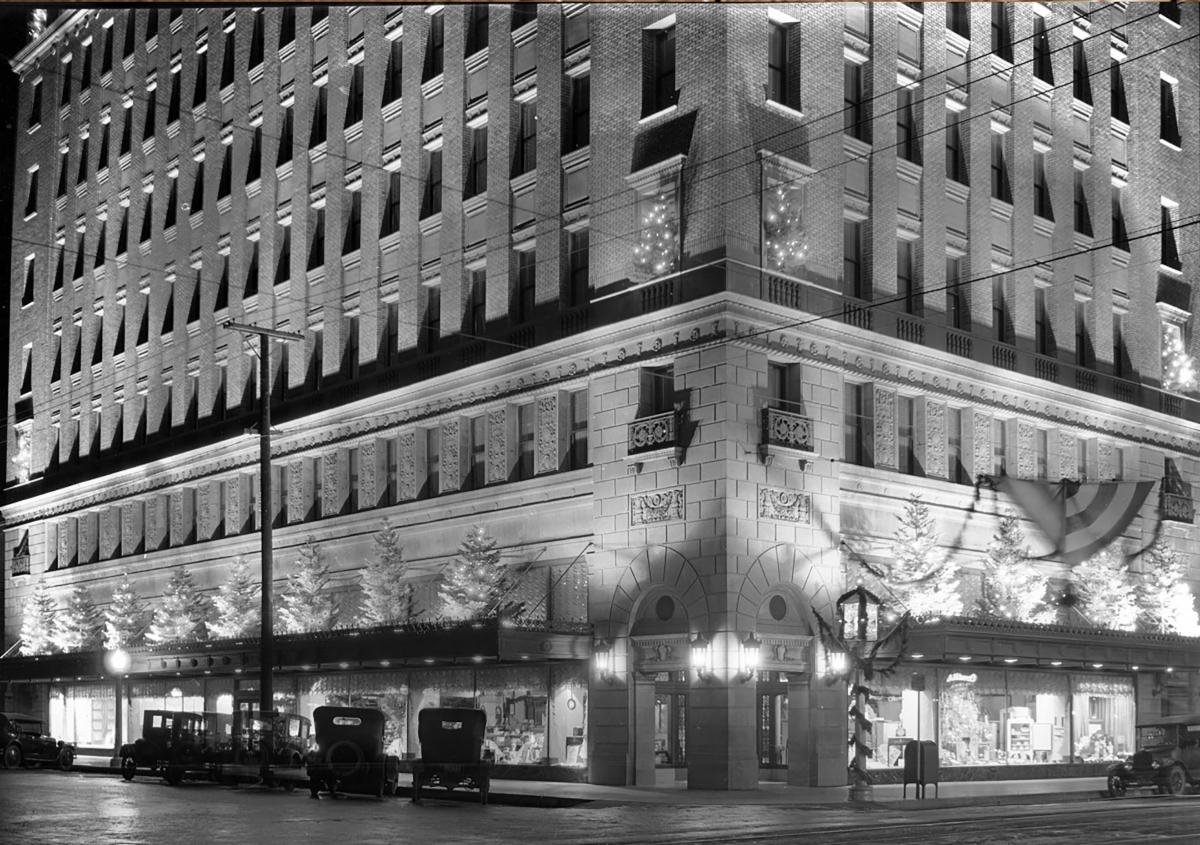
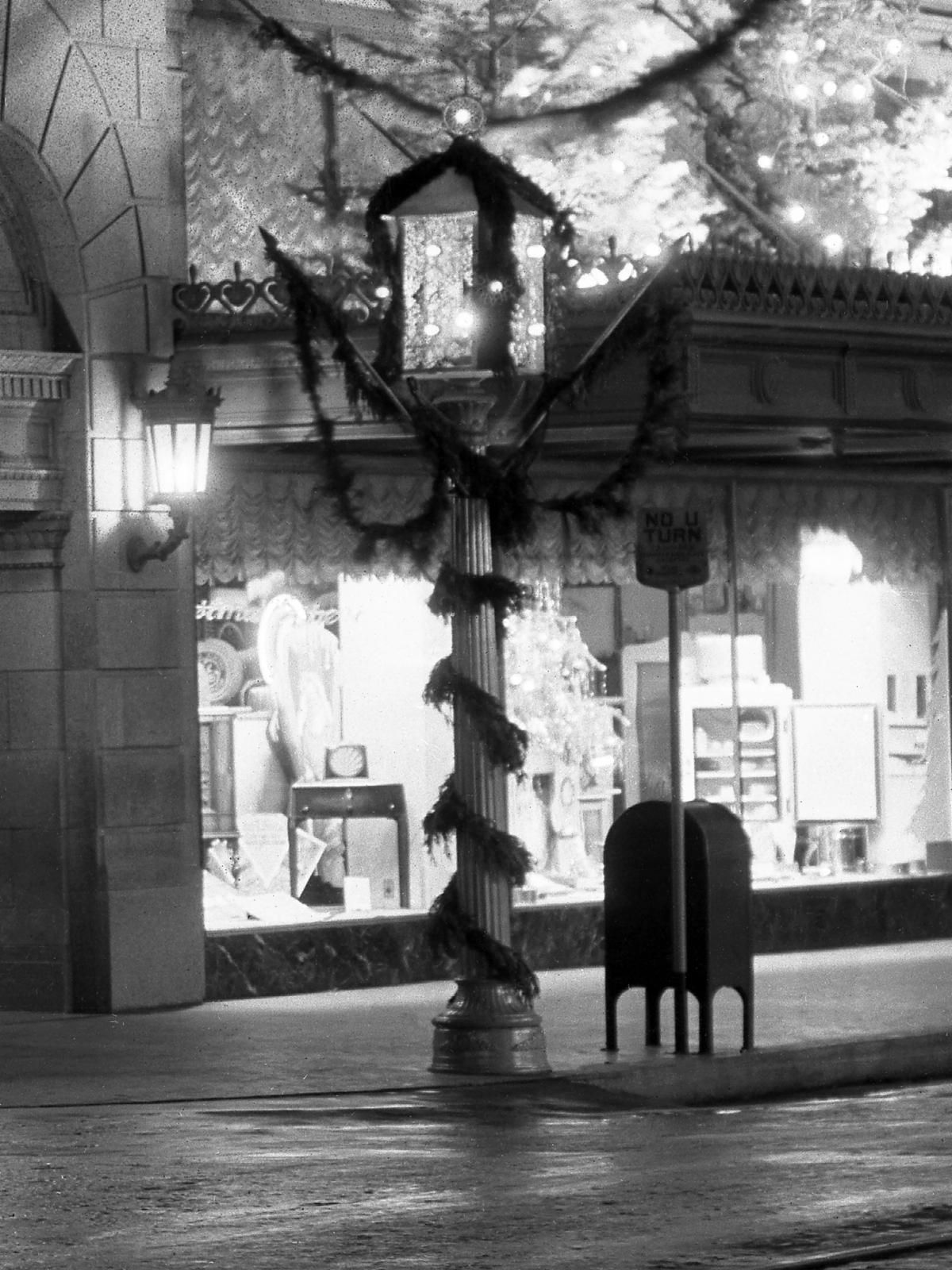
| | In learning this, I discovered in 1920 that the electroliers, better known to contemporary ears as streetlamps, were decorated with Christmas trees. Knowing that every Belmont Lantern had a hole in the bottom of it, electrical cords, and plugs to power the light bulbs, this seemed to me that the lanterns were also used for this purpose. Later articles in 1929, 1930, and 1931 referenced lantern decorations or “effects” for the electroliers. In particular, the 1931 article references them as, “... special lanterns of medieval design on the electroliers…” The electrolier being referred to as medieval, which do resemble the aesthetic of these objects, was the final piece of the puzzle I needed to know that these writings were referencing the Belmont lanterns. These articles supplied me with the exact years the lanterns were in use, and in turn, made finding a photograph considerably easier by having a three-year timeframe to work with. Shortly after discovering these articles, the photo was quickly found and the mystery was solved. | | |
Honoring Fresno’s Chinese American Legacy
Through Expanded Cultural Programming
| |
With support from an Expanded Access to Arts and Culture grant, the Chinese American Museum Project (CAMP) and the Fresno City & County Historical Society (FCCHS) are proud to launch a dynamic slate of public programs in the upcoming fiscal year. Designed to deepen public engagement and expand cultural education, this initiative will feature eight events over the grant period, including cultural workshops and public presentations centered on the historical experiences, traditions, and contributions of Chinese Americans in Fresno.
These programs aim to introduce broader audiences to the legacy, resilience, and enduring impact of Fresno’s Chinese American cultural stewards, one of the city’s most foundational yet historically underrepresented populations. This project represents an important step forward in honoring vital cultural voices and ensuring their stories are preserved and shared for generations to come.
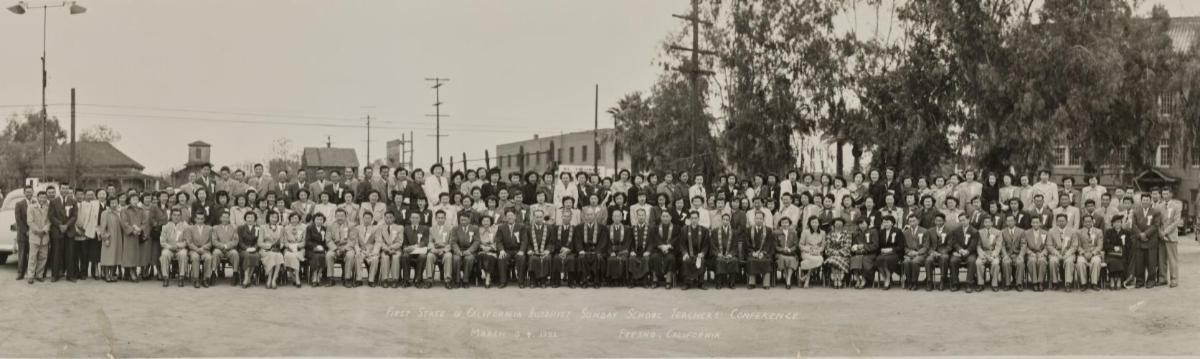
The first program in the series is an oral history screening taking place on January 24th at The Archive on Kern at 2:00PM. In collaboration with Rich Media and the Chinese Consolidated Benevolent Association (CCBA), CAMP recorded four powerful oral histories that capture lived experiences, family histories, and shared heritage leadership. The public will be invited to attend this special screening and engage with these meaningful narratives. Click here to RSVP to attend.
The oral history participants include:
Beverly Cho, born in Oakland, California, is deeply involved in civics in Selma and previously served as Selma City Council Mayor Pro Tem. She is a founding member and past president of the Central Valley Lioness Lions Club. Beverly also owns Cho’s Kitchen, a Chinese restaurant established in 1963 by her parents, who immigrated from China.
Mary Fung was born in China Alley in Fresno’s historic Chinatown. She and her late husband, Herbert Fung, raised two children and have a large extended family of grandchildren and great-grandchildren. Mary has worked for Leo Wilson Development as a broker for 45 years, reflecting a long and distinguished career in Fresno’s business community.
David Joe immigrated to the United States from Mainland China in 1952. A longtime resident of Kerman, California, he owned a small business and was actively involved as a leader in the Yuen Hoy Association, an organization dedicated to Chinese immigrants from the Hoy Peng and Fay Yuen regions of China. Together with his wife Karen, he raised four children and a growing family of grandchildren.
Franklin Ng, born in Honolulu, Hawaii, is Professor Emeritus of Asian American Studies at California State University, Fresno, where he taught for more than 40 years. He served as faculty advisor to numerous Asian American student organizations and played a pivotal role in advancing Asian American studies and advocacy in the Central Valley.
CAMP and FCCHS look forward to sharing this rich Chinese American heritage with the people and leaders in our region throughout the coming year. Through storytelling, education, and cultural celebration, this program series invites Fresno residents to learn, reflect, and connect with histories that continue to shape the region today.
| | |
MOONLIGHT MAHJONG RETURNS
February 7, 2026
| | |
Do You Mahjong?
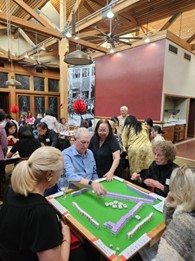
Come join us at The Archive on Kern for Moonlight Mahjong, a special fundraising event supporting our From China to Fresno exhibit! This one-of-a-kind evening invites you to learn and play Hong Kong–style Mahjong while exploring the game’s rich cultural history and meaning.
Mahjong is a game of skill, strategy, and luck that originated in 19th-century China and has since spread across the globe. While it is often compared to the Western card game rummy, Mahjong carries far deeper cultural significance, particularly within Chinese communities. Traditionally played at family gatherings, festivals, and celebrations, Mahjong serves as both entertainment and a powerful tool for building social connection. More than just a game, Mahjong reflects core principles of Chinese philosophy, especially the balance of Yin and Yang, the interplay of opposites such as light and dark, strength and weakness, and chaos and order.
Experience Mahjong Firsthand!
To truly appreciate Mahjong’s history, philosophy, and artistry, there is no better way than to sit down and play. At Moonlight Mahjong, you’ll have the opportunity to learn the game, sharpen your skills, and connect with others through this timeless tradition.
We would love to welcome you on February 7th at The Archive on Kern and discover the beauty, complexity, and cultural richness of Mahjong.
See you at the table!
| | |
THE BOY WITH THE LEAKING BOOT
By Cami Cipolla, Director of Educational Services and Community Engagement
| | | | |
Hello Friends of the Archives!
While reading The Valley’s Legends & Legacies for an upcoming project, I came across an article about a statue in Courthouse Park that I had never seen before. I walked all around the park with no luck. I love a good mystery, so naturally I needed to find the statue and learn of its history.
In 1872, when the Central Pacific Railroad laid out the townsite of Fresno Station, railroad officials offered local residents a four-block parcel at the corner of O and Fresno streets to be used as a public park and the future site of a courthouse. Townspeople, however, felt the location was too far from the commercial center on H Street. Few were willing to walk such a distance through fields of wild lupine and tumbleweeds. Instead, residents requested a site closer to town and were granted four blocks at Mariposa and L streets.
In 1874, the county seat officially moved to Fresno, and construction of a courthouse began at the center of what would become Courthouse Park. For more than a century, Courthouse Park has served as the heart of county government, but it has also functioned as a vital social and cultural gathering place. Couples courted beneath its trees, friends met along its shaded paths, band concerts filled the air, and public meetings brought the community together. It was here that the funeral for Dr. Rowell was held, and here that Fresno residents gathered at 2 a.m. on November 11, 1918, for a Thanksgiving service celebrating the end of World War I.
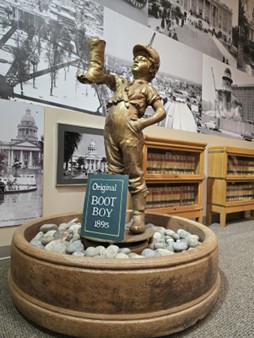
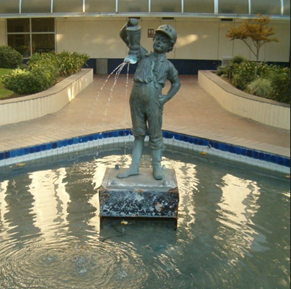
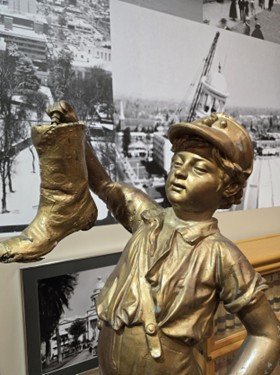
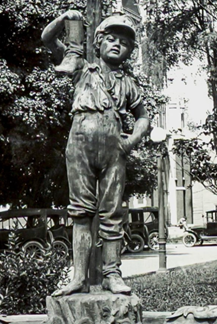
Courthouse Park carries a deliberately simple name because it belongs to everyone. Within its walkways stand memorials honoring individuals and events that shaped Fresno County’s history. One of the park’s most beloved features was the Boy with the Leaking Boot Fountain. In Fresno’s hot summers, residents argued that a public drinking fountain was essential. In response, the Boy with the Leaking Boot Fountain was erected in 1895 through the efforts of Sergeant Daniel Nichols of the Salvation Army. Fundraising was a community-wide effort: schoolchildren donated pennies, residents contributed from across Fresno, and the Board of Supervisors added $500 to complete the project. The fixture, featuring a pewter statue, became Fresno’s first public drinking fountain. Tin cups attached by chains to eight faucets provided water for the public, while blocks of ice were placed on the pipes to keep the water cool during the summer heat.
Originally located at the Van Ness and Mariposa entrance to the park in front of the original Fresno County Courthouse, the fountain was officially dedicated on August 21, 1895. It served the community for 26 years before being relocated near the L Street entrance to make room for the Anna Woodward Memorial. While the statue itself remained intact, the original tin cups were replaced with bubblers. Over the next fourteen years, the statue was vandalized three times, sustaining extensive damage. It was ultimately placed into storage until funds could be raised to recast it in bronze. After nearly twenty years, Fresno schoolchildren once again stepped forward, raising half the necessary funds. In 1947, the statue was restored and recast in bronze. Despite its restoration, the boy continued to suffer vandalism, including the loss of his iconic boot. He was relocated multiple times, eventually facing Tulare Street in front of the Hall of Records, before being moved again in 1954 to accommodate an expansion of the building. The statue remained in Courthouse Park until 2023, when it was transferred to the museum at the Fresno Fairgrounds, where it resides today.
Fun fact: Fresno’s Boy with the Leaking Boot is not unique. There are at least twenty-four known examples across the United States. The design is believed to have originated in the late 1800s, possibly in Italy or Germany, and was popularized by J.L. Mott Iron Works of New York City, which began offering the statue in its catalog around 1875. Originally titled The Unfortunate Boot, the sculpture focused on the boy’s predicament rather than heroism. Over time, numerous legends have emerged to explain the statue’s meaning. Popular stories include a young newspaper boy who drowned while fishing, a Civil War drummer boy who carried water to wounded soldiers in his boot, or a young firefighter participating in a bucket brigade. While many towns have no definitive story tied to their statue, communities have embraced it as a symbol of resilience, generosity, and civic pride. For Fresnans, the Boy with the Leaking Boot remains a cherished reminder of a bygone era, an enduring piece of public art that reflects the spirit, imagination, and shared history of the community.
Cheers!
| | |
CELEBRATE AMERICA 250 WITH
TIME TRAVELERS EDUCATION DAYS
MAY 6, 2026
| |
Teachers, bring your students on a trip back in time at our Time Travelers Educational Days at the Kearney Mansion Museum and Gallery. On May 6th, we will offer a special school tour that celebrates America’s Semi-Quintessential, the 250th birthday of our nation. This very special version of Time Travelers will be focused on America's earliest days as a country.
The day includes interactive stations, hands-on learning, and living history experiences. Cost is $10.00 per student and chaperone teachers are always free.
This program aligns with U.S. history curriculum and gives students a fun, engaging way to learn outside the classroom.
Space is limited, so we encourage teachers to reserve their spot soon.
For questions or to sign up, please contact us at dunger@valleyhistory.org or call (559) 777-4087
We look forward to welcoming your class to this amazing celebration.
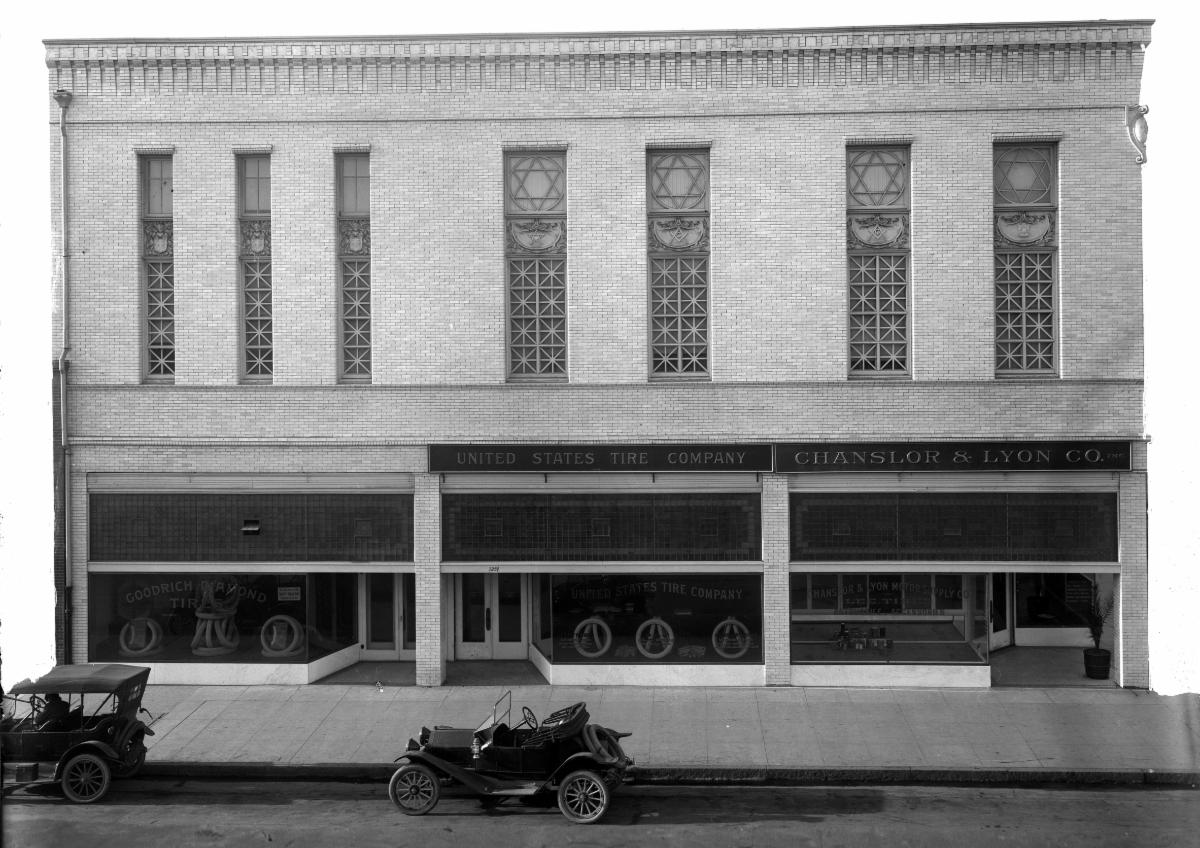
| | ROOTS OF THE VALLEY: Merchants’ Association of Fresno | | Masonic Hall Building, United States Tire Company, 1912. Courtesy of the Pop Laval Foudndation | |
Since the Merchants’ Association of Fresno played such a vital role in our Belmont Subway Lantern story, we thought you might enjoy learning a little more about their organization…
The Merchants’ Association of Fresno was organized April 7, 1911, by Fresno business and professional organizations interested in establishing a local credit bureau, one of the first merchant-owned in California, but also to promote harmony among the trade interests of Fresno County, the regulation of business advertising practices, establishment of laws, and promotion of business intercourse.
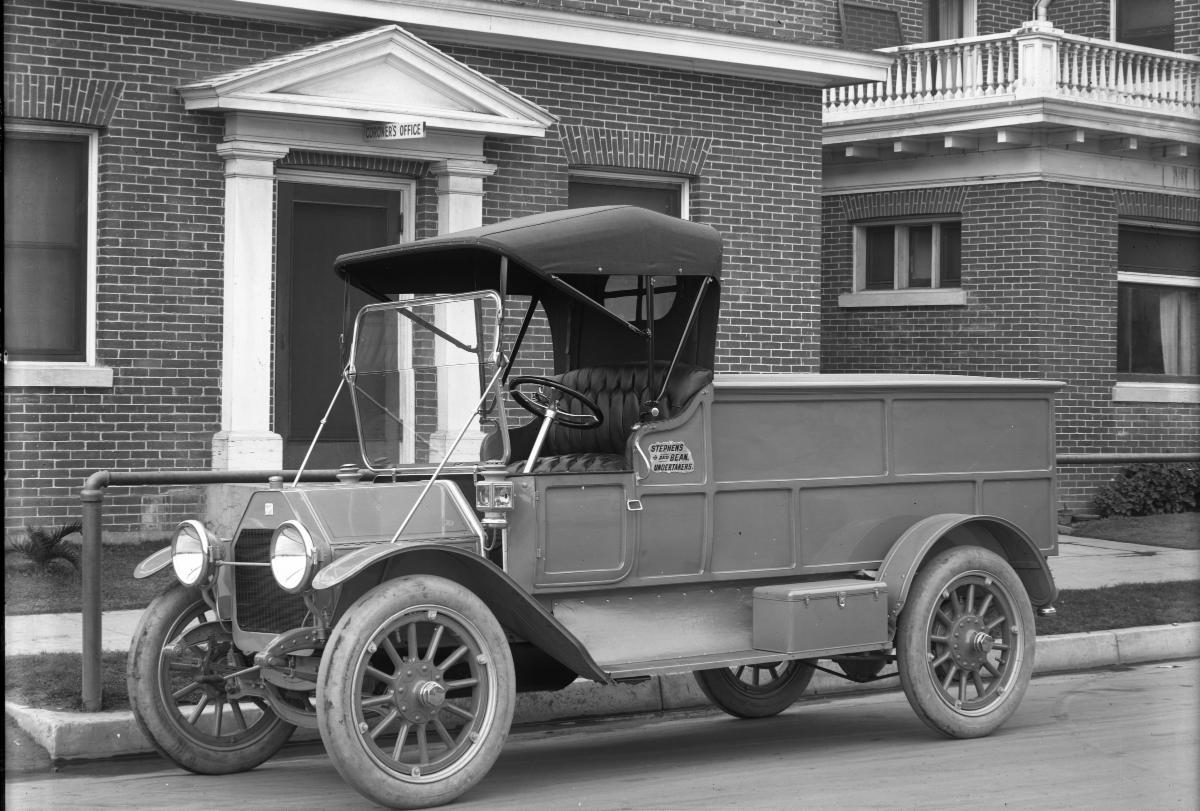
| | Stephens & Bean Undertaker Truck,
Circa 1913.
Courtesy of the Pop Laval Foudndation | |
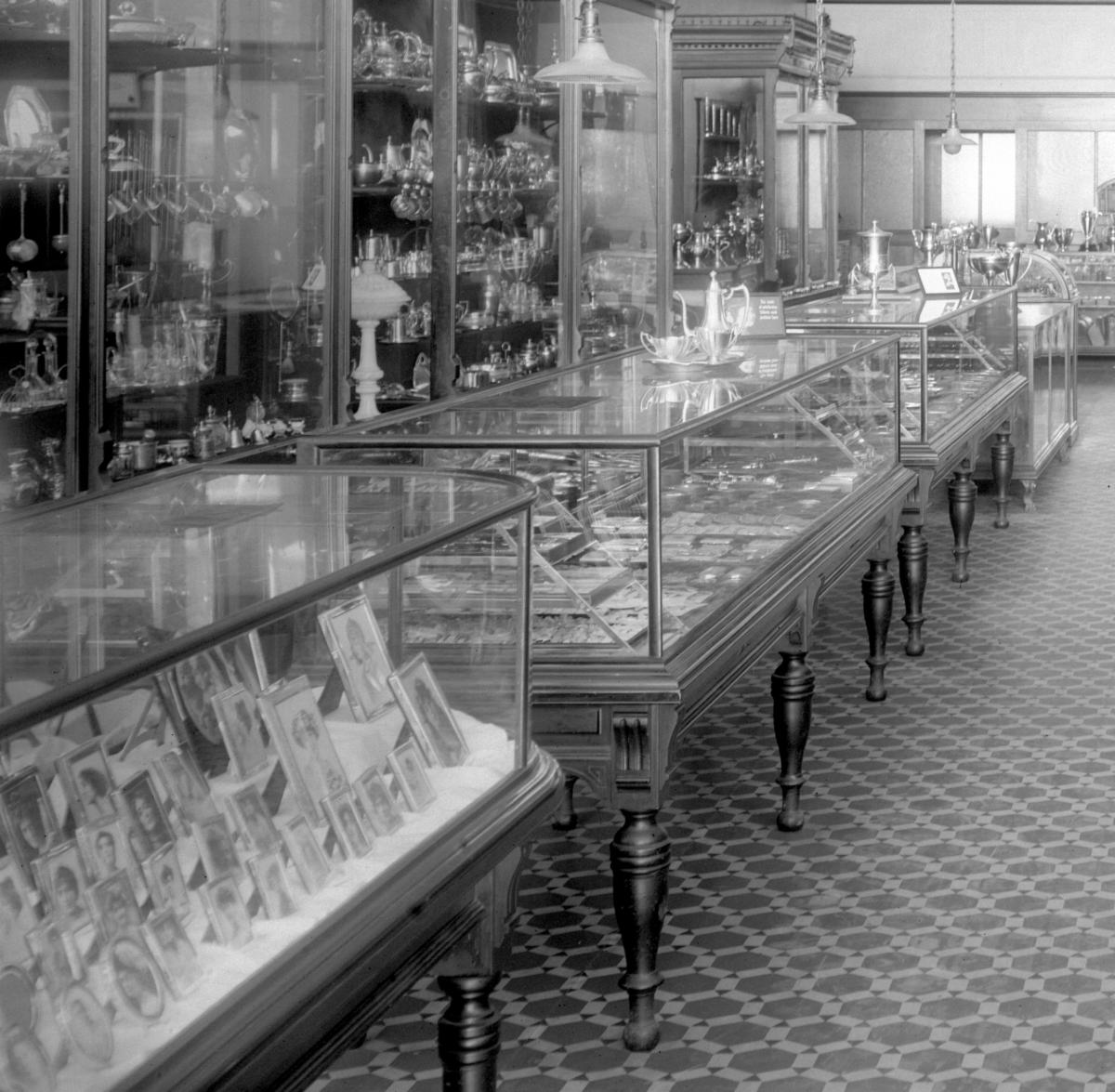
Interior, Warner Company Jewelers, September 2, 1914. Courtesy of the
Pop Laval Foudndation
| |
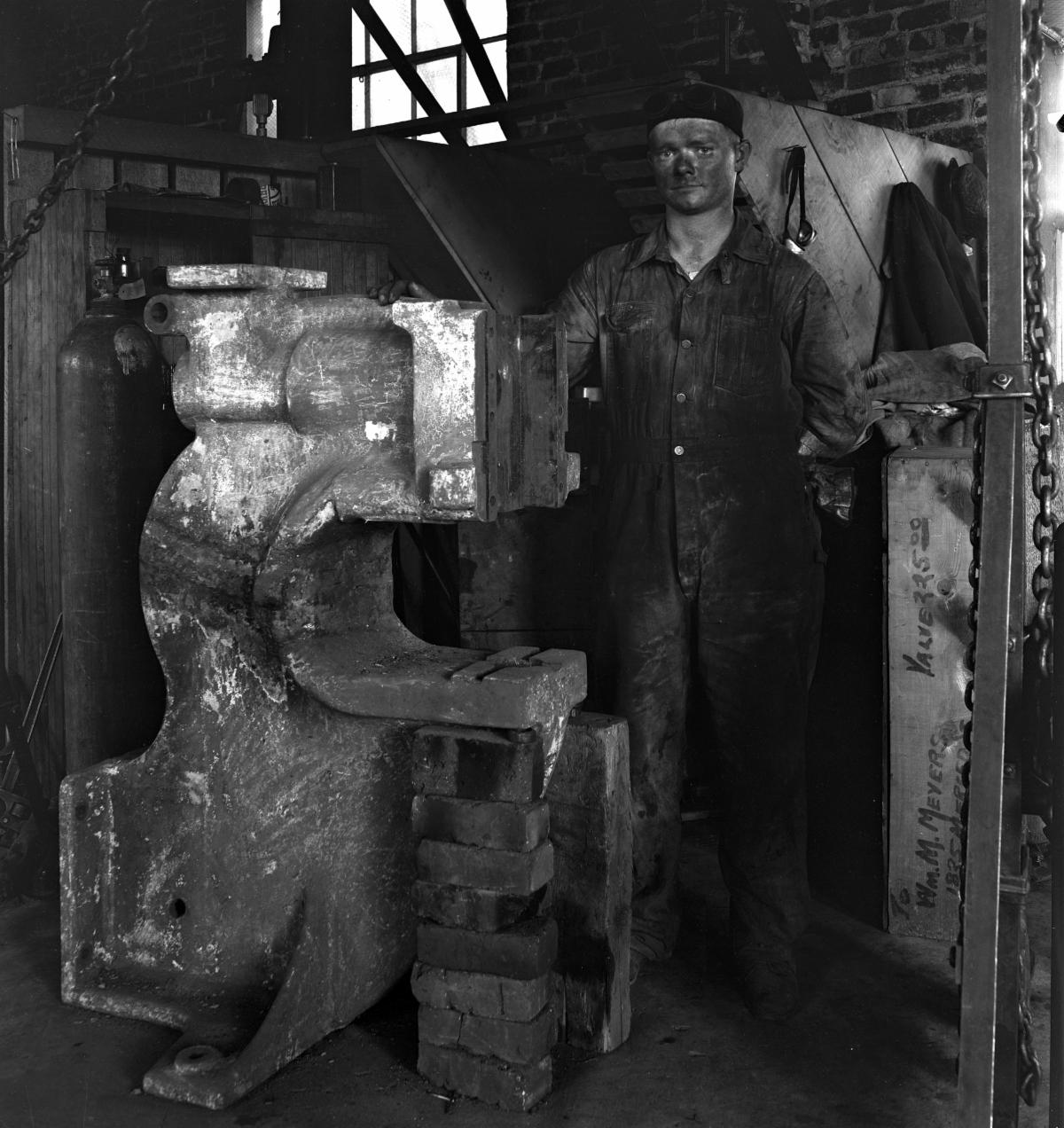
Foundryman with cast machine stand,
July 5,1920. Courtesy of the
Pop Laval Foudndation
| |
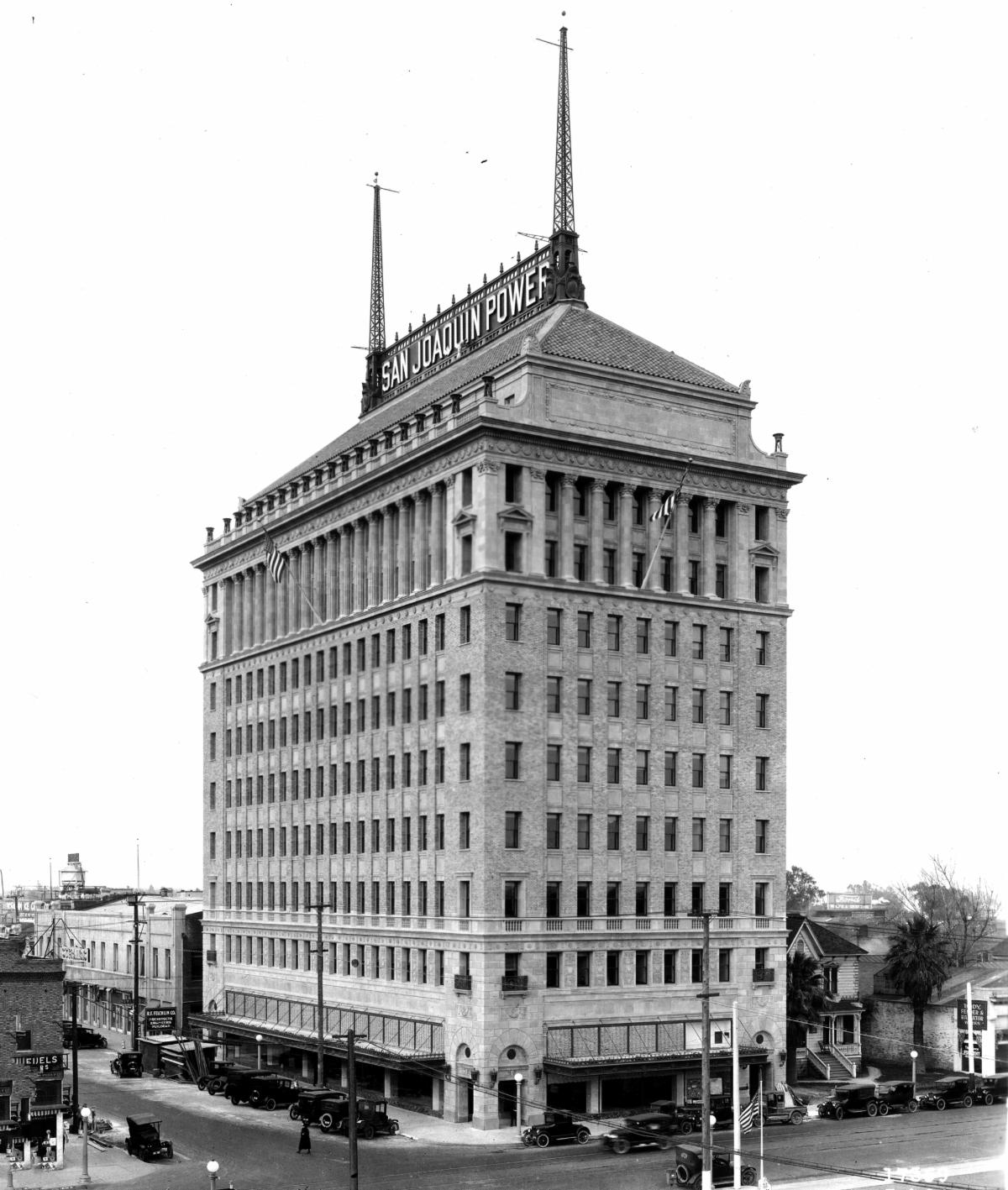
San Joaquin Power & Light Building,
March 4, 1924. Courtesy of the
Pop Laval Foudndation
| |
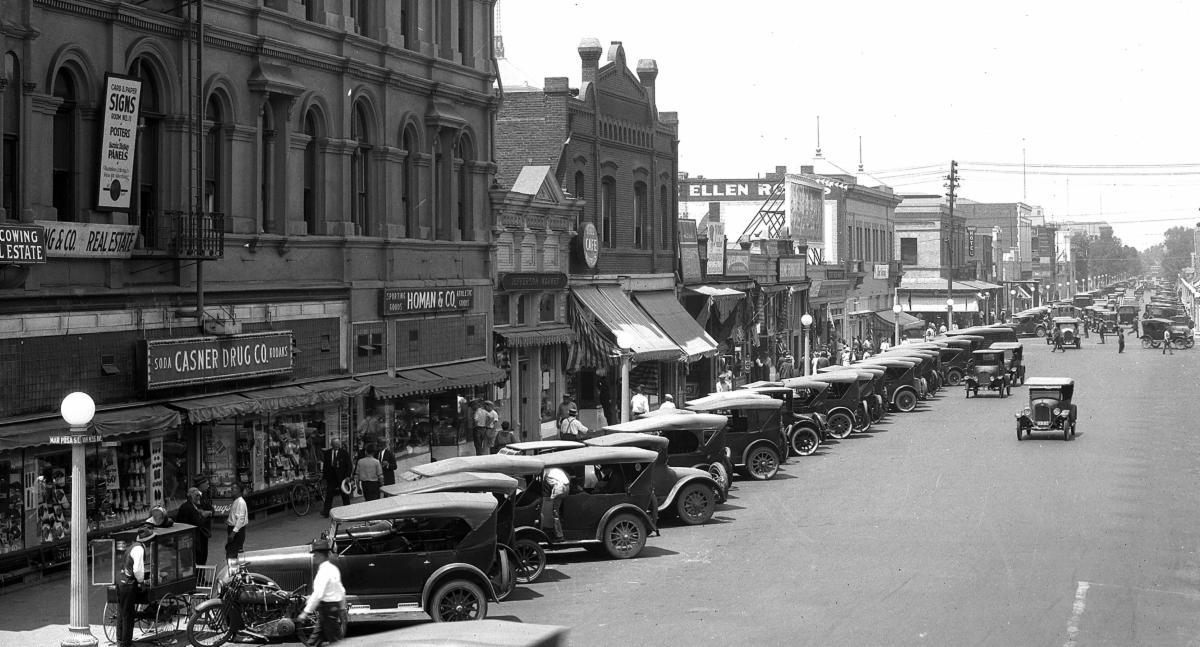
Castner Drug Store on Van Ness Ave.,
May 31, 1924. Courtesy of the
Pop Laval Foudndation
| |
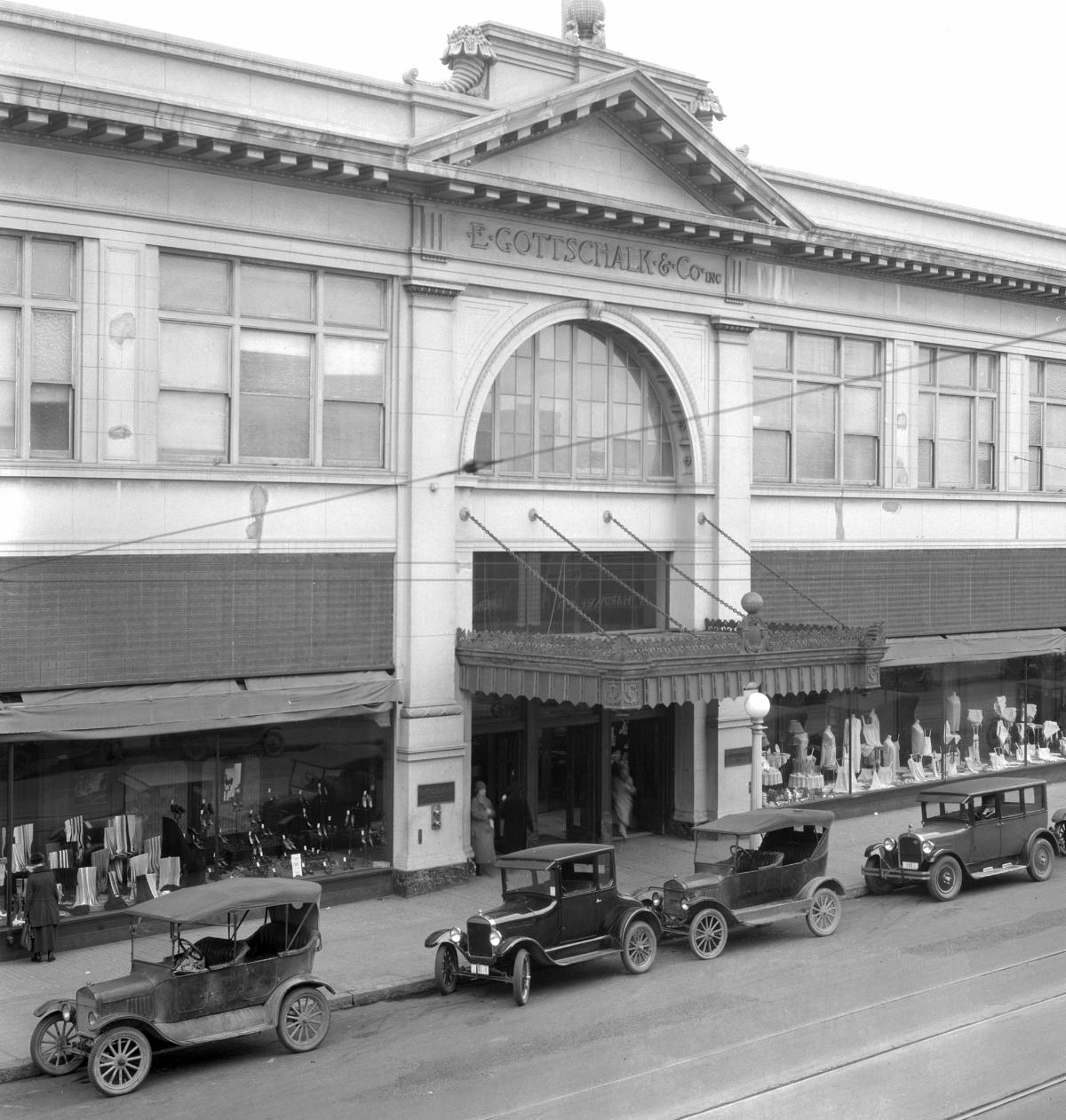
Gottschalks Main Entrance,
January 29, 1926. Courtesy of the
Pop Laval Foudndation
| |
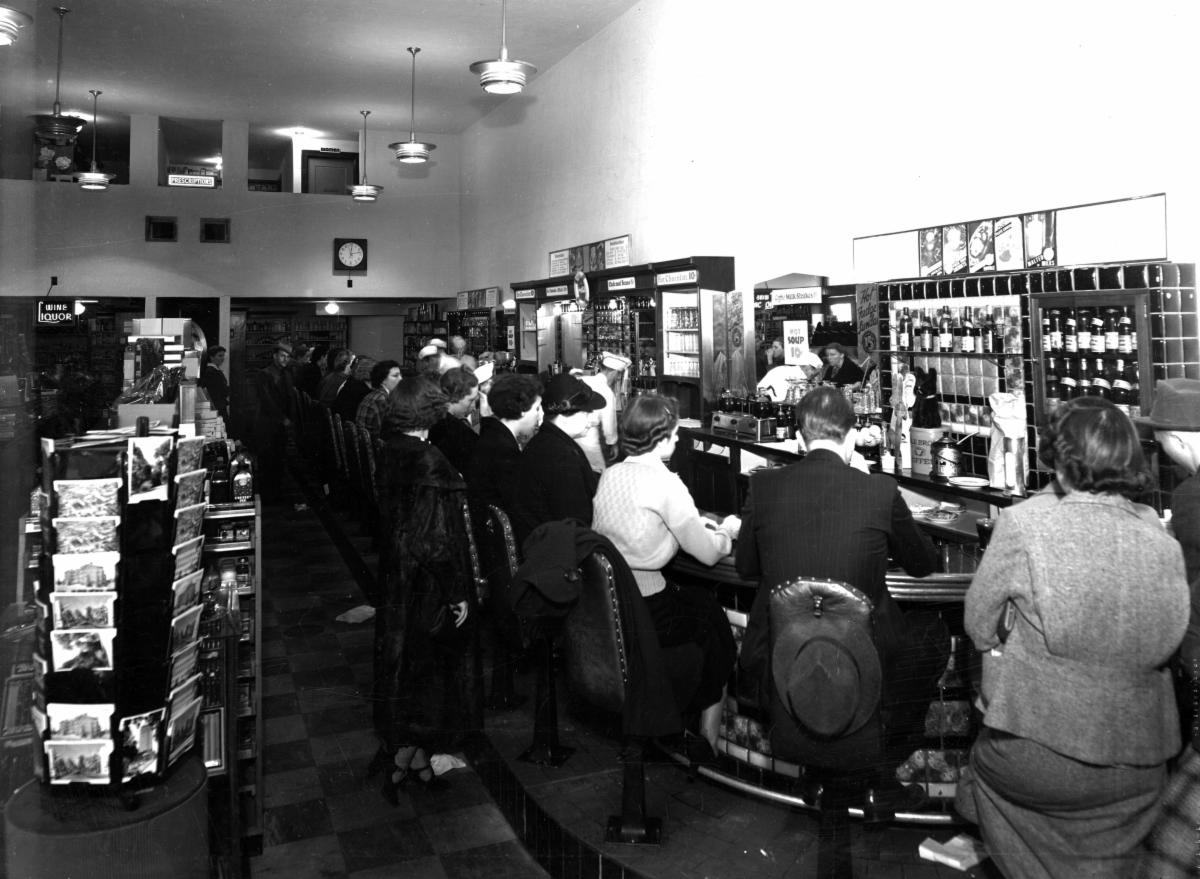
Interior, Castner Drug Store,
November 1937. Courtesy of the
Pop Laval Foudndation
| | |
The Fresno Morning Republican newspaper reported:
“MERCHANT ASSOCIATION ORGANIZED BY LOCAL BUSINESSMEN”
“Constitution and By-Laws Are Adopted; Officers Are Elected.
H. E. Wilkinson, President, and Geo. B. Hibbard Is Secretary.”
“The Fresno Merchants' Association was formally organized last night at the Chamber of Commerce. The constitution and by-laws, as prepared by a special committee, were adopted and officers elected for the first year.
The officers are:
H. E. Wilkinson, president.
A. R. McWhorter, vice president.
C. H. Miller, treasurer.
George B. Hibbard, secretary.
“The secretary will be the only officer of the association under salary, the remainder serving without pay. The first three officers are also members of the board of directors. The board has five members, the other two being Sig Wormser and Arthur McAfee.
“While the Merchants' Association will from now on be a reality, no arrangements have yet been made for headquarters. It is expected that at least temporary headquarters will be selected within the next few days.
“The first action taken by the association after its organization was an endorsement of a movement to have a celebration in Fresno on Raisin Day. The association also considered the proposed Monterey excursion to this city on April 29th and referred it to a special committee.
“The purposes of the organization, as outlined in the constitution, are to protect the merchants from various abuses to which they have been subjected in the past in the way of factitious advertising and unrestricted donation soliciting. The association will under no consideration enter into any political matters nor interfere in any labor troubles that might occur. The matter of credit is not considered in the bylaws but will in all probability be taken up at some time in the near future, when the association is in good working order.
“George B. Hibbard, secretary of the new organization, is a young man who has lived in Fresno for about four years. He was formerly chief clerk in the local telephone office under a J. P. Noble, going from here to Los Angeles, where he acted as chief clerk in the telephone office. Since his return he has been connected with a local collection agency.”
“SECRET COMMITTEE WILL PROBE ALL REQUESTS FOR DONATIONS”
“Merchants' Association Taking Steps to Protect Its Members Here.”
“Meeting Planned for Friday to Boost Enthusiasm; 80 Members Now.”
“A secret committee, to investigate all requests charity, benevolences and advertising from merchants of this city for, was yesterday appointed by President Wilkinson of the newly formed Merchants' Association, to become effective at once. The committee consists of three men, whose names are not known to anyone but themselves and the president, and this same secrecy is to be maintained always, in order to protect the members, themselves.
According to the plan under which this action was taken, the individual merchants of the city will cease to act on requests for charity, donations, semi benevolent advertising, public advertising and the like, and all these matters and the persons making the requests be referred to the Merchants' Association, which will in turn refer the matters to the secret committee. The plan is adopted in large part to protect merchants and businessmen from the at times very objectionable number of requests made for donations to almost everything that comes along and also to protect the business community against frauds and fakes of all kinds. The appointment of this committee is one of the first important steps the association has taken since its inauguration.”
“TO GET TOGETHER”
“For the purpose of getting the membership, which has grown amazingly in the last week, all together and really start the ball rolling, a meeting is to be held at the Chamber of Commerce building Friday night. Since a membership campaign was started a week ago, a great number of names have been added to the list of members, which now totals a little over eighty firms and individuals. Nothing like a general meeting of all these has yet been held.
“It is believed that in the next few days the membership will include virtually every firm of moment in the city, embracing also the public service corporations, in a scheme by which everyone that enters actively into the commercial life of the city is included.
“The purpose of the meeting at the Chamber of Commerce will be largely to develop a spirit of pull together. It is believed that in a few days, an announcement will be made of a special speaker who is to be secured for one of the meetings of the near future.”
“GREAT INTEREST SHOWN”
“A great deal of interest is being shown in this new association. With the establishment of headquarters, the organization now has a temporary home at 1933 Mariposa street, with George B. Hibbard, secretary, in charge. The interest shown by the business community has more than gratified the men who interested themselves in promoting the association. A meeting of the executive committee is scheduled for today.”
Some of the founding organizations are still known or a part of the Fresno business community today: E. Gottschalks and Company, the Warner Company, Webster Brothers, Inc. (Publisher of the Business Journal), Chanslor and Lyon Motor Supply, San Joaquin Power and Light (Pacific Gas and Electric), Homan and Company, San Joaquin Drug (E. P. Casner), Fresno Republican Publishing Company (The Fresno Bee), Pacific Telegraph and Telephone Company (SBC Communications), Valley Foundry and Machine Works, Hobbs-Parsons and Stephen and Bean.
Over the years, Merchants Association members promoted Fresno by advertising “back east” to encourage settlers to move west to Fresno area farms; monitored member business advertising practices and expelled members for violating the advertising rules; offered rewards to capture vandals; voted against day light savings time; worked to outlaw horse racing; promoted local governance to control downtown traffic with signage and speed limits and the establishment of trolley transportation to stops way out north (Pinedale); conducted the annual Raisin Bowl football game in the 1930s; home front support during the Great Wars with bond sales and community activities for the folks at home; and established the Downtown Association as a separate organization in the ‘60s, with Merchants Association to focus on credit reporting and debt collection services for the membership.
| | |
Merchants was one of the first credit reporting companies in California to adopt automated credit reporting when it joined the Trans Union network in 1974. It was in the forefront by automating its debt collection and mortgage reporting services as well. This "being first trend” continued when it became one of the first credit bureaus in the nation to develop an internet web site for all of its services, and to permit consumers nationwide to order their personal credit via the internet.
As the credit reporting marketplace changed in the ‘90s, the Association’s Board of Directors reviewed the long-term viability of the company and determined that it was in the best interests of its 750 members to sell the company. The decision to sell was not an easy one, as the Association was a part of the Fresno business community for 87 years and over 40 employees would have to find new jobs. Many of the Association’s employees had worked at the company for over 30 years. The Board gave first priority to the employees with assistance in separation pay and locating other jobs, and when the company was closed all employees but three had found replacement jobs.
As a merchant owned association that was incorporated as a non-profit California corporation, the Board, with the approval of the members, elected to distribute the sales proceeds to benefit the central California business community and to make donations to local non-profit charities in Fresno. This two-part donation resulted in the Boys and Girls Club of Fresno County, Break the Barriers, Hinds Hospice Foundation, Boy Scouts of America–Sequoia Council, and the Fresno Police Activities League, each receiving $70,000.
With the assistance of the California State University Fresno Foundation, the Board created the Fresno Merchants Association Scholarship Fund with a $1,700,000 donation to the Craig School of Business. The scholarship funds were designated to assist central California high school students interested in obtaining a business degree at the Craig School. The Merchants scholarship donation also assisted the business school by providing matching funds that enabled full funding of a donation promised by Jenny and Sid Craig.
When the company was closed in 1998, it still maintained the competitive edge against the three national credit reporting companies in the central California credit reporting market.
And, in addition to all that, the Merchants’ Association of Fresno was responsible for the acquisition of the 82 stunning lanterns that were displayed all along Fulton Street during the 1929, 1930, and 1931 holiday seasons!
| | |
MAKING HISTORY EVERY DAY
Year in Review 2025: Trade, disease
tested Central Valley farmers; weather was a friend
By Frank Lopez, Reprinted from The Business Journal, December 29, 2025
| |
Farmers and growers faced another challenging year in 2025, navigating trade disputes, labor pressures, disease outbreaks and economic uncertainty. The year began under the second term of the Trump presidency, which implemented sweeping tariffs on imported goods.
Retaliatory measures from other countries initially cut into U.S. crop exports, raising concerns among farmers and trade groups about higher domestic supply costs and lost sales overseas.
By spring, both China and the U.S. had scaled back their highest tariffs. Labor remained a concern. Trump’s immigration policies caused some workers to fear returning to the fields amid potential ICE raids. In January, the California Farm Bureau reported no widespread workforce disruptions but cautioned that aggressive enforcement could destabilize the industry.
Consumers saw higher grocery costs, driven in part by an ongoing bird flu outbreak that began in 2022. In March, roughly 20 million infected chickens, ducks and turkeys in the San Joaquin Valley were euthanized. Dairy operations were also affected when the virus reached most of California’s nearly 1,000 dairies in August, prompting quarantines.
Financial pressures continued to mount, with Federal Reserve interest rate hikes, lower commodity prices and rising labor costs cited as major factors. Farm employment declined by 1,800 jobs—a 3.4% drop—between March 2024 and April 2025, with ups and downs across livestock, dairy, and poultry sectors.
Amid these challenges, government and industry initiatives sought to bolster the workforce. In April, Rep. Vince Fong (R-Bakersfield) and the Fresno County Economic Development Corporation hosted a Good Jobs Roundtable with U.S. Secretary of Labor Lori Chavez DeRemer. The program, funded by a $23 million federal grant through the American Rescue Plan, offers paid job training in sectors including agriculture, manufacturing, transportation and logistics.
Earlier this month, President Trump unveiled a $12 billion aid package to support U.S. farmers struggling with low crop prices, high production costs and trade market issues. Most funding will go to the new Farmer Bridge Assistance Program for row-crop farmers, with $1 billion earmarked for specialty crops such as fruits, vegetables and nuts. California farmers, who primarily grow specialty crops, remain skeptical about the program’s local impact.
Weather offered a silver lining in early December. A two-week Tule Fog that blocked out the sun in the Central Valley allowed some crops to enter their chilling period, leaving farmers hopeful for a strong 2026 season.
Despite ongoing challenges, 2025 underscored the resilience of Central Valley agriculture as farmers adapt to shifting policies, economic pressures and environmental uncertainties.
| | |
San Joaquin Valley Town Hall Corner
Preserving the Last Wilderness - Saving Africa’s Okavango Delta
JAN. 21, 2026
| | | | |
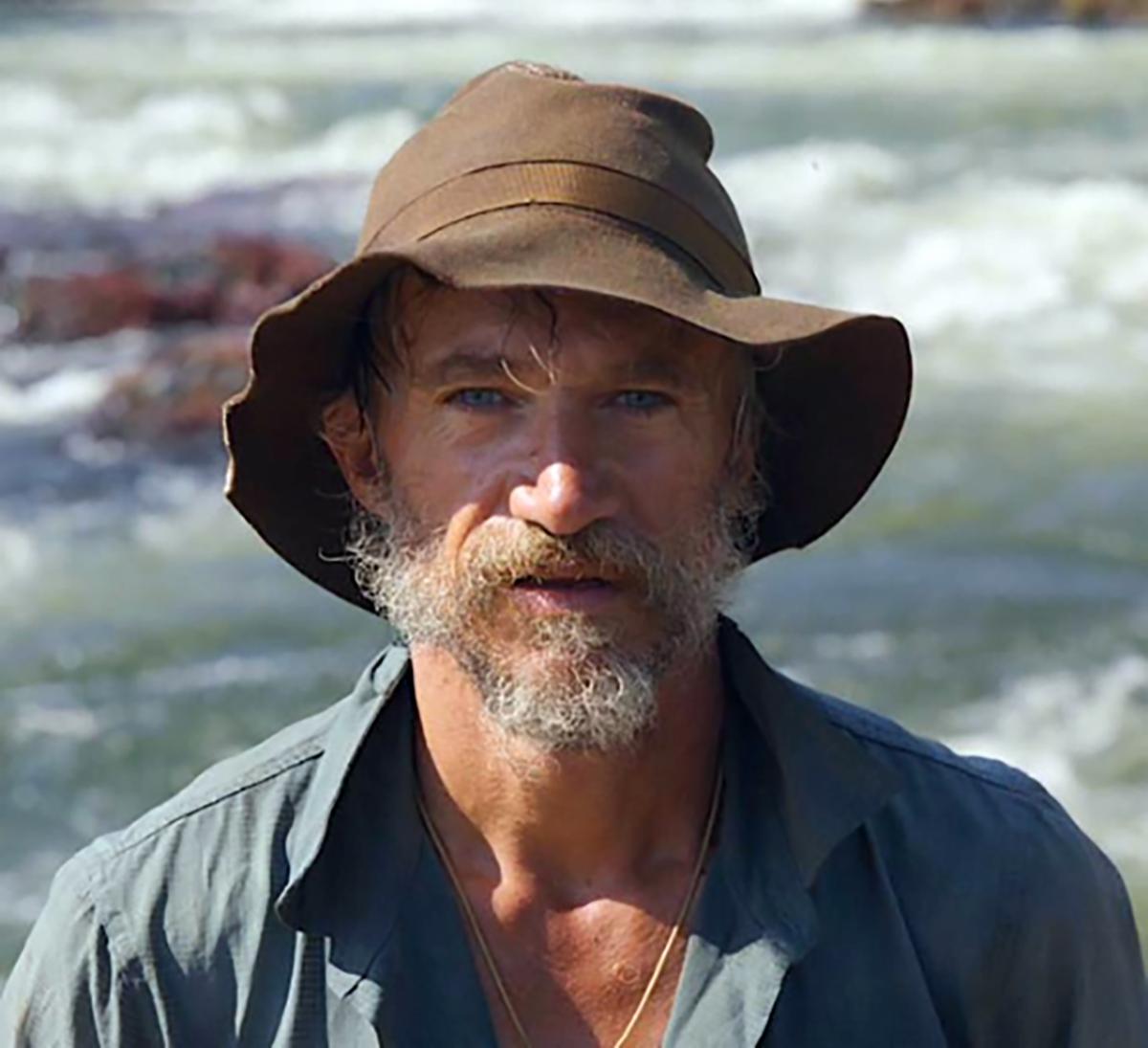
DR. STEVE BOYES
Conservationist & Adventurer
Join National Geographic Explorer Dr. Steve Boyes on a breathtaking journey into Africa’s last great wilderness: the Okavango Delta. With stunning imagery and gripping stories, Boyes reveals the urgent fight to protect this vanishing ecosystem—one that holds the key to our planet’s future. As he warns, “Wilderness cannot be restored, only destroyed. We are about to lose our last glimpse into pre-history.”
| | | | |