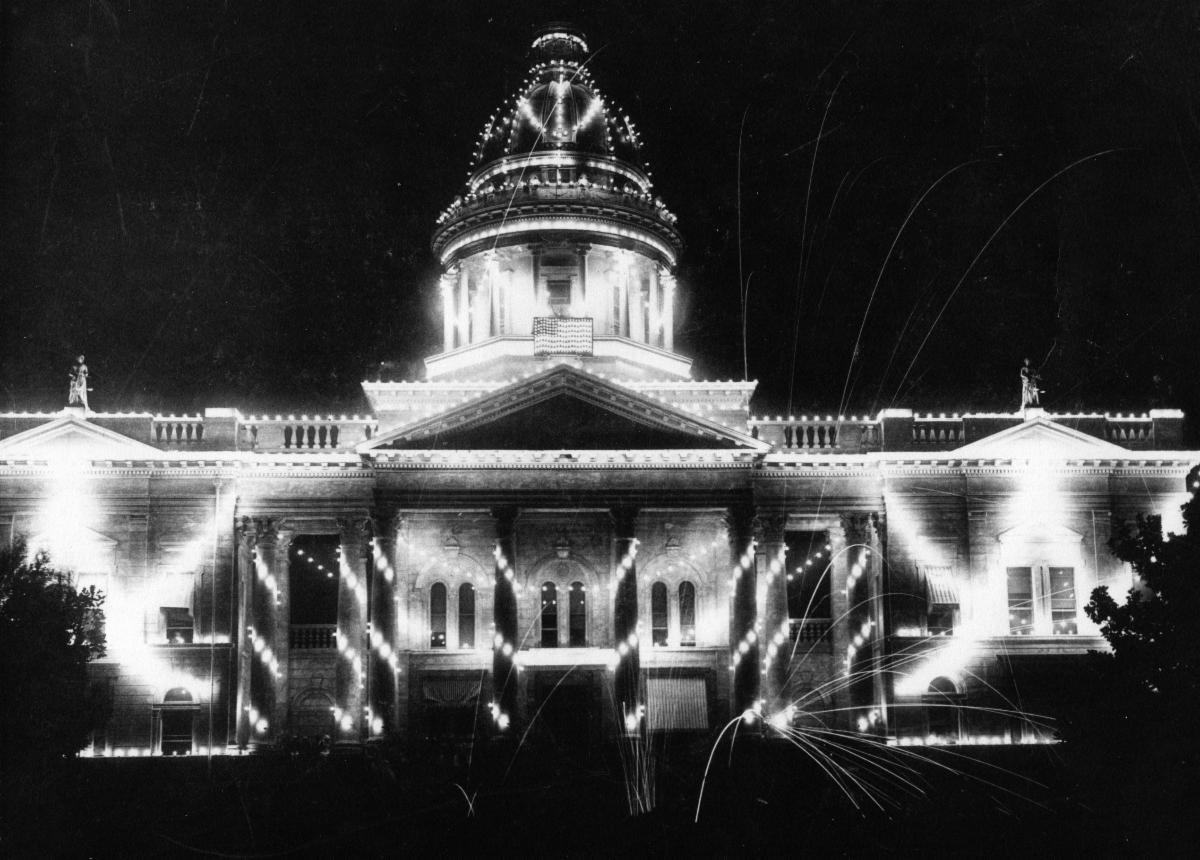
Monthly news & updates | | Fresno County Court House, July 4, 1897 | | |
A Message from the President
Dear Members, Supporters, and Friends,
| |
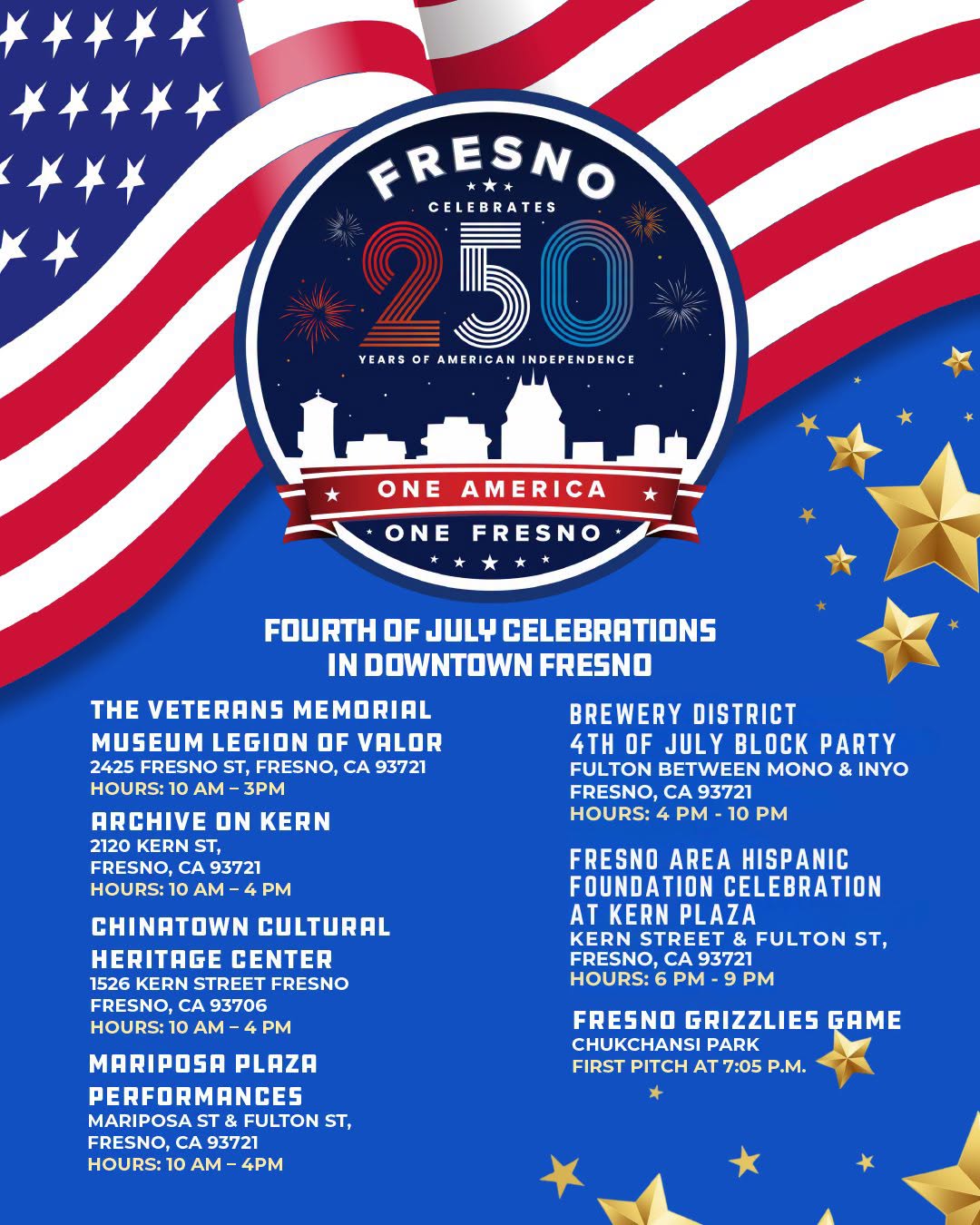
America is finally able to show her stars and stripes as the Semiquincentennial is upon us at last!
While all eyes are turned to July 4, 2026, when the United States celebrates her 250th birthday, thanks to the archives of the Fresno Historical Society, we can travel back to 1876 to see how the fledgling Fresnans honored our nation’s 100th.
| According to The Expositor Newspaper: | |
“The Centennial Fourth was celebrated in Fresno in a becoming and satisfactory manner, The town was gaily bedecked with flags and streamers, some buildings being especially gaudy. At one o'clock the procession was formed and marched through the principal streets. Among the noted features of the procession was the Car of Liberty containing the Goddess of Liberty, Miss Mary Cranmer, and some forty little girls carrying banners.
“Following the car came the boys carrying flags. After procession was over, the crowd assembled in the large warehouse of Silberman and Einstein's, filling it to repletion.
“The President of the Day, the Honorable R.P. Mace, was introduced after which he introduced Mr. Murry, who sang in a feeling manner, "The Star-Spangled Banner. An eloquent prayer was then offered, and The Declaration of Independence was read by H. N. Dixon in a fine manner.
“Mr. T. John McElvaney, the orator, acquitted himself with great credit. His address was able, eloquent and interesting. and full of patriotic sentiment. The ball in the evening was largely attended and passed off very pleasantly.
“It was the best Fourth of July celebration that has ever taken place in Fresno County.”
| |
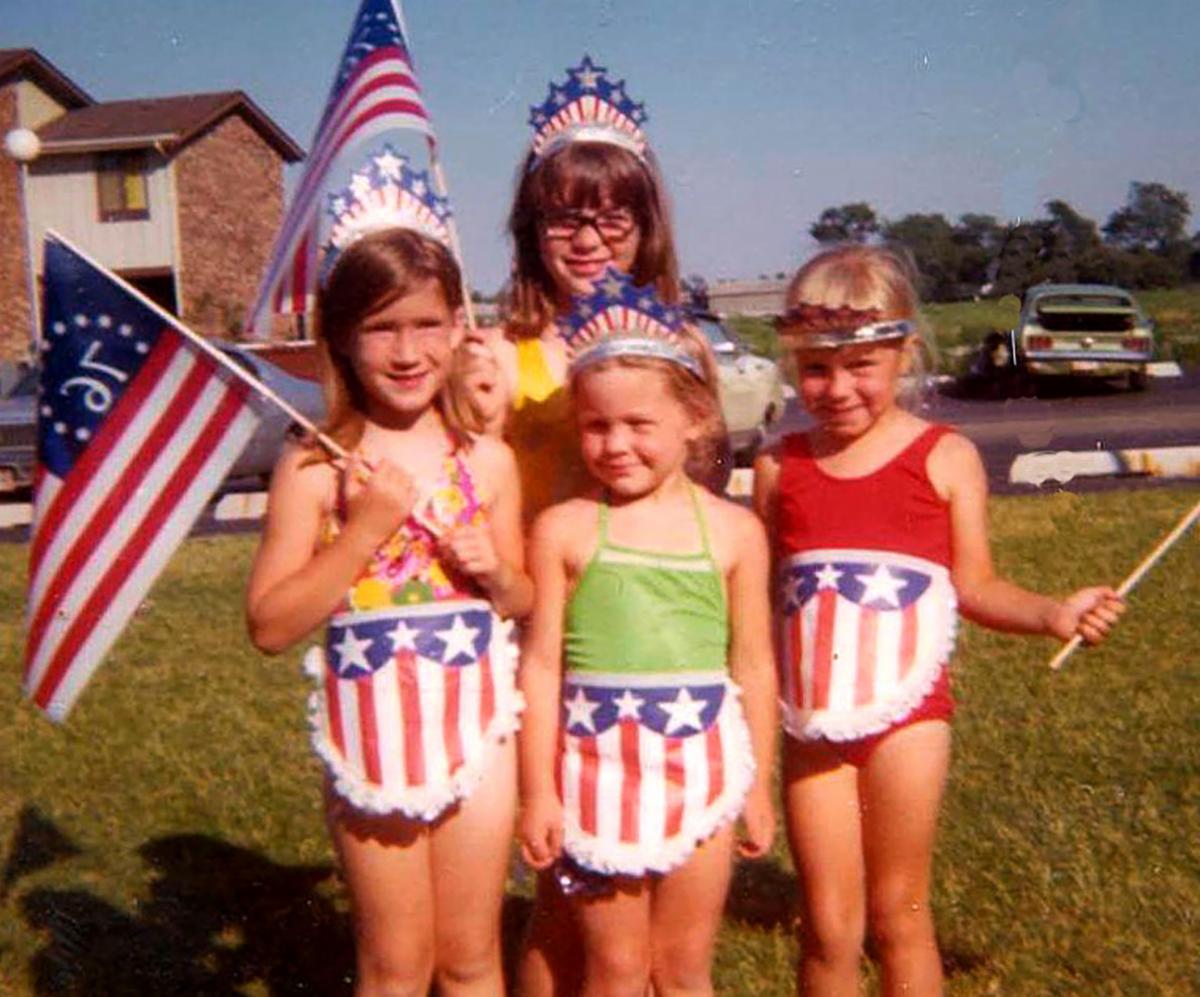
Well, what about the Bicentennial? Later you will read in Roots Of Our Nation how America commemorated our 200th birthday but I wanted to show you how OUR REGION really turned it up!
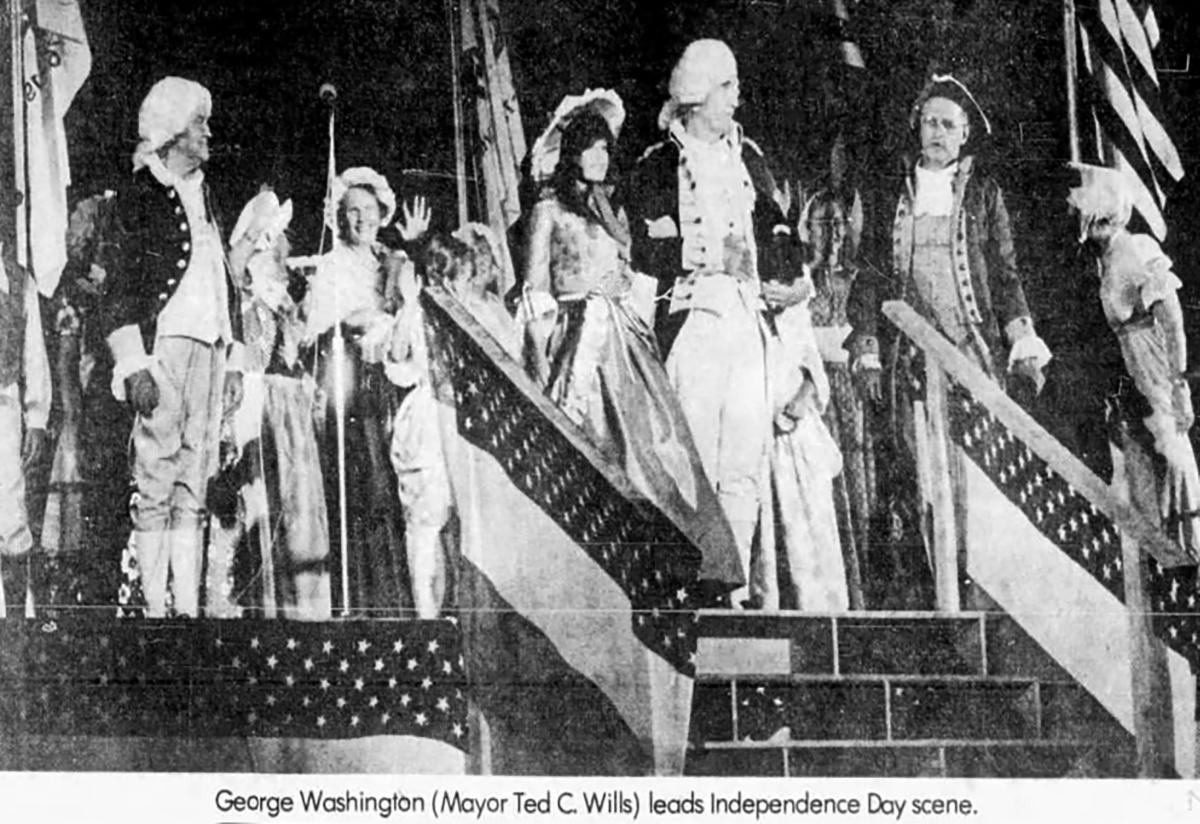
Mayor Ted C. Wills as George Washington is an image I won’t soon forget, though it certainly does not seem like 50 years to many of us.
The region went all out and held both a parade AND a pageant.
| |
A recap of the festivities from The Fresno Bee exclaimed:
“From Mrs. Uncle Sam to old and new dump trucks passed by the Van Ness Avenue reviewing stand Saturday during the nearly three-hour Greater Fresno Bicentennial Parade. U.S. Marine Corps Major L. M. Meyers of Lemoore Naval Air Station, his brass buttons gleaming in the morning sun, served as grand marshal. The 180 parade entries consisted for the most part of baton twirlers, vintage cars and civic, fraternal and veterans' groups.”
| |
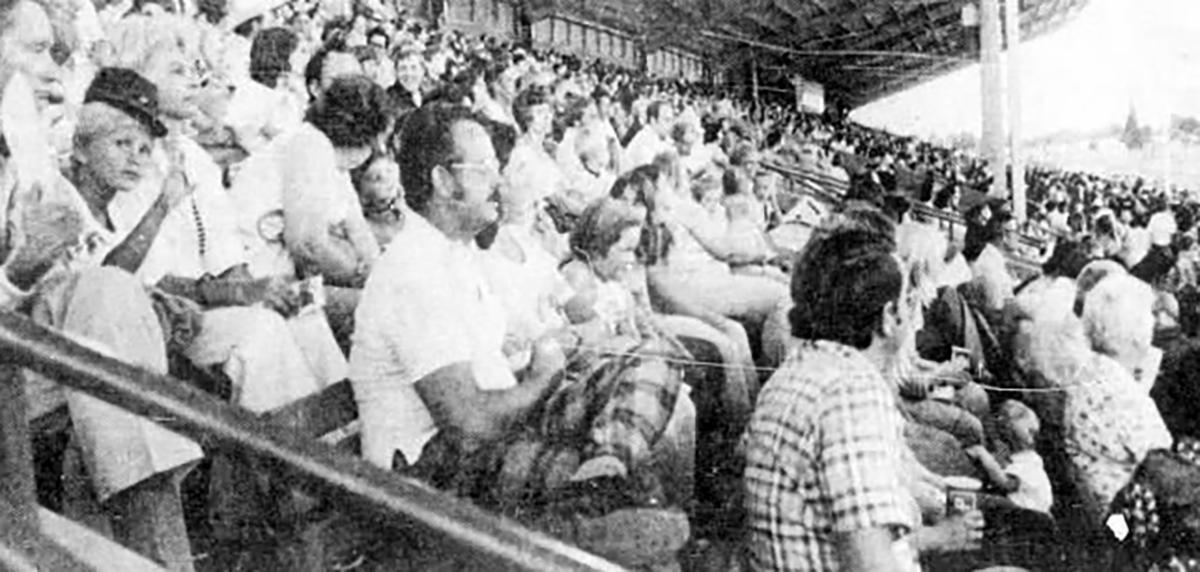
The two-day pageant clearly thrilled spectators…
“An enthusiastic crowd totaling nearly 14,000 persons witnessed Fresno's Bicentennial pageant at the fairgrounds highlighting the local recognition of the nation's 200th anniversary. The 16-scene pageant, "From Redcoats to the Red Planet," depicted 200 years of American history, compressed into an exciting, two-hour spectacle. The gigantic production featured music, dancing, portrayals, gymnastics, military units, old cars, mounted units, fireworks and many other scenes.”
| |
Fresno’s 1976 Bicentennial celebrations brought thousands of residents together through patriotic pride, public exhibitions, and visits from a legendary cross-country train tour.
Here is a breakdown of how the city celebrated the Bicentennial era:
-
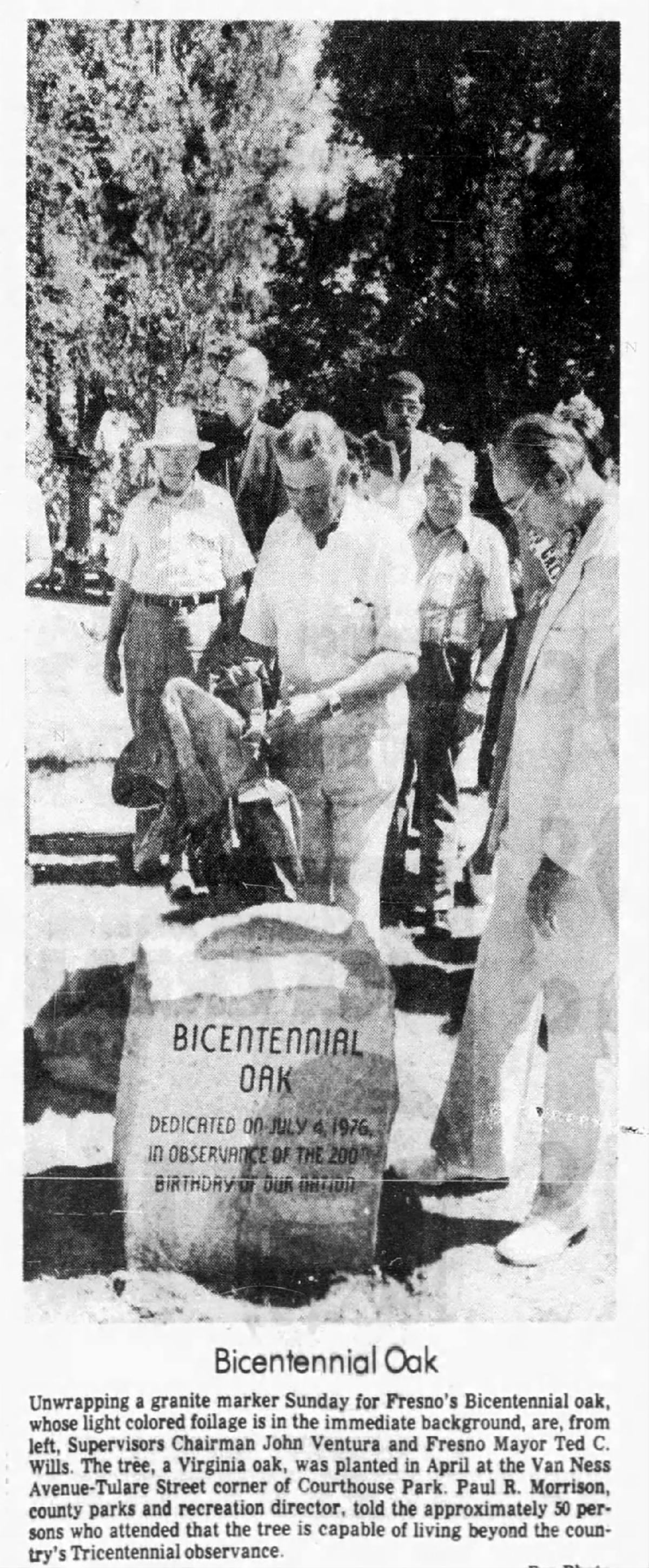
The Bicentennial Oak: A Virginia Oak was planted in Courthouse Park with a commemorative granite marker, officially designated as Fresno's Bicentennial Tree.
-
City Hall Flag Ceremonies: On July 1, 1976, Mayor Ted C. Wills and the City Council hoisted an American Revolution Bicentennial flag at City Hall. It was the first and only flag to fly alongside the Stars and Stripes and the California state flag since the city’s incorporation in 1885.
-
The Bicentennial Pageant: The city hosted a massive historical pageant for the 200th anniversary, with a cast of nearly 1,200 local volunteers putting in roughly 5,000 man-hours to stage the event.
-
American Freedom Train Visit: In December 1975, the cross-country American Freedom Train (1975–1976) made a highly anticipated three-day stop in Fresno. Pulled by the restored Southern Pacific 4449 steam locomotive, the 26-car train displayed hundreds of historic artifacts, including moon rocks and the original Louisiana Purchase.
| | |
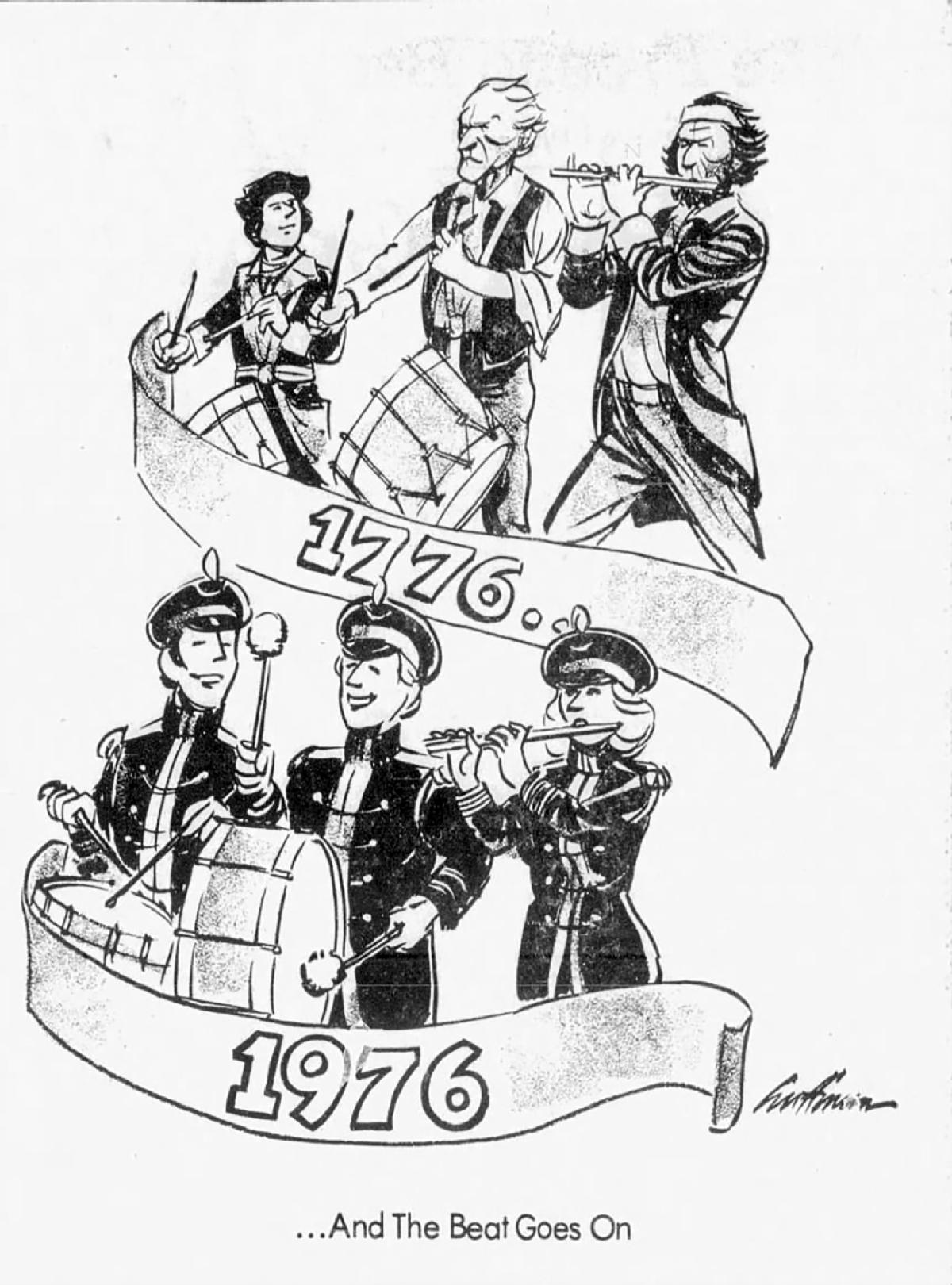
As we at the Fresno Historical Society continue nearly every day to dive deeply into our incredible McClatchy Collection, I found this Editorial piece, published in The Fresno Bee on July 4, 1976, to be particularly compelling and worth a read and a heed…
“Happy Birthday, America! Let the bells ring out from Philadelphia across the land. Let the marchers begin the parade. Unfurl the flag, strike up the band, step lively there. This is a day for old-fashioned pageantry and unabashed patriotism to honor the moment 200 years ago, at exactly 11 a.m. California time, when the tolling of the Liberty Bell proclaimed the signing of the Declaration of Independence and the struggle to fulfill its promise.
“In ways as diverse as its many parts, America is celebrating the beginnings and the prospering of a new nation of free men like no other before it. Ceremonies everywhere climaxing the year of the Bicentennial also herald the country's entry into its third and assuredly most difficult century. On another July 4th, this one in 1788, there was a great parade in Philadelphia after news came in that 11 of the 13 colonies had ratified the Constitution - some just barely - to make it a reality. Afterward, author Catherine Drinker Bowen recounts, people remarked upon the spectators' silence while the procession went by. Benjamin Rush, the physician-signer of the Declaration of Independence, called it a ‘solemn silence,’ as though citizens were awed by what had been achieved.
“‘Tis done,’ he wrote. ‘We have become a nation.’ A nation we remain but the mood today is different - restless, doubting, assailed by pressures that would defeat governments built on a lesser foundation. The celebration itself has been turned into a theatrical event, with vendors hawking their wares up and down the aisles. A young, robust, often bumptious country can be forgiven the excesses, the red-white-and-blue hustle and the tasteless commercial packaging of the Bicentennial provided it pauses long enough to consider what the fireworks are all about. The hoopla will have served a useful purpose if it moves Americans to take stock of the blessings and the flaws of democracy, and the management of the Republic.
Much of our history is colored by legends and images that hang on. When we glance back, historian Bruce Catton observed many years ago, we see Washington crossing the Delaware on a cold winter night or kneeling in prayer in the snow of Valley Forge; we see the Minuteman, or the lanky Virginia rifleman picturesque in fringed buckskin. A romantic haze, said Catton, has blurred what is most worth remembering - the fact that like all of man's wars, the war of the American Revolution was ‘a hard, wearing, bloody and tragic business, a struggle to the death that we came very close to losing.’ There were doubters in the crucial formative years, as there are skeptics today. In his first inaugural address in 1801, Thomas Jefferson said, ‘I know, indeed, that some honest men fear that a republican government cannot be strong, that this government is not strong enough.’ War and scandal have rocked the structure again and again but it stands firm because it was founded - Jefferson's words - on ‘the inherent and unalienable rights of man.’ The Bicentennial serves as a challenge to the United States to live up to the miracle at Philadelphia and to its mission as the beacon of the free world. It calls for a recharging (of the beliefs and hopes held by the disparate drafters of the Constitution in order for this generation, and those to come, to overcome the formidable problems confronting the country.
“The Revolution is not yet over. So much remains to be done to fully realize the American dream - to provide decent housing and care for the poor, the sick and elderly; to conserve dwindling resources of what once was the land of plenty; to combat such deadly enemies of democracy as racial animosities and intolerance; lessen violence, search out corruption and exert the moral leadership to avoid global suicide by nuclear folly. This is a time, then, for a rich nation to recapture the driving faith in democracy that flourished in the morning years of the Republic and made us the most fortunate of peoples. It is an occasion to honor the heritage of liberty and, in ‘solemn silence,’ offer up thanks for our material and political bounty.”
“Happy Birthday, America!”
| |
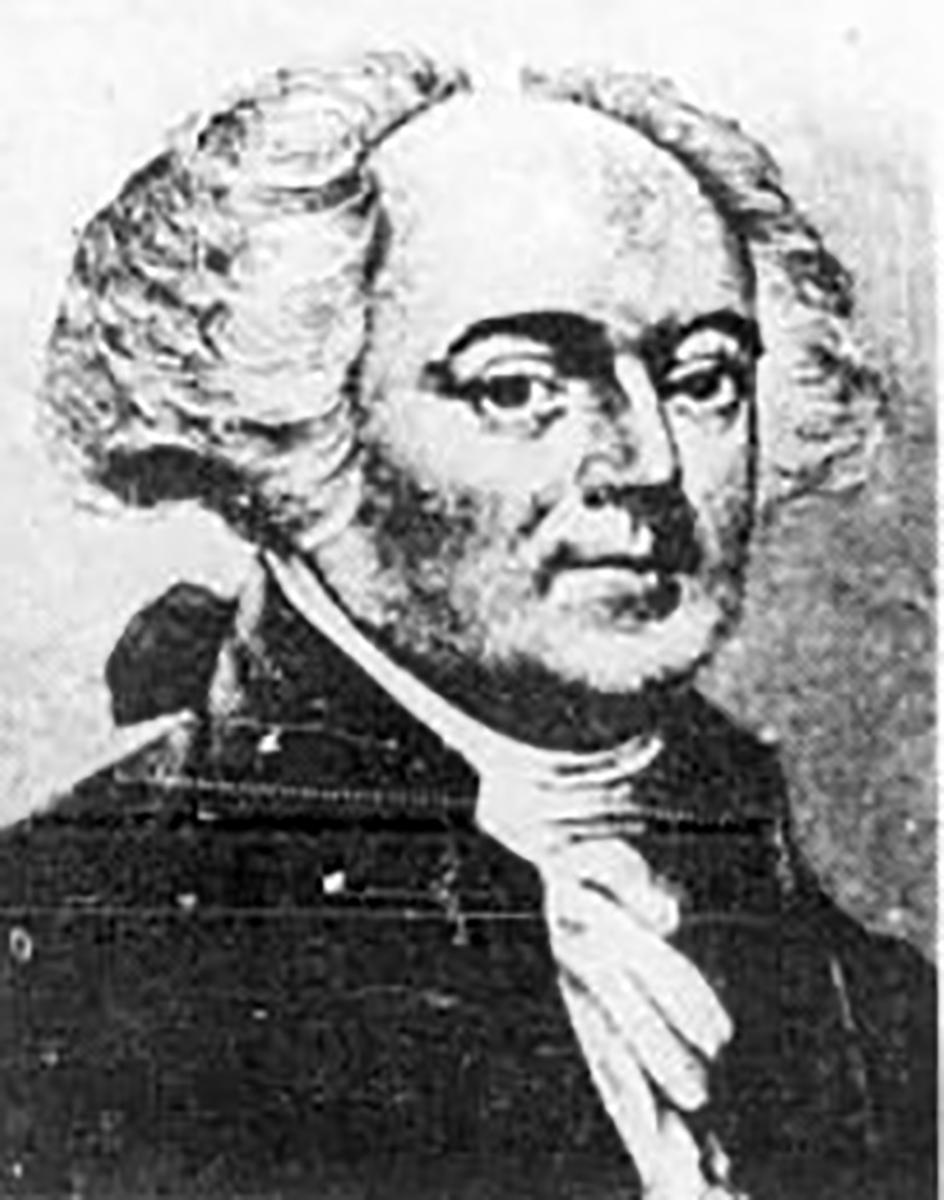
I wanted to finish today with this snippet of a piece on John Adams – someone we often are taught was a secondary figure to Washington and Jefferson. This description of his role seemed fresh and apropos. And, often, the best things take time!
“Adams: Freedom Floor Manager”
“EDITOR'S NOTE John Adams of Boston accomplished many things, but above all his work in Philadelphia in the spring and summer of 1776 made possible the Declaration of Independence. John Adams was the floor manager of independence. He brought it along slowly, carefully, counting and courting votes until a nation was ready to be born. ‘Be silent and patient,’ he cautioned the friends of liberty. ‘And time will bring forth, after the usual groans, throes and pains upon such occasions, a fine child.’ Adams was a painfully impatient man impatient with delay, impatient with the equivocation of fellow patriots, impatient with the reluctant and the cowardly.
“But his own self-control, with its moderating balm on his more radical cohorts, and his consummate skill at the legislative art led 13 angry but aimless colonies to unity and purpose and nationhood.”
Penned by Don McLeod of the Associated Press
I truly wish you all a peaceful and reflective Semiquincentennial as we look ahead to our country’s next 50 years. Remember, we make history Every Day for the generations yet to come.
| |
Warmest Wishes,
Elizabeth Laval
President
Fresno City & County Historical Society
| |
COME MAKE HISTORY
ON AMERICA’S 250TH BIRTHDAY!
Before the cookouts and fireworks begin, you are invited to be a part of our region’s one-of-a-kind contribution to the Semiquincentennial – 250 Voices – One America, One Fresno.
This unique video project, a partnership between the Fresno Historical Society and the Mayor’s Office, will spend the summer capturing a literal 250 mini-interviews with people all across our city.
And we want YOU to participate. Drop by The Archive on Kern on Saturday, July 4th between 10am and 4pm and let us include you in this project that will be played across the community on many platforms and will later be kept in a special America 250 Time Capsule to be shared in 2076 when our nation turns 300!
All that is needed is a short amount of time and you, your family, friends or whomever you choose. FCCHS President will be asking a few questions about America and Fresno – and remember, you can say whatever you like. Children under 18 can take part with signed parental permission only. All participants will be asked to complete a release so that we can use your interview all over the place!
The Archive on Kern is located at 2120 Kern Street in Downtown Fresno. Parking should be free due to the holiday.
Come be one of the 250 Voices sharing what life is like in 2026. The future generations will thank you! So will we!!!!!
Please contact info@valleyhistory.org with any questions.
| | | | |
FIELDS OF FRESNO AG TOURS
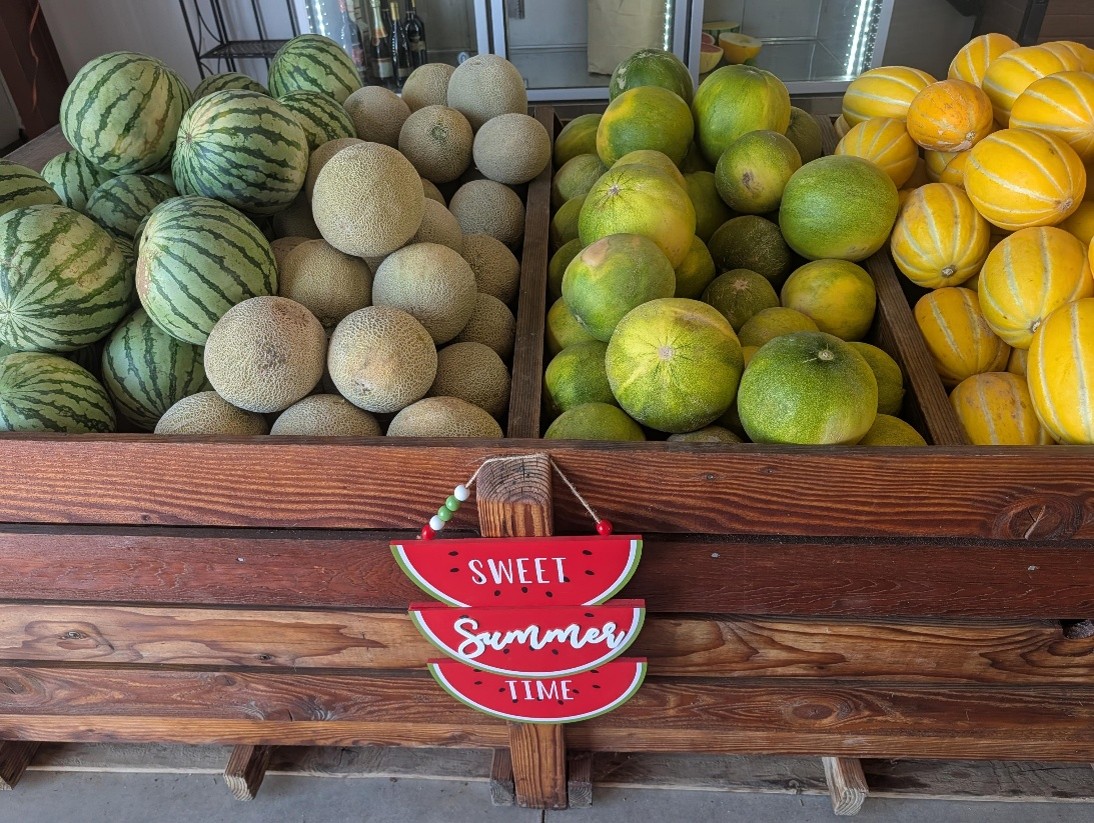
Sweet Summer Melons
Saturday, July 18
By Shelsea Avalos, Ag & Community Tours Coordinator
| | |
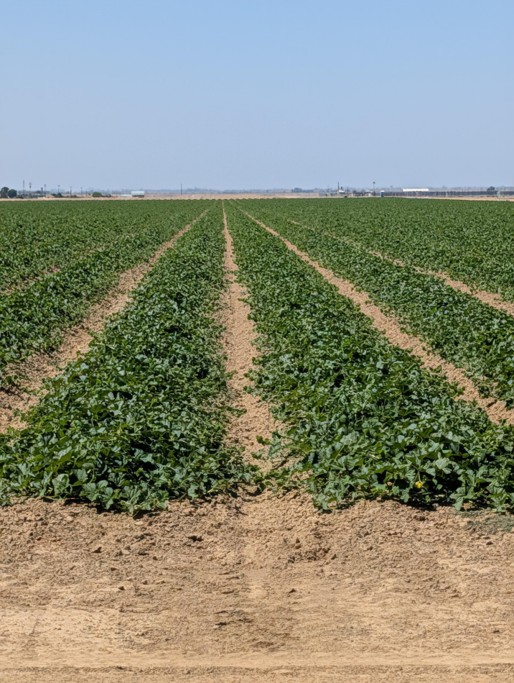
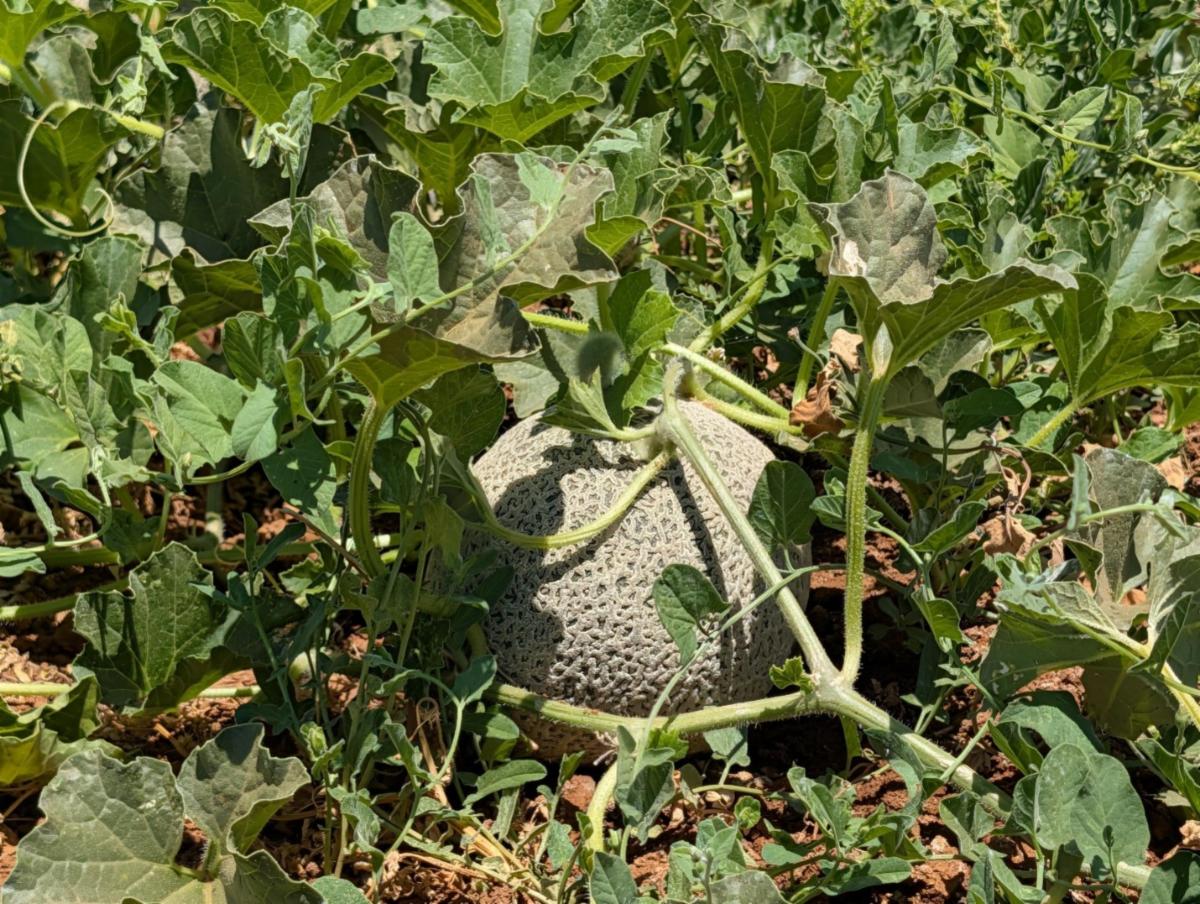
Summer is in full swing in the Central Valley, and few crops capture the season quite like melons. Crisp, refreshing, and made up of nearly 90% water; melons have become a summertime staple at backyard barbecues, family picnics, and neighborhood gatherings. Yet before they are sliced onto a plate, each melon spends nearly 100 days (about three and a half months) ripening under the California sun before beginning its journey from the field to your table.
This July, Fields of Fresno Ag Tours invites guests to venture west to the agricultural communities of Firebaugh and Mendota, where fertile soils, warm summer days, and generations of farming families have helped establish the region as one of California's premier melon-growing areas. While Mendota has long been recognized for its cantaloupe heritage, today these westside communities continue to produce melons enjoyed by families across the country and around the world. Beyond melons, this agricultural corridor is home to almonds, tomatoes, onions, grapes, and dozens of other crops that highlight the remarkable diversity of Fresno County agriculture.
| |
Our first stop brings us to Del Bosque Farms, where farmer Joe Del Bosque will share his family's agricultural story and introduce guests to the fascinating world of melon production. From sustainable farming practices to specialty melon varieties seldom found in traditional grocery stores, this stop offers a unique glimpse into one of the Valley's long-standing family farming operations and the opportunity to discover a new favorite melon. Guests will have the opportunity to sample and purchase produce at this stop.
Next, we will visit Turlock Fruit Company, a fourth-generation family-owned operation that has been growing and packing melons since 1918. During peak harvest, approximately 28,000 cartons of melons are packed each day, displaying the incredible scale of one of California's family-owned melon operations. Guided by Neill Callis, guests will step behind the scenes to see how melons are carefully prepared for grocery stores across North America and international markets. You may even be surprised to learn that the company's most popular specialty variety is the Orangedew, an exclusive melon that has outperformed traditional cantaloupe in USDA consumer taste tests.
| |
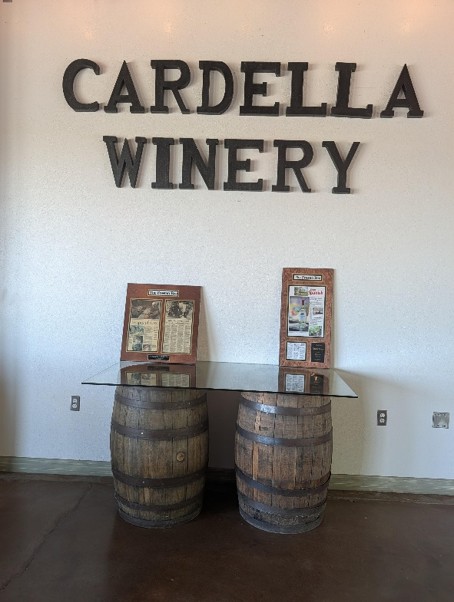
After a morning exploring the heart of California's melon country, we will make our way to Cardella Winery in Mendota for a Mediterranean-inspired lunch and wine tasting. This fourth-generation family winery beautifully reflects the agricultural diversity of the west side, where Italian heritage, vineyards, and Central Valley farming traditions come together to create an unforgettable finale to the day at this enchanting venue.
Although cantaloupe remains America's favorite grocery store melon, this tour offers the chance to discover a unique blend of history, family farming, and innovation. From specialty melon varieties with roots in Europe and Asia to exclusive melons grown right here in California, you will gain a new appreciation for the remarkable diversity that makes up one of the Central Valley's hallmark crops.
This full-day agricultural adventure begins with check-in at 7:20 a.m. at the Kearney Mansion Museum, where guests will board the motor coach before heading west for a day of exclusive agricultural experiences. We will return to Kearney by approximately 3:50 p.m., just in time to enjoy the rest of your summer evening.
| | |
The next time you enjoy a slice of watermelon at a backyard barbecue or a perfectly ripe cantaloupe on a warm summer afternoon, remember that there is an incredible story behind every bite. Now is your chance to witness the distinctive journey behind one of summer's sweetest harvests. Grab your closed-toed shoes, camera, and sense of adventure, then reserve your seat for another unforgettable Fields of Fresno Ag Tour.
Spots are limited, and these seats will not wait around forever. Secure your place on the motorcoach for the season today. Tickets and more information is available HERE. If you still have questions, please contact Shelsea at savalos@valleyhistory.org.
| | Proudly made possible by: | | |
HERITAGE IN ACTION LEAVES A LASTING LEGACY
By Cami Cipolla, Director of Educational Services and Community Engagement
| |
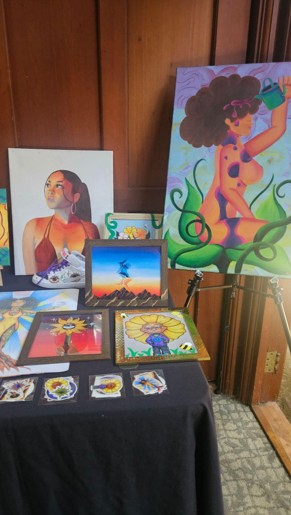
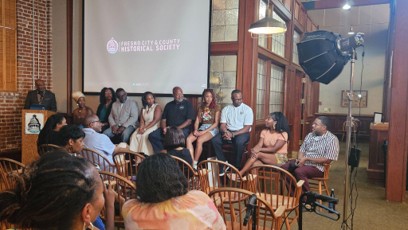
The Fresno City & County Historical Society is proud to celebrate the successful completion of Heritage in Action: Black History Shaping Fresno's Future, a stakeholder-driven initiative that honored the rich history, culture, and enduring contributions of Fresno's African American residents.
Made possible through the Expanded Access to Arts and Culture (EAAC) Measure P grant, Heritage in Action brought together educators, artists, historians, community leaders, and residents to preserve local stories while creating opportunities for learning, dialogue, and celebration.
Throughout the project, friends and neighbors explored Fresno's Black history through educational exhibits highlighting influential individuals, businesses, organizations, and historic milestones that have helped shape our city. Public panel discussions and community conversations encouraged participants to share experiences, reflect on local history, and celebrate the resilience and achievements of generations past and present.
One of the project's most meaningful accomplishments was the preservation of personal stories through oral histories and community-driven preservation digitization opportunities. Families were invited to share photographs, documents, and memories, ensuring these invaluable pieces of Fresno's history will be preserved for future generations. These first-hand accounts continue to expand the historical record while creating lasting educational resources for students, researchers, and members of the public.
| |
Heritage in Action also fostered new partnerships with local organizations, businesses, artists, and cultural leaders, demonstrating the power of collaboration in preserving and sharing our Valley neighbors’ diverse heritage.
The project culminated in a vibrant Juneteenth celebration that welcomed residents of all backgrounds to honor African American history, culture, resilience, and achievement through education, conversation, and meaningful connection.
While the grant has concluded, the impact of Heritage in Action will continue for years to come. New archival resources, strengthened community relationships, and preserved stories will enrich future exhibits, educational programs, and research while ensuring Fresno's African American history remains visible, accessible, and celebrated.
The Fresno City & County Historical Society extends its sincere gratitude to our project partners, volunteers, presenters, participants, and supportive cultural members whose passion and generosity made Heritage in Action such a meaningful success. Together, we are preserving history, strengthening community, and ensuring these important stories continue to inspire future generations.
| | |
SUCCULENT SOCIAL SUCCESS
By Debbie Unger, Tour Manager
| | | | |
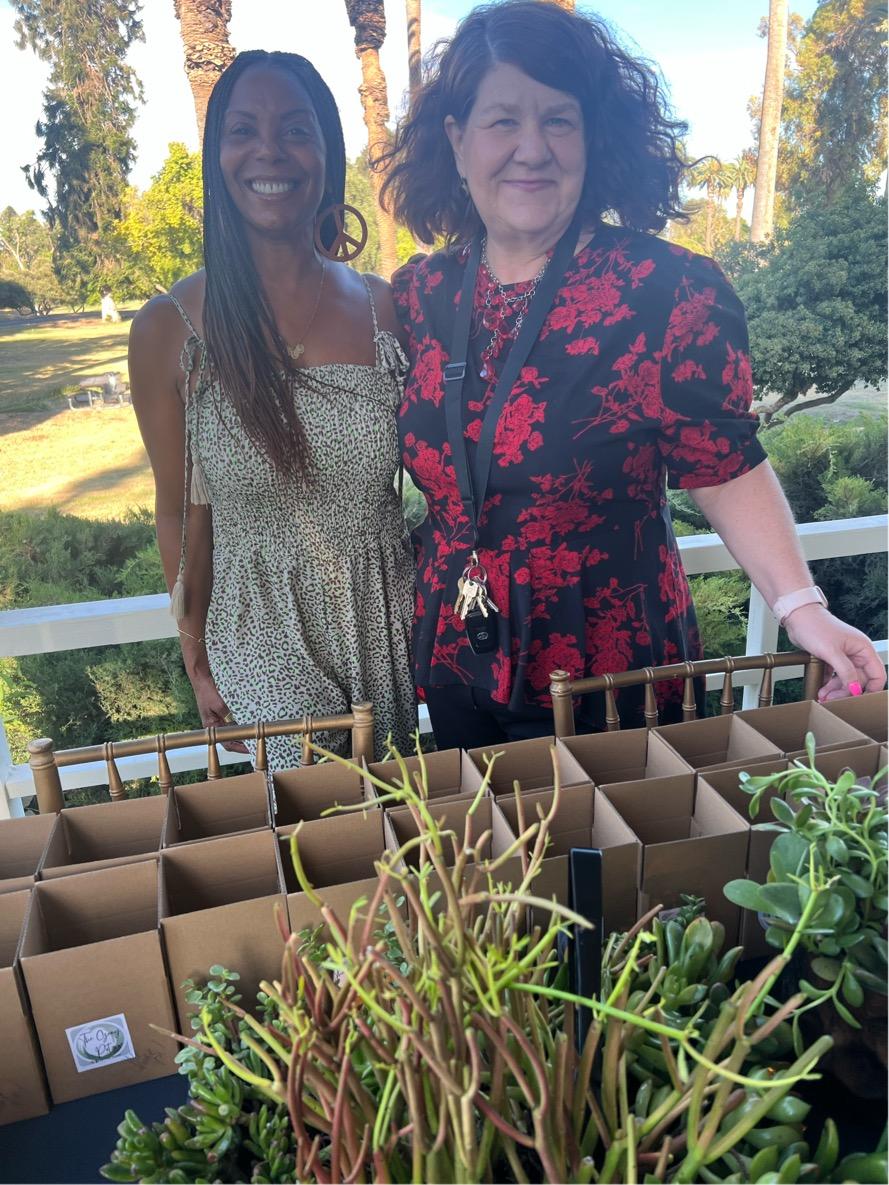
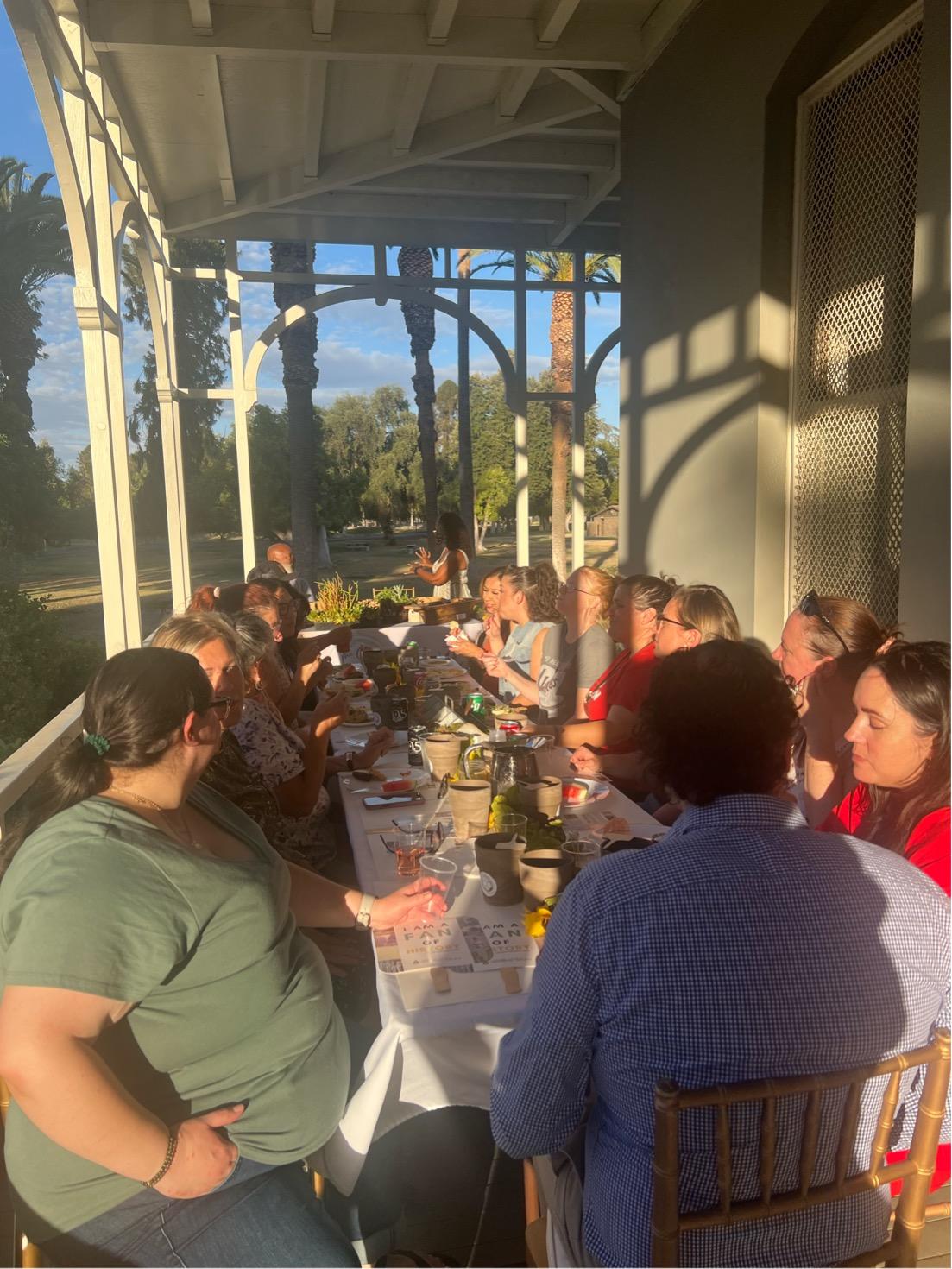
On a gorgeous summer evening, thirty guests gathered at Kearney Mansion Museum for the June 26th Succulent Social, where creativity and history came together in perfect harmony.
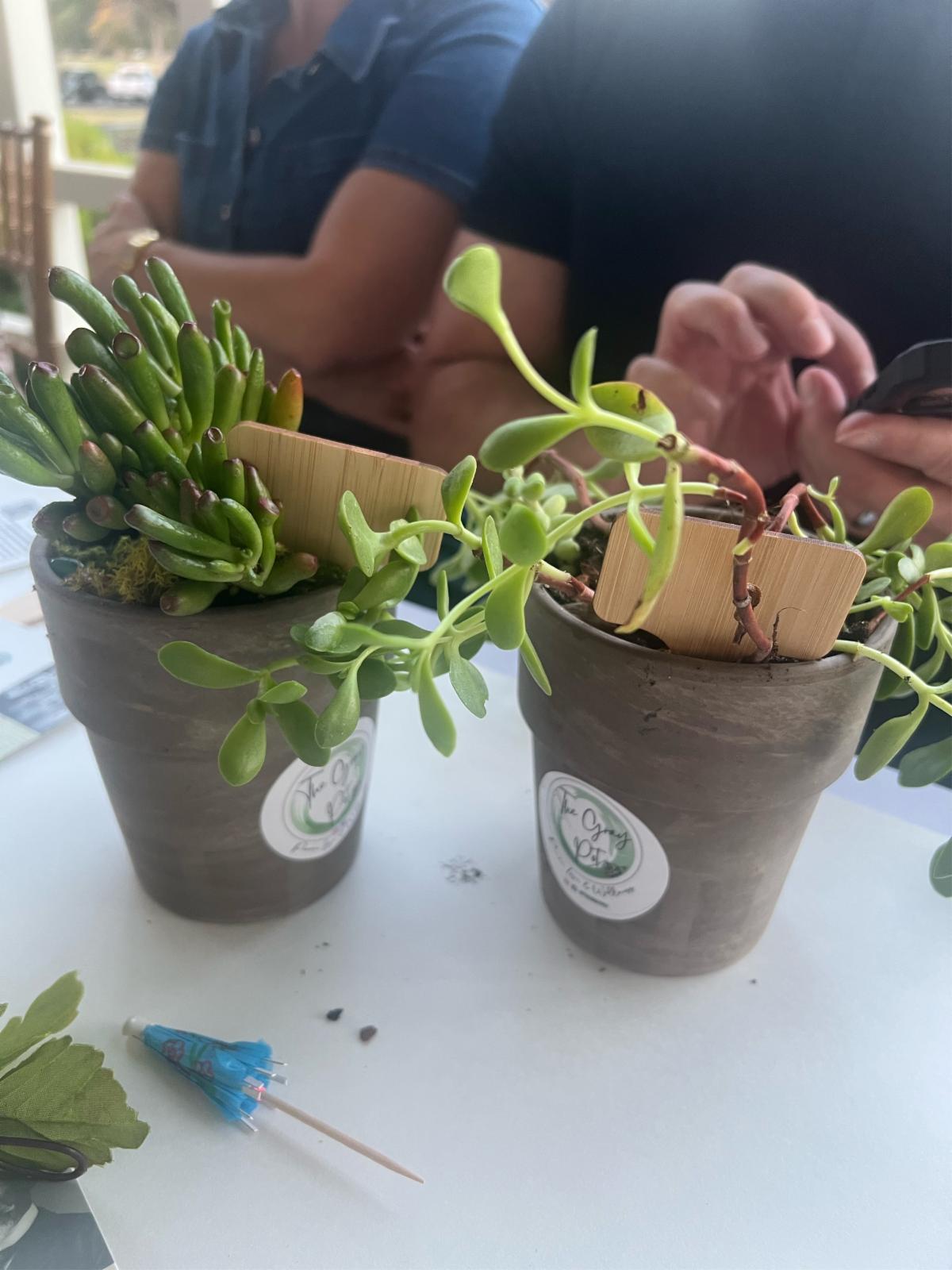
Guests crafted their own succulent arrangements while enjoying the fresh air and stunning views from the newly refurbished veranda before stepping inside the Mansion to explore its rich history. The combination of hands-on fun, beautiful surroundings, and a behind-the-scenes look at one of Fresno's treasured landmarks made for a memorable night.
Laughter, conversation, and a shared love of history filled the grounds as guests connected with one another in a relaxed and welcoming setting. Events like the Succulent Social showcase the Historical Society's commitment to creating unique experiences that invite the community to engage with local history in fresh, unexpected ways. Judging by the smiles, full tables, and beautiful creations carried home at the end of the evening, this was one event that truly took root.
We would like to extend our sincere thanks to Trish with “The Gray Pot” for hosting and everyone who attended and helped make the event such a success.
Looking ahead, we are excited to announce the next Succulent Social will take place during the Christmas holiday season on December 11th. Guests will create festive succulent arrangements while surrounded by the magic of our annual holiday celebration, featuring beautifully decorated designer-themed Christmas trees throughout the Mansion. It promises to be a truly enchanting experience and a wonderful way to celebrate the season.
Watch for additional details and ticket information coming soon. These tickets will sell out very quickly. We look forward to welcoming you back to Kearney Mansion for another memorable event!
| | |
DISCOVER COURTHOUSE PARK’S HISTORIC HEART
Debbie Unger, Tour Manager
| | |
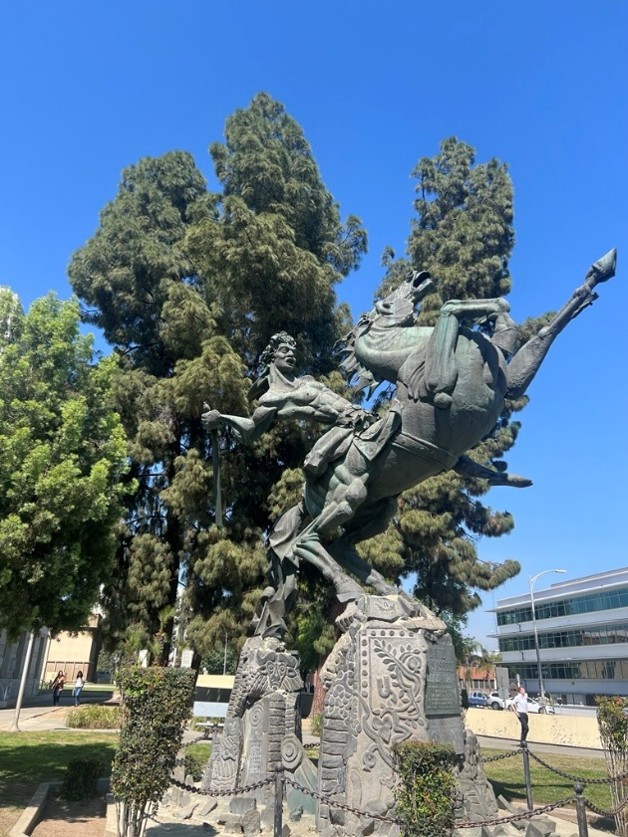
Immerse yourself in the rich history of downtown Fresno on the Courthouse Park Walking Tour, now available every Friday and Saturday. Guests are invited to join us for a guided walk through one of Fresno’s most historic areas, departing promptly at 11:00 am from The Archive on Kern.
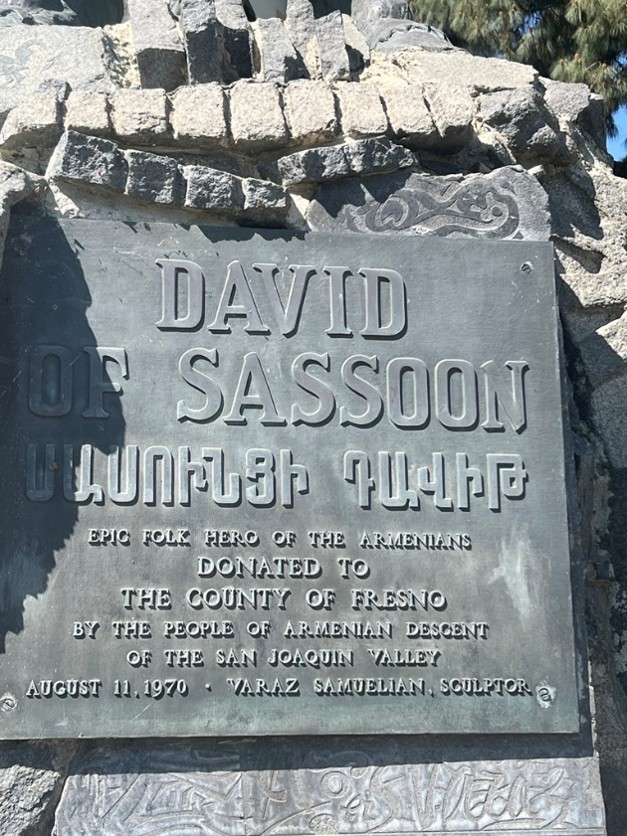
As you take a stroll in the cool summer breeze through Courthouse Park, you will uncover fascinating stories about Fresno’s beginnings, stately historic buildings, and the people who helped shape our community. One highlight of the tour is the David of Sassoon monument recognizing the important contributions of Fresno’s Armenian community to our Valley’s history.
Whether you are a longtime resident or visiting for the first time, this engaging walking tour offers a unique opportunity to connect with Fresno’s past while enjoying a morning meander outdoors.
Space is be limited, so be sure to reserve your spot and join us as we dive into the stories, monuments, and memories that make Courthouse Park a treasured landmark in our community.
| | |
ARCHIVAL SPOTLIGHT:
Fresno City Hall World War Exhibits:
Honoring Our Community’s Place in American History
By Donald Spencer MSc., Archivist.
| | |
Hello Friends of the Archives,
This year marks a significant milestone in our nation’s history. Not just because we are a host nation for the World Cup and so many people from around the world having the opportunity to see the wonders of our country, but also as the United States celebrates its 250th anniversary. To commemorate this milestone, the Fresno City & County Historical Society has worked diligently on installing new exhibits within Fresno City Hall.
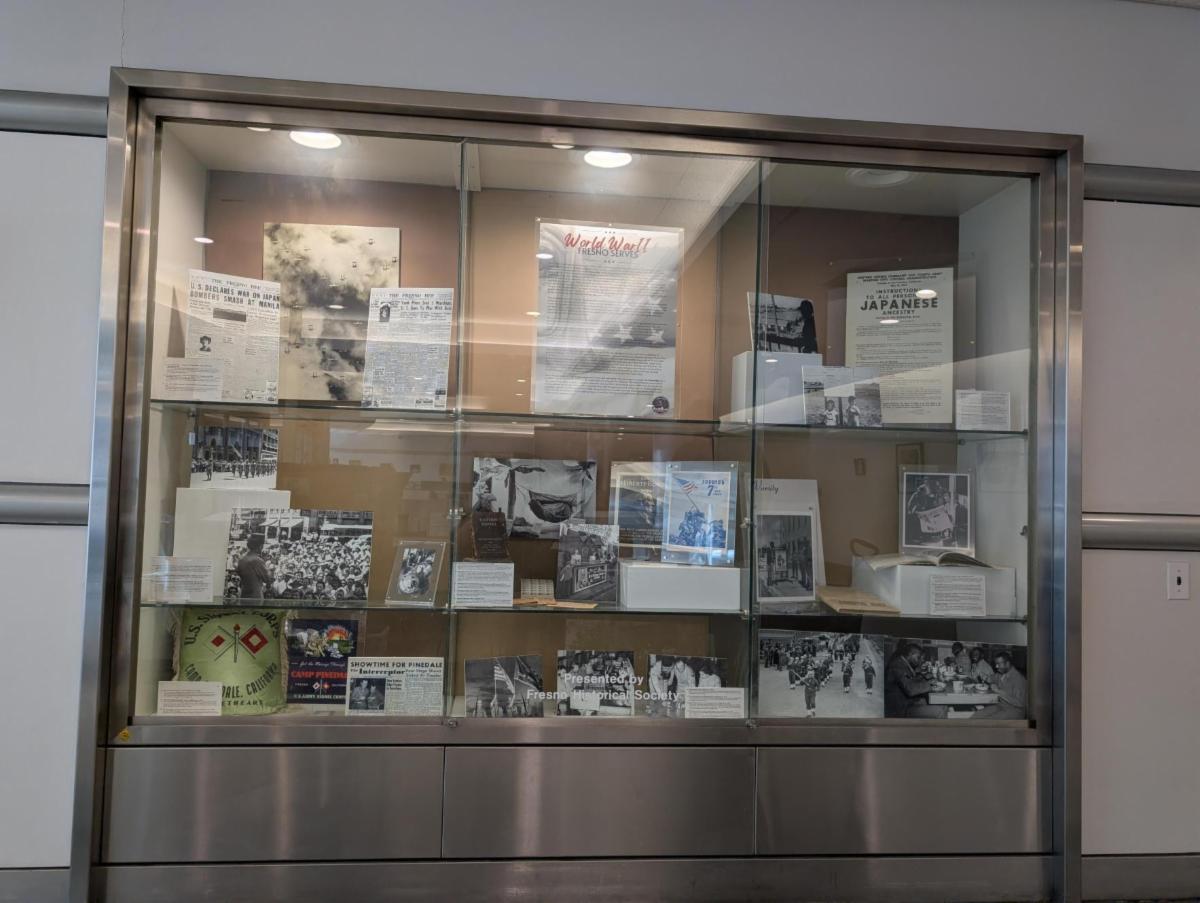
This is the first major refresh of the display cases in many years and could not be for a better reason. Spread across four cases on both floors of City Hall, the exhibits explore Fresno County’s role during WWI and WWII, highlighting the sacrifices, service, and resilience of local residents whose lives, and era, were shaped by global conflict. Our perception of the World Wars is often shaped around famous battles, locations, world leaders, and events in faraway lands. Fresno, in the minds of most people, is not synonymous with these wars. However, our new displays aim to remind us of all that entire annals of America's wars history were also written in the San Joaquin Valley. The men and women of Fresno County answered the call to serve abroad, supported one another on the home front, and endured the hardships that accompanied war. Their experiences connect our community to some of the most defining moments in American and World history.
| |
One of the most moving stories featured in the World War I exhibit is that of Homer H. Blevins, a Fresno native who became the city’s first known soldier killed fighting on the Western Front during the First World War. Only seventeen years old when he lost his life in France, Blevins represents the tremendous sacrifice made by a generation of young Americans. Belvin’s passing should remind us that the cost of war did not just touch those living in distant or more notable places, but also here with our families and our communities. Along with this story, one can learn about William Arthur Bigby Jr., an influential civic leaders. A graduate of Fresno High School, Army veteran, community advocate, and civil rights champion, Bigby’s life demonstrates that service to one’s country does not end when the uniform comes off. Bigby bridged military service and community leadership, illustrating how veterans are integral to shaping Fresno long after war, and makes us ponder on what we could have lost if our soldiers perished in war, having not lived out their entire life to its fullest potential.
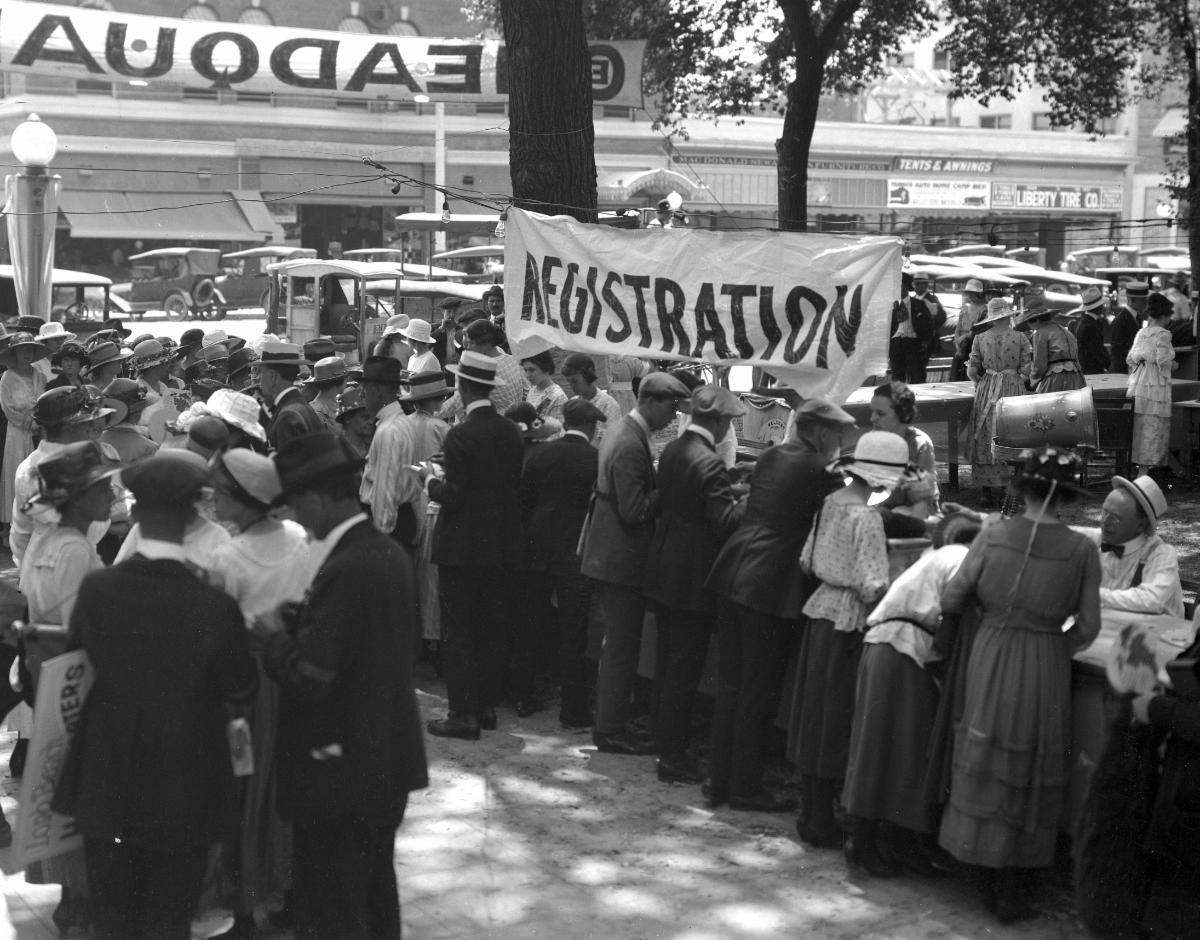
The World War I display case examines how Fresno County transformed and connected the Valley to events unfolding across the globe. Beginning with original newspaper coverage announcing America’s declaration of war in April 1917, the exhibit follows Fresno’s rapid mobilization as local men enlisted in the Army, Navy, and Marine Corps. Historic photographs by renowned Fresno photographer Pop Laval captured recruitment efforts in downtown Fresno, including enlistment stations established in everyday public spaces and Marine Corps recruiters encouraging young men to join the fight. Other images show newly enlisted servicemen posing proudly outside the Fresno County Courthouse and emotional scenes at the Santa Fe Depot, where families gathered to bid farewell to loved ones departing for military training and eventual service overseas. Also highlighted are the immense contributions made on the home front. Visitors will see Liberty Loan and War Savings materials that encouraged residents to financially support the war effort, as well as rare Home Guard documents illustrating how local citizens stepped forward to provide security and public service at home.
|
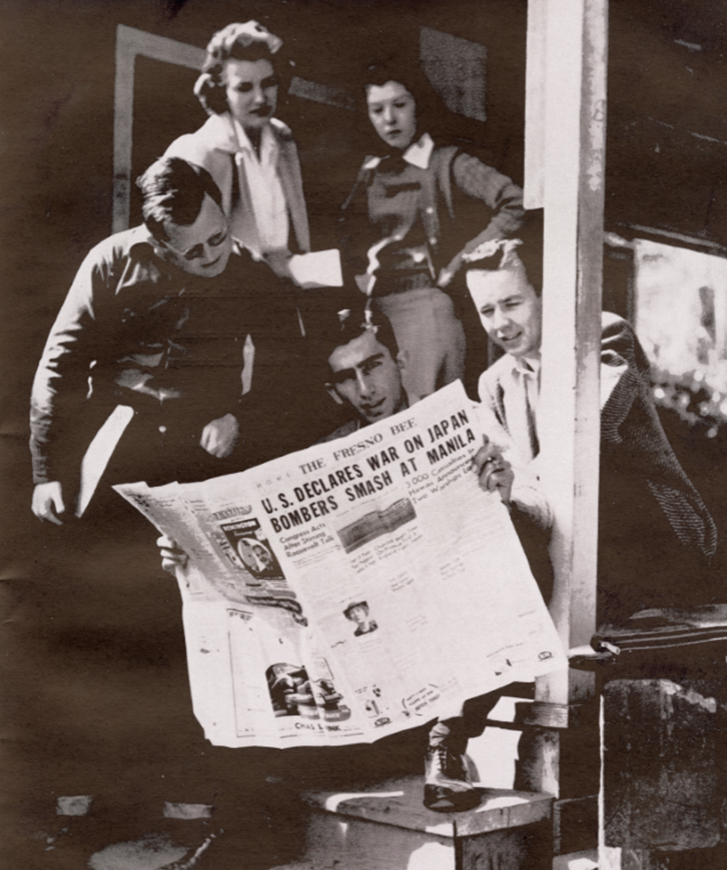
 | | Across the room, the World War II display shows how the largest conflict in human history transformed Fresno County and connected the Central Valley to events unfolding across Europe, Africa, and the Pacific. The exhibit begins like the last, with original Fresno Bee newspapers announcing the attack on Pearl Harbor and the United States’ declarations of war against Japan and the AXIS forces, allowing visitors to experience the same headlines that stunned Fresno residents in December 1941. From there, the display follows the community’s rapid mobilization and embracing in a sense of patriotism. Everyday life became increasingly shaped by the demands of war with yearbooks from Fresno High School and State College revealing how deeply the conflict influenced local students, many of whom would soon exchange football fields for battle fields overseas. The exhibit also examines the dramatic changes that occurred on the home front with original ration books, war bond advertisements, and photographs of bond drives held in front of the Fox Wilson Theatre and Gottschalks. Striking photographs of the Women’s Army Corps marching through downtown Fresno and speaking to local crowds while juxtaposed to images of guard towers at the Fresno Assembly Center where Japanese Americans were gathered for internment demonstrating the highs and lows of wartime solidarity in Fresno. Camp Pinedale, one of Fresno County’s most important wartime installation is included with its story told through photographs, newspapers, and personal keepsakes such as a sweetheart pillowcase.
With numbers of artifacts not mentioned here, viewers of our collections will gain a greater insight into Fresno’s impact during the war. These objects tell a uniquely Fresno story, one of service, sacrifice, patriotism, hardship, and perseverance. It demonstrates that while the war was being fought across distant continents, its impact was deeply felt in every facet of San Joaquin Valley life. For example, the creation of Fresno’s War History Committee, dedicated to keeping a record of Fresno’s place in the First World War, ultimately led to the founding of the Fresno City & County Historical Society itself, making World War I not only a defining chapter in Fresno’s past, but also being the origin story of the institution that preserves the county’s history today.
As our nation celebrates 250 years of independence, these displays invite us to reflect on what previous generations endured to preserve the freedoms we enjoy today. They also remind us that Fresno County was not merely a spectator of history, it was an active participant. The stories preserved in these cases belong not only to the individuals represented, but to all of us who call this community home. We encourage everyone who visits Fresno City Hall, to take a moment and explore these objects, and discover the remarkable ways our citizens contributed to the defense of liberty both at home and abroad and ponder how we may make our own new history, every day.
| | |
NEW HMONG CULTURE ARCHIVE PREMIERES AT FCCHS
Provided by Joel Pickford
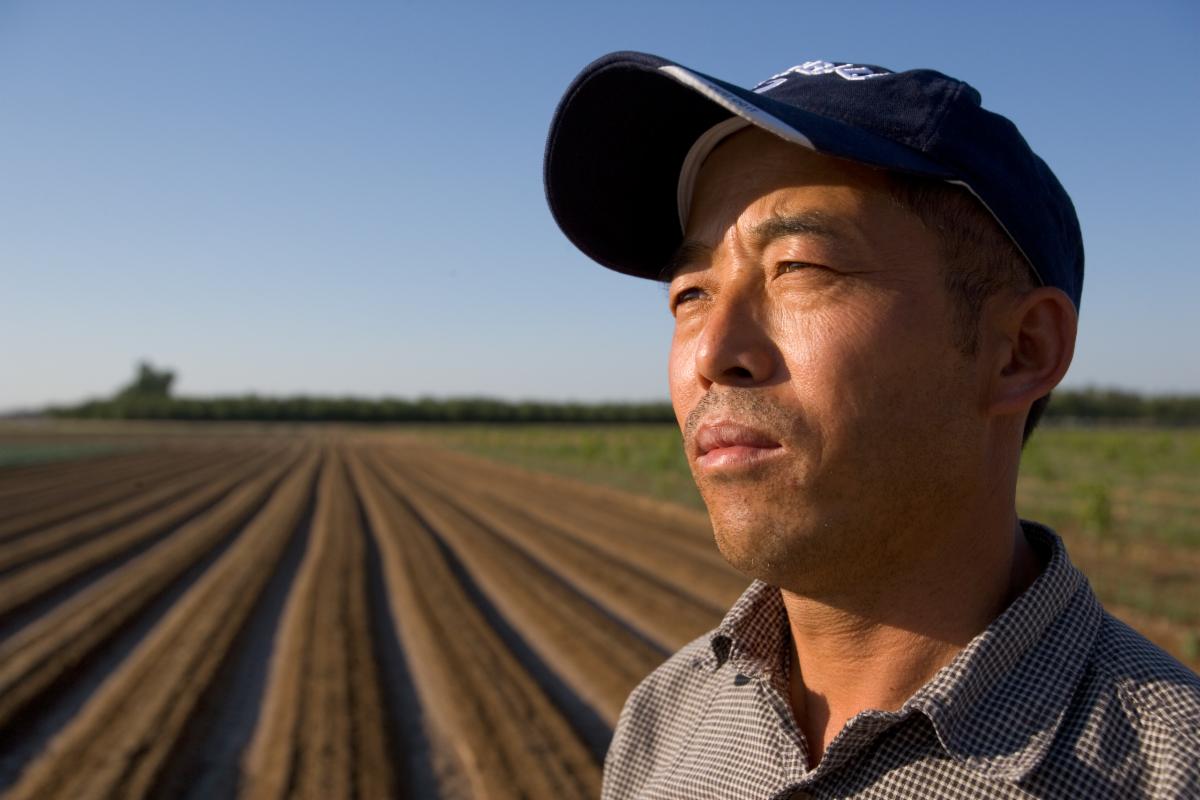
| | | | |
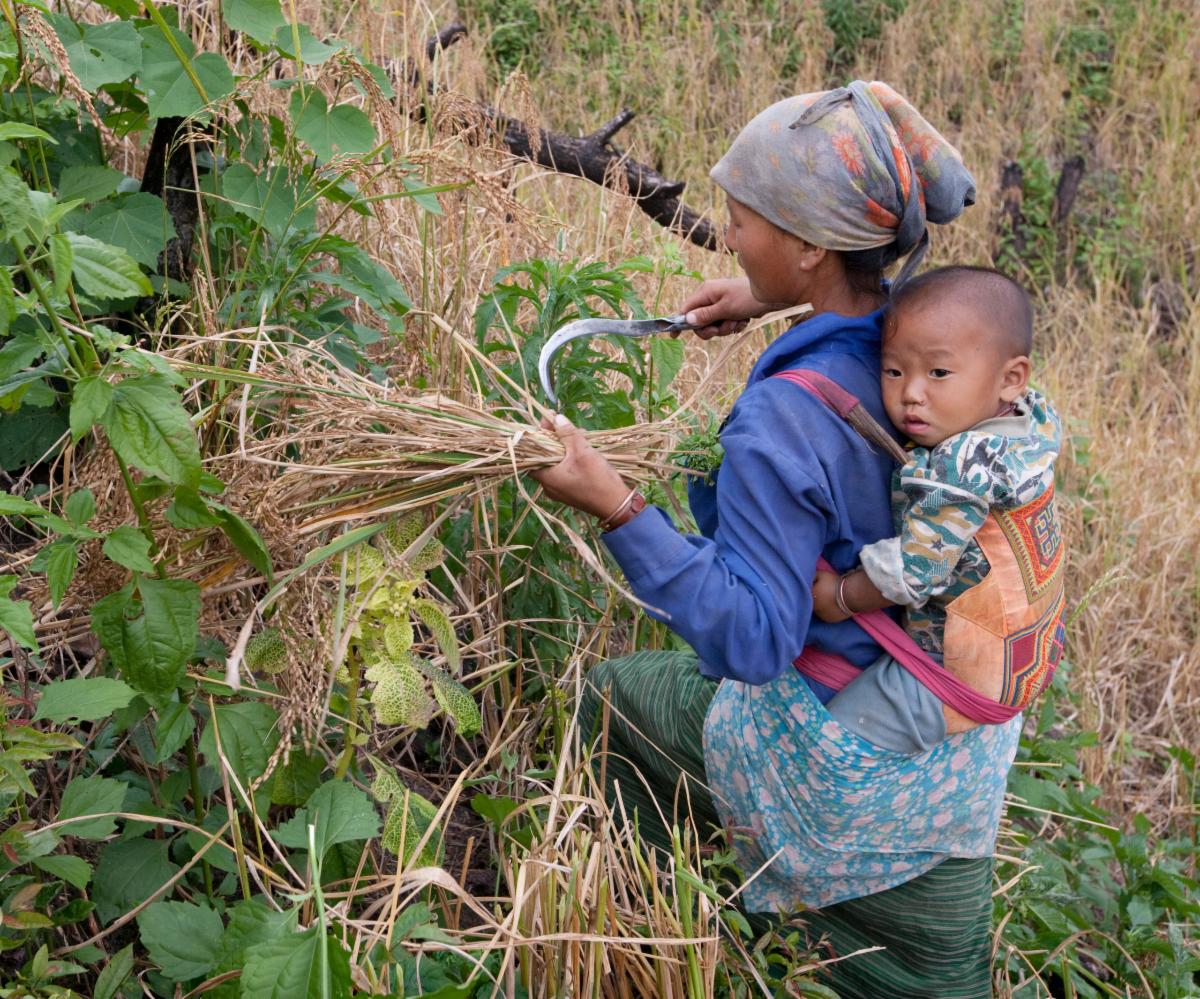
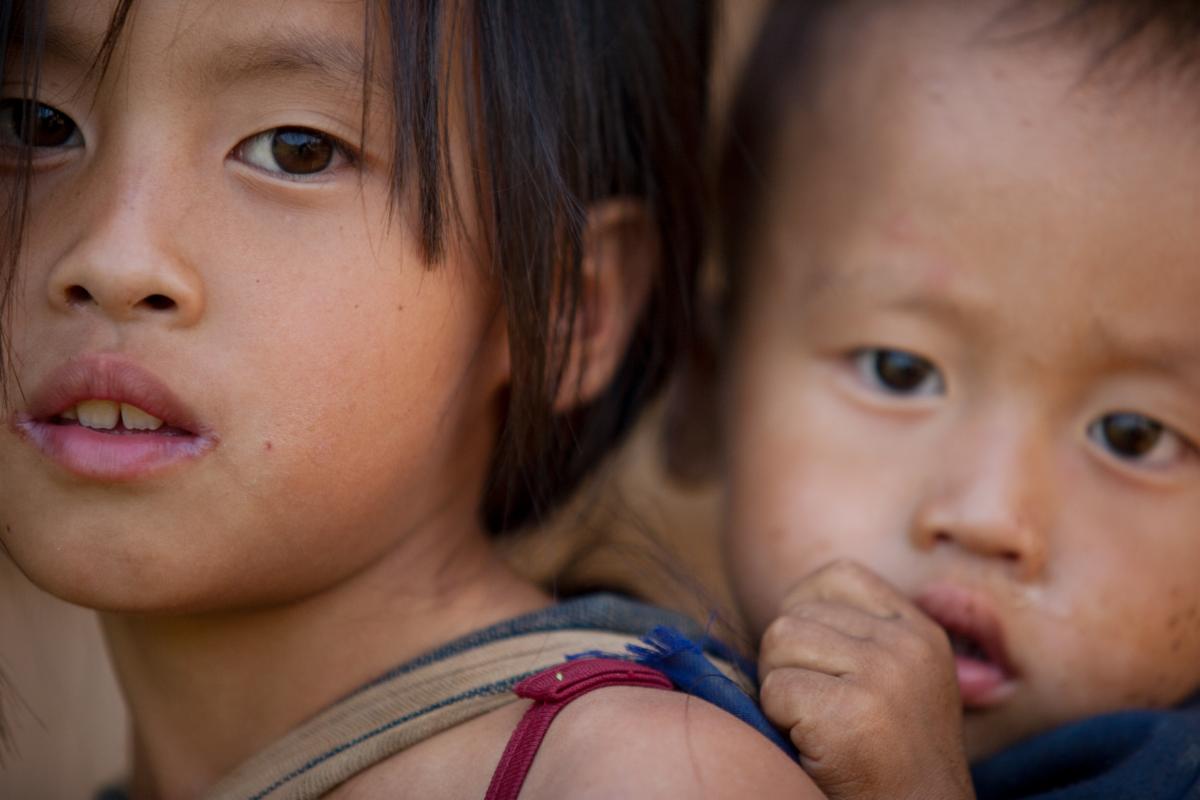
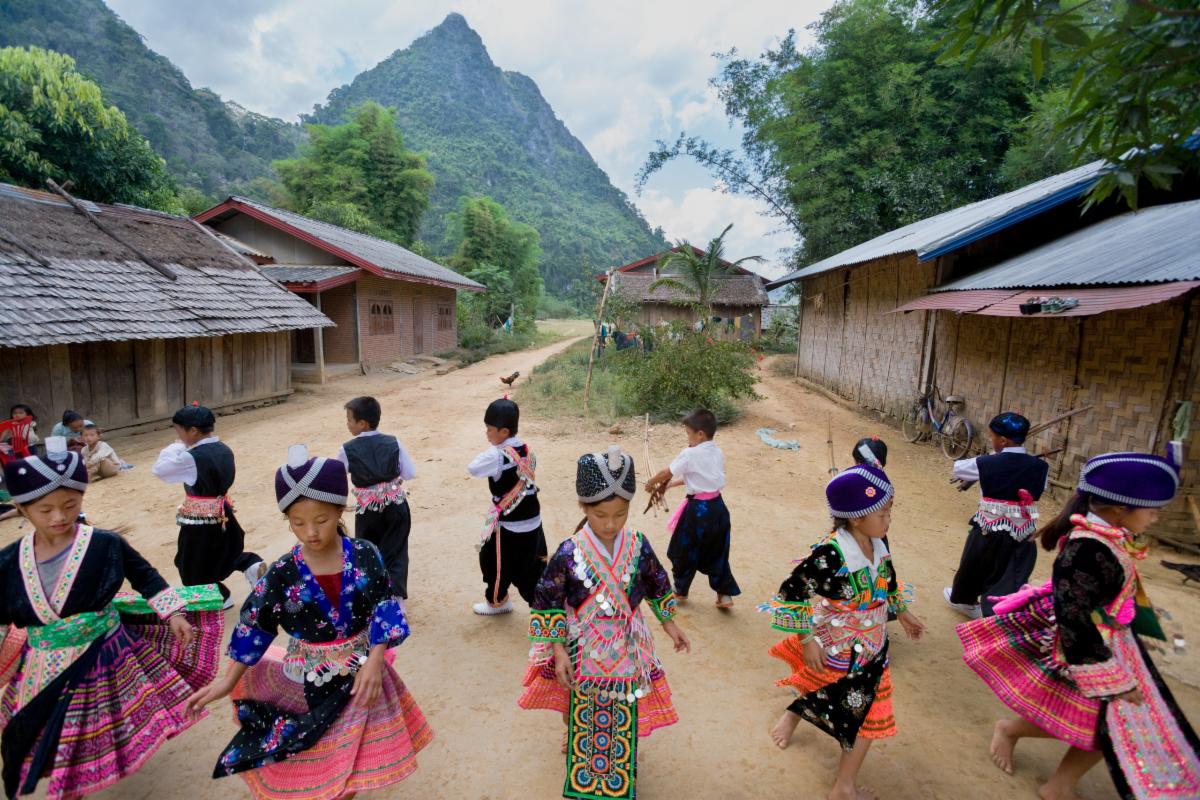
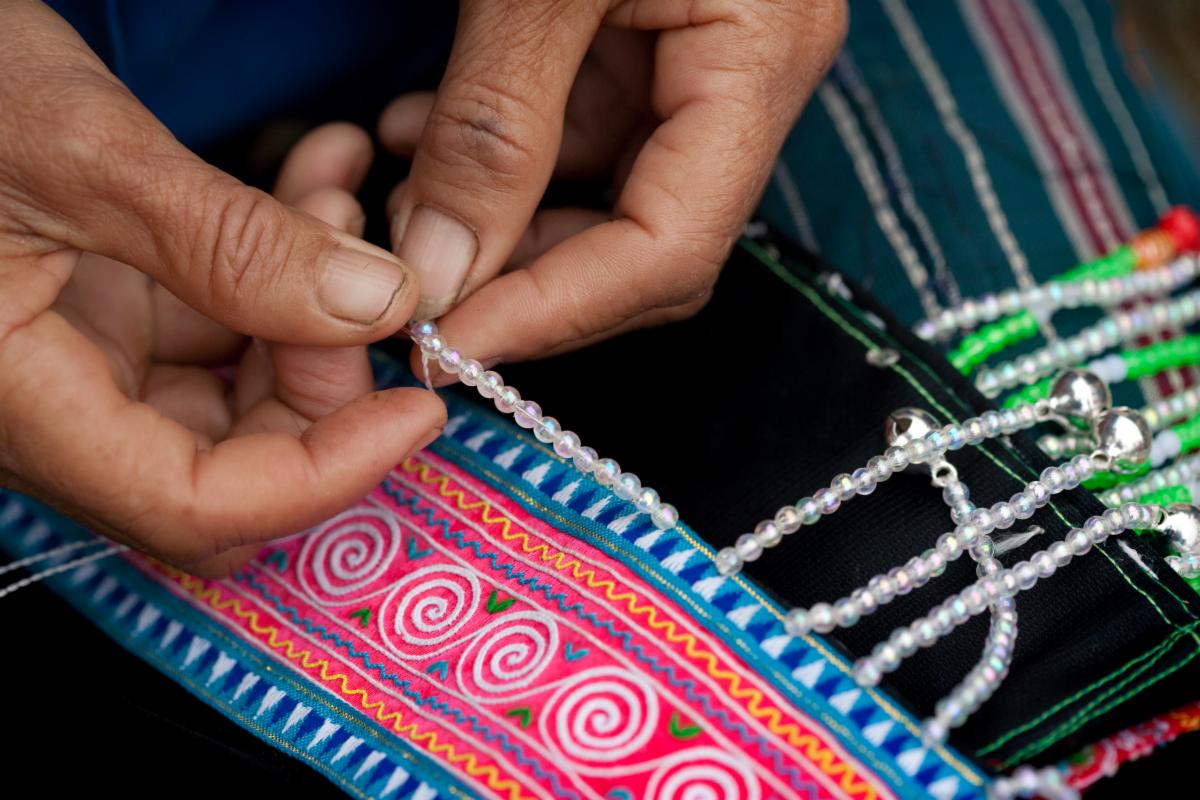
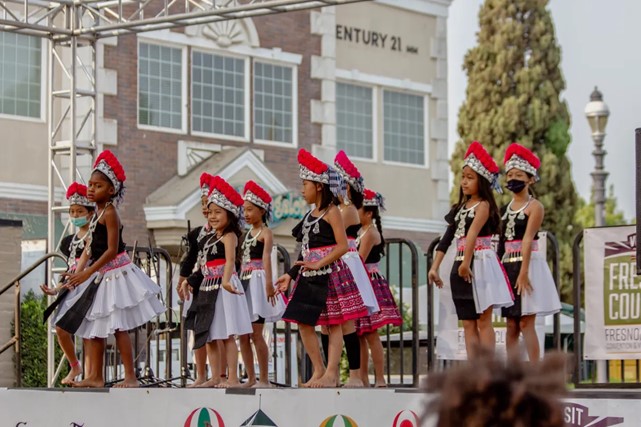
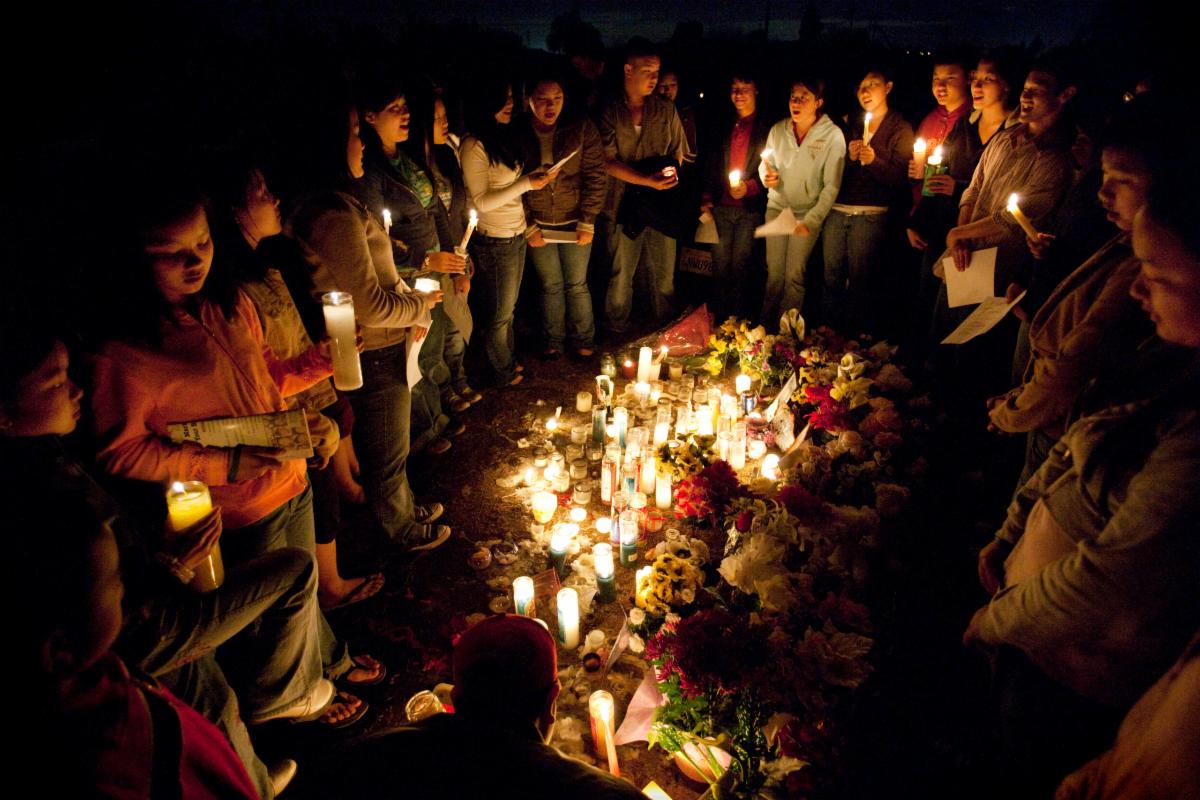
A new website takes viewers deep inside the Hmong Diaspora, from the mountain villages and rice fields of Laos to shaman ceremonies and farms in Fresno. The project is sponsored by the City of Fresno’s Measure P Expanded Access to Arts and Culture Fund.
From 2004 to 2014, photographer Joel Pickford documented Fresno’s Hmong community in greater depth than anyone else ever has, capturing more than 40,000 images. Funded by multiple grants from the James Irvine Foundation and Cal Humanities, Pickford worked with local community organizations and interpreters to gain access to a world that few outsiders have ever seen. The decade long project produced a hardbound book, Soul Calling: A Photographic Journey Through the Hmong Diaspora (Heyday, 2012), a Fresno Art Museum exhibition and another at the University of Wisconsin Milwaukee Art Museum.
In a 2007 conversation with Fresno Historical Society staff, Pickford was introduced to a game changing idea: creating collections. Rather than merely scanning the archives of deceased photographers, writers or filmmakers, museums and libraries could proactively commission living media makers to create online research collections. These content creators would be responsible for providing key support materials like photo captions, precise dates and narrative texts that are often missing from traditional collections.
During the early years of Soul Calling field work, a digital revolution was taking place in museums and libraries. Institutions everywhere were grappling with the daunting task of digitizing their existing collections; this labor intensive work can take years for large collections. Since Soul Calling was Pickford’s first project using digital cameras, he saw an opportunity to create a new kind of archival collection with images that were born digital and would not require scanning.
Pickford’s dream went unfunded for nearly 20 years. During his Soul Calling book tour, the photographer met with university libraries in five states. All of them wanted to acquire Soul Calling but were struggling to find funding to digitize their existing analog collections. Just as an agreement was taking shape with a major California library, 2025 federal funding cuts abruptly postponed the deal. But thanks to Measure P, Joel Pickford’s dream is now a reality.
The Hmong Photographic History & Culture Archive is live! The collection makes its debut with over 700 photographs organized into 20 subject galleries. During the next two years, new images will be added until the entire collection is online: about 2,500 selected photographs in 87 subject galleries.
In order to get the most out of the website, we recommend using a desktop computer, a laptop computer or an iPad. To enlarge an image, just click on it. Using a bigger screen will allow you to see more detail in the photographs. However, some viewers report that the iPad offers a very pleasant user experience while relaxing in a comfortable chair.
Visit the archive now at
https://hmongphotos.org
| | |
ROOTS OF OUR NATION:
REMEMBERING AMERICA AT 200
| | |
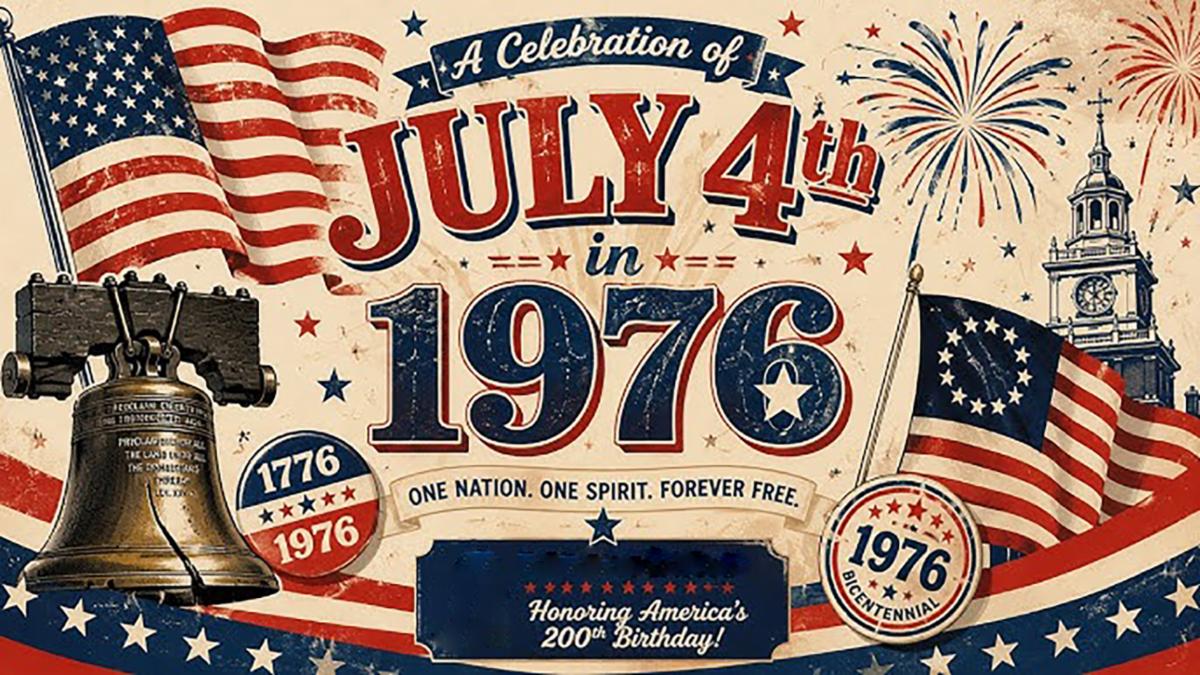
While we generally focus on the Roots of Our Valley each month, in doing research on our Bicentennial, which many of us remember well, the nation’s celebration and remembrance of her own roots stood out as somewhat sublime even as the post-Vietnam War era and Watergate did their best to impinge on the country’s birthday. Let’s look back…
The United States Bicentennial was a series of events in celebration of the nation’s 200th birthday. The American Freedom Train, carrying artifacts, documents, and artwork for public view, began its 21-month tour of the 48 contiguous states on April 1, 1975. On April 18, 1975, President Gerald Ford visited the Old North Church in Boston, Massachusetts, where two lanterns were ceremoniously lit, along with a third lantern in recognition of the country’s third century. He then delivered a major address at Lexington and Concord commemorating the 200th anniversary of the battles that spurred the Revolutionary War.
| |
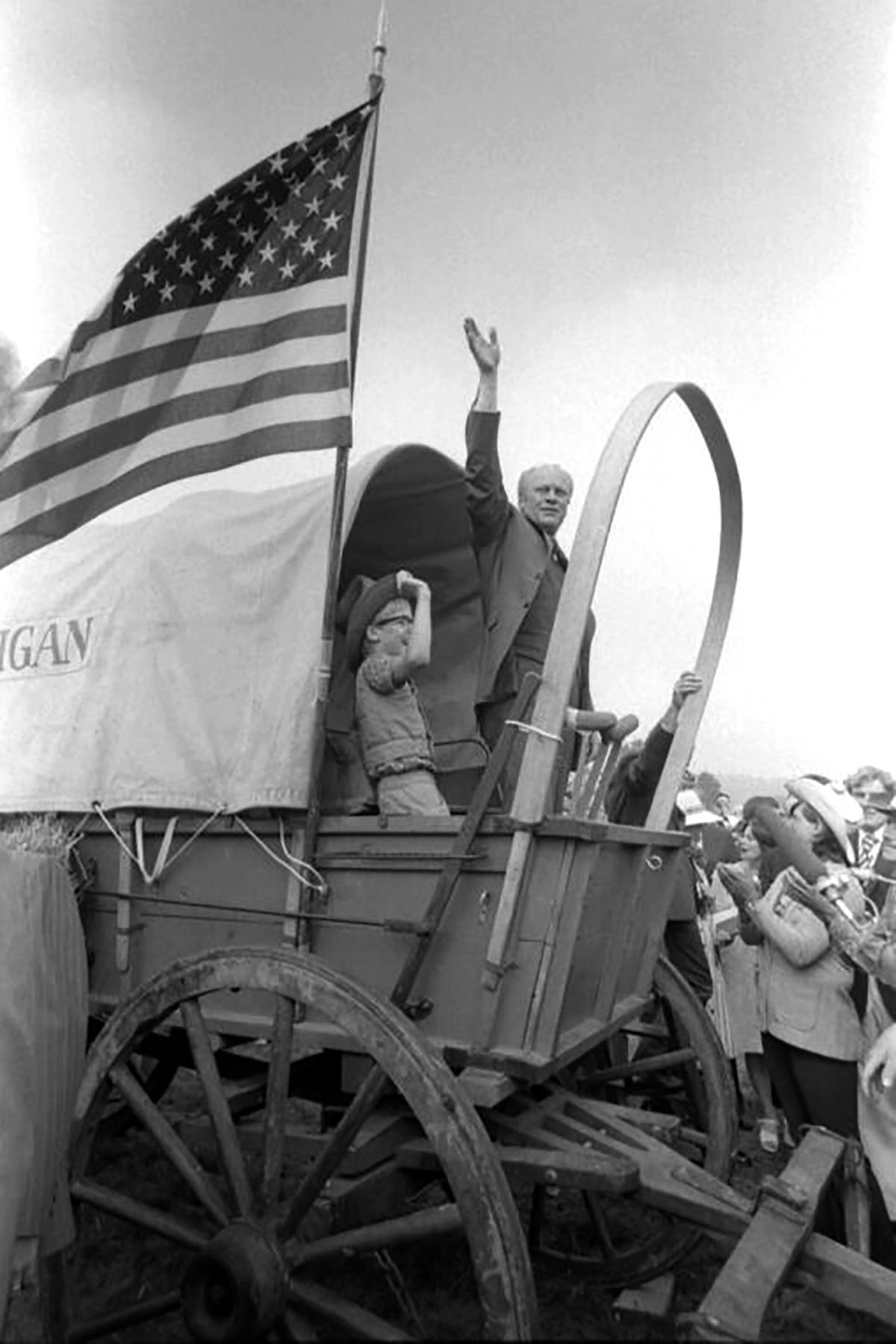
The United States Congress had previously established the American Revolution Bicentennial Commission (ARBC) in 1966 to organize the Bicentennial celebration. The ARBC was criticized, however, for showing excessive political bias and commercialism. As a result, Congress replaced the ARBC with the American Revolution Bicentennial Administration (ARBA) in 1973. ARBA focused on supporting and coordinating state, local, and private celebrations, with around 66,000 recognized events in total. There were picnics, ceremonies, presentations, and numerous other festivities across the country. One of the most significant events was the Bicentennial Wagon Train Pilgrimage, in which volunteers from every state traveled eastward over historic trails in covered wagons. Bicentennial celebrations were not limited to the United States. An exhibition titled The World of Franklin and Jefferson first opened in Paris, France, before travelling throughout Europe and the U.S.
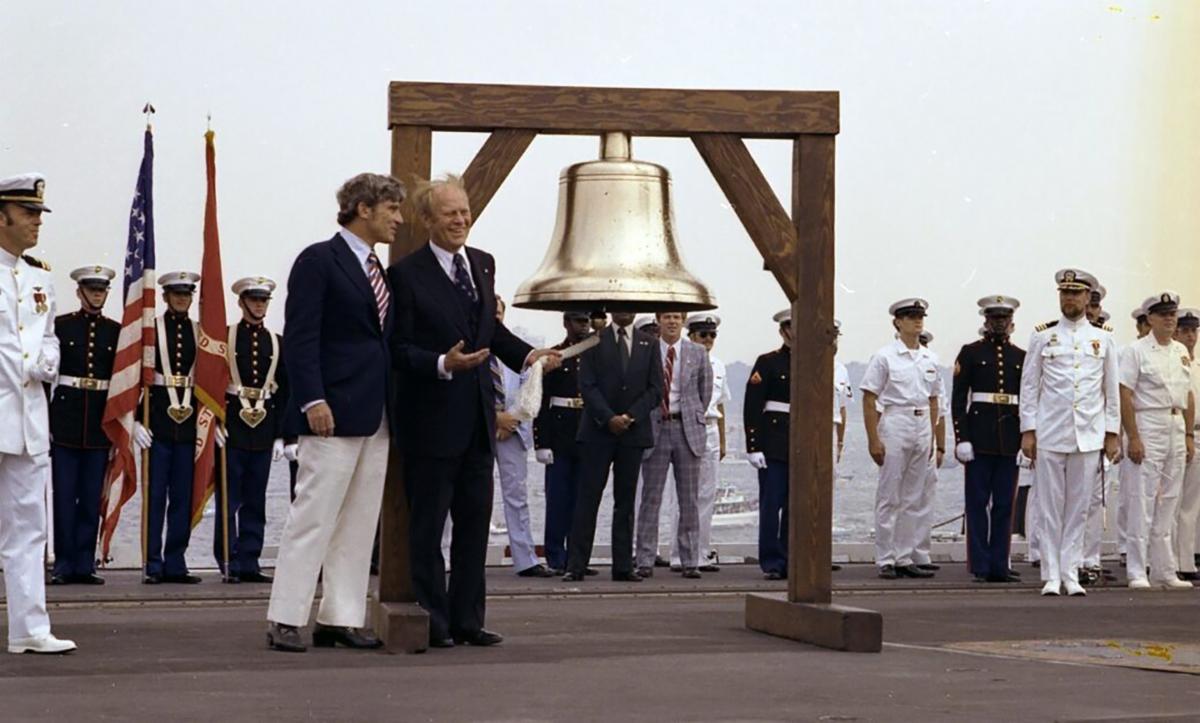
The Bicentennial was also commemorated by two official state visits. In May 1976, President and Mrs. Giscard d’Estaing of France visited the United States in recognition of the history of friendship between the two countries. As a gift to the U.S., President d’Estaing presented a printing press thought to have been used by Benjamin Franklin during his time as a diplomat in France. Two months later, in July 1976, Queen Elizabeth II and Prince Philip of Great Britain toured Philadelphia, the District of Columbia, Virginia, New York, Connecticut, and Massachusetts. On behalf of the British people, the Queen gifted to the United States the Bicentennial Bell, a replica of the Liberty Bell that hangs at Independence Hall in Philadelphia.
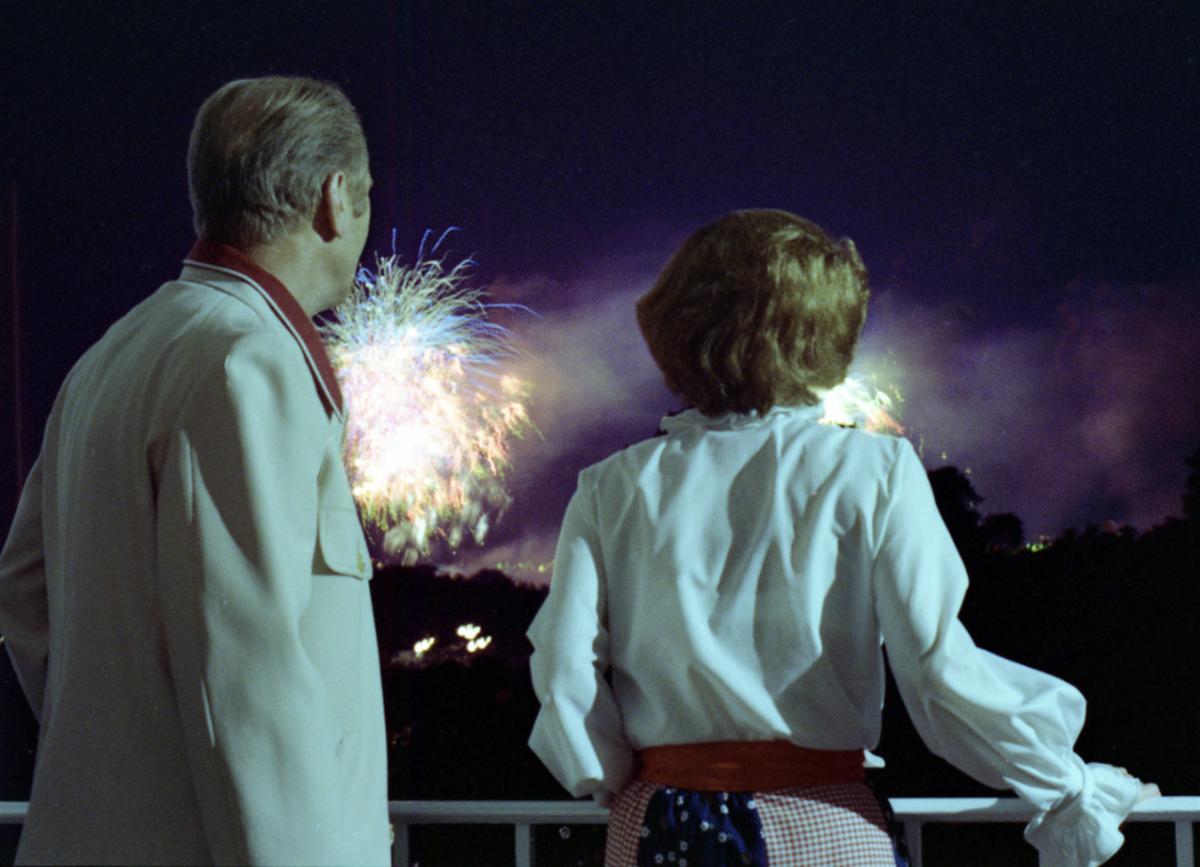
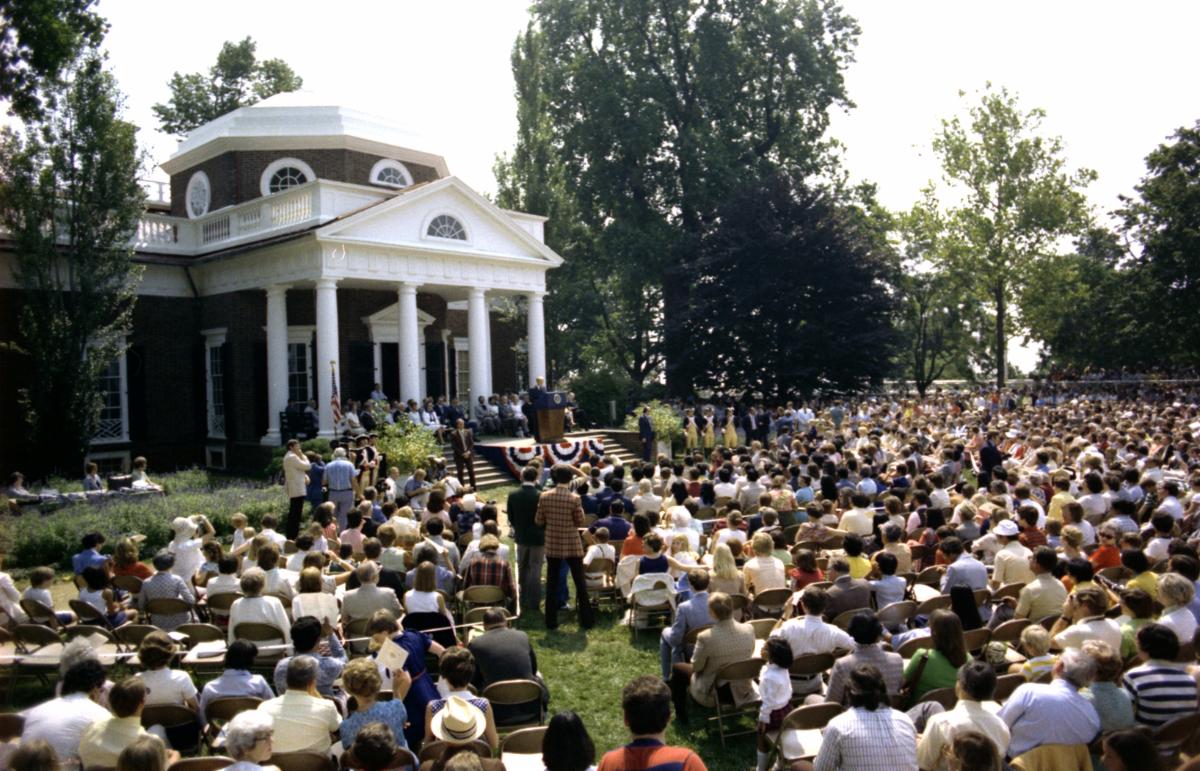
| Official Bicentennial events culminated on July 4, 1976, the 200th anniversary of the signing of the Declaration of Independence. On this day, President Ford and his daughter Susan first travelled to Pennsylvania where President Ford spoke at Valley Forge to honor the conclusion of the Bicentennial Wagon Train Pilgrimage. They then proceeded to Independence Hall in Philadelphia, where President Ford signed the Bicentennial Day Declaration, which reaffirmed a commitment to the principles of liberty, justice, and freedom that were first laid out in the Declaration of Independence. Following that, the two flew to New York Harbor where First Lady Betty Ford also joined them to celebrate Operation Sail, an international naval review of ships sent by the navies of numerous countries. The day ended in DC, where President and Mrs. Ford watched fireworks from the White House Balcony. | The Bicentennial is noted for the feelings of patriotism and nostalgia that the celebrations inspired. There was a general feeling that the country was beginning to recover after the unstable period that included the Civil Rights Movement, the Vietnam War, and the Watergate crisis. In his autobiography A Time to Heal, President Ford described the effect that Bicentennial Celebrations had on the country: “Rarely in the history of the world had so many people turned out so spontaneously to express the love they felt for their country. Not a single incident marred our festival. The nation’s wounds had healed. We had regained our pride and rediscovered our faith, and in doing so, we had laid the foundation for a future that had to be filled with hope.” | Gerald Ford Welcomes 100 New American Citizens in a Naturalization Ceremony at Thomas Jeffersons Monticello - July 4-1976. | | |
Some Key Events around the Bicentennial:
-
Operation Sail: The largest peacetime maritime gathering in U.S. history brought a fleet of 225 international ships, including 16 tall ships, past the Statue of Liberty in New York Harbor. It drew roughly six million spectators to the waterfront.
-
Presidential Activities: President Gerald R. Ford led official observations. He spoke at Valley Forge, PA, signed the Bicentennial Day Declaration at Independence Hall in Philadelphia, and concluded the day watching national fireworks over the Washington Monument from the White House.
|
-
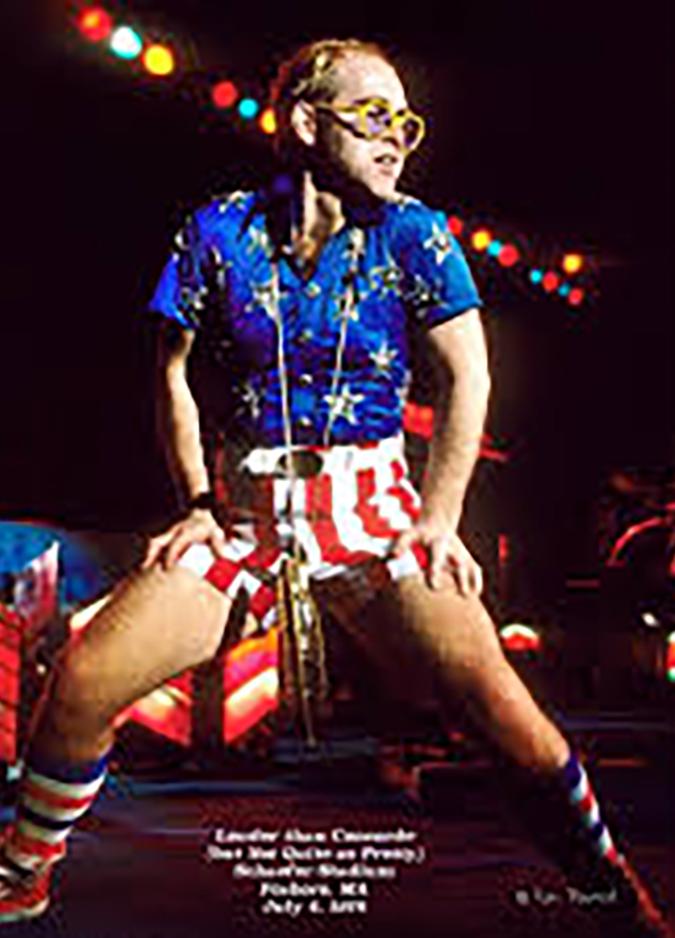
Elton John's Concert: Music superstar Elton John performed a massive, historic outdoor concert at Schaefer Stadium (now Foxboro Stadium) in Massachusetts to celebrate the 200th birthday, famously arriving on stage dressed as the Statue of Liberty. Sadly, Elton’s Philadelphia Freedom anthem lost out as the number one song in the United States on July 4, 1976, was Silly Love Songs by Wings.
-
The Viking 1 Mars Landing: Though it officially landed on July 20, 1976, the highly famous NASA spacecraft approached Mars and beamed historic photographs back to Earth during this Bicentennial period.
| | |
In literature:
-
Hardcover Fiction: Trinity by Leon Uris. A sprawling, historical novel about the historical troubles and socio-political climate in Ireland.
-
Hardcover Nonfiction: The Final Days by Bob Woodward and Carl Bernstein. A masterpiece of investigative journalism documenting the collapse and final months of Richard Nixon's presidency.
-
Mass Market Paperback: All the President's Men also by Bob Woodward and Carl Bernstein. This was highly popular at the time due to the major film adaptation starring Robert Redford and Dustin Hoffman released earlier that year.
| | |
On television – this is fascinating:
There was no single, traditional number one regular episodic show on July 4, 1976. Because it was the United States Bicentennial, television programming preempted regular weekly series to broadcast massive blocks of commercial-free, coast-to-coast coverage and entertainment.
The highest-rated broadcasts and network staples of the era included:
-
In Celebration of U.S.: A 16-hour live coverage event anchored by Walter Cronkite that dominated the day's viewing on CBS.
-
The Glorious Fourth: NBC's 10-hour marathon anchored by John Chancellor and David Brinkley.
-
The Great American Birthday Party: ABC's primary daytime event and evening recap hosted by Harry Reasoner.
-
Bob Hope's Bicentennial Star-Spangled Spectacular: NBC's evening prime-time special featuring performances by Sammy Davis Jr., Donny and Marie Osmond, and Captain & Tennille.
-
Bicentennial Minutes: Daily two-minute historical vignettes that concluded their two-year run on CBS that evening.
-
For regular weekly television, the overall number one rated series of the 1975–1976 season was the sitcom All in the Family on CBS. However, on the Bicentennial Sunday, Americans generally tuned into the networks' historical and patriotic broadcasts.
| |
Consumer Prices in California:
- On July 4, 1976, gas prices in California averaged roughly $0.45 to $0.60 per gallon, depending on the grade and type of station. This was slightly cheaper than the national average for the Bicentennial year, which hovered around $0.61 per gallon for unleaded.
-
The average retail price for a gallon of milk in the United States was approximately $1.68.
- Uncooked ground beef averaged about $0.87 to $1.20 per pound. At California and national supermarkets, USDA Choice Sirloin Steak cost approximately $1.27 per pound, while premium Filet Mignon was priced around $2.49 per pound.
-
In 1976, the median sales price for a home in California was approximately $48,630.
- Specific new and used car prices from the era include:
o 1976 Chrysler Cordoba: $4,895
o 1976 Chrysler Volaré: $3,220
o 1976 Ford Pinto: $2,895
o 1974 Dodge Colt (4-door, used in 1976): $2,295
o 1972 BMW Bavaria (Used in 1976): $6,495
| -
Minimum Wage: $2.30 per hour
| | |
Here are some notable comparisons of the Semiquincentennial and the Bicentennial:
Planning and Focus
-
Bicentennial (1976): Relied heavily on centralized national programs (like Tall Ships) and presented a more traditional, celebratory version of American history.
-
Semiquincentennial (2026): Focuses heavily on state and grassroots community partnerships. Programming through the official America 250 Foundation emphasizes a diverse narrative, combining innovation with critical reflection on the nation's past.
Media and Engagement
-
Bicentennial (1976): Rooted in analog media like television broadcasts and print.
-
Semiquincentennial (2026): Driven by social media and digital storytelling, allowing for more localized, personalized, and diverse voices.
Public Atmosphere
-
Bicentennial (1976): Occurred in a post-war era where Americans began discovering personal genealogy and preserving local history. It was known for its widespread, sometimes "bonkers" patriotic consumerism, including commemorative coins, stamps, and collectibles.
-
Semiquincentennial (2026): Some commentators and forum users observe that the overall atmosphere lacks the same readily recognized, unifying symbols or widespread public fervor seen in 1976, as the country navigates a more polarized cultural and political landscape.
| If you take time to reflect on July 4th this year, what are some of your thoughts on the Semiquincentennial and where would you like to see us in 2076 for America’s Tricentennial? | |
A HIDDEN GEM OF FRESNO:
THE VETERANS MEMORIAL MUSEUM
By Cami Cipolla, Director of Educational Services and Community Engagement
| |
Stepping through the front entrance of Fresno's historic Veterans Memorial Auditorium is like stepping into a living tribute to America's military history. Beneath soaring artistic ceilings and across polished marble floors lies one of the city's most remarkable yet often overlooked treasures - the Veterans Memorial Museum, proudly known as the Home of the Legion of Valor.
Established in 1991 through the vision and dedication of members of the Legion of Valor, volunteers, and the City of Fresno, the museum preserves the stories of the men and women who served our nation with courage and distinction. What was once an abandoned storage area has been transformed into an extraordinary museum filled with thousands of artifacts, photographs, military uniforms, official citations, and personal memorabilia spanning the Civil War through today's armed forces.
"Every artifact tells a story, “says Museum Director and CEO Michael Harris. From rare military equipment and uniforms to handwritten letters and photographs, the collection offers visitors a deeply personal look at American military history through the lives of those who served.
Among the museum's most notable exhibits is a tribute to Fresno native, Major General Ronald Markarian, who flew 116 combat reconnaissance missions during the Vietnam War and was awarded two Legion of Merit medals and the Bronze Star. Visitors will also discover a rare brass-encased Gatling gun, specially designed for naval service to resist corrosion at sea, as well as an impressive collection of meticulously crafted World War II aircraft models honoring the crews whose service helped shape history.
The museum's connection to the Legion of Valor makes it especially unique. Membership in the Legion is reserved for recipients of the nation's highest military decorations for valor, including the Medal of Honor, Distinguished Service Cross, Navy Cross, and Air Force Cross. Beyond preserving history, the organization continues to recognize extraordinary courage through its Silver Cross for Heroism and Bronze Cross for Achievement, honoring civilians whose actions save lives and ROTC and Junior ROTC cadets who demonstrate exceptional leadership, scholarship, and civic responsibility.
| | |
Every gallery reminds visitors that history is more than battles and dates—it is the story of ordinary men and women who demonstrated extraordinary courage in service to others.
Open Monday through Saturday from 10:00 a.m. to 3:00 p.m., the Veterans Memorial Museum welcomes visitors free of charge. Whether you are a veteran, history enthusiast, student, or simply curious about the stories behind America's military heritage, the museum offers an unforgettable journey through courage, sacrifice, and service.
The next time you visit downtown Fresno, consider stepping inside this remarkable museum. You may arrive to see military artifacts, but you will leave with a deeper appreciation for the people whose service helped shape our nation's history.
Did You Know?
The Veterans Memorial Museum occupies space inside Fresno's historic Veterans Memorial Auditorium, a landmark dedicated to honoring those who served our nation. What was once an unused storage area has become one of California's most significant collections of military artifacts and memorabilia, thanks to the vision of local veterans and countless volunteers.
| | | | |
STORIES THAT SHAPED US
By: Renee Delport, Central Valley Community Foundation
"Six Stories that Shaped Us" Initiative marking 60 years since the founding of Central Valley Community Foundation
| | Fresno’s League of Women Voters Upholds Democracy’s Promises | |
In May, the League of Women Voters of Fresno unveiled a mural in downtown Fresno. The colorful painting by well-known artist Will Portis celebrates voting rights and the struggles to preserve and expand these rights throughout America’s 250-year history. The mural tells the story of how voting evolved from a privilege reserved for white male property owners to an exercise in Democracy for all people. It includes critical moments in our nation’s voting history from the Civil War and the passage of the 13th, 14th and 15th Amendments to the 100-year struggle for women’s right to vote, culminating in the 19th Amendment.
The mural stands in contrast to a chaotic period in American history marked by political division and challenges to the nation’s constitutional and electoral norms. This time underscores the importance of organizations like the League.
Founded in 1920 by leaders of the women’s suffrage movement, the League of Women Voters is a grassroots civic organization with a single goal: to make democracy work for everyone. They do this by remaining:
- Nonpartisan, never endorsing candidates or parties
- Issue-Focused, advocating for issues only after extensive research and member consensus
- Inclusive, acknowledging past exclusion and working toward equity
Members of the League host forums, register voters, clarify complex ballots, study local issues and defend the principles that allow democracy to endure.
“At all levels of the League--national, state and federal--we are more committed than ever to educating voters and monitoring elections to counter the mis- and disinformation that can discourage voting,” said Kay Bertken, co-president of Fresno’s LWV. “People have to know that their voices will and do matter.”
As we celebrate America’s 250th birthday, the League reminds us that democracy, while strong and just, can also be fragile. It requires participation, openness and a desire to hear and understand those whose views are different from our own.
To learn more about the local League of Women Voters chapter or to participate, visit their website.
| This story is part of the Central Valley Community Foundation’s “Sixty Stories That Shaped Us” initiative to help mark 60 years since our founding. We invite you to join us in celebrating this milestone and this special place we call home. To learn more, visit centralvalleycf.org and follow us on Facebook, Instagram and LinkedIn @centralvalleycf. | | |
MAKING HISTORY EVERY DAY
City of Fresno hosts its first American flag retirement ceremony
By Kerry Mannix, ABC 30 Action News, June 14, 2026
| | |
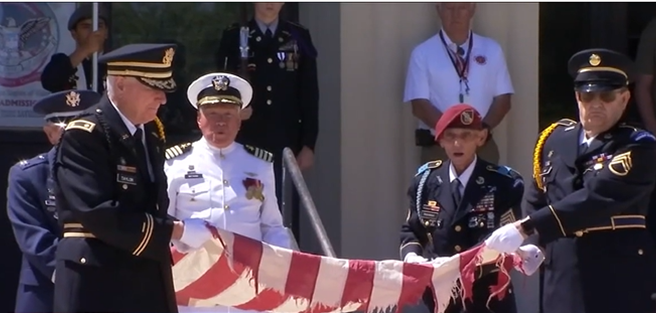
FRESNO, Calif. (KFSN) -- The City of Fresno hosted its first-ever honorable flag retirement ceremony Saturday.
It comes ahead of Flag Day on Sunday and as part of the celebrations marking 250 years of our nation's independence.
The ceremony was held at Veterans Memorial Auditorium.
The flag was retired at exactly 2:50 p.m. to signify two and a half centuries of our country.
The event was part of a nationwide effort to honor America's past - and look with hope towards its future.
A U-S military color guard presented the Stars and Stripes in front of dozens in Fresno Saturday to initiate the ceremony.
25 years ago, the now-retired flag was presented to Fresno's Veterans Memorial Museum by former Congressman George Radanovich.
This weekend, it was the centerpiece of an official flag retirement ceremony coordinated by the city of Fresno.
"This is the first flag retirement ceremony I've ever been at. So, it was something I wanted to experience. I wanted us to be the ones to host it in Fresno," said Fresno Mayor Jerry Dyer.
The event was part of the city's celebrations ahead of America's 250th birthday this July 4th and in honor of Flag Day on June 14th.
A band shared the stage with veterans and local and national leaders, who each delivered messages about the unifying force of the nation's flag.
"It represents one nation, under God, indivisible, with liberty and justice for all."
Messages of unity are a core principle of Fresno and America 250 celebrations in Central California and across the nation.
"The politics of division may be successful short-term, but they're not the American way. The American way is cherishing our fellow Americans," said Rep. Jim Costa.
In that spirit, Costa presented a new flag to the city and museum: a Betsy Ross flag featuring the 13 stars representing equality among the 13 colonies of young America surrounding the number 250.
The new flag will replace the flag retired on Saturday.
It's a symbol tying the country's past to its hope for the future.
"Be proud to be part of this country, not perfect, there is no perfect nation in the world. But it's the best nation in the world," said World War II veteran Norris Jernigan, the last remaining survivor of the crew aboard the Enola Gay, responsible for the atomic bombing of Hiroshima in 1945. "It's worth enlisting and taking part in protecting."
| | | | |