|
|
|
|
|
Fretted Americana, Inc.
|
Friday, September 25th, 2015
|
|
| |
|
H
appy Friday Everyone!
This week in history.....
September 25th, 1980
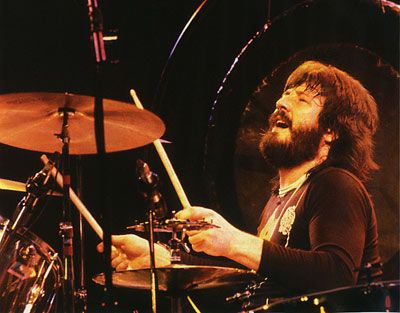
John Bonham died at age 32 :(
(sorry that deaths seem to be a recurring theme in these newsletters!)
On Sept 25th 1980, John Bonham, drummer with Led Zeppelin, died aged 32 after a heavy drinking session. 'Bonzo' was found dead at guitarists Jimmy Page's house of what was described as asphyxiation, after inhaling his own vomit after excessive vodka consumption, (40 shots in 4 hours). During live sets his drum solo, 'Moby Dick,' would often last for half an hour and regularly featured his use of his bare hands.
He is still widely considered to be one of the greatest drummers in the history of rock music and, over 30 years since his death, Bonham continues to garner awards and praise, including a Rolling Stone 2011 readers' pick, placing him first among the magazine's "best drummers of all time".
As Foo Fighter Dave Grohl said, "John played the drums like someone who didn't know what was going to happen next - like he was teetering on the edge of a cliff. No one has come close to that since, and I don't think anybody ever will. I think he will forever be the greatest drummer of all time."
And speaking of Dave Grohl, on this day in 1990, he auditioned for Nirvana and was instantly given the job!
Read more on John Bonham
HERE
And click
HERE to watch a video of this phenom of a drummer.
Please enjoy this selection of guitars and basses
similar to those used by Led Zeppelin...
818.222.4113 with any questions
|
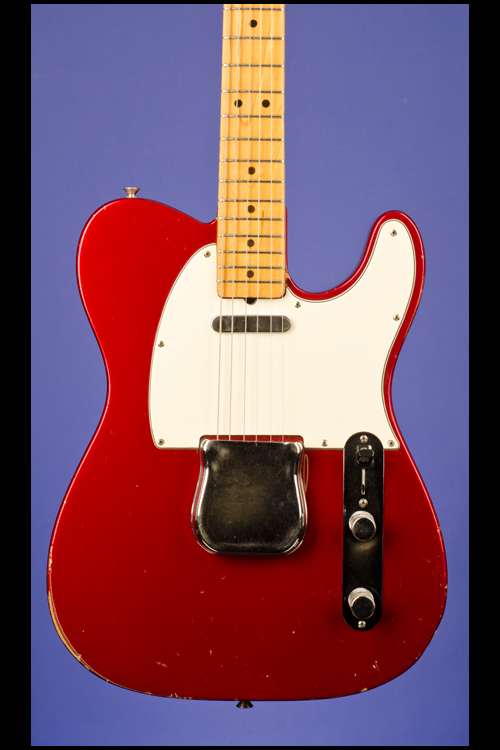
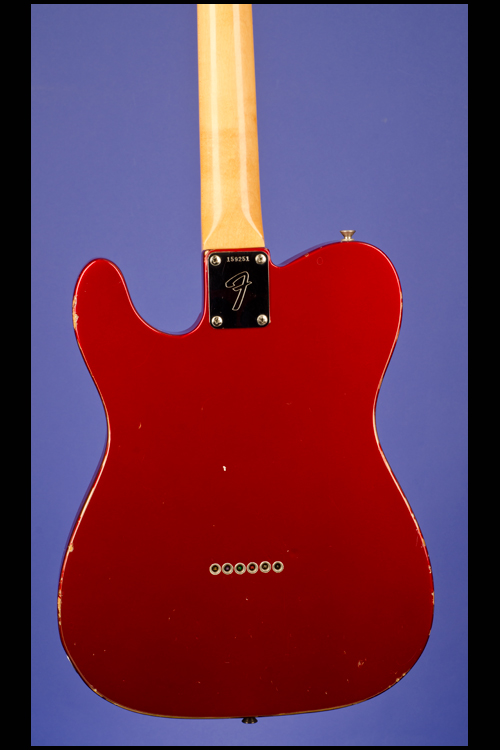
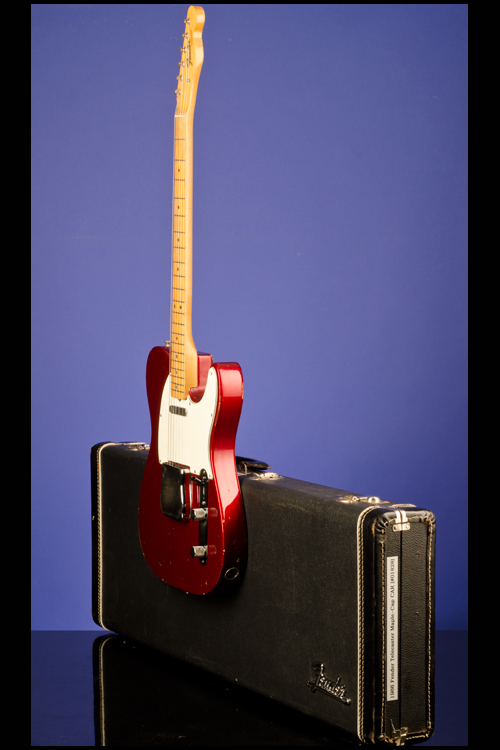
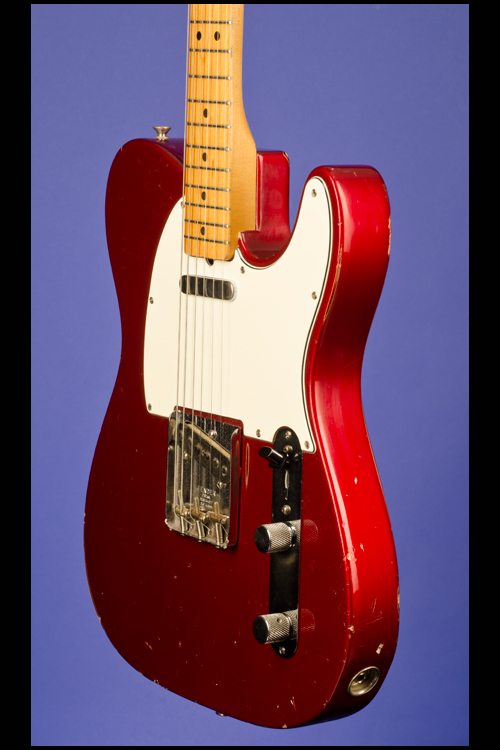
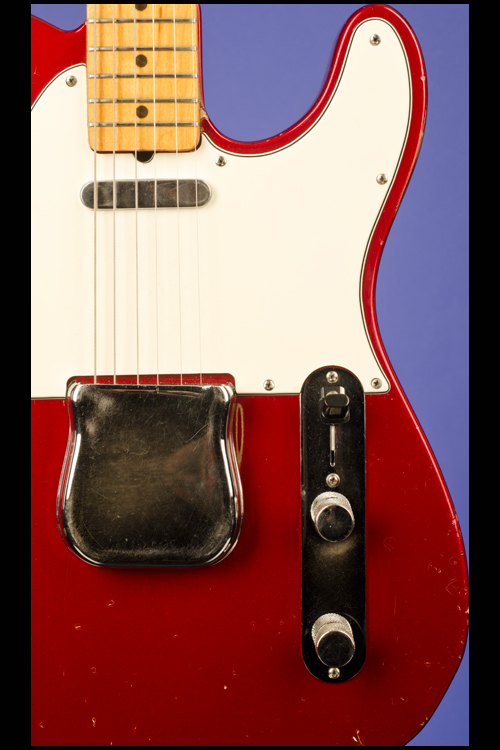
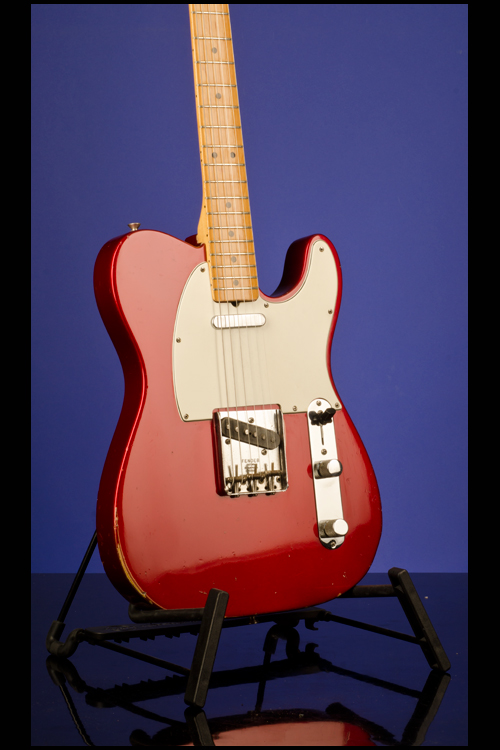
An Exceptionally Fine 1966
Custom-Color Maple-Cap Telecaster
1966 Fender Telecaster (Maple Cap), Candy Apple Red
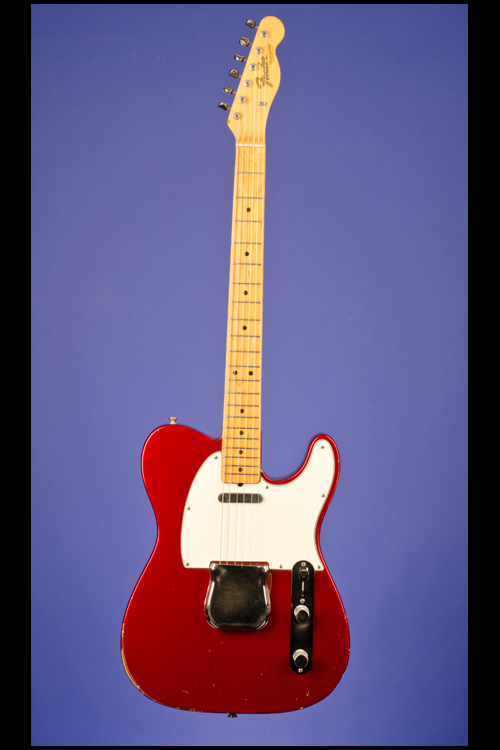
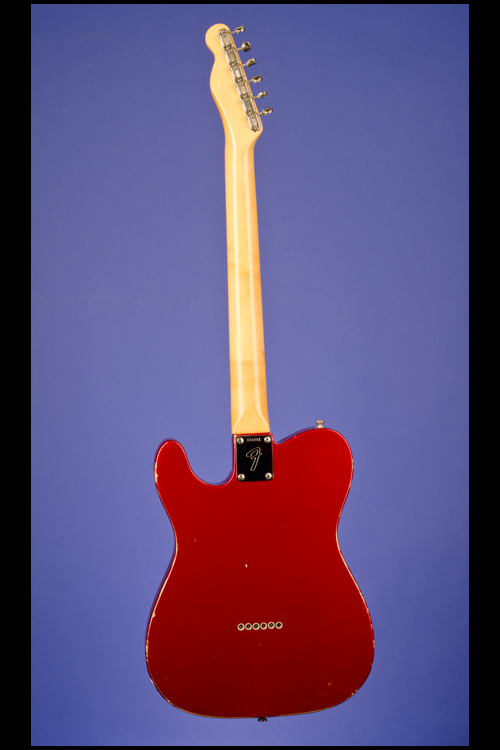
Single cutaway solid body. This 12 3/4-inch-wide "custom-color" Telecaster weighs just 7.70 lbs. and has a nut width of just under 1 5/8 inches and a scale length of 25 1/2 inches. Solid alder body, one-piece maple neck with a medium to thick profile, and maple-cap fretboard with 21 frets and black dot position markers. Headstock with "Fender" logo in gold with black trim, "Telecaster" in black beneath it, and two patent numbers beneath "Fender." Single "butterfly" string tree. Individual dual-line Kluson Deluxe tuners with oval metal buttons and "D-169400 / Patent No" stamped on the underside. The end of the neck is stamped "3 MAY 66B." Four-bolt Fender "F" neck plate with serial number ("159251") between the top two screws. One plain metal-cover pickup (at neck) with an output of 6.54k and one gray six-polepiece pickup with staggered polepieces (angled in bridgeplate) with an output of 7.02k. The potentiometers are stamped "137 6612" (CTS March 1966). Three-layer (white/black/white) plastic pickguard with eight screws. Two controls (one volume, one tone) plus three-way pickup selector switch, all on metal plate adjoining pickguard. Chrome knobs with flat tops and knurled sides and black plastic 'Top-Hat' switch tip. Fender combined bridge/tailpiece with three 'threaded' saddles. Complete with the original chrome "ashtray" bridge cover. This guitar is in exceptionally fine (9.00) condition. There is a minuscule amount of belt buckle wear on the back, a couple of tiny little marks on the edge and on the body of the guitar (the most significant mark on the edge to the left of the jack plate -- a little gouge about 1/4 x 1/8 inch), and a small amount of natural edgewear (from the player's sleeve). There are a few other marks which are inconsequential. There is virtually no wear to the maple-cap fretboard and there is just a small amount of wear to the original frets which is mainly confined to the first ten frets. There are two letters "ES" stamped into the body just by the neck pickup (only visible when the pickguard is removed) which signify that this guitar was "Enter Special" as with many other 1966 Fender guitars. This is an exceptional example of a very rare custom-color "Maple-Cap" Telecaster -- and the first that we have ever handled. Housed in its original Fender black hardshell case with reddish orange plush lining (9.25).
1966 and the "ES" Stamp. "The two-letter "ES" paint code means "Entered Special" for a special order or a show guitar. This does not indicate a factory refinish job, but was instead used by the factory to tell the finish booth to paint this body special order. Stamped number codes and letter codes mean different things... In 1966, Fender used the "ES" code a lot on their custom color instruments. At least for 1966, the ES code was used as some sort of default for custom colored instruments (be it Teles, or Strats or Jazz Basses). This two letters ("ES" for "Enter Special") seems to denote a special order, at least for 1966. Again this is has been seen lots of times on 1966 documented original custom color instruments." (http://www.provide.net/~cfh/fenderc.html)
"From 1950 up to mid-1959, Telecaster guitars were exclusively fitted with a fretted one-piece maple neck...without a separate fingerboard. By mid-1959, the original Maple Neck was replaced by a rosewood-capped neck... In January 1967 a maple fingerboard officially became optional on most Fender electrics, but Telecaster guitars with a maple-capped neck were actually available well before 1967, either on a replacement or a custom order basis. The 2-piece maple neck from the 60s is easily distinguished from the original one-piece neck by both the lack of walnut plug above the nut and contrasting stripe (a.k.a. 'skunk stripe') on the back" (A.R. Duchossoir, The Fender Telecaster, p. 50).
#01828
$24,500
For more photographs and details, please email debra@frettedamericana.com
|
|
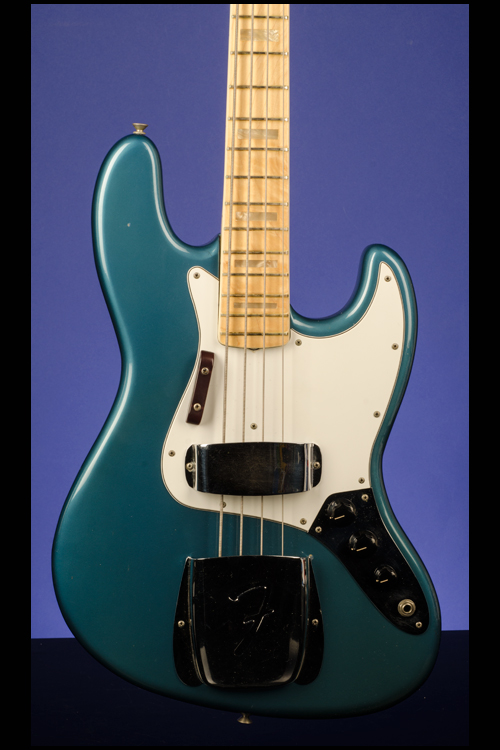
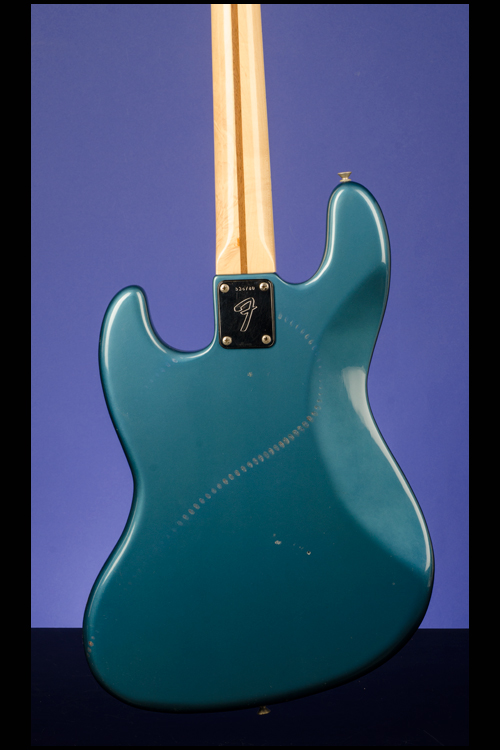
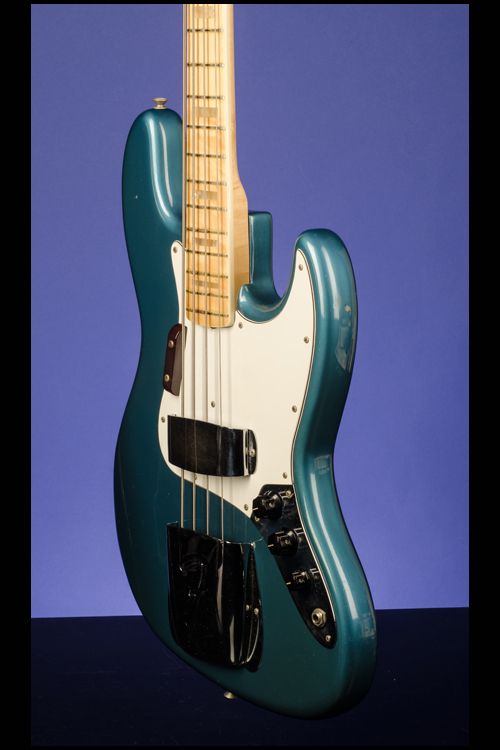
A Fine Early 1974 Custom Color Maple Neck Jazz Bass
One of the Very Last of the Four-Bolt Neck Models
1974 Fender Jazz Bass, Lake Placid Blue
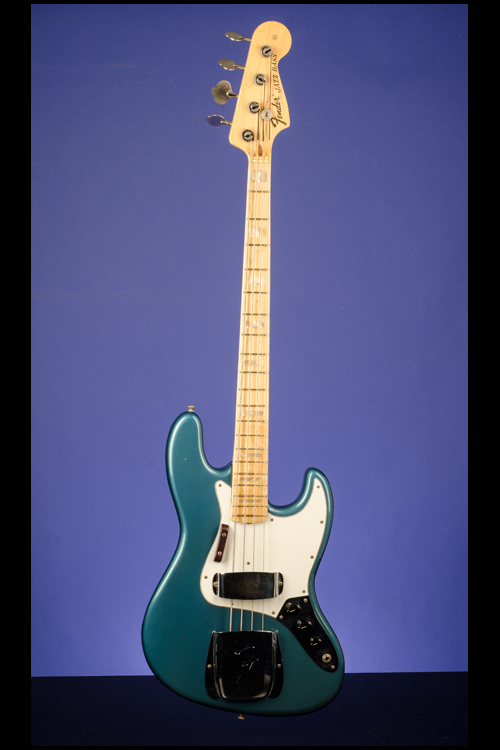
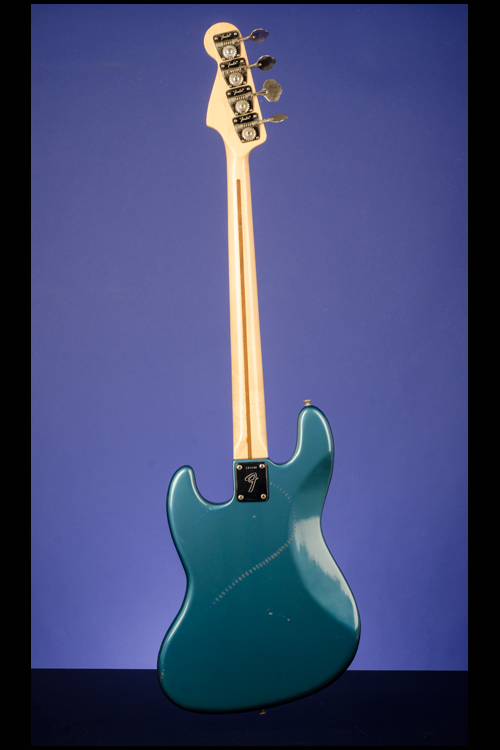
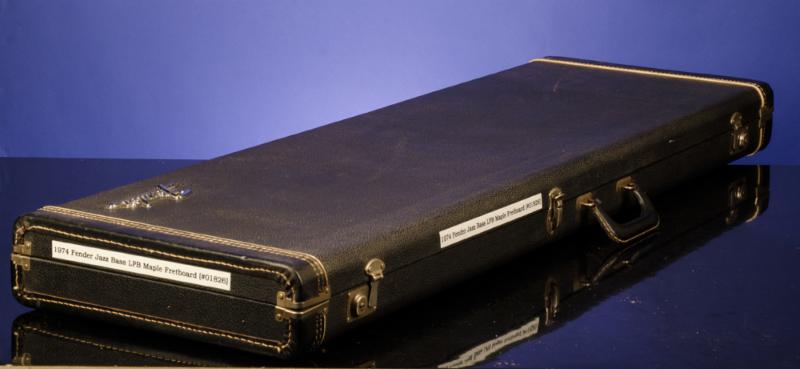
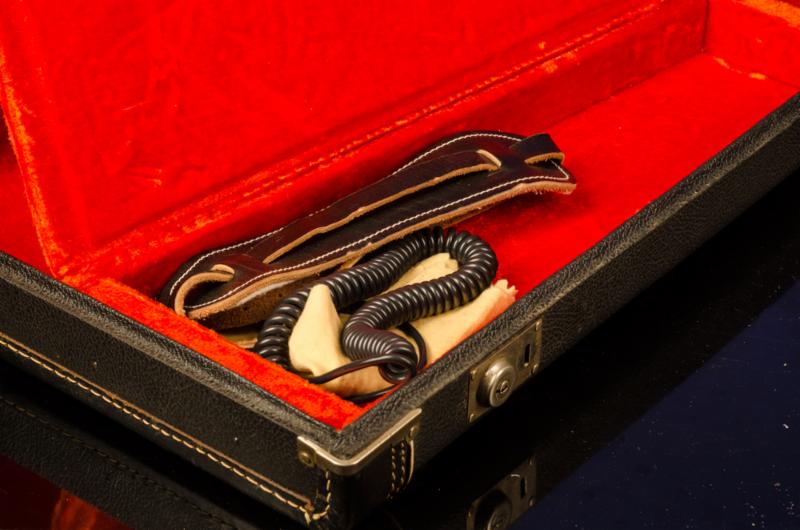
Asymmetrical double cutaway contoured offset solid body. This medium-weight custom color Jazz Bass weighs just 9.60 lbs. Asymmetrical double cutaway, contoured solid alder body. One-piece maple neck with a very fast medium profile. Single-bound maple fretboard with 20 original jumbo frets and inlaid pearl block position markers. Headstock with type "C" decal with "Fender" in black with gold trim and four patent numbers "2,573,254 2,960,900 2,968,204 3,143,028" in black below, "Jazz Bass," "Trade Mark," and "Offset Contour Body" at the ball end of the headstock. Single round string tree. Individual Fender tuners with oval "paddle" metal buttons. Four-bolt neck plate with the Fender backward "F" logo and the serial number "538780" above it. Two eight-polepiece, single-coil pickups with nicely balanced outputs of 7.35k and 7.96k. Three-layer white/black/white plastic pickguard with beveled edges and ten screws. Three controls (two volume blend controls, one for each pickup, and one master tone control) and jack socket, all on metal plate adjoining pickguard. The neck is dated "02 03 05 43" (February 1974) and the potentiometers are stamped "137 7405" (CTS, Feb 1974). Black plastic knobs with white markings. Combined 'Standard' individually height-adjustable four-saddle bridge tailpiece. Complete with both original bass pickup and bridge pickup covers, the bridge cover complete with the original mute. The Lake Placid Blue body color is bright, fresh and unfaded. When we purchased this bass we noticed that the treble pickup was not reading correctly so we sent the bass to our luthier Scott Lentz who has successfully restored the pickup back to its former glory. There is a line of 'cord burn' on the back where the guitar has 'sat' on the coiled cord for a prolonged period of time. There is one small 'ding' (the size of a match-head) on the top of the bass-horn, and a couple of very small and insignificant other marks on the back and the sides. At first glance this forty-one year old bass looks brand new - but because of the aforementioned marks we shall just give it a conservative (9.00+) exceptionally fine rating. Complete with the original Fender black leather guitar strap, an original black 'coiled' guitar cord, original Fender polishing cloth and two case keys. Housed in the original Fender three-latch, rectangular black hardshell case with reddish orange plush lining (9.00). Certainly the cleanest '74 LPB Jazz Bass that we have ever seen...
In late 1973 - early 1974, Fender in their infinite wisdom changed the standard four-bolt neck fixing for the (in my opinion) inferior three-bolt micro-tilt neck fixing - this is one of the very last of the original four-bolt examples. (DJB)
"After the introduction of the Jazzmaster in 1958, Fender needed an upscale model to augment the bass line. In 1960, Leo's new Jazz Bass borrowed the offset waist and part of the name from the Jazzmaster. It also featured a narrower neck width, which was faster playing than the Precision Bass" (J.W. Black and Albert Molinaro, The Fender Bass, p. 25).
#01826
$7,950
For more photographs and details, please email debra@frettedamericana.com
|
|
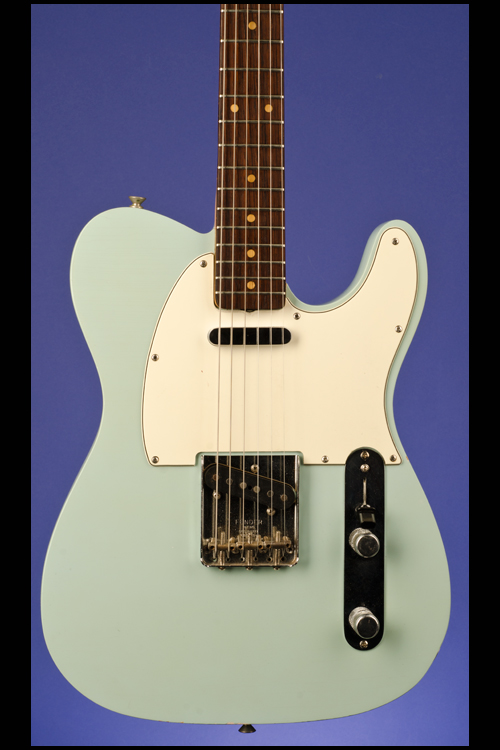
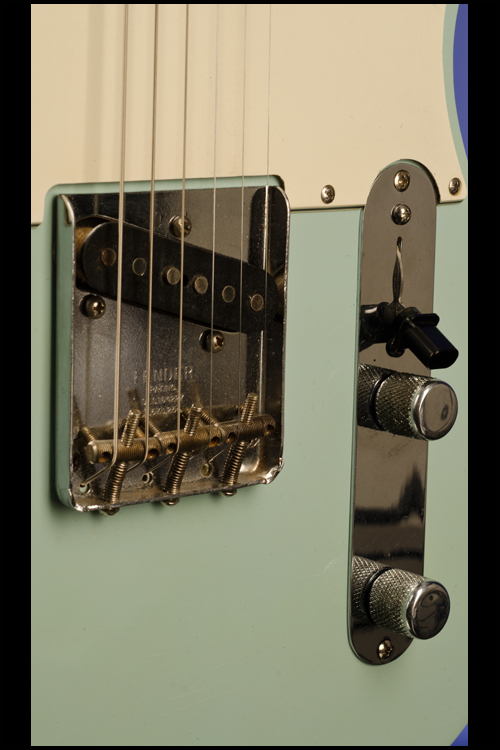
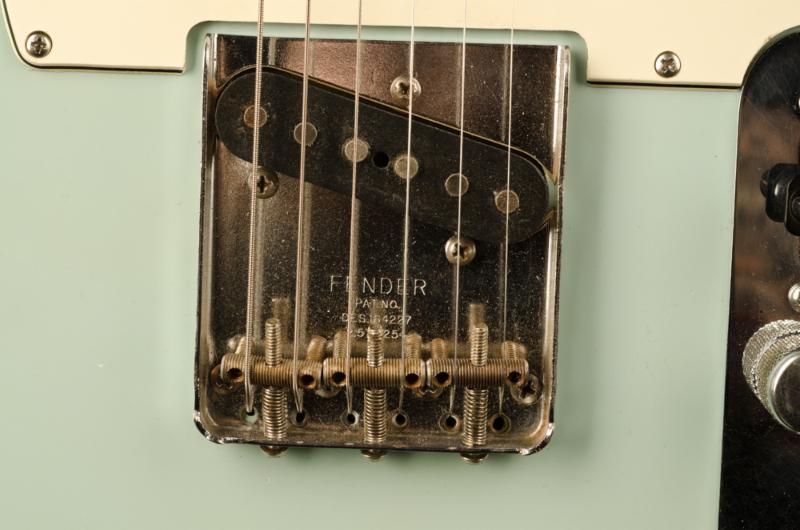
The Most Beautiful 'Franken-Tele'
1964 Fender Telecaster ('59 Slab-Board Neck),
Sonic Blue (Refinished)
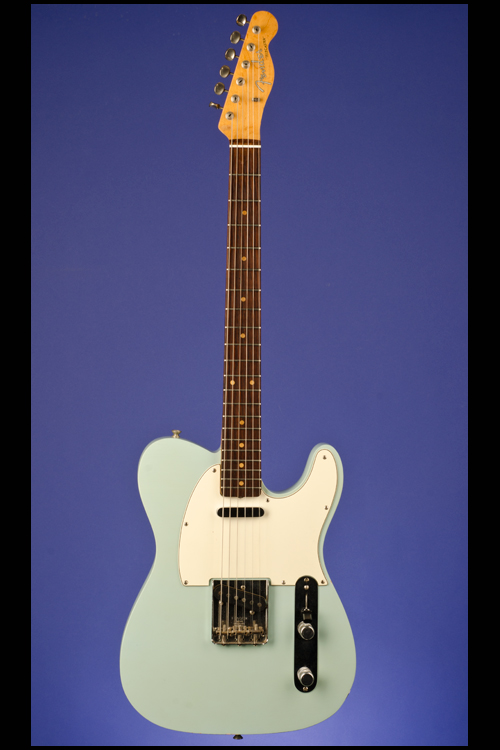
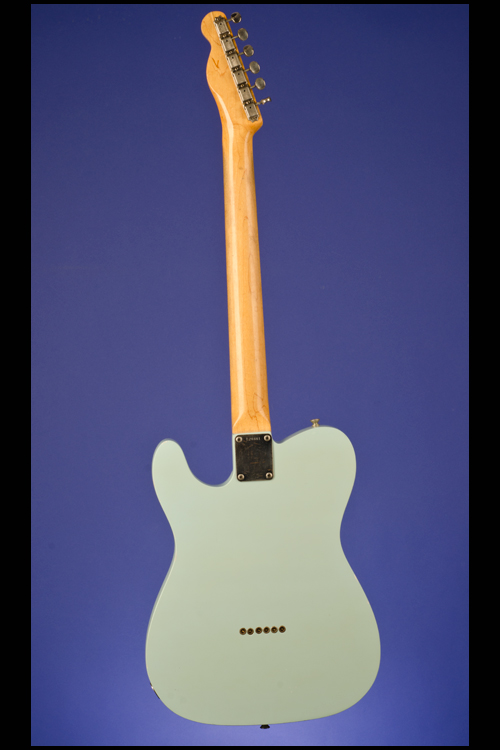
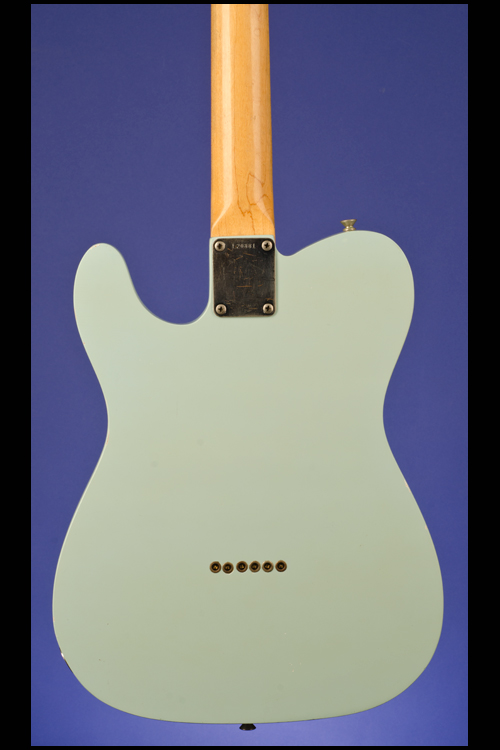
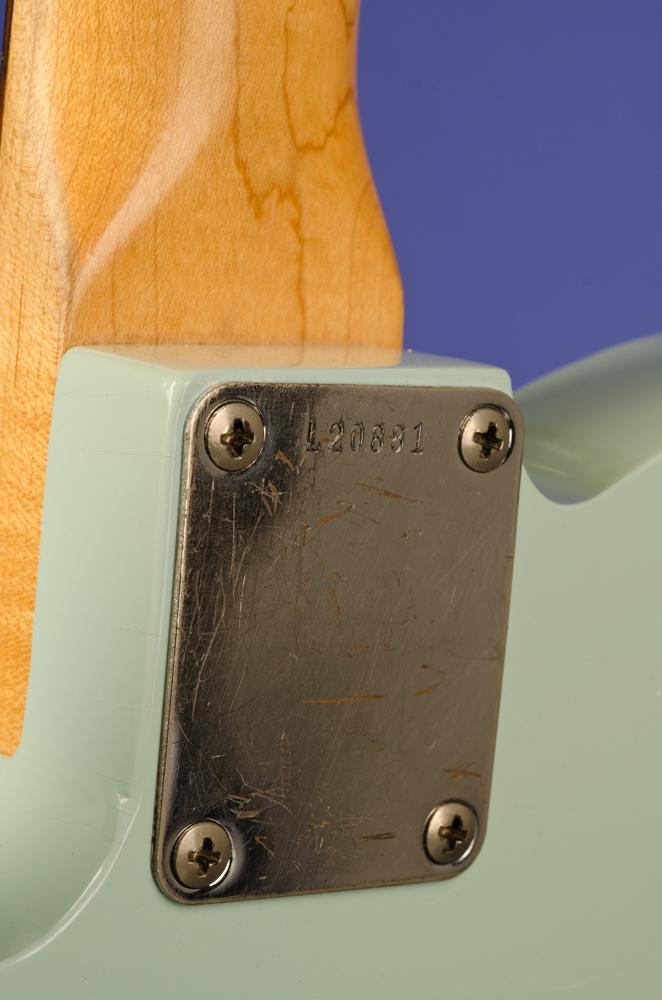
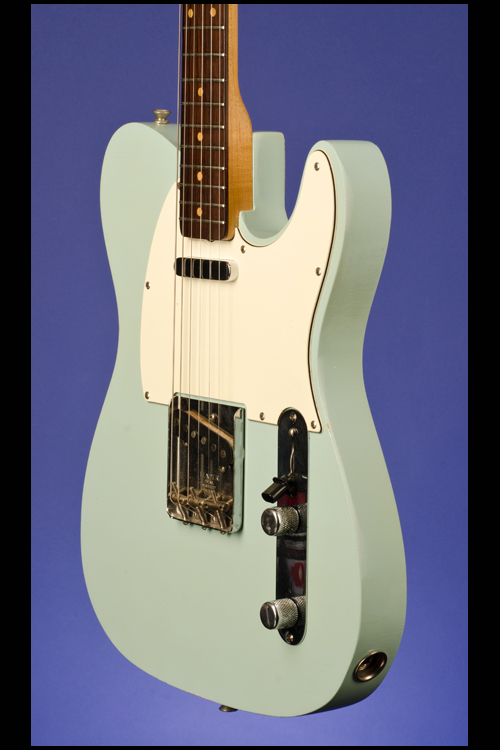
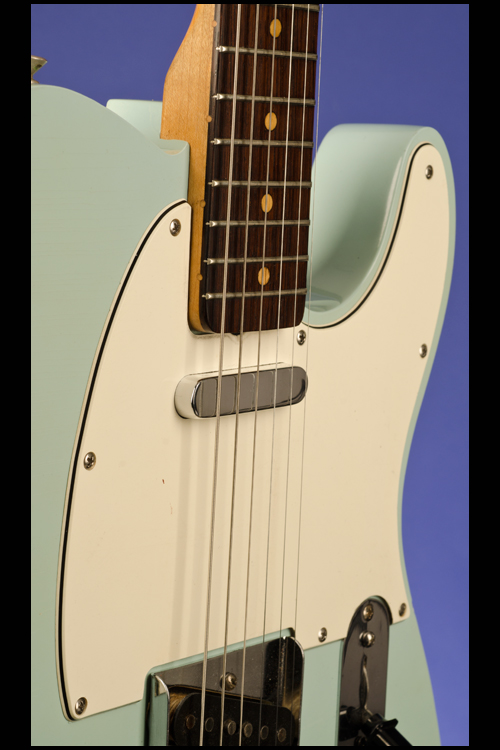
Single cutaway solid body. This 12 3/4-inch, wide, 1 5/8 thick Telecaster weighs just 6.50 lbs. and has a solid ash body. Original early 1959 maple neck with a slab-board "Brazilian' rosewood fretboard with 21 original frets and clay dot position markers. The neck has a nut width of 1 5/8 inches and a scale length of 25 1/2 inches. Original "spaghetti" logo in silver outlined in black, with "Telecaster" in black beneath. Single butterfly string tree with 'small' nylon spacer. Individual Kluson deluxe "double-line" tuners with oval metal buttons. The end of the neck is not dated as is quite common with early 1959 examples. Four-bolt neckplate with serial number "L20881" between the top two screws. One plain metal-cover 'black-bottom' pickup at neck with an output of 6.28k, and one black 'grey-bottom' six-polepiece pickup angled in bridgeplate with an output of 6.82k (stamped on the underside in yellow "APR 22 1964". Three-layer white over balck plastic pickguard with eight screws. Two controls (one volume, one tone) plus three-way selector switch with "top-hat" tip, all on metal plate adjoining pickguard. The potentiometers are stamped "137 6416" (CTS April 1964). Chrome knobs with flat tops and knurled sides. Fender combined tailpiece and bridge. There is some wear to the original frets - but they certainly have plenty of life left in them. There is some light playing wear to the varnish on both sides of the neck between the first and seventh frets. There is a small area of surface loss (from a cigarette burn?) to the face of the headstock by the low E tuner. Housed in an early 1970s Fender three-latch, rectangular black hardshell case with red plush lining (9.00).
Eight years a go we bought an (all original - no refret of refinish) 1959 'slab-board' Telecaster neck... it has sat here and looked at us as if to say 'I ain't got nobody' - please help me!
Listening to this pitiful cry we searched high and low for a suitable '59 body - but to no avail
Last year we came across an original 1964 Telecaster body which had been re-finished (nitro-cellulose) in Sonic Blue (with some very light and perfect finish checking) to such a high standard that we could not resist beginning the 'project'
We contacted our friend and master luthier Scott Lentz and asked him to 're-build' to exact '64 Fender Factory specifications. We then contacted another of our friends - master vintage parts supplier - Bruce Hastell (HTH Vintage Guitars) and asked him to source all of the original parts including two original 1964 pickups and an original 1964 Telecaster wiring harness with potentiometers and capacitors complete.
Every single part on this guitar (except of course the '59 neck) is original from 1964 - from the string-tree washer all the way down to every single screw and even an original early '64 neck plate with serial number.
The guitar arrived back here early this week and I had an excited telephone call from Scott Lentz "what do you think David - sounds great doesn't she?"
So folks, making her debut today - we have 'Franken-Tele' but unlike Mary Shelley's famous man-made monster - this is a very, very beautiful guitar.
She sounds just like the combination of all original '64 parts should - A 1964 Telecaster
She plays with a very special feel - she has the far superior 'slab-board' neck which was only available from mid 1959 through August 1962. The neck profile is typical of 1959 with a neck thickness rising gently from 0.79 behind the nut, to 0.85 behind the fifth fret, to 0.95 being the twelfth fret and finally 0.99 inches behind the fifteenth fret.
#01288
$14,500
For more photographs and details, please email debra@frettedamericana.com
|
|
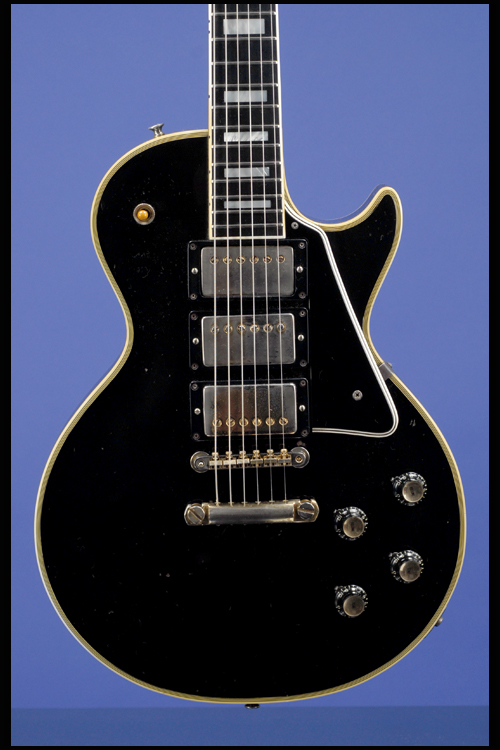
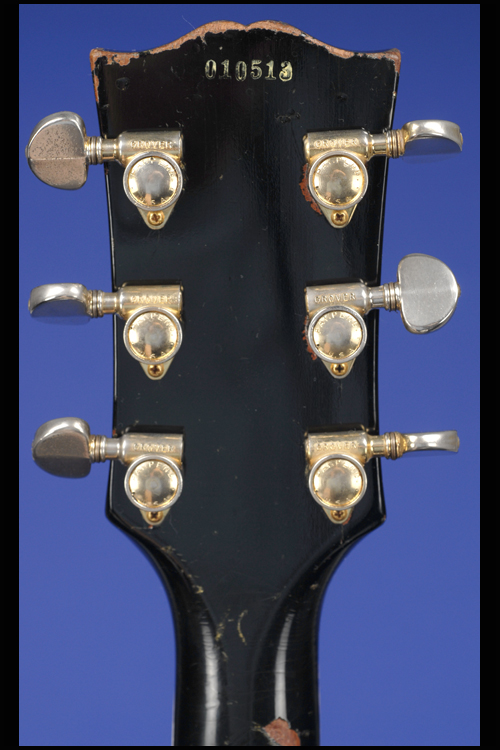
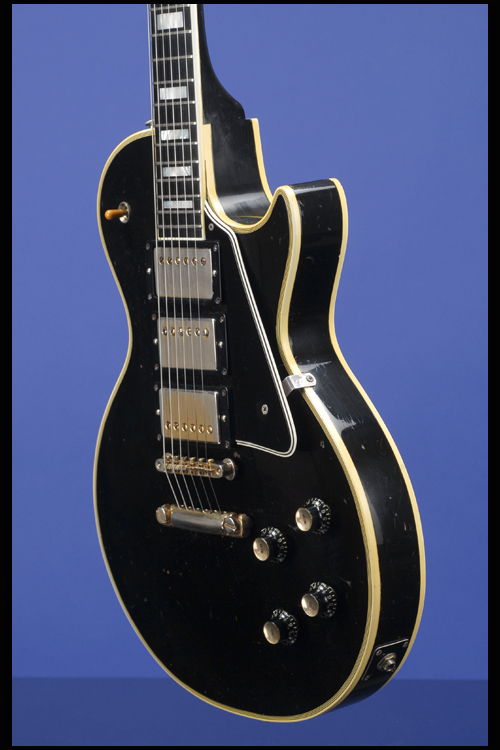
A One-Owner 1960 Les Paul Custom "Black Beauty"
1960 Gibson Les Paul Custom "Black Beauty", Black
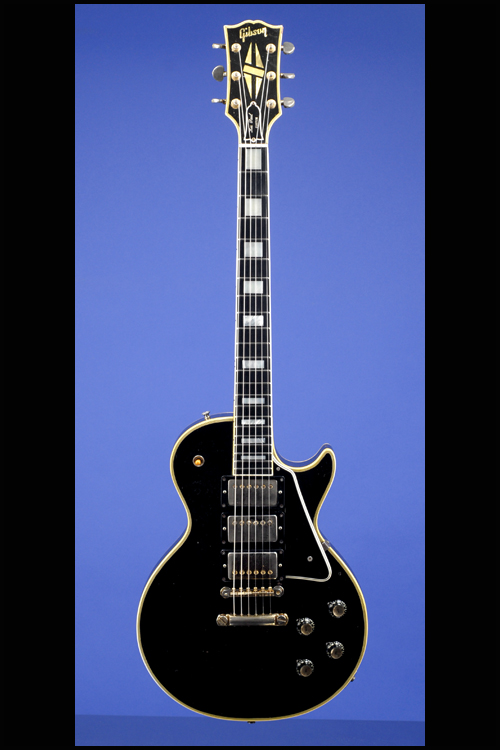
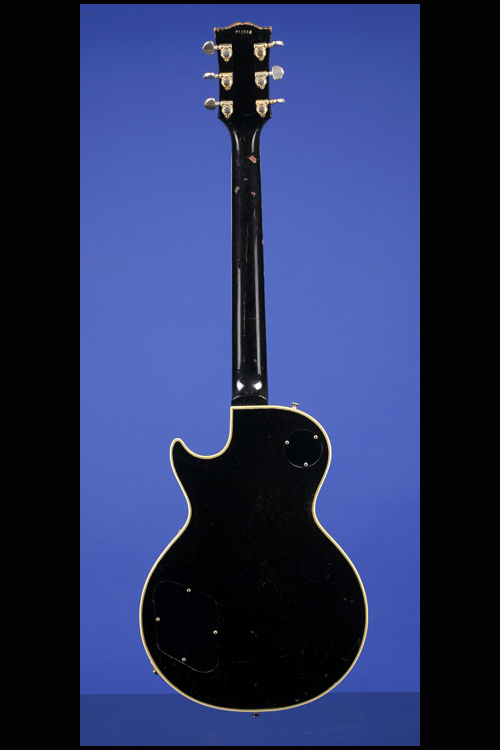
Single cutaway solid body. This medium weight Les Paul Custom weighs 10.70 lbs. and has a solid mahogany body with a slightly arched top. One-piece mahogany neck with a nice medium profile, a comfortable nut width of just under 1 11/16 inches and a standard Gibson scale length of 24 3/4 inches. Ebony fretboard with 22 original thin frets and inlaid pearl block position markers. The top of the guitar has seven-ply binding, the back of the guitar has five-ply binding, the headstock has five-ply binding, and the fretboard has single white binding. Headstock with inlaid pearl "Gibson" logo and five-piece pearl split-diamond inlay. Two-layer (black on white) truss-rod cover with "Les Paul Custom" engraved in white. Individual Grover Roto-Matic tuners with half-moon metal buttons. The serial number ("010513") is inked in yellow on the back of the headstock. Three really hot PAF (double-black) humbucking pickups with very strong outputs of 8.16k, 8.14k, and 7.76k. Five-layer (black/white/black/white/black) plastic pickguard. Four controls (two volume, two tone) on lower treble bout plus three-way selector switch on upper bass bout. Black plastic bell-shaped "Bell" knobs. ABR-1 Tune-O-Matic non-retainer bridge with metal saddles and separate stud tailpiece. All hardware gold-plated.The potentiometers are all stamped: "134 6043" (Centralab October 1960). There is some very light belt buckle scarring on the back of the guitar (nothing down to the wood), a small piece of binding (1/2 inch) is missing from the edge of the headstock just above the "G" tuner. There are a couple of surface chips on the edges of the guitar, the most significant being on the treble-horn where there is also a small (3/4 inch) cut. A few tiny surface marks on the front of the guitar, and some very minor tarnishing to the gold-plated hardware. The original frets show little-to-medium wear. That all said, this totally original '60 Custom -- with a neck and a sound to die for -- is certainly one of the finest that we have ever seen. At just over ten-and-a-half pounds It is on the medium-to-heavy side for a Custom - but the extra weight shows most positively in the sound. This is an amazing one-owner guitar in exceptionally fine (9.00) condition and this is the first time that it is being offered for sale. Housed in its original (very worn) Gibson five-latch black pebble-grain "black beauty" hardshell case with yellow/orange plush lining (7.50).
"In a move designed to widen the market still further for solidbody guitars, Gibson issued two new Les Paul models in 1954, the Custom and the Junior...The two-pickup Custom looked classy with its all-black finish, multiple binding, block-shaped position markers in an ebony fingerboard, and gold-plated hardware, and was indeed more expensive than the gold-top. Paul said that he chose the black colour for the Custom. 'When you're on stage with a black tuxedo and a black guitar, the people can see your hands move with a spotlight on them. They'll see your hands flying.' The Custom had an all-mahogany body, as favoured by Les Paul himself, rather than the maple/mahogany mix of the gold-top, giving the new guitar a rather mellower tone...The Les Paul Custom was promoted in Gibson catalogues as 'the fretless wonder' because of its use of very low, flat fretwire, different to the wire used on other Les Pauls at the time and favoured by some players for the way it helped them play more speedily...The September 1954 pricelist showed the Les Paul Custom at $325 and the Les Paul Junior at $99.50. The gold-top meanwhile had sneaked up to $225" (Tony Bacon, 50 Years of the Gibson Les Paul, p. 25). The Custom was the first Les Paul model to receive the company's Tune-O-Matic bridge, used in conjunction with a separate bar-shaped tailpiece, which offered for the first on Gibsons the opportunity to individually adjust the length of each string, thus improving tuning accuracy.
#00964
$65,000
For more photographs and details, please email debra@frettedamericana.com
|
|
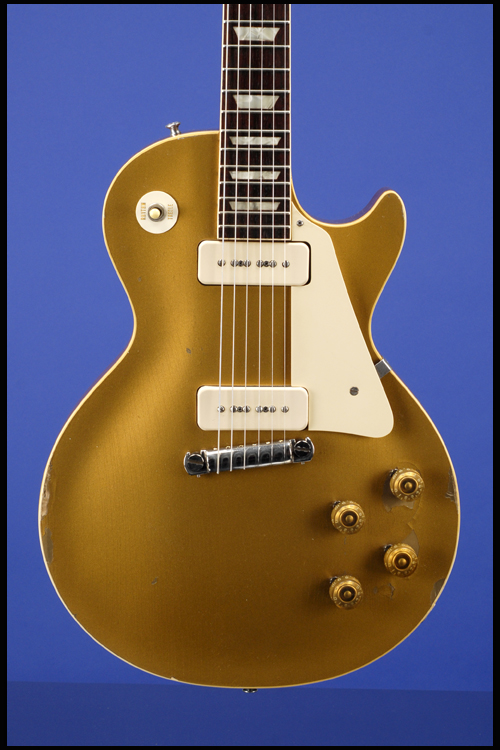
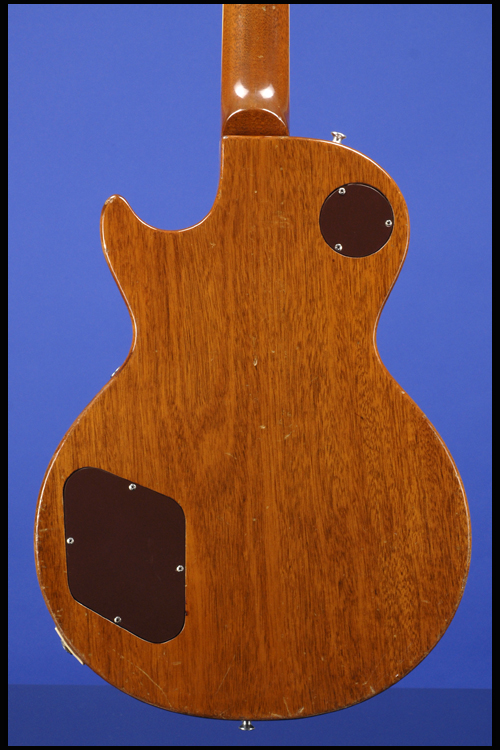
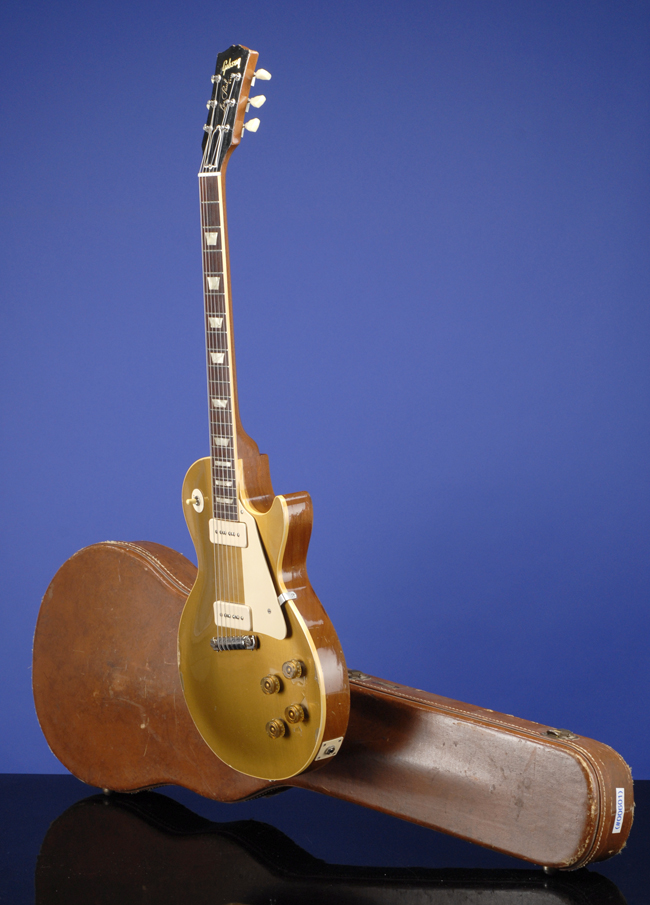
A Totally Original One-Owner
1955 Gibson Les Paul Standard Gold Top

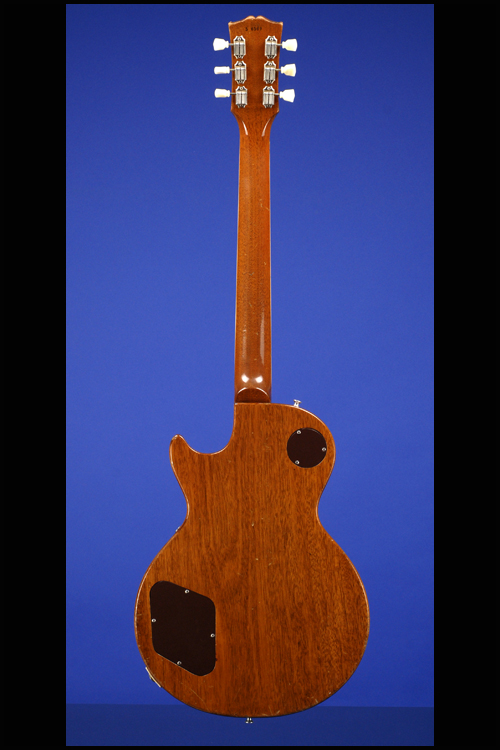
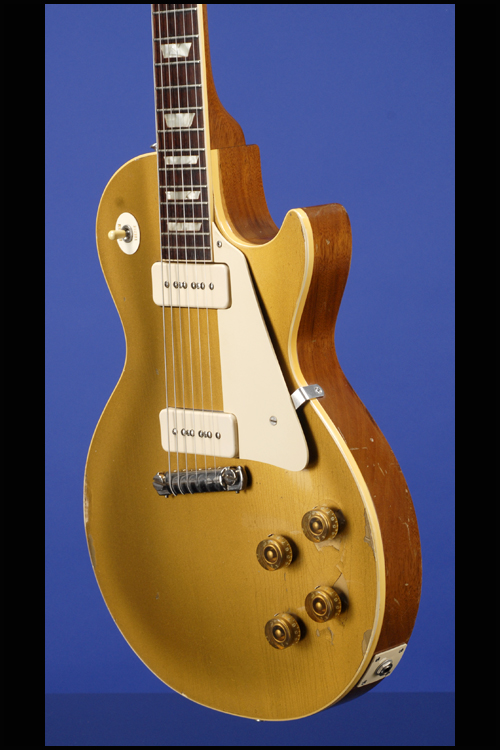
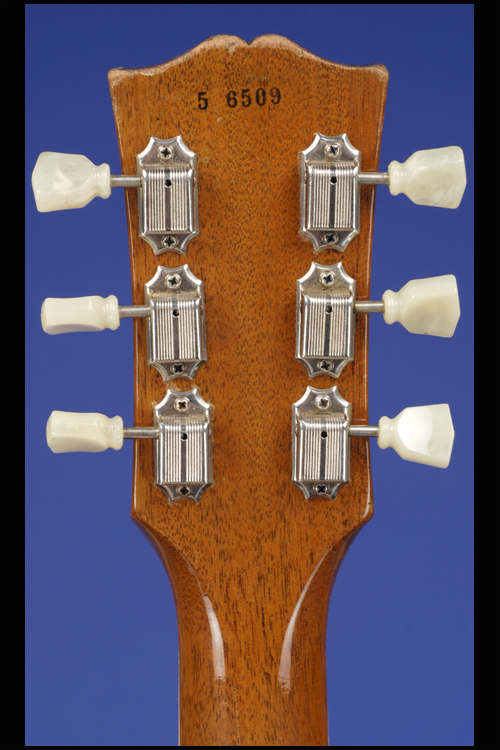
Single cutaway solid body. This totally original lightweight Les Paul Standard Gold Top weighs just 8.50 lbs. and has nice, fat nut width of 1 11/16 inches and a standard Gibson scale length of 24 3/4 inches. Solid mahogany body with a solid carved maple top, one-piece mahogany neck with a nice, thick profile, and rosewood fretboard with 22 frets and inlaid pearl trapezoid (crown) position markers. Serial number ("5 6509") inked-on in black on the back of the headstock. The top of the guitar has single cream binding and the fretboard has single cream binding. Headstock with inlaid pearl "Gibson" logo and with "Les Paul Model" silk-screened in gold. Two-layer (black on white) plastic truss-rod cover. Individual single-line "no-name" Kluson Deluxe tuners with single-ring tulip-shaped Keystone plastic buttons (stamped on the inside "2356766 PAT APPLD."). Two incredibly hot P-90 pickups with outputs of 8.28k and 7.85k. Single-layer cream-colored plastic pickguard. Four controls (two volume, two tone) on lower treble bout plus three-way pickup selector switch on upper bass bout. Gold plastic barrel-shaped "Speed" knobs. The potentiometers are stamped "615 4190" (ROC early fifties) and the two original capacitors are stamped "Grey Tiger Type GT 452 .02 MFD 400 VDC." Combination "wrap-over" bar bridge/stud tailpiece. This super guitar is in excellent plus (8.75) condition -- it plays wonderfully and has sustain to die for! There is some minor finish checking on the top of the guitar and a couple of small areas around the controls where the gold paint has actually flaked off, the largest (triangular-shaped) area measuring approximately 3/4 x 3/4 inch. There are also a couple of areas on the edge of the top, but these are much smaller. There is some very minor belt buckle wear on the back of the guitar and a few tiny marks on the back and on the top edges of the headstock. Housed in the original Gibson brown hardshell case with four latches and pink plush lining (9.00).
This totally original '55 Les Paul Standard Gold Top -- with a neck and a sound to die for -- is the one of the best that we have ever seen. It has the early "ROC" pots (which were used only between 1949 and 1954) and the "Grey Tiger" capacitors, which preceeded the usual "Bumble-Bees." At just eight and a half pounds, it is a real lightweight. This one owner guitar has been off-the-market for over fifty years...and this is the first time that it is being offered for sale.
Many guitarists consider this to be the ultimate "blues machine" -- the sustain on this guitar is quite unbelievable!
"The first Gibson Les Paul solidbody electric guitar, known simply as the Les Paul Model then but now better known by its descriptive nickname 'gold-top', first went on sale during 1952" (Tony Bacon, 50 Years of the Gibson Les Paul, p. 15).
"The new Les Paul guitar was launched by Gibson in 1952, in the summer, priced at $210, which was about $20 more than Fender' Telecaster sold for at the time...Today, a gold-finish Les Paul model is nearly always called a gold-top thanks to its gold body face...The new gold-top's solid body cleverly combined a carved maple top bonded to a mahogany base, a sandwich that united the darker tonality of mahogany with the brighter sonic 'edge' of maple. Paul said that the gold colour of the original Les Paul model was his idea. 'Gold means rich,' he said, 'expensive, the best, superb'" (Tony Bacon, 50 Years of the Gibson Les Paul, pp. 20-21).
"In 1955 the gold-top gained Gibson's new Tune-o-matic bridge. The unit had the facility to adjust individual string-length, improving intonation. Two years later humbucking pickups replaced P90s on the gold-top" (Tony Bacon and Paul Day, The Gibson Les Paul Book, p. 19). This guitar is one of the last Les Paul Standard Gold Tops with "wrap-over" bar bridge/stud tailpiece before the Tune-O-Matic bridge was introduced in late 1955.
#00601
$42,500
For more photographs and details, please email debra@frettedamericana.com
|
|
|
| |
|
Fretted Americana, Inc.
P.O. Box 9029
Calabasas, California 91372
818-222-4113
|
|
|
| |
|