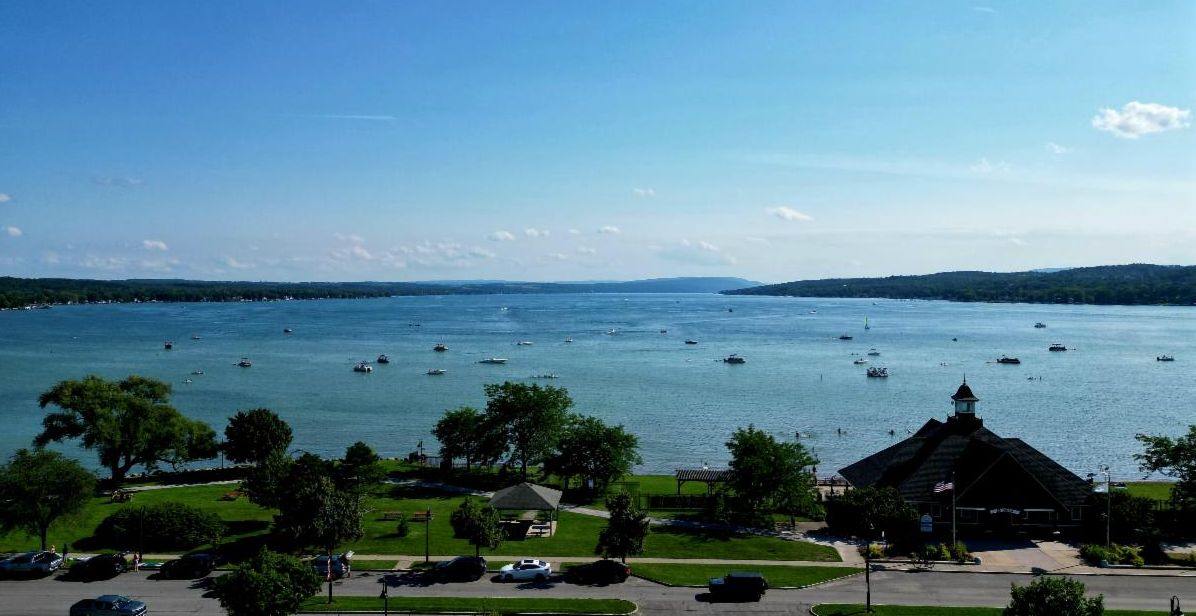
Water Quality Update for Friday, August 14th, 2026 | | Did someone forward you this email? Click HERE to subscribe directly. | | The CLWA Weather Station is located at Canandaigua BoatWorks on the east side of the lake. | | Friday afternoon looking south from Kershaw Beach. What a gorgeous day! | | |
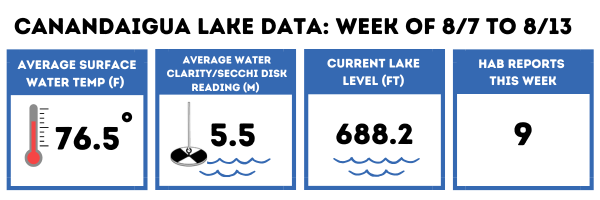
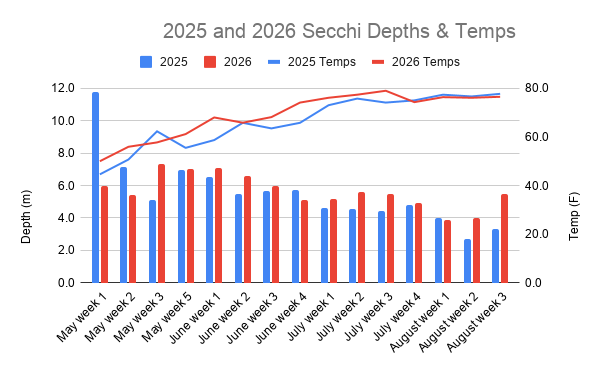
Average lake surface temp and lake level are about the same this week as last, while water clarity improved for the second week in a row. We continued to have more harmful algae bloom (HAB) reports come in during the week but nothing too bad. Kershaw Beach reopened this week for swimming, Friday was an absolutely gorgeous day and Saturday is looking good as well.
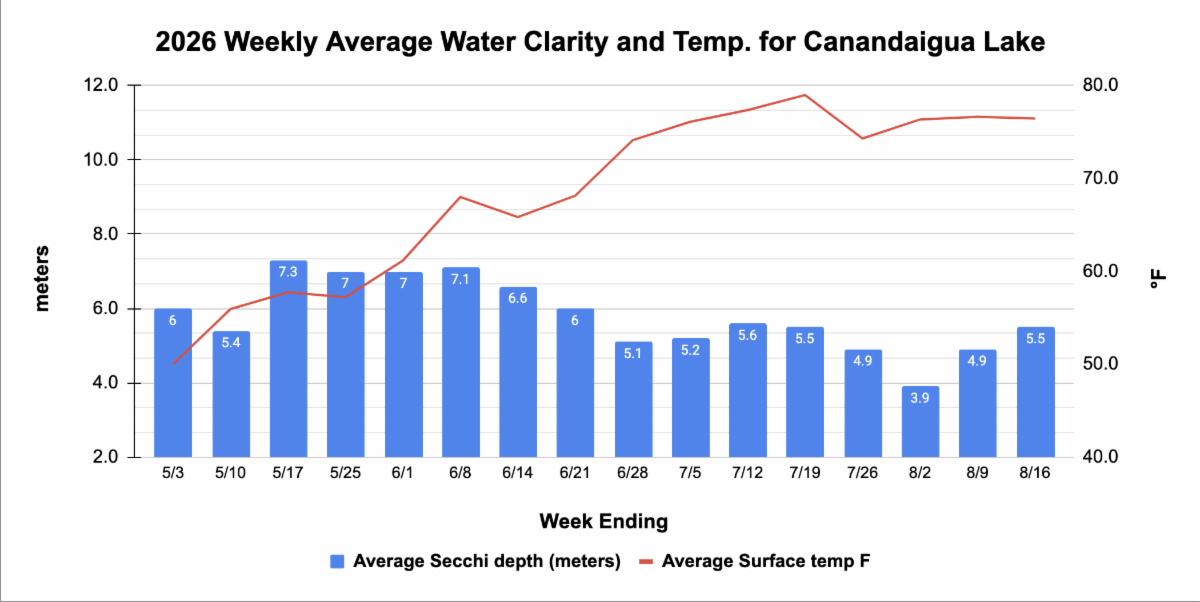
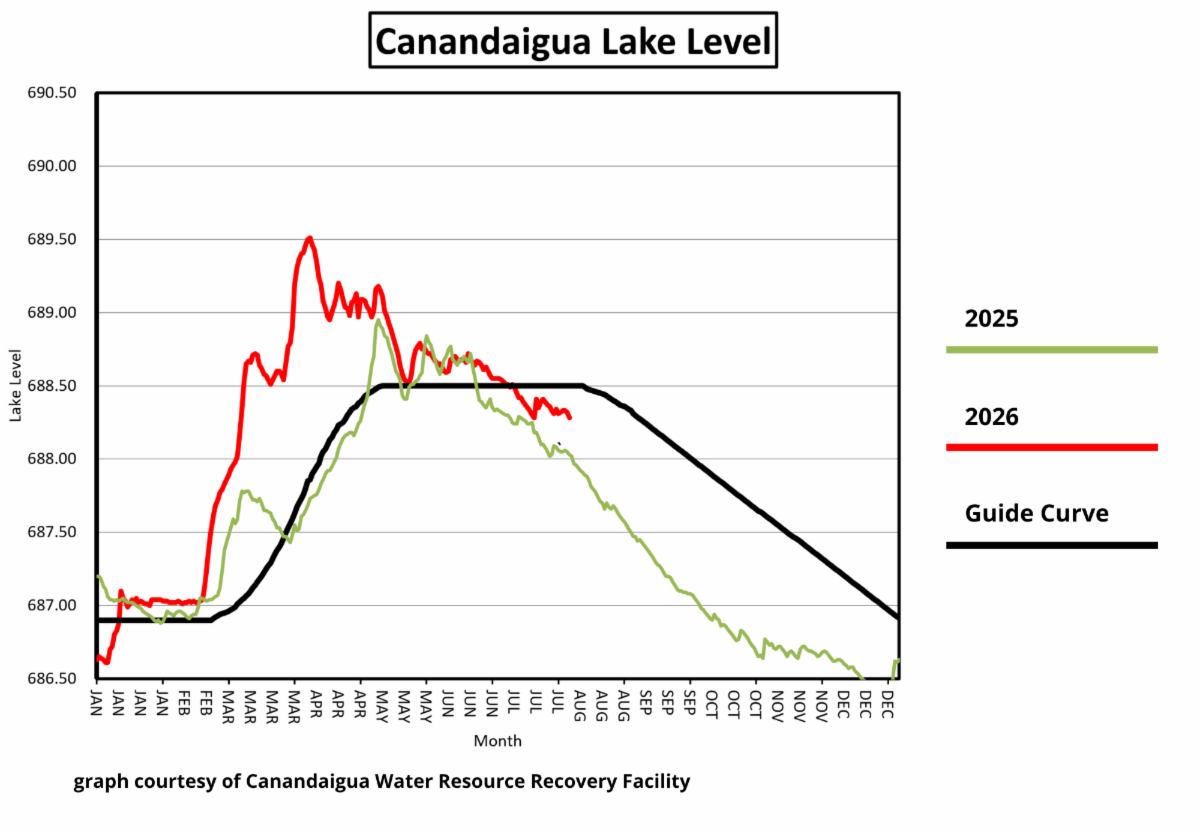
| | Weekly water clarity and temp data collected by our dedicated CLWA Citizen Science volunteers. You can see that average water clarity is again higher this week and surface temp is about the same. | | How is 2026 comparing to 2025 so far? Average surface temps are just about the same right now as they were last year. Water clarity (measured by secchi disk depth) has seemed a bit better actually - and is overall very similar except for the difference at the beginning of the season. Last year this week our average clarity was 3.3 meters. This year our weekly average is 5.5 m this week - a pretty noticeable difference as you can see on the chart below. | Lake level is about the same this week as last. Both outlet gates are closed and the feeder canal gate is open at the required minimum - 0.25 ft open. This week starts the decrease in lake level based on the guide curve to slowly get us down to the desired level for the winter. | | |
In this weeks update:
- HABs Update
- Lake Temperature Profile and Thermocline
- August is Water Quality Month
- What's in Your Garden?
- Upcoming events
| | |
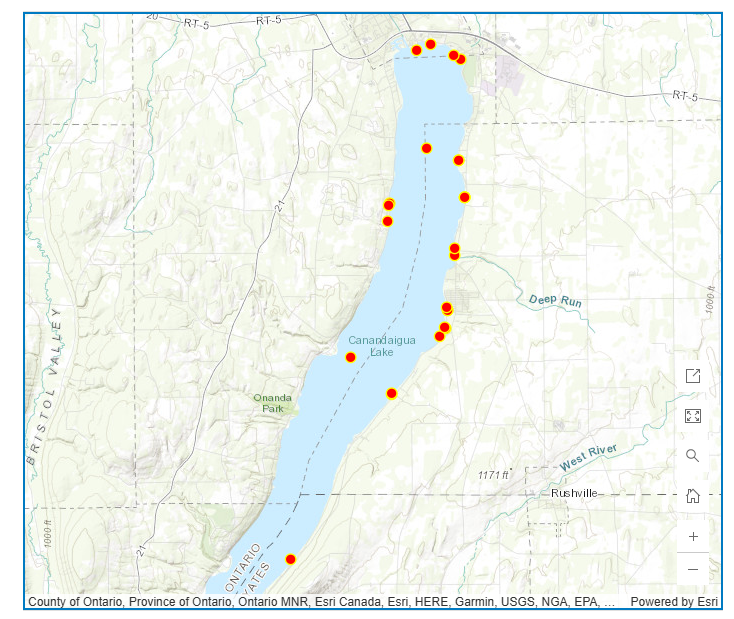
We have had 9 harmful algae bloom (HAB) reports come in this week so far. We have had 28 bloom reports so far this season. Our HABs map shows where reports have come in this season to date. Reports have come in all on the north end of the lake so far - on both sides - and also mid-lake. Most report have been streaking/spots - relatively light blooms. We haven't had any reports of very heavy, pea soup looking blooms yet although a few of the photos are starting to look like heavier blooms than the past few weeks.
Last week on Thursday Kershaw Beach was closed due to HABs. This week - the beach was opened back up on Wednesday after testing by the Department of Health confirmed the water was safe for swimming.
The NY threshhold for microcystin toxin levels safe for swimming is 4 ug/L . We didn't get a sample from the bloom on Thursday morning at the beach to test - however regulated beaches must close immediately if a visual harmful algal bloom (HAB) is present, regardless of tested toxin levels. We do have samples from other locations around the lake from our CLWA citizen science volunteers. These samples have been sent over to the Finger Lakes Institute for toxin analysis. We don't have results back yet - but in years past it is common for our toxin levels to be well above the recreational limit of 4 ug/L.
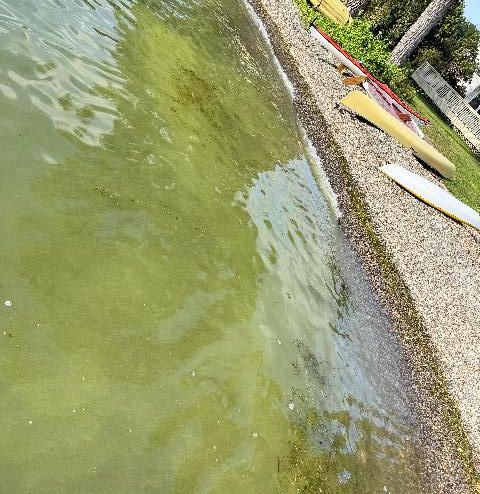
| | Confirmed bloom reports from volunteers have come in from the north end of the lake so far this summer on both sides and also mid lake. The map is interactive on our website and you can click to view reported blooms to see their date and location details. | Photo from HAB report submitted on 8.7.26 from the east side near Crystal Beach by a CLWA Citizen Science volunteer. This is the worst looking HAB report we have received so far this season in terms of density of algae. | |
Remember: HABs are constantly changing.
They can appear, move, and disappear quickly. A bloom reported in one location does not mean that the entire lake is affected or that conditions are the same everywhere.
Our HAB map is a helpful tool for seeing where blooms have been reported, but it is not an exact, real-time picture of conditions across the lake. Before swimming, boating, or letting pets near the water, take a moment to look at the water where you are. If you see water that looks like spilled paint, pea soup, or has unusual discoloration or surface scum, stay out.
When in Doubt - Stay Out!
Knowledge is power! Knowing what HABs look like and staying informed can help you safely enjoy Canandaigua Lake all summer long. Stay observant, stay informed, and help us spread the word!
Scoll all the way to the bottom of this email for our general HABs reminders, resources, and ID info.
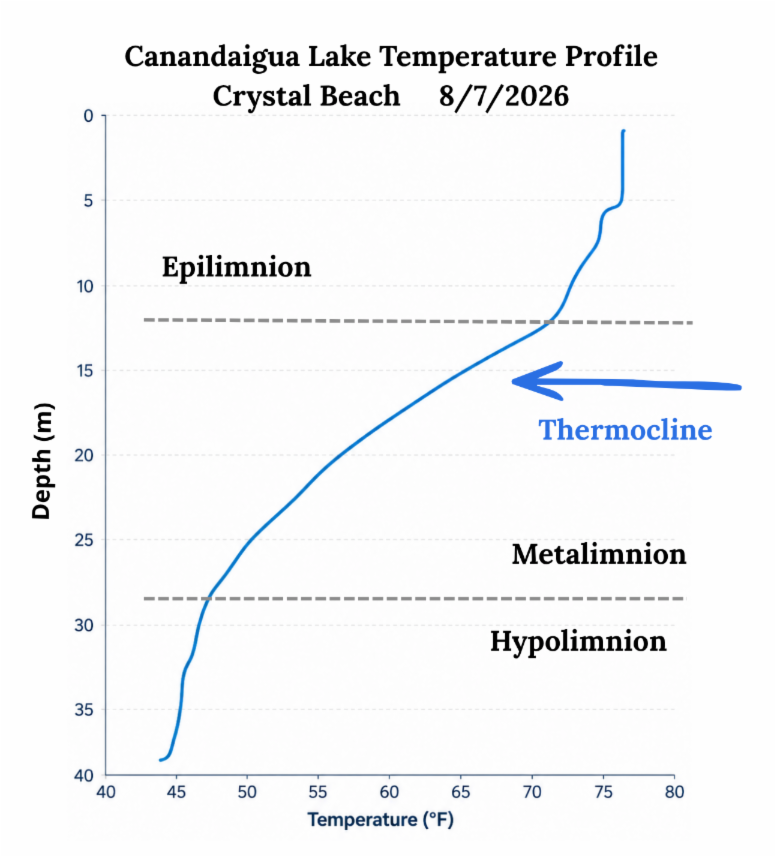
| | Temperature Profiles and the Thermocline | In addition to the weekly water clarity and surface temperature measurements, we also have a few volunteers who help us track the temperature profile of the lake all season. These volunteers lower fish hawk digital temp-at-depth gauges into the lake that record the temperature every meter deep at their location. Below is the temp depth profile in the lake near Crystal Beach from last week. We can't thank all of our amazing citizen scientists enough. The data they are gathering is creating such a valuable long term data set for our lake. | |
If you’re an avid angler, you’re probably very aware of where the thermocline is right now. (Hint: it’s set up around 12–15 meters or so.) For the rest of us, you might be thinking: the thermo-what?
Each summer, as the lake warms, the surface water heats much faster than the deeper water below. By July, the lake’s thermal layers are usually well established. A warm layer of water sits on top of a cooler, denser layer, separated by a transition zone where temperature changes rapidly with depth—the thermocline. As the lake cools in the fall - the layers break down and the lake becomes mixed again from bottom to top.
The three main thermal layers of a stratified lake are the epilimnion, metalimnion, and hypolimnion. During the warmer months, sunlight heats the surface, creating distinct zones based on depth, temperature, and mixing.
Epilimnion: The top layer. It is warm, sunlit, and mixed by the wind. This layer generally has plenty of oxygen and supports abundant life.
Metalimnion: The middle layer, just below the epilimnion. This is where you find the thermocline—the zone where water temperature drops rapidly with depth.
Hypolimnion: The deep, bottom layer. It stays cold, dark, and dense and has little mixing with the upper layers during summer. In many shallow or nutrient-rich lakes, oxygen can become depleted in this layer. In an oligotrophic lake like Canandaigua, however, high dissolved oxygen can be maintained even at depth. This is how we have a two story fishery - with lakers and rainbow trout!
For cold water fish like trout, the thermocline is especially important. During the warmest part of the day, trout may remain suspended or hold near the bottom in the cold lower layer. When actively hunting baitfish, however, they often move up toward the base of the thermocline.
So, for anglers, knowing where the thermocline is can be key to knowing where—and at what depth—to set your lines.
| August is Water Quality Month | | |
The history of National Water Quality Month originally dates back to two US congressional acts that were passed in the early 1970s in an effort to protect our water sources. Starting with the Clean Water Act that was passed in 1972, the federal government began taking steps to curb water pollution by making it illegal to dump high amounts of toxic materials into bodies of water. This set the standard for making sure that surface water was up to certain standards before being used for human consumption and recreation. In 1974, the Safe Drinking Water Act was passed to further protect the quality of groundwater and public water systems. Fast forward to 2005 when The EPA declared August as National Water Quality Month to raise awareness about protecting fresh water sources.
When we look out at Canandaigua Lake and all the water it holds, it can be easy to take this incredible resource for granted. But with only a small fraction of the water on Earth available as fresh water, we are truly fortunate to have such an abundant and exceptional source of fresh water right here in our community.
Protecting this resource is something we can all be part of. Through the choices we make on our properties and in our daily lives, each of us can help protect the lake and maintain the clean, healthy water we are so fortunate to enjoy.
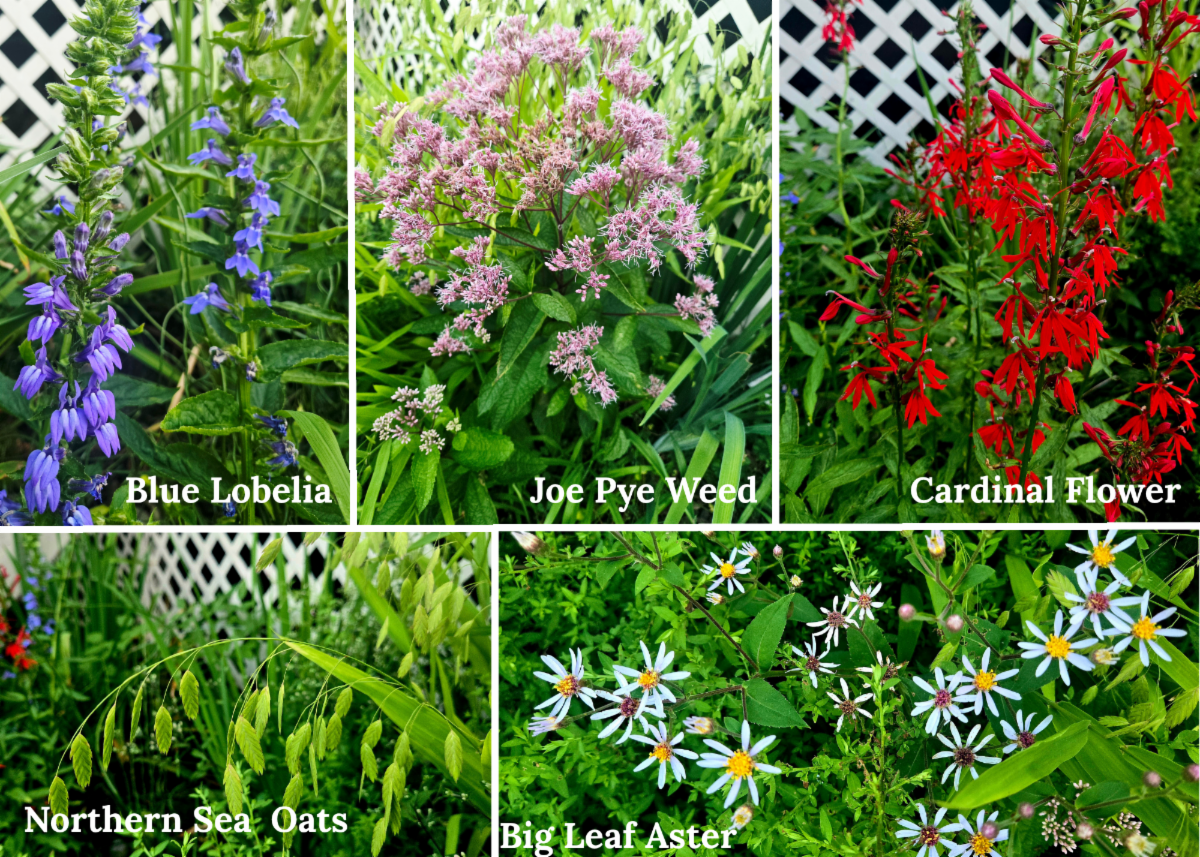
| | Native Plants for Lake Friendly Living | | It may still be summer - but its not too early to start thinking about planting again this fall when it cools down! Looking for gardening inspiration? Here are some native plants in my garden right now that are looking pretty happy. Have some native plants of your own that you want to share? Send us your native plant photos so you can help inspire others to have beautiful and functional landscaping as well. | | |
Right now, both the blue lobelia and cardinal flower are looking great! These two native beauties are actually relatives blue lobelia (Lobelia siphilitica) and cardinal flower (Lobelia cardinalis). Cardinal flower is a favorite of hummingbirds, while joe-pye weed and bigleaf aster are pollinator magnets. Northern sea oats is a great native grass that adds beautiful texture with its ornamental seedheads.
All of these plants can grow in full to partial sun, helping stabilize soils and soak up rainwater. They’re a beautiful way to support wildlife while helping protect Canandaigua Lake, too! We are working on planning a Native Plant Open House with Mayflowers Garden and Nursery Center for next month. This will be a great opportunity to learn about a wide variety of native plants available and find something that works for your own landscape. Stay tuned for more details soon!
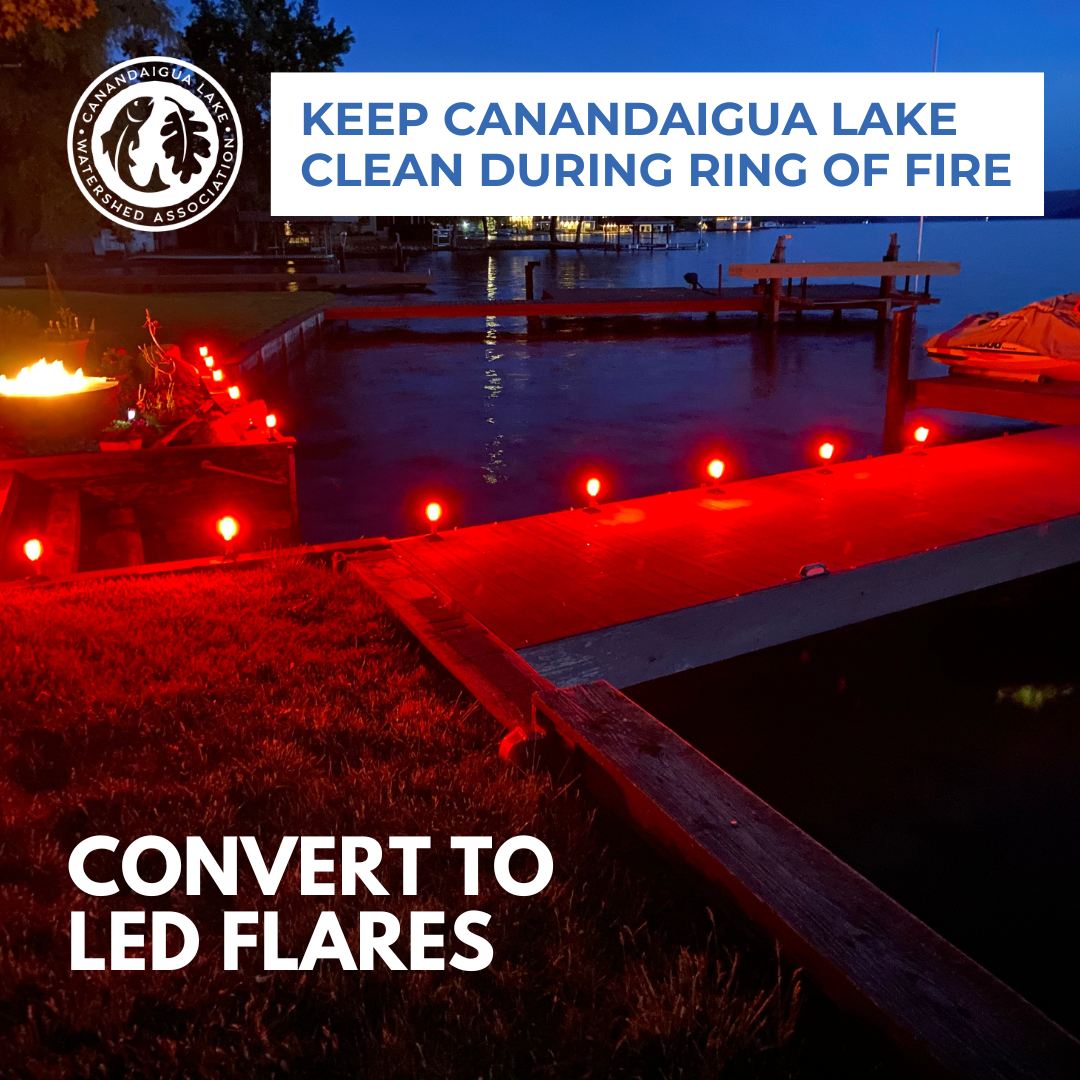
| | Get your Flares for the Ring of Fire! | | |
Can you believe the Ring of Fire is on the horizon? The summer is flying by! This year the event will be held on Saturday, September 5th starting at 9 PM. The event begins with the lighting of a ceremonial bonfire at the top of Bare Hill. Right after, participants along the shoreline will light their flares to create a continuous glowing red ring around the Canandaigua Lake perimeter.
In the past, traditional incendiary highway flares created the beautiful red glow we know and love during the Ring of Fire. While creating an exciting fizz and bright light, they also leave behind potassium perchlorate burn-off, which contaminates the air, soil, and lake, in addition to leaving behind metal spikes that can pollute the lake.
We are happy to share that many participants have switched to an environmentally-friendly LED flare. Learn more about them and their benefits at the link below and consider transitioning to this option if you participate in the Ring of Fire.
| |
|
When: Wednesday, September 16th, 6:00- 7:30 PM
Where: Heron Hill Tasting Room on Canandaigua Lake, 5323 Seneca Point Road, Canandaigua, NY 14424
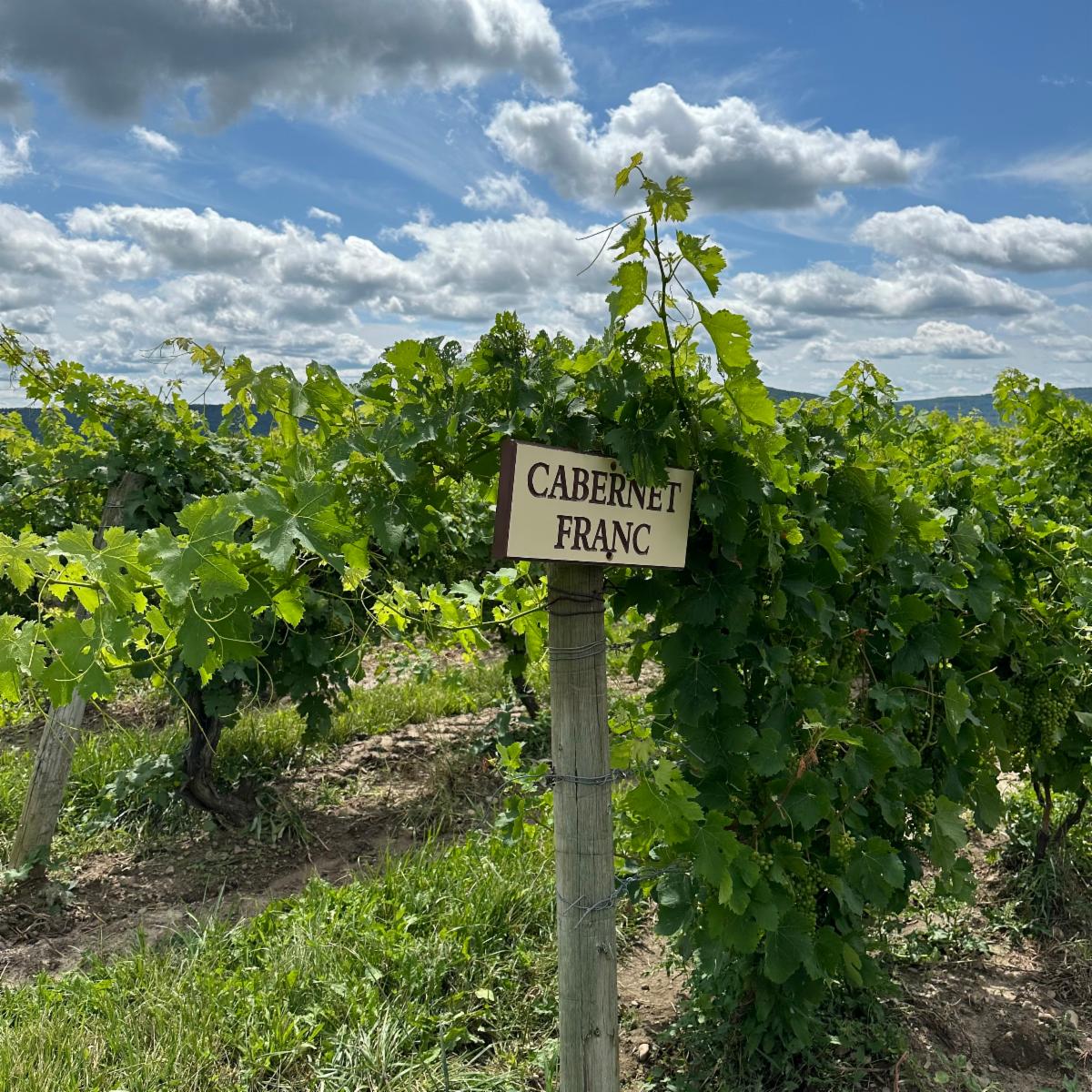
Join Heron Hill and the CLWA for a special tour of the Heron Hill Vineyard's at the Heron Hill Tasting Room on Canandaigua Lake. You will learn about the history of the vineyards, its day to day operations, and all of their sustainability efforts implemented in order to help protect water quality!
You will also get to enjoy live music, light snacks, and have the opportunity to purchase some of the limited-edition Heron Hill wine crafted especially for CLWA. Wine's for sale include a Chardonnay and Cabernet Franc, crafted from grapes grown at Heron Hill’s Ingle Vineyards, located on the west side of Canandaigua Lake and owned by winery founders John and Josephine Ingle.
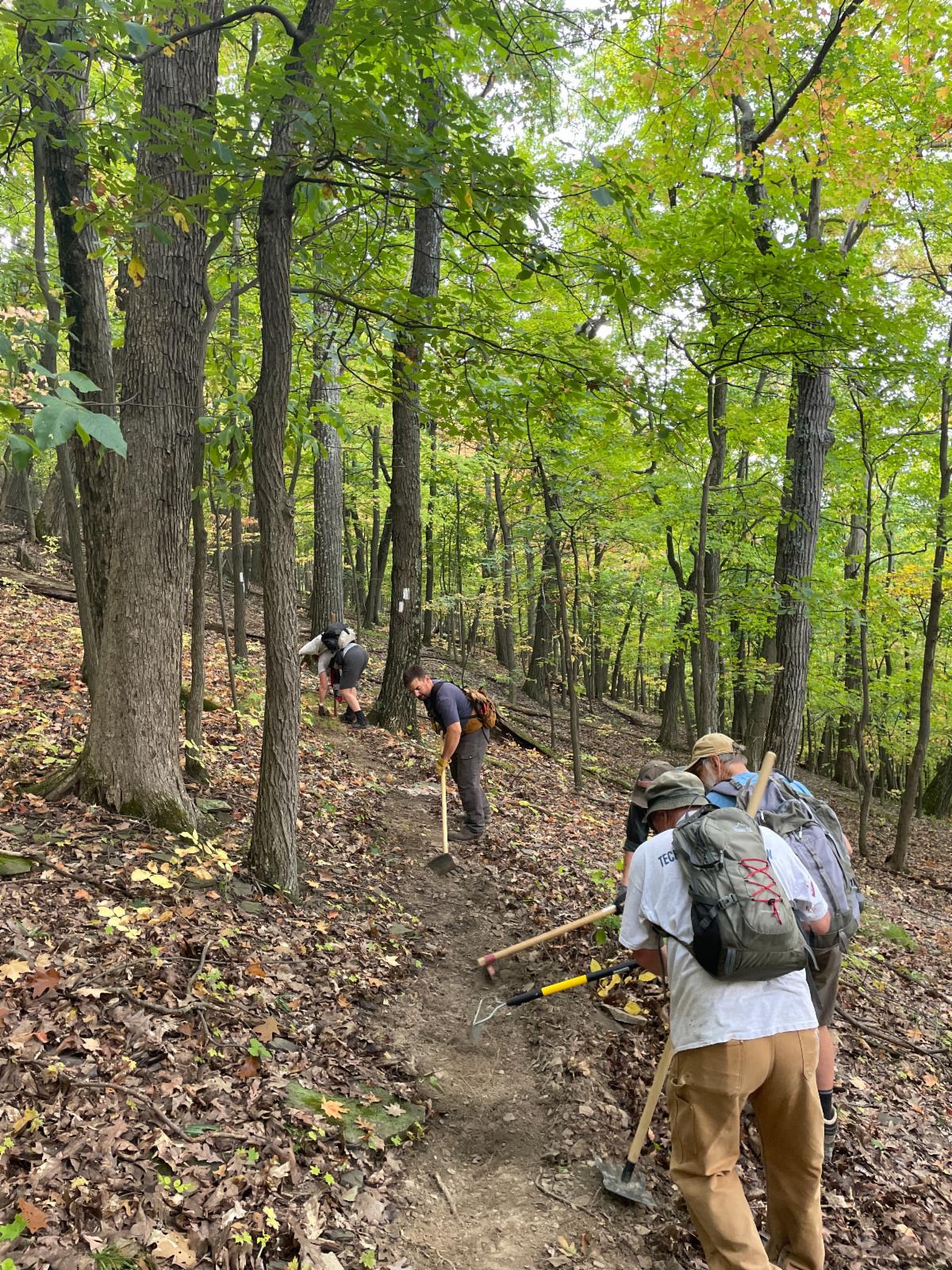
| | Trail Work Day with Finger Lakes Land Trust (FLLT) | |
When: Friday, October 16th, 10:00AM-12:30PM and 1:30-4:00PM.
Where: Great Hill Preserve, 4756 S Hill Rd, Middlesex, NY 14507
Join the Canandaigua Lake Watershed Association and the Finger Lakes Land Trust (FLLT) for a second year of trail work at the Great Hill Nature Preserve in Middlesex NY. The main focus of the day will be side- hilling and working on switchbacks. All gear, including gloves and clippers, will be provided by FLLT.
*Meet location will be Clark's Gully parking area because parking is a bit tricky at the preserve. We will then carpool to the preserve.*
Please wear appropriate attire for trail clean-up and bring plenty of water and a snack if you'd like.
*Registration is required so we know how many volunteers to expect! Thank you!*
*Rain date is October 23rd, 10:00 AM-12:30 PM and 1:30-4:00 PM*
| This Month is Packed with Exciting Partnerships! | 'Savor the Flavor. Support the Lake' Partnership Is Back! | August's special will be a Baja Flatbread - Toasted flatbread topped with street corn salad, crispy shrimp, pickled red onion, purple cabbage and drizzled with Nolan’s Baja sauce. | |
Now in its second year, the collaboration between Nolan's on Canandaigua Lake, Heron Hill Winery, and CLWA brings together local food, Finger Lakes wine, and lake stewardship to inspire residents and visitors alike to help protect the lake that make Canandaigua such a special place to live, work, and visit.
From July 1st through September 30, Nolan's will once again feature a limited-edition Heron Hill Winery Chardonnay in support of CLWA. A portion of every bottle sold will be donated to CLWA to advance our mission of protecting, preserving, and restoring Canandaigua Lake through science, education, and advocacy. Read all about the partnership here in the Democrat and Chronicle.
| Make a Splash Campaign with Wegmans | |
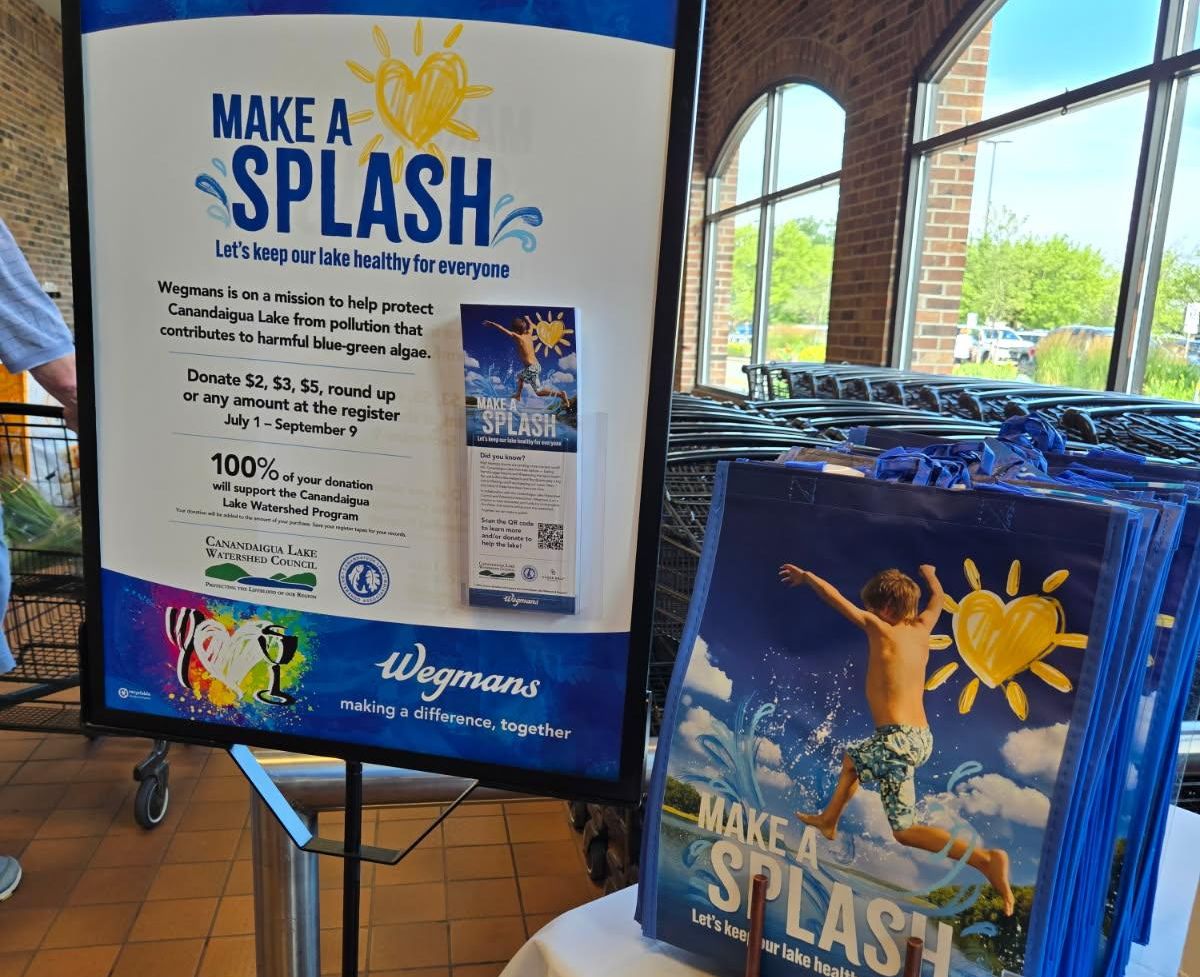
The Make A Splash Campaign is back at the Canandaigua Wegmans through the end of September! You can help by purchasing a limited-edition Make A Splash reusable bag or making a donation at checkout. Proceeds are shared equally between the Canandaigua Lake Watershed Council and the Canandaigua Lake Watershed Association.
Thank you to Wegmans and everyone who supports this community effort. Together, we're making a lasting difference for Canandaigua Lake.
| | |
Stay informed so you can enjoy Canandaigua - or other New York Lakes - safely and confidently this summer.
We have a map on our website homepage for Canandaigua Lake reported blooms from our volunteers.
NYHABS Map
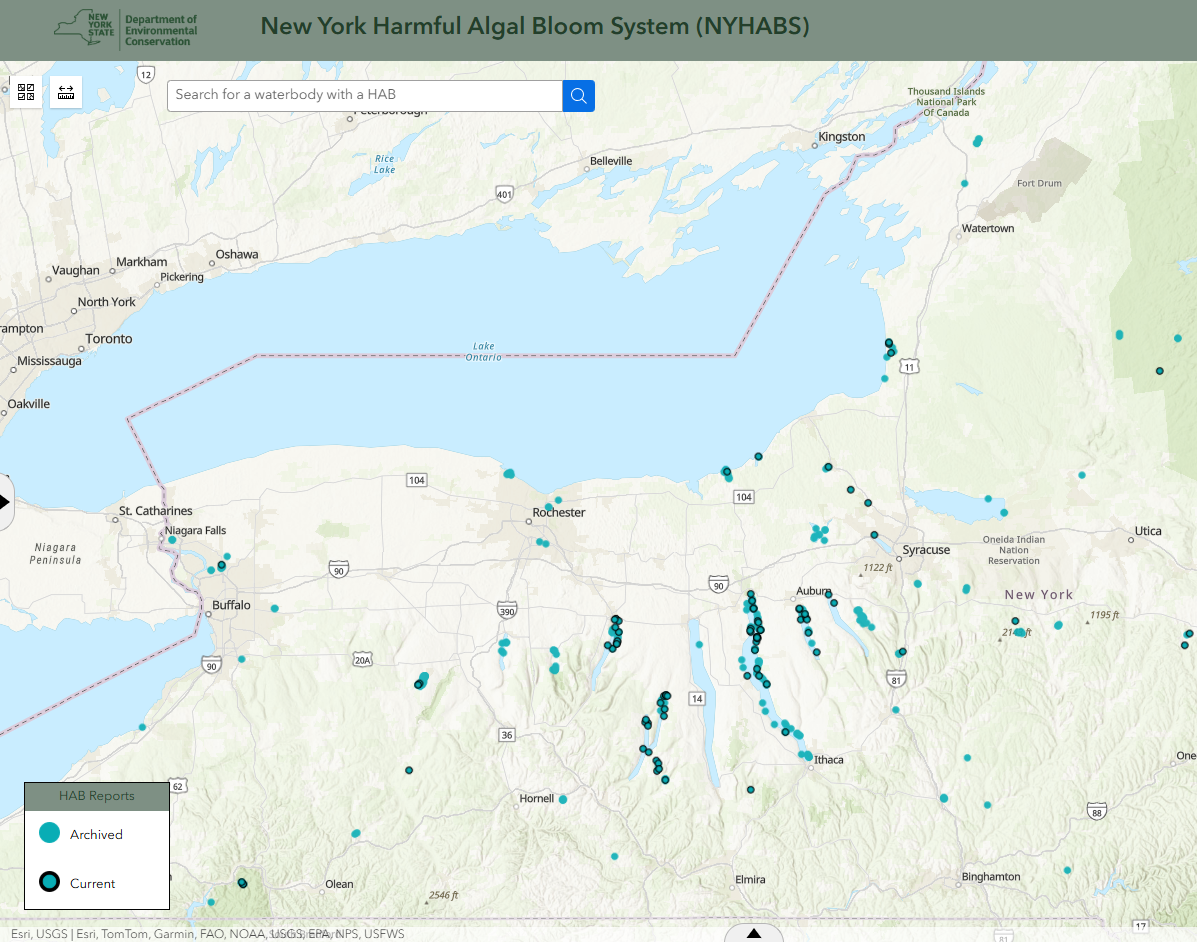
The link below leads to the NYHABS interactive map and displays the location of HABs in New York State. Each blue dot outlined in black represents a HAB reported in the past 2 weeks. There may be other waterbodies with HABs that have not been reported to DEC. All reports through our monitoring program are shown on our own map on our website. CLWA staff uploads all HABs report to the NYHABs database that we receive through our trained volunteers. You can also upload a HABS report directly to DEC here.
Visit NYHABS map here NYHABs map on August 14 shown below.
| |
About HABs
Cyanobacteria, sometimes referred to as blue-green algae because of their color, are among the oldest organisms on Earth. They are naturally occurring in our lakes, generally in low numbers.
When triggered by the perfect storm of conditions - such as heavy rains followed by a few days of warm weather with calm winds - cyanobacteria may begin to increase, forming “blooms”. HABs can appear quickly and persist for hours or days, or they can disappear almost as quickly as they formed.
Since previous research informs us that high levels of toxins (microcystin) may accompany the blooms, humans and our pets should avoid coming into contact with the water when an active bloom is observed.
How to identify blooms
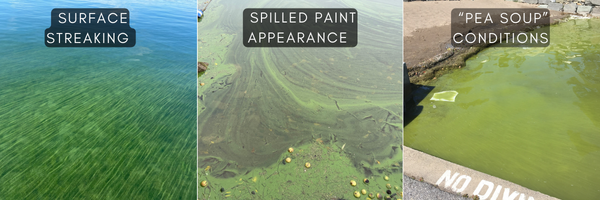
Use visual cues to identify potential blooms. They can appear like pea soup, spilled paint, surface streaks or scum. The color is typically green, blue-green, or yellow, but can also be brown, red, or purple. When blooms are discovered, they are usually found along shorelines or in cove areas. They are most often seen along the stretch of shoreline that is impacted by the prevailing winds. However, during significant bloom events, sometimes they can be found in open water areas.
Visit the NYS DEC website to learn more about identifying blooms.
| |
Remember - conditions can change rapidly. Please use caution when out on the lake and look for characteristics of HABs including water that looks like:
- Pea soup, spilled paint, surface streaks or scum
- Color's that are typically green, blue-green or yellow but can also be brown, red or purple
- Typically found along shorelines or coves
Please, to keep yourselves and pets safe, avoid any water conditions that appear to be bloom-like. Don't hesitate to reach out to us at 585-394-5030 with any questions or email us at HABS@canandaigualakeassoc.org if you are concerned about water quality. Sending us photos of the water is strongly encouraged. Have a wonderful weekend and stay tuned.
| |
What should you do if you suspect a bloom
When in doubt, stay out!
- Don't swim, wade, jetski, waterski or tube in a bloom.
- Shower if exposed to bloom conditions. Wash pets off if they have gone into bloom-infested waters.
- Don't consume fish from the lake during blooms.
- Do not use PRIVATE water drawn from the lake during a bloom. Public water supplies have safeguards in place and can be utilized unless you are otherwise notified.
-
Report the bloom to the NYSDEC NYHABs portal: on.ny.gov/habform
| | | | |