|
Water Quality Update for Friday, August 28th, 2026
by the Canandaiuga Lake Watershed Association
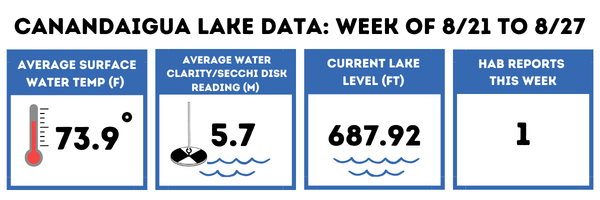
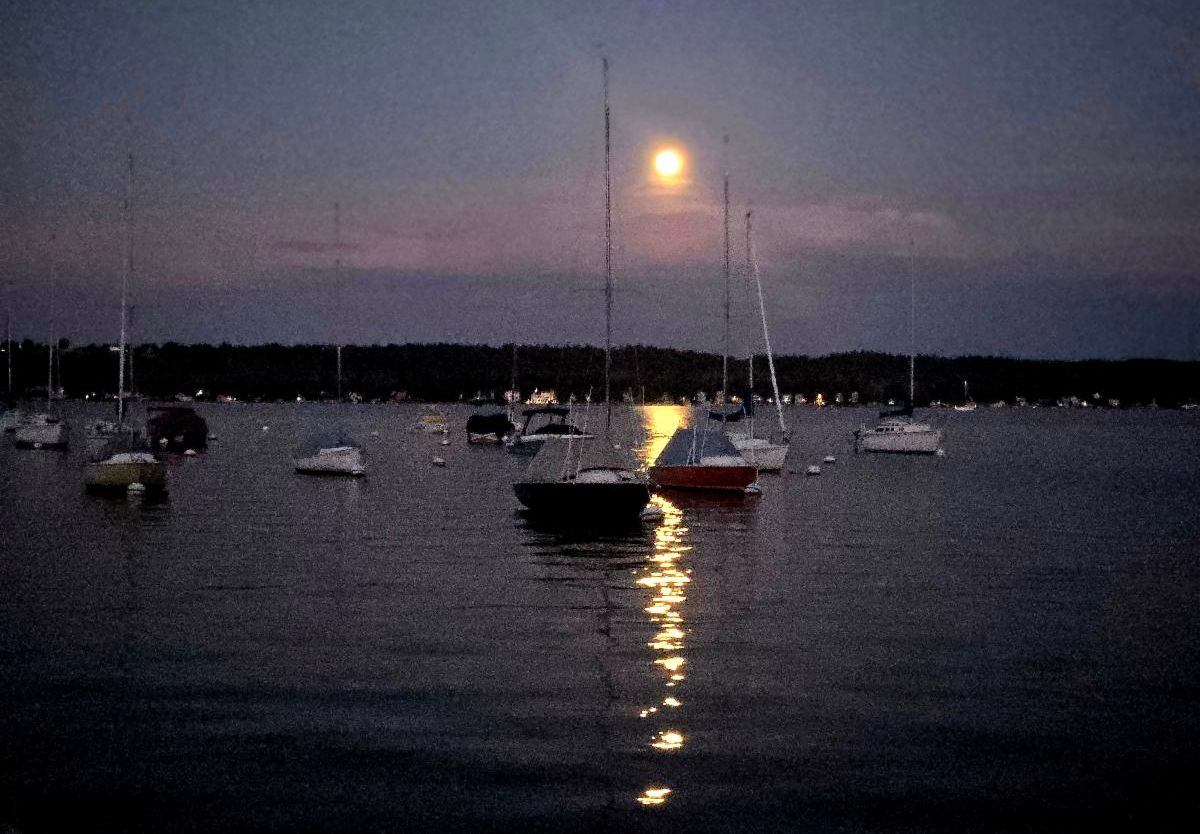
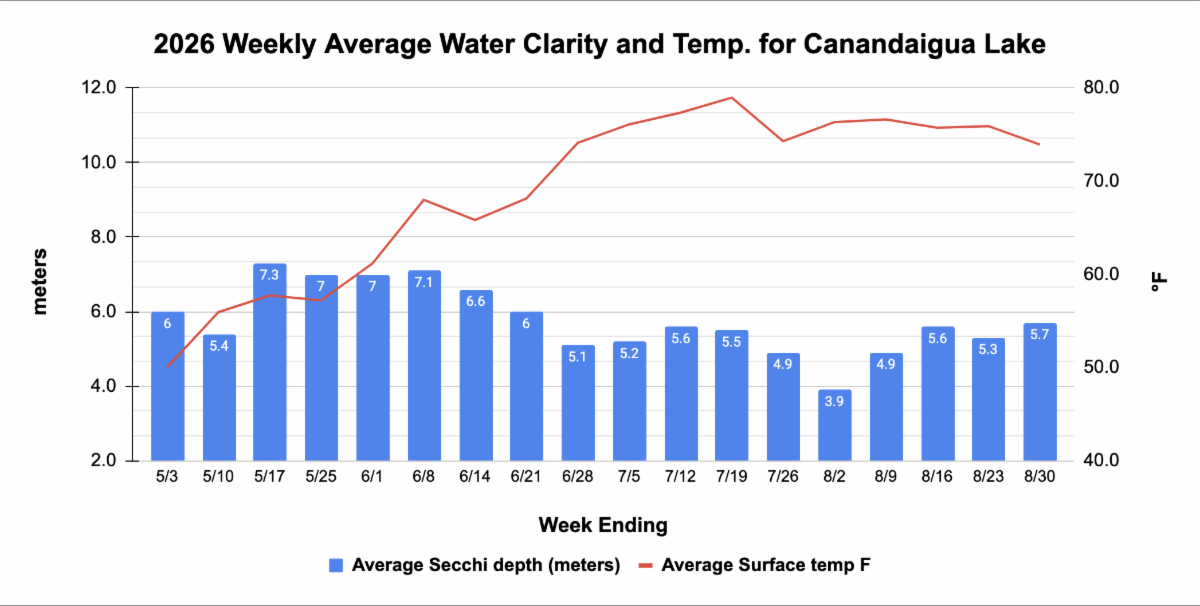
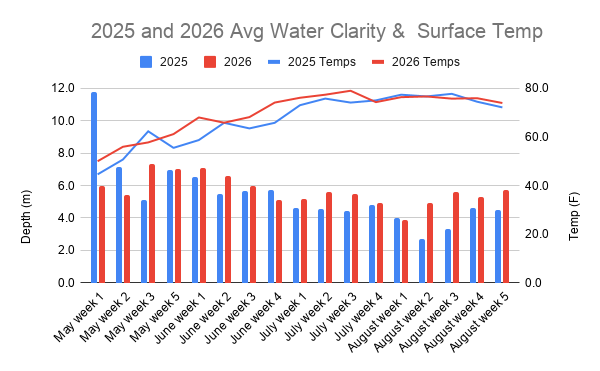
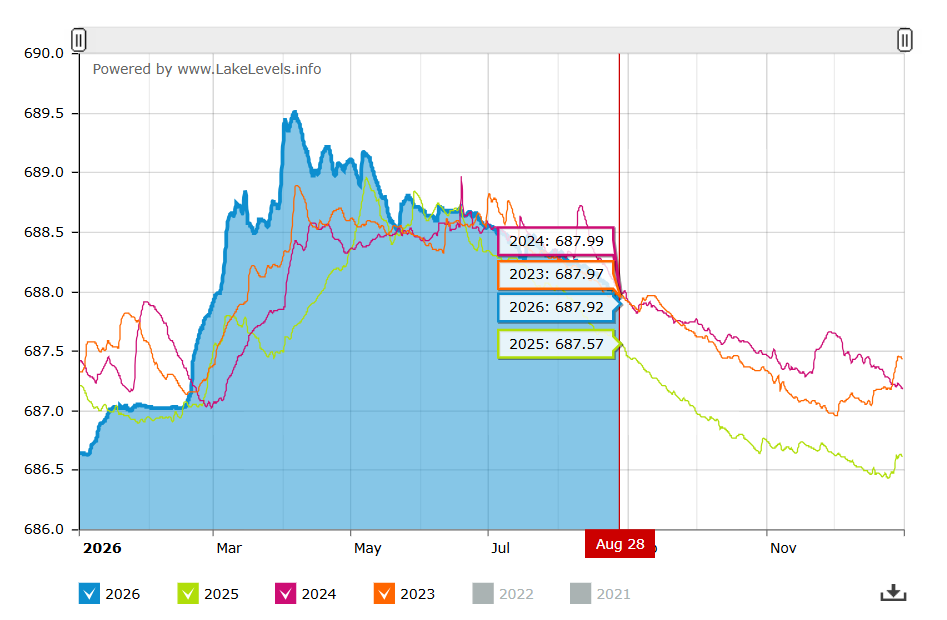
| | Did someone forward you this email? Click HERE to subscribe directly. | | The CLWA Weather Station is located at Canandaigua BoatWorks on the east side of the lake. | | The moon rise over the lake on Thursday evening was stunning. Thursday night had a lunar eclipse and tonight is the full moon. | | This week seems to have flown by quickly and relatively quietly. Cooler temps at the beginning of the week definitely brought down our surface water temperature - the average is down almost 3 degrees. Water clarity increased slightly and the lake level decreased slightly. We only had one harmful algae bloom reported this week. | | Weekly water clarity and temp data collected by our dedicated CLWA Citizen Science volunteers. You can see that average water clarity is slightly improved and surface temp decreased this week. | | How is 2026 comparing to 2025 so far? Average surface temps are just about the same right now as they were last year. Water clarity (measured by secchi disk depth) has seemed a bit better actually - and is overall very similar except for the difference at the beginning of the season. | Lake level is slightly lower than last week. Currently both outlet gates are closed and the feeder canal gate is open at the required minimum - 0.25 ft open. There are a few different places you can find the lake level online. NOAA is one. Lake Levels online also has nice charts - where you can easily see the whole year and compare to the last few years. | | |
In this weeks update:
- HABs Update
- WakeSmart Outreach Campaign
- Be on the Lookout for Spotted Lantern Fly
- August is Water Quality Month - MacroInvertebrates for monitoring stream health
- Upcoming events
| | |
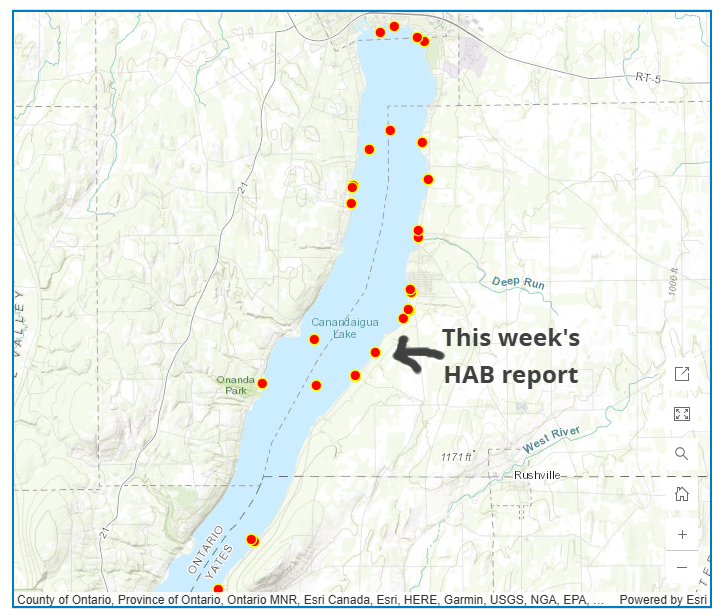
We only had one harmful algae bloom report come in this week. Our HABs map shows where reports have come in this season to date. Reports have come in mostly on the north end of the lake so far - on both sides - and also mid-lake - but are starting to work their way down south as the season progresses. Most reports have been streaking/spots - relatively light blooms. We haven't had any reports of very heavy, pea soup looking blooms yet although a few of the photos are starting to look like heavier blooms than the past few weeks.
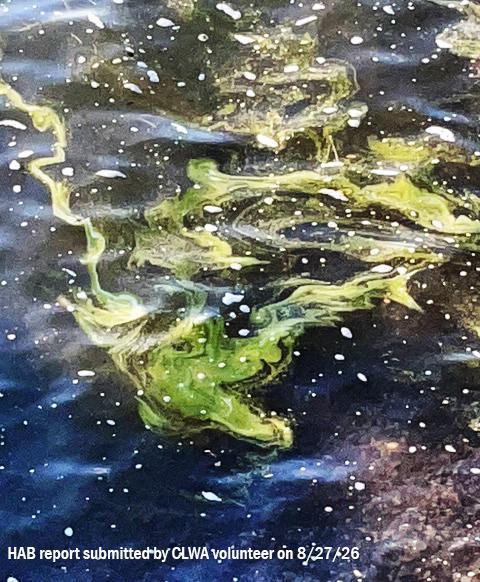
The photo below from this week's report looks much more concentrated - like spilled paint - than the less concentrated streaking photos we have been seeing so far. Typically September has been the worst month for HABs on the lake so our volunteers are still staying alert and checking the shoreline as we move into next month.
| | Confirmed bloom reports from volunteers have come in mainly from the north end of the lake so far this summer on both sides and also mid lake. The map is interactive on our website and you can click to view reported blooms to see their date and location details. | |
Remember: HABs are constantly changing.
They can appear, move, and disappear quickly. A bloom reported in one location does not mean that the entire lake is affected or that conditions are the same everywhere.
Our HAB map is a helpful tool for seeing where blooms have been reported, but it is not an exact, real-time picture of conditions across the lake. Before swimming, boating, or letting pets near the water, take a moment to look at the water where you are. If you see water that looks like spilled paint, pea soup, or has unusual discoloration or surface scum, stay out.
When in Doubt - Stay Out!
Knowledge is power! Knowing what HABs look like and staying informed can help you safely enjoy Canandaigua Lake all summer long. Stay observant, stay informed, and help us spread the word!
Scoll all the way to the bottom of this email for our general HABs reminders, resources, and ID info.
| | WakeSmart: Smart wakeboating tips to protect our Lake | |
Wakeboats and their potential impacts on water quality - including shoreline erosion and lakebed sediment disturbance - have become an important topic nationwide, and CLWA has been closely following the conversation.
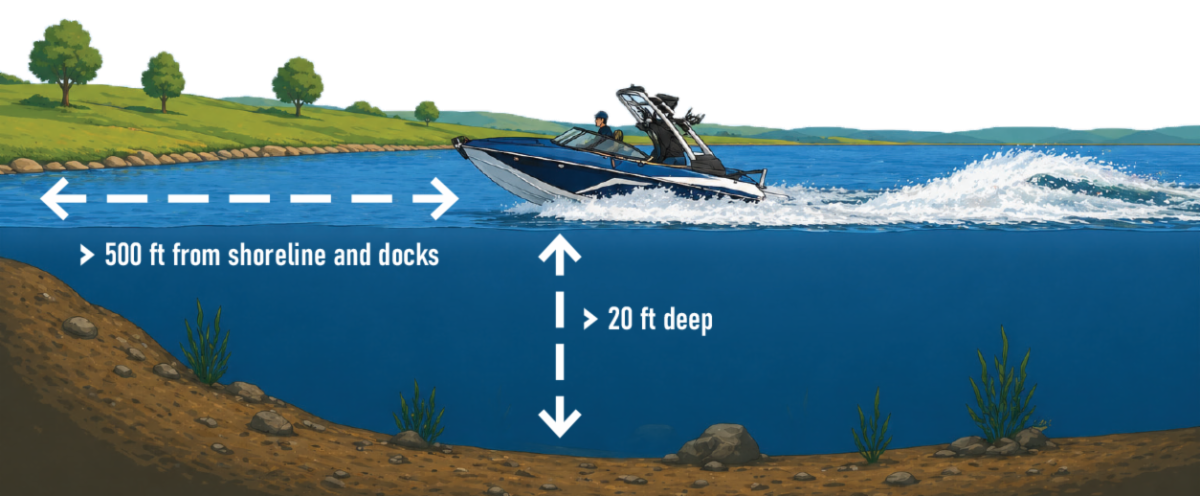
In July, CLWA launched our “WakeSmart” outreach campaign to encourage wakeboaters to operate in deeper water and farther from shore when enjoying wakesports. By following a few simple practices, boaters can continue to enjoy wakesports while also helping to protect the lake’s exceptional water quality. The “WakeSmart” campaign focuses on three simple practices for wakeboat operators to minimize their impact on the lake:
● Give Space. Stay at least 500 ft back from shorelines, docks and other boats.
● Stay Deep. Wakesurf in water at least 20 ft deep to avoid stirring up bottom sediments. On our lake – this means to be sure to stay south of the Canandaigua Yacht Club/Butler Rd on the north end and north of Smith Boys Marina on the south end. Don't worry - we made a map!
● Change Course. Avoid repeated passes in the same area to reduce wave impact to the shoreline and lake bottom.
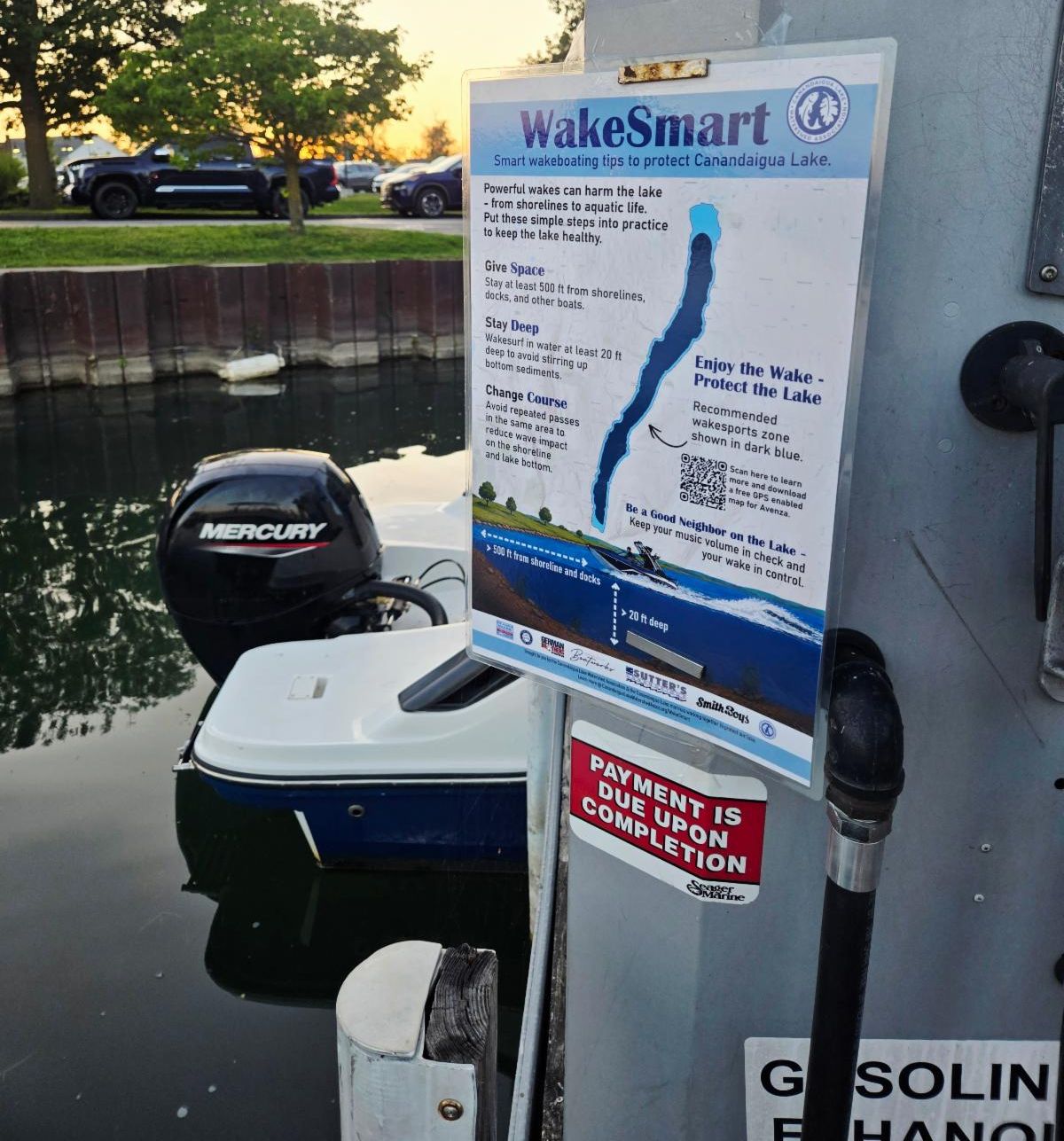
| We are thrilled to be launching this new outreach campaign in partnership with our Canandiagua Lake marinas. Their support is key to reaching wake boat owners and sharing this important message.The participating marinas – Canandaigua BoatWorks, German Brothers Marina, Seager Marine and Freedom Boat Club, Smith Boys, and Sutters Marina – all have “WakeSmart” informational rack cards and posters at their sites – and have also educated their dock staff about the campaign. | Our marinas understand that wakesurfing is an important part of the boating experience for many of their customers, but they also recognize that how and where these boats are operated can make a real difference for the lake. By following these simple WakeSmart guidelines, boaters can enjoy their time on the water while helping protect our shorelines and our lake’s water quality for everyone. | As part of the outreach campaign WakeSmart posters are posted at the marina gas pumps - where wakeboaters are filling up their tanks. | There have been numerous scientific studies into the waves created by wakeboard boats compared to regular motor boats. CLWA reviewed these studies, as well as actions and recommendations other states are taking, when developing these recommendations in coordination with our local marinas. Links to these studies are provided on our website along with more details: www.canandaigualakeassoc.org/WakeSmart. | August is Water Quality Month - Monitoring Stream Health with Macroinvertebrates | | |
Water Quality Monitoring with Aquatic Macroinvertebrate Stream Sampling
To wrap up Water Quality month - we thought we would talk about measuring water quality in the streams that feed our lake. Did you know that one way scientists study the health of streams is by collecting and identifying the types of aquatic macroinvertebrates (AMI) they find in them? Pretty cool right?!
Aquatic macroinvertebrates (AMI) - or macros for short- are creatures that live all or part of their life in the water, can be seen with the bare eye and do not have a spine. They are really fun to collect and study in general but its really neat that they can also be used as a bioindicators or living things that can tell us about the health of a stream. Scientists or citizen scientists will collect these creatures and identify them and then categorize them according to their sensitivity. There are sensitive, somewhat tolearant, and tolearnt AMI.
What we are really hoping to find when sampling for AMI are the presence of sensitive species such as stoneflies, mayflies and caddisflies. Sensitive macros have to live in very healthy streams with little to no environmental degredation, cooler temperatures and highly oxygenated water. If we find sensitive macros, its telling us the stream is healthy!
AMI Stream Studies and Activities with the Watershed Education Program
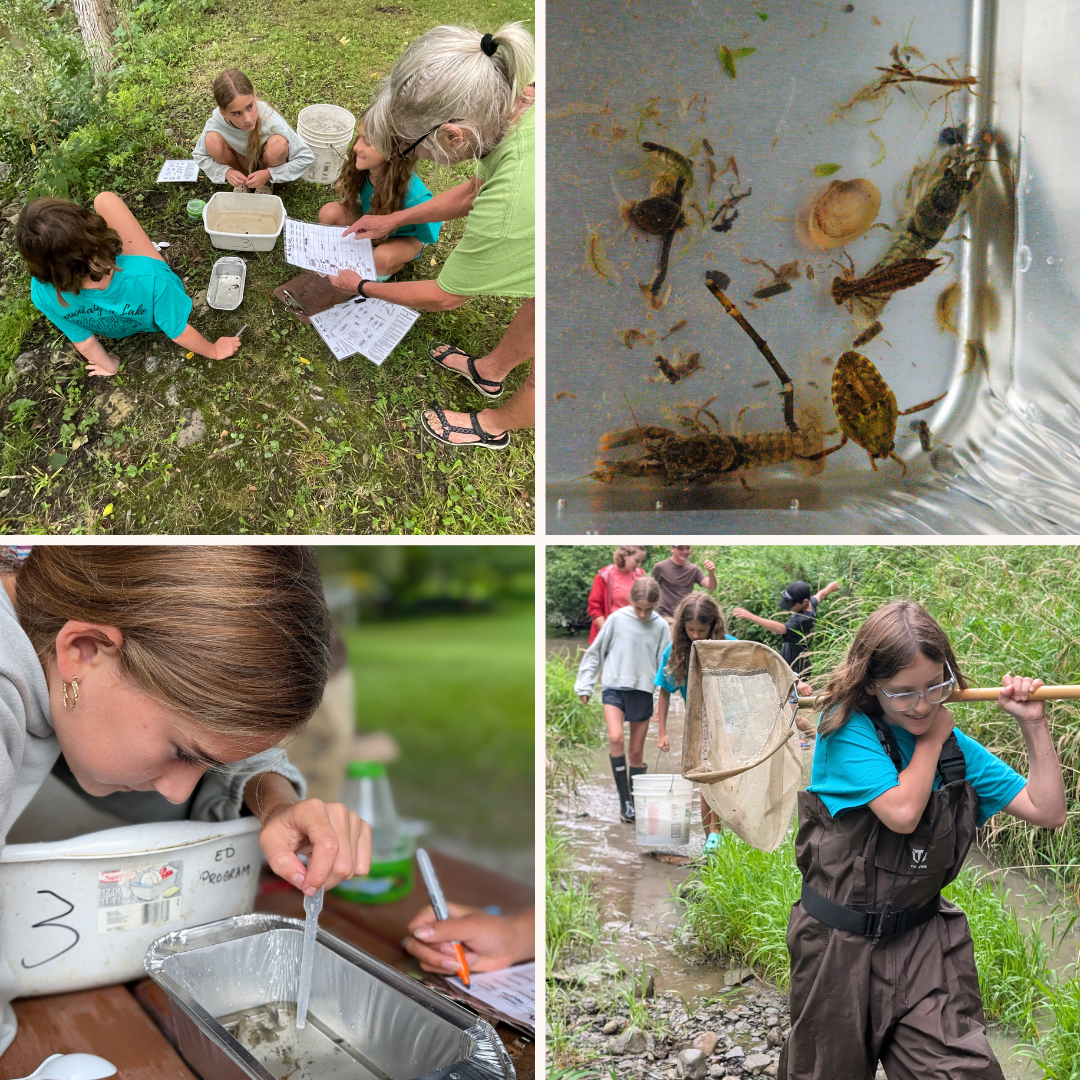
As part of our Water and Wildlife Summer camp, and other student programming with the Watershed Education Program (WEP), students have the opportunity to get in the streams and participate in citizen science efforts and collect and identify AMI in streams within the watershed. We then report these findings to the Department of Environmental Conservation (DEC) and other partners to track the health of the streams in our area. We have the next generation of lake stewrds already in action!
Pictured above are action shots of last weeks Water and Wildlife summer camp. Campers had a blast stopping at a few streams around the lake and investigating the critters they found. Thank you again to the Fitgerald Brothers bus service for transporting them on this trip at a very generous discount!
For more information on the WEP and summer camp, please visit our education page here.
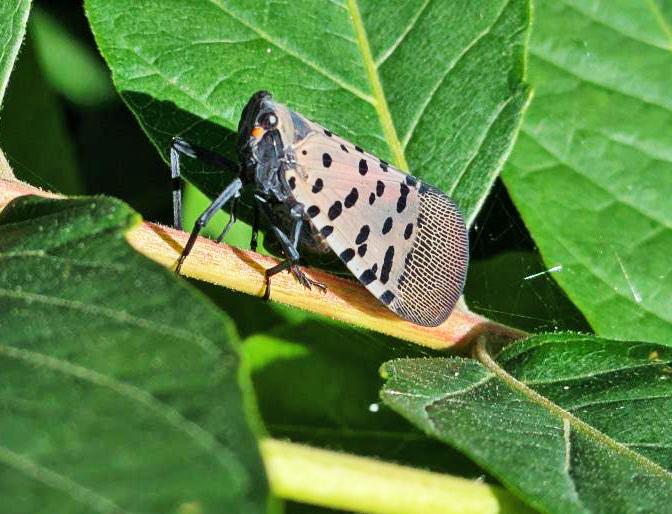
| | Spotted Lanternfly Status in Ontario County | photo provided by Lydia Williams, FL PRISM | |
You may have heard about this invasive insect over the years, the Spotted lantern fly (SLF), orignating all the way from Asia. None have currently been found in our watershed but have been identified in some surrounding areas as close as Geneva on the campus of Hobart and William Smith.
The highest concern for this invasive is the affect it can have on the agrictultural industry, diminishing plant health and crop quality by the feeding they do on the sap of plants. Vineyards face the highest risk of agrictultural damage but fruit trees, hops and some hardwoods like maple and walnuts can also be at risk.
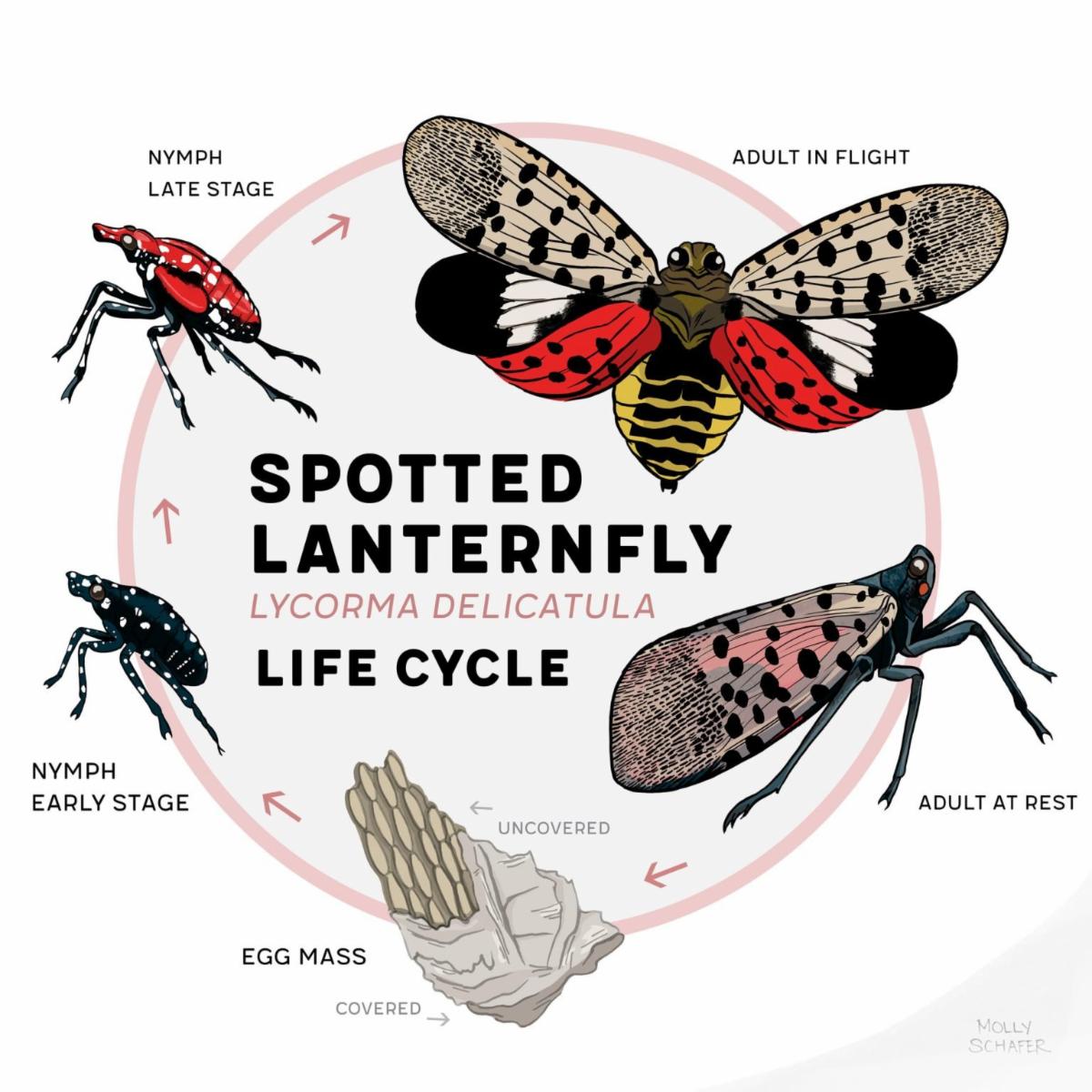
At this time in the SLF lifecycle, there are currently a mix of early black nymphs, late-stage red nymphs, and adults being found in areas identified with SLF, but the ratio is leaning towards adults right now. Be on the look out and report any sightings in our area.
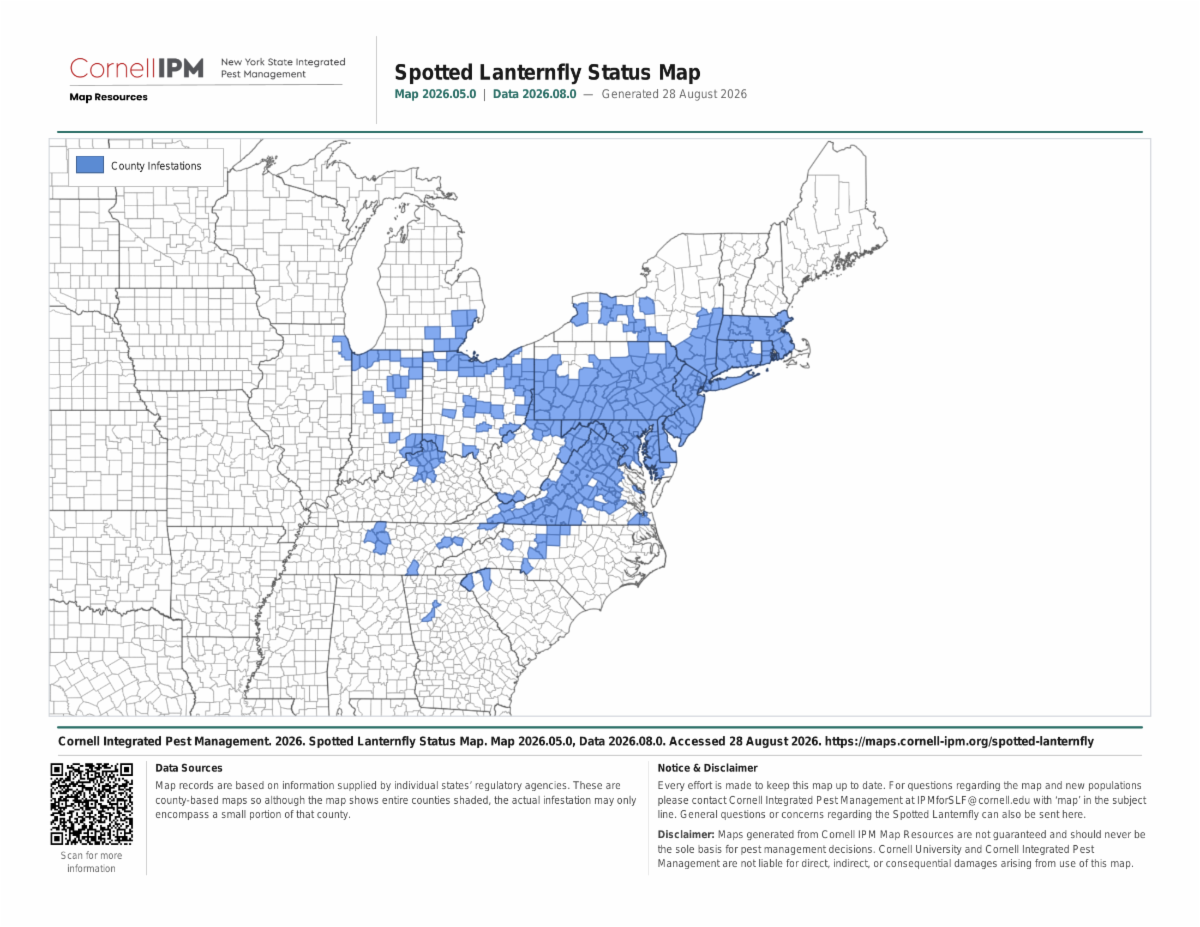
| illustration by Molly Schafer | In the below map you can see what counties SLF have been found in. For more information on the SLF, what to do if you see one, and how to report seeing one, please visit the SLF Page on the Department of Environmental Conservation's website here. | |
The Finger Lakes PRISM is hosting a Network meeting on the SLF on Thursday, September 3, 2026 from 2:00 - 4:00 PM at Hobart William Smith Colleges in Geneva, NY.
This meeting is meant for partners across the Finger Lakes region with the purpose to share information on SLF efforts, discuss regional concernts and priorities and identify opportunities for greater coordination and collaboration. If you are interested in this meeting, please register below.
| Get your Flares for the Ring of Fire! | | |
Can you believe the Ring of Fire is on the horizon? The summer is flying by! This year the event will be held on Saturday, September 5th starting at 9 PM. The event begins with the lighting of a ceremonial bonfire at the top of Bare Hill. Right after, participants along the shoreline will light their flares to create a continuous glowing red ring around the Canandaigua Lake perimeter.
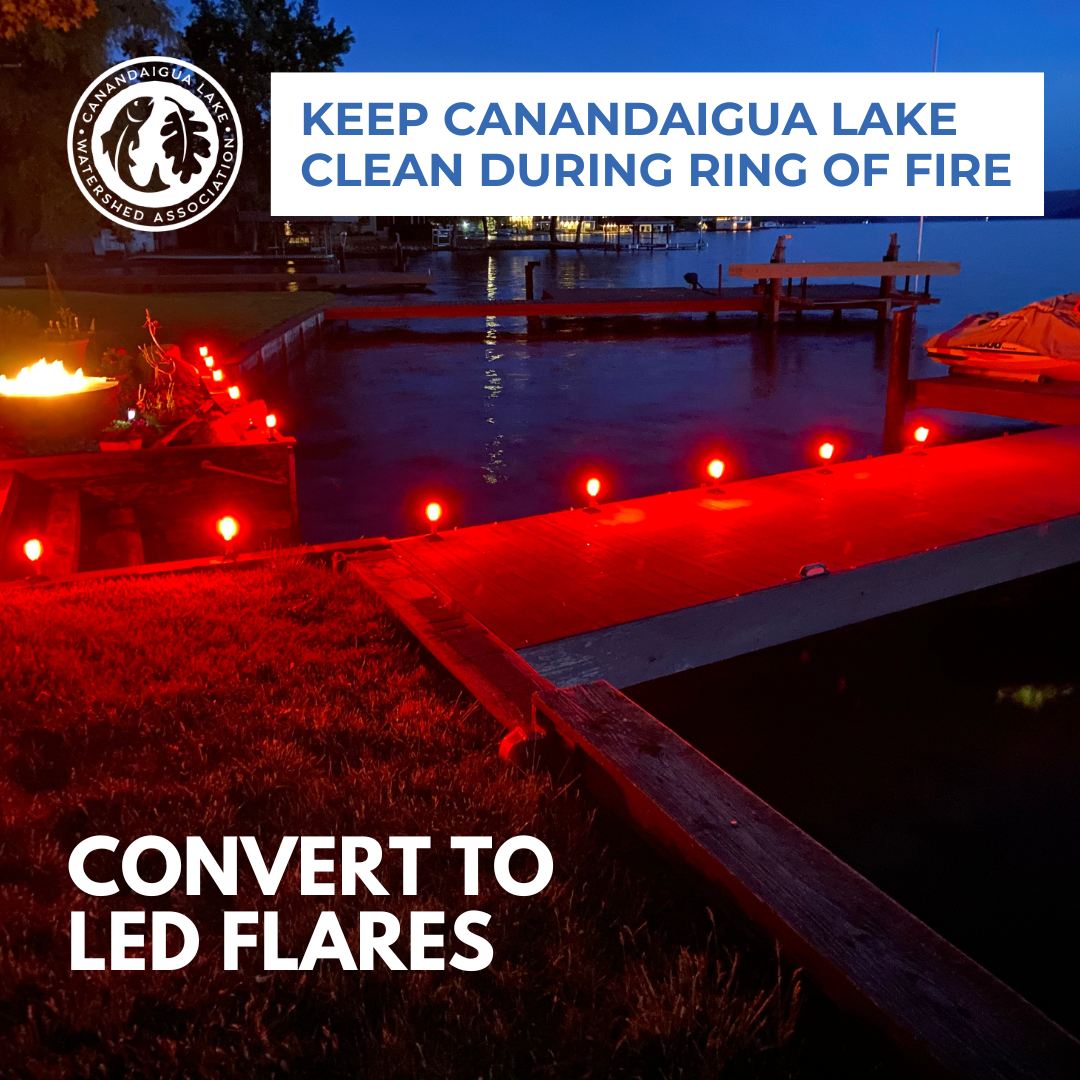
In the past, traditional incendiary highway flares created the beautiful red glow we know and love during the Ring of Fire. While creating an exciting fizz and bright light, they also leave behind potassium perchlorate burn-off, which contaminates the air, soil, and lake, in addition to leaving behind metal spikes that can pollute the lake.
We are happy to share that many participants have switched to an environmentally-friendly LED flare. Learn more about them and their benefits at the link below and consider transitioning to this option if you participate in the Ring of Fire.
| |
|
When: Wednesday, September 16th, 6:00- 7:30 PM
Where: Heron Hill Tasting Room on Canandaigua Lake, 5323 Seneca Point Road, Canandaigua, NY 14424
Join Heron Hill and the CLWA for a special tour of the Heron Hill Vineyard's at the Heron Hill Tasting Room on Canandaigua Lake. You will learn about the history of the vineyards, its day to day operations, and all of their sustainability efforts implemented in order to help protect water quality!
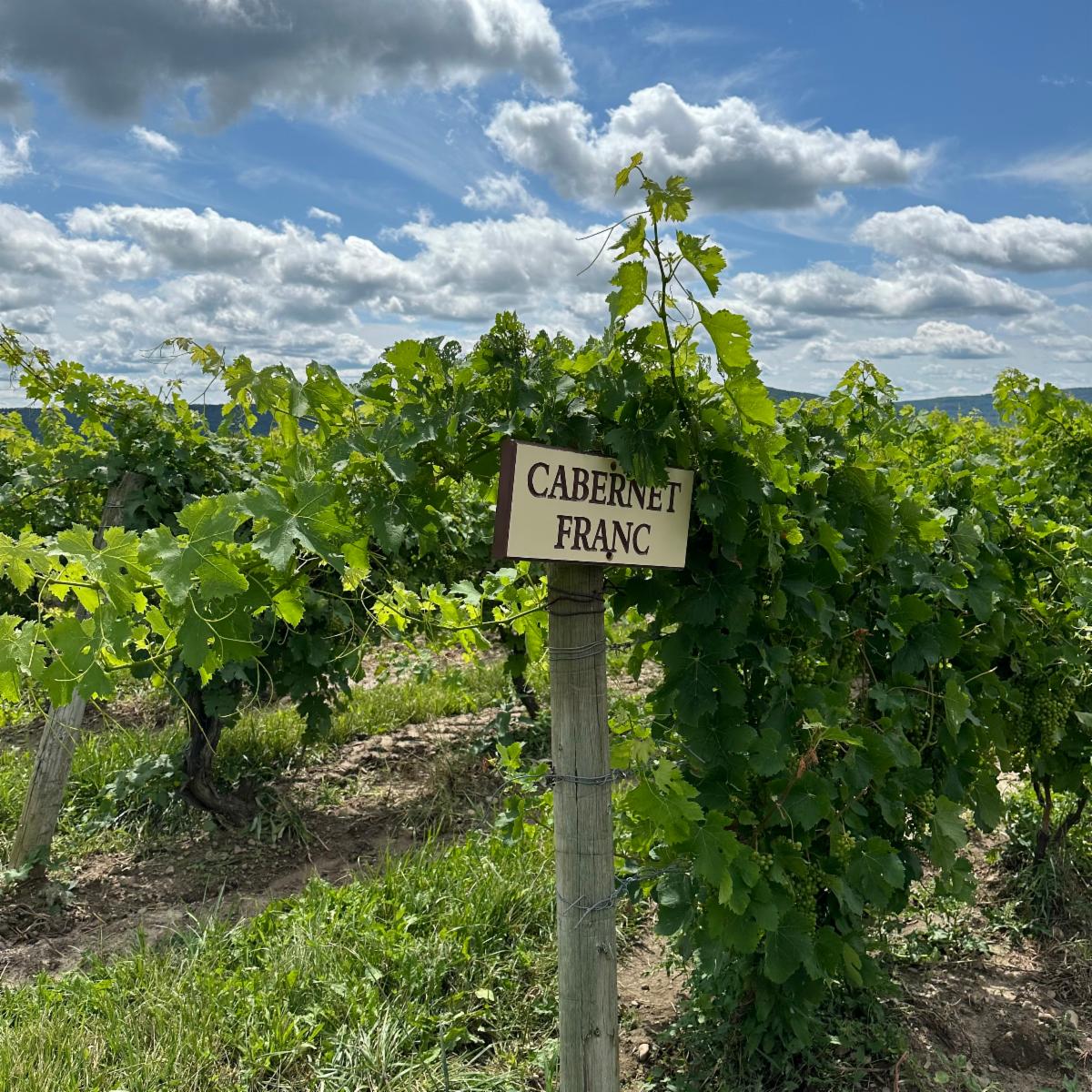
You will also get to enjoy live music, light snacks, and have the opportunity to purchase some of the limited-edition Heron Hill wine crafted especially for CLWA. Wine's for sale include a Chardonnay and Cabernet Franc, crafted from grapes grown at Heron Hill’s Ingle Vineyards, located on the west side of Canandaigua Lake and owned by winery founders John and Josephine Ingle.
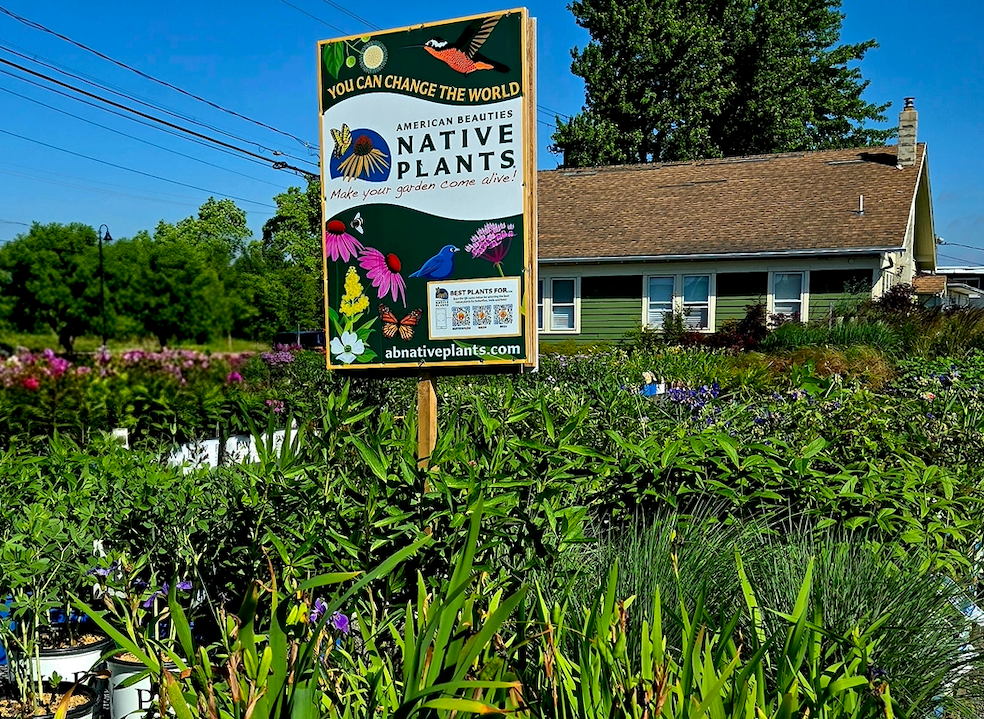
| | Mayflowers Native Plant Open House | |
When: Tuesday, September 22nd, 6:00- 7:30 PM
Where: Mayflowers Nursery and Garden Center, 2505 NY-332, Canandaigua, NY 14424
Join the CLWA and Mayflowers Nursery and Garden Center for a tour of their facility and to learn more about the benefits of native plants, Mayflowers' native plant offerings, and other things you to can do to live lake-friendly. The fall is an excellent time to plant so we hope you can join us to learn more and find some native plants you and your garden will love!
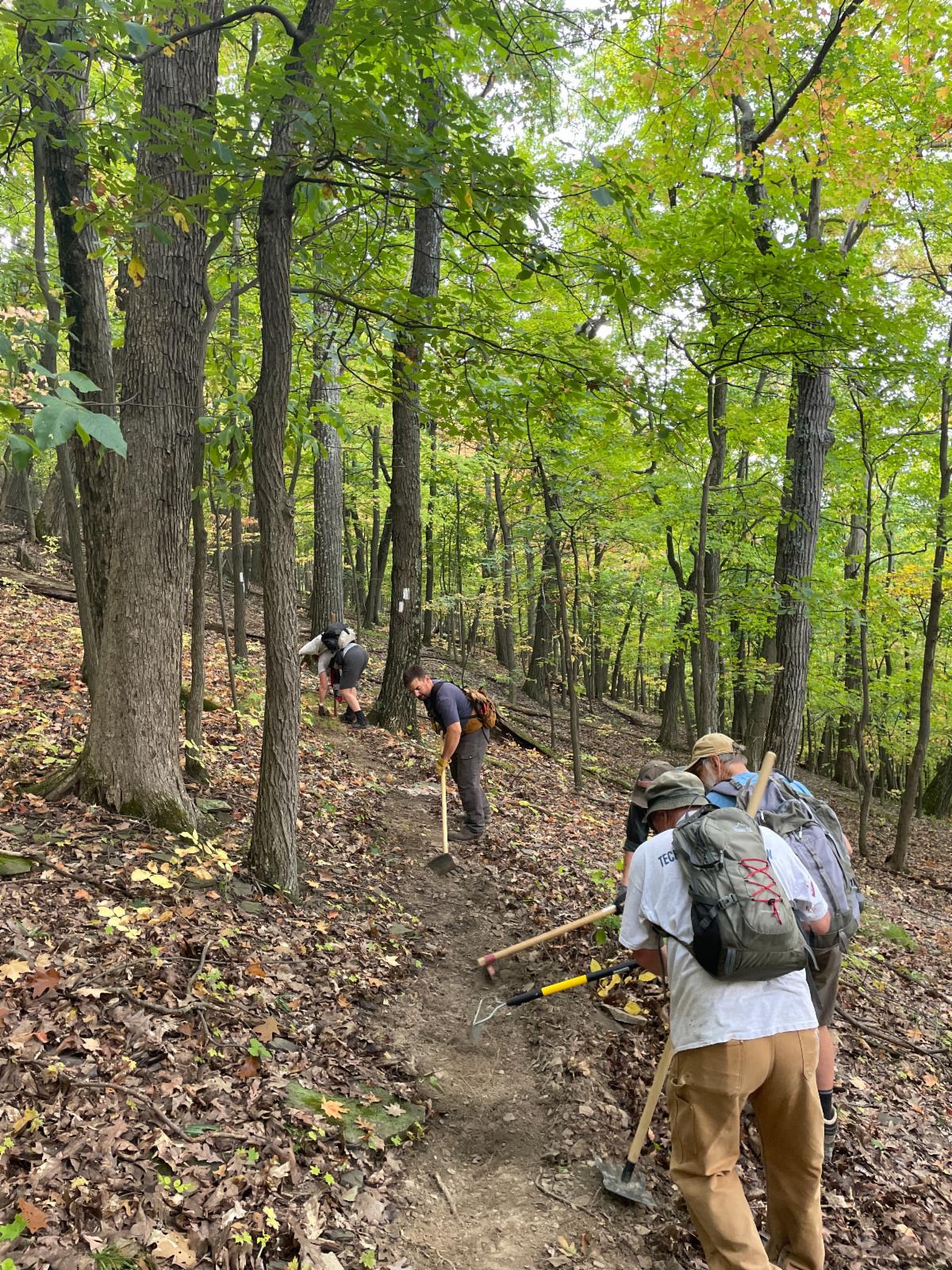
| Trail Work Day with Finger Lakes Land Trust (FLLT) | |
When: Friday, October 16th, 10:00AM-12:30PM and 1:30-4:00PM.
Where: Great Hill Preserve, 4756 S Hill Rd, Middlesex, NY 14507
Join the Canandaigua Lake Watershed Association and the Finger Lakes Land Trust (FLLT) for a second year of trail work at the Great Hill Nature Preserve in Middlesex NY. The main focus of the day will be side- hilling and working on switchbacks. All gear, including gloves and clippers, will be provided by FLLT.
*Meet location will be Clark's Gully parking area because parking is a bit tricky at the preserve. We will then carpool to the preserve.*
Please wear appropriate attire for trail clean-up and bring plenty of water and a snack if you'd like.
*Registration is required so we know how many volunteers to expect! Thank you!*
*Rain date is October 23rd, 10:00 AM-12:30 PM and 1:30-4:00 PM*
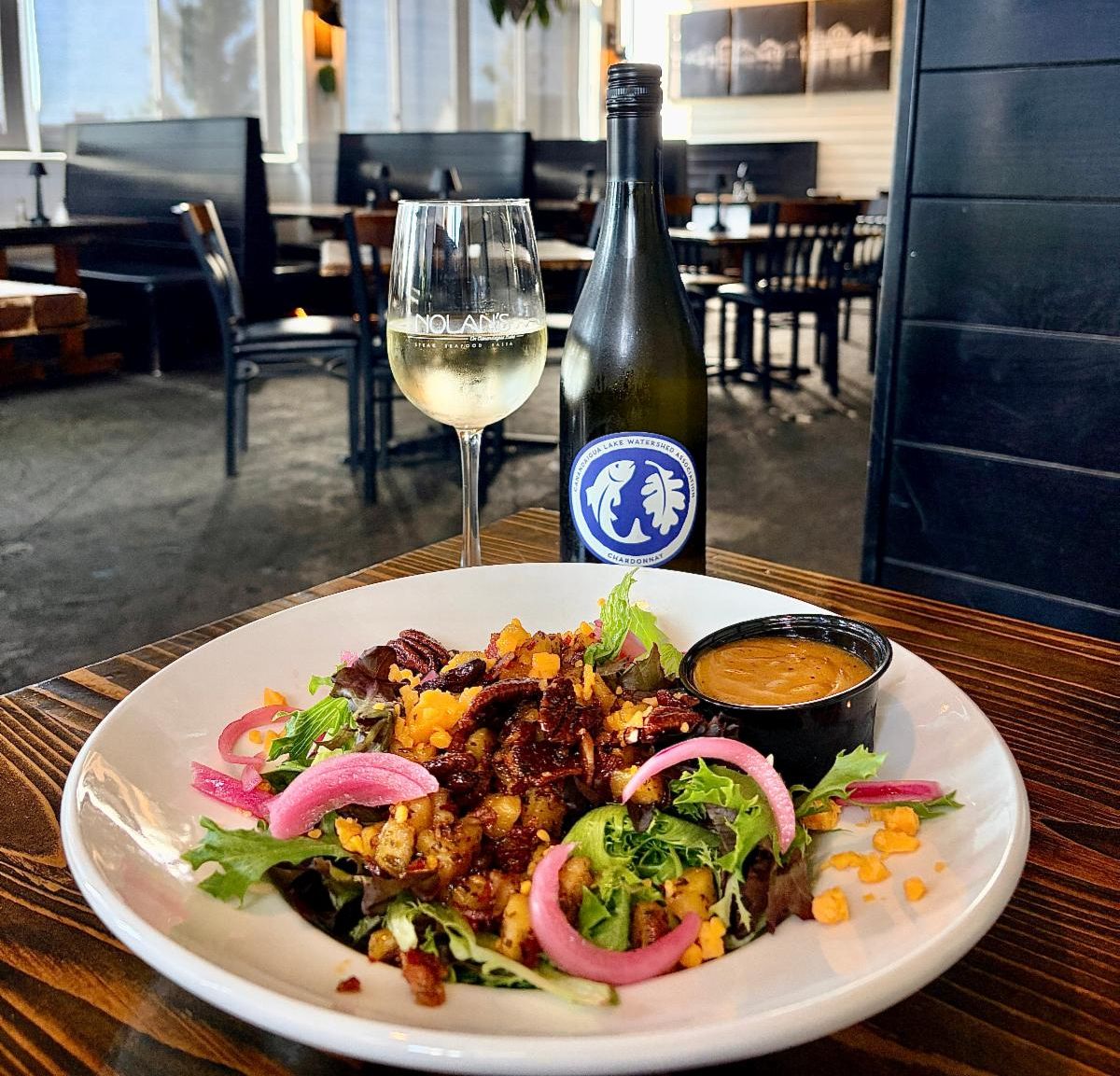
| This Month is Packed with Exciting Partnerships! | 'Savor the Flavor. Support the Lake' Partnership Is Back! | September's special is Hot Honey Apple Bacon Salad - Apple-bacon chutney, sharp cheddar crumble, candied pecans, pickled red onions, served over mixed greens with Nolan’s hot honey vinaigrette. Pairing: Heron Hill Chardonnay to benefit CLWA | |
Now in its second year, the collaboration between Nolan's on Canandaigua Lake, Heron Hill Winery, and CLWA brings together local food, Finger Lakes wine, and lake stewardship to inspire residents and visitors alike to help protect the lake that make Canandaigua such a special place to live, work, and visit.
From July 1st through September 30, Nolan's will once again feature a limited-edition Heron Hill Winery Chardonnay in support of CLWA. A portion of every bottle sold will be donated to CLWA to advance our mission of protecting, preserving, and restoring Canandaigua Lake through science, education, and advocacy. Read all about the partnership here in the Democrat and Chronicle.
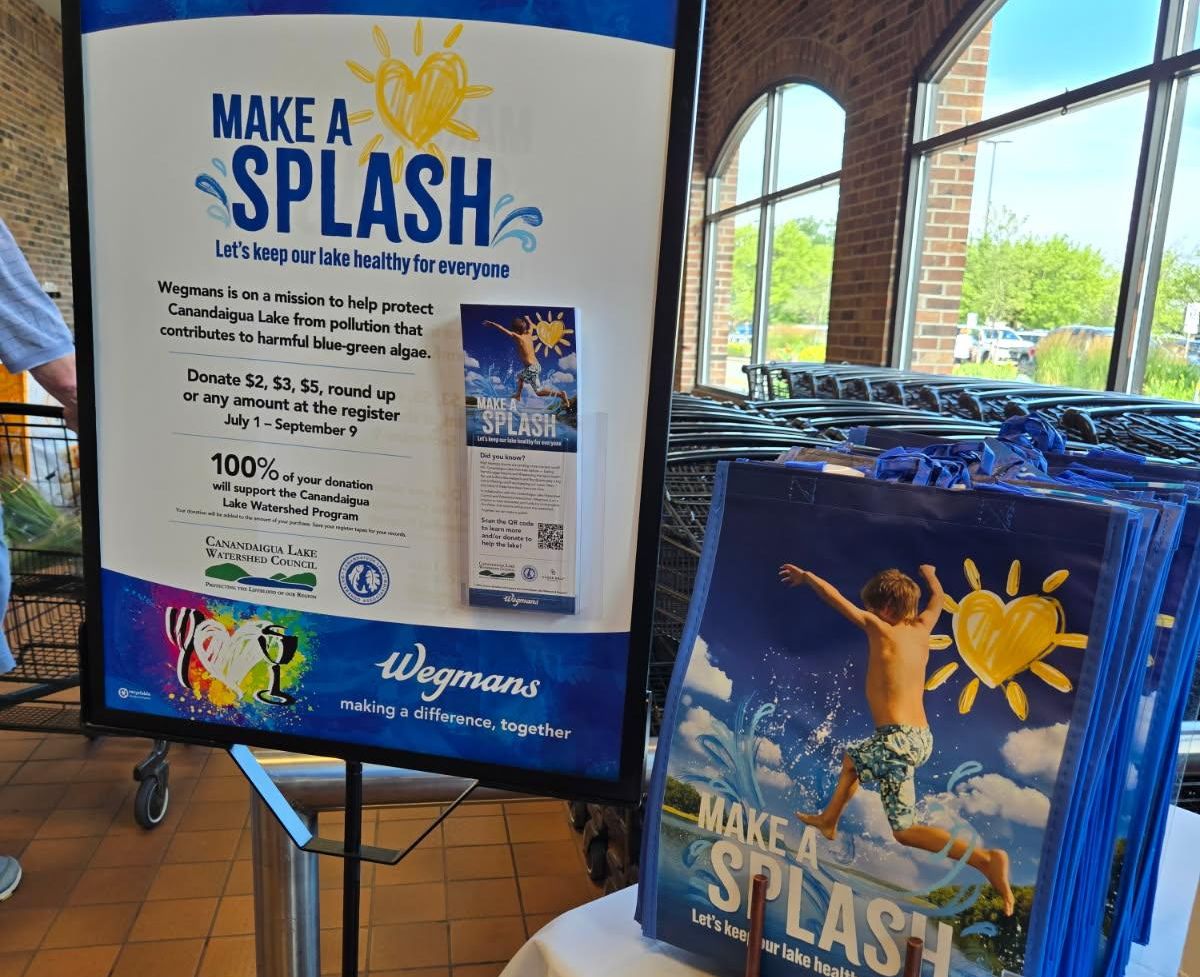
| Make a Splash Campaign with Wegmans | |
The Make A Splash Campaign is back at the Canandaigua Wegmans through the end of September! You can help by purchasing a limited-edition Make A Splash reusable bag or making a donation at checkout. Proceeds are shared equally between the Canandaigua Lake Watershed Council and the Canandaigua Lake Watershed Association.
Thank you to Wegmans and everyone who supports this community effort. Together, we're making a lasting difference for Canandaigua Lake.
| | |
Stay informed so you can enjoy Canandaigua - or other New York Lakes - safely and confidently this summer.
We have a map on our website homepage for Canandaigua Lake reported blooms from our volunteers.
NYHABS Map
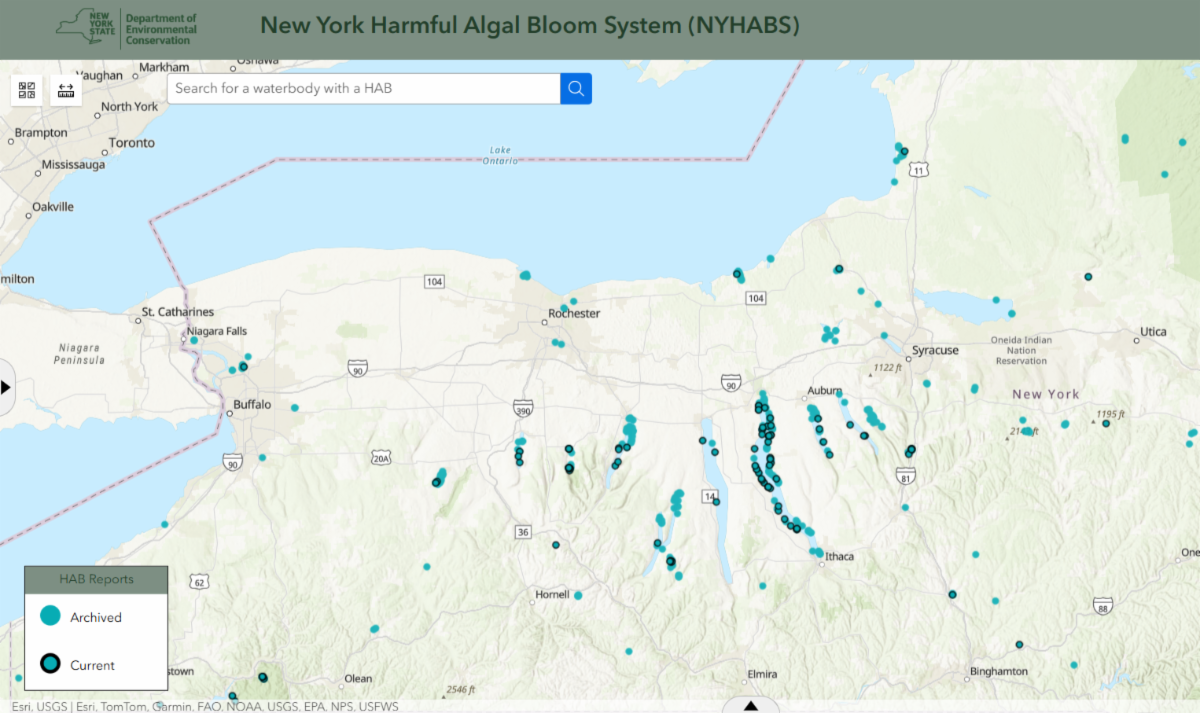
The link below leads to the NYHABS interactive map and displays the location of HABs in New York State. Each blue dot outlined in black represents a HAB reported in the past 2 weeks. There may be other waterbodies with HABs that have not been reported to DEC. All reports through our monitoring program are shown on our own map on our website. CLWA staff uploads all HABs report to the NYHABs database that we receive through our trained volunteers. You can also upload a HABS report directly to DEC here.
Visit NYHABS map here NYHABs map on August 28 shown below.
| |
About HABs
Cyanobacteria, sometimes referred to as blue-green algae because of their color, are among the oldest organisms on Earth. They are naturally occurring in our lakes, generally in low numbers.
When triggered by the perfect storm of conditions - such as heavy rains followed by a few days of warm weather with calm winds - cyanobacteria may begin to increase, forming “blooms”. HABs can appear quickly and persist for hours or days, or they can disappear almost as quickly as they formed.
Since previous research informs us that high levels of toxins (microcystin) may accompany the blooms, humans and our pets should avoid coming into contact with the water when an active bloom is observed.
How to identify blooms
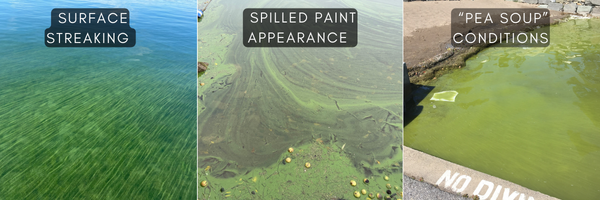
Use visual cues to identify potential blooms. They can appear like pea soup, spilled paint, surface streaks or scum. The color is typically green, blue-green, or yellow, but can also be brown, red, or purple. When blooms are discovered, they are usually found along shorelines or in cove areas. They are most often seen along the stretch of shoreline that is impacted by the prevailing winds. However, during significant bloom events, sometimes they can be found in open water areas.
Visit the NYS DEC website to learn more about identifying blooms.
| |
Remember - conditions can change rapidly. Please use caution when out on the lake and look for characteristics of HABs including water that looks like:
- Pea soup, spilled paint, surface streaks or scum
- Color's that are typically green, blue-green or yellow but can also be brown, red or purple
- Typically found along shorelines or coves
Please, to keep yourselves and pets safe, avoid any water conditions that appear to be bloom-like. Don't hesitate to reach out to us at 585-394-5030 with any questions or email us at HABS@canandaigualakeassoc.org if you are concerned about water quality. Sending us photos of the water is strongly encouraged. Have a wonderful weekend and stay tuned.
| |
What should you do if you suspect a bloom
When in doubt, stay out!
- Don't swim, wade, jetski, waterski or tube in a bloom.
- Shower if exposed to bloom conditions. Wash pets off if they have gone into bloom-infested waters.
- Don't consume fish from the lake during blooms.
- Do not use PRIVATE water drawn from the lake during a bloom. Public water supplies have safeguards in place and can be utilized unless you are otherwise notified.
-
Report the bloom to the NYSDEC NYHABs portal: on.ny.gov/habform
| | | | |