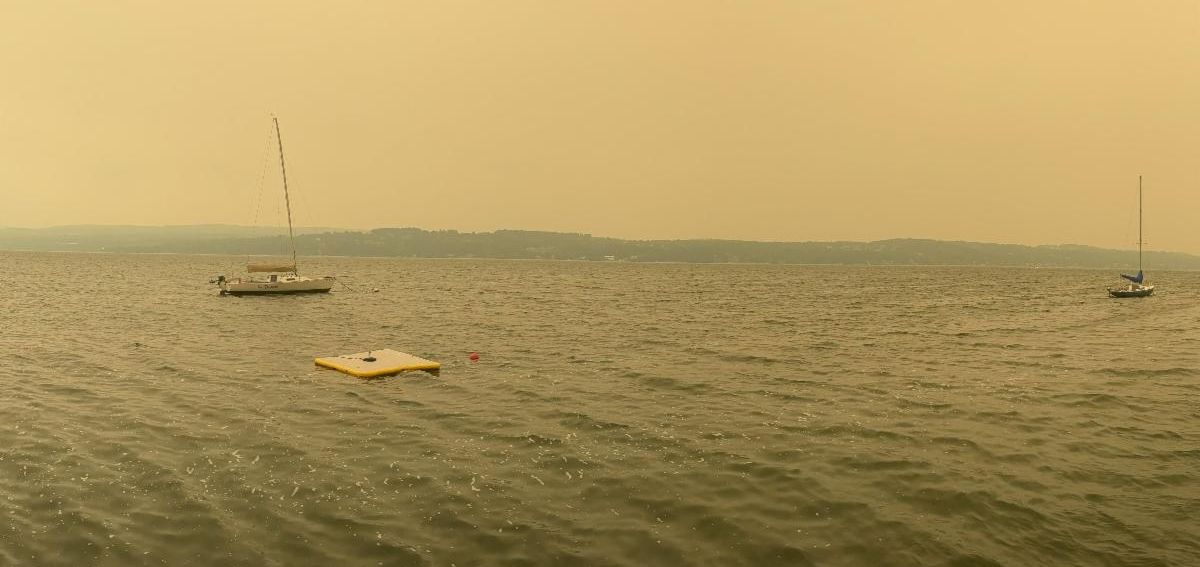
Water Quality Update for Friday, July 17, 2026 | | The CLWA Weather Station is located at Canandaigua BoatWorks on the east side of the lake. | | An orange haze blanketed much of the region on Wed and Thurs this week. Photo by CLWA board member Lynn K from the east side of the lake. | | |
The Lake This Week
While this is our weekly water quality update, air quality has been the big environmental story this week. Smoke from hundreds of wildfires burning in Canada prompted New York State to issue an Air Quality Health Advisory beginning Wednesday. The advisory was extended through Thursday and again into Friday as wildfire smoke continued to impact the region.
Fortunately, blue skies have returned today, making for a beautiful day on the lake. If you'd like to check current conditions, you can view real-time air quality data on AirNow.
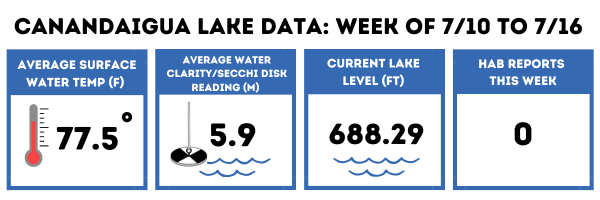
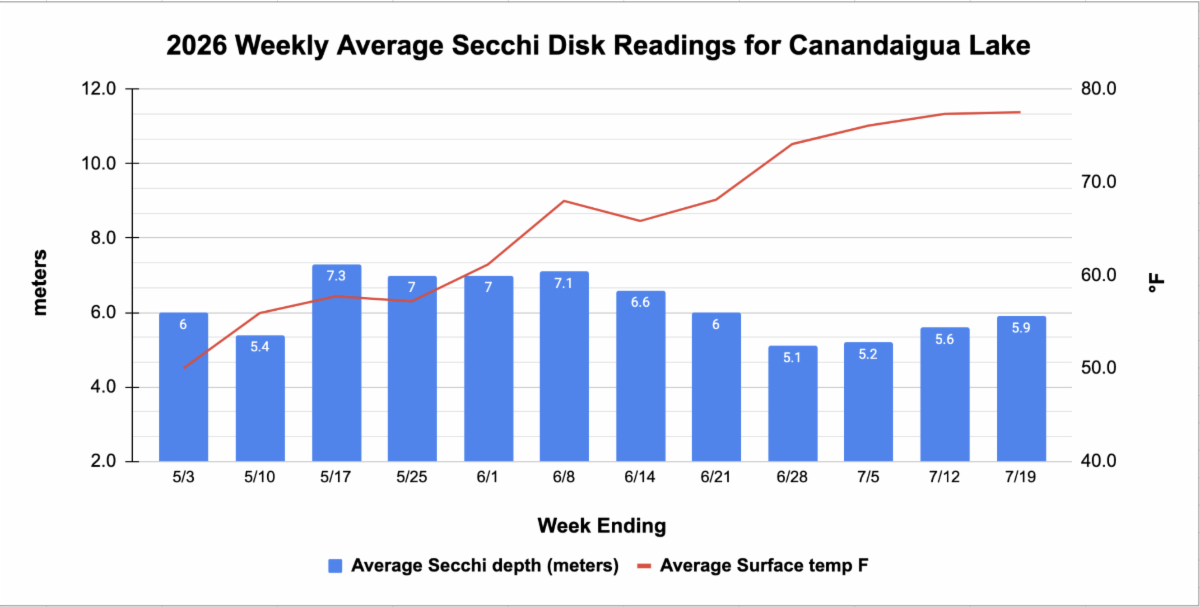
No big changes in water quality indicators this week. Average water clarity is slightly improved - at just under 6 meters- average water temp is pretty steady, and lake level is a bit lower than last week. No HABs have been reported this week.
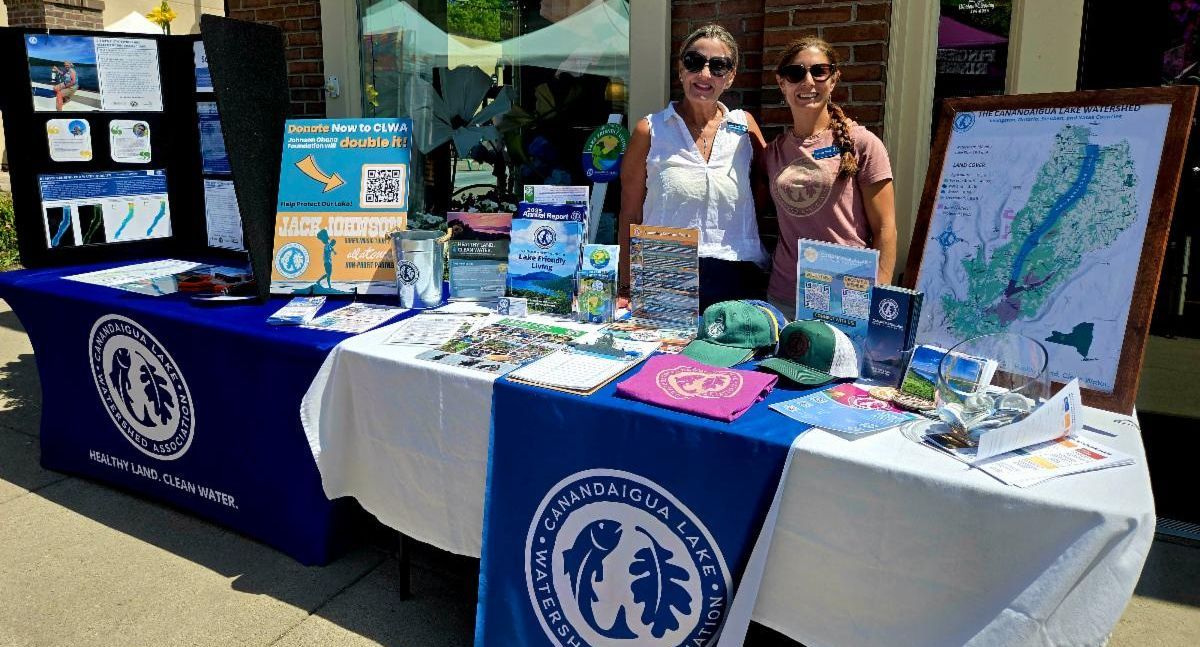
| | Weekly water clarity and temp data collected by our dedicated CLWA Citizen Science volunteers! | | CLWA has a table at the Main Street Art and Music Festival this weekend - so be sure to come by and say hello, grab some merch, or renew your membership!! Our table will be set up right out front of the Ontario Co. Chamber office - right next to the Central on Main. | | |
In this weeks update:
- CLSAP
- Secchi Disk Volunteers needed
- Lakes Appreciation Month - All About Lakes
- Weather Station data: Sunlight and Air Quality
- Summer Photo Contest
-
Upcoming events: Boat trip openings on July 22nd - call if interested
| | Citizen Science Lake Assessment Program (CSLAP) | | |
The Citizens Statewide Lake Assessment Program (CSLAP) is a long-running volunteer lake monitoring partnership between NYSDEC and NYSFOLA.
Trained volunteers collect water quality data throughout the summer, including water temperature, Secchi transparency (water clarity), conductivity, pH, color, total phosphorus, nitrogen, chlorophyll-a, calcium, and chloride.
This consistent, long-term monitoring helps track changes in lake health, identify water quality trends, and provide valuable scientific data to support lake management and protection efforts.
CLWA has been participating in CSLAP since 2017. In addition to our weekly monitoring of water clarity that we share in these updates, our CSLAP monitoring site provides valuable long-term data to help track changes and trends in Canandaigua Lake’s water quality over time. State-wide CSLAP is available online.
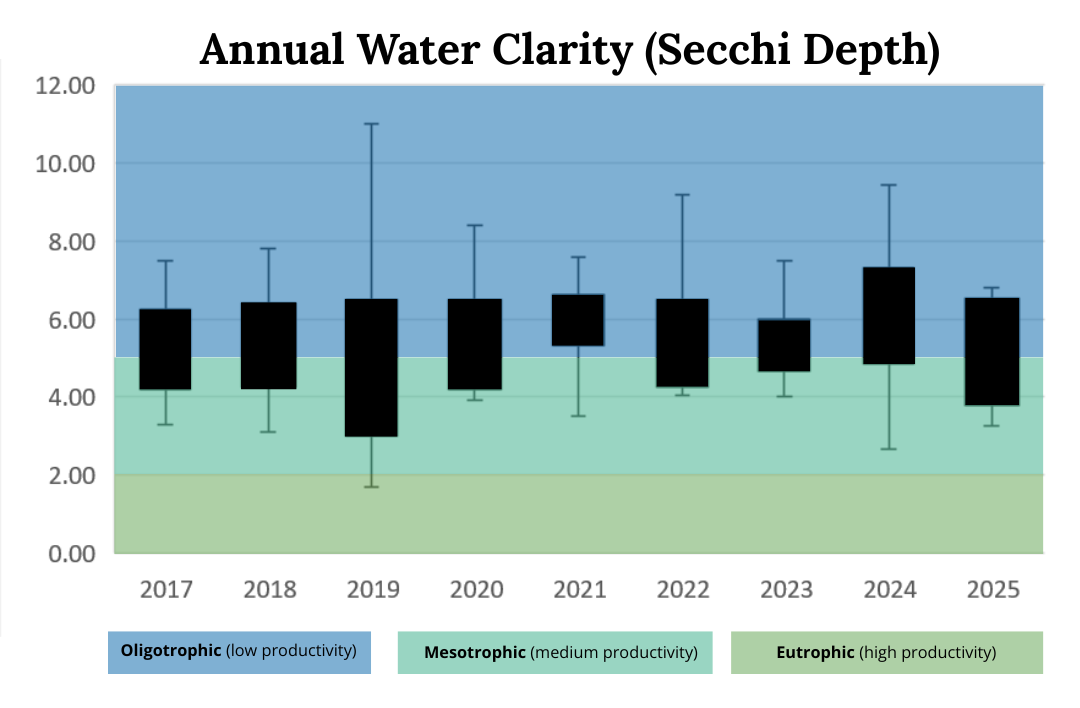
As you can see in the graph below- our long term median clarity is just a little over 5 meters. 5 meters and higher is considered oligotrophic.
| | |
What is a Trophic State?
Lakes are often labeled by their trophic state -oligotrophic, mesotrophic, or eutrophic - when talking about water quality and lake health.
The Trophic State Index provides a standardized way to assess the health and nutrient status of lakes, helping scientists, managers, and the public understand the ecological condition of these important water bodies.
- Oligotrophic : Low nutrient levels, clear water, and low biological productivity.
- Mesotrophic: Moderate nutrient levels and productivity.
- Eutrophic: High nutrient levels, excessive plant and algal growth, and potentially poor water quality.
Phosphorus, chlorophyll-a, and water clarity are the three key indicators used to determine a lake's trophic state. This week we looked at our water clarity data from CSLAP. Next week we will take a look at the phosphorus data!
| Secchi Disk Volunteers Needed at Black Point and Menteth Point | |
Do you get out on the lake weekly and are looking to get involved with citizen science efforts? If so, we would love your help! We are looking to fill a couple secchi disk locations on the lake - Black Point and Menteth Points.
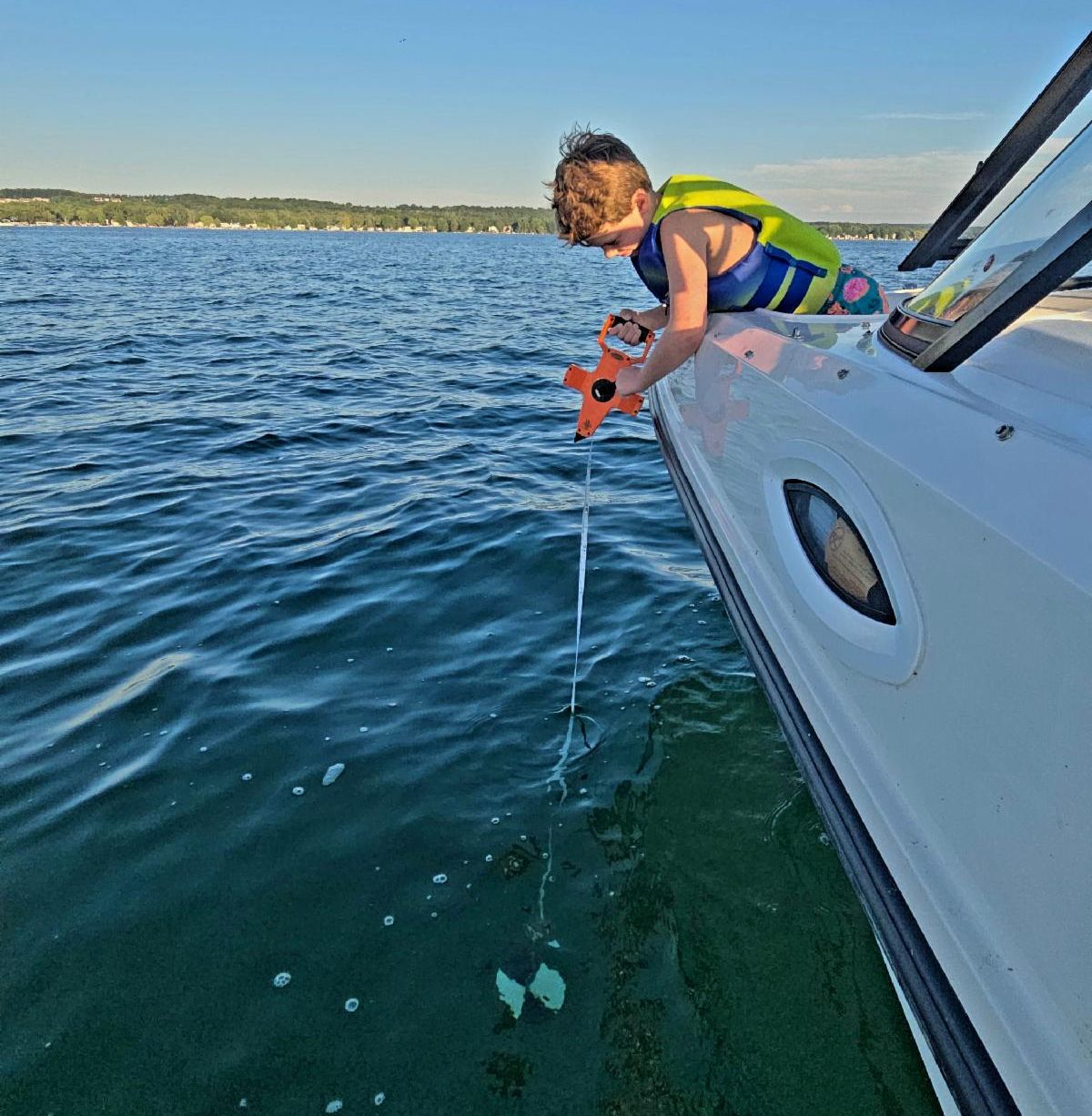
A secchi disk measures the transparency and turbidity of the water - acting as a simple yet effective indicator of overall lake productivty and water quality. It assesses light penetration - which can be effected by both algal abundance and suspended sediments - helping to track long term trends.
This is a simple but important way to collect valuable data. We use it to track Canandaigua Lake's water clarity over time, and researchers at SUNY-ESF also use our measurements to help validate their remote sensing research.
Please give the office a call at 585-394-5030 if you have regular boat access at these locations and would like to get involved!
| |
|
July is Lakes Appreciation Month
While we often talk about Canandigua Lake facts - This week, as part of Lakes Appreciation Month, we thought it would be fun to share some interesting facts about our planet's lakes.
Did You Know?
- There are about 47,743 cubic miles (199,000 km³) of lake water on Earth.
-
Lake water makes up only about 0.4% of the world’s freshwater supply, with most freshwater stored in glaciers and groundwater.
-
About 80% of the world’s lake water is found in just 40 large lakes, and roughly 70% is located in North America, Africa, and Asia.
-
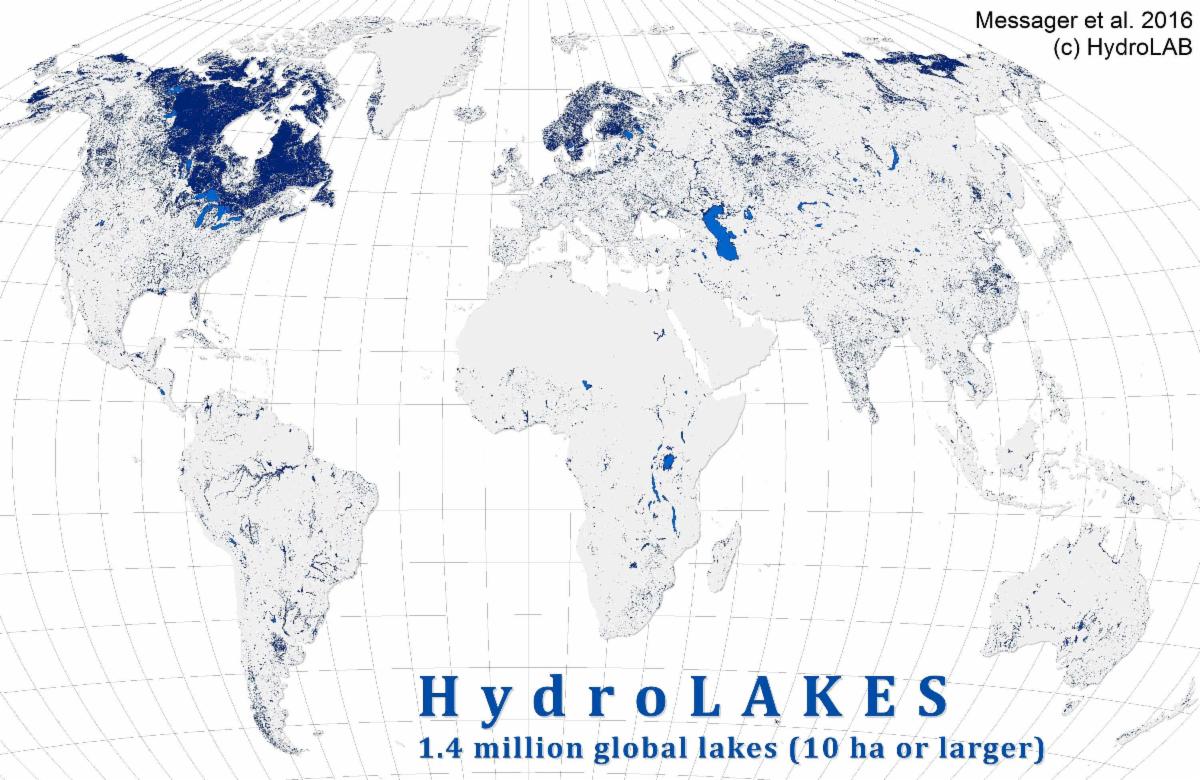
Nearly half of all the world’s lakes are in Canada, largely due to past glaciation that created thousands of basins.
-
The deepest freshwater lake in the world is Lake Baikal in Siberia, reaching a depth of 5,371 feet (1,637 meters).
-
Lake Superior is the largest freshwater lake by surface area. It covers about 31,700 square miles (82,100 km²), stretches over 380 miles (612 km), and is up to 160 miles (257 km) wide. It borders Michigan, Minnesota, Wisconsin, and Ontario.
facts provides ny NatureWorks from NHPBS
| Map of the world's lakes with surface areas of 10 hectares or more. The large, dark blue areas in Canada reflect the high concentration of lakes in those regions. Credit: HydroLAB, McGill University | |
Weather Station Data: Visible Sunlight and Air Quality
Last week, we shared that our new weather station at Canandaigua BoatWorks is now collecting real-time data on precipitation, wind, temperature, and visible sunlight (called Photosynthetically Active Radiation, or PAR).
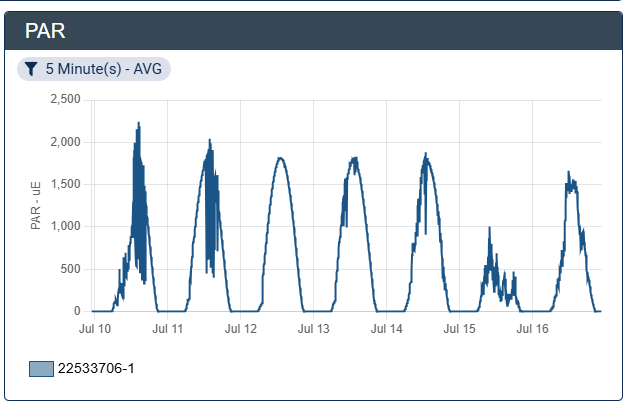
The graph below shows how Wednesday's wildfire smoke noticeably reduced the amount of visible sunlight reaching the lake. Although air quality was actually worse on Thursday, PAR wasn't reduced as much. That's because PAR and the Air Quality Index (AQI) measure different things. Smoke particles scatter sunlight, making it more diffuse rather than blocking it completely, and the AQI also includes pollutants such as ozone and fine particles that aren't directly related to the amount of sunlight reaching the surface.
By tracking both weather and light conditions, we'll gain another valuable piece of the puzzle in understanding the environmental factors that influence Canandaigua Lake.
| PAR Data from the CLWA Weather Station at Canandaigua Boatworks this week. Notice the drastic decline on Wednesday due to the wildfire haze. |
What is PAR?
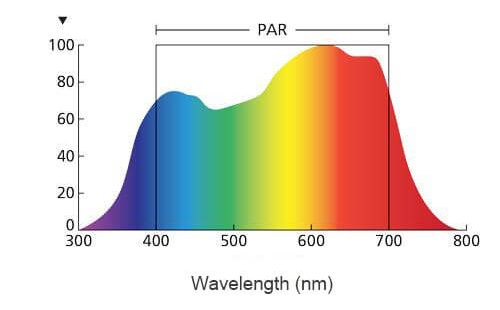
Photosynthetically Active Radiation (PAR) is the portion of sunlight (400–700 nanometers) that plants and algae use for photosynthesis. It's the visible light that fuels growth.
About half of the Sun's energy reaching Earth is infrared radiation, a little less than half is PAR (visible light), and only a small fraction is ultraviolet (UV) radiation.
By measuring PAR alongside water temperature, precipitation, and nutrient data, researchers can better understand the environmental conditions that contribute to harmful algal blooms (HABs). Combined with our shoreline monitoring program, this information will be shared with researchers to support ongoing HAB research, management, and mitigation efforts.
| |
HABs Update
No harmful algae bloom (HAB) reports came in this week. No reports have come in from our volunteers to date this season - however there was one public report submitted to the NYSDEC on June 12 at Deep Run Park that can be found on the NYHABs map. Our first confirmed bloom in 2024 was 6/20/24 and our first confirmed bloom in 2025 was not until 7/28/25. With the warm weather predicted for next week - we should all be keeping an eye out and always remember to avoid any water that looks discolored. When in doubt - stay out!
| | |
Stay informed so you can enjoy Canandaigua - or other New York Lakes - safely and confidently this summer.
We have a map on our website homepage for Canandaigua Lake reported blooms from our volunteers.
NYHABS Map
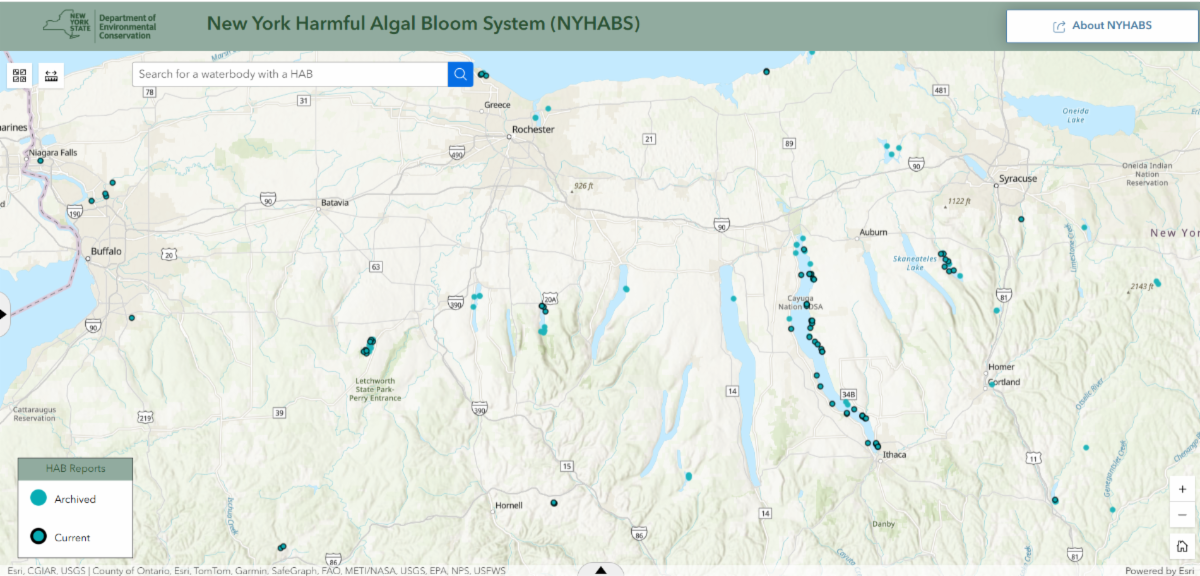
The link below leads to the NYHABS interactive map and displays the location of HABs in New York State. Each blue dot outlined in black represents a HAB reported in the past 2 weeks. There may be other waterbodies with HABs that have not been reported to DEC. All reports through our monitoring program are shown on our own map on our website. CLWA staff uploads all HABs report to the NYHABs database that we receive through our trained volunteers. You can also upload a HABS report directly to DEC here.
Visit NYHABS map here NYHABs map on July 17 shown below.
| |
About HABs
Cyanobacteria, sometimes referred to as blue-green algae because of their color, are among the oldest organisms on Earth. They are naturally occurring in our lakes, generally in low numbers.
When triggered by the perfect storm of conditions - such as heavy rains followed by a few days of warm weather with calm winds - cyanobacteria may begin to increase, forming “blooms”. HABs can appear quickly and persist for hours or days, or they can disappear almost as quickly as they formed.
Since previous research informs us that high levels of toxins (microcystin) may accompany the blooms, humans and our pets should avoid coming into contact with the water when an active bloom is observed.
How to identify blooms
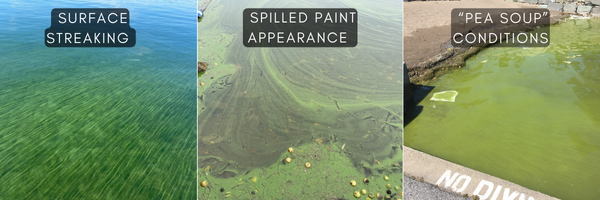
Use visual cues to identify potential blooms. They can appear like pea soup, spilled paint, surface streaks or scum. The color is typically green, blue-green, or yellow, but can also be brown, red, or purple. When blooms are discovered, they are usually found along shorelines or in cove areas. They are most often seen along the stretch of shoreline that is impacted by the prevailing winds. However, during significant bloom events, sometimes they can be found in open water areas.
Visit the NYS DEC website to learn more about identifying blooms.
| |
Remember - conditions can change rapidly. Please use caution when out on the lake and look for characteristics of HABs including water that looks like:
- Pea soup, spilled paint, surface streaks or scum
- Color's that are typically green, blue-green or yellow but can also be brown, red or purple
- Typically found along shorelines or coves
Please, to keep yourselves and pets safe, avoid any water conditions that appear to be bloom-like. Don't hesitate to reach out to us at 585-394-5030 with any questions or email us at HABS@canandaigualakeassoc.org if you are concerned about water quality. Sending us photos of the water is strongly encouraged. Have a wonderful weekend and stay tuned.
| |
What should you do if you suspect a bloom
When in doubt, stay out!
- Don't swim, wade, jetski, waterski or tube in a bloom.
- Shower if exposed to bloom conditions. Wash pets off if they have gone into bloom-infested waters.
- Don't consume fish from the lake during blooms.
- Do not use PRIVATE water drawn from the lake during a bloom. Public water supplies have safeguards in place and can be utilized unless you are otherwise notified.
-
Report the bloom to the NYSDEC NYHABs portal: on.ny.gov/habform
| | This Month is Packed with Exciting Partnerships! | |
'Savor the Flavor. Support the Lake' Partnership Is Back! | | |
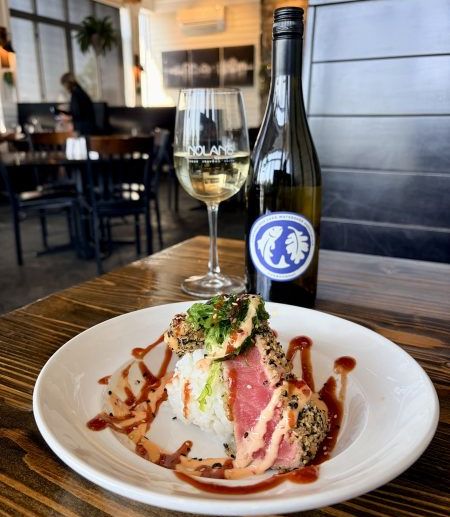
Now in its second year, the collaboration between Nolan's on Canandaigua Lake, Heron Hill Winery, and CLWA brings together local food, Finger Lakes wine, and lake stewardship to inspire residents and visitors alike to help protect the lake that make Canandaigua such a special place to live, work, and visit.
From July 1st through September 30, Nolan's will once again feature a limited-edition Heron Hill Winery Chardonnay in support of CLWA. A portion of every bottle sold will be donated to CLWA to advance our mission of protecting, preserving, and restoring Canandaigua Lake through science, education, and advocacy. Read all about the partnership here in the Democrat and Chronicle.
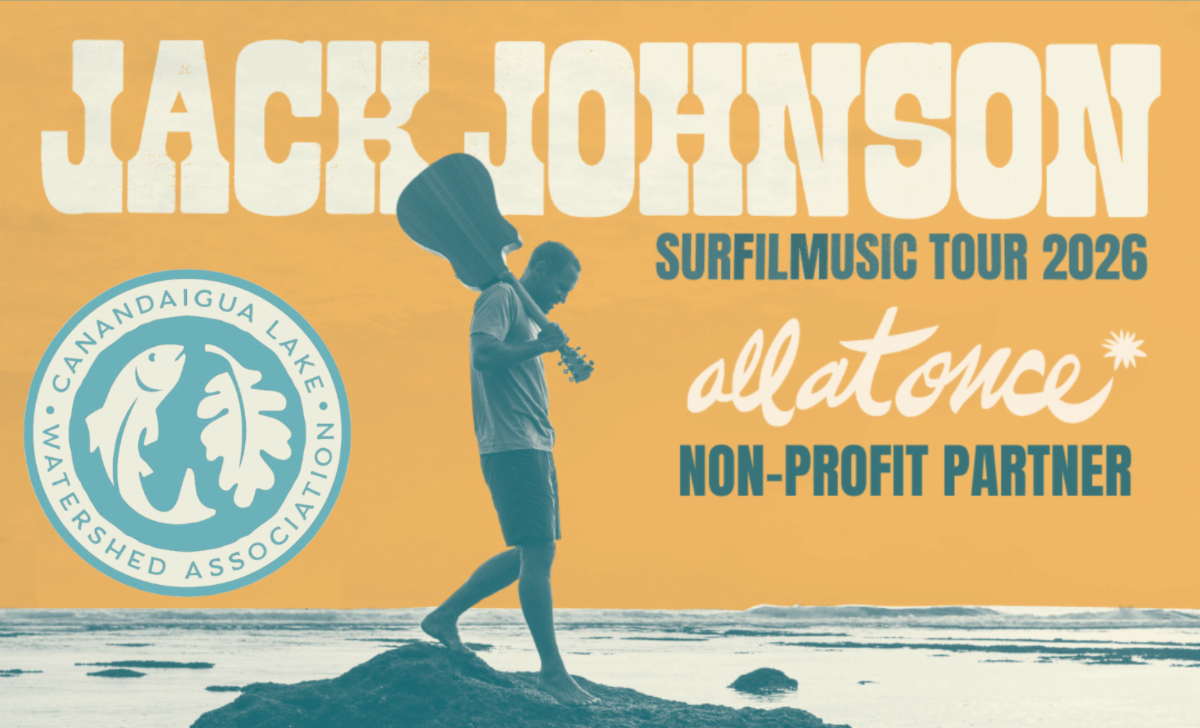
| | Jack Johnson Match Campaign | CLWA had a blast in the Village Green on July 1st at the Jack Johnson concert at CMAC. As part of our partnership with Jack Johnson's All At Once Foundation, we have another incredible opportunity. Donations up to $2,500 made to CLWA now through October will be MATCHED by the Johnson Ohana Foundation. Donate below, and you will DOUBLE your impact in protecting Canandaigua Lake! | Make a Splash Campaign with Wegmans | | |
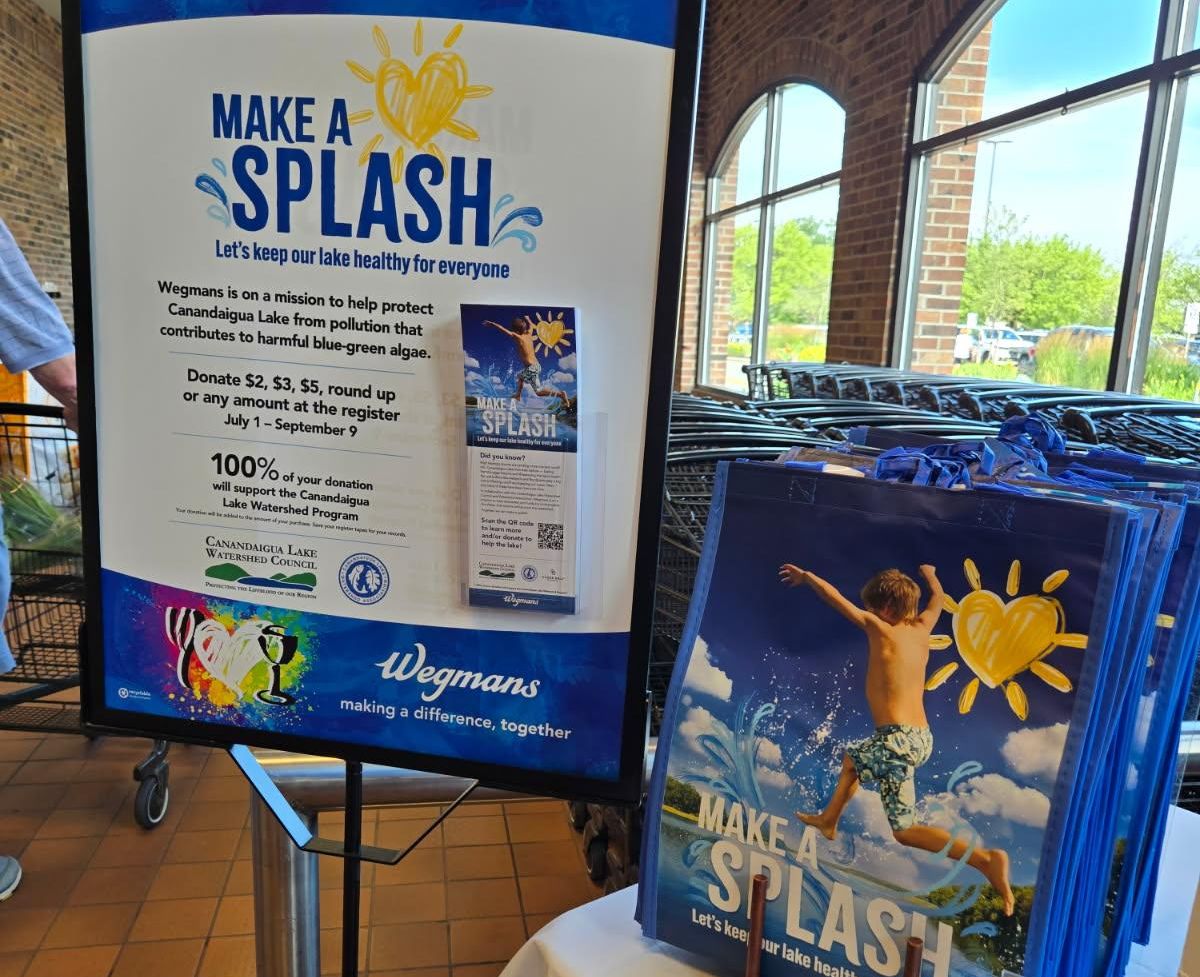
The Make A Splash Campaign is back at the Canandaigua Wegmans through the end of September! You can help by purchasing a limited-edition Make A Splash reusable bag or making a donation at checkout. Proceeds are shared equally between the Canandaigua Lake Watershed Council and the Canandaigua Lake Watershed Association.
Thank you to Wegmans and everyone who supports this community effort. Together, we're making a lasting difference for Canandaigua Lake.
| | CLWA Photo and Video Contest | | |
The CLWA Annual Photo & Video Contest is underway. We have many fabulous entries already! Keep them coming! Please share your photos and videos of our gorgeous watershed throughout the seasons today for the chance to win great local prizes! The winning photos are featured on our calendar and notecards every year.
- Voting begins July 1
- Entry Period Closes August 15
- Winners Announced by August 29
| | |
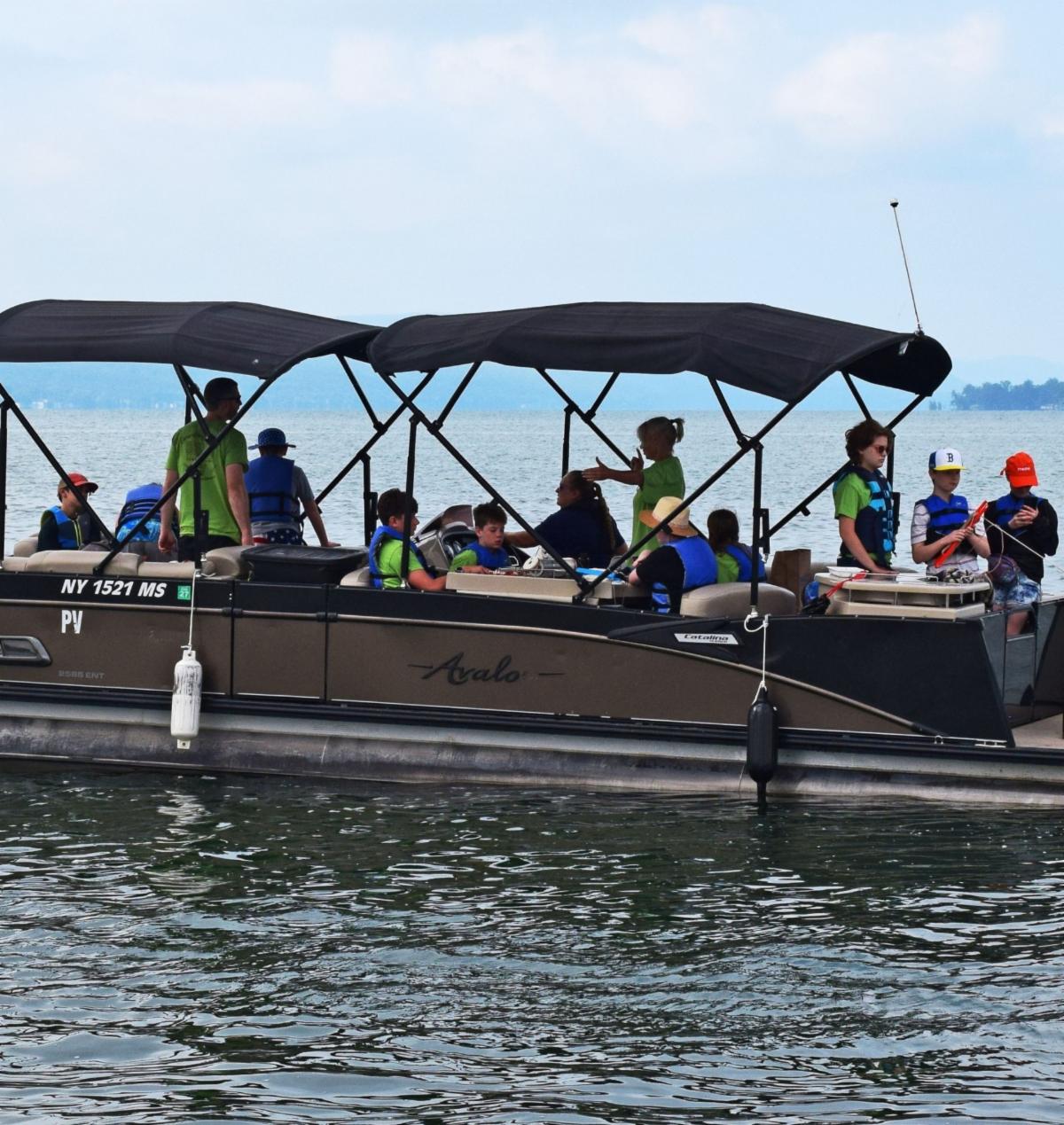
Community Science Boat Trip with CLWA Educators and Seager Marine's Freedom Boat Club | |
RESCHEDULED to JULY 22nd. WE HAVE OPENINGS. CALL IF YOU ARE INTERESTED IN ATTENDING AT 585-394-5030.
When: Wednesday, July 22nd with sessions at 4:00 PM, 5:00 PM and 6:00 PM
Where: Seager Marine, 811 South Main Street, Canandaigua, NY 14424
Have you ever wondered how scientists monitor the health of Canandaigua Lake?
Don’t miss this unique opportunity to experience it firsthand on a guided, 45 minute pontoon boat excursion, generously provided by the Seager Marine's Freedom Boat Club. This immersive field experience brings lake science to life as you participate in real data collection and sampling techniques used by environmental professionals. During this experience you’ll get to:
- Conduct plankton tows to observe algae and other microscopic organisms that form the foundation of aquatic food webs
- Deploy a Van Dorn sampler to collect water from below the surface for chemical analysis
- Watch a bottom dredge in action as it retrieves a “bite” of lakebed sediment for study
Throughout the trip, experts will share insights on critical issues impacting the lake, including zebra and quagga mussels, harmful algal blooms (HABs), and the effects of nutrient runoff on water quality.
Join us for an engaging and informative journey beneath the surface of one of our region’s most valuable natural resources.
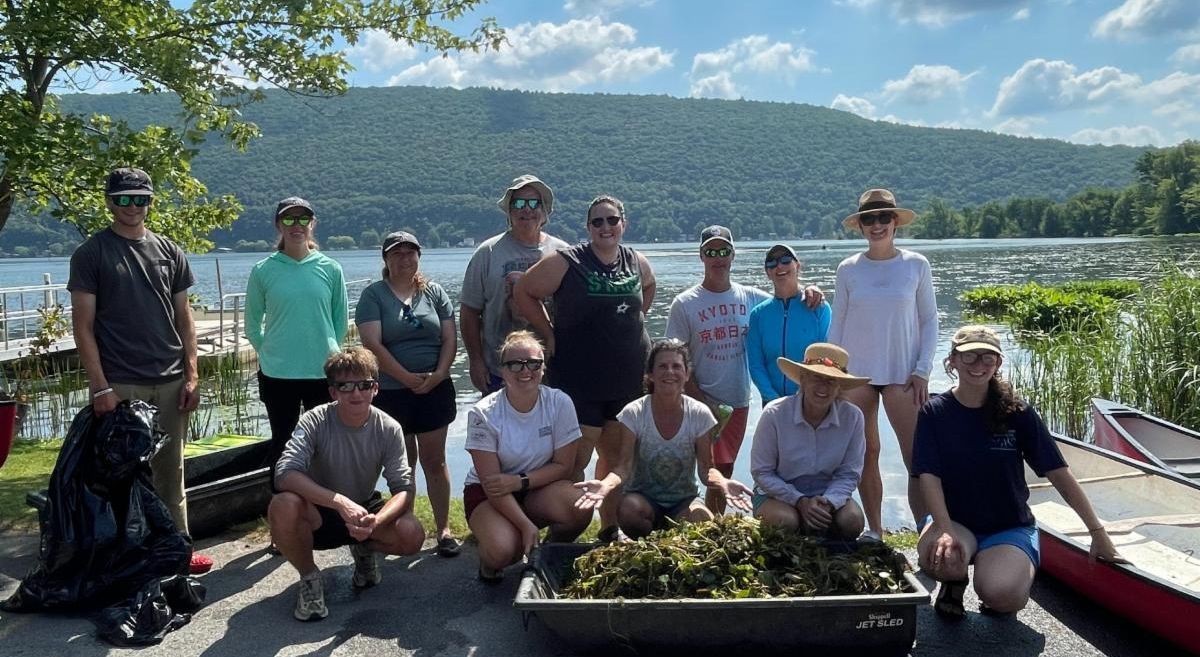
| | Invasive Species Pull with Finger Lakes PRISM and CLWA | | |
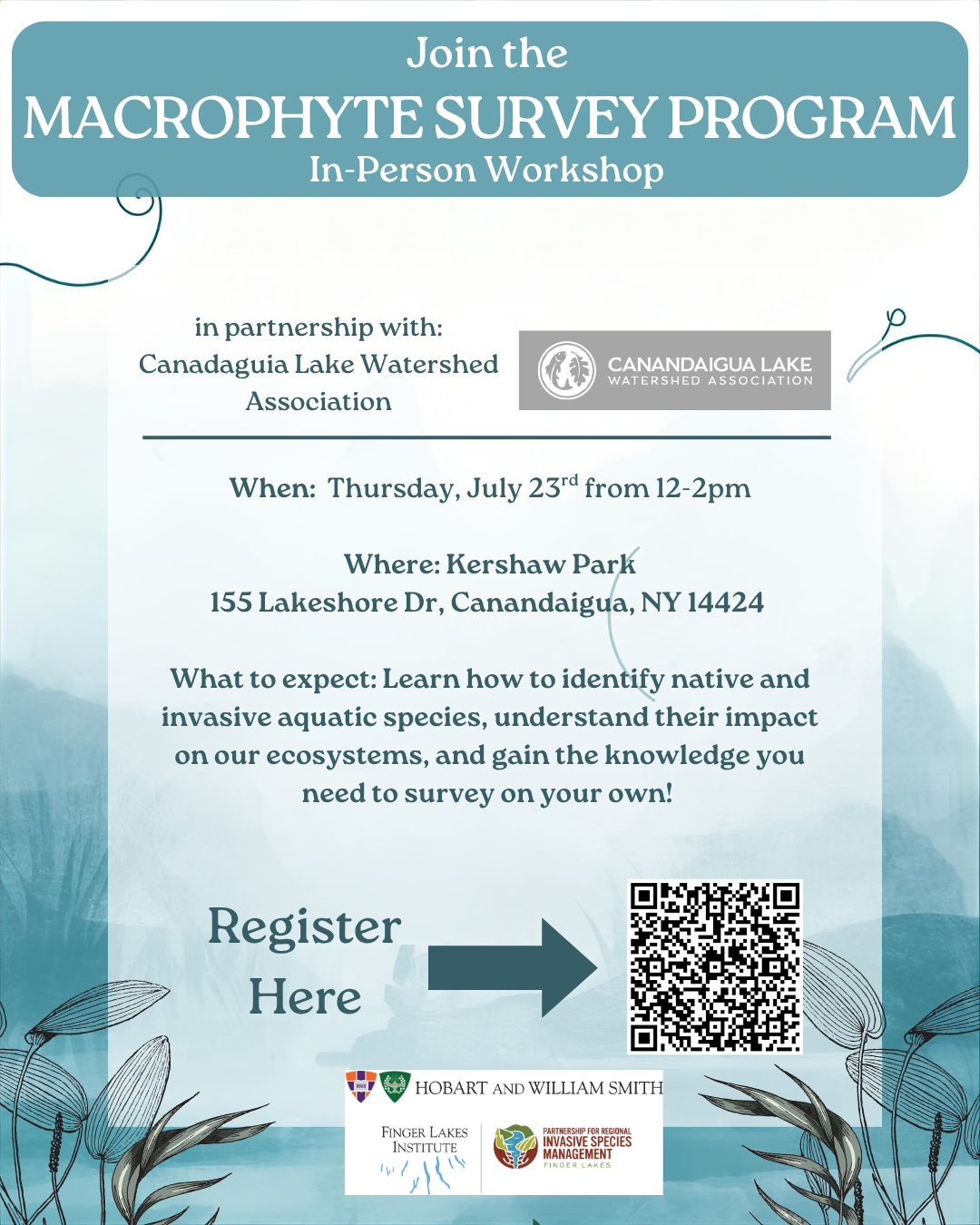
When: Thursday, July 23rd, 12 – 2 PM
Where: Kershaw Park, 155 Lakeshore Drive, Canandaigua, NY 14424
Join the FLPRISM and CLWA at Kershaw Park to learn how to identify native and invasive aquatic species, understand their impact on our ecosystems, and gain the knowledge you need to survey on your own.
| | Invasive Species Pull with FLPRISM and CLWA | | |
When: Wednesday, July 29, 9:00 AM – 12:00 PM
Where: Woodville Boat Launch, Rte 21, 3 miles north of Naples
Join the CLWA and the Finger Lakes PRISM in the West River in Naples to pull Aquatic Invasive Species (AIS).
Event Details:
- AIS removal will focus on European frogbit and water chestnut
- PRISM can provide watercrafts for some people – let us know in the registration form if you need one
- Receive a quick lesson on AIS at the launch
- Please wear appropriate attire for paddling
- Bring plenty of water and a snack if you’d like
Thank you for volunteering to help manage invasive species in our watershed!
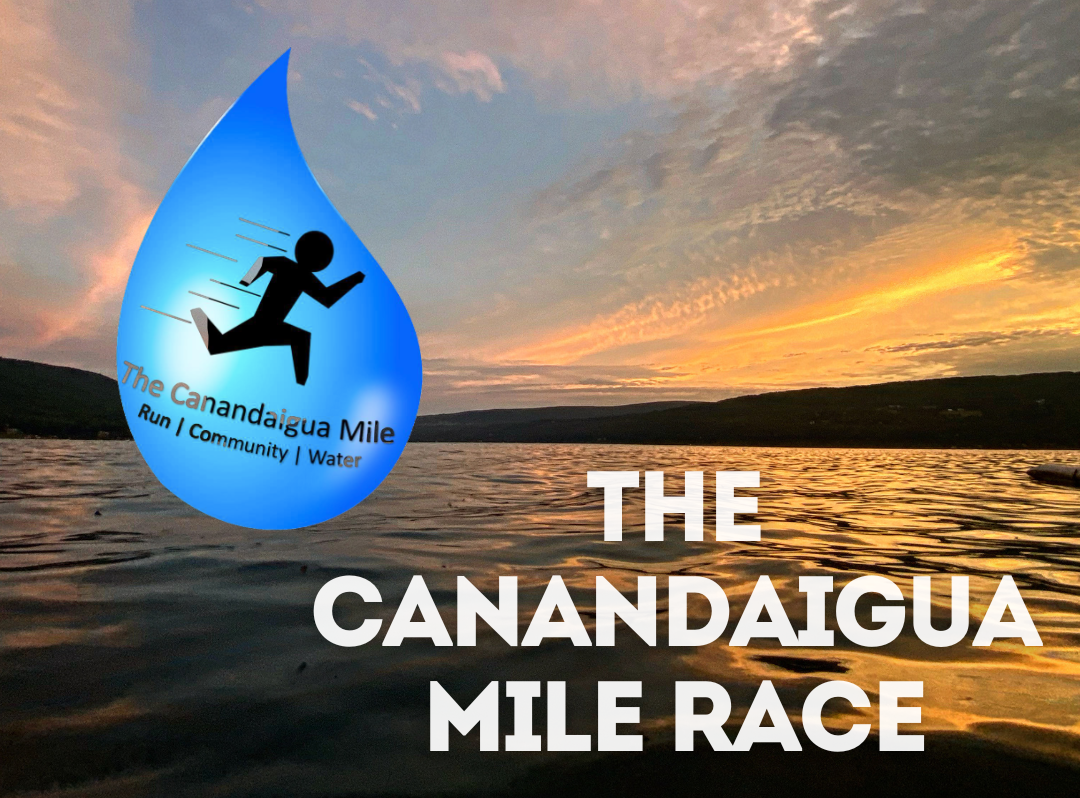
| | The Canandaigua Mile Race (and Walk) and Clean-Up | |
When: Sunday, August 2nd, 8:00 AM – 11:00 AM
Where: Lakeshore Drive, Canandaigua, NY 14424
Up to 200 racers will take off on Lakeshore Drive in Canandaigua at 8:30 am on Sunday August 2nd to race the fastest mile in the Finger Lakes. The race is also open to folks that just want to walk and support the cause! The race will conclude with a post-race party at New York Kitchen. A huge thank you to NY Kitchen for donating their space for the after party!
Also, during and following the post race party, there will be a lake shoreline cleanup event in partnership with the Canandaigua Lake Watershed Association to raise awareness for water quality and reduce trash in the community of Canandaigua. We hope you can join us!
A huge thank you goes out to Abbie Sullivan, A.J. Beers and their amazing team for all their time and effort in organizing this fabulous event for the fourth year in a row and for their passion to raise awareness on water quality issues. Every year they have generously donated proceeds to CLWA to help fund lake protection efforts. We are so grateful for your support.
| | Join or renew your 2026 CLWA membership today! | |
Thank you for being a valued member of the Canandaigua Lake Watershed Association (CLWA). Because of your support, we’re able to protect and preserve the lake we all care so deeply about – and serve as a strong, trusted voice for the lake and its future.
Now is the time to renew your 2026 membership and help ensure Canandaigua Lake remains healthy for today and future generations. If you already renewed this year -- thank you!
With over 600 supporters and 85+ dedicated volunteers, only CLWA connects and communicates with our community about vital science-based information to help safeguard the lake and inspire a culture of stewardship. As advocates and the voice for the lake, we use citizen science, education, and outreach to empower our community to take meaningful action.
Every dollar you give fuels the science, education, outreach, and advocacy needed to protect Canandaigua Lake as a vibrant and cherished resource.
| | |
The Canandaigua Lake Watershed Association, Inc. is a 501 (c) (3) not-for-profit organization. Our Tax ID is 16-1071349.
Contributions may be tax-deductible to the extent permitted by law. A copy of the organization’s most recent financial report may be obtained from the New York State Attorney General’s Charities Bureau, 28 Liberty Street, New York, NY 10005, by calling (212) 416-8686, or by visiting www.charitiesnys.com. You may also request recent financial reports by contacting CLWA directly at 144 Mill Street, Canandaigua, NY 14424 or by calling (585) 394-5030.
| | | | |