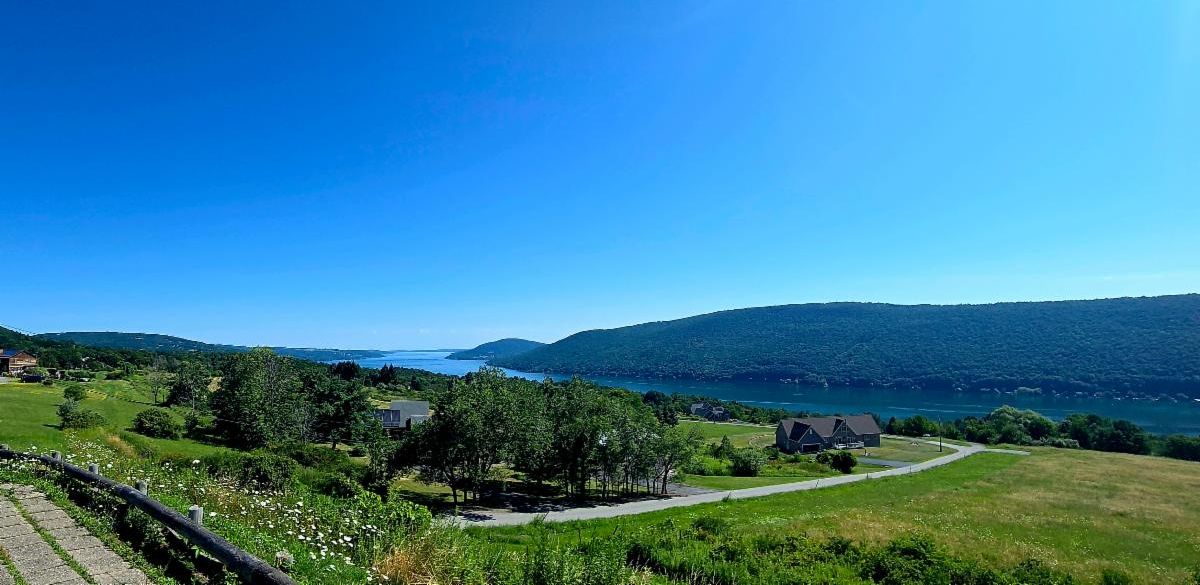
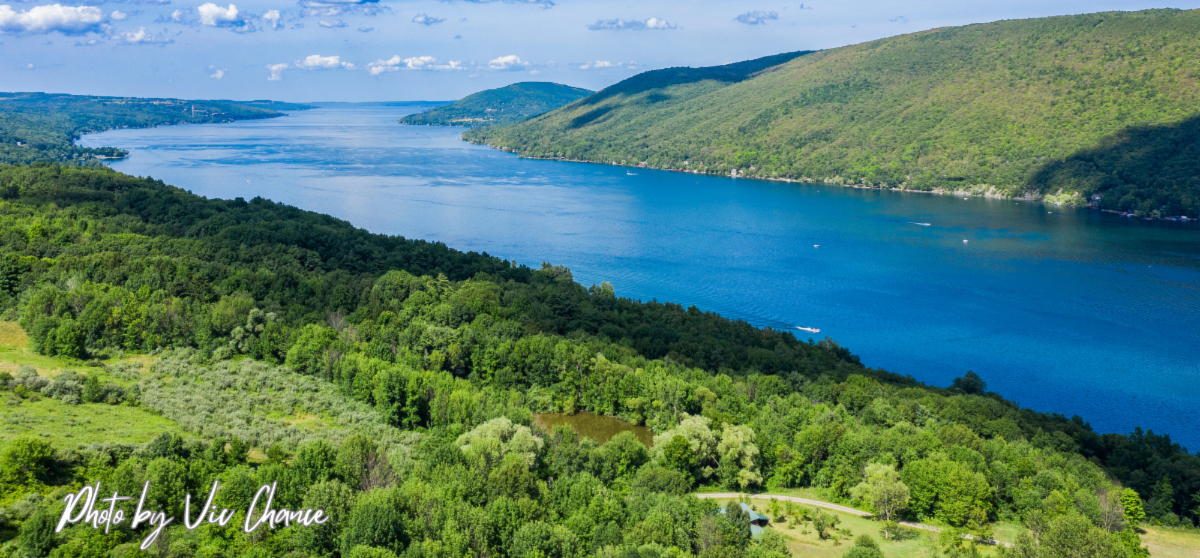
Water Quality Update for Friday, July 31, 2026 | | Did someone forward you this email? Click HERE to subscribe directly. | | The CLWA Weather Station is located at Canandaigua BoatWorks on the east side of the lake. | | This morning - Friday - was so picture perfect I couldn't NOT pull over and stop at the Overlook for a photo even though I have probably already take this photo a hundred times! | | A quick note - The Canandaigua Mile Race is this weekend on Sunday Aug 2 -followed by a volunteer shoreline cleanup. Keep reading to the end of this email to see about this upcoming event and others. We know the email is long - but we are trying to limit the number of emails we send by combining our water quality updates with our upcoming events emails. | | |
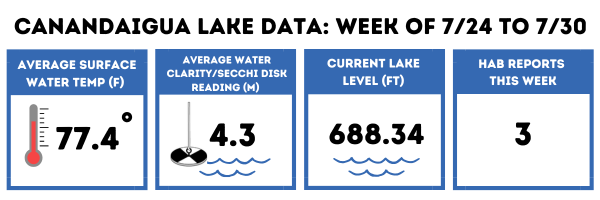
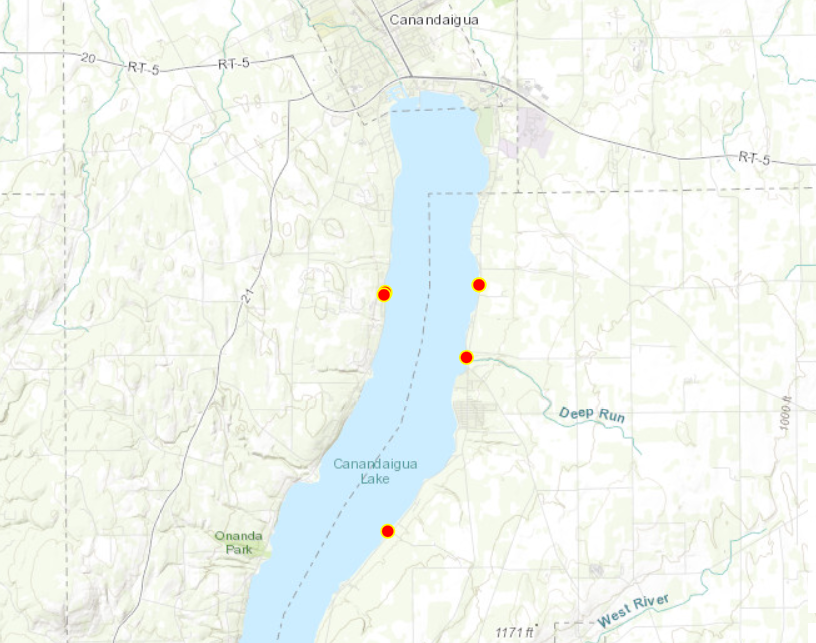
After last week ending with HAB reports on Friday and again on Sunday - its been a relatively quiet week to end the month. The 3 harmful algae bloom reports in the header were all from Sunday and were light streaking and dots in the water. We have had a report come in today as well - but its just for something pretty small as well - so far overall most of the lake is looking good. The north end is busy busy today as people are taking advatage of this gorgeous weather!
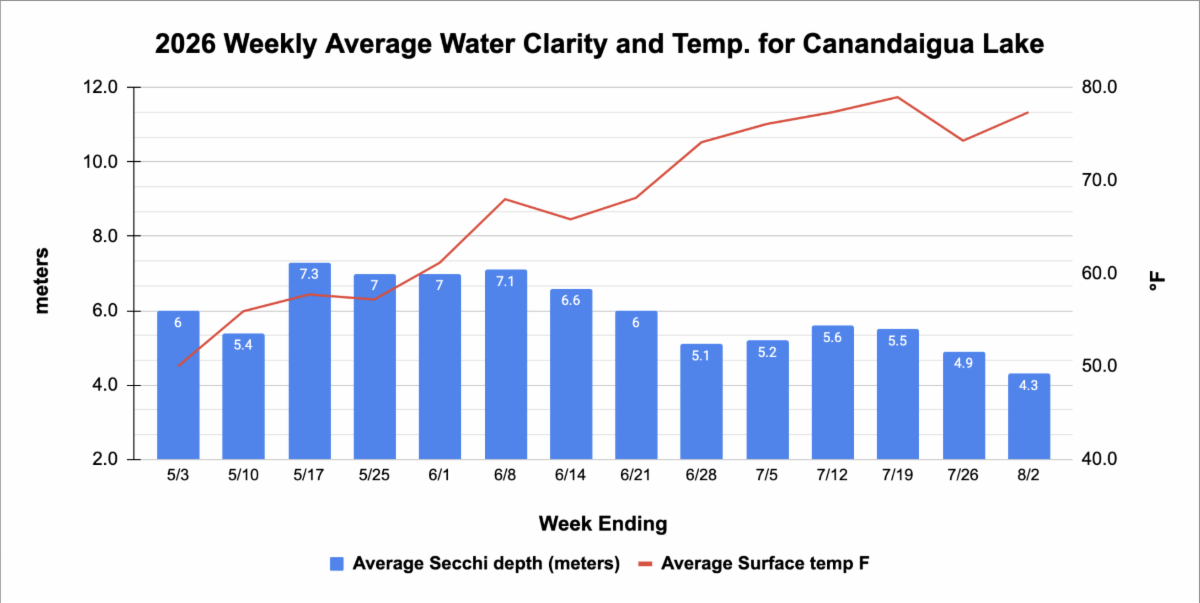
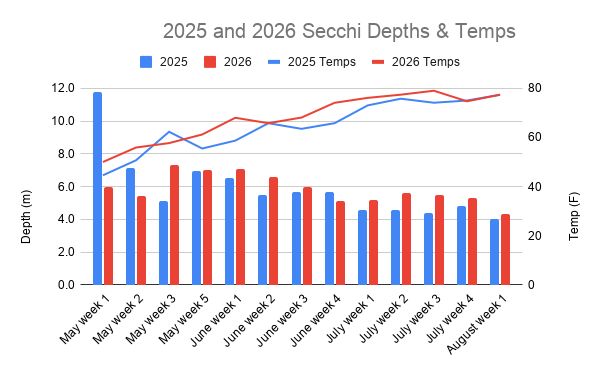
Temperatures dipped mid-week and Wednesday was chilly and rainy - but its warmed right back up. Average water clarity has gone down significantly from last week though. At the same time - surface water temp increased as well. Lake level is pretty much the same.
| | Weekly water clarity and temp data collected by our dedicated CLWA Citizen Science volunteers. You can see that average clarity is again lower this week - and the surface temp is back up. | | How is 2026 comparing to 2025 so far? Average surface temps are just about the same right now as they were last year. Water clarity has seemed a bit better actually - but nothing statistically significant - and is overall very similar except for the difference at the beginning of the season. | | |
In this weeks update:
- HABs Update
- HABs look-alikes
- Partner Research: ESF Remote Sensing Project
- Lake Foam Reporting
- Fishhook Waterflea
- CLSAP: Chlorophyll data
- Summer Photo Contest
- Upcoming events
| | |
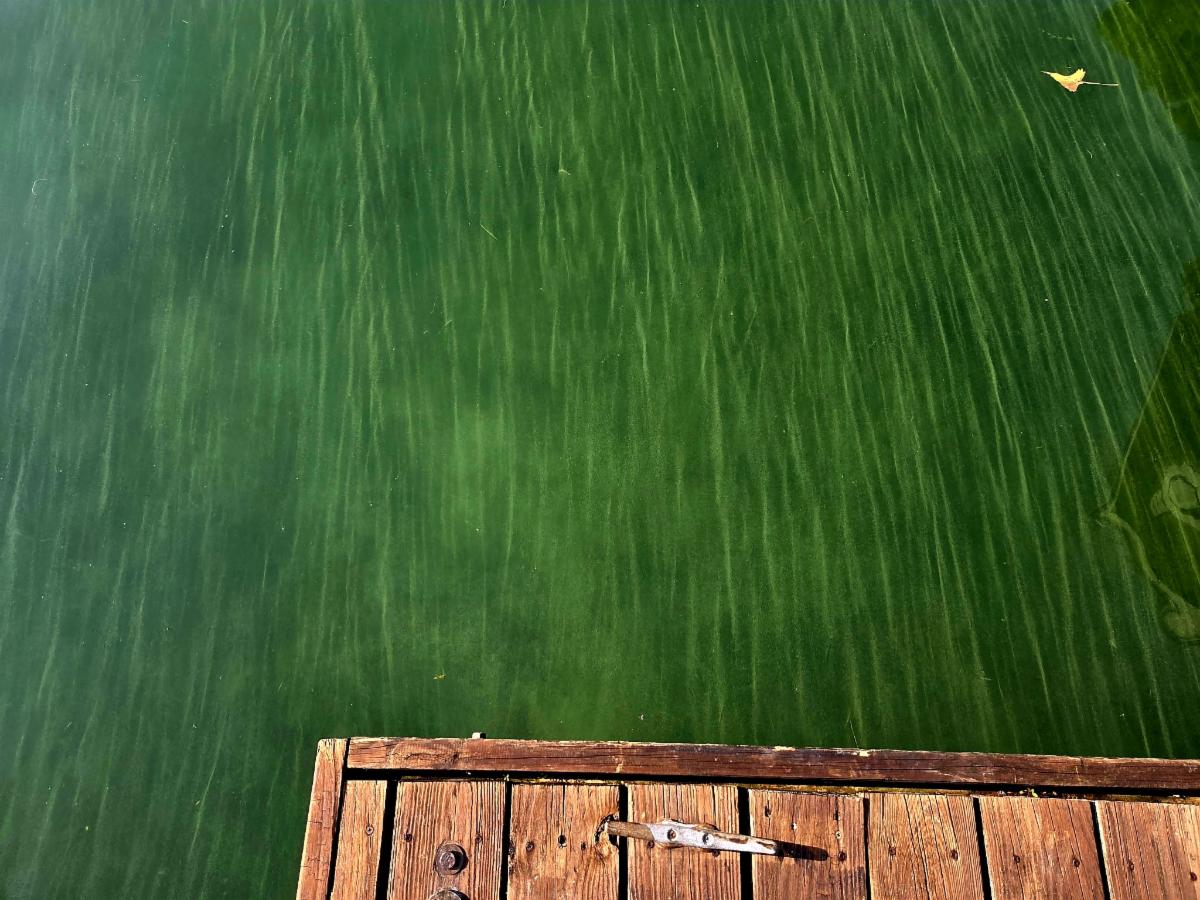
We had 3 reports last Sunday - two on the northwest side a bit south of German Brothers Marina - and one on the east close to Ontario County Beach Park. There has also been some streaking further out mid lake as well in these general areas.
We had one report today again close to Ontario County Beach Park. All of the reported blooms so far have been light streaking. They might not be entirely obvious if you aren't really looking for it.
| | HAB photo from Sunday morning last weekend - just south of German Brothers Marina on the west side. | | Confirmed bloom reports from volunteers have come in so far on the northwest and northeast sides of the lake near shore. | |
Remember: HABs are constantly changing.
They can appear, move, and disappear quickly. A bloom reported in one location does not mean that the entire lake is affected or that conditions are the same everywhere.
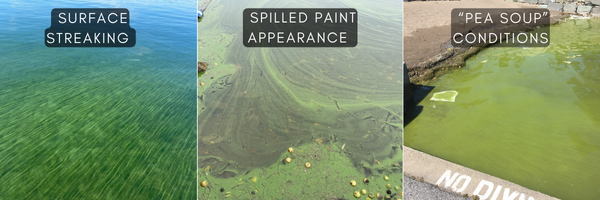
Our HAB map is a helpful tool for seeing where blooms have been reported, but it is not an exact, real-time picture of conditions across the lake. Before swimming, boating, or letting pets near the water, take a moment to look at the water where you are. If you see water that looks like spilled paint, pea soup, or has unusual discoloration or surface scum, stay out.
When in Doubt - Stay Out!
Knowledge is power! Knowing what HABs look like and staying informed can help you safely enjoy Canandaigua Lake all summer long. Stay observant, stay informed, and help us spread the word!
Scoll all the way to the bottom of this email for our general HABs reminders, resources, and ID info.
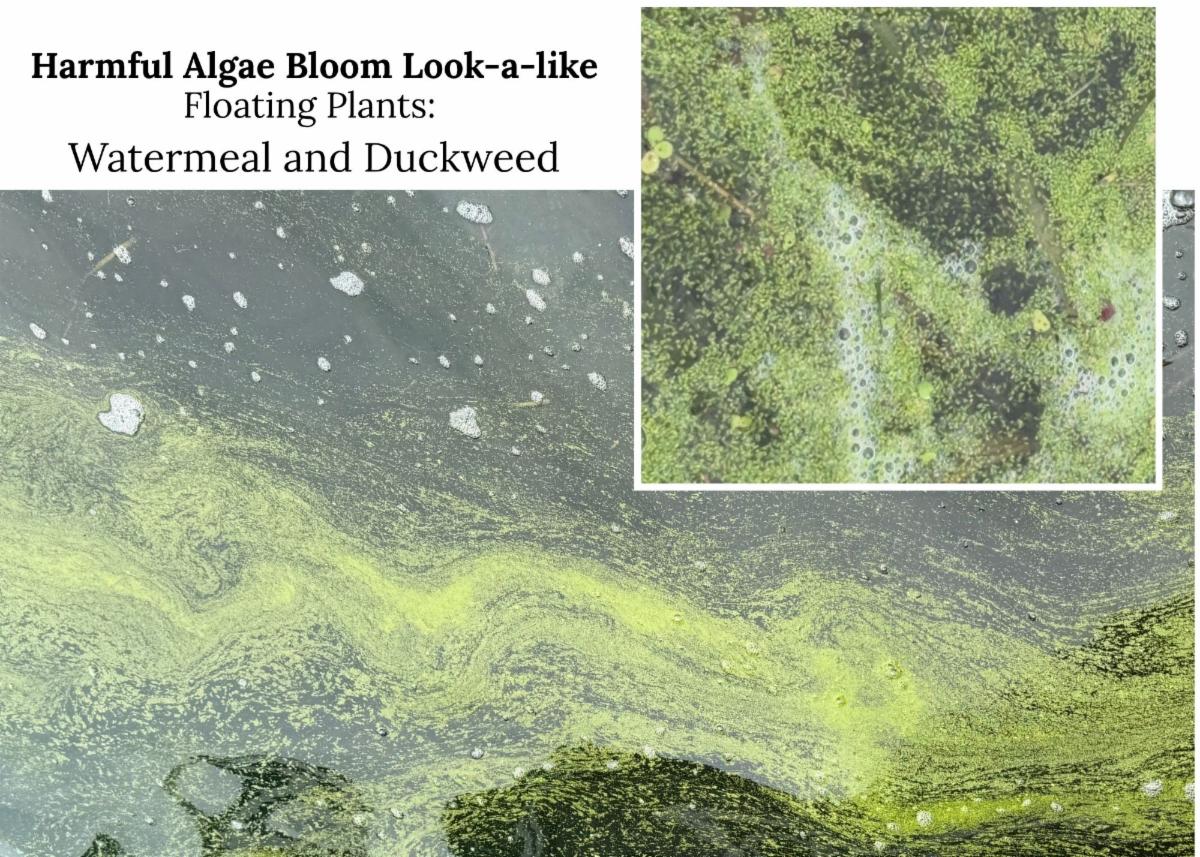
| | Harmful Algae Bloom (HAB) ID | | We received a report of a possible HAB this week on Tuesday down south near Granger Point. From a distance - this certainly looks suspicious. But when you look up close - you can see the tiny individual floating plants of watermeal and duckweed in the photo. These are common look-a-likes for HABs. Another context clue that helps with ID is that it is uncommon to have a HAB like this down on the southwest end (although it cannot be ruled out just based on that), and the weather was relatively cool and windy on Tuesday as well - not ideal HAB conditions. These plants are common down in the West River - and were just blown up the lake a bit. | | SUNY ESF Remote Sensing Research | |
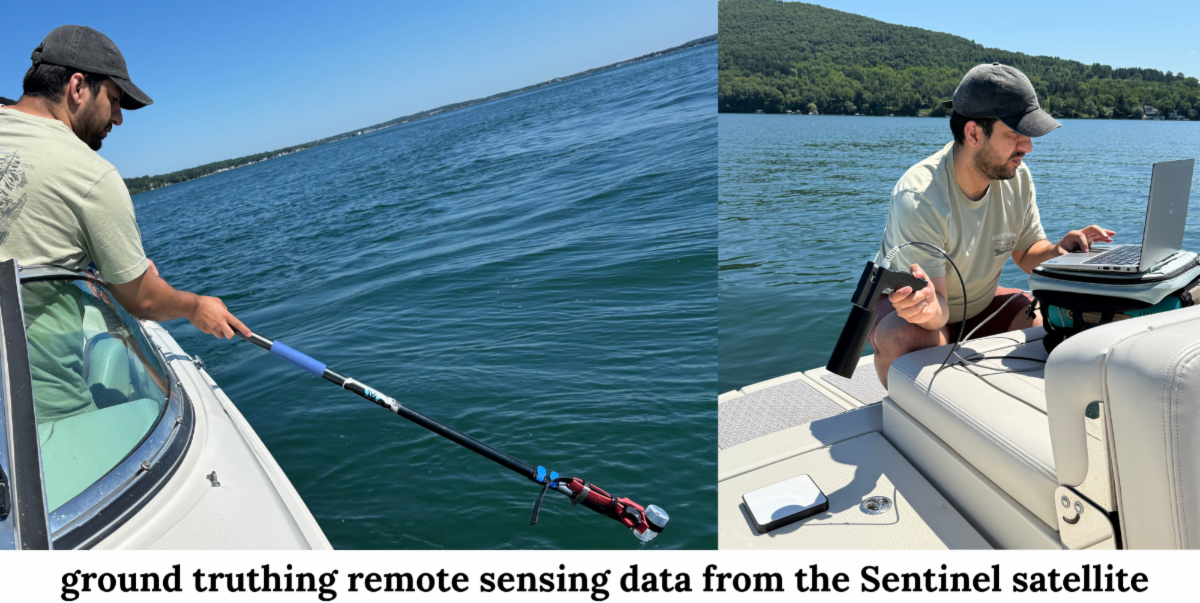
What a perfect day for remote sensing!
A SUNY ESF PhD candidate, Environmental Resource Engineer , Sajad Familsamavati, was transported up and down Canandaigua Lake today by our Citizen Scientist Committee co-chair Sally Napolitano, accompanied by our Summer Intern Sophie and committee co-chair Lynn Klotz.
Syncing directly with a Sentinel satellite flyover, Sajad collected 20 mid-lake water samples along a north to south transect at roughly .8 miles apart. These samples will be analyzed for turbidity and chlorophyl a (specifically, green algae, cyanobacteria, and diatoms) and then used to ground-truth data to validate the satellite's observations. Sajad also gathered surface spectroscope readings to quantify atmospheric interference and further refine the Sentinel data. This is a multi-year research project that CLWA citizen scientists have helped with.
| |
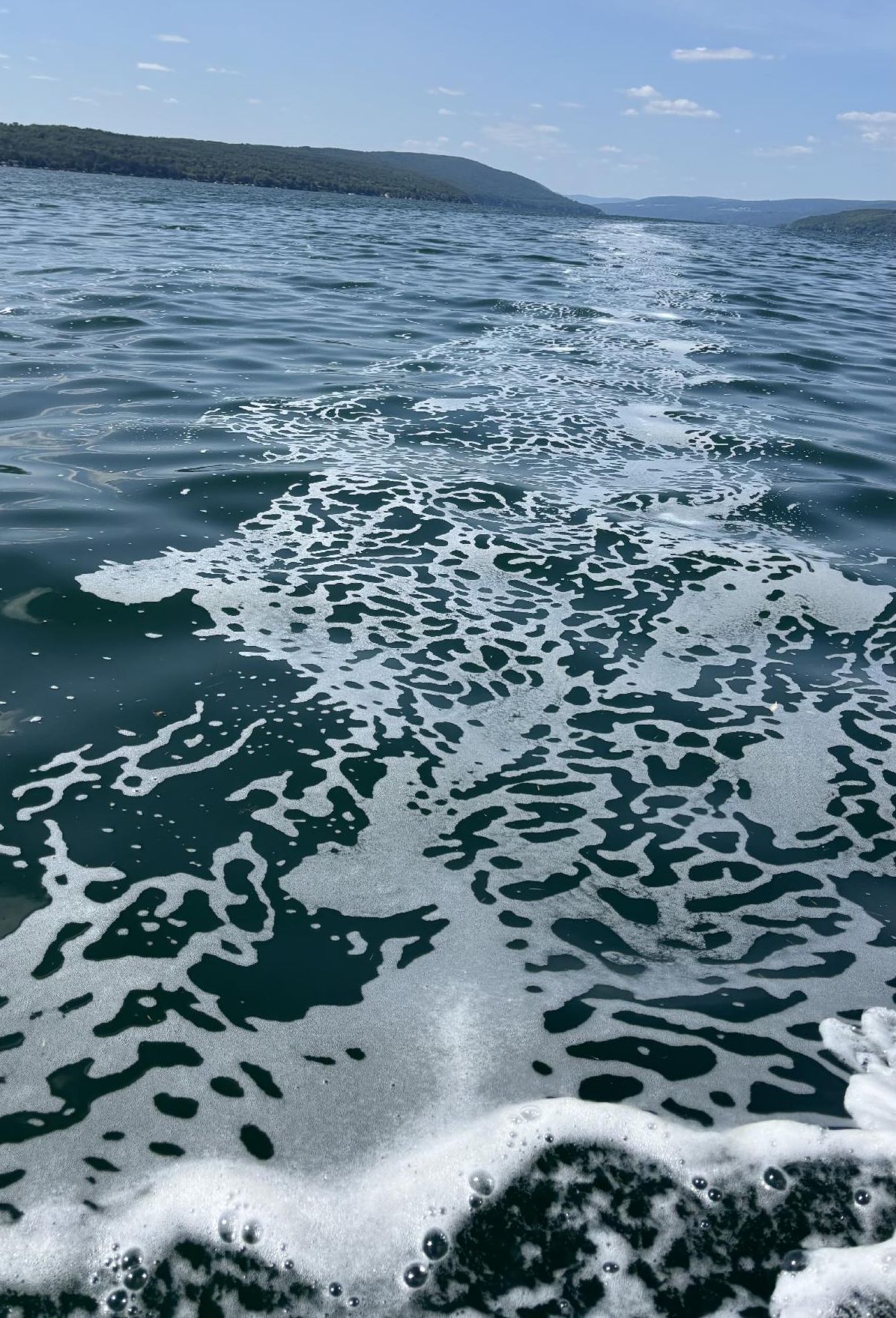
Thanks to the hard work and diligence of Canandaigua Lake’s many volunteers, we now have 7 years of foam reporting data (2019-2025) are are starting on year 8. This has given critical insights into the quantity and appearance of foam, its seasonality, and the locations where it is most abundant.
Please continue to report foam so we can keep building and strengthening this database. A few notes to help with your efforts this year.
1) Ensure you input the correct GPS coordinates into the survey form. There are many free tools online to get this info from your phone, and the coordinates are often embedded in your photographs. Keep in mind the survey form uses ‘decimal degrees’, so if your coordinates are in degrees-minutes-seconds you will have to convert using easily searchable online tools.
2) If you are having trouble reporting using the app, you can go to our research partners website and use the browser version - https://www.globalaquaticresearch.com/finger-lakes.html. Directions are provided (“click here”) at the top of the survey.
3) There are many moving parts to make the foam survey work, especially now that the survey tool has been expanded from just Canandaigua to include all 11 Finger Lakes - so if your submission is rejected let CLWA know so we can ensure the workflow is behaving.
More details about the Foam Research on Canandaigua Lake and the link to the Foam Reporting Tool can be found on our website here. Stay tuned for a more detailed update about the Lake Foam data in our upcoming printed newsletter.
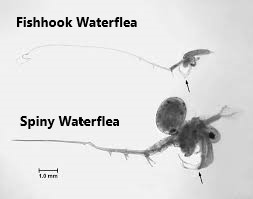
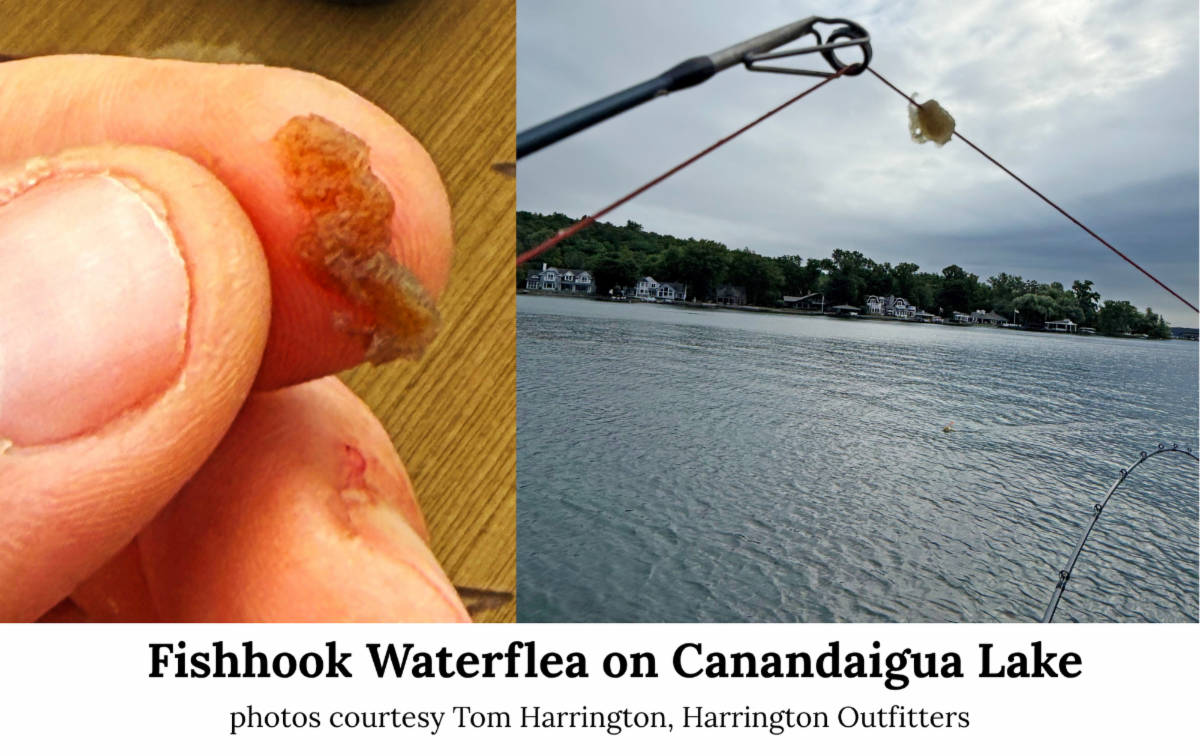
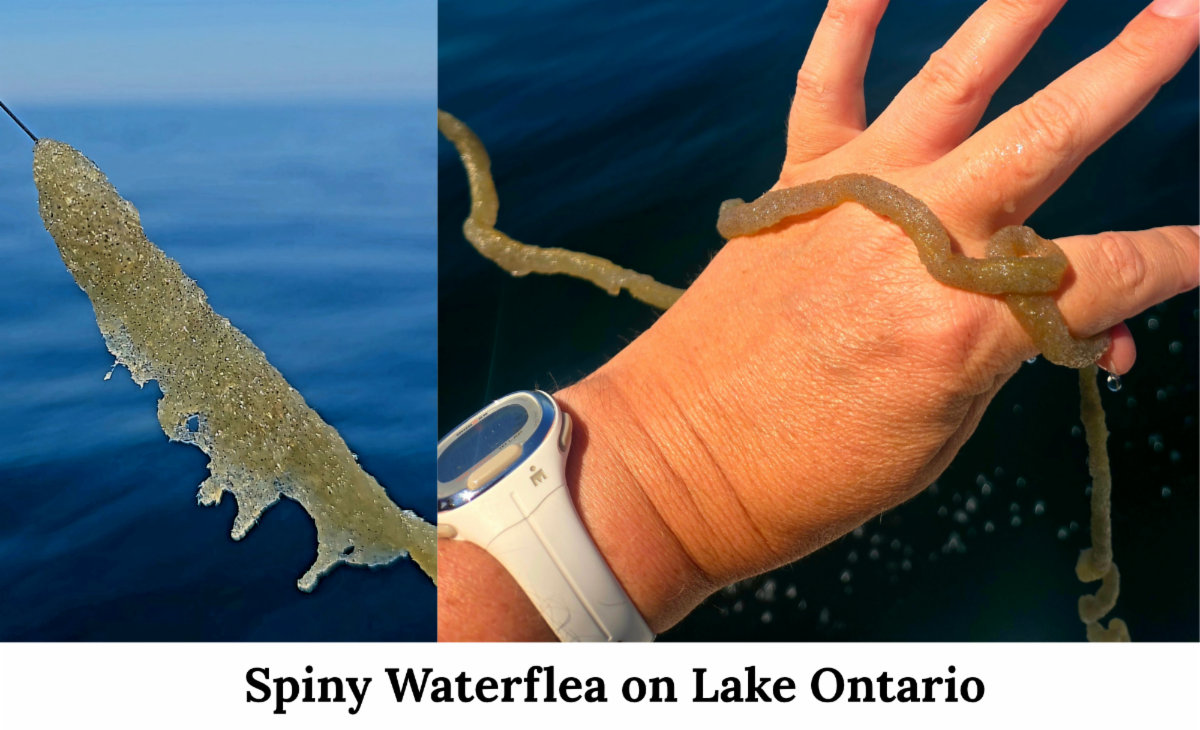
| Canandaigua Lake foam photo submitted to foam survey July 20, 2026. | The Spiny Waterflea and the Fishhook Waterflea are tiny freshwater crustaceans that threaten native fish populations by consuming a main food source, plankton. They are also a nuisance to anglers as they collect in cotton-like masses on fishing lines and downrigger cables. They feature long, barbed tail spines that deter small fish predators, reproduce rapidly through cloning, and spread via boats and fishing gear. So far - we have Fishhook waterflea found in Canandaigua Lake - but not Spiny Waterflea - and we would like to keep it that way. Spiny waterflea is found in nearby water bodies- including Lake Ontario. Always remember to Clean - Drain - and Dry all boats and fishing gear when moving in between bodies of water. | Fishhook waterflea is currently clogging up eyelets on fishing rods on Canandaigua Lake - but its no where near as bad as it was last year. These photos were taken yesterday. Last year seemed to be a 'boom' year - with more fishhook waterflea than anglers could ever remember dealing with on our lake. This invasive zooplankton just looks like gelatinous goo on your line. Thanks to Tom Harrington of Harrington Outfitters for keeping us informed about the fishing conditions out there! | It is a bad year for Spiny Waterflea up on Lake Ontario! These photos are from fishing on July 12th. It covered the lines when reeling in from trolling and was not easy to get off. It is much worse than it has been the past few years. We want to be sure to keep this aquatic invasive out of our lake! | Citizen Science Lake Assessment Program (CSLAP) | | |
The Citizens Statewide Lake Assessment Program (CSLAP) is a long-running volunteer lake monitoring partnership between NYSDEC and NYSFOLA.
Trained volunteers collect water quality data throughout the summer, including water temperature, Secchi transparency (water clarity), conductivity, pH, color, total phosphorus, nitrogen, chlorophyll-a, calcium, and chloride.
This consistent, long-term monitoring helps track changes in lake health, identify water quality trends, and provide valuable scientific data to support lake management and protection efforts.
CLWA has been participating in CSLAP since 2017. All of our reports and data are avialable right on our website here. In addition to our weekly monitoring of water clarity that we share in these updates, our CSLAP monitoring site provides valuable long-term data to help track changes and trends in Canandaigua Lake’s water quality over time. State-wide CSLAPdata for all lakes in the program is available online.
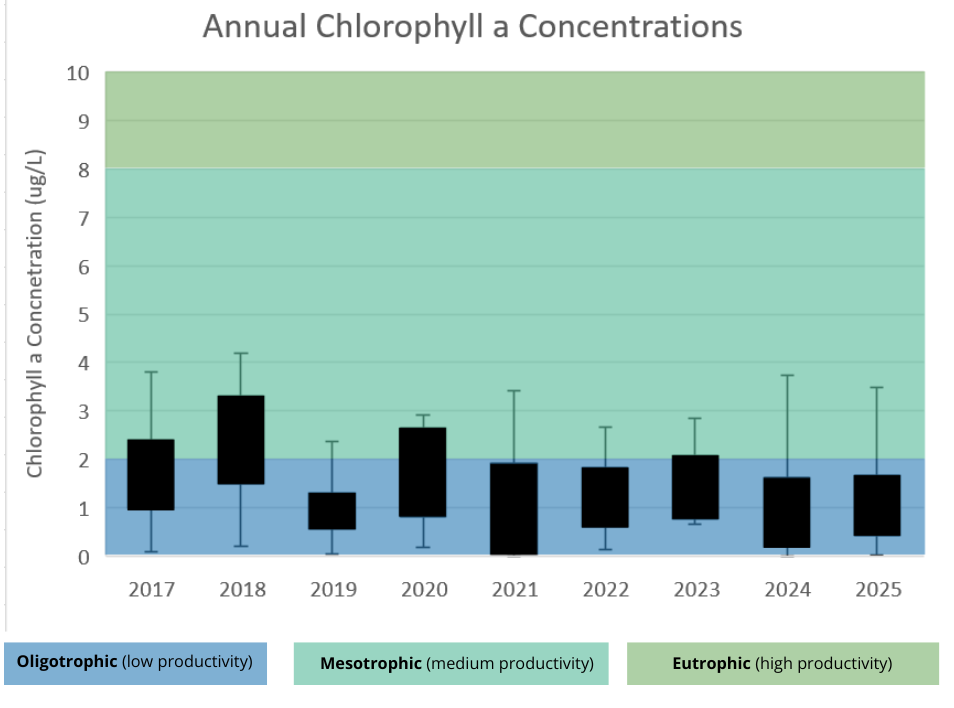
Canandaigua Lake consistently records lower total phosphorus, lower chlorophyll-a (algae), and substantially higher water clarity (Secchi disk transparency) than the vast majority of New York State lakes. Last week we talked about the long term phosphorus data for our lake. This week we are looking at our chlorophyll a.
Chlorophyll a measures the amount of planktonic algae (phytoplankton) floating in lake water. It serves as a direct indicator of algal biomass and primary biological productivity. The median chlorophyll concentration in Canandaigua Lake is 1.86 ug/L. Waterbodies in New York are classified as oligotrophic when their chlorophyll concentrations are less than 2 ug/L.
| | |
What is a Trophic State?
Lakes are often labeled by their trophic state -oligotrophic, mesotrophic, or eutrophic - when talking about water quality and lake health.
The Trophic State Index provides a standardized way to assess the health and nutrient status of lakes, helping scientists, managers, and the public understand the ecological condition of these important water bodies.
- Oligotrophic : Low nutrient levels, clear water, and low biological productivity.
- Mesotrophic: Moderate nutrient levels and productivity.
- Eutrophic: High nutrient levels, excessive plant and algal growth, and potentially poor water quality.
Phosphorus, chlorophyll-a, and water clarity are the three key indicators used to determine a lake's trophic state. We have now looked at our water clarity, phosphorus, and chlorophyll data over these past few weeks.
| | CLWA Photo and Video Contest | | |
The CLWA Annual Photo & Video Contest is underway. We have many fabulous entries already! Keep them coming! Please share your photos and videos of our gorgeous watershed throughout the seasons today for the chance to win great local prizes! The winning photos are featured on our calendar and notecards every year.
- Voting begins July 1
- Entry Period Closes August 15
- Winners Announced by August 29
| | The Canandaigua Mile Race (Can come walk too!) | |
When: Sunday, August 2nd, 8:00 AM – 11:00 AM
Where: Lakeshore Drive, Canandaigua, NY 14424
Up to 200 racers will take off on Lakeshore Drive in Canandaigua at 8:30 am on Sunday August 2nd to race the fastest mile in the Finger Lakes. The race is also open to folks that just want to walk and support the cause! The race will conclude with a post-race party at New York Kitchen. A huge thank you to NY Kitchen for donating their space for the after party!
A huge thank you goes out to Abbie Sullivan, A.J. Beers and their amazing team for all their time and effort in organizing this fabulous event for the fourth year in a row and for their passion to raise awareness on water quality issues. Every year they have generously donated proceeds to CLWA to help fund lake protection efforts. We are so grateful for your support.
*See below about clean-up that is happening as part of this event*
| Canandaigua Lake Shoreline Clean-Up (Following CDGA Mile) | |
When: Sunday, August 2nd, 9:00 AM – 12:00 PM (*Come at anytime during this time period*)
Where: Lakeshore Drive, Canandaigua, NY 14424
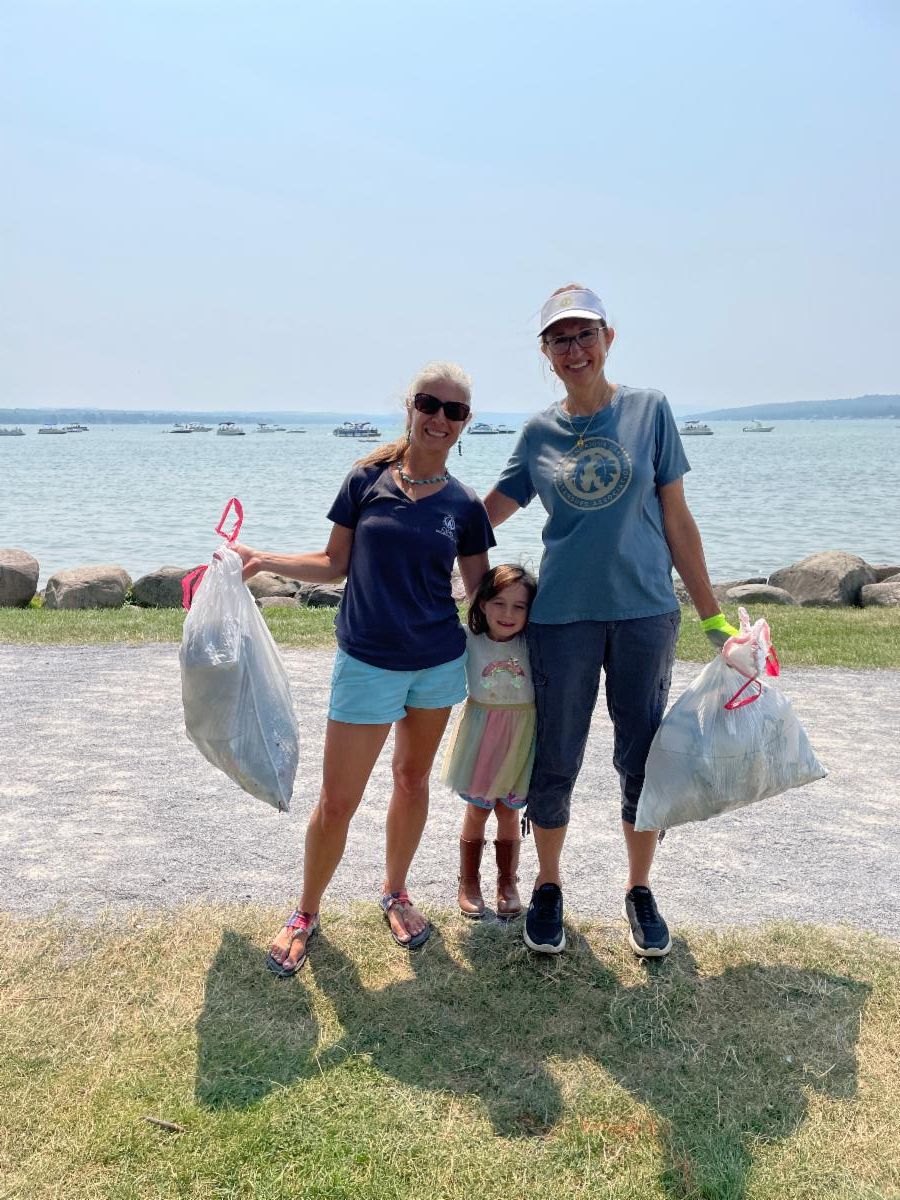
Following the race, community volunteers and race participants are invited to help with a lake shoreline cleanup in partnership with the Canandaigua Lake Watershed Association to raise awareness for water quality and reduce trash in the community of Canandaigua. We hope you can join us! Bring a friend!
| |
When: Wednesday, September 16th, 6:00- 7:30 PM
Where: Heron Hill Tasting Room on Canandaigua Lake, 5323 Seneca Point Road, Canandaigua, NY 14424
Join Heron Hill and the CLWA for a special tour of the Heron Hill Vineyard's at the Heron Hill Tasting Room on Canandaigua Lake. You will learn about the history of the vineyards, its day to day operations, and all of their sustainability efforts implemented in order to help protect water quality!
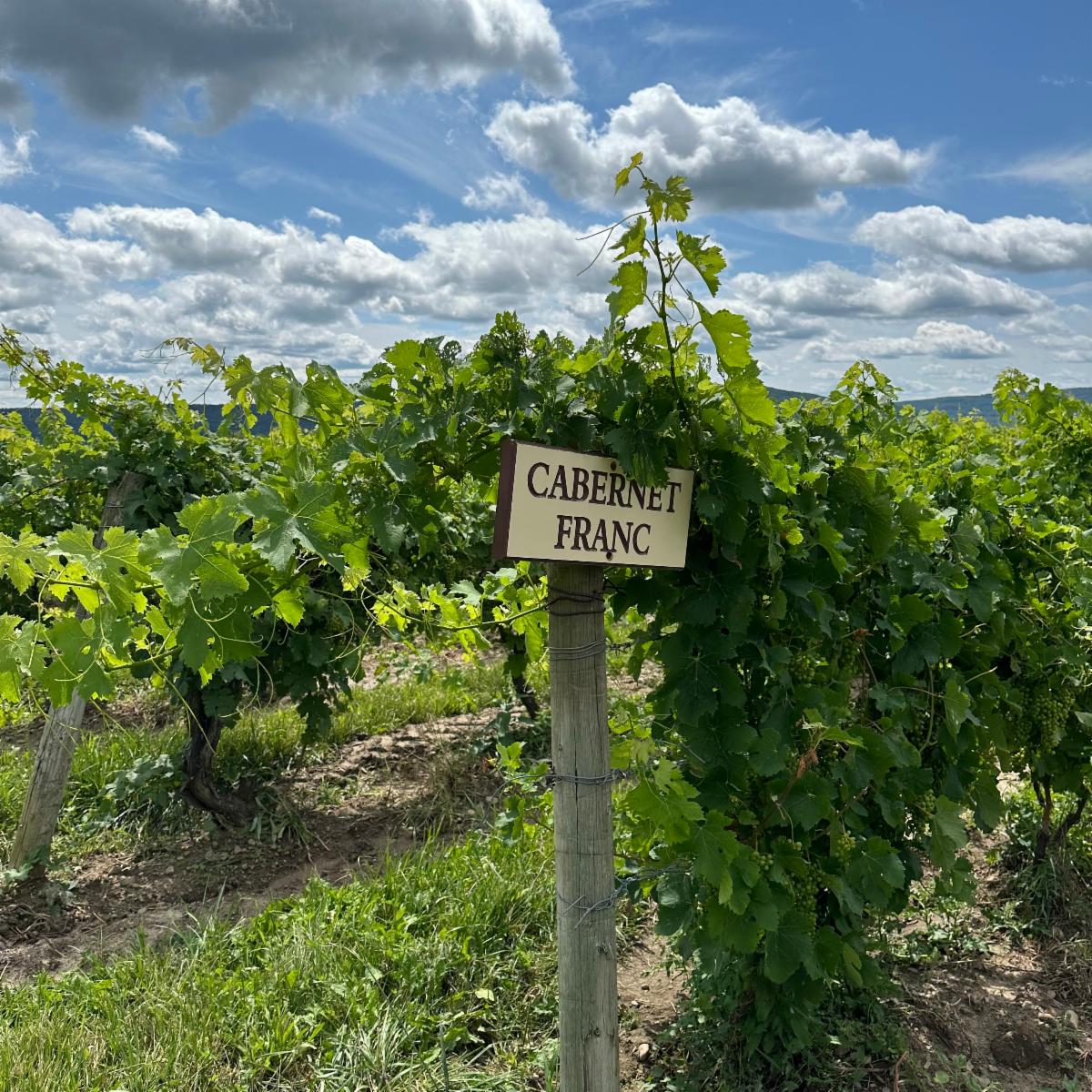
You will also get to enjoy live music, light snacks, and have the opportunity to purchase some of the limited-edition Heron Hill wine crafted especially for CLWA. Wine's for sale include a Chardonnay and Cabernet Franc, crafted from grapes grown at Heron Hill’s Ingle Vineyards, located on the west side of Canandaigua Lake and owned by winery founders John and Josephine Ingle.
| | Trail Work Day with Finger Lakes Land Trust (FLLT) | |
When: Friday, October 16th, 10:00AM-12:30PM and 1:30-4:00PM.
Where: Great Hill Preserve, 4756 S Hill Rd, Middlesex, NY 14507
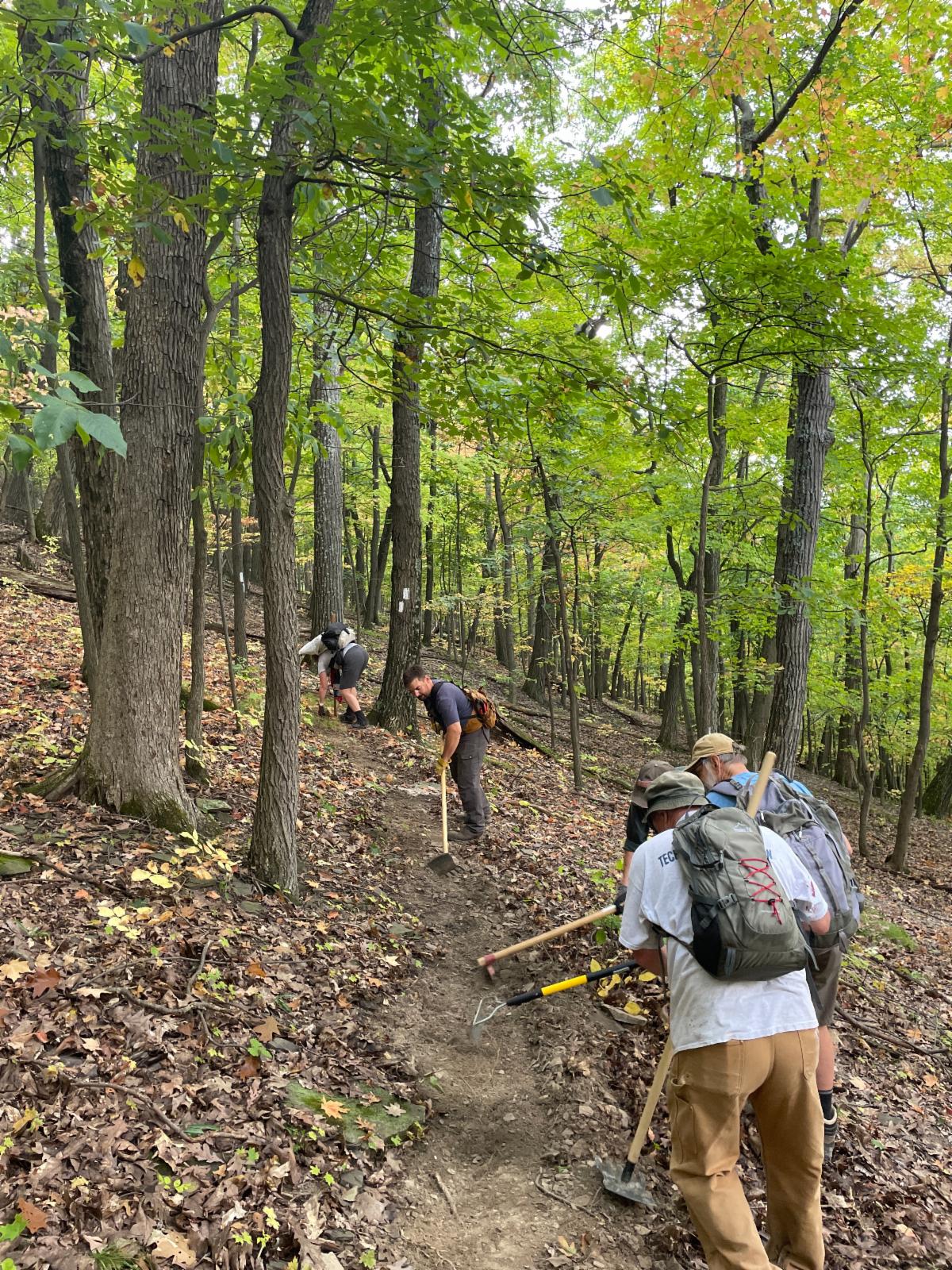
Join the Canandaigua Lake Watershed Association and the Finger Lakes Land Trust (FLLT) for a second year of trail work at the Great Hill Nature Preserve in Middlesex NY. The main focus of the day will be side- hilling and working on switchbacks. All gear, including gloves and clippers, will be provided by FLLT.
*Meet location will be Clark's Gully parking area because parking is a bit tricky at the preserve. We will then carpool to the preserve.*
Please wear appropriate attire for trail clean-up and bring plenty of water and a snack if you'd like.
*Registration is required so we know how many volunteers to expect! Thank you!*
*Rain date is October 23rd, 10:00 AM-12:30 PM and 1:30-4:00 PM*
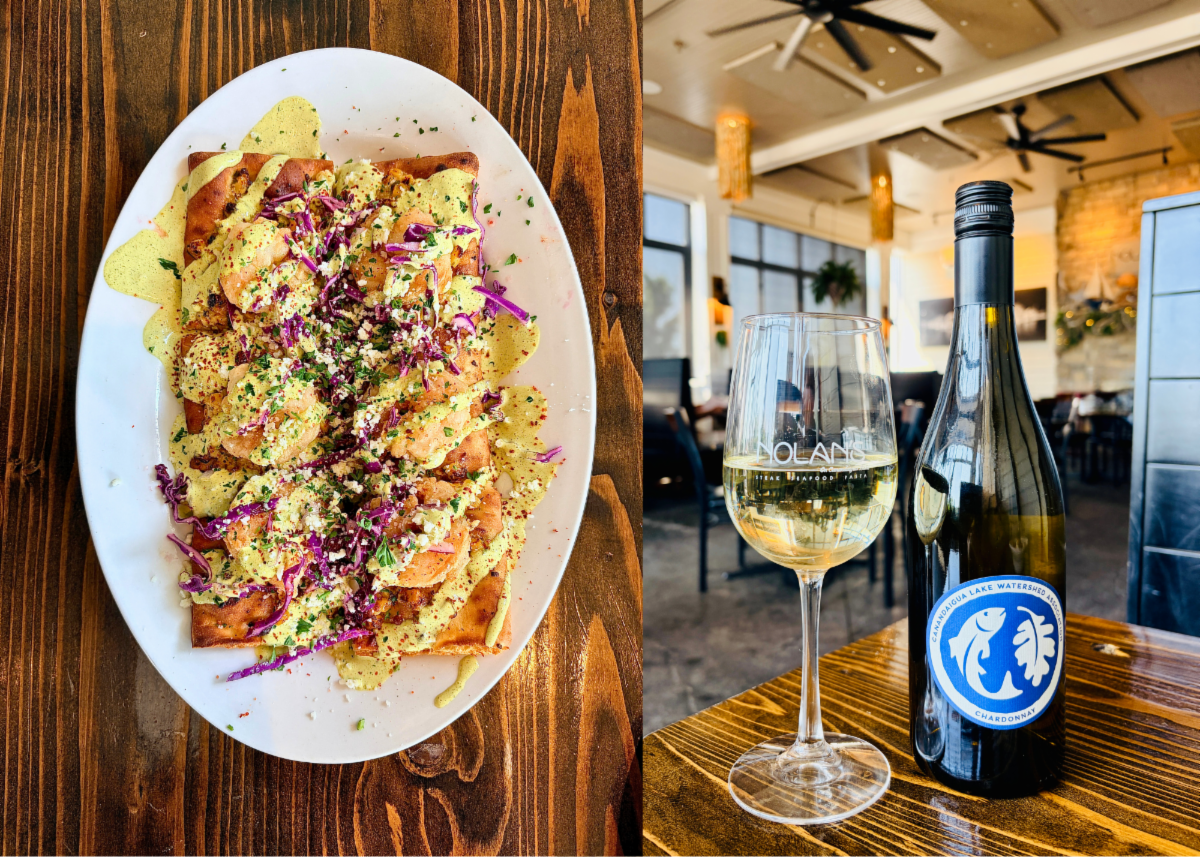
| This Month is Packed with Exciting Partnerships! | 'Savor the Flavor. Support the Lake' Partnership Is Back! | August's special will be a Baja Flatbread - Toasted flatbread topped with street corn salad, crispy shrimp, pickled red onion, purple cabbage and drizzled with Nolan’s Baja sauce. | |
Now in its second year, the collaboration between Nolan's on Canandaigua Lake, Heron Hill Winery, and CLWA brings together local food, Finger Lakes wine, and lake stewardship to inspire residents and visitors alike to help protect the lake that make Canandaigua such a special place to live, work, and visit.
From July 1st through September 30, Nolan's will once again feature a limited-edition Heron Hill Winery Chardonnay in support of CLWA. A portion of every bottle sold will be donated to CLWA to advance our mission of protecting, preserving, and restoring Canandaigua Lake through science, education, and advocacy. Read all about the partnership here in the Democrat and Chronicle.
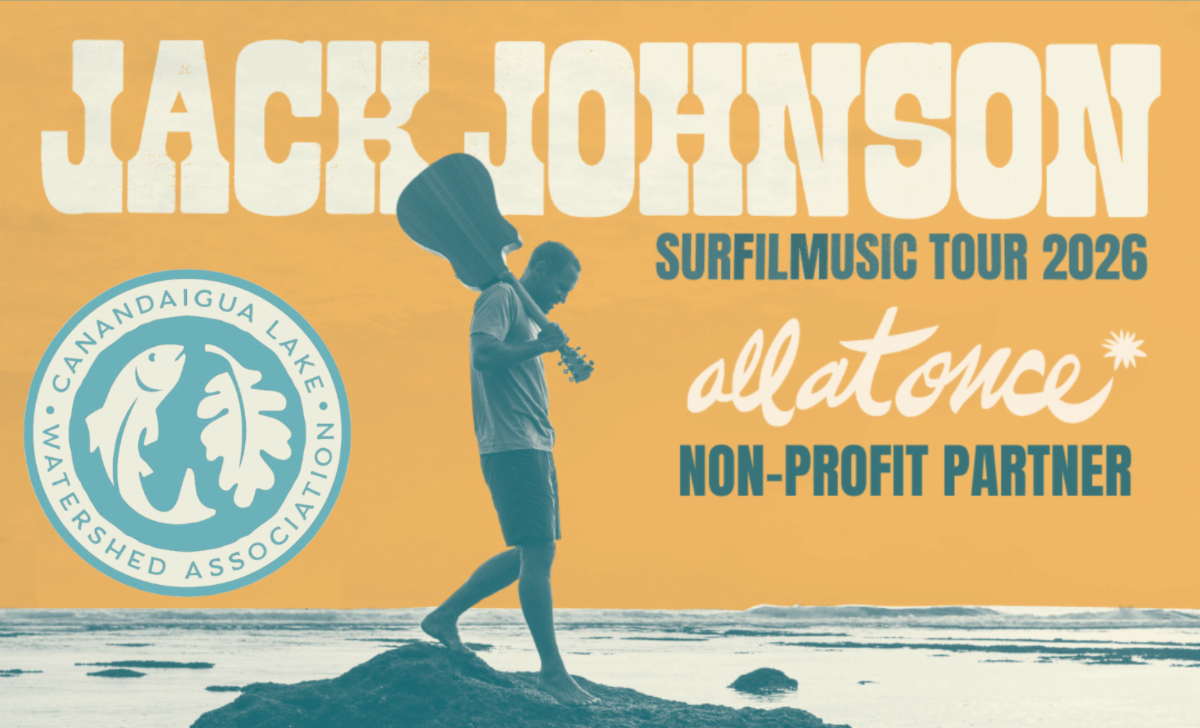
| Jack Johnson Match Campaign | CLWA had a blast in the Village Green on July 1st at the Jack Johnson concert at CMAC. As part of our partnership with Jack Johnson's All At Once Foundation, we have another incredible opportunity. Donations up to $2,500 made to CLWA now through October will be MATCHED by the Johnson Ohana Foundation. Donate below, and you will DOUBLE your impact in protecting Canandaigua Lake! | Make a Splash Campaign with Wegmans | |
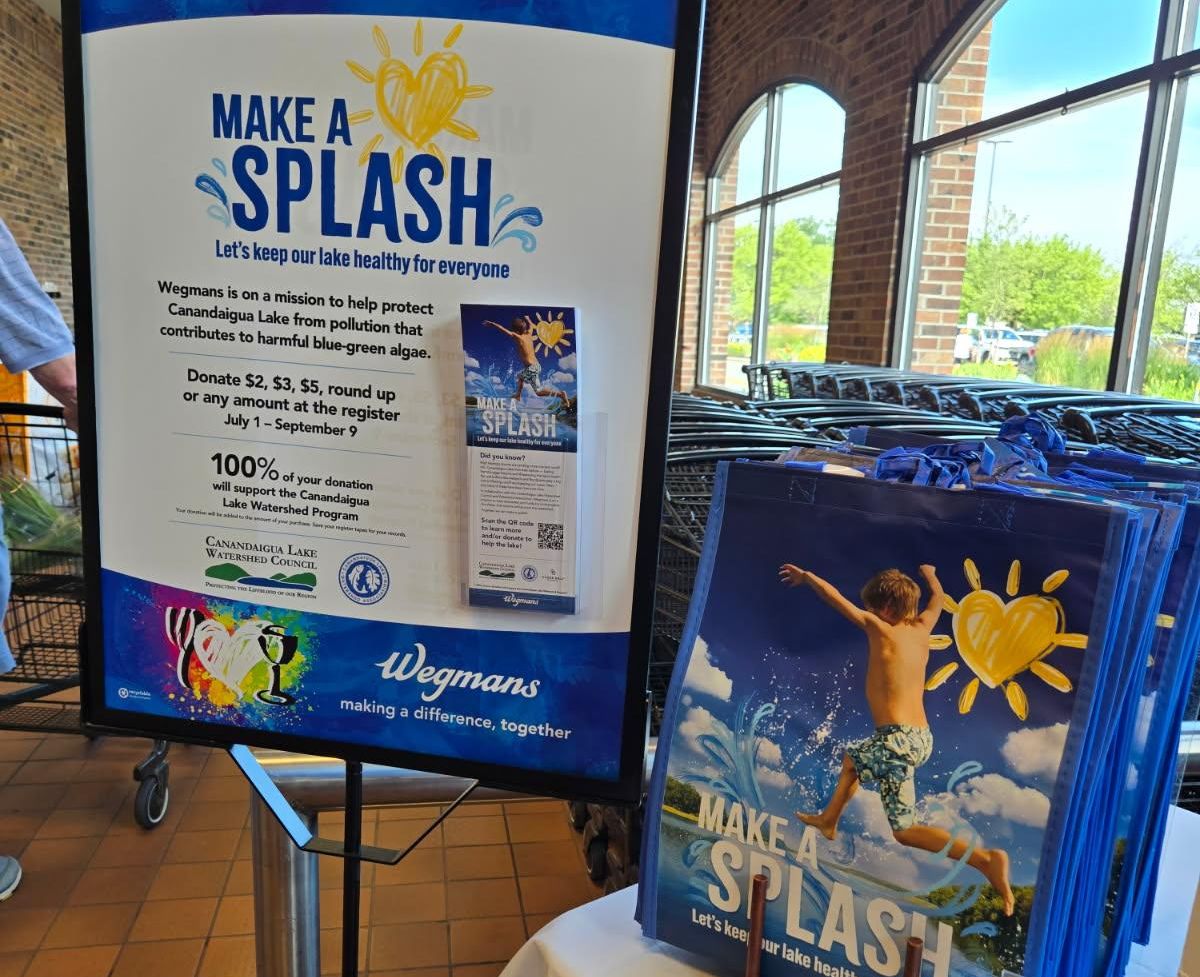
The Make A Splash Campaign is back at the Canandaigua Wegmans through the end of September! You can help by purchasing a limited-edition Make A Splash reusable bag or making a donation at checkout. Proceeds are shared equally between the Canandaigua Lake Watershed Council and the Canandaigua Lake Watershed Association.
Thank you to Wegmans and everyone who supports this community effort. Together, we're making a lasting difference for Canandaigua Lake.
| Join or renew your 2026 CLWA membership today! | |
Thank you for being a valued member of the Canandaigua Lake Watershed Association (CLWA). Because of your support, we’re able to protect and preserve the lake we all care so deeply about – and serve as a strong, trusted voice for the lake and its future.
Now is the time to renew your 2026 membership and help ensure Canandaigua Lake remains healthy for today and future generations. If you already renewed this year -- thank you!
With over 600 supporters and 85+ dedicated volunteers, only CLWA connects and communicates with our community about vital science-based information to help safeguard the lake and inspire a culture of stewardship. As advocates and the voice for the lake, we use citizen science, education, and outreach to empower our community to take meaningful action.
Every dollar you give fuels the science, education, outreach, and advocacy needed to protect Canandaigua Lake as a vibrant and cherished resource.
| | |
Stay informed so you can enjoy Canandaigua - or other New York Lakes - safely and confidently this summer.
We have a map on our website homepage for Canandaigua Lake reported blooms from our volunteers.
NYHABS Map
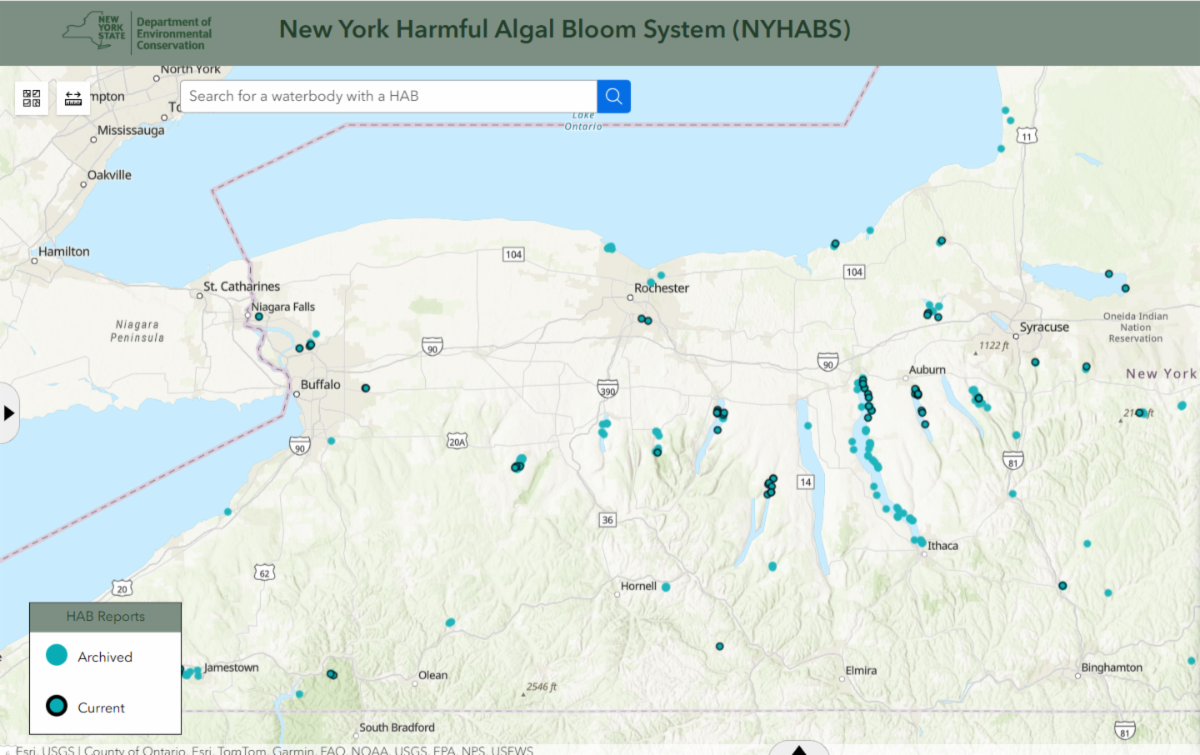
The link below leads to the NYHABS interactive map and displays the location of HABs in New York State. Each blue dot outlined in black represents a HAB reported in the past 2 weeks. There may be other waterbodies with HABs that have not been reported to DEC. All reports through our monitoring program are shown on our own map on our website. CLWA staff uploads all HABs report to the NYHABs database that we receive through our trained volunteers. You can also upload a HABS report directly to DEC here.
Visit NYHABS map here NYHABs map on July 31 shown below.
| |
About HABs
Cyanobacteria, sometimes referred to as blue-green algae because of their color, are among the oldest organisms on Earth. They are naturally occurring in our lakes, generally in low numbers.
When triggered by the perfect storm of conditions - such as heavy rains followed by a few days of warm weather with calm winds - cyanobacteria may begin to increase, forming “blooms”. HABs can appear quickly and persist for hours or days, or they can disappear almost as quickly as they formed.
Since previous research informs us that high levels of toxins (microcystin) may accompany the blooms, humans and our pets should avoid coming into contact with the water when an active bloom is observed.
How to identify blooms
Use visual cues to identify potential blooms. They can appear like pea soup, spilled paint, surface streaks or scum. The color is typically green, blue-green, or yellow, but can also be brown, red, or purple. When blooms are discovered, they are usually found along shorelines or in cove areas. They are most often seen along the stretch of shoreline that is impacted by the prevailing winds. However, during significant bloom events, sometimes they can be found in open water areas.
Visit the NYS DEC website to learn more about identifying blooms.
| |
Remember - conditions can change rapidly. Please use caution when out on the lake and look for characteristics of HABs including water that looks like:
- Pea soup, spilled paint, surface streaks or scum
- Color's that are typically green, blue-green or yellow but can also be brown, red or purple
- Typically found along shorelines or coves
Please, to keep yourselves and pets safe, avoid any water conditions that appear to be bloom-like. Don't hesitate to reach out to us at 585-394-5030 with any questions or email us at HABS@canandaigualakeassoc.org if you are concerned about water quality. Sending us photos of the water is strongly encouraged. Have a wonderful weekend and stay tuned.
| |
What should you do if you suspect a bloom
When in doubt, stay out!
- Don't swim, wade, jetski, waterski or tube in a bloom.
- Shower if exposed to bloom conditions. Wash pets off if they have gone into bloom-infested waters.
- Don't consume fish from the lake during blooms.
- Do not use PRIVATE water drawn from the lake during a bloom. Public water supplies have safeguards in place and can be utilized unless you are otherwise notified.
-
Report the bloom to the NYSDEC NYHABs portal: on.ny.gov/habform
| | |
The Canandaigua Lake Watershed Association, Inc. is a 501 (c) (3) not-for-profit organization. Our Tax ID is 16-1071349.
Contributions may be tax-deductible to the extent permitted by law. A copy of the organization’s most recent financial report may be obtained from the New York State Attorney General’s Charities Bureau, 28 Liberty Street, New York, NY 10005, by calling (212) 416-8686, or by visiting www.charitiesnys.com. You may also request recent financial reports by contacting CLWA directly at 144 Mill Street, Canandaigua, NY 14424 or by calling (585) 394-5030.
| | | | |