February 27, 2026

Facebook  Instagram  LinkedIn  X

The General Assembly finished February with a flurry of activity in both chambers. The Senate amended the income tax reduction bill, and sent the abandoned building tax credit bill to the House after lengthy debate on an amendment involving data centers (see below in State House Sound Bites). Meanwhile, the Senate Agriculture and Natural Resources Committee amended the hemp bill and gave it a favorable report.  


The House spent hours on Wednesday debating a bill that would, among other things, allow for the display of the Ten Commandments and other historical documents in public school and postsecondary classrooms. The House Judiciary Committee also advanced several bills to the floor related to juvenile justice reform. 


These and other bills of interest are detailed below.

Upcoming Action Item


67.17. DJJ: Capital Expenditure Charge. This proviso, which was amended by the House Ways and Means Committee this week (see below in budget section), requires local governments using the juvenile detention services provided by the Department of Juvenile Justice (DJJ) to pay a capital expenditure charge of $125 per day per child not to exceed 25 days to DJJ to cover capital expenditures and investments in the facilities that house juveniles. This charge is in addition to the per diem charge of $50 that offsets operating expenses. If the local government does not provide full funding to DJJ, the state will transfer the remaining amount owed from the Local Government Fund (LGF) on the local government’s behalf, and the transfer will be considered a distribution of the LGF to the local government. This is more than three times the amount that counties paid before the proviso! 


The House will take up the budget bill on the floor the week of March 10. Please contact your House members before this debate and ask them to remove this proviso from the budget if you have concerns about the $125 per day capital expenditure charge (for a total of $175 per day including the per diem charge).

State House Sound Bites

Data Centers Under Fire from S.C. General Assembly 


“This is trying to accomplish what the mass majority of South Carolinians would like to see, and that is for us not to subsidize a data center.” – Sen. Lee Bright 


Members of the House introduced a Joint Resolution on Thursday to prohibit governmental entities of the state—counties, municipalities or political subdivisions—from granting final approval for applications or permits for or incentives or other requests related to a new data center until Jan. 1, 2028. 


On the Senate side, much of the conversation surrounding the abandoned buildings tax credit bill focused on an amendment proposed to prohibit the tax credit from being used for data centers. This conversation sparked a larger debate on the opinions of individual senators on using taxpayer money to incentivize data centers to locate in South Carolina. As a result of this debate, SCAC anticipates that financial incentives for data centers will continue to be a heated topic going forward.


Next Steps


There are currently two bills on data centers (S. 867 and S. 902) in Senate subcommittees. A Senate Agriculture and Natural Resources subcommittee is having a hearing on S. 867 next Tuesday, March 3, at 9 a.m. SCAC anticipates a Senate Judiciary subcommittee meeting on S. 902 within the next two weeks. Please contact SCAC staff if you would like to speak on either of these bills.  

Bills of Direct Interest to Counties

Revenue, Finance and Economic Development

SCDOT Modernization 


A Senate Transportation subcommittee met Thursday to continue discussing the comprehensive South Carolina Department of Transportation (SCDOT) modernization bill. The subcommittee previously adopted, at SCAC’s request, an amendment to clarify that the transfer of roads from SCDOT to counties must be agreed to by mutual consent and to remove the requirement that any roads transferred to counties always be maintained in good condition under SCDOT’s standards.  


Status: On Thursday, the subcommittee adopted an amendment after briefly explaining its contents. The subcommittee only released a summary of the amendment, which is explained below. SCAC staff will provide necessary updates when the specific amendment language is published.  


The amendment strikes the provision that allows the legislative delegation to devolve the functions of the County Transportation Committee (CTC) to the county governing body. This would remove the authority for county councils to appoint members of the CTC or serve as the CTC. The amendment would also require the CTC to be made up of fair representation of municipalities and unincorporated areas of the county. It is unclear how many municipal representatives would be required to serve on the committees. The full Transportation Committee will debate S. 831 next Wednesday, March 4, at 9:30 a.m.  


If your county council serves as or appoints your CTC, the above amendment may compromise the composition of your committee. If you are concerned about the above amendment, please reach out to members of the Senate Transportation Committee. SCAC will report on its full details once the amendment becomes available. 


Investment Funds 


S. 420 would allow a qualified retiree post-employment benefit trust to invest in notes, bonds, debentures, or other debt instruments issued by a U.S. corporation, provided that the instruments are rated in general categories by no fewer than two nationally recognized credit rating organizations. 


Status: The Senate gave S. 420 second and third readings, sending the bill to the House. 


Abandoned Buildings Tax Credit 


S. 853 was filed in response to a revenue ruling by the S.C. Department of Revenue requiring that buildings eligible for the tax credit be income-producing. 


Status: The Senate gave S. 853 second and third readings, sending the bill to the House.  


United States Produced Iron and Steel 


H. 4709 would require a public entity entering a contract or purchasing materials for a public works project to include a requirement that any iron or steel product permanently incorporated in the project be produced in the United States.  


Status: The House gave H. 4709 second and third readings, sending the bill to the Senate.

Land Use, Natural Resources and Transportation

Farm Structures 


H. 3262 would not allow a county or municipality to enforce building codes on a farm structure that can accommodate up to 300 people and be used for public or private events (weddings, receptions, meetings, demonstrations of farm activities, meals, etc.).  


Status: SCAC testified against H. 3262 on Tuesday, and after much debate, a House Agriculture subcommittee adjourned debate on the bill.  

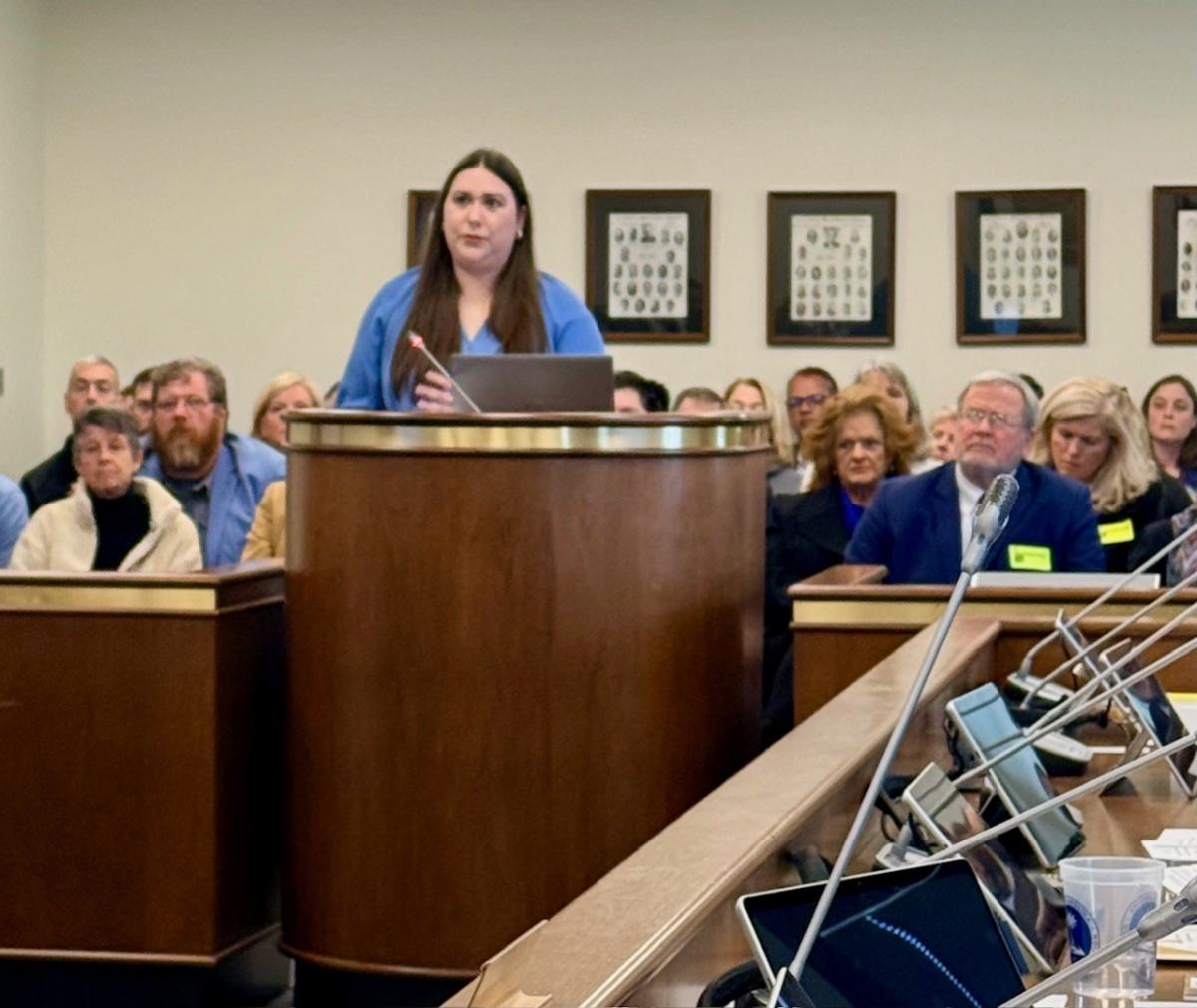
SCAC Government Affairs Specialist Sallie McLeod testifies at a House Agriculture and Natural Resources subcommittee on H. 3262, a bill about farm structures.

Utility Terrain Vehicles (UTVs) 


S. 222 would allow UTVs (also known as side-by-sides) to be used on public roadways and create regulations surrounding their usage.  


Status: A Senate Transportation subcommittee amended S. 222 to prohibit a county from imposing any tax or fee on UTVs while allowing a county to require proof of residency for an operation permit sticker. The subcommittee gave S. 222 a favorable report as amended, and the bill will be on the next full committee’s agenda. 


Underground Storage Tank Laws/Pipelines 


S. 893 would align federal and state standards and provide clear, consistent criteria for identifying and counting the underground storage tanks subject to oversight by the Department of Environmental Services. The bill also would increase the maximum reimbursement for qualifying cleanup costs resulting from a petroleum release from an underground storage tank from $1 million to $2 million and restore $1 million to the State Underground Petroleum Environmental Response Bank (SUPERB) financial responsibility fund, commonly known as the cleanup fund. In addition, the bill would change the annual renewal fee and add a member to the SUPERB Advisory Committee, requiring that the appointee be an underground storage tank owner. 


Status: A Senate Medical Affairs subcommittee adopted a technical amendment and gave S. 893 a favorable report as amended. The bill will now be on the next full committee’s agenda.

Public Safety, Judicial and Corrections

HALO Act 


H. 4763/S. 175 would create the Helping Alleviate Lawful Obstruction (HALO) Act, which would make it a misdemeanor offense to obstruct a first responder or emergency medical care provider performing their official duties, an SCAC policy position. The first responder or health care worker must first give a warning to the obstructer to remove themselves to a distance of at least 25 feet. This offense would be punishable by a fine of no more than $500 and imprisonment for no more than 60 days.  

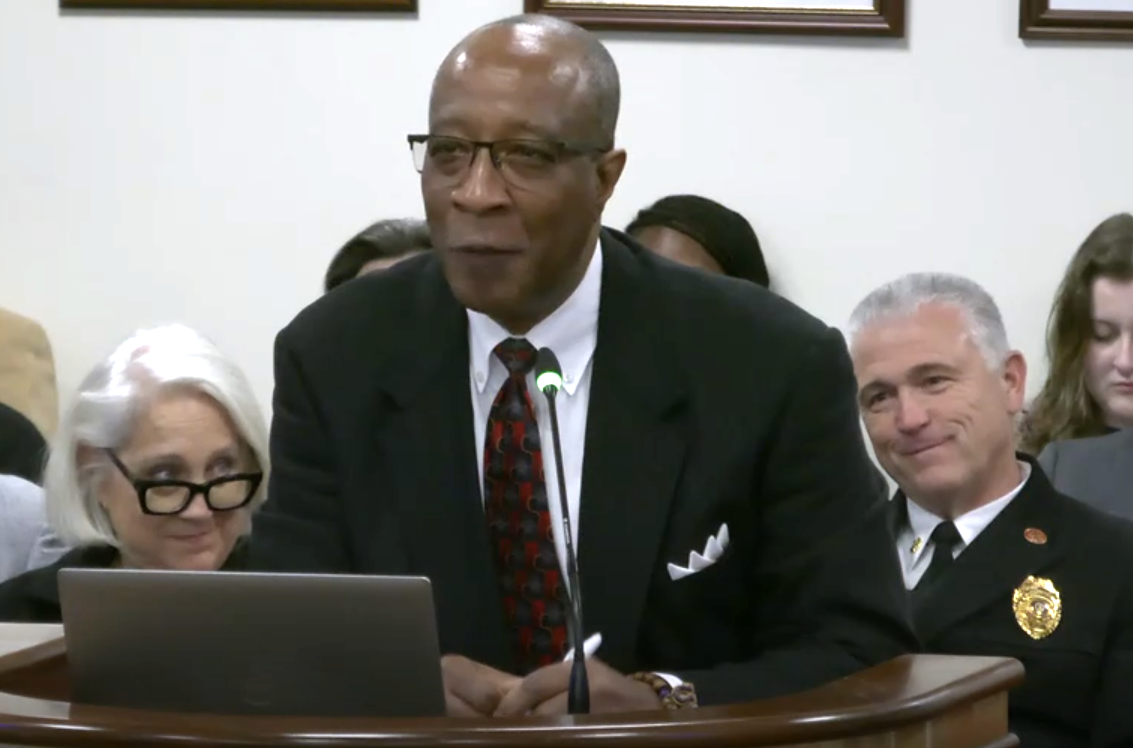
Kent Lesesne, Of Counsel for SCAC, testifies before the House General Laws Subcommittee on H. 4763, the HALO Act.

Status: SCAC testified in support of H. 4763 on Tuesday at a House Agriculture subcommittee. The subcommittee and full committee passed the bill, and H. 4763 is pending second reading on the House calendar.  


Last week, a Senate Judiciary subcommittee gave S. 175 a favorable report, and the bill will be on the next full committee’s agenda.


Juvenile Crime Waivers 


H. 4151would update the definition of a child or juvenile to exclude a person 17 or older who is charged with any offense involving a weapon, as well as a person 16 or older who is charged with a felony offense carrying a term of imprisonment for 30 years or more, a first-degree burglary offense, or the offense of attempted murder. This would shift these cases from family court to circuit court. However, the bill would authorize solicitors to remand these cases to the family court at their discretion. 


Status: The House Judiciary Criminal Laws subcommittee amended H. 4151 to add to the list of charges that would automatically cause a case to be heard in circuit court and expands the methods by which a case could be remanded back to family court, including by motion of the circuit court, or upon motion of the defendant after a hearing and order issued by the circuit court judge. The full committee adopted the subcommittee amendment and gave the bill a favorable report. H. 4151 is pending second reading on the House calendar. 


Juvenile Fingerprints 


H. 5120would require the DJJ to fingerprint and photograph juveniles admitted to any secure facility operated by the agency and send these to the State Law Enforcement Division (SLED). The fingerprints must be kept separate from adults’ fingerprint records. 


Status: The House Judiciary Committee gave H. 5120 a favorable report, and the bill is pending second reading on the House calendar. 


Juvenile Prevention Programs 


H. 5121would establish community juvenile crime prevention programs under which public or private nonprofit entities would be allowed to provide services and activities to prevent juvenile crime and delinquency. 


Status: The House Judiciary Committee gave H. 5121 a favorable report, and the bill is pending second reading on the House calendar. 


Medical/Mental Health Patient Transport 


S. 299 would extend the transportation deadline for a mentally ill individual to three days after conditions are deemed safe for transport, in the case of a natural disaster or some other life-threatening condition. The bill also would allow a friend or relative to transport a mentally ill patient based on circumstances.  


Status: A Senate Medical Affairs subcommittee gave S. 299 a favorable report, and the bill will be on the next full committee’s agenda. 


Immigration 


H. 4764 would require law enforcement agencies operating correctional facilities to enter into written agreements or memorandums of agreement with federal immigration enforcement agencies to participate in the immigration programs that authorize state and local law enforcement agencies to enforce federal immigration laws within a correctional facility. If the federal government terminates an agreement, a local law enforcement agency would not be able to be found in violation of federal law. The bill also would require SLED to provide a training program for law enforcement agencies that enforce federal immigration laws. 


Status: A House Judiciary subcommittee adopted an amendment to provide a safe harbor provision where hardships exist and to provide certain immunity to law enforcement agencies— including counties and county law enforcement operating jails and detention centers—acting within the scope the agreement while carrying out the provisions of the bill. The amendment also would exclude a “holding cell” from the definition of correctional facility. H. 4764 will be on the next full committee’s agenda.  


Seizure First Aid Pamphlets 


S. 935 would require state agencies and branches, counties, and other political subdivisions to post a pamphlet on rendering seizure first aid to those who have suffered a seizure in the workplace. The Department of Public Health must create this informational pamphlet and post it on its website for use by the above agencies. 


Status: A Senate Medical Affairs subcommittee gave S. 935 a favorable report, and the bill will be on the next full committee’s agenda.

County Government and Intergovernmental Relations

Veterans Benefits 


S. 695 would enact the “South Carolina Safeguarding American Veterans’ Benefits Act” to prohibit claim sharks who are not federally accredited by the Department of Veterans Affairs (DVA) from charging veterans for helping file their benefit claims. The amendments would clarify what constitutes excessive or unreasonable fees from those accredited by the DVA and what should be included in agreements between veterans and those offering to help them receive their benefits. 


Status: A House Medical, Military and Public Municipal Affairs subcommittee gave S. 695 a favorable report, and the bill will be on the next full committee’s agenda. 


Personal Privacy Protection Act 


H. 5075 would prohibit public bodies from collecting, disclosing, or releasing personal information about members, volunteers, and financial or nonfinancial donors to nonprofit organizations with exceptions.  


Status: A House Judiciary subcommittee adopted a clarifying amendment and gave the bill a favorable report. H. 5075 will be on the next full committee’s agenda. 


Other Statewide Bills of Interest

Income Tax Reform 


H. 4216, which was passed by the House in 2025, would change South Carolina’s individual income tax structure by reducing the tax rate over time until it reaches 1.99%. The tax rate for 2026-27 would be 1.99% on taxable income up to $30,000 and 5.39% on $30,000 and over. The Senate adopted an amendment to decrease the percentage of taxable income from 5.39% to 5.21% on $30,000 and over and gave the bill second and third readings, sending it back to the House for consideration of the amendment. 


Hemp-Derived Products 


H. 3924, as originally introduced, would make it unlawful for a person under 21 to possess or consume hemp or THC products, such as CBD gummies and oil. The Senate Agriculture Committee amended the bill to limit the regulation to hemp or THC beverages, thereby treating them like alcoholic beverages. The amendment also would prohibit on-premises consumption of these beverages. The committee gave the bill a favorable report as amended, and it is pending second reading on Senate floor. 


Name, Image, and Likeness (NIL) Public Records  


H. 4902 would require that the total amount of revenue spent by an institution of higher education during each fiscal year as part of an intercollegiate athletics revenue-sharing program be subject to public disclosure. However, the total amount and any percentage amount of those revenues paid to any specific athlete, or any specific sport or athletic program would be exempt from disclosure. Also, documents related to or created as part of the process of negotiating an agreement with an athlete would be confidential and may not be considered a public record. The Senate gave H. 4902 a third reading, and the bill has been enrolled for ratification. 


Newly Introduced Legislation

See below links for summaries of legislation introduced this week.


House Bills


Senate Bills


View/Download Full Text for Newly-Introduced Legislation


You can also go to www.scstatehouse.gov and click on "Legislation," then "Introduced Legislation."


Note: If you would like to offer comments to the SCAC staff, please call us toll-free at 1-800-922-6081, fax to (803) 252-0379, or send an email.

X Share This Email
LinkedIn Share This Email