|
With three days left in the regular session, the House has amended the Senate version of the state budget, which passed two weeks ago. This version of the House budget includes earmarks or community investments. The House also amended the Sine Die Resolution to allow the General Assembly to reconvene after adjournment to address redistricting the state’s congressional districts.
Meanwhile, the Senate advanced bills that would increase poll worker take-home pay and to streamline the business personal property tax collection process. These and other bills of interest to counties are detailed below.
| | |
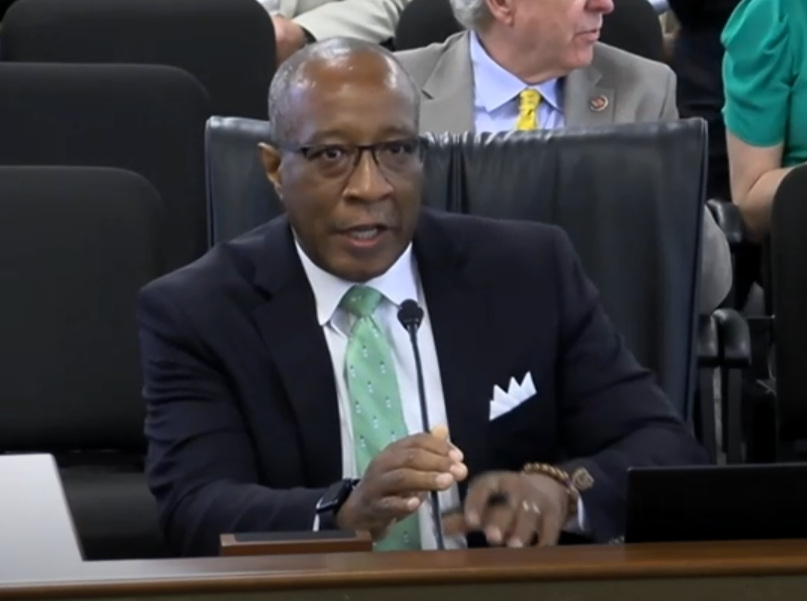
“Devolution, home rule, we say all of that is important, but it seems that we are selective about that when it matters and when it’s important.”
–Rep. Gilda Cobb-Hunter of Orangeburg County during the House debate on S.508, the monuments and memorials bill
| |
Bills of Direct Interest to Counties | Revenue, Finance and Economic Development | | |
Budget
The House took up the Senate version of the budget and further amended H. 5126 on Wednesday. The budget, as passed by both chambers, locks in increased funding to the Local Government Fund (LGF) by $15,294,812 statewide. This represents full funding to the LGF under the statutory formula. See the estimated LGF county allocations for FY 2026-27. The agreed-to budget also includes $12 million for the Rural Stabilization Fund, the same amount allocated last year. There is also no increase in employer premiums under the State Health Plan for FY 2026-27.
Although the House originally provided $100 million to County Transportation Committees (CTC), this funding was reduced to $42.7 million this week.
Note: The House-passed version of the state budget has not been published. Below is a summary based on documents and information SCAC received. We will continue to share any additional funding details or provisos once they are finalized.
The House adopted the following new or amended provisos of interest:
31.EMT (DPH: Emergency Suspension of EMT and Paramedic Licenses) Prohibits the Department of Public Health (DPH) from taking emergency action to suspend any emergency medical technician (EMT) or paramedic license until the following transparency and disciplinary standards afforded to other licensed healthcare professionals are established and implemented:
- Defined investigative procedures, timelines, and evidentiary standards;
- Mandatory training requirements for investigators;
- Clear notification requirements for emergency medical services agencies and licensed providers;
- Reasonable timelines for investigation resolution which are communicated in writing to impacted parties; and
-
Transparent case status communication protocols.
31.FHT (DPH: Firefighter Health Testing) Directs DPH to use up to $7.5 million of allocated funds to establish and administer a statewide firefighter occupational health program in coordination with the state fire marshal. The proviso provides no-cost PFAS blood testing, occupational health screenings, and cancer-related diagnostic testing for active career and volunteer firefighters employed by municipal, county, state, or special purpose district fire departments. It requires DPH to contract with qualified statewide medical providers meeting specified expertise, access, confidentiality, reporting, and data-tracking standards; protects individual medical results from employment-related use; clarifies that fire departments are not responsible for procuring services; and requires departments to provide reasonable paid release time for firefighter participation.
101.3 (VET: Military Enhancement Fund Allocations) Amends the existing proviso to add nonprofit organizations as eligible fund recipients, provided that the organizations meet the grant and transparency qualifications of the program, are registered with the Secretary of State with good standing, and are operating in a county or municipality.
108.14 (PEBA: PORS Return to Work) Adds that the current earnings limitation does not apply if compensation received by the retired member from the covered employer is for employment in a critical needs law enforcement position as determined by the Law Enforcement Training Council (LETC). The LETC must review and approve, from the documentation provided by the covered employer, that no qualified, nonretired member is available for employment in the position and that the member selected for employment meets the requirements of this provision. No later than Jan. 1 of the current fiscal year, the LETC must submit a report to the chairman of the Senate Finance Committee and the chairman of the House Ways and Means Committee of the positions requested for inclusion in the earnings limitation exception. The exception applies only to those approved by the General Assembly for the fiscal year in response to the report the LETC submits. The LETC must develop guidelines and curriculum for these officers to be recertified.
118.21 (SR: Nonrecurring Revenue) Reduces the nonrecurring allocation of funds for the CTC Acceleration Program to $42.7 million. The amendment to the existing proviso also provides
$4 million to the City of Summerville to ensure the operation of critical public safety systems and campuses during severe weather events and $150,000 to Lige Street and Southland Parks in Rock Hill.
The budget bill will now head to conference committee where Reps. Bruce Bannister, Davey Hiott and Jackie Hayes and Sens. Harvey Peeler, Brad Hutto and Tom Davis will determine what will be included in the final version.
South Carolina Department of Transportation (SCDOT) Modernization
This week, the Senate insisted on their amendments to S. 831 after the House had amended the bill last week (see the May 1 Friday Report). The bill is headed conference committee. The members are Reps. Bruce Bannister, Shannon Erickson, Gary Brewer and Sens. Larry Grooms, Sean Bennett, and Overture Walker.
Business Personal Property Tax
H. 5006 would exempt the first $10,000 of business personal property tax for small businesses in South Carolina. The bill also would streamline the filing process by requiring that all returns for business personal property be filed with the South Carolina Department of Revenue. This part of the bill is an SCAC policy position.
Status: The Senate amended the bill to add the language from S. 125—the low-income housing tax exemption reporting bill and S. 768—the bill to increase the homestead exemption, both SCAC policy positions. The House Ways and Means Committee also inserted the contents of H. 5006 into S.688, giving the bill another avenue to pass this session.
The Senate gave H.5006 second and third readings, as amended, and it will be returned to the House for consideration of the amendments.
Accommodations Tax Collections
H. 3876 would update the process of collecting and remitting accommodations taxes, with an emphasis on providing guidance when third-party platforms or other online booking services are involved to ensure that all accommodations taxes are remitted to local governments, an SCAC policy position.
Status: The Senate Finance Committee amended the bill to allow property owners to determine the merchant of record and gave H. 3876 a favorable report, as amended. The bill is pending second reading on the contested Senate calendar.
Manufacturing Property Tax Exemption
S. 439 would increase the reimbursement cap for the 42.8571% manufacturing property tax exemption from $170 million to $300 million. The reimbursements will continue to come from the Trust Fund for Tax Relief, and the increase in reimbursements will come from the General Fund.
Status: The House gave S. 439 second and third readings, and the bill is enrolled for ratification.
Property Tax After Death
H. 3841 would allow that when a property owner dies, the property receiving the owner-occupied ratio will continue to do so until the decedent’s estate is closed, upon recording or deed of distribution, or after Dec. 31 of the year following the date of death, whichever occurs first. This provision applies only if the property is not rented.
Status: The Senate adopted a technical amendment and gave H. 3841 second and third readings, and the bill was sent back to the House for consideration of the Senate amendment.
Heirs’ Property
H. 4477 would allow a one-time transfer of property to qualified family members to clear the title of heirs’ property without it counting as a taxable transfer of interest.
Status: The Senate adopted a technical amendment and gave H. 4477 second and third readings, sending the bill back to the House for consideration of the Senate amendment.
Investment Funds
S. 420 would allow a qualified retiree post-employment benefit trust to invest in notes, bonds, debentures, or other debt instruments issued by a U.S. corporation, provided that the instruments are rated in general categories by no fewer than two nationally recognized credit rating organizations.
Status: The House adopted a committee amendment to change how investment instruments are rated and to require political subdivisions to take reasonable steps if the investments are downgraded in the future, before giving the bill a favorable report. S. 420 is pending second reading on the House calendar.
Communication Service Providers
H. 5122 would exempt from sales tax certain items sold to or used by internet access service providers and communications service providers.
Status: The Senate amended H. 5122 to provide that this exemption does not apply to data centers whose energy usage exceeds 50 megawatts and adds the definition of “taxpayer” to include a person who bears a relationship to the taxpayer as described in Section 267(b) of the Internal Revenue Code before giving the bill a second reading. H. 5122 is pending third reading on the Senate calendar.
U.S.-Produced Iron and Steel
H. 4709 would require a public entity entering a contract or purchasing materials for a public works project to include a requirement that any iron or steel product permanently incorporated in the project be produced in the United States.
Status: The Senate gave the bill a second reading, and H. 4709 is pending third reading on the Senate calendar.
| | Land Use, Natural Resources and Transportation | | |
Protection of Monuments and Memorials
S. 508 would prohibit local governments from relocating, removing, or disturbing certain monuments and memorials. The bill requires, among other things, plaques and markers to be removed prior to the demolition of a government structure and exempts a government entity that temporarily relocates or removes a monument or memorial, including road dedication signs, for construction projects as long as it is returned to its original location or close to its original location on project completion. Violations of prohibited actions, such as removing or altering certain monuments, are limited to “reasonable costs.”
Additionally, amending monuments or memorials to a dedicated class of people, such as the names of fallen soldiers, police, and first responders, are not required to come before the General Assembly for approval and QR codes can be used only for living memorials to update such items as deaths in the line of duty.
Status: The House debated over 20 amendments to the bill on Thursday and adopted several of interest. Any transportation related project that changes a historical name or provision protected under the bill will not count as a renaming or rededication and does not require legislative approval if the change is incidental to the project and not primarily intended to remove a protected name. Affinity organizations also are required to give notice of at least 90 days before filing any civil actions for violations to allow local governments to fix a damaged or destroyed monument.
Additionally, the provisions of the bill do not apply to entities such as museums, libraries, temporary exhibitions, or permanent interpretive, educational, or commemorative structures located on certain properties. After adopting these amendments, the House gave S. 508 second reading, and the bill is pending third reading on the House calendar.
Roadside Markets
H. 5097 would allow a roadside market where a farmer sells products produced on their farm to the public to be exempt from local government stormwater regulations, stormwater permitting requirements, and local building codes. This includes permitting, inspection, and construction requirements otherwise applicable to commercial or retail structures. The General Assembly adopted an amendment requested by SCAC and the Municipal Association of South Carolina to limit the exemption to farmers that operate the roadside market on property that they own or lease and to provide immunity to counties and cities in the event an injury to person or property occurs at a market that is exempt from inspection or permitting. The Senate adopted a technical amendment as well as an amendment prohibiting the sale of ingestible hemp products from roadside markets.
Status: The Senate gave H. 5097 second and third readings, and the House concurred in the Senate amendments. The bill will now be enrolled for ratification.
Mobile Home Zoning
H. 5113 would prohibit local governments from preventing the continued lawful but nonconforming use of property when a pre-existing manufactured or mobile home is replaced with a new one. The replacement home must be no more than five years old. The county may prevent such use under limited circumstances.
Status: The Senate amended the bill to require the replacement home destroyed by a weather occurrence to meet federal and local flood elevation standards and building codes.
At SCAC’s request, the Senate also amended H. 5113 to include the language of H. 4246, which would allow the creation of joint residential improvement districts between counties and municipalities upon the consent of both governing bodies, an SCAC policy position.
After adopting these amendments, the Senate gave H. 5113 second reading, and the bill is now pending third reading on the Senate calendar.
University Campus Events Zoning
S. 832 would prevent a county or municipality from interfering with land use approvals for events held on the campus of a state-supported institution of higher learning based on zoning ordinances or land use classifications. However, the bill would not limit a county or municipality’s authority to enforce safety laws and would make sure nothing could be construed as limiting the authority of a county or municipality to apply and enforce generally applicable regulations.
Status: The House Education and Public Works Committee gave S. 832 a favorable report, and the bill is pending second reading on the contested House calendar.
Transportation Network Companies
H. 3474 would amend the “Transportation Network Company Act” to revise the definition of "personal vehicle" to include a personal vehicle that may be registered or licensed as a charter limousine with the South Carolina Public Service Commission or as a limousine or other for-hire vehicle by the governing body of a county or city.
Status: The Senate gave H. 3474 second and third readings, and the bill is enrolled for ratification.
Utility Terrain Vehicles (UTVs)
S. 222 would allow UTVs and farm UTVs to be used on public roadways with a speed limit up to 35 mph and would create regulations surrounding this usage, including limiting operation to within four miles of the address on the registration. The bill would prohibit a county from imposing any tax or fee on UTVs, but counties could require proof of residency for an operation permit sticker. The bill also would allow counties to regulate operation of UTVs in unincorporated areas by ordinance. The Senate amended the bill to delete all references to farm UTVs, to require a person operating a UTV to be at least 17 years old with a valid driver’s license, to change the maximum speed limit of roads on which UTVs can be operated to up to 55 mph, to increase the range of operation to within 10 miles, and to prohibit a modified exhaust system that is louder than its manufactured design. The Senate further amended the bill to define “UTV.”
Status: The Senate amended the bill this week to classify UTVs under the South Carolina Department of Motor Vehicles as private passenger motor vehicle and to allow a farmer with a valid South Carolina Agricultural Tax Exemption card from the Department of Agriculture and a valid driver’s license to operate a UTV or other similar vehicle with on roads with a speed limit of 55 miles per hour or less within 10 miles of the operator’s agricultural operation. The Senate gave the bill third reading and sent S.222 to the House.
Public Water Systems
H. 5111, as originally introduced, would prohibit counties and municipalities from mandating connection to municipal water systems unless there is a public health threat documented through fines, fees, assessments, and penalties. The bill also would prohibit a county or municipality from denying building permits, certificates of occupancy, zoning approvals, subdivision approvals, or other land-use or development approvals solely because a property owner elects to use a private water well. Political subdivisions that knowingly violate these provisions would be subject to a civil penalty not to exceed $1,000 per day for each day the violation continues. The bill allows local governments to still charge fees, require well registration, and mandate continued connection to public water systems unless the system is unable to provide service to a property.
Status: The Senate gave the bill second and third readings, and the bill is enrolled for ratification.
Drone Regulations
H. 4679 would establish statewide regulation of drone operation, create criminal penalties, and authorize law enforcement to detain individuals, investigate violations, and confiscate violating drones. Operating a drone in restricted areas would be a misdemeanor, while more serious offenses such as weaponizing a drone, unlawfully surveilling, or smuggling contraband to correctional facilities including county detention centers would be a felony. Exemptions for law enforcement, emergency medical services, military, and agricultural operations are included. The legislation would not apply to employees of any state, county, municipal, or local government agency or department acting withing the scope of their employment or official duties.
Status: The Senate adopted a strike and insert amendment, but the language of the bill relating to county detention centers mentioned above remains in the bill. The Senate gave the bill a second reading, as amended, and it is pending third reading on the Senate calendar.
| | Public Safety, Judicial and Corrections | | |
Police Animals
H. 3034 would increase penalties for harassing, injuring or killing police dogs or horses and require restitution to the law enforcement agency, a past SCAC policy position. The Senate passed an amendment to reduce the penalties for teasing police animals to no more than $1,000 and no more than one year in jail and to make shooting into a vehicle occupied by a police animal a felony punishable by no more than $1,000 and no more than five years imprisonment.
Status: The House concurred with the Senate amendments on H. 3034, and the bill is enrolled for ratification.
Juvenile Crime Waivers
H. 4151 would update the definition of a child or juvenile to exclude a person 17 or older who is charged with any offense involving a weapon, as well as a person 16 or older who is charged with a felony offense carrying a term of imprisonment of 30 years or more, a first-degree burglary offense, or the offense of attempted murder. This would shift these cases from family court to circuit court. However, the bill would authorize solicitors to remand these cases to the family court at their discretion. The bill provides that a case could be remanded back to family court, including by motion of the circuit court or upon motion of the defendant after a hearing and order issued by the circuit court judge.
Status: After taking testimony from several stakeholders, including SCAC, a Senate Judiciary subcommittee carried the bill over. H. 4151 is likely dead for the session.
| | Kent Lesesne, SCAC Of Counsel, testifies before a Senate Judiciary subcommittee on a juvenile crime waivers bill this week. | | |
Coroners’ Disposition of Remains
H. 4188 would allow coroners to release unclaimed remains to another family member of the deceased when the next of kin of the deceased is charged in connection with the death or is otherwise uncooperative in claiming the remains. The bill also would allow the coroner to cremate unidentified remains 30 days after the date of death or date of discovery and allow the remains to be buried or interred in a cemetery in the county where the remains were found.
Status: The Senate amended the bill to define when a body is unidentified versus unclaimed before giving the bill second reading. The Senate then gave H. 4188 third reading and sent the bill back to the House for consideration of the Senate amendments.
Evictions
H. 4270 would require that personal information in filings and records on a defendant—who was subject to eviction or ejection, when the case was resolved by settlement or subsequent payment that satisfied any debt—must be removed from the public records five years after the final disposition if no additional filing is recorded. The Senate amended the bill to increase the timeframe from five years to seven years and added that if there are no additional eviction filings during the seven-year period, filings and records must be removed from public records.
Status: The Senate gave H. 4270 third reading, sending the bill back to the House for consideration of the above amendments.
Street Takeovers
H. 4292 would make it unlawful to organize or participate in a deliberate and coordinated blocking of a public street, highway, or parking lot for racing, burnouts, or any other such reckless behavior with vehicles. It also outlines penalties.
Status: The Senate gave H. 4292 third reading, and the bill is enrolled for ratification.
Magistrate Court Costs and Fees
H. 4813 would increase the fines, fees, and assessments on several filings collected in magistrate courts. The revenue produced from the fee increases may not be used to replace existing county funding. The Senate amended the bill to allow the increased fee revenue to be used for security expenditures in magistrate court and extend the validity period for magistrate eligibility exam scores from six months to 18 months.
Status: The House concurred in the above Senate amendments, and the bill is enrolled for ratification.
Magistrates Court Representation
H. 3335 would authorize a housing authority to designate a non-attorney to represent them in magistrate court.
Status: The Senate adopted a technical amendment and gave the bill second reading.
Firefighters Workers’ Compensation Coverage
H. 3163 would revise the list of existing occupational diseases that are currently compensable under the South Carolina Workers’ Compensation Law to include the occurrence of a stroke as one of the conditions that are presumed to have “arisen out of and in the course of employment” for firefighters. This presumption applies only if the condition or conditions develop while a firefighter is actively engaged in fighting a fire, participating in a technical rescue incident, or training exercise that involves stressful or strenuous physical activity, or within 24 hours thereof. The presumption does not apply to clerical, administrative, or sedentary activities.
Status: The Senate gave H. 3163 third reading, and the bill is enrolled for ratification.
Tort Reform
S. 922, as originally introduced, would create more oversight for gubernatorial appointment vacancies when the Senate is not in session.
Status: The House Judiciary Committee struck the language from S. 922 and inserted the language from H. 4544, the tort reform bill. This bill would amend the definition of “occurrence” to add, “for purposes of this chapter, where multiple acts or omissions constituting negligence occur without a break in the causal chain, and result in substantially the same injury, harm, or damages, such acts or omissions shall be deemed a single occurrence, regardless of whether committed by one or more individuals or entities.”
The bill as amended also would raise the exiting caps on damages found in the Tort Claims Act from $300,000 per individual to $600,000 per individual arising from a single occurrence and from $600,000 per occurrence to $1.2 million per occurrence.
The House Judiciary Committee gave the bill a favorable report as amended, and it is pending second reading on the House calendar.
Telecommunications Location
S. 114 would require a wireless telecommunications carrier to provide call location information concerning the telecommunications device of a user to a law enforcement agency upon its request to respond to a call for emergency services or in an emergency that involves the risk of death or serious physical harm. The bill also includes language to conform with federal law by changing “risk of death or serious physical harm” to “immediate death or serious bodily injury.”
Status: A House Judiciary subcommittee gave S. 114 a favorable report. However, the full House Judiciary Committee adjourned debate on the bill.
| | County Government and Intergovernmental Relations | | |
Primary Protests/Municipal Elections
H. 3556 would authorize the state executive committee to hear protests for partisan county officers, partisan less than county officers (for example, a partisan-elected school board member), and partisan municipal officers. The bill would allow the committee, by resolution adopted at least 60 days prior to a primary, to require the filing of any protest or contest to be accompanied by a refundable deposit for hearing costs, not to exceed $750. A municipal governing body could also determine, by ordinance, when the terms of its newly elected officers begin, provided the terms begin no earlier than 48 hours after the certification of the results and no later than 80 days after the election. The House made several amendments to H. 3556 to include establishing dates for municipal elections as follows:
- The first Tuesday after the first Monday in April; or
- The first Tuesday after the first Monday in November.
On or after the bill’s effective date, if the municipality holds general elections the first Tuesday after the first Monday in November of odd-numbered years, then the municipal governing body must not establish a different time for its general elections. If within 90 days of the effective date of this law, a municipal governing body fails to establish a time for its general elections, then the time is the first Tuesday after the first Monday in November in odd-numbered years. This is an SCAC policy position.
Status: The Senate concurred in the House amendments, and the bill is enrolled for ratification.
Poll Workers’ Pay
H. 3551 would exempt certain compensation paid to poll managers and clerks of elections from gross income for income tax purposes and for purposes of the South Carolina Retirement System, an SCAC policy position.
Status: The Senate amended the bill to apply the provisions to tax years beginning after 2025. The Senate gave H. 3551 second and third readings, sending the bill back to the House to consider the above amendment.
Veterans Homes
H. 4799 would exempt veterans homes, hospitals, and nursing homes owned and operated by the Department of Veterans Affairs (DVA) from the certificate of need requirements.
Status: The Senate gave H. 4799 second and third readings, and the bill is enrolled for ratification.
County Veterans Affairs Officers
H. 3510 would require the Secretary of the DVA to appoint a veterans affairs officer for each county. The bill also requires the General Assembly to provide funding for two full-time employees in each office and ensures that the bill does not create an unfunded mandate. This is an SCAC policy position.
Status: The Senate Family and Veterans Affairs Committee gave the bill a favorable report as amended, and H. 3510 is pending second reading on the contested Senate calendar.
Joint System Governance
S. 829 would allow joint water and wastewater systems to use weighted voting, create member- or governor-appointed commissions with county legislative delegation recommendations, and add a governor-appointed tie-breaking commissioner when needed. The bill also would establish eligibility and conflict of interest rules, require automatic forfeiture for disqualifications or certain convictions, and allow commissions to adjust as new members join. The bill also would permit system reconstitution while protecting existing contracts and strengthening bond security by extending member payment obligations to match the term of issued debt. A Senate Judiciary subcommittee adopted an amendment to centralize financial authority at the commission level to make it easier for a governor-appointed board to issue bonds without local government approval.
Status: The House Judiciary Committee gave S. 829 a favorable report, and the bill is pending second reading on the House calendar.
Hospital Beds
H. 5164 would create building and fire code exceptions for the placement of hospital beds in hallways during emergencies. A designated member of the hospital’s leadership team must make the decision to authorize hallway beds in justified emergencies.
Status: The Senate amended the bill to add the language from S. 170, which adopts and implements policies for licensed facilities to prevent exposure to surgical smoke, before giving H. 5164 second reading. The bill is pending third reading on the Senate calendar.
Cryptocurrency
S. 163 would prohibit any governing authority, including a political subdivision, from accepting or requiring a payment using central bank digital currency issued by the Federal Reserve or another federal agency. The bill would prohibit a political subdivision—in areas zoned for industrial use—from:
- Placing restrictions on a digital asset mining business that do not generally apply to businesses in that area;
-
Placing a specific limit on sound decibels generated from a digital asset mining business other than limits generally imposed for sound pollution in that area; or
- Changing the zoning of a digital asset mining business without going through the proper notice and comment.
A digital asset mining business may appeal a change in zoning to the proper court of jurisdiction.
Status: The House gave S. 163 second and third readings, and the bill is now enrolled for ratification.
| | Other Statewide Bills of Interest | | |
Circuit Court Judges
H. 4805 would increase the number of circuit court judges in certain judicial circuits. The Senate gave the bill a third reading, and H. 4805 is enrolled for ratification.
Sales Tax Exemption for Emergency Services IP Network
H. 5093 would exempt from sales tax service contracts for Emergency Services IP Network in support of “Next Generation 911” in South Carolina. The Senate amended the bill to add the definition of “taxpayer” to include a person who bears a relationship to the taxpayer as described in Section 267(b) of the Internal Revenue Code, giving the bill third reading and returning it to the House for consideration of the amendments.
Sine Die Resolution
S. 883 would allow the House and Senate to meet after adjourning on sine die if necessary to consider specific matters, including the budget. The House amended the bill to give the General Assembly the ability to discuss redistricting the state’s congressional districts and sent the bill back to the Senate.
Codification of Sine Die
S. 238 would codify circumstances that the General Assembly may reconvene after adjourning sine die on the second Thursday in May each year. If the House fails to give third reading to the general appropriations bill by March 31, the sine die date would be extended by one day for each day of delay. For the purposes of the Administrative Procedures Act, the time period that the legislature has to review state regulations would be from the second Friday in May through the second Monday in January.
The House passed S. 238 on Thursday sending the bill to the Senate. The Senate further amended the bill to clarify that if the general appropriations bill is not completed by sine die, the President of the Senate or the Speaker of the House may call their respective chambers back into session at any time through the last day in June. The General Assembly may also complete matters relating to any conference committees appointed on or before the date of sine die adjournment during this time. The Senate returned S. 238 back to the House, as further amended, where they can concur or non-concur with the Senate changes.
| | Newly Introduced Legislation | |
| |
Fairfield County Shout Out
The Senate recognized Fairfield County Council and county officials this week.
| | | | | | |