|
Water Quality Update for Friday, September 25th, 2026
by the Canandaigua Lake Watershed Association
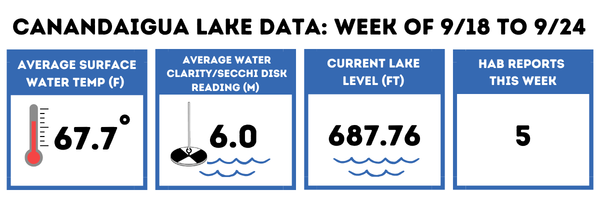
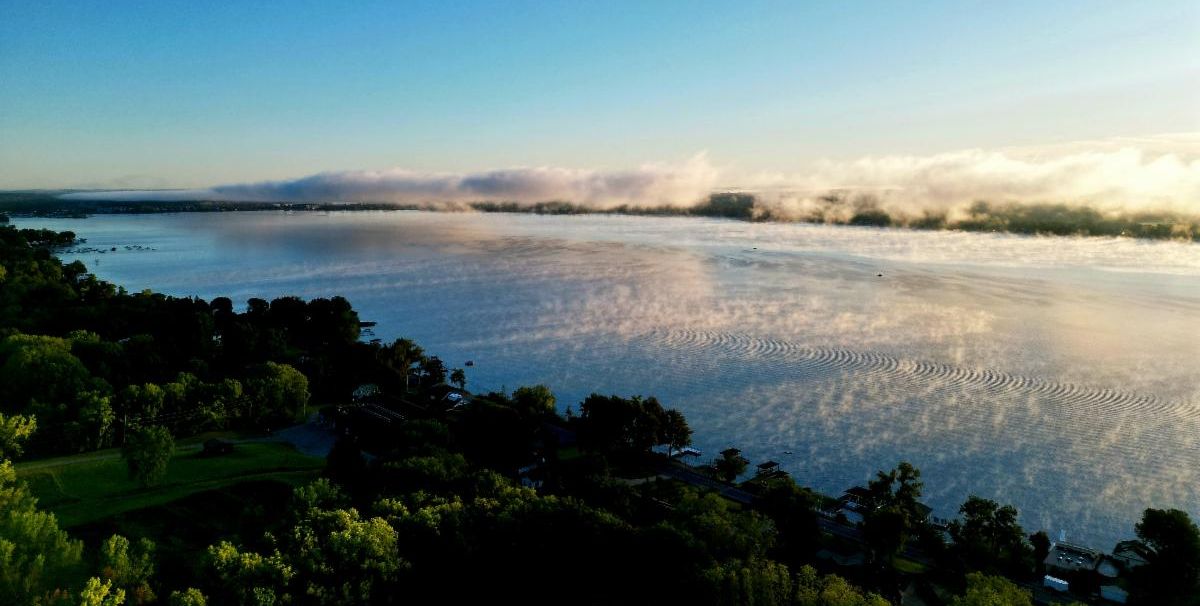
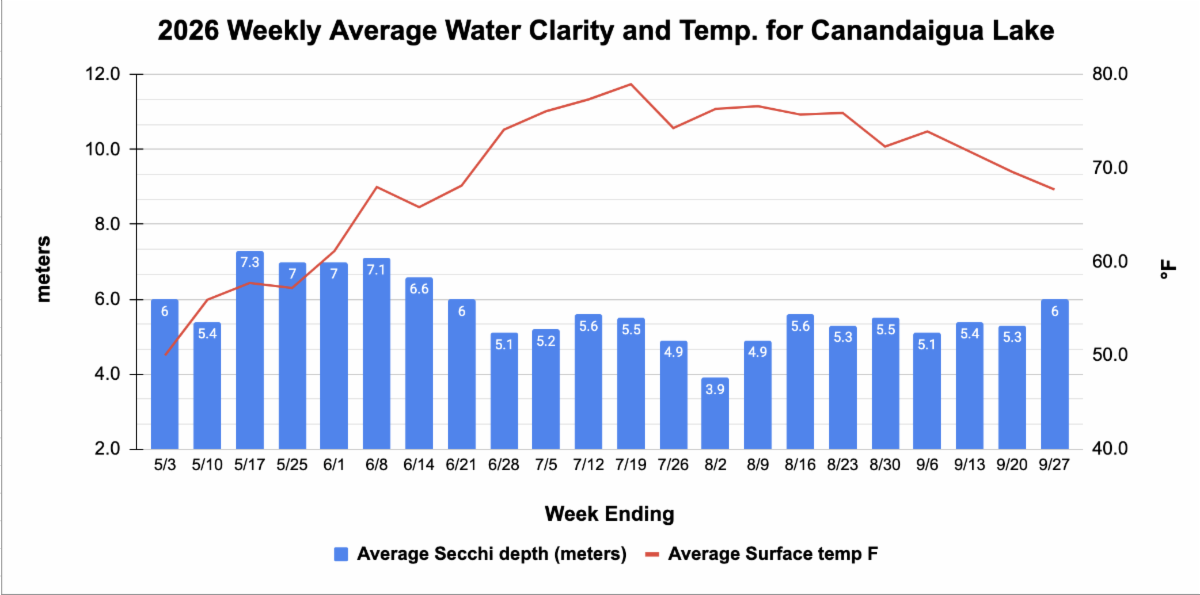
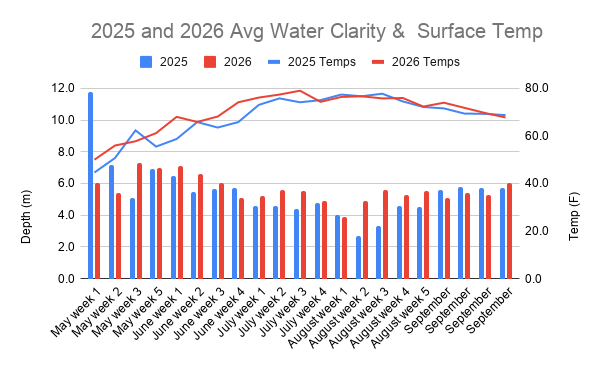
| | Did someone forward you this email? Click HERE to subscribe directly. | | The CLWA Weather Station is located at Canandaigua BoatWorks on the east side of the lake. | | Fall arrived full swing this week with cool nights creating misty mornings. | | Average water clarity is up and average surface water temp is down this week - both as expected for this time of year. Lake level is down ever so slightly this week compared to last. We had five harmful algae bloom reports come in this week but they were all very low levels of algae - and so are still considered 'suspicious' and haven't all been confirmed yet has blooms. Tuesday was the first day of Fall - and while there might be some nice boating weather left - its definitely pretty chilly for a swim - with water temperature back down to where it was earlier this season in mid-June. | | Weekly water clarity and temp data collected by our dedicated CLWA Citizen Science volunteers. You can see that average water clarity is up and surface temperature has now dropped below 70 degrees F. | | How is 2026 comparing to 2025 so far? Right now water clarity (measured by secchi disk depth) and average surface temp are essentially the same as this time last year. 2026 had seemed a bit better overall for water clarity until September - and then the trend reversed and it was slightly worse than it was in 2025 for a few weeks - but now they have evened back out. Also - these differences are so slight for most of the season - they aren't statistically significant. | |
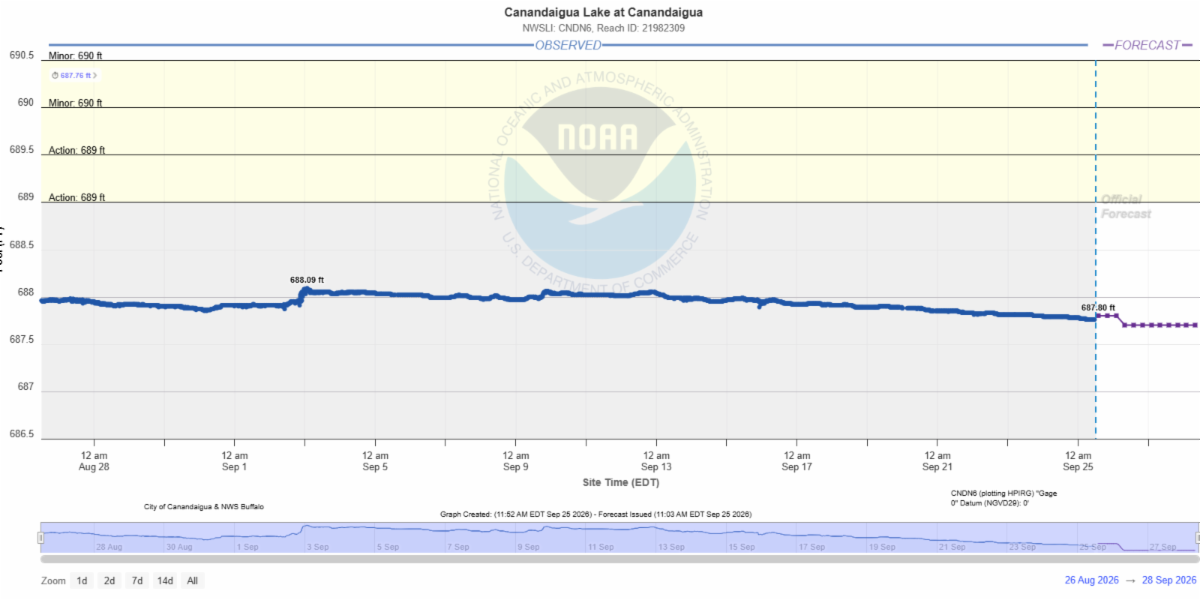
Lake level has decreased slightly this week down to 687.76 today. Currently both outlet gates are closed and the feeder canal gate is open at the required minimum - 0.25 ft open. There are a few different places you can find the lake level online. NOAA is one. Lake Levels online also has nice charts - where you can easily see the whole year and compare to the last few years. We often look at that chart so this week we included the NOAA chart instead.
When you look at the level for the past month - you can see the gradual decrease. The NOAA chart shows the current levels with reference to flood stages, and also predicted future lake levels. Whereas the Lake Levels online map can show you the level over the course of the year, and compare year to year. So depending on what you would like to know about lake level, the two charts can provide you with different information.
| | |
In this weeks update:
- HABs Update
- Mayflower Nursery Event Recap
- Oak Wilt and Oak Trees
- Native Tree Giveaway!
- Fall foliage Report - I love NY
- Upcoming events
| | After our worst week to date last week for harmful algae bloom reports around the lake, it was a very quiet week this past week. We received 5 HAB reports - but a few of them were very low levels of algae and are still considered 'suspicious' until they have been confirmed. So overall it was a good week out on the lake. | |
Our weekly volunteer shoreline monitoring season where monitors are asked to report weekly for both bloom and non-blooms officially ends on October 1. So next week will be our final week of 10 weeks! We still recieve reports of blooms after that - but we no longer ask people to report non-blooms as well.
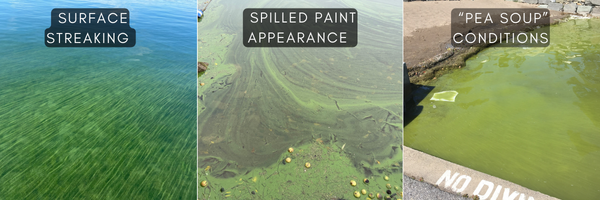
There might be fewer swimmers out there right now with the water temps below 70 now - but there might be some brave folks out there still! Please always use caution and do not enter the water if it looks discolored. Please also keep a careful eye on pets this time of year and keep them out of the water as well if it looks like spilled paint, pea soup, or otherwise discolored.
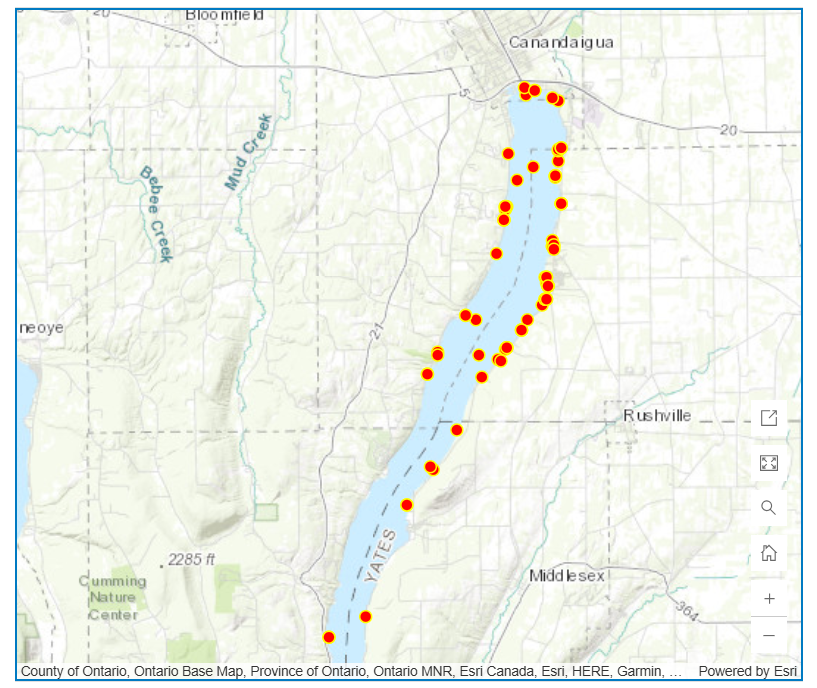
| Confirmed bloom reports from volunteers have come in mainly from the north end of the lake so far this summer on both sides and also mid lake. The map is interactive on our website and you can click to view reported blooms to see their date and location details. | |
Remember: HABs are constantly changing.
They can appear, move, and disappear quickly. A bloom reported in one location does not mean that the entire lake is affected or that conditions are the same everywhere.
Our HAB map is a helpful tool for seeing where blooms have been reported, but it is not an exact, real-time picture of conditions across the lake. Before swimming, boating, or letting pets near the water, take a moment to look at the water where you are. If you see water that looks like spilled paint, pea soup, or has unusual discoloration or surface scum, stay out.
When in Doubt - Stay Out!
Knowledge is power! Knowing what HABs look like and staying informed can help you safely enjoy Canandaigua Lake all summer long. Stay observant, stay informed, and help us spread the word!
Scoll all the way to the bottom of this email for our general HABs reminders, resources, and ID info.
| Cyanobacteria throughout the season | |
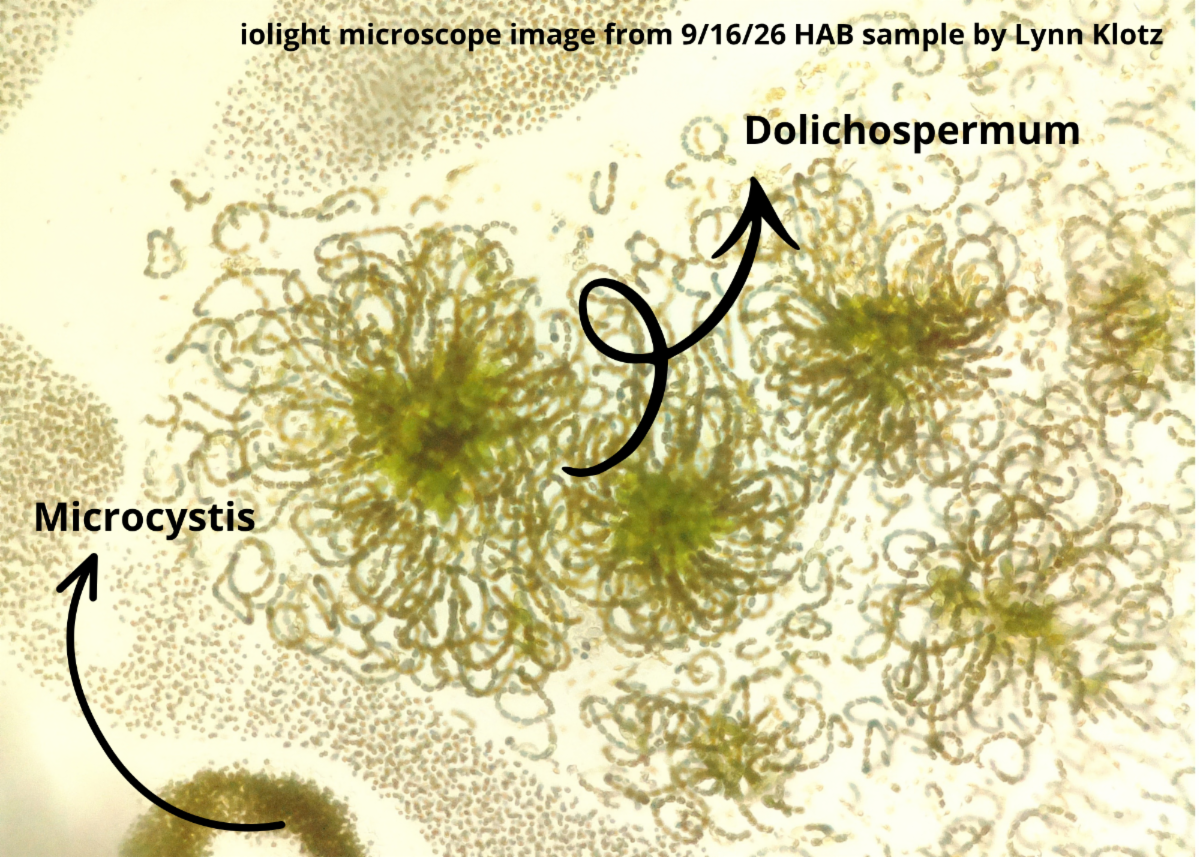
The image above is from a sample collected last week, when we experienced our largest blooms of the season to date. Through years of sampling by our Citizen Science volunteers, along with past research with SUNY-ESF’s Dr. Greg Boyer, we know that Microcystis is the most common type of cyanobacteria (blue-green algae) associated with HABs in Canandaigua Lake. However, in past years we have also seen an increase in Dolichospermum, another type of cyanobacteria, later in the season.
Sure enough, the samples collected from last week’s bloom reports contained a noticeably higher amount of Dolichospermum than samples collected earlier this season. This gives us another opportunity to learn more about the different cyanobacteria present in our lake and how they may change throughout the season.
Why does this matter? Different types of cyanobacteria can produce different compounds, including toxins. Microcystis can produce microcystin, a hepatotoxin that can affect the liver and is the toxin we routinely test for in our HAB samples each year. Dolichospermum can produce several types of toxins as well, including hepatotoxins, neurotoxins, cytotoxins, and dermatotoxins.
Importantly, there is still more for us to learn about Dolichospermum in Canandaigua Lake. We are working to better understand how common it is, which strains are present, and what toxins those strains may be capable of producing. Continued sampling and research will help us build that understanding over time.
This is exactly why ongoing monitoring is so valuable: there are still questions to answer, and our Citizen Science program is helping us gather the information needed to better understand HABs in Canandaigua Lake.
| |
Oak Wilt in the Watershed and the Importance of Oaks
by Sonya Carnevale, CLWA Outreach Committee Member
| |
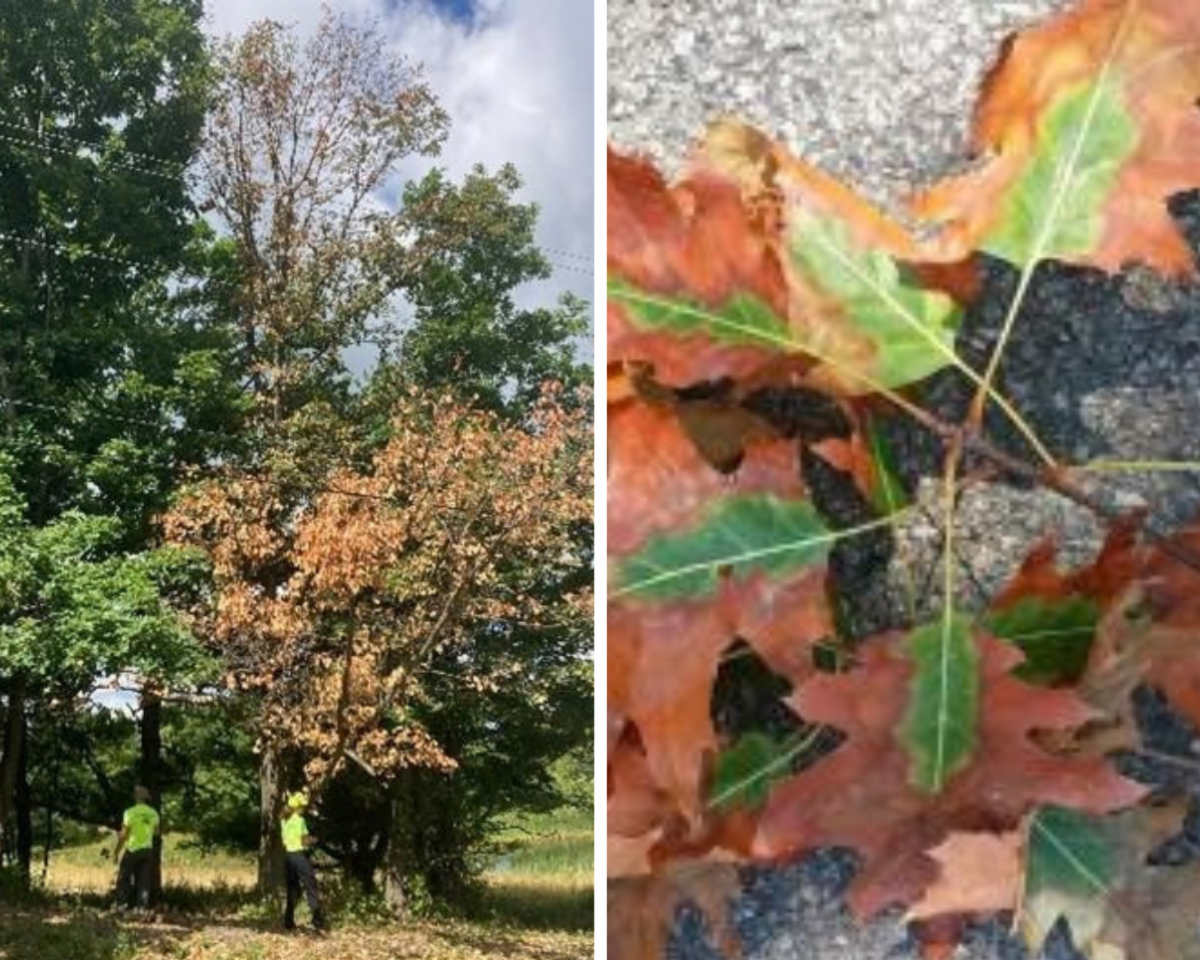
This past summer, oak wilt appeared on our property for the first time. Oak wilt is a serious fungal disease which most likely originated in Central or South America. The first case in NY was discovered in 2008 but through the efforts of the NY DEC, infections have thankfully remained isolated.
Oak trees are enormously important. Apart from their economic value, they play a critical role in our ecosystems. In fact, the oak is considered a keystone species. In a roman arch, the keystone is the wedge-shaped stone at the top which locks all the other stones into place. If you remove the keystone, the arch will tumble. Similarly, because oaks are at the base of the food chain, without oaks, the food web could be in danger.
We have about 16 native species of oaks in NY, divided into two categories: red oaks (including red, scarlet, pin, and black) and white (including white, burr, chestnut and swamp). Combined, they host about 385 species of insects. Their acorns are an important source of food, not just for squirrels, but for numerous small mammals, bears, and birds including jays and turkeys. Even wood ducks and mallards depend on acorns during the winter! Besides being a food source, oaks are important for shelter, breeding, and have massive root systems which hold onto soil and filter water. In addition, due to their size, mature oaks sequester more carbon than many other trees.
Read the full article at the link below and to learn more about oak wilt, how DEC is managing it, and what you should do if you suspect it on your property.
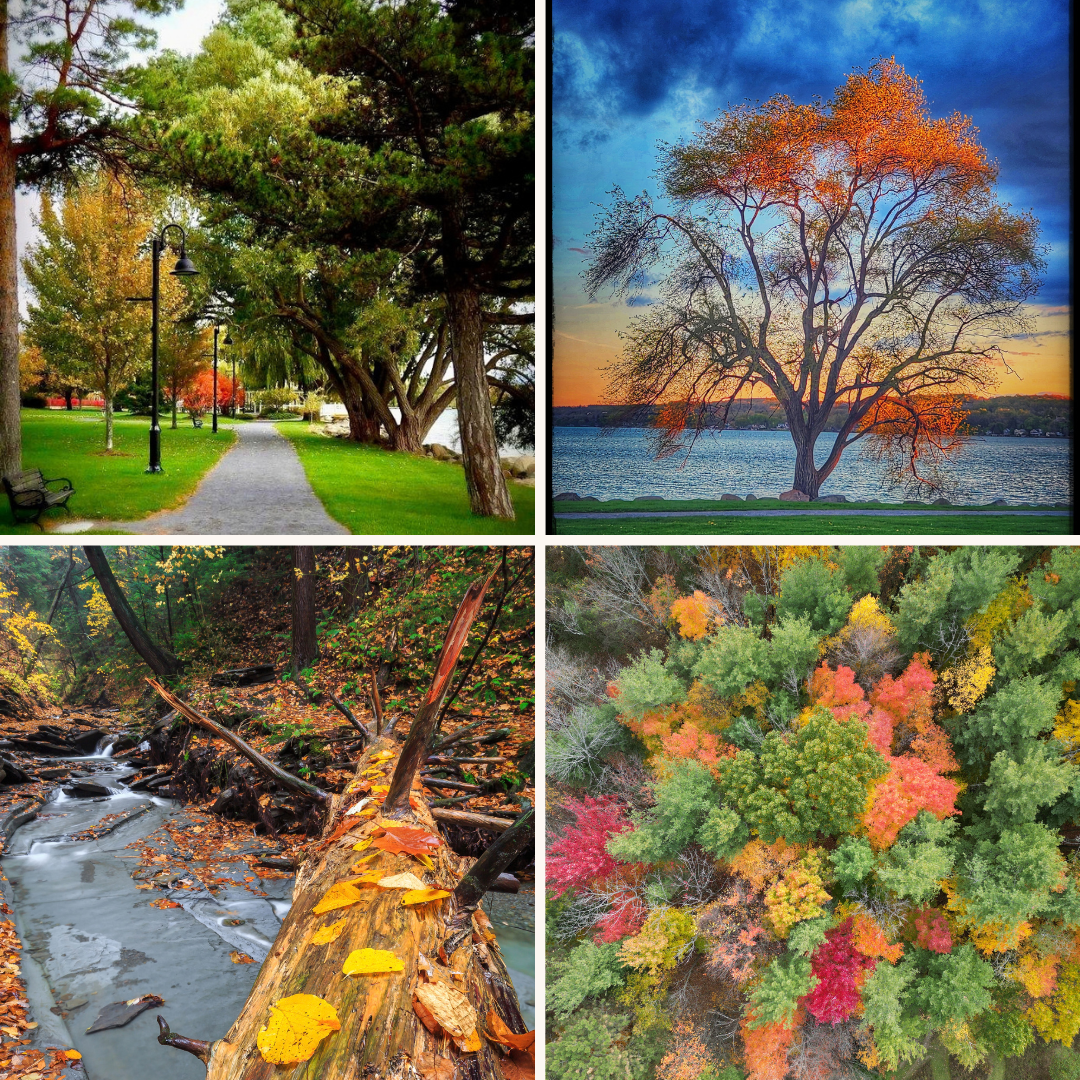
| | October CLWA Tree Giveaway - Reserve Your Free Tree Today! | Photos from CLWA photo contest participants | |
"Plant trees under whose shade you do not expect to sit."
A generous CLWA member wants their donation to help protect the lake - now and for decades to come! - by getting more trees planted in the watershed. So, CLWA is thrilled to be giving away trees this Fall.
If you live in the Canandaigua Watershed and would like to plant a native tree this fall - reserve a tree here. (If you are unsure if you live in the watershed, please visit this map of the watershed: Canandaigua Watershed Map.)
We are partnering with local nursery owner, Jim Engel of White Oak Nursery. We will have 40 trees available. One tree per person, please! First come, first served.
Details:
- Trees are in 5" x 8" pots and are varied heights (small, but mighty, and ready to grow!)
-
Select from the following types of trees: White oak, Bur oak, Pin oak, Swamp white oak, Black gum, Basswood, River birch, Yellow birch, Paper birch, and Silver maple. Visit White Oak’s website to see descriptions for each tree
- Trees will come with a stake and wire mesh to protect them from deer when they are planted
- Trees will be available for pick up in mid-October (date/location will be communicated via email).
If you are interested in reserving a tree, please visit this link to register your contact information and select your tree preference below. We will reach out to confirm with pick up details.
Thank you again to our generous member
for his commitment to the future of the watershed.
| | |
Fall is the perfect time to plant!
The soil still holds summer’s warmth, so new roots grow easily, and cooler air temperature means less stress and less water loss for the tree. Rain is often more consistent in the Fall, which helps soil settle around the roots.
So, reserve your free tree and get planting!
| | |
How do trees protect Canandaigua Lake and its watershed?
Planting trees is one of the most effective long-term investments a property owner can make – for their property and the ecosystem surrounding their property. (Reserve your free tree here.)
Trees protect the water quality of lakes by intercepting rainfall, reducing stormwater runoff, filtering pollutants through their roots, and stabilizing shoreline soils.
A tree canopy intercepts rainfall from storms and retains huge volumes of water that could otherwise tax potentially over-burdened municipal drain pipes or ditches. Trees effectively slow down stormwater runoff through tree roots by creating pathways within the soil that allow water to penetrate deeper. As a result, more water is absorbed into the ground and less runoff enters nearby waterways. Roots also hold soil in place – serving as a naturally absorptive barrier for chemicals between fields or development and waterways and as natural buffers to strengthen streambanks and shoreline soils against erosion.
| | Mayflowers Native Plant Open House Event Recap | | |
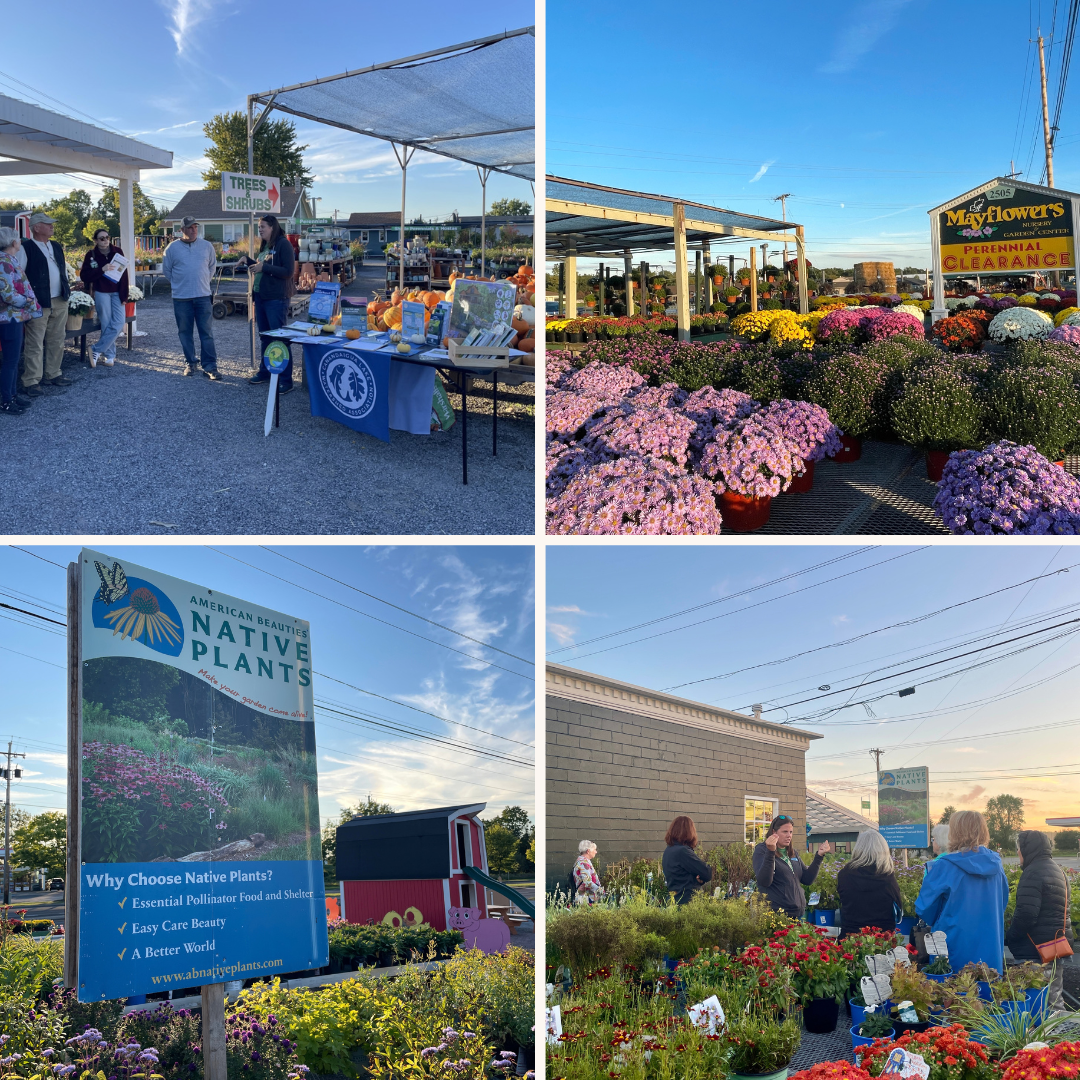
Thank you, Charlie May from Mayflowers Nursery & Garden Center, for hosting CLWA's Native Plant Open House this week. Charlie led us on a tour of his nursery's extensive native plant offerings and Emily DeBolt, CLWA's Executive Director, shared a wealth of knowledge on how to integrate native plants into your lake-friendly landscaping.
We are so grateful to Charlie and his team for their ongoing support and generosity toward supporting lake protection efforts. They have been a long-time business member of the CLWA. Thank you for everything Charlie and team!
Interested in native plants but missed the event? Head over to Mayflowers and check out their selection. Or, check out CLWA's website for native plant resources and other tips on our Lake Friendly Living page linked below!
| | I LOVE NY Fall Foliage Report | | |
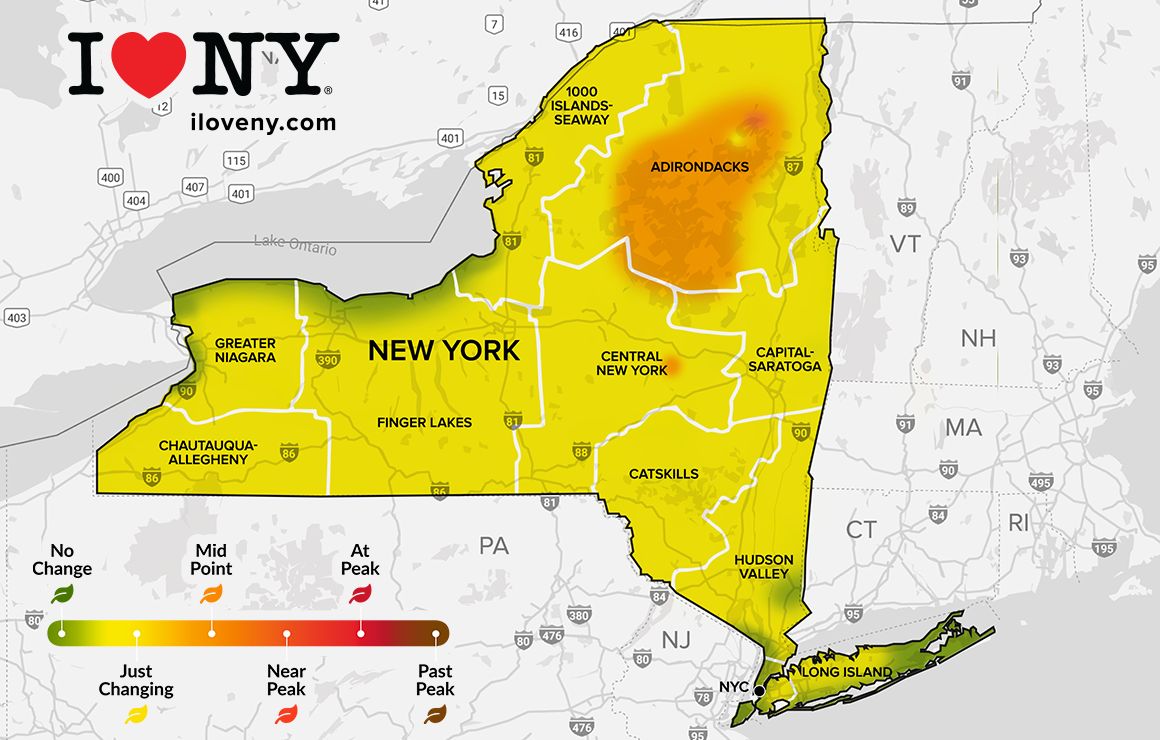
We all love this time of year when the leaves start changing and showing their true colors! Keep up to date on how the leaves are changing on the I LOVE NY Fall Foliage Report that they release weekly. Reports come in from more than 100 field volunteers on anticipated color condtions. View the report below.
*I LOVE NY defines "peak" as the best overall appearance the foliage will have during the season. It takes into account color transition, brilliance, and leaf droppage.*
| |
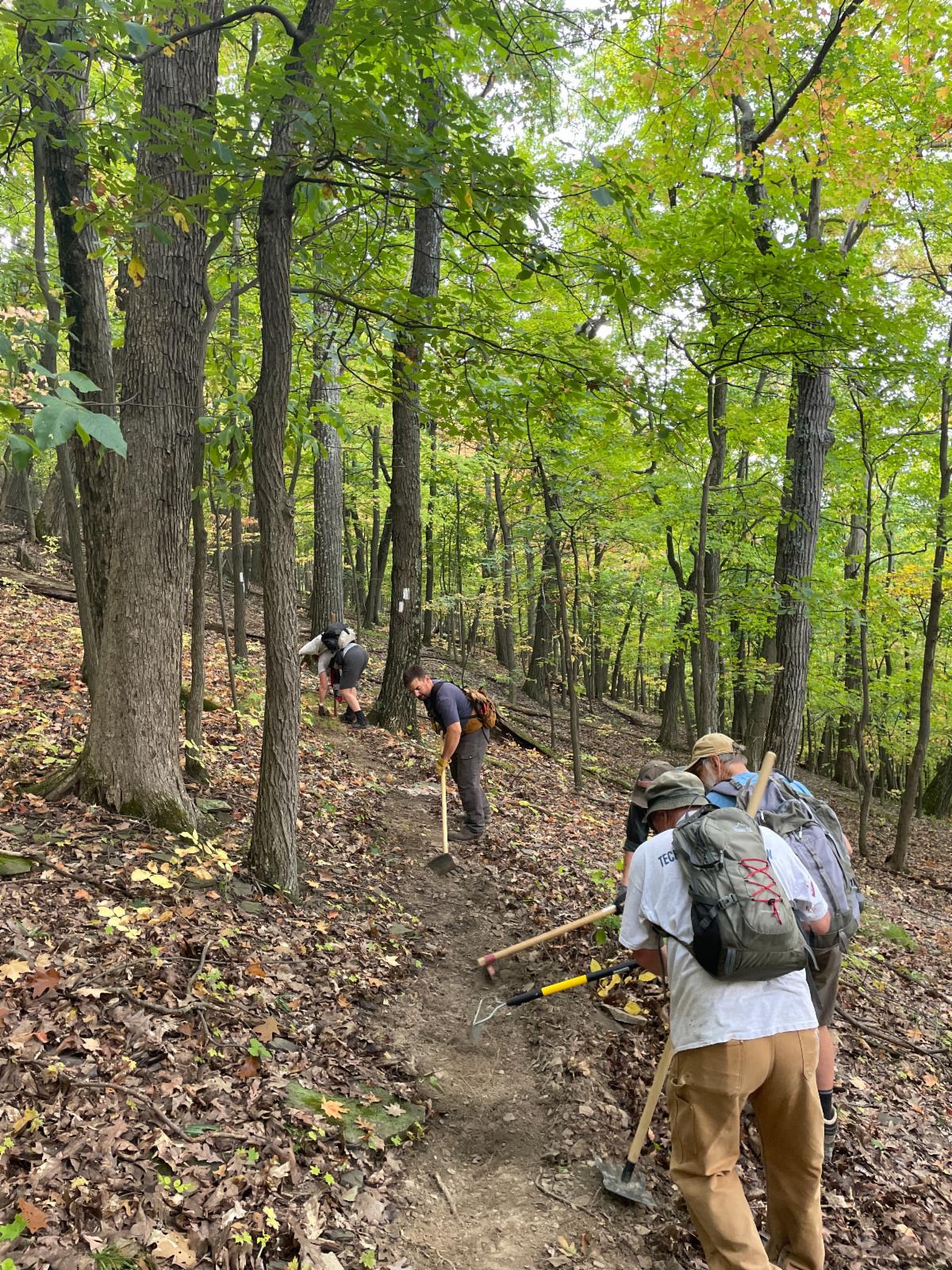
Trail Work Day with Finger Lakes Land Trust (FLLT) | |
When: Friday, October 16th, 10:00AM-12:30PM and 1:30-4:00PM.
Where: Great Hill Preserve, 4756 S Hill Rd, Middlesex, NY 14507
Join the Canandaigua Lake Watershed Association and the Finger Lakes Land Trust (FLLT) for a second year of trail work at the Great Hill Nature Preserve in Middlesex NY. The main focus of the day will be side- hilling and working on switchbacks. All gear, including gloves and clippers, will be provided by FLLT.
*Meet location will be Clark's Gully parking area because parking is a bit tricky at the preserve. We will then carpool to the preserve.*
Please wear appropriate attire for trail clean-up and bring plenty of water and a snack if you'd like.
*Registration is required so we know how many volunteers to expect! Thank you!*
*Rain date is October 23rd, 10:00 AM-12:30 PM and 1:30-4:00 PM*
| CLWA Annual Chipotle Fundraiser -- Mark your Calendars! | |
You will need to show this flyer before ordering at the restaurant!!!
If you will be ordering online, please use the code in the flyer below, 34FGCQ8.
| | |
Stay informed so you can enjoy Canandaigua - or other New York Lakes - safely and confidently this summer.
We have a map on our website homepage for Canandaigua Lake reported blooms from our volunteers.
NYHABS Map
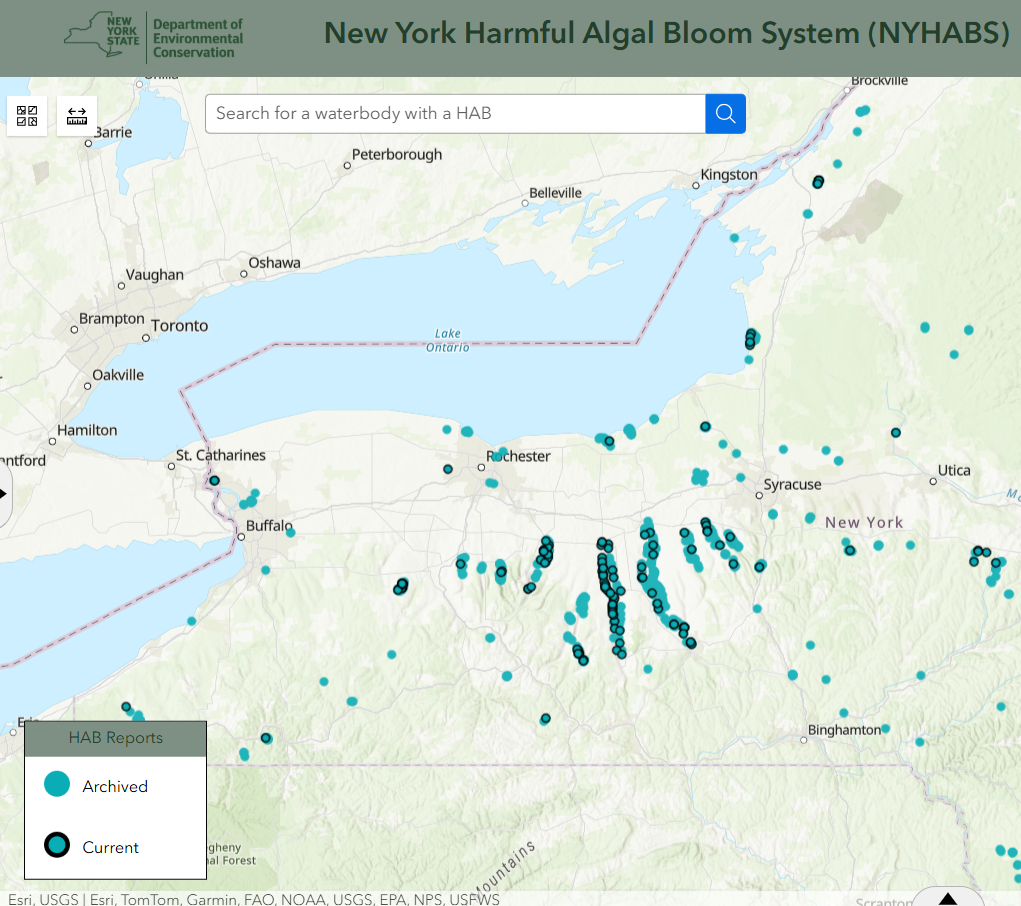
The link below leads to the NYHABS interactive map and displays the location of HABs in New York State. Each blue dot outlined in black represents a HAB reported in the past 2 weeks. There may be other waterbodies with HABs that have not been reported to DEC. All reports through our monitoring program are shown on our own map on our website. CLWA staff uploads all HABs report to the NYHABs database that we receive through our trained volunteers. You can also upload a HABS report directly to DEC here.
Visit NYHABS map here NYHABs map on Sept 25 shown below.
| |
About HABs
Cyanobacteria, sometimes referred to as blue-green algae because of their color, are among the oldest organisms on Earth. They are naturally occurring in our lakes, generally in low numbers.
When triggered by the perfect storm of conditions - such as heavy rains followed by a few days of warm weather with calm winds - cyanobacteria may begin to increase, forming “blooms”. HABs can appear quickly and persist for hours or days, or they can disappear almost as quickly as they formed.
Since previous research informs us that high levels of toxins (microcystin) may accompany the blooms, humans and our pets should avoid coming into contact with the water when an active bloom is observed.
How to identify blooms
Use visual cues to identify potential blooms. They can appear like pea soup, spilled paint, surface streaks or scum. The color is typically green, blue-green, or yellow, but can also be brown, red, or purple. When blooms are discovered, they are usually found along shorelines or in cove areas. They are most often seen along the stretch of shoreline that is impacted by the prevailing winds. However, during significant bloom events, sometimes they can be found in open water areas.
Visit the NYS DEC website to learn more about identifying blooms.
| |
Remember - conditions can change rapidly. Please use caution when out on the lake and look for characteristics of HABs including water that looks like:
- Pea soup, spilled paint, surface streaks or scum
- Color's that are typically green, blue-green or yellow but can also be brown, red or purple
- Typically found along shorelines or coves
Please, to keep yourselves and pets safe, avoid any water conditions that appear to be bloom-like. Don't hesitate to reach out to us at 585-394-5030 with any questions or email us at HABS@canandaigualakeassoc.org if you are concerned about water quality. Sending us photos of the water is strongly encouraged. Have a wonderful weekend and stay tuned.
| |
What should you do if you suspect a bloom
When in doubt, stay out!
- Don't swim, wade, jetski, waterski or tube in a bloom.
- Shower if exposed to bloom conditions. Wash pets off if they have gone into bloom-infested waters.
- Don't consume fish from the lake during blooms.
- Do not use PRIVATE water drawn from the lake during a bloom. Public water supplies have safeguards in place and can be utilized unless you are otherwise notified.
-
Report the bloom to the NYSDEC NYHABs portal: on.ny.gov/habform
| | | | |