Friday's Labor Folklore
Con Carbon, the Minstrel of the Mine Patch
I was driving along there, just blinking and trying to stay awake, and all of a sudden there was somebody on top of one of those telephone poles -- out of thousands of telephone poles, there's one that has a guy on it, and he had one of those little telephones hooked into the wires.

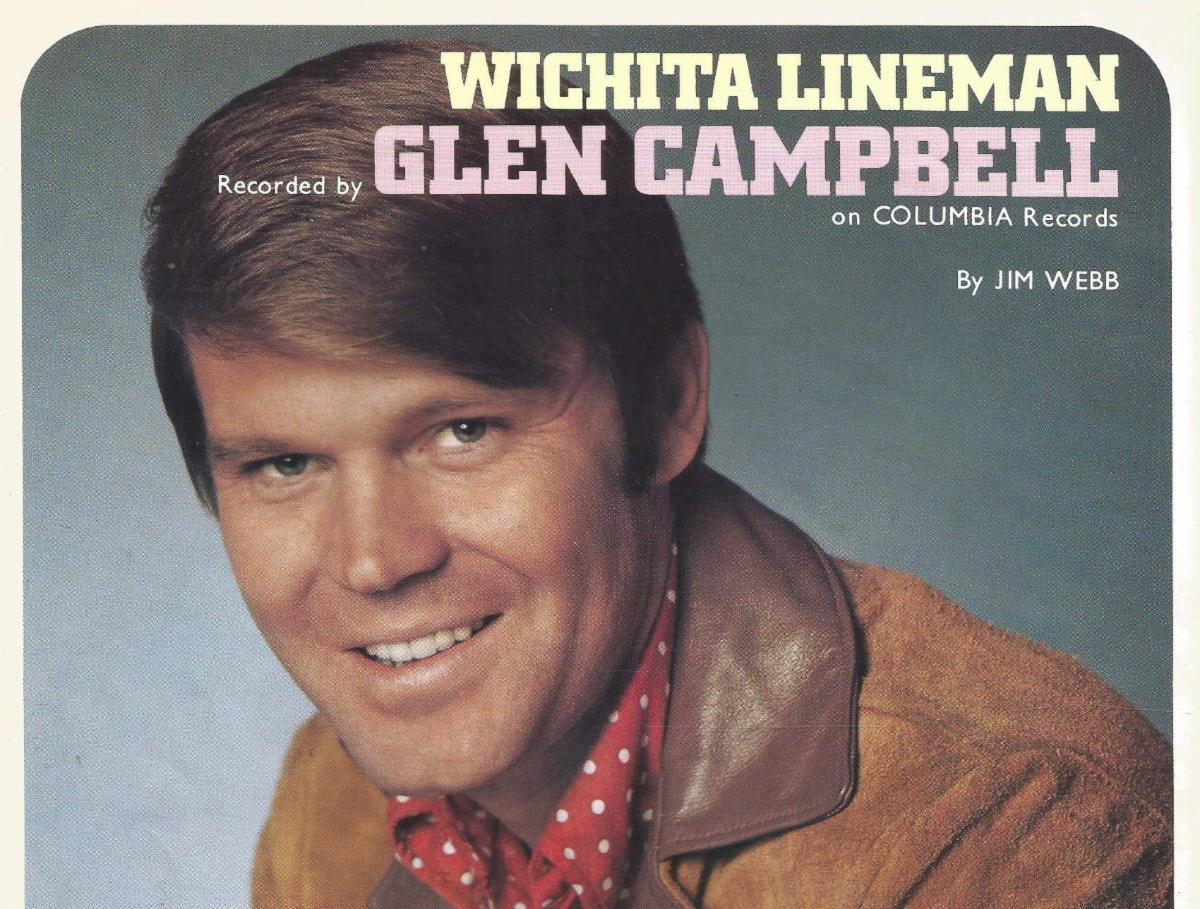
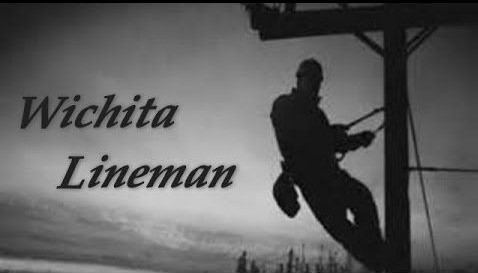
The Wichita Lineman
Jimmy Webb's song about a worker
has "entertained and haunted millions
for over a half a century."*

I am a lineman for the county and I drive the main road
Searching in the sun for another overload
I hear you singing in the wire, I can hear you through the whine
And the Wichita lineman is still on the line.

I know I need a small vacation but it don't look like rain
And if it snows that stretch down south won't ever stand the strain
And I need you more than want you, and I want you for all time
And the Wichita lineman is still on the line.

*The Wichita Lineman : searching in the sun for the world's greatest unfinished song by Dylan Jones, London : Faber & Faber, 2019.
Jimmy Webb -- Songwriter, Composer, Singer

  • Born in 1946 in Elk City, Oklahoma. His father was a Baptist minister; his mother encouraged him to learn piano and organ. Both of his parents were musicians. Jimmy grew up listening to country music and white gospel. He began improvising and rearranging church hymns and he began writing and performing religious songs in church.
  • His first commercial songwriting success was in 1965 when The Supremes recorded My Christmas Tree.
  • In 1967 his song Up,Up and Away won a Grammy Award for Song of the Year; it was featured on the 5th Dimension's debut album. (Webb wrote 4 other songs for that album.)
  • That same year Glen Campbell released his version of Jimmy Webb's By the Time I Get to Phoenix. It topped the country music charts in Canada and soared to number 2 in the U.S. 
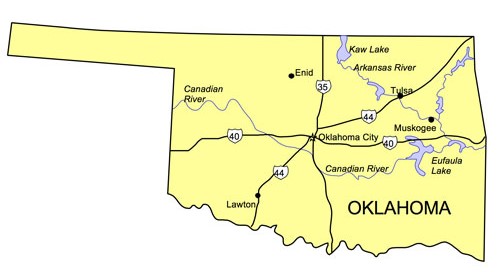
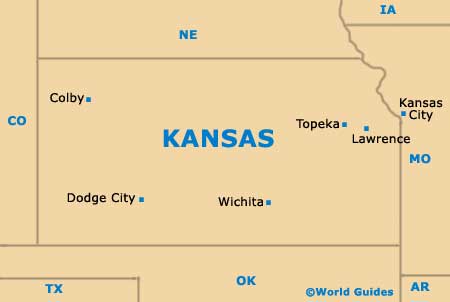
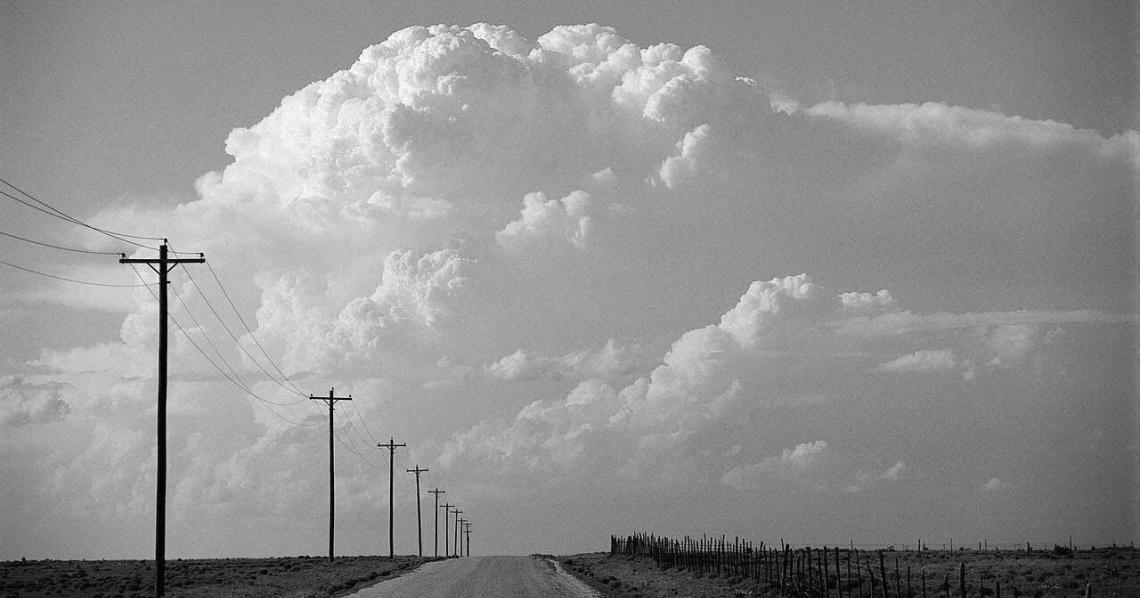
  • Both Jimmy and Glen were living in Los Angeles when Glen asked him to "write something geographical" for his new album. Webb remembered driving the Oklahoma and Kansas flatlands where he saw a telephone lineman "hanging against a lonely, desolate landscape." And he remembered, as a boy, walking up to the wires and hearing a high humming sound.
  • Campbell kept calling him on the phone asking if the song was finished yet, reminding him that he and his producer were working on a deadline; Webb remarked that they were too impatient. He sat down at his baby grand piano and, in two hours, composed what, he thought, was 3/4ths of a song. "I phoned them and told them it didn't have a third verse."
  • He made a cassette tape of the song, put the recording in a manila envelop and sent it Glen and his producer at their studio. He included a note with a stern warning that the song was unfinished and that, if they liked it, he would have a go at finishing it later.
  • Webb met with Campbell a few days later and reminded him that the song was unfinished. "It is now!" Campbell replied. That same day he received Webb's tape Glen and his band went into Capital Studios in Hollywood and started recording the song. Instead of a third verse Campbell - a superb guitar player who got his start as a session musician in LA - played the melody, note-for-note.
  • In 1968 Wichita Lineman hit no. 3 on the U.S. pop music charts and spent 15 weeks in the top 100. The next year lightning would strike twice when Webb and Campbell collaborated on Galveston, another song about a place. In 2010 Rolling Stone magazine listed Wichita Lineman at number 195 of the "500 Greatest Songs of All Time."
  • In 1986 Jimmy Webb was inducted into the Songwriters Hall of Fame; in 1993 he received the National Academy of Songwriters Lifetime Achievement Award. He has also received Grammy Awards for music, lyrics and orchestration. In 2019 Wichita Lineman - with its two verses - was inducted into the National Recording Registry of the Library of Congress.
The Oklahoma Panhandle
Kansas Flatlands
by
Glen Campbell
The International Brotherhood of Electrical Workers (IBEW) was founded in 1891 in St. Louis when a group of electricians decided to form a union and affiliate with the American Federation of Labor. They called themselves the "the Electrical Wiremen and Lineman's Union." Currently the IBEW is a powerful national union with over 750,000 members.  
 
In 2014 Len Shindel, a communications specialist working at IBEW headquarters in Washington, D.C., interviewed Jimmy Webb for the union's The Electrical Worker. During that interview Webb exclaimed "we shouldn't turn into a country where we only get excited about celebrity and wealth."  
 
"I feel honored when linemen say they like my song. That's all that I could hope for as a writer. A while back, a guy comes up to me after a concert.  He said his father was a lineman who had just passed on. Before he died, he said the last thing he wanted was for someone to play Wichita Lineman for him. I wish he had called me. I would have been there."

"Remember this classic? : a conversation with 'Wichita Lineman' songwriter." The Electrical Worker, Dec., 2014.

With thanks to Wikipedia, always.