|
-- Special Edition --
Billy Martin
-- A Fighter
by Bruce Macgowan
| | |
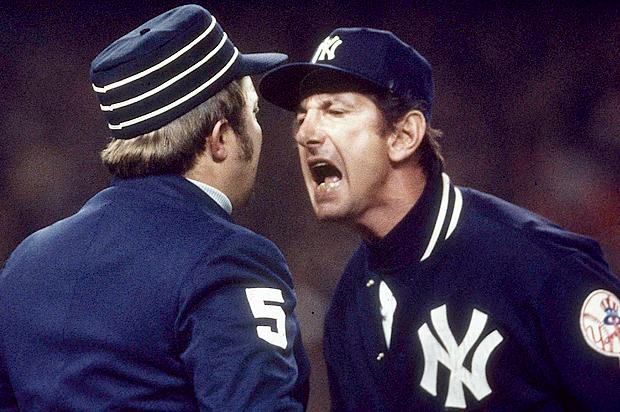
Billy Martin famously argued with umpires and was known for his explosive temper and fiery ejections | |
The tension was palpable when I trooped into manager Billy Martin’s office after his A’s lost a narrow decision to the visiting Detroit Tigers. Billy rarely enjoyed meeting with reporters after games anyway. Especially after losses. Billy’s eyes were bleary and he had a sour look on his face like the unhappy inebriate slumped over on his stool in the bar.
There was a good 10-15 seconds of uneasy silence as reporters looked intently at their notebooks as if they were studying bugs. Finally, I broke the tension by asking the first question.
“Billy, the A’s have really been struggling lately,” (they had just lost their eighth of ten games.) Is there any one problem you can attribute that to?”
Billy slowly looked up at me, his face screwing into a tight frown.
“Yeah, there’s three fucking things wrong: We’re not hitting, we’re not fielding and we’re not pitching. Any other stupid questions?" he snorted sarcastically.
Undaunted, I followed up with two more questions which he actually gave thoughtful answers to but when I was about to ask him a fourth question he cut me off.
“Is this a fucking one-on-one interview because if you want one of those you shoulda come here before the game. You see these other assholes standing here? They gotta ask me their dumb questions too. This is what we call a press conference. You know what that is, don’t you?”
I smiled and backed off. I didn't mind being browbeaten or even embarrassed by a coach or an athlete in front of my peers. It came with the job.
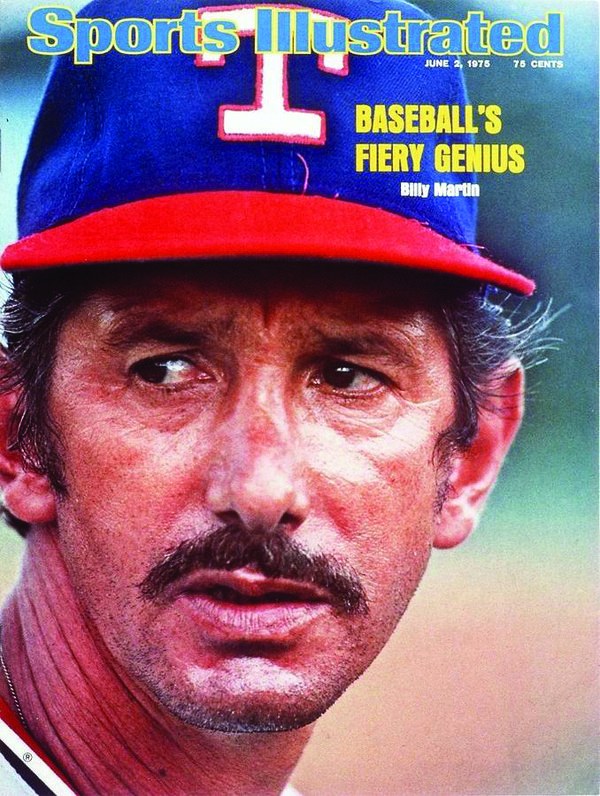
| Bill Martin was five times the manager of the New York Yankees who built a reputation as a manager who would initially make bad teams good, before ultimately being fired amid dysfunction. In each of his stints with the Yankees, he managed them to winning records before being fired by team owner George Steinbrenner or resigning under fire. | |
Billy Martin was an interesting study. An outstanding and fiery infielder with the Yanks, Billy unfortunately liked to fight as much as he liked to play baseball and this hurt his career. As a manager, he had a habit of turning teams from losers to winners almost overnight but then by his third or fourth year he would inevitably burn out. This happened in Minnesota and Texas and it happened in Oakland in 1982. Of course this was during an interim period between several tempestuous stints with the Yanks under their egotistical owner George Steinbrenner. The two men fought constantly and the NY media ate it up.
It was a different story in Oakland where the A’s played second fiddle to the cross bay San Francisco Giants.
By 1979, the A’s, still owned by cheapskate Charlie Finley, had become a joke. Their radio broadcasts were carried on the Cal radio station in Berkeley, they drew less than 5,000 fans a game, and all of their recognizable players from those great teams of the early 1970s had moved on. What remained was pretty much a group of unproven rookies, little-known journeymen and sprinkled in a few aging veterans approaching the end of their careers.
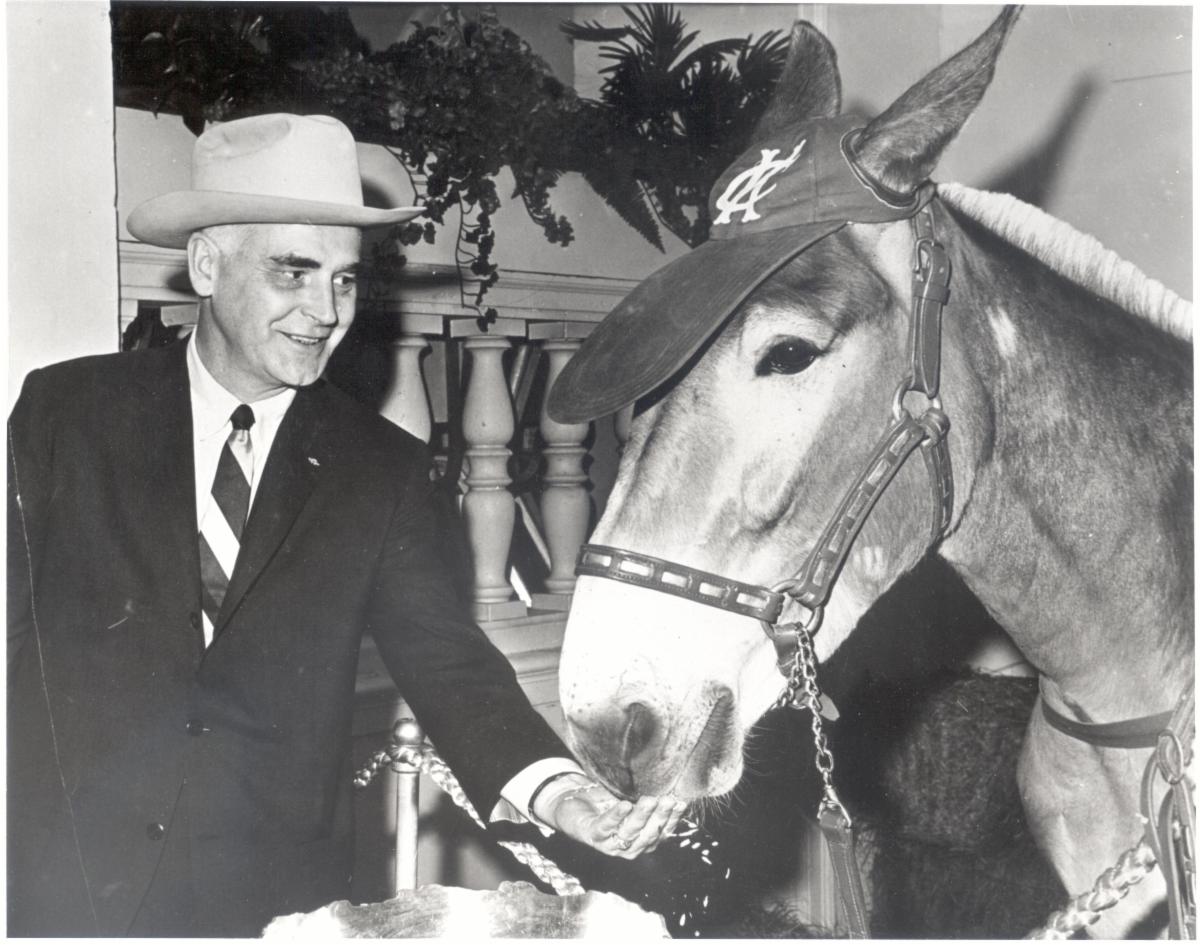
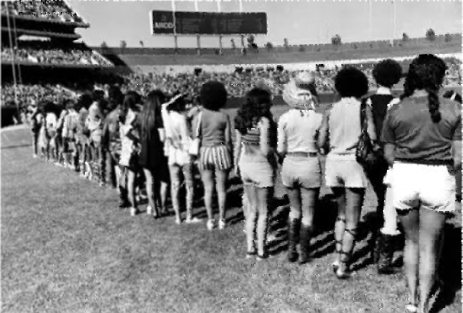
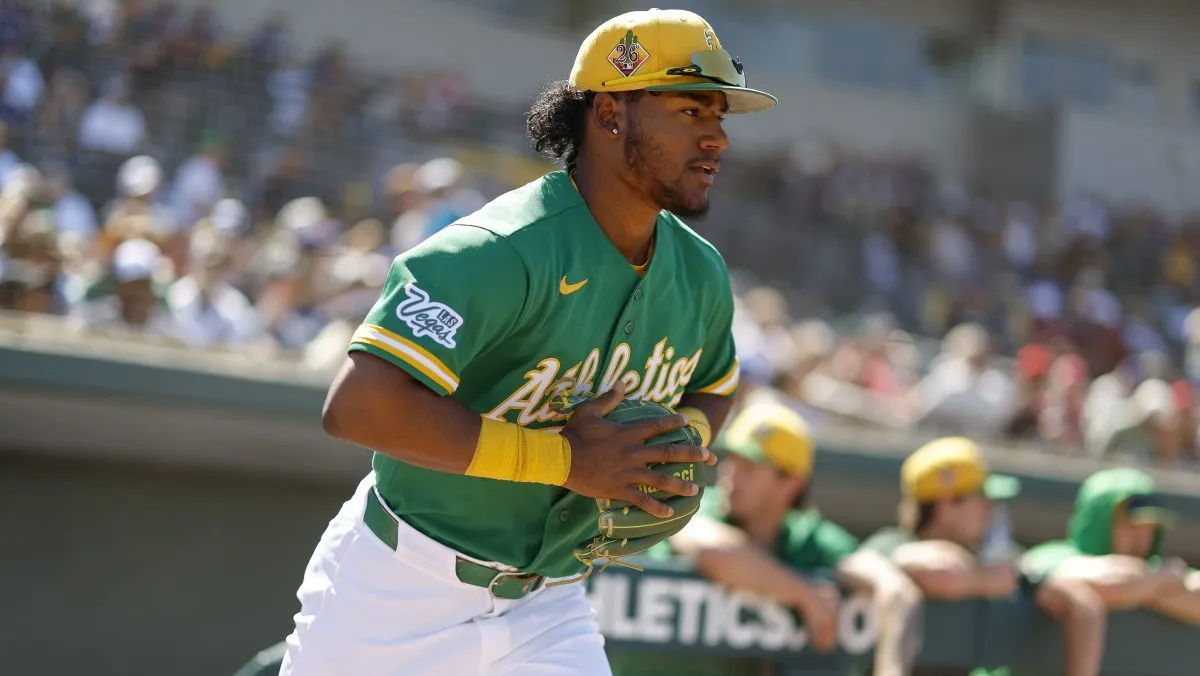
Finley was the consummate carnival barker, coming up with zany ideas such as multi-colored Kelly Green and California Gold uniforms, fireworks displays after wins, and zany promotions such as “Hot Pants Day’ when any woman wearing short pants would be let into the game for free. And of course there was Finley’s pet mule, “Charlie O” and “Harvey the mechanical Rabbit,” who would pop up behind home plate with a bucket full of fresh baseballs when the umpire needed a new supply.
| |
Finley replaced the Athletics' traditional elephant mascot with
a live mule. "Charlie-O" was paraded about the outfield, into cocktail parties and hotel lobbies and into the press room
after a large feeding to annoy reporters
| |
Finley feuded with his players and was feisty with reporters, but when Billy Martin became available after burning out of one of the many managerial jobs he held, there was Finley waiting with a contract.
Martin signed in 1980 and immediately turned the A’s into a respectable, exciting team. They had up-and-coming stars such as Rickey Henderson, Mike Norris and Dwayne Murphy, and Martin employed a type of aggressive baseball that one local writer decided to call “Billy Ball.”
Martin was pleasantly surprised but gave the writer a backhanded compliment. “This writer, a black guy – (Billy was a bit of a racist) -- named Wiley came up with it. It’s pretty accurate. We play aggressively; hit and run, double steals, squeeze bunts. It's about teamwork and self-sacrifice, but I doubt if Wiley knows anything about that.”
| |
"In perhaps the worst promotion in local baseball history, if not the history of humanity, the Oakland A’s from 1971 to 1973 scheduled Hot Pants Day at the ballpark. Women were encouraged to come in tight shorts, then brought on the field for a series of indignities disguised as “events” while the men in the crowd ogled them and took photos. Amazingly, the inaugural Hot Pants Day resulted in no major protests."
-- Peter Hartlaub, The San Francisco Chronicle
| |
The next season, 1981, something truly magical transpired in Oakland. Levis owner Walter Haas bought the team and immediately did everything he could to connect with the community and get East Bay fans back into baseball. He also hired local sportscasting legends Bill King and Lon Simmons to be the voices of the A’s radio broadcasts. And the A’s came roaring out of the gate, winning their first 11 games and leading from start to finish in the AL West.
Although the season was shortened to 100 games because of mid-season work stoppage, Martin had his starting pitchers go the distance most of the time, piling up 60 complete games as Norris, Rick Langford, Steve McCatty and Matt Keough were ironmen. The A’s lost three straight in the American League championships to the Yanks, but the club’s immediate future looked bright.
Unfortunately things went sour in 1982, as the heavy workload the previous year led to pitching woes in the form of inconsistency and sore arms. As the A’s sunk deeper into the AL West standings, Martin became more frustrated and seethed as the losses piled up. He held shorter, more tense post-game talks with writers. Billy and his longtime drinking buddy, Art Fowler, the pitching coach who followed him from team to team, would often sit in Billy’s office late after games and polish off a bottle or two of whisky.
Billy was not only combative vocally but we mentioned earlier how he loved to fight. Earlier in his career he sucker punched a pitcher on his team and broke the man’s jaw. Another time he got into an infamous scrap with a drunken marshmallow salesman who accosted him at a bar. Billy tagged the unfortunately gentleman with a hard right, knocking him onto the floor.
| Shooty Babitt is a former second baseman who played for the Oakland Athletics during the 1981 Major League Baseball (MLB) season. After retiring as a player, Babitt became a baseball scout, and later worked as a television analyst | |
My friend, A’s infielder Shooty Babbit, only played one year in the majors and it was for that special 1981 team.
“Billy was really hard on me but I learned a lot about baseball from him,” Shooty explained to me one time.
Rickey Henderson, who set the single season stolen base record in 1982, adding a small ray of brightness to an otherwise gloomy year was, like Billy, a native of Berkeley. Billy loved Rickey’s aggressiveness as a player and Rickey later credited Billy for fast-tracking his development in the big leagues. But by the end of 1982, Billy had worn out his welcome in Oakland, just as he had done in other cities.
Late in the season, A’s team president Roy Eisenhardt had a press release given to media folks in the press box that Martin had been fired. When we all went down to the A’s clubhouse afterward, we walked cautiously past Martin’s office. We noticed the door was open but no one was in his cubicle. But the place looked as if it had been turned upside down in some sort of brawl. Pictures that had been hanging on the walls were now strewn across the floor and broken glass from their frame littering the floor. Martin’s desk had been overturned, and the cradle of the phone had been knocked out of position. An empty bottle of undetermined booze was lying on its side, the neck of the bottle broken off revealing a jagged edge.
| |
Some longtime writers thought Billy played and managed the game as if he were constantly angry or paranoid. He was raised by a single mom, a feisty, small little woman who once told Billy: “If you’re gonna get into a fight, you throw the first punch. You hit ‘em hard before they can hit you!”
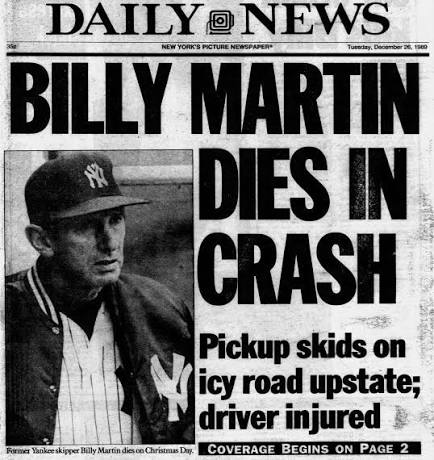
Billy did some hitting, but he also took some tough blows too. The final one came on Christmas Day of 1989. Billy and a friend of his had been drinking heavily and the friend drove the car off the road. Both men died. It was a sad end for one of the game’s truly unique characters.
| |
* * *
Long-time Bay Area sportscaster Bruce Macgowan has been recording his 45 years of broadcast experience for a forthcoming book to be published shortly. For earlier articles by Magowan published in Sports Today, click HERE.
| | |
Publisher: Christopher Weills
Associate Publisher: Ann Cooke
Marketing Director: Robert Moselle
Sales: Ayiko Konopaski
Contributors: Lydia Chain, Steve Chain, Harvey Cohen, Andy Dolich, Pete Elman, Rob Flammia, Bruce Macgowan, Robert Moselle, Howard Pearlstein, Amaury Pi-Gonzalez, T. Buff, Shelia Young. Dave Newhouse (dec.)
Software Engineer / Sports Today! Editor: Medhavee Upadhyaya
Technology Advisors: Silas Everett, Gaurav Chaulagain
Staff Photographers: Jeff Bayer, Alex Ho, Ed Jay, Ron Sellers, Darren Yamashita, Rich Yee, Kenny Karst (retired), Elliott Smith (dec.)
Advisor: Arif Khatib
Artist: Carl Macki
Website: www.UltimateSportsGuide.net
Contact us at: theultimatesportsguide@gmail.com
| | |
The Ultimate Sports Guide is very appreciative to the ongoing contributions made by former staff photographer Kenny Karst and Robert Moselle. Mr. Karst, now retired, continues to contribute helpful ideas and his archives.
Mr. Moselle, Esq., is now lending his extensive editorial experience and marketing savvy to the publication.
| | | | |