Case Against Former Forsyth County Investment Adviser Concludes with Guilty Plea, Lengthy Sentence |
|
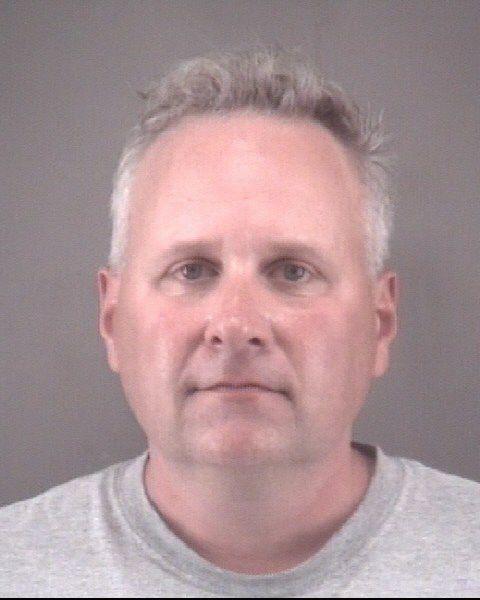
A multi-year investigation led by law enforcement agents with the North Carolina Secretary of State’s Securities Division with the assistance of the US Postal Inspection Service ended in February with Forsyth County Superior Court Judge David Hall sentencing Russell Joseph Mutter to a minimum of 16 years, 3 months and a maximum of 22 years, 5 months in prison for a scam in which 12 victims – most of them elderly – lost more than $3.3 million.
Mutter was charged with 41 counts of Investment Adviser Fraud, Financial Exploitation of an Older Adult, and Obtaining Property by False Pretenses. Judge Hall consolidated those charges into three Class C felony counts for sentencing purposes. Mutter was sentenced to a minimum of 65 months and a maximum of 90 months for each of those three counts, with those sentences to be served consecutively. Mutter will get credit towards this sentence for the time he has served since his arrest.
“Mr. Mutter utterly disregarded his fiduciary responsibility to act in his clients’ best interests,” said NC Secretary of State Elaine Marshall. “He targeted retirees – including his own father – and instead of protecting their finances he misled them, used their faith against them to gain their trust, and ultimately created a Ponzi scheme to cover up his losses with funds from new investors while converting clients’ money for his personal use.”
Investigators say Mutter defrauded 12 victims in Forsyth County and outside of North Carolina – many of them elderly – out of $3,339,047.23 between January of 2009 and December of 2017. Mutter removed funds from his clients’ accounts without their authorization, invested some of his clients’ funds in high risk securities without their knowledge, and misused client funds. When these speculative investments failed, Mutter sought to hide the losses by fabricating fraudulent account statements. Underscoring the degree to which things spiraled as losses mounted from Mutter's speculative investments, investigators discovered a large number of lottery tickets that Mutter bought with clients' funds as he seemingly became more desperate for a major influx of cash to right a sinking ship.
Secretary Marshall thanked Forsyth County District Attorney Jim O’Neill and Assistant District Attorney Jessica Spencer for the successful prosecution of this case.
The Secretary of State’s Securities Division issued a temporary Cease and Desist Order in February of 2018 prohibiting Mutter from operating RJM Financial, and issued a Final Order on April 17, 2018 permanently revoking his license to act as an investment adviser in North Carolina.
Investors are urged to always call the Secretary of State’s North Carolina Investor Hotline at 800-688-4507 to find out whether anyone offering an investment opportunity is registered to sell securities in North Carolina, and whether the investment opportunity itself is registered.
|
|
Secretary Marshall Advises North Carolinians to Give Generously, but Wisely to Help Ukrainian Refugees
As Russia’s invasion of Ukraine creates a massive evolving humanitarian crisis, people across the world are giving to nonprofits as they look for ways to help. NC Secretary of State Elaine Marshall urges North Carolinians to do their homework to assure they’re doing the most good for those in need.
“We are all looking for anything we can do to help,” Secretary Marshall said. “North Carolina’s giving public is always generous, and we’re watching startling scenes and a scale of human suffering play out on the news now that is unlike anything we’ve seen in Europe since World War II. While this kind of unfolding tragedy can bring out the best in many, it can also bring out scam artists seeking to take advantage of our desire to help. That not only steals from the individuals making the contribution, it robs the victims who are in urgent and desperate need of assistance.”
Secretary Marshall advises people to be wary of high pressure solicitations through social media and texts. Also look out for groups using names that resemble those of established, respected charities.
Charity Navigator has a list of national charities assisting humanitarian efforts in the region with ratings to indicate the most effective organizations. The Better Business Bureau’s Wise Giving Alliance is also a good resource to check out charitable organizations raising funds for humanitarian aid for Ukrainians.
The State of North Carolina and Moldova have had a bilateral partnership agreement in place since 1999, and have worked on military and civilian projects together, including humanitarian efforts. One of the organizations the partnership also works with is the Moldova World Children’s Fund. The group is taking donations to help refugees that are relocating specifically to Moldova from neighboring Ukraine. More than 200,000 Ukrainian refugees are estimated to have entered into Moldova, with tens of thousands remaining.
“Local food and clothing drives may not be the most practical way to get assistance to folks, given all the logistical challenges of getting those donations into the region,” cautioned Secretary Marshall.
The Secretary of State’s Office also worked with the National Association of State Charity Officials (NASCO) to author an online guide to help North Carolinians make informed donations online. The Guide, which highlights information to request when making a charitable donation through an online platform or app, is available on the charities section of the Secretary of State’s website at sosnc.gov/divisions/charities.
The Secretary of State’s Charitable Solicitation Licensing Division encourages everyone to visit the charities section of www.sosnc.gov to check out organizations that have charitable solicitation licenses in North Carolina and review their financial statements and the percentage of their donations that have gone directly to their charitable programs.
Secretary Marshall is also urging North Carolina’s investing public to keep a keen eye out for investment scam artists who may look to profit from worries about economic volatility related to escalating tensions resulting from Russia’s invasion of Ukraine.
Investment scam artists may look to capitalize on rising energy and fuel prices by pitching risky or fake investments in the energy sector or luring investors to abandon regulated markets for supposedly more "stable" commodities investments that turn out to be bogus.
“It’s always wise to call our NC Investor Hotline at 800-688-4507 before signing over any of your money to make sure that the person offering you an investment opportunity is registered to sell securities in North Carolina, and – just as importantly – that the investment opportunity itself is registered,” Secretary Marshall advised.
|
|
Cryptocurrency Takes Center Stage in Longform Interview with Securities Division Officials
Secretary of State Special Agent in Charge of the Special Investigations and Forensic Services Group, Shawn Pruett, and Director of Investor Protection and Education, John Maron joined host J.W. Simmons this month on WCLN’s "We Should Know" program for a wide-ranging discussion about cryptocurrency.
It’s crucial to understand how any investment deal you ponder will work to turn a profit, so it’s important to understand what cryptocurrency is and how it works, as well as how any specific investment deal involving digital assets will work. In this program, Agent Pruett provides a great backgrounder on cryptocurrency.
Commenting on the enforcement actions the Securities Division has undertaken in this area, Agent Pruett notes that those investigations typically involve people investing in cryptocurrency, or investing in crypto trading programs or crypto mining operations that turn out to be non-existent.
(Click the image below to watch this informative interview in its entirety.)
|
|
One Call Could Save Your Life Savings!
Is that individual offering you an investment opportunity licensed to sell securities in North Carolina? Is the investment opportunity itself registered? Know before you sign!
While registration in and of itself is no guarantee against fraud, not being registered is a very big red warning flag.
We urge you to take five minutes to call our NC Investor Hotline at 1-800-688-4507 to see if the person you have been dealing with – perhaps even for years – is properly registered and/or has a disciplinary history. You can also check to see if the actual investment itself is properly registered.
Pick up the phone and call us. You owe it to yourself and your family to check. And please also consider sharing the information in this newsletter with YOUR contacts or your social networks. Doing so will help keep your friends and loved ones safe, too. More information can be found at https://www.sosnc.gov/divisions/securities/for_investors.
|
|
NASAA Talks Podcast: NASAA’s Senior Issues and Diminished Capacity Committee Presents
This podcast episode features the launch of NASAA’s new webcast series, “NASAA’s Senior Issues and Diminished Capacity Committee Presents.”
This webcast series was developed by NASAA’s Senior Issues and Diminished Capacity Committee to provide an inclusive platform for learning from the best and brightest minds who will discuss issues that matter most to those dealing with at-risk investors. (Click on the image below to listen to the podcast.)
|
|
SEC to Host Two Free Virtual Outreach Events This Week Helping Women and Caregivers for Older Adults Avoid Scams
The U.S. Securities and Exchange Commission is hosting two free virtual outreach events this week.
The first, to be held on Tuesday, March 29, 2022 at 7 p.m. ET, will be hosted by the Securities and Exchange Commission’s New York Regional Office, in coordination with Alpha Kappa Alpha Sorority Inc., Tau Omega Chapter. It will celebrate women’s history month by offering a free investor education panel discussion about staying safe from financial fraud.
Entitled, "Financially Savvy Females: Lessons to Avoid Financial Fraud," the panel will feature four women from the SEC’s New York Regional Office. Sharon Bryant, Hane Kim, Celeste Chase and Shari Singh will share their expertise in spotting different types of investment fraud, including those found online and involving digital assets. The panelists will answer questions after the discussion.
To participate, click here to register. Participants can submit questions for the speakers before the event by emailing SECNYOutreach@sec.gov and are encouraged to share information about this event with family and friends.
The event, which will be streamed live on sec.gov from 10:00 a.m. to 11:30 a.m. ET, will feature opening remarks by SEC Chair Gary Gensler, followed by a panel discussion with Richard Best, Acting Director of the SEC’s Division of Examinations; Nancy LeaMond, Executive Vice President and Chief Advocacy and Engagement Officer at AARP; and Christine Kieffer, Senior Director of the Financial Industry Regulatory Authority (FINRA) Investor Education Foundation. After the panel discussion, law students serving in the Fordham University School of Law and the University of Miami School of Law investor advocacy clinics will share lessons learned from fraud cases involving older Americans. Members of the public may submit questions to the panelists in advance of the event via email to Summit2022@sec.gov.
|
|
FraudStoppers: FINRA's Market Investigations Group
The latest episode of FINRA's "UNscripted" podcast focuses on the organization's work to detect and deter fraud and insider trading in service of its mission to protect investors and market integrity. In this episode, the head of FINRA's Market Investigations team, Sam Draddy, joins host Kaitlyn Kiernan to talk about the latest trends and patterns in FINRA's fraud and insider trading investigations, including stories about some of the most interesting cases of the past few years.
(Click on the image below to listen to the podcast.)
|
|
Don't Swipe Right on Romance Scams
Romance scams aren't just a concern on Valentines Day, and seniors are increasingly victimized in these cons. This informative video features Montana Commissioner of Securities and Insurance Troy Downing and Deputy Securities Commissioner Lynne Egan discussing the risk that romance scams pose to seniors and other investors.
|
|
Biden Administration Advises Nation's Private Sector to Prepare for Potential Russia Cyberattacks
If loose lips could sink ships in World War II, what could lax cybersecurity standards and practices do to critical infrastructure today amid escalating aggression from Russia?
That concern has been ratcheting up since Russia's invasion of Ukraine and its increasingly provocative rhetoric aimed at the West, so the Biden Administration issued a statement and fact sheet this week urging US businesses to "harden [their] cyber defenses immediately" in light of "evolving intelligence that the Russian government is exploring options for potential cyberattacks."
Noting that most of America’s critical infrastructure is owned and operated by the private sector, President Biden said that "critical infrastructure owners and operators must accelerate efforts to lock their digital doors." The statement added that the Department of Homeland Security’s Cybersecurity and Infrastructure Security Agency (CISA) has been actively working with organizations across critical infrastructure to rapidly share information and mitigation guidance to help protect their systems and networks.
CISA Director Jen Easterly responded to the White House statement, saying it "reinforces the urgent need for all organizations, large and small, to act now to protect themselves against malicious cyber activity."
CISA has been actively working with critical infrastructure entities to rapidly share information and mitigation guidance that will help them protect their systems. Easterly added that CISA will "continue working closely with our federal and industry partners to monitor the threat environment 24/7, and we stand ready to help organizations respond to and recover from cyberattacks." Easterly urged organizations to report incidents, saying "when cyber incidents are reported quickly, it can contribute to stopping further attacks."
|
|
SEC Proposes Rules on Cybersecurity Risk Management, Strategy, Governance, and Incident Disclosure by Public Companies
The Securities and Exchange Commission has proposed amendments to its rules to enhance and standardize disclosures regarding cybersecurity risk management, strategy, governance, and incident reporting by public companies.
"Over the years, our disclosure regime has evolved to reflect evolving risks and investor needs," said SEC Chair Gary Gensler. "Today, cybersecurity is an emerging risk with which public issuers increasingly must contend. Investors want to know more about how issuers are managing those growing risks. A lot of issuers already provide cybersecurity disclosure to investors. I think companies and investors alike would benefit if this information were required in a consistent, comparable, and decision-useful manner. I am pleased to support this proposal because, if adopted, it would strengthen investors’ ability to evaluate public companies' cybersecurity practices and incident reporting."
The proposed amendments would require, among other things, current reporting about material cybersecurity incidents and periodic reporting to provide updates about previously reported cybersecurity incidents. The proposal also would require periodic reporting about a registrant’s policies and procedures to identify and manage cybersecurity risks; the registrant’s board of directors' oversight of cybersecurity risk; and management’s role and expertise in assessing and managing cybersecurity risk and implementing cybersecurity policies and procedures. The proposal further would require annual reporting or certain proxy disclosure about the board of directors’ cybersecurity expertise, if any.
The proposed amendments are intended to better inform investors about a registrant's risk management, strategy, and governance and to provide timely notification to investors of material cybersecurity incidents.
The proposing release will be published on SEC.gov and in the Federal Register. The comment period will remain open for 60 days following publication of the proposing release on the SEC's website or 30 days following publication of the proposing release in the Federal Register, whichever period is longer.
|
|
Mitigating Threats Posed by Russian State-Sponsored Cyber Actors’ Exploitation of Default Multifactor Authentication Protocol
The Cybersecurity and Infrastructure Security Agency (CISA) and the Federal Bureau of Investigation (FBI) have issued a joint cybersecurity advisory with technical details, mitigations, and resources regarding previously demonstrated ability of Russian state-sponsored cyber actors to gain network access through exploitation of default multifactor authentication (MFA) protocols and a known vulnerability in Windows Print Spooler, “PrintNightmare.”
As early as May 2021, the Russian state-sponsored cyber actors took advantage of a misconfigured account set to default MFA protocols at a non-governmental organization, allowing them to enroll a new device for MFA and access the victim’s network. The actors then exploited a critical vulnerability “PrintNightmare” (CVE-2021-34527) to run arbitrary code with system privileges, and then were able to access cloud and email accounts for document exfiltration.
-
Enforce MFA for all users, without exception, and ensure it is properly configured to protect against “fail open” and re-enrollment scenarios
- Implement time-out and lock-out features
- Disable inactive accounts uniformly in active directory, MFA, etc.
-
Update software, prioritizing known exploited vulnerabilities
- Monitor network logs continuously for suspicious activity
- Implement security alerting policies
“At CISA, we are great believers in multifactor authentication. It remains one of the most effective measures individuals and organizations can take to reduce their risk to malicious cyber activity. This advisory demonstrates the imperative that organizations configure MFA properly to maximize effectiveness,” said CISA Director Jen Easterly. “Now, more than ever, organizations must put their shields up to protect against cyber intrusions, which means applying the mitigations in this advisory including enforcing MFA for all users without exception, patching known exploited vulnerabilities, and ensuring MFA is implemented securely.”
“The FBI, alongside our federal and international partners, will continue to pursue cyber actors who engage in this type of targeted malicious activity of unauthorized access and exfiltration of data,” said FBI Cyber Division Assistant Director Bryan Vorndran. “We encourage organizations who may have experienced this type of exploitation to report to the FBI and/or CISA and provide us with additional information so we can continue to deter and disrupt nation-state actors. The FBI will not tolerate this type of criminal activity and we will use all of the tools in our toolbelt to combat this threat.”
CISA has updated the Shields Up webpage to include new services and resources, recommendations for corporate leaders and chief executive officers, and actions to protect critical assets. Additionally, CISA has created a new Shields Up Technical Guidance webpage that details other malicious cyber activity affecting Ukraine. The webpage includes technical resources from partners to assist organizations against these threats.
To report a cyber incident, organizations should contact CISA at report@cisa.gov or call CISA’s 24/7 CISA Central Operations Center at (888) 282-0870 and/or to the FBI via your local FBI field office or the FBI’s 24/7 CyWatch at (855) 292-3937 or CyWatch@fbi.gov.
|
|
NIST Seeks Input to Update Cybersecurity Framework, Supply Chain Guidance
Potential revisions to NIST’s Cybersecurity Framework are planned for 2022
NIST wants to explore better ways to align the CSF with other NIST guidance, such as the Privacy Framework, Secure Software Development Framework, Risk Management Framework, Workforce Framework for Cybersecurity (also called the NICE Framework), and its series on IoT cybersecurity.
To keep pace with the always evolving cybersecurity landscape, the National Institute of Standards and Technology (NIST) is planning to revise the widely adopted NIST Cybersecurity Framework (CSF). In advance of the update, NIST is asking the public for information that would improve the effectiveness of the CSF and its alignment with other cybersecurity resources. The agency is also requesting suggestions to inform cybersecurity guidance related to supply chain risks.
“Every organization needs to manage cybersecurity risk as a part of doing business, whether it is in industry, government or academia,” said Commerce Deputy Secretary Don Graves. “It is critical to their resilience and to our nation’s economic security. There are many tools available to help, and the CSF is one of the leading frameworks for private sector cybersecurity maintenance. We want private and public sector organizations to help make it even more useful and widely used, including by small companies.”
This marks the second time that NIST will update the CSF, formally known as the Framework for Improving Critical Infrastructure Cybersecurity, which it initially released in 2014 after extensive public involvement and collaboration. NIST is requesting public input that falls into three main categories: changes purely to the CSF itself; relationships and alignment between the CSF and other resources; and ways to improve cybersecurity in supply chains.
Comments are due by April 25, 2022. Visit the CSF website to view the RFI and for details on how to submit your comments. Responses to this RFI will inform possible revisions of the CSF as well as the NIICS initiative. Send general questions about this RFI to CSF-SCRM-RFI@nist.gov.
|
|
NASAA Seeks Public Comment on Proposed Statement of Policy Regarding Peer-to-Peer Lending
The North American Securities Administrators Association (NASAA) is seeking public comment on a proposed Statement of Policy Regarding Peer-to-Peer Lending. NASAA’s proposed statement of policy is designed to provide a framework through which lending platforms register securities they issue to investors.
“The intent of this statement of policy is to set specific registration and qualification standards for securities offerings involving peer-to-peer lending,” said Melanie Senter Lubin, NASAA President and Maryland Securities Commissioner. “I wish to thank the members of NASAA’s Corporation Finance Section and Corporation Finance Policy Project Group for their work in developing this important statement of policy.”
In peer-to-peer lending, online platforms act as intermediaries to match individuals and small businesses seeking to obtain loans with investors who fund the loans. Peer-to-peer lending can be a means by which borrowers obtain needed funds, but investors may face significant risks of loss and must heavily rely on the lending platform to help mitigate those risks.
“NASAA developed this statement of policy to set some ground rules for peer-to-peer lending relationships and to help investors in such relationships become better informed. If adopted, the policy would ensure that lending platforms properly vet borrowers, facilitate loans, enforce repayment and otherwise set and enforce the terms of these instruments,” said Andrea Seidt, NASAA’s Corporation Finance Section Committee Chair and Ohio Securities Commissioner.
The proposed statement of policy is posted on the NASAA website with instructions to the public on how to submit comments. The deadline for submitting comments is April 21, 2022. Following the public comment process, the statement of policy may be submitted to the NASAA membership for approval.
|
|
SEC Proposes Rules to Enhance and Standardize Climate-Related Disclosures for Investors
The Securities and Exchange Commission this week proposed rule changes that would require registrants to include certain climate-related disclosures in their registration statements and periodic reports, including information about climate-related risks that are reasonably likely to have a material impact on their business, results of operations, or financial condition, and certain climate-related financial statement metrics in a note to their audited financial statements. The required information about climate-related risks also would include disclosure of a registrant’s greenhouse gas emissions, which have become a commonly used metric to assess a registrant’s exposure to such risks.
"I am pleased to support this proposal because, if adopted, it would provide investors with consistent, comparable, and decision-useful information for making their investment decisions, and it would provide consistent and clear reporting obligations for issuers," said SEC Chair Gary Gensler. "Our core bargain from the 1930s is that investors get to decide which risks to take, as long as public companies provide full and fair disclosure and are truthful in those disclosures. Today, investors representing literally tens of trillions of dollars support climate-related disclosures because they recognize that climate risks can pose significant financial risks to companies, and investors need reliable information about climate risks to make informed investment decisions. This proposal would help issuers more efficiently and effectively disclose these risks and meet investor demand, as many issuers already seek to do. Companies and investors alike would benefit from the clear rules of the road proposed in this release. I believe the SEC has a role to play when there’s this level of demand for consistent and comparable information that may affect financial performance. This proposal thus is driven by the needs of investors and issuers."
The proposed rule changes would require a registrant to disclose information about (1) the registrant’s governance of climate-related risks and relevant risk management processes; (2) how any climate-related risks identified by the registrant have had or are likely to have a material impact on its business and consolidated financial statements, which may manifest over the short-, medium-, or long-term; (3) how any identified climate-related risks have affected or are likely to affect the registrant’s strategy, business model, and outlook; and (4) the impact of climate-related events (severe weather events and other natural conditions) and transition activities on the line items of a registrant’s consolidated financial statements, as well as on the financial estimates and assumptions used in the financial statements.
For registrants that already conduct scenario analysis, have developed transition plans, or publicly set climate-related targets or goals, the proposed amendments would require certain disclosures to enable investors to understand those aspects of the registrants’ climate risk management.
The proposed rules also would require a registrant to disclose information about its direct greenhouse gas (GHG) emissions (Scope 1) and indirect emissions from purchased electricity or other forms of energy (Scope 2). In addition, a registrant would be required to disclose GHG emissions from upstream and downstream activities in its value chain (Scope 3), if material or if the registrant has set a GHG emissions target or goal that includes Scope 3 emissions. These proposals for GHG emissions disclosures would provide investors with decision-useful information to assess a registrant’s exposure to, and management of, climate-related risks, and in particular transition risks. The proposed rules would provide a safe harbor for liability from Scope 3 emissions disclosure and an exemption from the Scope 3 emissions disclosure requirement for smaller reporting companies. The proposed disclosures are similar to those that many companies already provide based on broadly accepted disclosure frameworks, such as the Task Force on Climate-Related Financial Disclosures and the Greenhouse Gas Protocol.
Under the proposed rule changes, accelerated filers and large accelerated filers would be required to include an attestation report from an independent attestation service provider covering Scopes 1 and 2 emissions disclosures, with a phase-in over time, to promote the reliability of GHG emissions disclosures for investors.
The proposed rules would include a phase-in period for all registrants, with the compliance date dependent on the registrant’s filer status, and an additional phase-in period for Scope 3 emissions disclosure.
The proposing release will be published on SEC.gov and in the Federal Register. The comment period will remain open for 30 days after publication in the Federal Register, or 60 days after the date of issuance and publication on sec.gov, whichever period is longer.
|
|
Register for the SEC’s 41st Annual Small Business Forum to Impact Capital Raising Policy
Sessions will focus on the following topics:
- Mon., April 4 - Empowering Entrepreneurs: Tools to Navigate Capital Raising
- Tue., April 5 - Hometown Entrepreneurship: How Entrepreneurs Can Thrive Outside of Traditional Capital Raising Hubs
- Wed., April 6 - New Investor Voices: How Emerging Fund Managers Are Diversifying Capital
- Thur., April 7 - Small Cap World: What to Know and How to Think Ahead
The Forum website will continue to be updated with details on the agenda, speakers, registration, and FAQs in the coming weeks leading up to the event.
“Each year we look forward to hosting the Small Business Forum and engaging with entrepreneurs, investors, and other thought leaders who are passionate about capital raising,” said Office Director Martha Legg Miller. “By providing a platform for Forum participants to develop capital raising policy recommendations, the SEC is able to keep a pulse on the real-world impact of our rules on communities across the country.”
Click here to register and receive a link to participate.
|
|
FINRA Requests Comment on a Proposed Rule to Accelerate Arbitration Proceedings for Seriously Ill or Elderly Parties
FINRA is seeking comment on a proposal to accelerate arbitration case processing when requested by parties who are seriously ill or are at least 75 years old. The proposal would help ensure that these parties are able to participate meaningfully in FINRA arbitration by shortening certain case processing deadlines for parties and arbitrators under the Codes.
The text of the proposed amendments is set forth in Attachment A. Questions regarding this Notice should be directed to:
-
Victoria Crane, Vice President and Associate General Counsel, Office of General Counsel (OGC), at (202) 728-8104 or email;
-
Thomas Kimbrell, Associate General Counsel, OGC, at (202) 728-6926 or email; or
-
Kristine Vo, Assistant General Counsel, OGC, at (212) 858-4106 or email.
Questions regarding the Economic Impact Assessment in this Notice should be directed to Matthew Kozora, Senior Economist, Office of the Chief Economist, at (202) 728-8804 or email.
FINRA encourages all interested parties to comment. Comments must be received by May 16, 2022.
Comments must be submitted through one of the following methods:
- Online using FINRA’s comment form for this Notice;
- Emailing comments to pubcom@finra.org; or
- Mailing comments in hard copy to:
Jennifer Piorko Mitchell
Office of the Corporate Secretary
FINRA
1735 K Street, NW
Washington, DC 20006-1506
|
|
FINRA Issues Reminder About the Scope of Chief Compliance Officer Supervisory Liability
FINRA has issued a Regulatory Notice reminding member firms about the scope of broker-dealer chief compliance officer (CCO) supervisory liability under FINRA rules.
“Chief compliance officers play an important role in facilitating compliance by promoting strong practices that protect investors and market integrity. That does not automatically make them supervisors, subject to FINRA’s supervisory requirements,” said Jessica Hopper, Executive Vice President, Enforcement. “This Notice helps to clarify when a CCO is—and is not—subject to potential liability under FINRA’s Supervision rule.”
The Notice discusses the scope of the Supervision Rule (3110), the CCO’s role and how FINRA assesses a CCO’s liability under Rule 3110.
For example, as stated in the Notice, FINRA will bring an action against a CCO under Rule 3110 for failure to supervise only when the firm confers on the CCO supervisory responsibilities and the CCO fails to discharge those responsibilities in a reasonable manner. In those instances, FINRA also will consider whether charging the CCO is the appropriate regulatory response to address the violation after weighing aggravating and mitigating factors.
For 2018-2021, of the nearly 440 FINRA disciplinary actions involving Rule 3110 violations for supervisory failures, CCOs were charged in 28 instances. Of those 28, 18 involved a CCO who was also the CEO or president of the firm—a role that confers supervisory responsibilities. For each of the remaining 10 matters, FINRA found that the firm had conferred upon the CCO specific supervisory responsibilities that the CCO failed reasonably to perform.
|
|
-
On March 8, 2022, former Forsyth County Investment Adviser, Russell Joseph Mutter, pleaded guilty and was sentenced to a minimum of 16 years, 3 months and a maximum of 22 years, 5 months in prison for a scam that cost 12 victims - most of them elderly -- more than $3.3 million. Click here for more details.
-
On November 15, 2021, Joshua Matthew Houchins, 36, of Raleigh, NC, was sentenced to ten years in prison on charges of Wire Fraud, in violation of Title 18, United States Code, Section 1343, and Possession of a Firearm by a Felon, in violation of Title 18, United States Code, Section 922(g). The defendant was also ordered to serve three years of supervised release and to pay restitution to victims in the total amount of $1,771,382.25. According to court documents and arguments made in court, Houchins, owner of various Raleigh real estate development companies, carried out a Ponzi scheme upon numerous local real estate investors. Houchins also possessed a rifle and several rounds of ammunition after having been convicted of a felony. For more details, see the related story in this newsletter and this press release.
-
On July 29, 2021, the North Carolina Department of the Secretary of State, Securities Division entered into a Final Consent Order ("Order") with Tannin Capital, LLC. The Order states that Tannin Capital was ineligible for an exemption from state registration as an investment adviser from October 2019 through on or about April 2020. Pursuant to the Order, Tannin Capital agreed to immediately cease and desist from violating any provision of the North Carolina Investment Advisers Act and any related administrative rules, to pay a civil penalty and reimbursement of the costs of investigation. The North Carolina Department of the Secretary of State thanks the U.S. Securities and Exchange Commission, Atlanta Regional Office for their assistance in this matter. For more information on this Order, click here.
-
On May 21, 2021, the North Carolina Department of the Secretary of State, Securities Division entered into a Final Consent Order (“Order”) with Roy Neil Carlson. The Order states that Carlson violated North Carolina law during the last two years by transacting business in North Carolina as an investment adviser representative without a valid registration pursuant to the North Carolina Investment Advisers Act. Pursuant to the Order, Carlson agreed to immediately cease and desist from violating any provisions of the North Carolina Investment Advisers Act and any related administrative rules, to pay a civil penalty, and cost of investigation. For more information, click here.
-
On April 5, 2021, Anthony Wayne March, 49, of Wake Forest, NC, was sentenced to 135 months imprisonment for wire fraud and ordered to pay $6,040,965.00 in restitution. (See the full story above.) The Internal Revenue Service Criminal Investigation Division (IRS-CI), and the North Carolina Secretary of State, Securities Division conducted the investigation in this matter. The Office of the U.S. Bankruptcy Administrator for the Eastern District of North Carolina provided substantial assistance. Assistant United States Attorney Ethan Ontjes, Special Assistant United States Attorney Brian Behr, and Special Assistant United States Attorney Kevin Harrington represent the United States.
-
On March 26, 2021, the Securities Division of the North Carolina Department of the Secretary of State issued a Temporary Cease and Desist Order to Respondents, Roy Neil Carlson and Carlson Financial Services, LLC. The order found Respondents were transacting business in the State of North Carolina in violation of the North Carolina Investment Advisers Act. The Temporary Order to Cease and Desist ordered each Respondent and any person, employee, officer, director, entity or independent contractor under the direction or control of Respondents, to immediately cease and desist from violating the anti-fraud provisions of the Investment Advisers Act, soliciting or providing investment advice to any prospective or current advisory clients, making or causing to be made any misleading filing to the Administrator and otherwise holding itself out to be or engaged in the business of an investment adviser or investment adviser representative. The Temporary Order to Cease and Desist gives Respondents 30 days in which to request a hearing. If no such request is made during that time, the Temporary Order to Cease and Desist shall become final. For more information, click here.
-
On March 15, 2021, Charles Gilbert Murphy, a serial fraudster from Apex, NC, was sent back to federal prison to serve 75 months for an investment scam involving impersonation of a mayor, professor, and a government agency. The investigation was conducted by the Federal Bureau of Investigation, the Internal Revenue Service Criminal Investigation, and the North Carolina Secretary of State's Securities Division. For more information, see this press release.
|
|
|
|
NC Department of the Secretary of State
Securities Division
Investor Protection & Education Services
|
|
|
|
|
|
|
|