June 1, 2026

IN THIS ISSUE

Policy Corner

News Feed

Training & Events

Resources

Job Announcements

Policy Corner

Beyond Diagnosis: Understanding SED & Functional Impairment

This spring, the Substance Abuse and Mental Health Services Administration (SAMHSA) released Refocus and Renew: Moving Towards Health, a series of technical assistance papers on serious mental illness (SMI) and serious emotional disturbances (SED). In addition to the introductory paper, two papers focus on children and youth with SED and their families. This Policy Corner provides an overview of SED in Children, Youth, and Young Adults. An upcoming TA Telegram will review Cross-System Collaboration to Support Children and Youth with Behavioral Health Needs and Their Families. Both papers were supported by the National Association of State Mental Health Program Directors (NASMHPD) Technical Assistance Coalition contract.

Serious Emotional Disturbances (SED) in Children, Youth, and Young Adults provides an overview of SED, which incorporates functional impairment into the assessment of needs. Used widely across public behavioral health systems, it is also part of the authorizing legislation for system of care grants. The paper emphasizes the importance of developmental considerations with SED and discusses how symptoms and behaviors may change as children get older. It also discusses prevalence of, risk factors for, and co-occurring problems with SED; describes assessments for functional impairment; and reviews appropriate clinical interventions and supports. 


A unique feature of this paper is the inclusion of a series of clinical briefs that each focus on a diagnostic category: trauma-related; neurodevelopmental; anxiety; obsessive-compulsive and related; mood; and disruptive, impulse control, and conduct. Each brief discusses clinical presentation, risk factors, prevalence and comorbidities, and, perhaps most importantly, treatments and recommendations for state and local child- and family-serving systems.


The authors make four overarching policy recommendations for improving treatment and supports for children and youth with SED:

  1. Emphasize functional impairment in eligibility criteria to ensure timely identification and early intervention.
  2. Ensure sustainability of services because the needs of youth with SED may be chronic and require support into adulthood.
  3. Promote access to affordable service delivery.
  4. Strengthen workforce development through targeted incentives and specialized approaches to ensure quality and effectiveness.


The authors conclude, “Effectively addressing SED demands a coordinated, integrated approach encompassing clear definitions, precise assessments, comprehensive service arrays, and collaborative multisystem interventions.” They observe, “…access to care must be a foundational principle, ensuring that services are available and effective for all populations.”


Authors of the technical assistance paper: F. Tony Bonadio, PhD; Sarah Quinn, MSW; Jessica Lim, MSSA; and Michelle Zabel, MSS at Innovations Institute, and Christopher Bellonci, MD, Harvard Medical School.

News Feed

Children's Behavioral Health Collective


As a founding member of the new Children’s Behavioral Health Collective (CBH Collective), Innovations Institute is driving action to ensure families receive timely, coordinated support. The new CBH Collective Communications and Media Toolkit and Infographic offer data-driven insights and shared language to move systems from fragmentation to collaboration. Every system has a responsibility to act. Read more and download these resources to help strengthen the continuum of care and keep children safely in their communities.

SAMHSA NOFOs


Last month, SAMHSA released two Notice of Funding Opportunities (NOFO), both with deadlines of Monday June 15, 2026:

Community Programs for Outreach & Intervention with Youth & Young Adults at Clinical High Risk for Psychosis (CHR-P) identifies youth/young adults up to age 25 at clinical high risk for psychosis, providing evidence-based interventions to prevent the onset of psychosis or lessen severity.

Garrett Lee Smith State/Tribal Suicide Prevention & Early Intervention (GLS State/Tribal) supports States and Tribes to implement youth suicide prevention and early intervention strategies for those under age 24.

Adaptive Strategies Resource Library


The LINK Center recently spotlighted a resource from the National Association of State Directors of Developmental Disabilities Services (NASDDDS) for people experiencing altered brain functioning (I/DD, autism, brain injury), who face a higher prevalence of co-occurring behavioral and physical health issues. Research indicates people respond well to standard evidence-based interventions when cognitive adaptations are applied. The Adaptive Strategies Resource Library highlights specific interventions and the modifications necessary to make them accessible.

Trainings & Events

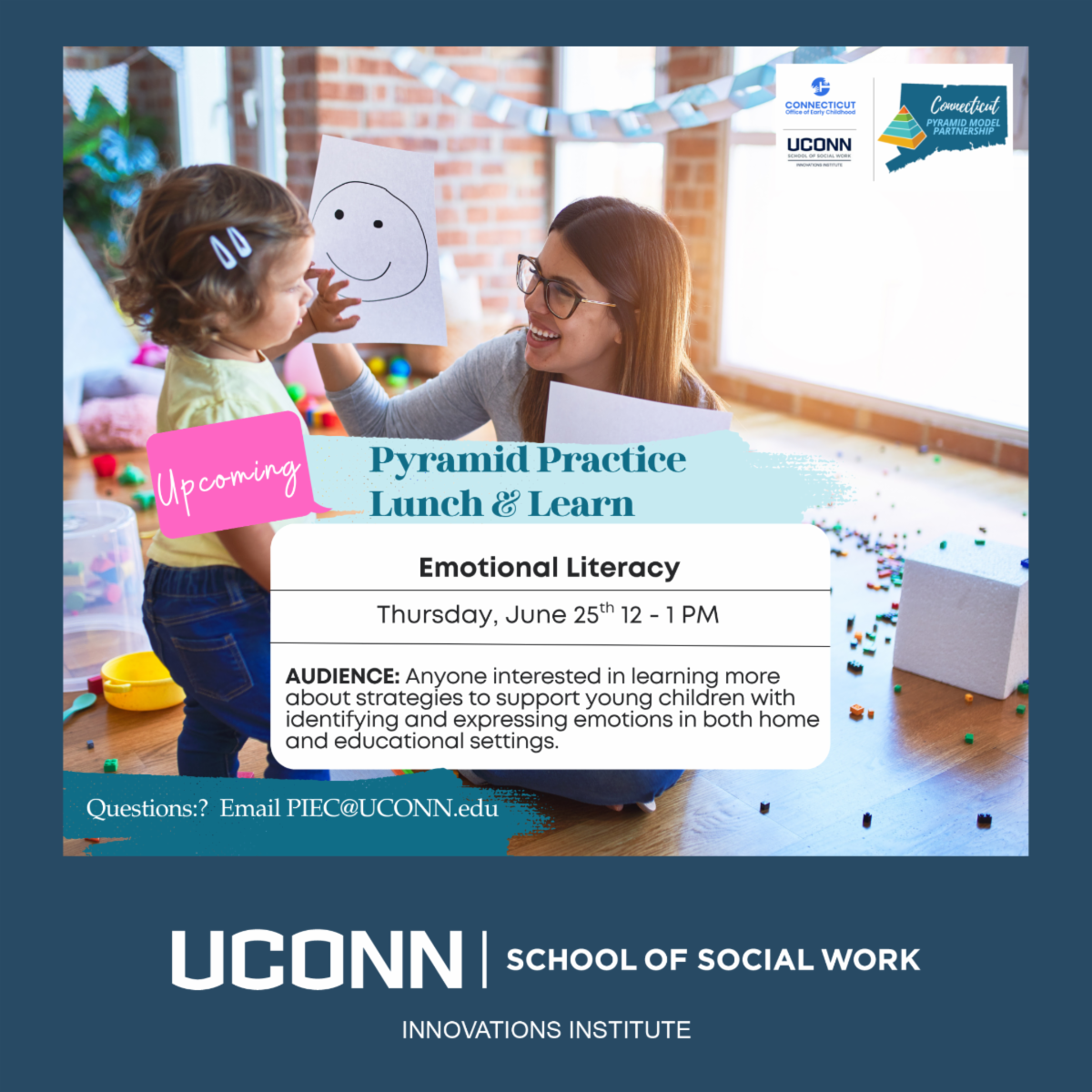
Pyramid Practice Lunch & Learn: Emotional Literacy

Thursday, June 25

12:00 – 1:00 PM ET


Join Innovations Institute's Parent, Infant, and Early Childhood (PIEC) team for the monthly Pyramid Practice Lunch & Learn. The June session will focus on emotional literacy and is for anyone interested in learning more about strategies to support young children with identifying and expressing emotions in both home and educational settings.

Equity in Youth Suicide Prevention: Addressing Racial & Ethnic Disparities

Wednesday, June 3

12:00 – 1:30 PM ET


Join the Children's Hospital Association (CHA) and Nationwide Children's Hospital in cooperation with the Ohio CHA and the Ohio Youth Suicide Prevention Collaborative for the first session in a youth suicide prevention webinar series. This session will discuss racial and ethnic disparities in youth suicide and structural and systematic factors on suicide risk and access to care. Continuing education credits are available.

P-5 Policy Network First Fridays

Friday, June 5

11:30 AM ET


As the impacts of HR1the 2025 federal budget reconciliation actbecomes clearer, this webinar will share stories and strategies on the upcoming changes and what it means for the prenatal-to-five community. Hear about an opportunity to raise your voice to support FY27 appropriates asks, diaper donations for families in need, and more.

What's Possible with Better Early Childhood Funding & Cost Data?

Wednesday, June 10

12:00 PM ET


Better funding and cost data can help early childhood leaders make smarter investments, strengthen programs, and better support children and families. Join the Data Quality Campaign for a conversation with leading early childhood finance experts about what’s possible when the field has stronger cost and funding data—and how better data can support more effective policies, funding decisions, and coordinated systems. 

AHRQ Integration Academy – From Coding to Braiding: Strategies for Financing & Sustaining Integrated Behavioral Health in Primary Care

Wednesday, June 10

1:00 – 2:30 PM ET


Join the AHRQ Academy for Integrating Behavioral Health and Primary Care for an inside look at the new Integrated Behavioral Health (IBH) Financing Toolkit and discussion of practical approaches to building sustainable IBH funding models across primary care, health systems, safety net settings, and rural communities. 

Exploring Research & Policy to Support Black Families & Strengthen America's Future

Monday, June 15

1:00 – 2:15 PM ET


Join Black Families Flourishing (BFF) for a virtual panel discussion with BFF core advisors and leading scholars whose work is shaping conversations about Black family life, public policy, research, and systems change. In honor of Juneteenth, this discussion will examine how Black families and communities continue to build, care for each other, and flourish. 

Resources

Prevention & Recovery Tip Sheet


A new tip sheet from the 988 Crisis Systems Response Training and TA Center, Supporting Children, Youth, and Families in Crisis, provides practical, easy to understand guidance to help prevent crises, respond effectively when a child or youth is in emotional distress, and support healing after a crisis. It emphasizes family-centered approaches, early identification, and connection to appropriate crisis and recovery supports.

Child Welfare Financing Survey


Every two years, Child Trends—with support from Casey Family Programs and the Annie E. Casey Foundation—conducts a national survey of how each state finances child welfare. These data are compiled and released in a national report, state-level factsheets, funding source factsheets, and other products. Among the findings, child welfare agencies increasingly use smaller federal funding sources and state and local funding for child welfare has largely held steady in recent years.

Job Opportunities

Center for Adoption Support & Education (CASE)

Colorado State University

Do you have a job opportunity you would like to share with the field?

Be sure to indicate any applicant deadlines.

Received this from a colleague? Stay connected!

LinkedIn
Instagram
Facebook
X Share This Email
LinkedIn Share This Email

View as Webpage