|
Dear Friends,
As 2025 comes to an end, I want to take this opportunity to share some thoughts about a core aspect of Slifka’s work: commitment to community.
The concept of “community” is under attack. One of the main broadsides against it comes from competition between definitions. Who is “in” and who is “out”? Are communities defined by the identities of their members? By fees paid to belong? By political, religious, or other ideological beliefs?
Not all communities are voluntary. What about aspects of human existence that bind us to others based simply on where or how we were born? If we shift our attention to communities that are formed by conscious choice, how pluralistic should communities be in accepting people who want to be a part of them?
These questions have the potential to feel somewhat luxurious to us as contemporary American Jews as we look back to ground our self-perception. After all, Jewish communities throughout much of our history were defined by those outside of it, sometimes by physical walls that defined where that community could live or move, other times by laws that discriminated against Jews because of who they were. And Jews were killed for the same reason. That history is not over as last week’s massacre of Jews on Bondi Beach in Sydney attests.
As I reflect on 2025 as Slifka’s Executive Director, I am struck by the number of times the question of who Slifka should include in its community has come up among our Jewish stakeholders. Of course, there are many opinions about this. But Slifka’s answer to this is pretty simple:
Anyone who is interested in the strength and vitality of Jewish life at Yale is welcome in the Slifka community. This includes people who hold divergent political, religious, social, ethnic, and cultural identities and practices. It includes people who would never otherwise share Facebook groups, or follow the same Instagram or Twitter/X influencers. It includes people who sing Jewish songs in different languages, identify the core essence of what it means to be Jewish very differently, and vote differently in elections.
Hence, we don’t check any Jewish credentials at the door - not kosher or ritual observance, family trees, Shabbat practice, or views on Israel. Anyone who supports robust Jewish life at Yale is welcome. Such openness, however, does not mean Slifka as the center for Jewish Life at Yale agrees with or platforms the views of everyone we welcome into our space on any of these matters. We only allocate our human, financial, and infrastructure resources to activities that are in line with our values.
Here are some examples:
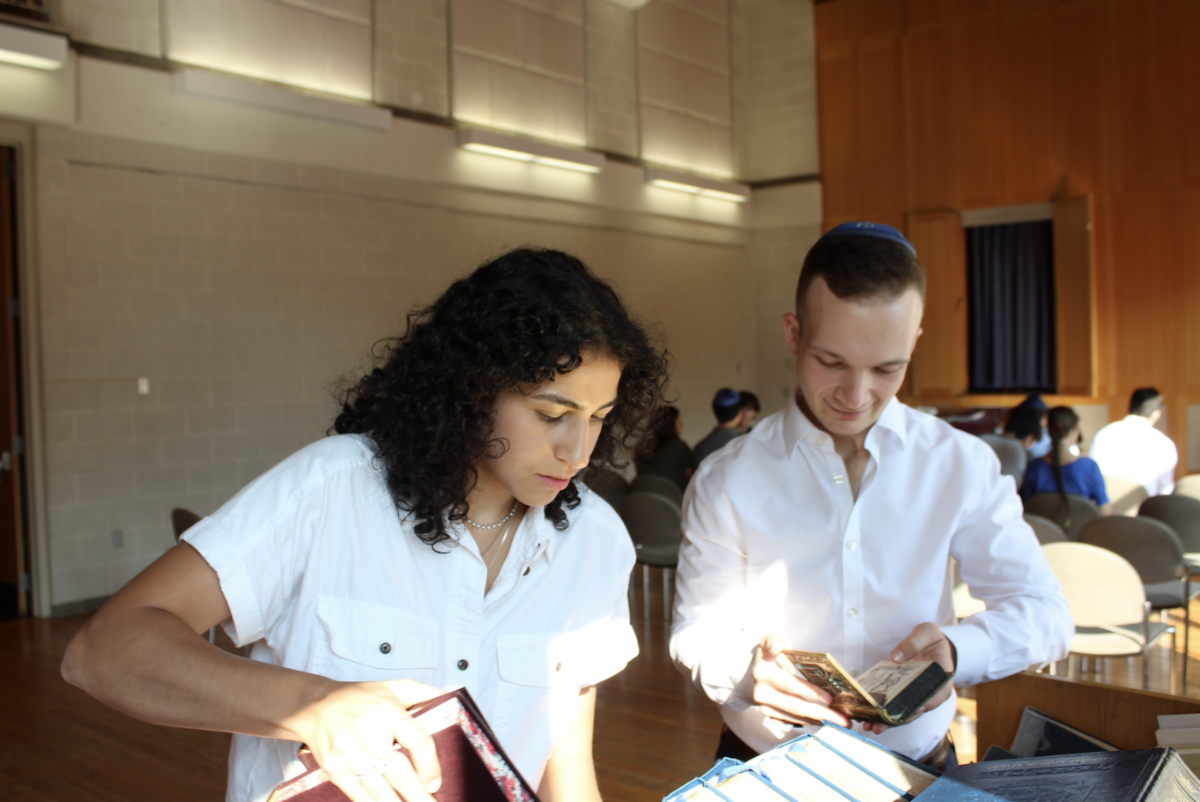
Slifka offers Shabbat and holiday services (three different denominational options on Friday nights and two on Shabbat morning) because communal singing and prayer is an important component of Jewish life. We serve kosher food and provide opportunities for both introductory and more advanced Jewish study because these activities foster serious engagement between Jews around traditional Jewish practices. We proudly fly both the American and the Israeli flags over our front door because we believe strongly in the promise and potential of both nations, even when we disagree with policies their democratically elected governments implement. And we invest in security to keep out those who would seek to do us harm.
As an educational institution committed, like Yale, to excellence in teaching, learning and living but through a Jewish lens, Slifka Center creates meaningful opportunities for students to engage deeply with Jewish life, thought, and values. Through this work, students are invited to:
- Attend Shabbat dinners and setting aside time to unplug,
- Engage with the Jewish intellectual tradition and the texts that preserve it,
- Connect with other Jewish students, faculty, and staff members as a way of expanding networks and perspectives on what it means to be human through a Jewish lens,
- Spend time studying and/or being in Israel, experiencing the Jewish State as the only place in the world where Jewish history and its contemporary culture come to life in the public square,
- Learn our foundational stories, ideas, laws, and the history of our development over millennia,
- Understand what we have inherited from our parents, families, and home communities about our past and what it means for our present and future,
- Find mentors and role models, both among students and staff,
- Graduate as proud Jewish adults, equipped with the knowledge and motivation to engage with their Jewish identity thoughtfully throughout their lives.
2025 has been a year of challenge to our community and our definition of it. I am SO proud to report here in December that our community is strong, resilient, proud, and cohesive. It’s not about uniformity or homogeneity, it’s about community - finding people with whom you are willing to join a collective that carries a stronger value proposition than standing alone.
As we saw again in Sydney as the semester was ending, violent antisemites will come after any Jew, regardless of how they define their connection to being Jewish. Politics, religious practice, and ways of thinking are irrelevant to terrorists. The victims on Bondi Beach were murdered simply because they were Jews.
And so at Slifka we welcome all who see themselves as Jewish, wish to learn more about Jews and Judaism, or support a strong and vital Jewish community at Yale, while being clear to them and to ourselves about who we are and what we stand for. I hope that each of you has a community to be part of that meets these criteria, and that you will join us in supporting Slifka Center with a 2025 gift, if you haven’t already. Click here to view our 2024-25 Annual Report, or contact me at uri.cohen@yale.edu for more information.
76% of Jewish Yale undergraduates chose to be part of our Slifka community this past year. I can’t wait to see what next year holds.
Here’s to 2026!
|