|
Dear Friends,
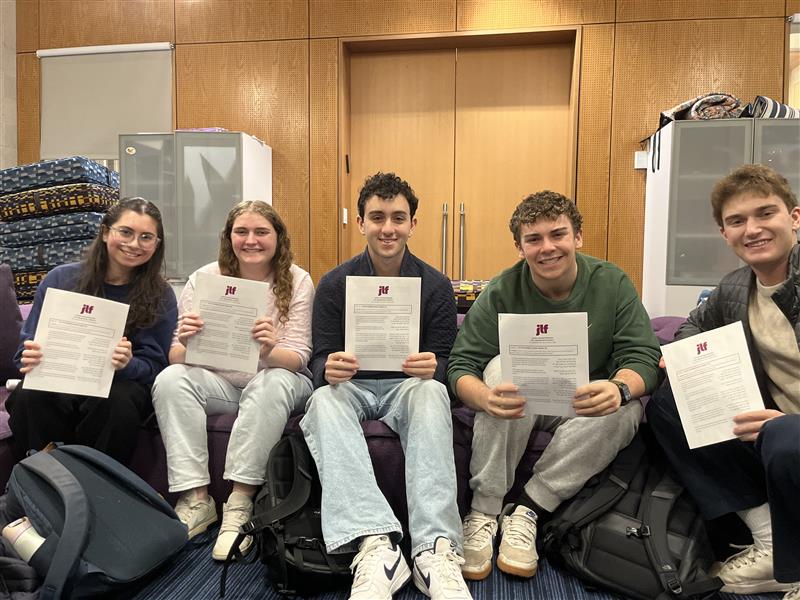
November is election month, and there has been a lot of attention paid to various races. The one race you probably have not heard much about was the one in the Yale Jewish community: a new Hillel Student Board was elected. The official transfer of power happens each year at Student Leadership Transition Shabbat (which took place November 7-8), one of my favorite moments of the year.
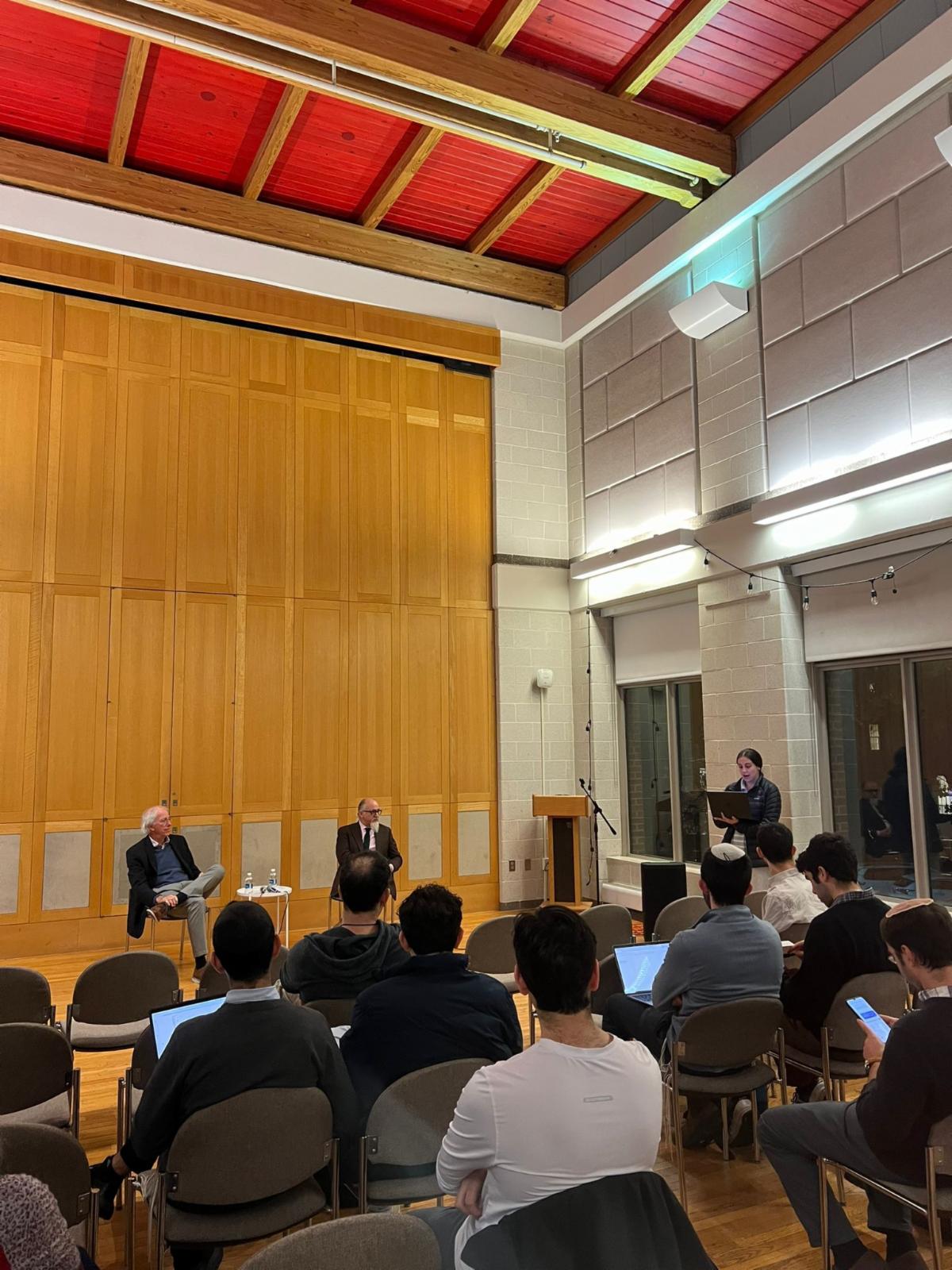
I’m a big fan of ceremonies. In front of a packed Kikar Schusterman (our dining hall) at that Shabbat dinner I talked about the public spectacle described in Numbers 27 15-23 in which Moses implores God to appoint a new leader for the people who will follow Moses. God tells Moses to select Joshua, and to bring him up in front of all the people and the Urim v’Tumim (the High Priest’s breastplate which famously appears on the Yale crest). “You shall put some of your honor upon him that all the congregation will be obedient,” God says to Moses in verse 20. “And he laid his hands (“vayismokh”) upon him and gave him a charge.” This commissioning is the most famous leadership transfer in history, and we reenact it (in a way) annually at Slifka.
Later on in my talk I mentioned the concept of “servant leadership.” I asked the students who had heard of it, and maybe two hands went up. Servant Leadership is the idea that the main motivation for some leaders is to serve, and the definition of success is the well-being of those being led. This type of leadership is easier when those being led are a relatively homogeneous group - it’s much harder when there is significant diversity of opinion and belief across multiple axes. Jewish communities fall into this latter category, of course.
Servant leadership isn’t about making everyone love you or agree with you. It’s not about always getting what you want all the time - either as leader or constituent. It’s about a durable trust that the leader is committed to the well-being of the whole, and that while individuals within the group are cared for all the time, they get what they want often enough to make it worth it to stay in the group. It’s all about trust.
I had the opportunity that night to toast the outgoing co-Presidents of Hillel Student Board for the close partnership we have shared and the ways their work have strengthened this community. I also shared my excitement and gratitude for the incoming student co-Presidents who are committed and energized to follow in the footsteps of their predecessors and take our community to new heights.
Leadership at Slifka isn’t limited to students’ time here. Slifka is a training ground for future leadership opportunities and commitment to Jewish life. Two proofs of this:
-
I’d like to congratulate Noah Tirschwell, who was just named a Rhodes Scholar, and will be studying Jewish Studies at Oxford.
-
I also want to salute Rob Bildner '72 (and his wife Elisa Spungen Bildner '75) along with Bill Poorvu '56 (and his wife Lia Poorvu) upon each receiving the Yale Medal. Rob & Elisa and Bill & Lia are Slifka Founders and long-time supporters. We are so proud of you all!
What happens at Slifka has ripple effects far and wide across space and time.
I hope that all those who were elected and those who did the electing (whether your candidate won or not) will be served well by your elected officials. The more servant leaders we have out there, the brighter the future will be for all of us.
As always, thanks for reading.
|