|
Dear Friends,
This month has carried us through a whirlwind of moments — some joyful, some marked by sadness and reflection. This month included Yom Kippur, Family Weekend, October 7th, Sukkot, the onset of the ceasefire in Israel and Gaza and the return of the living hostages along with some of the slain, Shemini Atzeret, Simchat Torah, Fall Break and Asian-Jewish Shabbat. It has been quite a month.
The constant ebbing from highs to lows and everything in between this month, I am reminded not only of how this is so reflective of the Jewish experience over the millennia, how deeply the world moves us, and how much our response matters. In times like these, it is especially meaningful to anchor in the work that we do — the daily efforts that build understanding, connection, community and care. What happens at Slifka has never felt more vital, not only for our students and their families but also far beyond.
I want to take a moment to connect the dots: to illustrate how three core initiatives from this past month (that you can learn more about and see pictures of below) exemplify our commitments to individual relationships as an antidote to hate and to strengthening the ties that bind Jewish community.
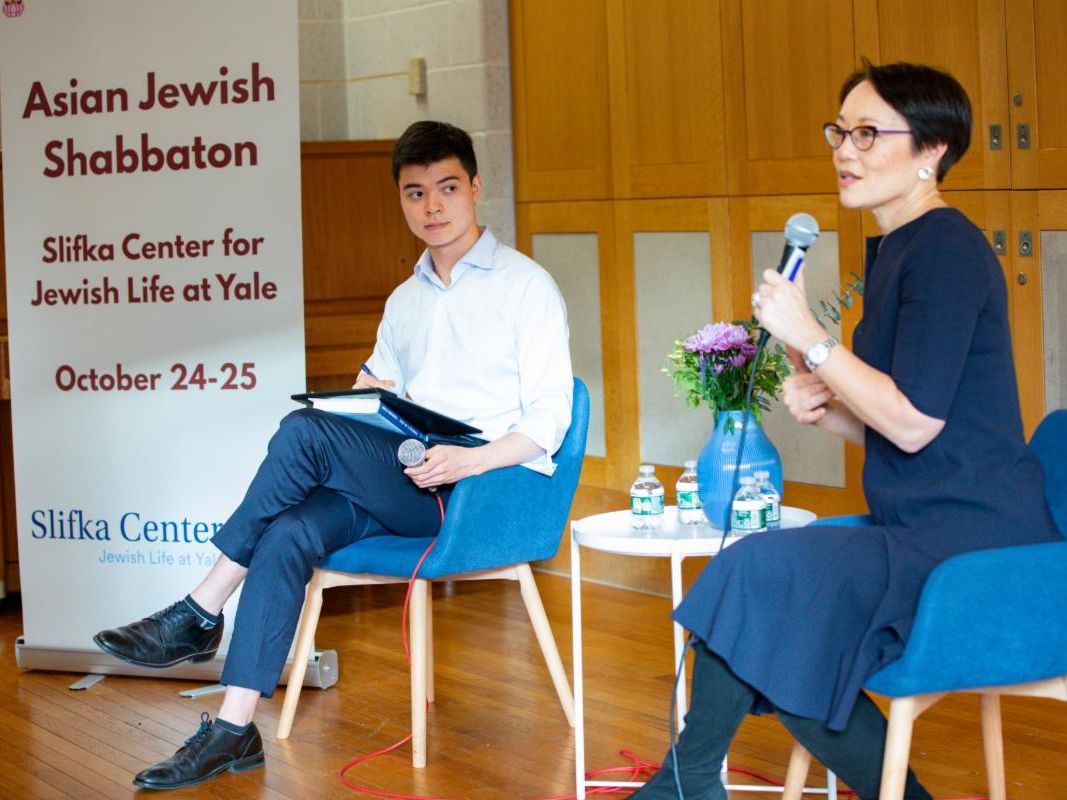
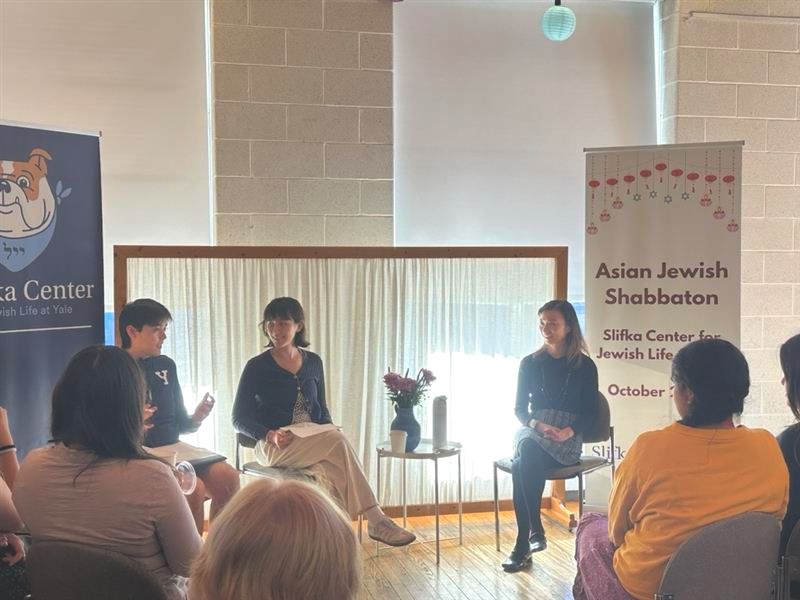
This past weekend’s Asian Jewish Shabbat was a massive celebration of what happens when Jewish vision, energy, creativity, leadership, and exuberance come together. Our two amazing leaders, Jamin and Zach, used the Asian Jewish Union platform they created here at Yale, built on the foundation Slifka provided, to design and host a celebration of Jewish identity that attracted students from all over the country and featured one of the world’s leading Rabbis — Angela Buchdahl. Over 100 students joined her for Shabbat services in Battell Chapel, 521 students participated in Shabbat dinner (a new record), and 40 Asian Jewish students from all over the country participated in the whole Shabbaton experience. This program showed that:
- Together, our only limitations are our capacity to imagine and ability to execute. Slifka helps students build and explore their ideas.
- Like Zach and Jamin, individuals can make a big difference in the lives of the many. Many participants shared that whereas they have often felt alone, this Shabbaton gave them a community and confidence they never knew existed.
-
Jewish life is worthy of the public sphere at Yale on a regular Shabbat – not just on the High Holidays.
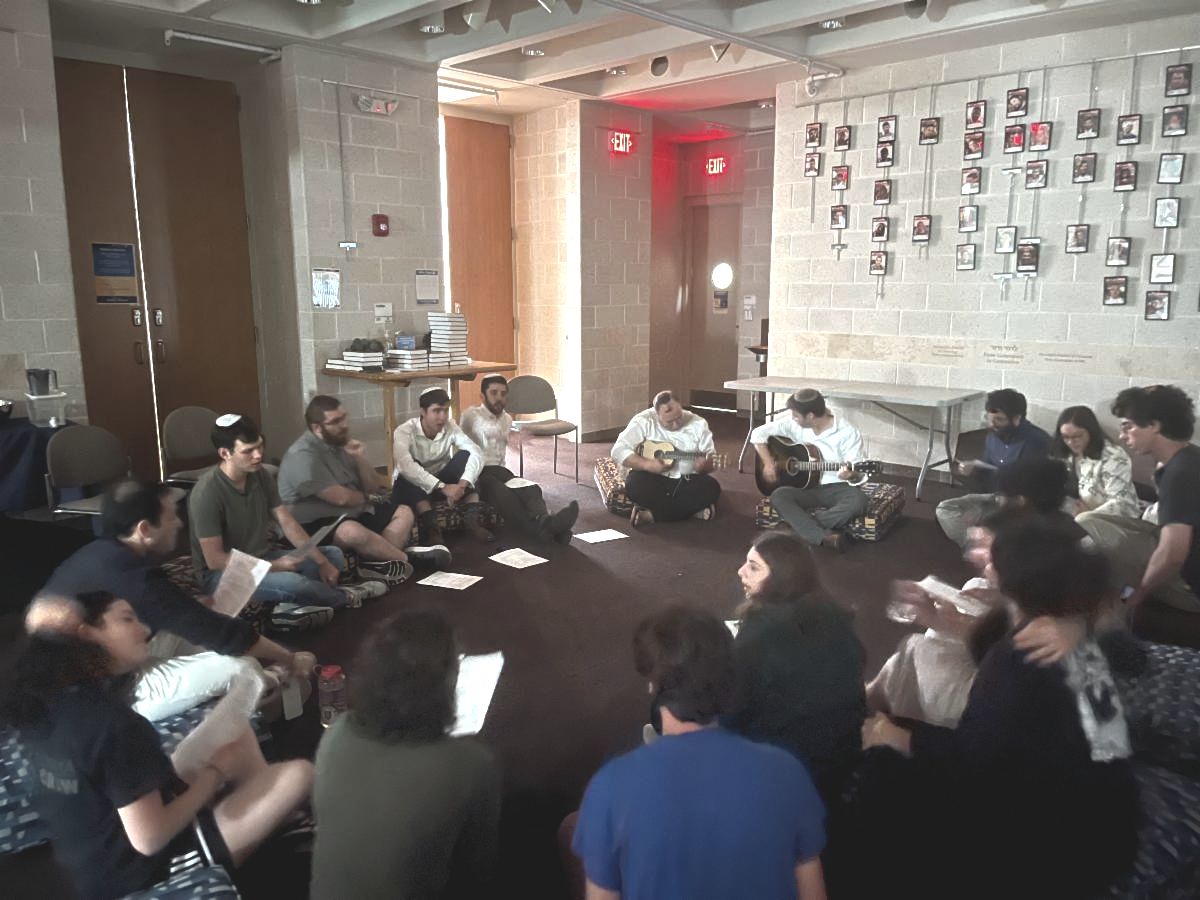
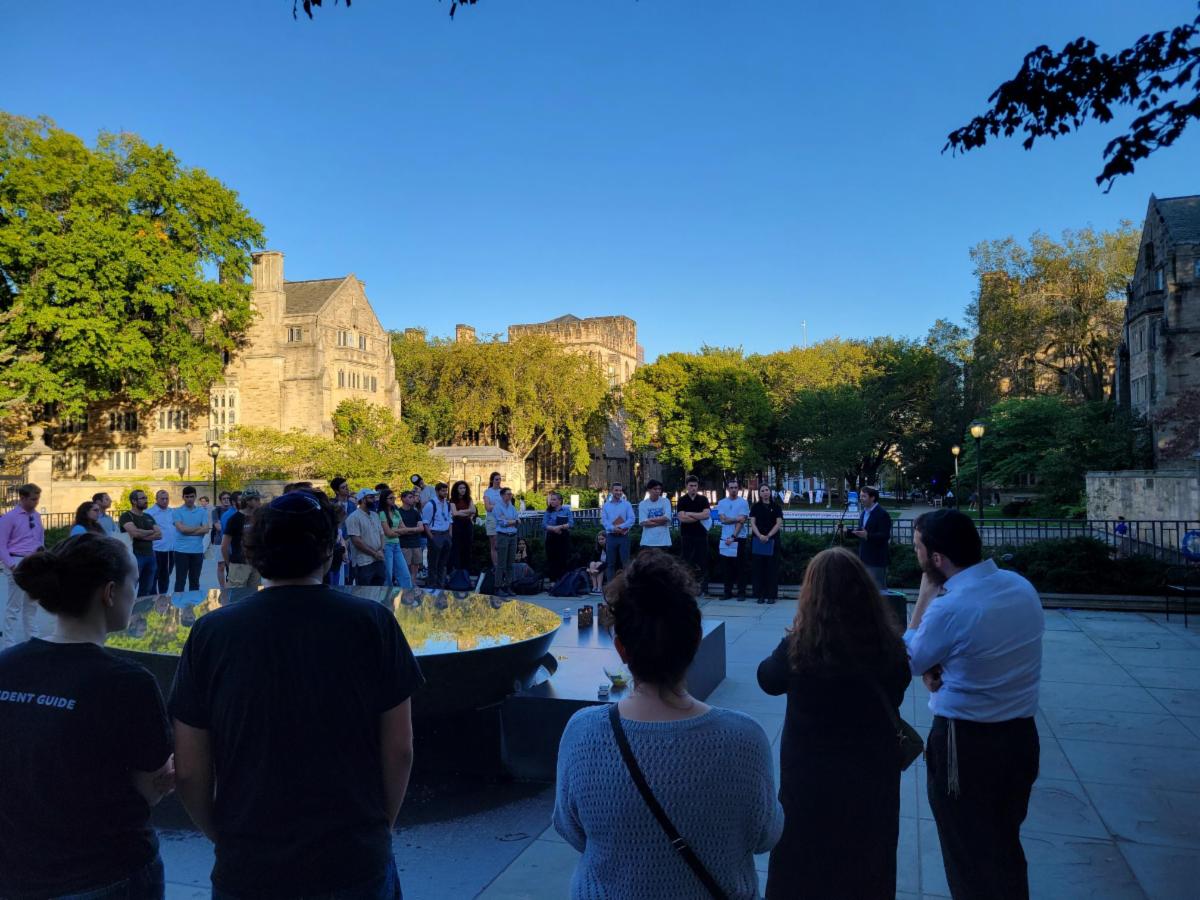
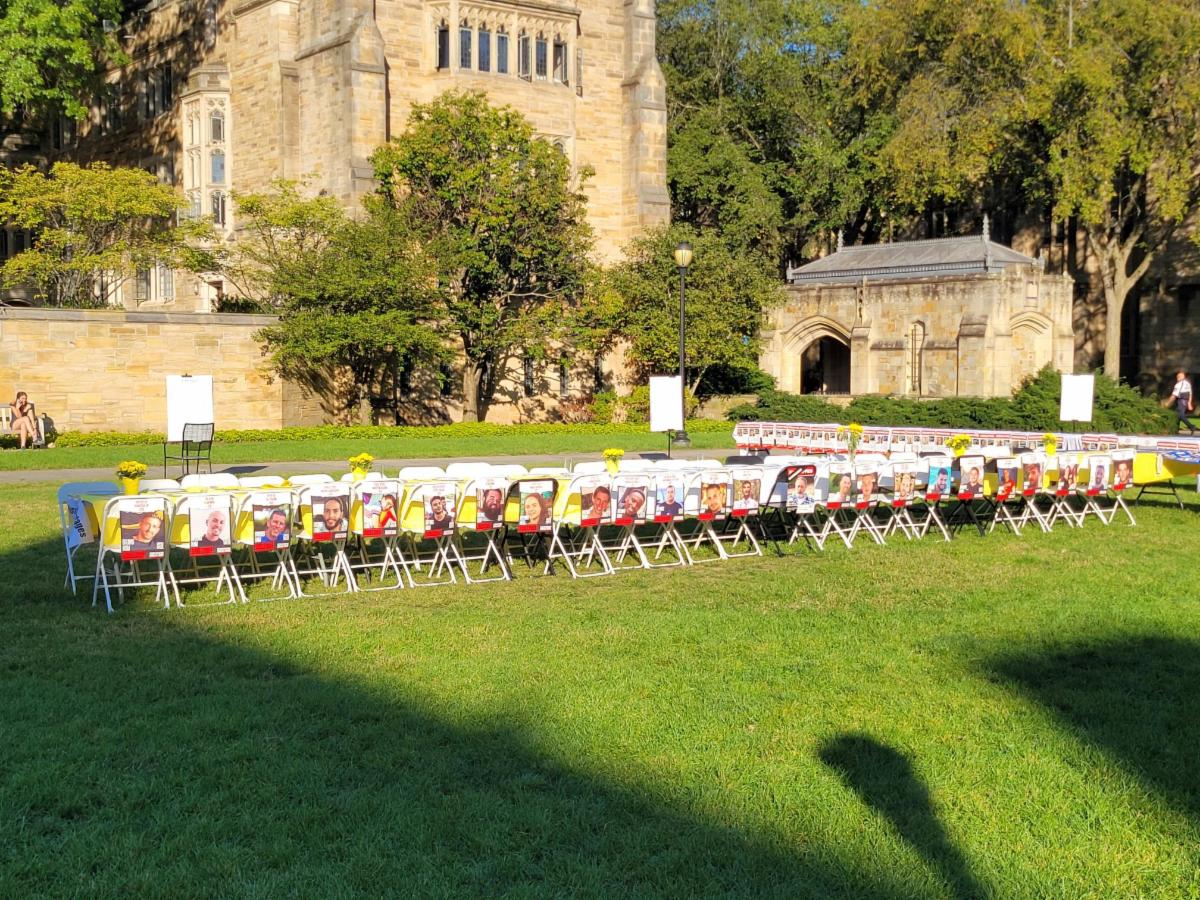
On October 5th we hosted our second annual commemorations of the pogrom of October 7, 2023. Our students and staff once again arranged “hostage tables” on Cross Campus, held a public vigil at the Women’s Table, and heard from survivors of that day. Just eight days later, our Israel Fellow, Yulia Borik, and some students had the privilege of taking down the first posters of hostages who had been returned after 738 days in captivity that have hung at Slifka for two years. That day alone held celebration, sorrow, and worry, much of which continues to persist as of this writing, since not all of the bodies have been returned and the ceasefire is shaky. These commemorations showed that:
- Together, we can be resilient across a range of emotions and events, bolstered by the sense of community we create. Slifka helps facilitate this important process.
- Like our students in the face of both relief and sorrow, we can create our own rituals by doing what seems right and holds meaning for us personally and communally.
- The world continues to change fast, and our job is to adapt and do our best to make the future better than the present by leaning into Jewish values, heritage, and traditions.
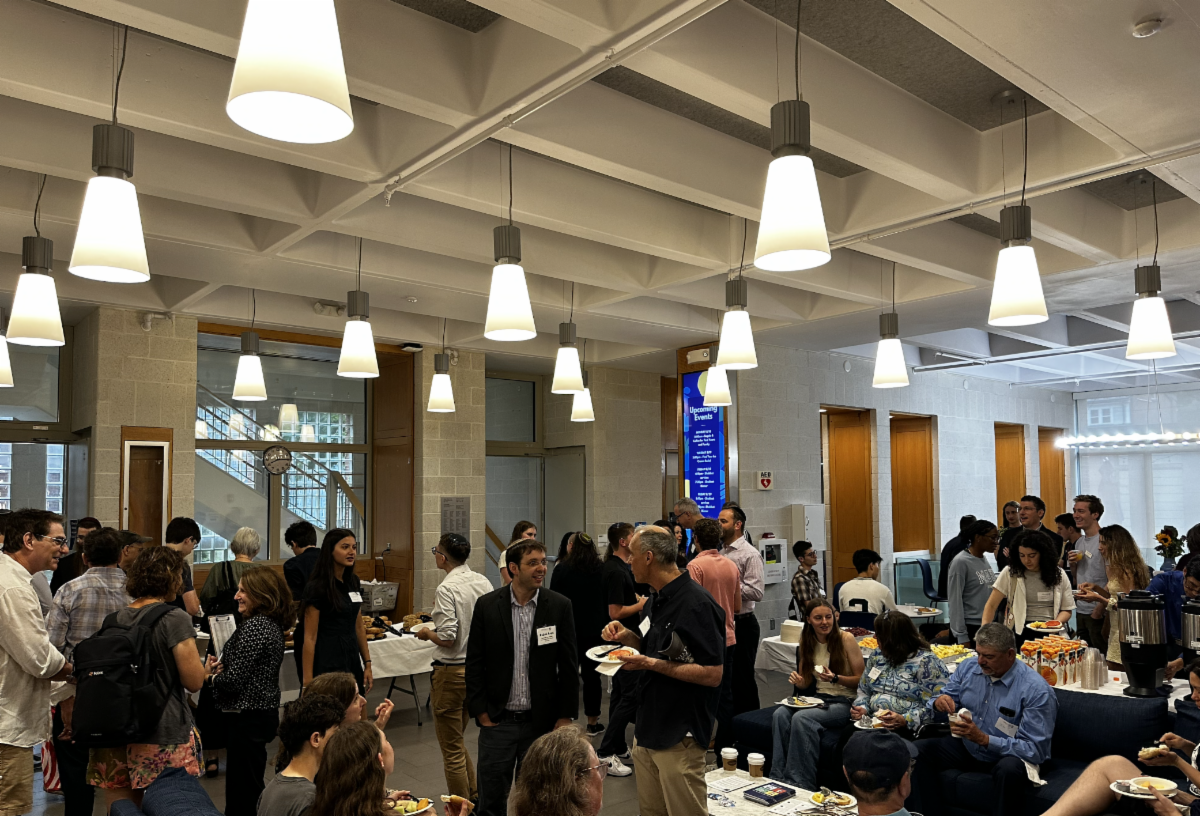
Slifka was packed over Family Weekend. We once again needed all three floors of the building to hold everyone. The Sylvia Slifka Chapel on the second floor needed to be turned over twice - first from a prayer space where our Egal minyan had 80 participants into a dining space to hold 120 for dinner, and then back over to an auditorium space for a standing-room only Magevet Concert. Then Saturday afternoon Ruby Namdar – a Sapir Prize-winning author who is also a parent of a current Yale student – gave a talk that attracted another 75 participants. The weekend showed that:
- Together, we succeed in making Slifka all about family, which so often includes both love and disagreement.
- Like the more than 400 students and families who streamed through Slifka over Family Weekend experienced, Slifka offers something for everyone, whether it be cultural, social, religious, intellectual, artistic and beyond.
- At the end of the day it is good for Jews to stick together because we benefit from each other, and we recognize that being in community is much more enjoyable most of the time than being isolated.
As the month draws to a close, I want to make sure the words that I leave you with communicate what I’m feeling the most.
First, I am relieved and grateful that the living hostages are back home, and that many of those we lost have come back. I look forward to being able to say that everyone has come home.
Second, I am anxious about what the future holds, whether the ceasefire will continue to hold, and whether peace is really possible. The weight of history and the cascade of headlines each hour continue to validate that anxiety.
Third, I feel hope that there is a new chance for peace, and that Israelis and Palestinians may finally be able to have the lives of respect, security, dignity, and humanity that they deserve. I hope that the forces for durable peace and long-term stability will prevail so that everyone in the region will benefit, as will those of us far beyond it who – as always – are implicated by it. I hope that this is the anniversary we will celebrate in next Fall’s holiday season.
Lastly, I feel tremendous gratitude to be part of the Slifka community. We are alive and vibrant, proud and strong. We have come through these last two years together – if we can withstand that we can survive anything life throws at us. This has been the Jewish story for millennia, and I am proud for the Yale campus to be the greenhouse in which the next generation of Jewish community leaders grow and prepare their contributions to a better future.
Thanks for reading, and for being such an important part of this work.
|