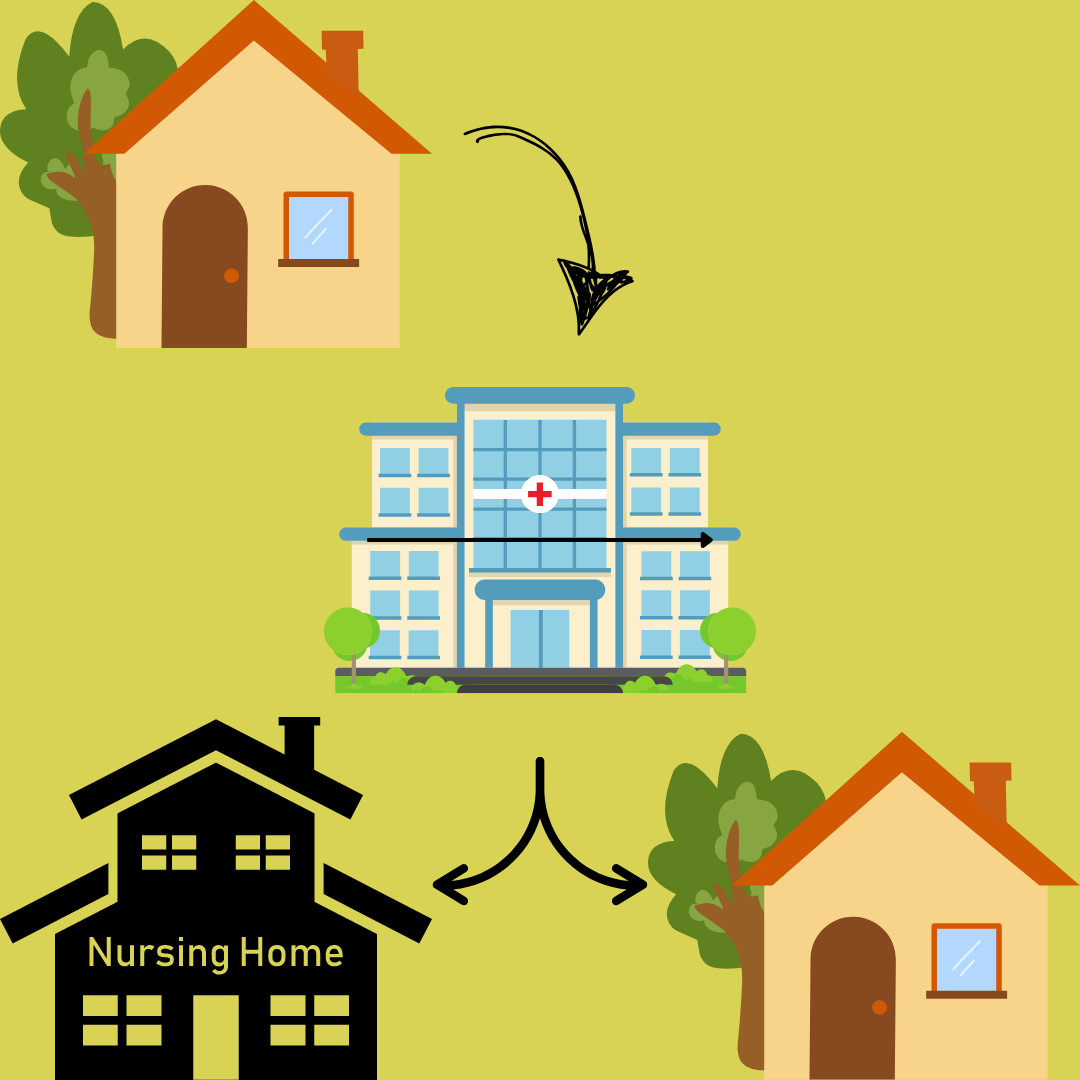
From Home to Hospital and Back 9.19.24

Avatar: How can I support you?

Dear Friends and Welcome new Subscribers!


Eldercare is episodic which means that caregiving isn't always a continuous, daily commitment, but rather, it consists of periods of intense care followed by times of relative calm.


I'm often approached by families when they're trying to prepare for an elderly parent's discharge from the hospital. It could mean that mom (or dad) needs wound dressings changed, special tubes or IV lines need regular flushing or they're worried that their parent has lost the ability to care for themselves independently after two weeks in a hospital bed. When you find yourselves scrambling to make sense of things, unsure of what to do next, it helps to have professional support. Scroll down to read more.


Last week I hosted an engaging, interactive presentation on Advance Care Planning. It was enlightening as participants got answers to questions on this topic. Have you completed your Advance Directives? It probably feels like you can put it off for a while, right? Do you know the difference between a Living Will and a MOLST form? How will you find someone to be your Health Care Proxy? Have you started conversations with your loved ones about your own wishes for medical care at the end of you life? How do you even start those conversations? Even though we like to think medical emergencies won't happen to us, they DO and an ambulance is a terrible place for advance care planning. So, when medical decisions need to be made, your advance planning will make a big difference!


I'll be hosting another free one-hour webinar on Advance Care Planning: Getting Started - Monday, Oct. 14th at 7pm EST. Invite a friend or family member and join us. Registration is necessary by clicking here to get your Zoom link.


If you know a family caring for a loved one at end-of-life, and can see they're feeling overwhelmed, feel free to give them my contact information. You can also share my book, Guiding Lights, an easy-to-read manual that helps navigate healthcare, homecare and end-of-life services for the dying. You can leave a Voice Mail or text message at the number below. I have reinstated my calendar for those who asked to make appointments that way. Use this link for that. Finally, thank you for sharing this newsletter with those who would benefit from it. I do appreciate it!


I'm here for you,

Jean Oswald, Hospice RN

Author, End-of-Life Consultant

(VM & Texts): 585-454-9679

Set up an appointment online

Graphic: Home, Hospital, Nursing Home

From Home to Hospital

When your loved one (your person) needs to go to the Emergency Room or hospital, I suggest you set yourself up for success in advocating for them. Plan ahead: If they have a serious illness, put together a "grab n' go" folder today. Pull all of your person's information together and put these things in the folder:

  1. A Face sheet - in a plastic sleeve - with your person's full name, date of birth, insurance information including a Medicare Advantage name and number if covered. This should also contain a list of medical problems or diagnoses AND allergies
  2. Medication list - name of medication, dosage and when they're taken
  3. Health Care Proxy name and contact information with their Living Will or copy of MOLST form (whatever you have). If you don't have both, then at least have the name of the person (Health Care Proxy) and their contact information who can speak for them if they're unable to speak for themselves
  4. A signed HIPPA release form that says medical providers are allowed to speak with you (signed ahead of time with the patient's permission)

Practice "polite assertiveness" when you accompany (or follow soon after) your loved one to an Emergency Room. And then continue to practice polite assertiveness throughout their stay and possible admission as well as discharge. The professionals want to feel respected and most want to teach patients and their families about the plan of care going forward.

  • In an emergency room, if you are asked to go to the waiting room, you can tell the staff you will do that, but holding that important folder, you can tell the staff that you also have invaluable information regarding your person's history, allergies, and medical problems. Usually someone will come out to see you from the "team." Always introduce yourself ("I'm Mary's daughter; and you are...?") Ask what their role is in your person's care. Figure out the hierarchy of medical providers. An 'Attending' physician, RN, P.A., Resident and N.P. each have different roles they fill in providing care to your person. Ask them to describe the hierarchy of care that is being given to your person so that you understand the key players and the part(s) they play
  • Know that your person's primary care physician (PCP) won't be in charge of their care. The PCP is notified within 24 hours of the admission, but it's the Attending who leads their care and can tell you what the protocols are for your their care. Ask who you can communicate with regularly. It's often a Resident if your person is at a teaching hospital
  • Whether your person is still in the ED, in the "Observation" area or "inpatient" (admitted), make sure you're with your person at least once in the early morning (by 6:30 or 7am) to introduce yourself to the 'white coats' who come to see your person. Find out their role (i.e. a specialist like a cardiologist (heart doctor), nephrologist (kidney doctor) or pulmonologist - lung specialist) in your person's care. Ask who the Attending doctor is in charge of your person's care each day.
  • While that 'white coat' is still with your person, find out if that doctor has received the full report of your person's last 24 hours and has a plan for going forward. Ask about test results, what they mean and what the next steps are
  • If your person was admitted, ask if there is a consistent time this provider sees your person each day. Position them as the expert who is there to "teach you" about whatever the protocols and plans are. If you have any trouble getting clarity on who you may have access to regarding your person's treatment plan, ask if you can have a phone number for the main desk on the unit to get updates when you can't be there
  • Always find out who the nurse is that is taking care of your person each day. The nurse's name may be on the board in their room. When the nurse comes to see your mom, ask how long their shift is and if there is an aide assigned to your mom as well
  • Know that if there is a patient portal, test and bloodwork results often appear in the portal - in real-time, so you can stay abreast of what's happening and ask about those results later

From Hospital to Home

Things to know when your loved one is in the hospital:

  1. As soon as your person comes to an Emergency Room or is admitted to the hospital, someone is planning for their discharge right away. In my city, this person is known as the "discharge planner." Each hospital unit has one of these. *The discharge planner usually "rounds" with the medical team each morning so that they know when beds will be available for new admissions
  2. You could ask your person's nurse (or the nurse in charge of the unit) this question: "I know you start planning for discharge upon admission. I don't want to be caught unprepared and want to participate fully in my person's care and discharge. Do you have an assigned discharge planner for my person?" The nurse can direct you to them.
  3. Introduce yourself to the discharge planner right away. Their job is to stay in communication with the patient and their family about discharge. This person can become your clinical liaison in addition to the lead physician. They know what the medical team's thoughts and plans are for your person and they can tell you when a change in course is happening or alert you to plans for an earlier, unexpected discharge. They might tell you that a "transfer to a SNF" is pending and you can respond "I don't even know what that is. Can you explain it to me?" Again, positioning them in the educator role keeps the relationship flowing. (A SNF is a skilled nursing facility.)
  4. The discharge planner is aware of your person's medical insurance. This impacts your person when they need to receive rehabilitation after hospitalization. The discharge planner can often give you a list of "rehab facilities" so you can list your preferred places on a scale of 1-5 for example. but you might want to check out those facilities! If so, and before you feel pressured into a quick discharge, tell the discharge planner you need a day to check out those rehab facilities. This becomes a discharge "dance" so-to-speak, where you want more time, but they need to know you're being diligent in that task.
  5. Know that SNF's usually have excellent rehab units, PT staff, nurses and aides that give your person lots of great care. Unfortunately, that is not always true for their other floors. See if you can walk through a regular unit in the SNF and get a sense of adequate staffing, activities and nursing care.
  6. Unfortunately there are times when your person has not only been very sick during their stay, but they've mostly been in bed, immobile. They may or may not have received any physical therapy (PT), so it is unreasonable for your person to go home without a minimum of conversation about what "home" looks like (i.e. where is the bedroom, the bathroom and how many stairs do they need to climb?) as well as a PT "eval." If you get ANY pushback about this, you need to insist on what is called a "safe discharge" and go speak to the patient advocacy office about your person's needs.

Whew! I know that was long! Next month I will continue this thread with more about preparing for your loved one's return home from the hospital or rehab, and give you information about homecare agencies, how to know if your loved one is turning a corner and hiring private help.

Visit my Website

Compassionate Consulting LLC | Email Facebook IG LinkedIn