From Pullman cars to picket lines: The enduring connection between Labor and Civil Rights


View This Email as Webpage

Today we honor Dr. Martin Luther King, Jr., remembering his life, his struggle, and his unfinished work. For railroad workers, this day carries special meaning — not just because Dr. King was a champion of working people, but because the fight for civil rights and the fight for union rights have always been inextricably linked.

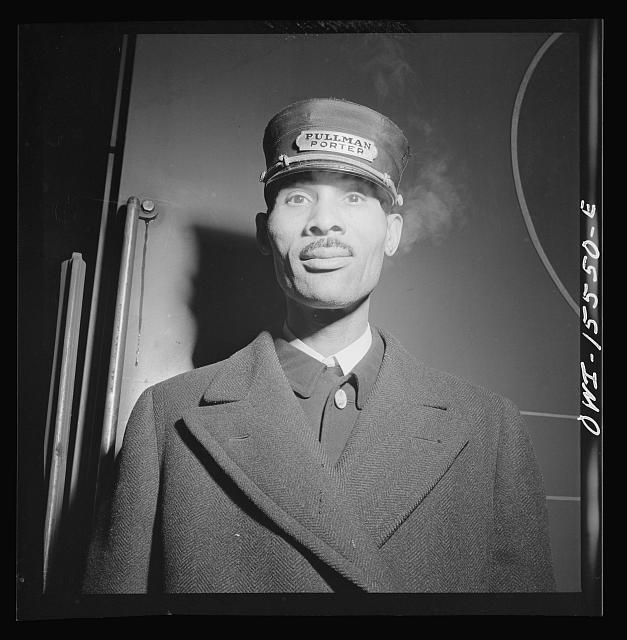
One hundred years ago this past August, Black sleeping car porters packed an Elks Hall in Harlem to launch what would become the Brotherhood of Sleeping Car Porters. That 12-year battle against the Pullman Company wasn't just about wages and hours — it was about dignity, equality, and economic freedom. As one union bulletin declared: "Douglass fought for the abolition of chattel slavery, and today we fight for economic freedom."


The BSCP became more than a union. It became what organizers called "an institutional anchor" for the entire civil rights movement. When A. Philip Randolph threatened a March on Washington in 1941, BSCP locals across the country provided the organizing muscle that forced President Roosevelt to ban discrimination in defense industries. When Rosa Parks was arrested in Montgomery, it was E.D. Nixon — president of the local BSCP — who bailed her out of jail, and the union hall that became headquarters for the boycott.

Dr. King understood this connection deeply. When he spoke to the AFL-CIO in 1961, he made it clear: "Our needs are identical with labor's needs: decent wages, fair working conditions, livable housing, old-age security, health and welfare measures, conditions in which families can grow, have education for their children, and respect in the community."


Yet when King was assassinated on April 4, 1968, he was in Memphis supporting sanitation workers fighting to form a union. And those rail unions that helped anchor the civil rights movement? Most didn't allow Black Americans to join until King and others forced them to change.


This MLK Day, we're witnessing that same fusion of labor power and civil rights struggle in Minneapolis. After ICE killed Renee Good on January 7 and unleashed a campaign of terror against immigrant and non-immigrant workers alike, dozens of unions — including SEIU, UNITE HERE, transit workers, educators, and the Minneapolis Regional Labor Federation — have joined with community organizations to call for a statewide action this Friday, January 23: no work, no school, no shopping. 

Workers across Minnesota are refusing to participate in business as usual until ICE leaves their communities. It's exactly the kind of united working-class action King called for in his final years.


Today, rail carriers still refuse to recognize MLK Day as a paid holiday, even as one in three U.S. workers receive it. Railroad Workers United calls on all carriers to grant this holiday to rail workers. Until they do, we continue the struggle King described in his final year — the fight to redistribute economic and political power to working people of all races.


The lesson from the Brotherhood of Sleeping Car Porters to the streets of Minneapolis today rings true: our unions must be more than contract enforcers. They must be anchors for economic justice and civil rights. That's the work King died for. That's the work that continues.

IMAGE SOURCES

First Above/Caption & Source:

"Delano, Jack, photographer. Chicago, Illinois. Pullman porter at the Union Station. Chicago Illinois Cook County United States, 1943. Jan. Photograph." https://www.loc.gov/item/2017843898/." Library of Congress, Prints & Photographs Division, Farm Security Administration/Office of War Information Black-and-White Negatives.


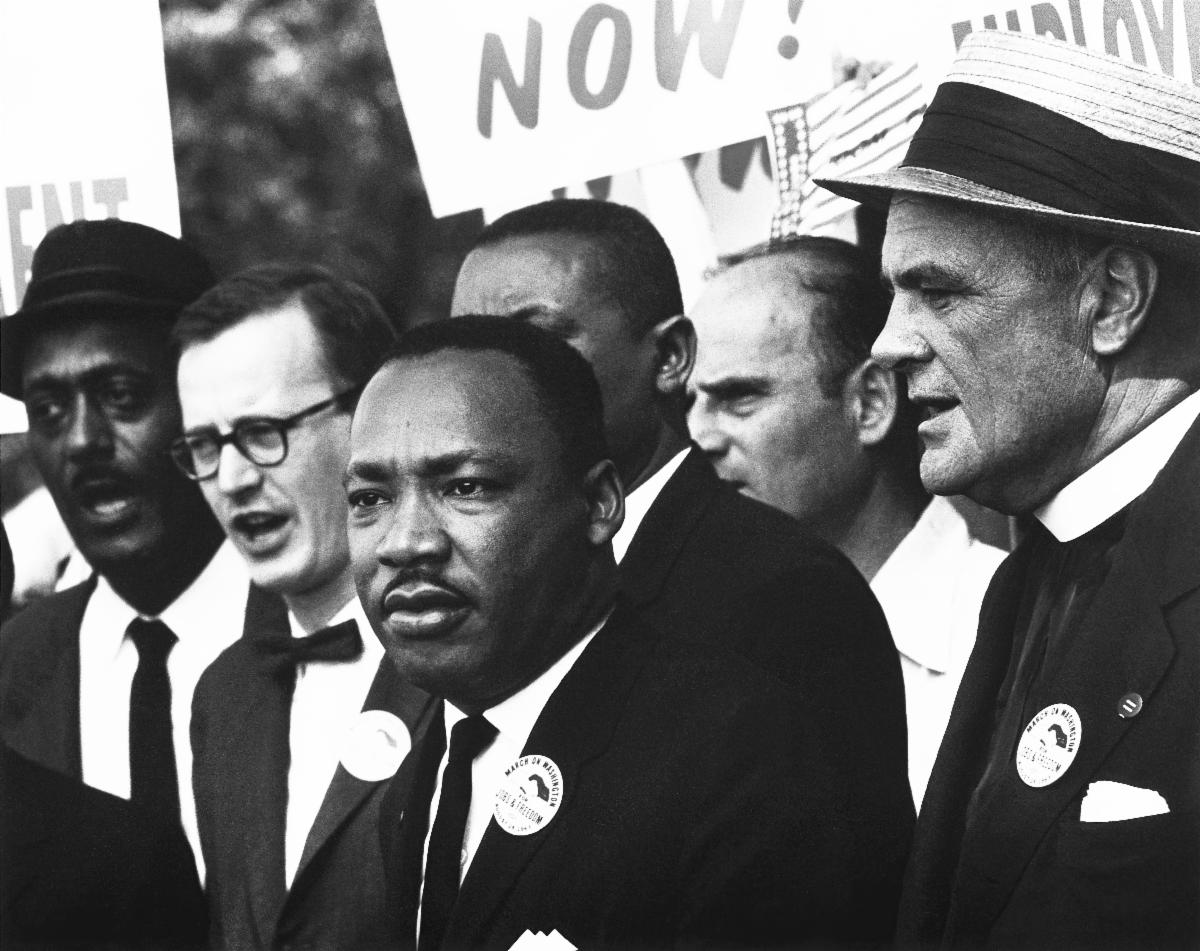
Second Above/Caption & Source:

"[Civil Rights March on Washington, D.C. [Dr. Martin Luther King, Jr. and Mathew Ahmann in a crowd.], 8/28/1963" Original black and white negative by Rowland Scherman. Taken August 28th, 1963, Washington D.C, United States (The National Archives and Records Administration). Colorized by Jordan J. Lloyd. U.S. Information Agency. Press and Publications Service. ca. 1953-ca. 1978. https://catalog.archives.gov/id/542015


Video Clips: MLK, Unions and Organized Labor


History of the Brotherhood of Sleeping Car Porters


ICE Out of Minneapolis Labor & Solidarity Actions

Railroad Workers United

Solidarity -- Unity -- Democracy