|
Dear Mandel JDS Families,
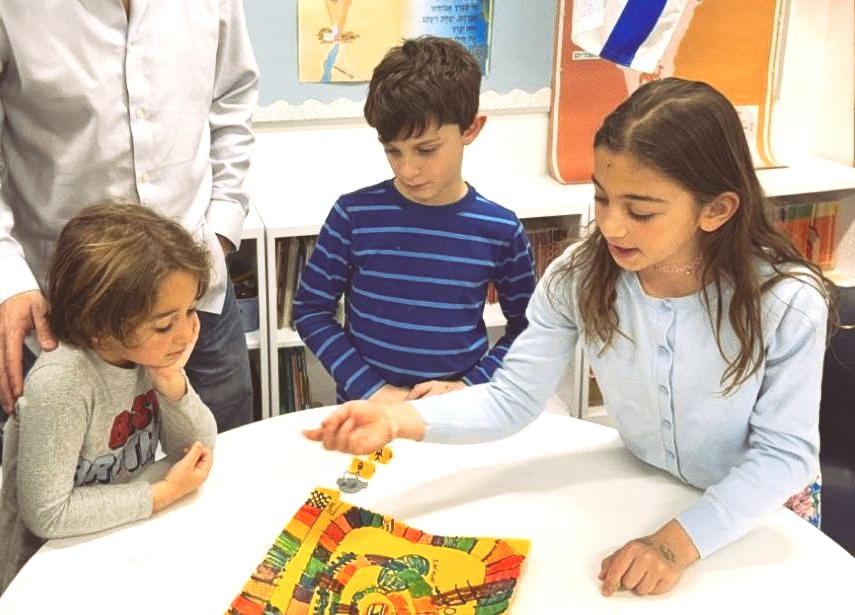
Picture this. Sammy and Jillian are playing “Bananagrams,” a popular offshoot of Scrabble, in the commons area of their local elementary school. As Sammy places his final letter to spell the word “CASSEL,” he begins to celebrate. Jillian, seeing Sammy’s spelling mistake, corrects him and tells him the true spelling of the word is “CASTLE.” Sammy is disappointed in his gaffe, but he perseveres, rearranges his letters, and creates two new words to replace his misspelled word. As the game continues, they are constantly debating the rules, laughing, challenging each other, and having fun. Precisely the type of “friction” social psychologist Jonathan Haidt says is healthy for students.
Another scene. Max is sitting alone in the same common space as Jillian and Sammy. Scrolling on his phone, he rarely looks up to see what is happening around him. With AirPods in his ears, he can hardly make out the joyous giggling of the other students. With each scroll of his thumb, he receives another hit of dopamine to the brain. A video of an AI-generated piece of fruit appears on his screen. The abominable, false creature is eating juicy, AI-generated fruit. Before he even has time to question, ‘Is that cannibalism?’ he scrolls again. A violent, real-life scene appears on the screen. People are scattering, screams fill the air. Another scroll. This time something called Italian Brainrot consumes his vision. An AI-generated shark named Tralalero Tralala is wearing blue Nike sneakers, and he is gibbering nonsense. He scrolls again. He doesn’t negotiate rules, interact with any classmates, or even come close to critically thinking about what he is consuming. He is deep in a dopamine loop without a clear path forward or out.
Social psychologist Jonathan Haidt has been sounding the alarm about exactly these two scenes. In his bestselling book, The Anxious Generation, he points to the sharp rise in anxiety, depression, and loneliness among young people that coincides with the decline of real-world play and the dramatic rise of phone use. Haidt argues that students need the kind of friction Sammy and Jillian experienced. Negotiating rules, bouncing back from mistakes, and sharing moments of joy with peers are what build resilience and social skills. The endless scroll on Max’s phone can’t offer any of that. Instead, it traps kids in a loop of passive consumption, giving them dopamine hits without meaningful connection or learning. Haidt’s solution is simple but powerful: we have to give kids more opportunities for hands-on, face-to-face play — the kind that builds confidence, creativity, and community in ways technology never will. In fact, in a recent article, Haidt looks at research that suggests students are craving these tech-free experiences. “It’s like they’re homesick for a world they’ve never known,” he says.
|