|
Why Avoiding Difficult Conversations Often Creates Bigger Problems Later
Most leaders do not wake up in the morning looking for conflict.
In fact, many difficult conversations are delayed for understandable reasons. Leaders do not want to damage relationships, lower morale, create emotional reactions, or make an already stressful situation worse. So they wait. They hope the issue will improve on its own. Sometimes they convince themselves that “now is not the right time.”
But in organizations, silence rarely stays silent.
When conversations are avoided, people begin filling in the gaps with assumptions, frustration, and distrust. Performance issues linger. Team tension quietly spreads. What could have been resolved with one thoughtful discussion often becomes a much larger issue later.
One executive I coached managed a highly capable employee who had gradually become disruptive in meetings. The employee interrupted others, dismissed ideas publicly, and created tension across the team. The leader avoided addressing it directly because the employee delivered strong results and had been with the organization for years.
Instead of improving, the behavior escalated.
Team members stopped speaking openly during meetings. Collaboration declined. Eventually, one valued employee resigned, citing the unhealthy team environment.
The difficult conversation that felt uncomfortable in the beginning became unavoidable later—only now the damage was larger, emotions were higher, and trust had already eroded.
This is one of the hidden costs of avoidance.
Many leaders mistakenly believe courage means being forceful or confrontational. In reality, courageous leadership is often much quieter. It is the willingness to speak honestly, respectfully, and directly before problems spiral out of control.
Courageous conversations are rarely perfect. They may feel awkward. Emotions may surface. But leadership is not the absence of discomfort. Leadership is the willingness to move through discomfort with clarity and integrity.
One of the most important lessons I have learned through years of coaching, mediation, and conflict resolution work is this:
People can usually handle honest conversations better than prolonged uncertainty.
When leaders avoid communication, employees often create their own explanations:
- “Leadership doesn’t care.”
- “Nothing will change.”
- “Why bother speaking up?”
Over time, silence itself becomes a message.
This is especially important in today’s workplace. Organizations are operating under constant pressure—economic uncertainty, rapid change, hybrid work environments, and emotional fatigue. Under these conditions, small misunderstandings can escalate quickly when communication is unclear or delayed.
The strongest leaders are not necessarily the loudest or most charismatic. Often, they are the individuals willing to step into difficult moments with calmness, empathy, and honesty.
That does not mean every conversation must be harsh or formal. In fact, the most effective difficult conversations often begin with curiosity rather than accusation.
Instead of:
“You have a bad attitude.”
A more productive opening might be:
“I’ve noticed some tension in recent meetings, and I wanted to check in with you about what’s happening.”
That small shift lowers defensiveness and opens the door to dialogue instead of confrontation.
Many workplace conflicts begin with small moments left unaddressed:
- unclear expectations,
- unresolved misunderstandings,
- lack of feedback,
- or assumptions that quietly harden over time.
The longer issues sit unresolved, the more emotional meaning people attach to them.
Having the conversation does not guarantee immediate resolution. But avoiding the conversation almost guarantees continued tension.
Perhaps one of the most important forms of leadership courage is the willingness to have the conversation that everyone else is avoiding.
Because sometimes one honest conversation can change the direction of a relationship, a team, or even an organization.
And often, that conversation begins with a simple decision:
“Let’s talk.”
© Orlando E. Blake, PhD.
Executive Coach | Conflict Resolution Specialist
Author of Conflict Breakthrough and Leaders Path
All rights reserved.
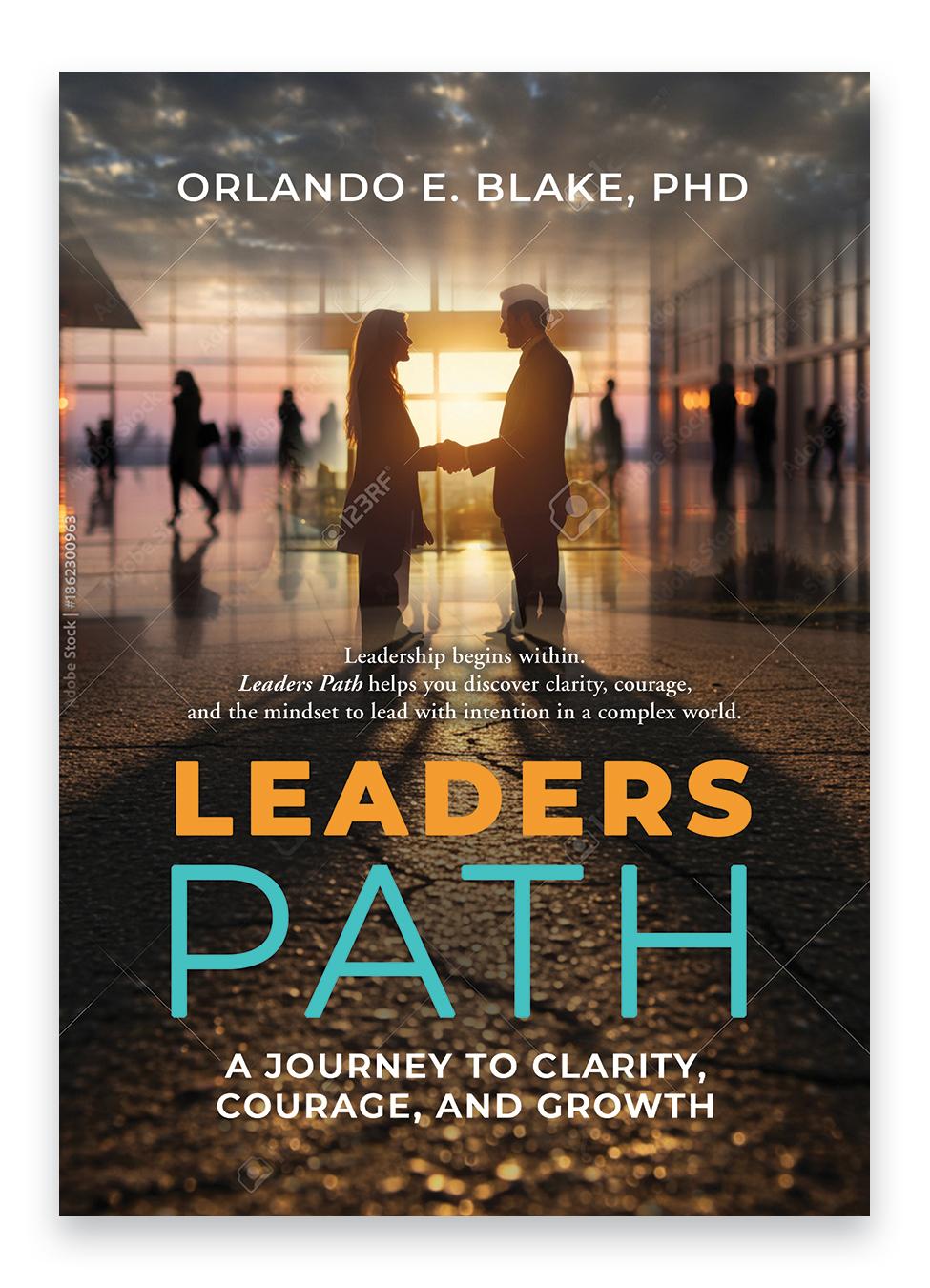
My new book, Leaders Path: A Journey to Clarity, Courage, and Growth - Available on Amazon HERE and on booklocker.com HERE where you may read an excerpt.
|