|
Remembering Paul Longmore
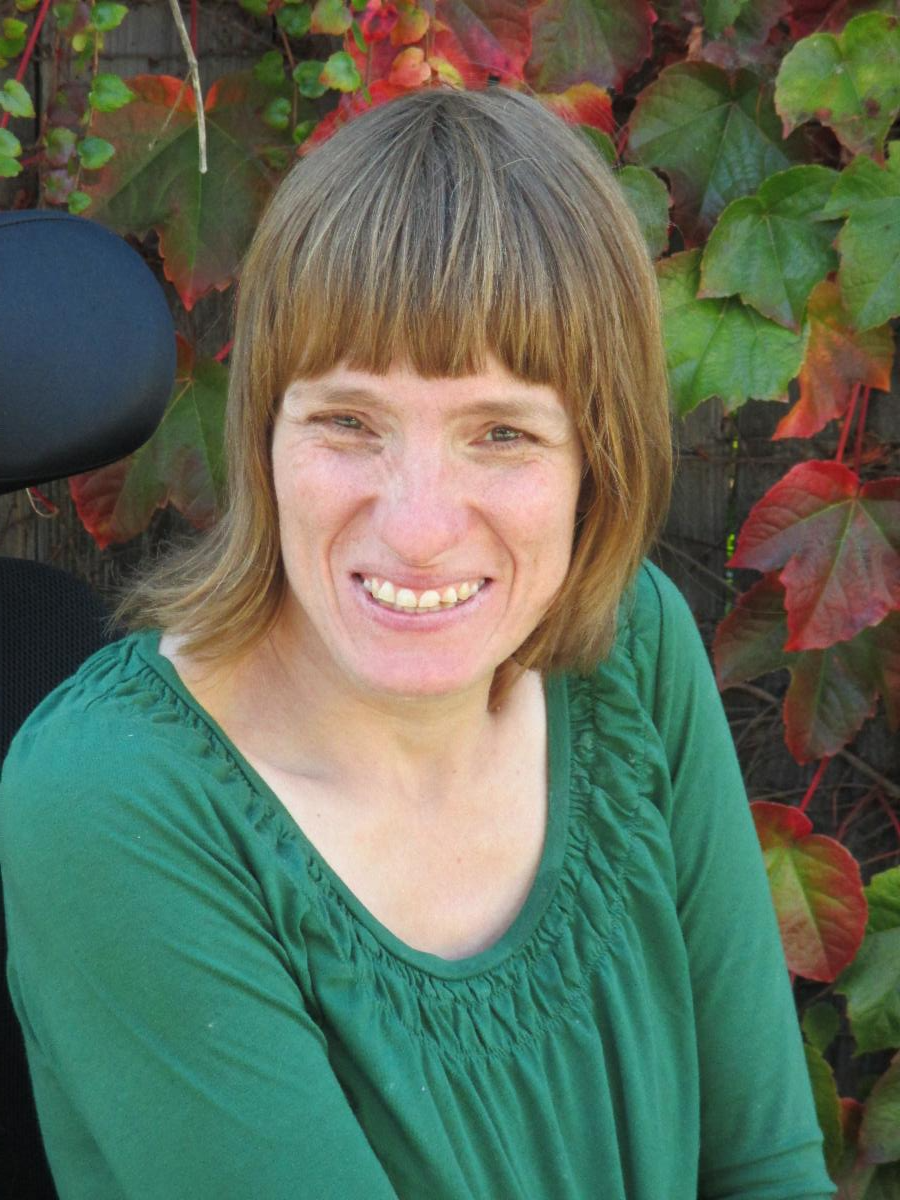
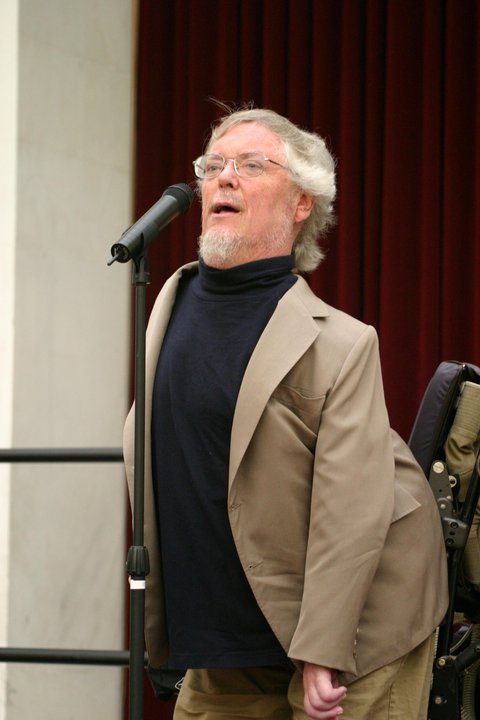
Paul K. Longmore is remembered as a pioneering disability historian and activist. Melissa Crisp-Cooper (pictured right) spoke with his younger sister, Ellen Longmore Brown, about the person behind that public legacy, including his childhood, humor, activism, and values.
Interview by Melissa Crisp-Cooper, Associate Director of Advocacy and leader of the Paul K. Longmore Center at The Arc San Francisco.
| |
An Interview with Ellen Longmore Brown | |
Paul's younger sister, Ellen Longmore Brown, graciously answered my questions about Paul as an older brother, his witty personality, and his life as a scholar and activist. Enjoy. | |
| |
Where did you and Paul grow up?
Paul was born in New Jersey in 1946. Our family moved to Southern California when I was four and he was six. We also lived in Portland, OR, and Santa Clara, CA, where we both graduated from high school.
| |
|
Can you tell me about your family?
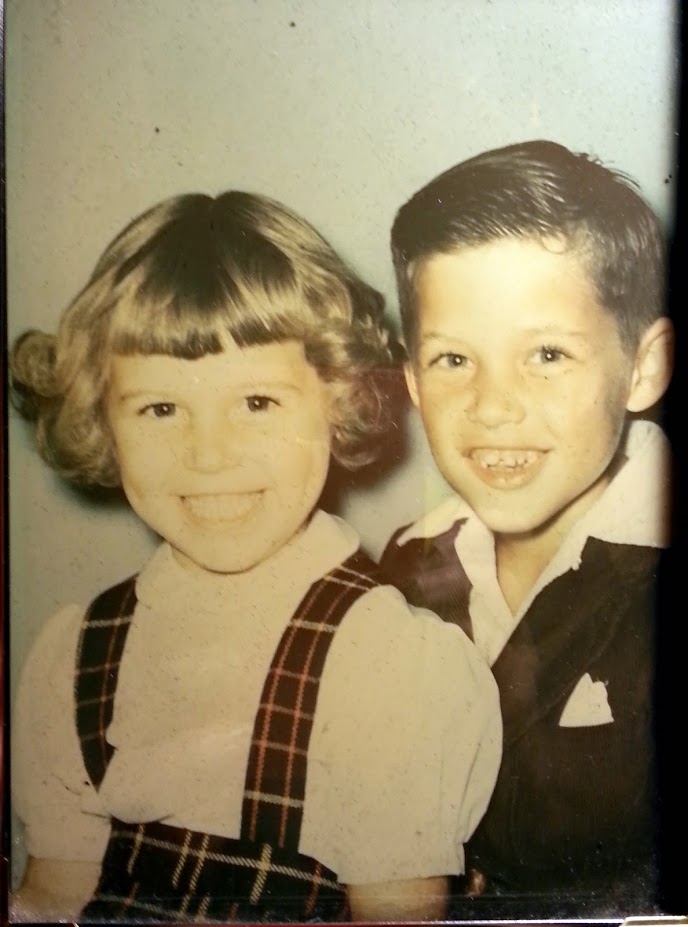
Paul was my only sibling. He was two years older than I was. Our father was a pastor, so we grew up with faith being an important part of our lives. Our parents instilled in both of us that we needed to do something to help people and make our lives count for something. Paul certainly did that.
Our mother was a stay-at-home mom, as many women were in the 1950s. After Paul got polio and was able to return home, she became his primary caregiver—dressing, feeding, and washing him—as well as his strongest advocate.
I spent a lot of my childhood in the hospital but not as a patient. In those days, especially right after the epidemic, children were not allowed to visit with family members. Most likely, this was because they didn’t know how polio was spread, and it was a precaution against others contracting it. However, that meant that while my parents were visiting Paul, I stayed in the hospital waiting room. Paul and I often talked about the fact that we had very different childhoods—both revolving around a hospital—him in a hospital bed and me in the waiting room.
| |
|
What was Paul like as a child or brother? Do you have a favorite memory? Did you have a good relationship?
We were typical siblings who argued and fought both verbally and physically. I knew that I couldn’t push him, but I could slap him, which I did from time to time. However, even though he couldn’t use his arms or hands, he had a lightning-quick kick. If I was going to slap him, I had to be prepared to get out of the way as quickly as possible, or he would nail me in the shins! I have always given my parents credit for treating both of us the same and not coddling Paul. He didn’t get away with anything, got punished just like I did, and had no special privileges.
One of my favorite memories of our childhood was when I was in elementary school, and he was in junior high. Our bedroom doors were right next to each other, and every night after we were in bed, he would teach and then grill me on all the states and capitals as well as all the U.S. Presidents in chronological order.
| |
|
How did his personality change or stay the same after he was diagnosed with polio?
Before polio, Paul was very shy (which is hard to believe for those who knew him later in life!). However, as he learned to navigate life after polio, he became much more outgoing and, eventually, a full-fledged extrovert! I think it was his way of coping with his disability, especially with the way others reacted to him. People would stop, stare, point, and/or ignore him, so he figured he’d head things off by making a comment or joke first.
He wanted people to ask him questions about his disability. Children, of course, have a way of saying exactly what they think, and he encouraged them to do that. Parents would often tell their children not to point or say something out loud around Paul. However, he would tell the parents not to stop their children from talking to him. All the neighborhood kids knew him by name and loved talking to him. He had a way with kids. He was also one of the early advocates of the polio vaccine and would educate kids on why they needed to have it.
He never seemed to be bothered when people would stop and stare, at least not as much as it bothered me. Our arrival at a restaurant could stop conversation in the whole place, and we would walk in silence to our table. I wanted to scream at the people to stop staring, but Paul took it in stride or, at least, he learned to ignore it.
| |
|
I read that Paul was one of the first students to be mainstreamed into general education classes (long before the passage of the Education for All Handicapped Children Act of 1975). How did he feel about being a pioneer?
Once he was able to come home from the hospital, he attended the local elementary school. However, he was placed in a class with kids of all ages who had a wide range of disabilities. There was one teacher who had to navigate teaching all the different age levels and abilities.
It was my parents, especially my mother, who went to bat for Paul and were his strongest advocates for mainstreaming him. It took until seventh grade for the school district to finally agree to allow him to attend regular classes with everyone else. From then on, even when we moved, he was in class with the general school population.
I doubt that, at the time, he realized he was being a “pioneer.” He was just thrilled to be going to school “like everyone else.” Not only did it change things for him for the better, but it also changed the other students. For perhaps the first time in their lives, they got to know someone with a disability and discovered he was just like them except for his physical appearance or capabilities. Early on, and continuing throughout his college days, there were students who would volunteer to carry his books and walk to class with him. I have to believe that this was eye-opening for many of them and helped change their perspectives regarding people with disabilities or those who didn’t look like them.
Paul was always a very good student. In high school, he was involved in the debate team, which his high school was well-known for. His public speaking skills came from both nature and nurture, since both our parents were excellent public speakers.
Having to adapt to his physical limitations after polio, such as not being able to write and take notes, helped him hone other skills like listening and remembering. He developed a remarkable memory for information and facts.
| |
|
Do you remember an early example of his activism?
I do remember that once he decided the Vietnam War was wrong, he began to speak out against decisions that adversely affected the wider population.
As you are well aware, Paul stood up to the Social Security Administration by burning his first book in front of the federal building in Los Angeles, which was very public and very gutsy.
This was due to the regulation that would not allow him, and others with a disability, to earn an income or receive royalties. Because of him and other activists, these restrictions were eventually lifted in a policy in the ADA known as the Longmore Amendment.
When he was able to move out of my parents’ house, he could very well have been involved in lots of things that none of us even knew about!
| |
|
What was he like at family dinners? Did he like to debate or try out lecture topics?
My husband once said, “The Longmore family could have 5 conversations going on with only four people and none of them ever got completed!” Our nightly dinner table was filled with lively discussions and debates about everything. My mother jokingly blamed my father for teaching Paul to ask “why” about everything from the time he could talk. I think his love of debate started at our dinner table.
| |
|
What key truths did he want his students and/or non-disabled people to know about those of us with disabilities?
Our faith tradition instilled in us that everyone has value. Paul wanted those with disabilities to know and believe this for themselves. However, he was aware, from his own experience, that non-disabled people needed to know this, not only for themselves, but for everyone else they encountered who were “not like them.” He knew that our society and world are much better off when the gifts and abilities of those in the disability community are recognized, accepted, and valued.
| |
|
Can you tell me something about Paul’s personality? I have heard about his sense of humor. Were the two of you close as adults?
He used humor to disarm people who were uncomfortable with his disability. While he was going through four surgeries to fuse his spine, he had an open tracheotomy, which was closed after the last surgery. Unfortunately, the surgeon botched the job and left Paul with what can only be described as a belly button in his neck, and it was very visible.
People, particularly kids, would comment on it. One time, we were at a conference, and the two of us were with a group of teenagers we’d just met. One of them asked him, “why do you have a belly button in your neck?” I never knew what he was going to say or how he was going to answer that particular question. On this occasion, he told them that one time on a family vacation, he had fallen down the Grand Canyon but, fortunately, a tree had stopped him from falling to the bottom of the canyon. However, unfortunately, a branch of the tree had impaled him in the neck, leaving what looked like a belly button. The other kids were shocked, and a little skeptical, so they turned to me and asked me if it was true. Again, I’d never heard this explanation before, but I simply nodded my head and said, “Yes, yes it is!”
From the time I went away to college until Paul’s death (over 44 years), we only lived near each other for 11 of those years. Most of that time, I was living on the East Coast or in Europe. So, our “closeness” was built on talking or seeing one another infrequently. We had such different experiences due to our location, careers, and family lives, and it wasn’t until after both our parents passed away that we talked more often. In the last 10 years of his life, we talked once a month for several hours each time. In fact, the night before he passed away, we talked on the phone for about two hours.
| |
|
How would you describe Paul’s legacy?
I am sure there is a long list of ways he left behind a legacy, but for me, I think it was the people whose lives were changed because of him or because of changes he was able to make to better the lives of the disability community. Even though I always knew the positive effect he had on people, after he passed, I was overwhelmed by the number of those who contacted me about what a difference he had made in their lives. There were those who knew him at different times in his life and in different arenas, as well as those who had never met him, but he had touched their lives in a significant way.
I always knew what a powerful presence he was and how he affected other people, but I had no idea of the magnitude of his influence until after his death. Paul worked hard to be a voice for those who did not have a forum to be heard.
| |
|
What do you think Paul would say about the current political moment?
Wow, that’s a good question, and one I ask myself all the time. I miss his astute ability to get to the heart of issues and then address them with intelligent rhetoric. There is no doubt in my mind that he would have a lot to say about the current administration on so many levels. As a historian, he would be livid at the total disregard for our democracy and the Constitution. I have no doubt that he would be writing and speaking out about those issues. He would be outspoken regarding decisions being made that are detrimental to the disability community, including the current threat to the Olmstead Act.
| |
|
What advice would Paul have given me in my new role?
He would tell you to be your own person. I have no doubt that you are in this role because you bring abilities and experiences that no one else has. Cathy Kudlick and Emily Beitiks each brought something different to their positions at the Longmore Institute when it was at SFSU, and each helped make it more than even Paul could have imagined. I have every reason to believe that you will do the same.
At Paul’s Memorial Service, I shared a verse from the New Testament that another Paul said of himself, and in 2010 I said it of my Paul,
So, now it’s your turn to pick up the mantle, continue running the race, and fight the good fight.
| |
|
Ellen, thank you for sharing your memories of Paul!
Paul, I hope I will make you proud!
Melissa Crisp-Cooper
Associate Director of Advocacy
Leader, Paul K. Longmore Center
The Arc San Francisco
| |
| Our Company | Contact Us | FAQs | Privacy Policy | | | | |