Fundraising Talks
News and updates from the USM Office of
Advancement Research
| |
 | | This article from Forbes comes to us from Laura MacDonald, founder of Benefactor Group, author of The Endowment Handbook, and past chair of Giving USA. In the article, Laura notes that as charitable giving becomes increasingly complex, strategies that worked in 2025 may not succeed in 2026. Things such as new tax laws, DAFs, and innovative giving platforms mean that fundraisers have to move beyond just asking for gifts and instead, act as philanthropic strategists. This means understanding donors’ motivations and aligning giving with their financial goals, as well as using behavioral insights to grow trust and engagement. Successful fundraising professionals now need to have skills in philanthropic literacy, must collaborate with advisors, and share stories rooted in shared values. The focus is shifting from transactional fundraising to transformational relationships, where success is measured by trust and impact rather than dollars raised. Ultimately, fundraisers who use this partnership-driven approach will help donors rediscover the joy of giving.
| | This article from BizTech covers tech trends in 2026, specifically what trends we can expect in the nonprofit sector. According to BizTech, now, more than ever, nonprofits are turning to artificial intelligence to address staff shortages and to streamline operations. They are using AI to support HR onboarding, compliance, and administrative tasks, as well as using AI for donor engagement through AI-powered CRM systems that enable segmentation, retention-risk scoring, and personalized outreach. Nonprofit organizations are moving toward unified cloud platforms that integrate fundraising, service delivery, and finance, which in turn reduces IT costs and improves transparency. Data privacy and cybersecurity are top of mind, and nonprofits are adopting advanced encryption and confidential computing to protect sensitive donor and beneficiary information. This year, hybrid engagement models will continue to dominate events and fundraising, as they offer flexibility when facing budget constraints and global uncertainties. Click here to read more. | | |
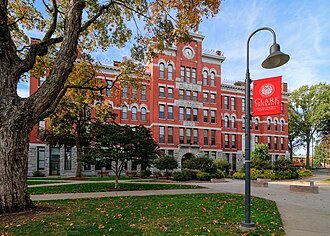
| | | In 2024, Clark University in Worcester, MA partnered with EverTrue to launch an AI-powered donor research system that dramatically accelerates what was once hours of work into minutes. The system delivers detailed, citation-backed reports while keeping humans in charge of oversight. This article from CASE outlines exactly what the system is and how Clark University is using it. Using a custom super prompt in ChatGPT, the system generates rich 15–20-page profiles that include biographies, affiliations, giving history, and outreach guidance at around $0.90 per report. The reports feed into a human review process to ensure accuracy and align with ethical standards like GDPR and CASE’s fundraising principles. Thanks to this system, Clark went from producing about 100 reports per year to nearly 1,900. The Clark team stresses the importance of starting with publicly available data, establishing strong governance, and maintaining human validation before scaling AI tools. Click here to read more.
| | | In another case study from CASE, we learn about how the University of Southern California (USC) is using AI to transform advancement services by automating donor data processing and improving efficiency. Previously, staff spent hours manually reviewing and updating records, but AI tools now handle tasks like address standardization, gift entry validation, and duplicate detection in minutes. This has freed up staff to focus on strategic priorities such as donor engagement and stewardship rather than administrative work. USC understands that AI is not a replacement for human judgment. Instead, AI augments workflows while maintaining compliance and ethical standards. The university also invested in staff training to build confidence in AI tools and ensure proper oversight. Click here to read more. | | | This article from Nonprofit Pro covers data from 2025 that reveals key trends shaping the nonprofit sector as we move into 2026. Some highlights include that recurring giving continues to grow and that one-time giving remains flat, year over year; GivingTuesday donors were retained at a 65 percent rate in comparison to 52 percent for donors who gave earlier in the year; Millennial giving increased 22 percent to an average of $1,616 per donor; Gen Z donors are more likely to give if a digital creator is involved in a nonprofit; and only 24 percent of nonprofits had an AI policy in 2025. Click here to read the full list. | | |
EAB predicts four major trends shaping advancement in 2026. First, AI will become a core tool for advancement teams. Second, data integration and governance will take center stage as institutions work to unify fragmented systems and ensure compliance while leveraging insights for smarter decision-making. Third, donor expectations for transparency and impact reporting will rise, requiring advancement professionals to demonstrate measurable outcomes and articulate the value of giving more clearly. Fourth, talent challenges and staff burnout will persist, prompting organizations to invest in automation and professional development to retain skilled teams. Click here to read more insights on these trends from EAB.
| | | | |