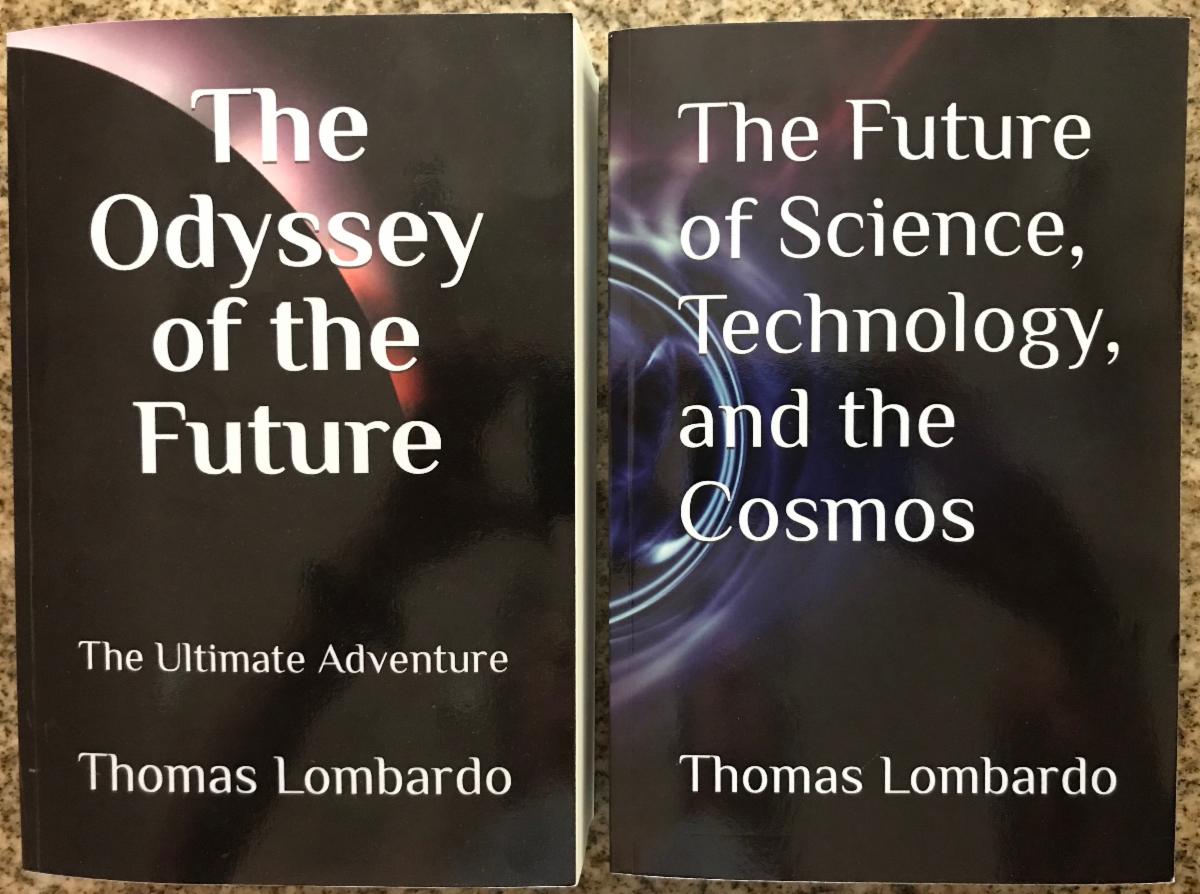
Recently I published two books, The Odyssey of the Future: The Ultimate Adventure and The Future of Science, Technology, and the Cosmos. The first book, created as a textbook for a college-level introductory course on the future, presents a comprehensive and integrative perspective on all the major dimensions of future human reality, from science, technology, and the environment to society, psychology, and culture. The book covers such diverse topics as the history of theories of evolution, progress, and time; feminist perspectives on the future; utopian thinking and the future of ethics; arts, sports, and entertainment; human diversity, creativity, and freedom; cyberpunk, postmodernism, the New Age, and philosophies of the future; and spiritual-religious visions of the future.
The second book examines, in depth, theoretical science and cosmology; information technology, computerization, and robots; energy, industry, and nanotechnology; evolution and biotechnology; the environment, natural resources, and ecological science; outer space travel and colonization and the far distant future of the universe; and the limits and scope of human knowledge, with a good amount of contemporary science fiction included throughout the volume.
Although respectively written in 1997 and 2002, I never published either book. This last year, though, I decided, for a number of reasons, to publish both of them. The books were my first substantial futurist writings—historical markers in the ongoing evolution of my futurist thinking—and signaled the beginning of a twenty-five year career as a futurist.
Both books are highly interdisciplinary, intentionally so, in scope, organization, and educational philosophy. Although both volumes discuss in depth the work of many notable futurists, they also incorporate relevant insights and theories of writers of diverse academic disciplines, including the physical and biological sciences, history, cultural studies, philosophy, psychology, and literature.
Of special note, The Odyssey of the Future was written to provide students with an interdisciplinary and integrative education that had as its focus (or center of gravity) a futurist perspective that pulled together all the traditional areas of college academic study.
In fact, it was thinking as an interdisciplinary educator, who was searching for methods to create integrative understanding in students, that originally ignited my deep and sustained professional interest in futures studies. In an illuminating epiphany in the early 1990s, I realized that the ideal way to pull together higher education was through the lens of the future: The study and understanding of the future should be the center of gravity in education, guiding and inspiring our entire curriculum and our teaching methods. As I state early in the text of The Odyssey of the Future, “The future is the most practical and consciousness-expanding topic that the human mind can entertain.” Reality should be seen and understood “through the eyes of the future.” One key chapter in this book is “The Future of Education,” in which I outline my thoughts on the central importance of a futurist perspective in education; as a budding futurist I proposed that “the future of education should be education on the future.”
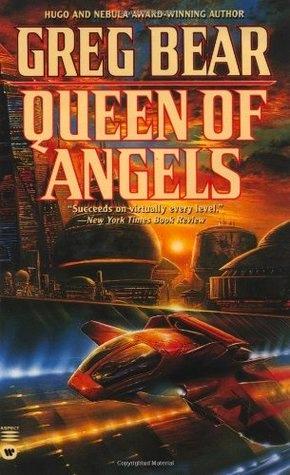
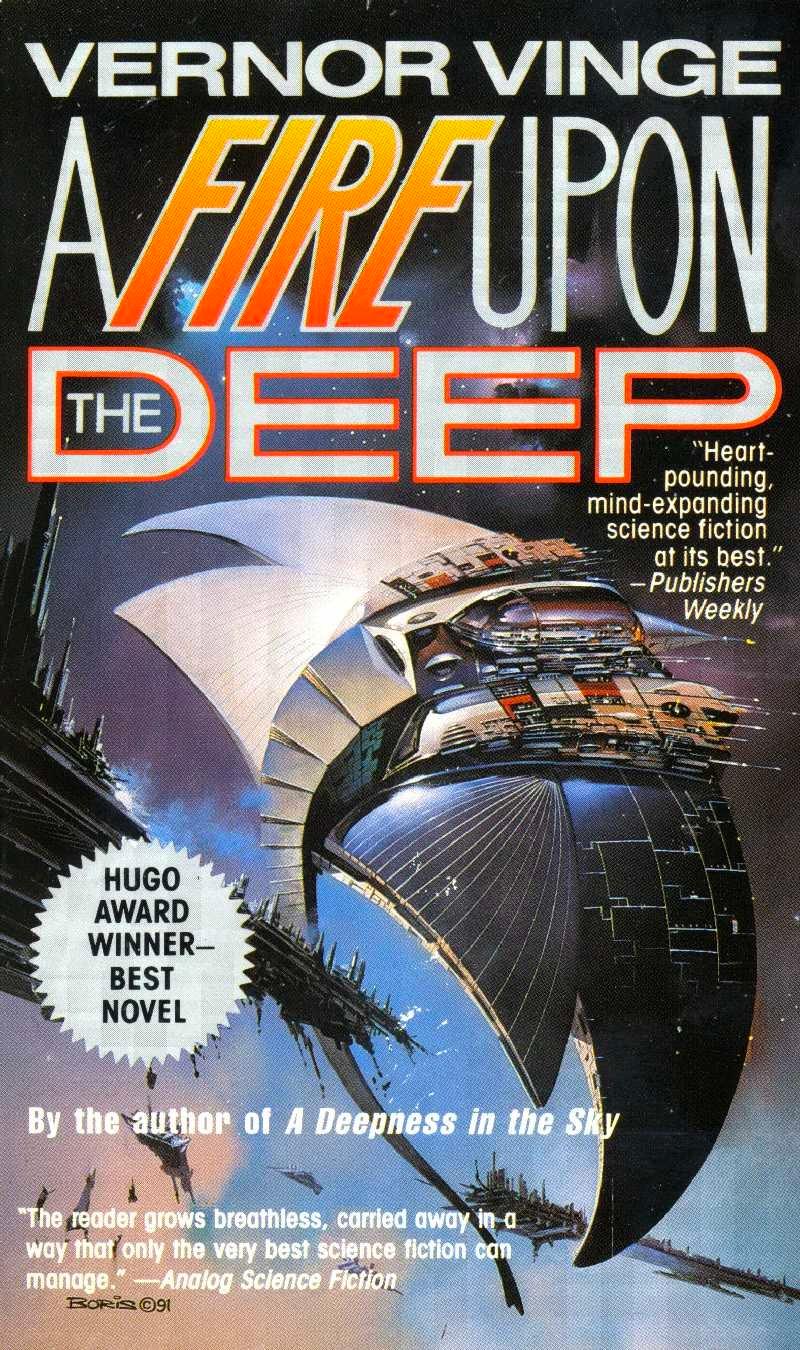
After completing The Odyssey of the Future, one area of further study I decided to explore in more detail was the future of science and technology. It seemed to me that the potential mind-boggling advances in science and technology were of critical importance in understanding the wondrous possibilities of the future. Again adopting a multidisciplinary approach, I dove into the writings of scientists, cosmologists, and technological thinkers from numerous disciplines beyond simply the work of professional futurists. As I believe Alvin Toffler once said, “Everyone is a futurist.” Valuing the narrative-literary perspective as essential within a multidisciplinary framework of understanding, I included in my new readings a number of contemporary science fiction novels, such as Greg Bear's Queen of Angels, Stephen Baxter's Vacuum Diagrams, and Vernor Vinge's A Fire Upon the Deep. I had been a reader of science fiction since my youth, and my fascination with the genre greatly contributed to my later interest in futures studies. Scientifically informed narratives of the future powerfully inspire and enlighten our consciousness of the future.
Out of this weaving together of futures studies, scientific and technological thought, and multitudinous science fiction narratives, The Future of Science, Technology, and the Cosmos emerged. The book examines such far-reaching topics as the potential emergence of a “global brain” and “global mind”; downloading consciousness into computers and living in virtual reality; the purposeful creation and evolution of new forms of life; technologically augmenting and transforming the human species; redesigning our earthly environment and terraforming other planets; the search for a grand unified scientific theory of everything; cosmic levels of civilization and solar and galactic engineering; and the future evolution of the universe.
As I state in the preface to The Future of Science, Technology, and the Cosmos, in researching and writing this book, I changed the futurist perspective I presented in The Odyssey of the Future in some key ways. Both books are “big picture” visions of reality and the future, philosophical and cosmic in scope, and it was especially at this holistic and theoretical level of understanding that I modified my thinking. Although both books take an evolutionary perspective on “life, the universe, and everything,” the second book is more thorough-going and consistently evolutionary, emphasizing the mystery, adventure, and open-ended quality of the future of humanity and the cosmos.
As we envision and understand it, the future evolves; our futurist visions should evolve. My mind had evolved by the time I finished the second book. As I argue in The Future of Science, Technology, and the Cosmos, there is no end to the human quest for knowledge. With this second book, as a futurist I was clearly now on a journey of discovery, recalibration, and ongoing transformation in my own consciousness. And in line with this evolutionary insight, in recently re-reading this second book, I find a number of ideas I now no longer think are plausible or valid. Although there are many ideas in both books I still believe are valuable, illuminating, and on target, my understanding of the big picture of things—encompassing the possibilities of the future—thankfully, has kept changing and growing. As the grand historian Peter Watson stated, “Evolution is the story of us all.”
"It is unmistakably the best webinar presentation, consecutively viewed or singly viewed, that I have ever spent as a participant or a viewer. Ever!" Cedar Sarilo Leverett, MFA, Society of Consciousness Studies
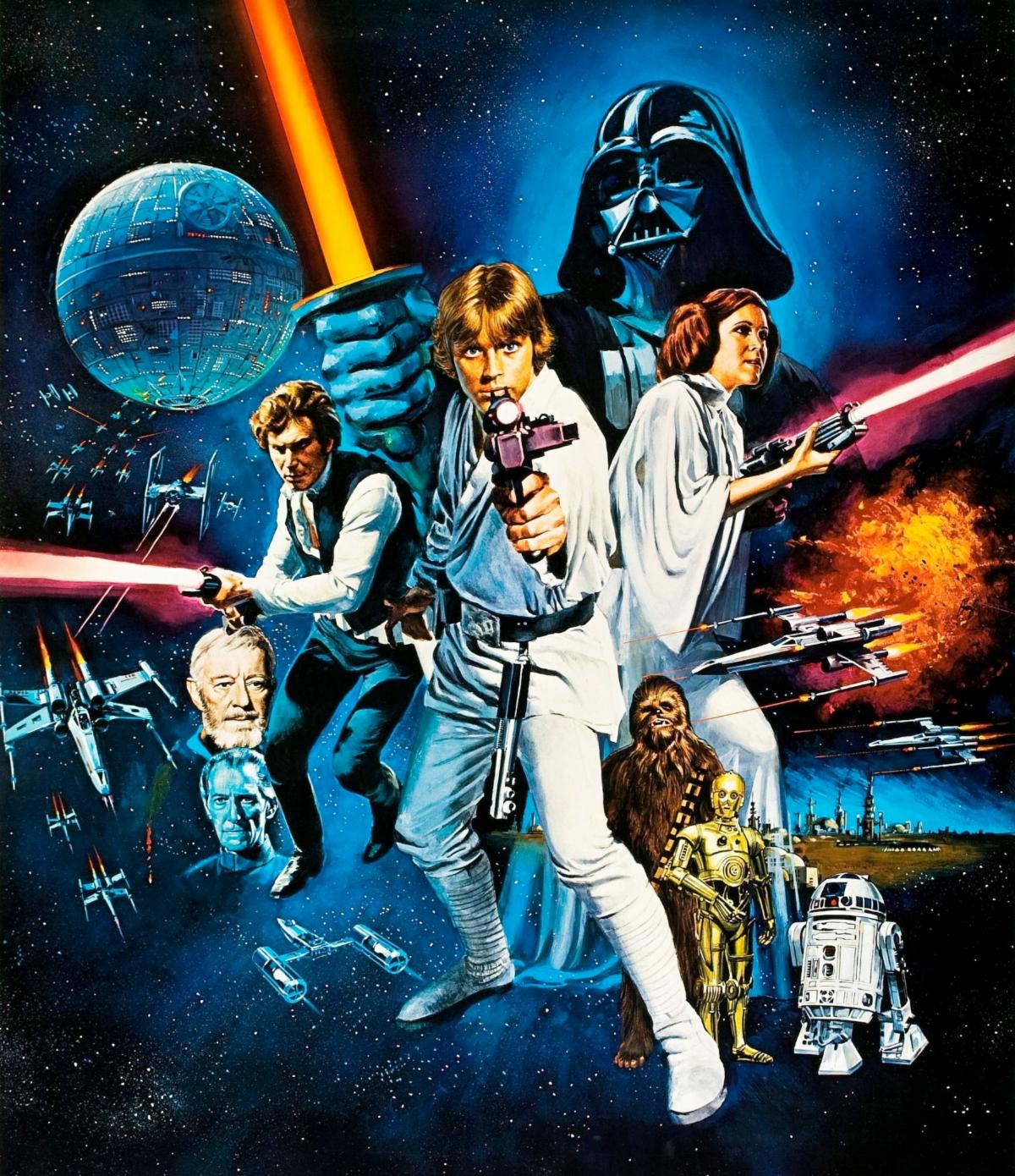
Having completing in May, 2022 the three-part webinar on "The 1980s: From Star Wars through Cyberpunk - How Science Fiction Conquered the World," the entire Evolution of Science Fiction Webinar series produced thus far from ancient myth and fantasy up through the 1980s, and concluding with Neal Stephenson's Snow Crash and The Diamond Age, is now available for viewing--as roughly 20 individual video presentations--on the Center for Future Consciousness Video School website.
For those unfamiliar with the Evolution of Science Fiction webinars, here's an introduction to the entire series:
"Combining colorful slide presentations and in-depth analysis, in these webinars, based on my book series Science Fiction: The Evolutionary Mythology of the Future, I examine the evolutionary history of science fiction from ancient to contemporary times. I delve into the mythological origins and dimensions of science fiction; fantasy versus science fiction; the rise of the modern scientific world view; utopias and dystopias through the ages; the Enlightenment, Romanticism, and Gothic horror; the impact of evolutionary theory on science fiction; Wells, Stapledon, and the integration of futures studies and science fiction; robots, techno-intelligence, and aliens; time travel and alternate realities; fantastical adventures, space exploration, and the emergence of Space Operas; the Golden Age, the Silver Age, the New Wave, Feminist Science Fiction, Cyberpunk, Steampunk, and the "New Weird;" social, psychological, and religious science fiction; and numerous other key themes and dimensions of science fiction. Covering science fiction literature, art, cinema, and comics, I discuss in depth the appeal, value, and influence of science fiction on the modern world and the impact of intellectual and cultural trends on the evolution of science fiction."
New Science Fiction Webinars this Fall
After taking a summer break, this fall the science fiction webinar series will continue, beginning with "The 1990s: The Farthest Reaches of Space, Time, and Mind."
Here's an introduction to the forthcoming webinar this fall on the 1990s:
"In the 1990s science fiction literature expands outward into the farthest reaches of space, time, and mind. The depth and breadth of science fiction novels ascends to new levels in world-building and universe-building. In a trend that began in the 1980s, novels get bigger, and more intellectually intricate and mind-stretching. Setting new literary and imaginary standards along such lines, Dan Simmons’ Hyperion Cantos—modeled on Chaucer’s Canterbury Tales—delves into the “future of everything” a thousand years from now. Vernor Vinge, who first popularized the concept of the “technological singularity,” won Hugo awards for his space adventures in the Milky Way and his fantastical aliens in A Fire Upon the Deep and A Deepness in the Sky. In Queen of Angels and Darwin’s Radio Greg Bear dives into the foundations of consciousness and the evolutionary transcendence of contemporary humanity. Kim Stanley Robinson, in his Mars trilogy (Red Mars, Green Mars, & Blue Mars), writes the best books ever on the settlement of Mars--comprehensive, highly realistic utopian visions of the terraforming of another world. And Greg Egan—a powerhouse scientific-mathematical intellect—creates virtual minds, virtual universes, and virtual gods in his Permutation City and Diaspora.
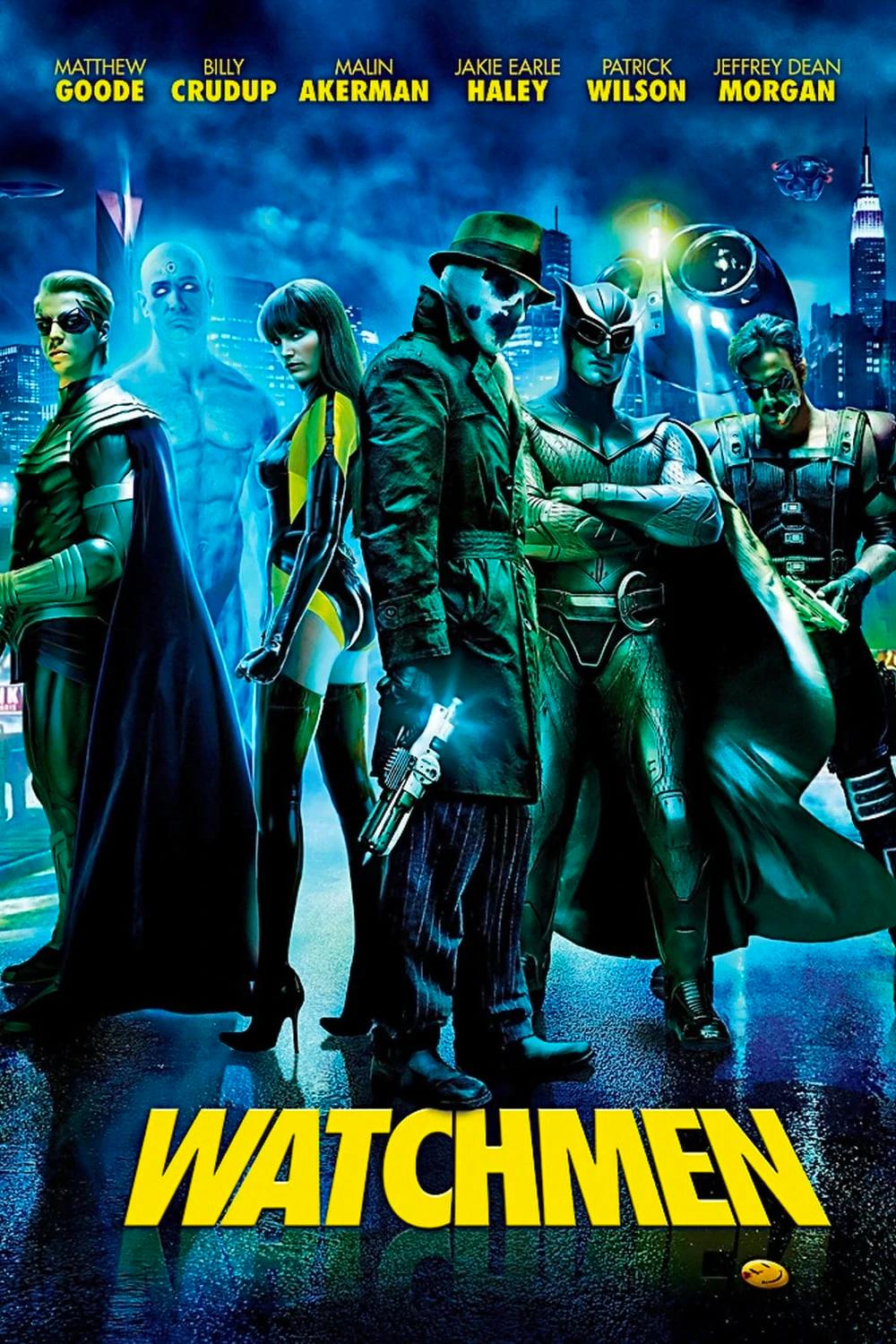
There were numerous other engaging, thought-provoking authors of the era creating award winning stories, such as Octavia Butler (Parable of the Talents), Lois McMaster Bujold (the Vorkosigan Saga), and Nancy Kress (Beggars in Spain). Also during this time, Steampunk—a multi-faceted new cultural movement—emerged and began to rewrite history and redesign reality. Science fiction continued to dominate the cinema, with such notable films as The Matrix, Jurassic Park, Independence Day, The Fifth Element, Contact, Twelve Monkeys, and Terminator: Judgment Day. Programmed entirely with science fiction movies and series, the Sci-Fi Channel appeared in the 1990s. Finally, building on the great success of Akira, Sandman, and the phenomenal Watchmen, science fiction graphic novels exploded in popularity. Without question, science fiction significantly evolved in the 1990s."
Science Fiction: The Evolutionary Mythology of the Future
New Books:
Volumes Two and Three
An evolutionary and transformative journey through the history of science fiction, from ancient to contemporary times, exploring the innermost passions and dreams of the human spirit, the most expansive cosmic creations of thought and imagination, and the farthest reaches of the universe and beyond.
“Lombardo is just simply brilliant... you will feel overwhelmed.”
DR. ERIK ØVERLAND, President of the World Futures Studies Federation
* * *
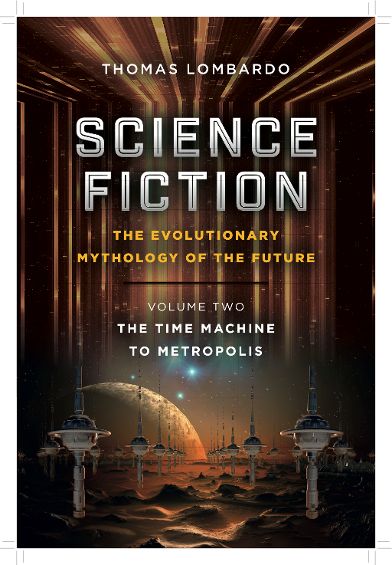
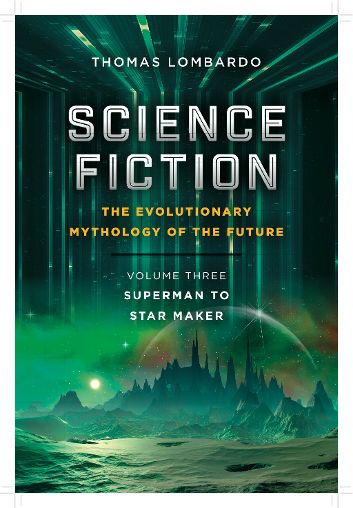
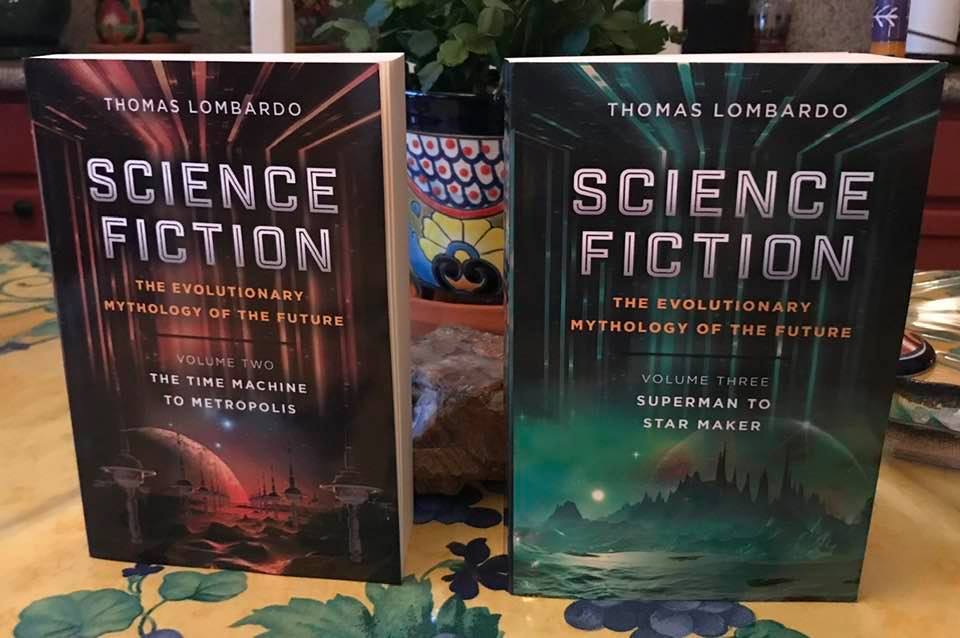
I am happy to announce the publication of two new volumes in my Science Fiction: The Evolutionary Mythology of the Future series:
Volume Two “The Time Machine to Metropolis”
Volume Three “Superman to Star Maker”
Both new volumes are available for purchase on Amazon, Barnes & Noble, and the Publisher’s website.
Continuing his in-depth evolutionary history of science fiction Tom Lombardo examines science fiction literature, art, cinema, and comics, and the impact of culture, philosophy, science, technology, and futures studies on the development of science fiction. These two new volumes also describe the reciprocal influence of science fiction on human society and the evolution of future consciousness.
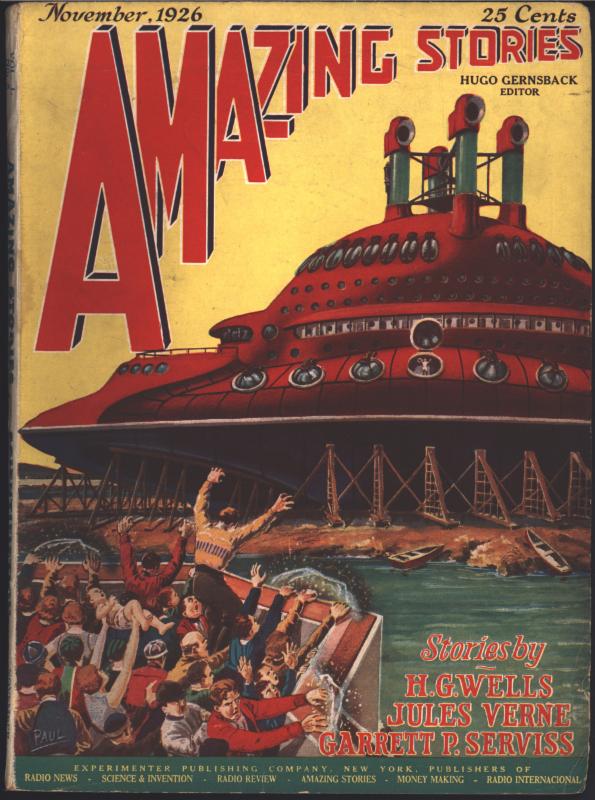
Volume Two covers the years 1895 to 1930, and includes an extensive discussion of H. G. Wells and his numerous science fiction novels and futurist publications. Also covered in-depth are Thea von Harbou and Fritz Lang’s classic silent movie Metropolis. Other key figures discussed in Volume Two include Méliès, Zamyatin, Gernsback, Burroughs, Merritt, Huxley, and Hodgson.
Volume Three primarily focuses on the 1930s, covering the phenomenon of Superman and key authors such as Čapek, Hamilton, “Doc” Smith, Campbell, Lovecraft, C. A. Smith, and Williamson. Volume Three concludes with an extensive philosophical examination of Olaf Stapledon’s Last and First Men and Star Maker.
Some of the key themes and topics addressed in the two volumes include: Dystopian and utopian visions of the future; the meaning of progress and the meaning of life; the future evolution of the human conscious mind and the possible emergence of psychic powers and collective forms of intelligence; the ethics and philosophy of space operas and super-heroes; technology, robots, and human society; technological intelligence; alien mentality and alien civilizations; time travel, time loops, and time wars; global war, catastrophes, and world-wide disasters; science and religion; fear and horror, and hope and wonder in science fiction; and the significance of the theory of evolution in the development of science fiction.
To support our ongoing educational and publication efforts please DONATEto the Center for Future Consciousness.