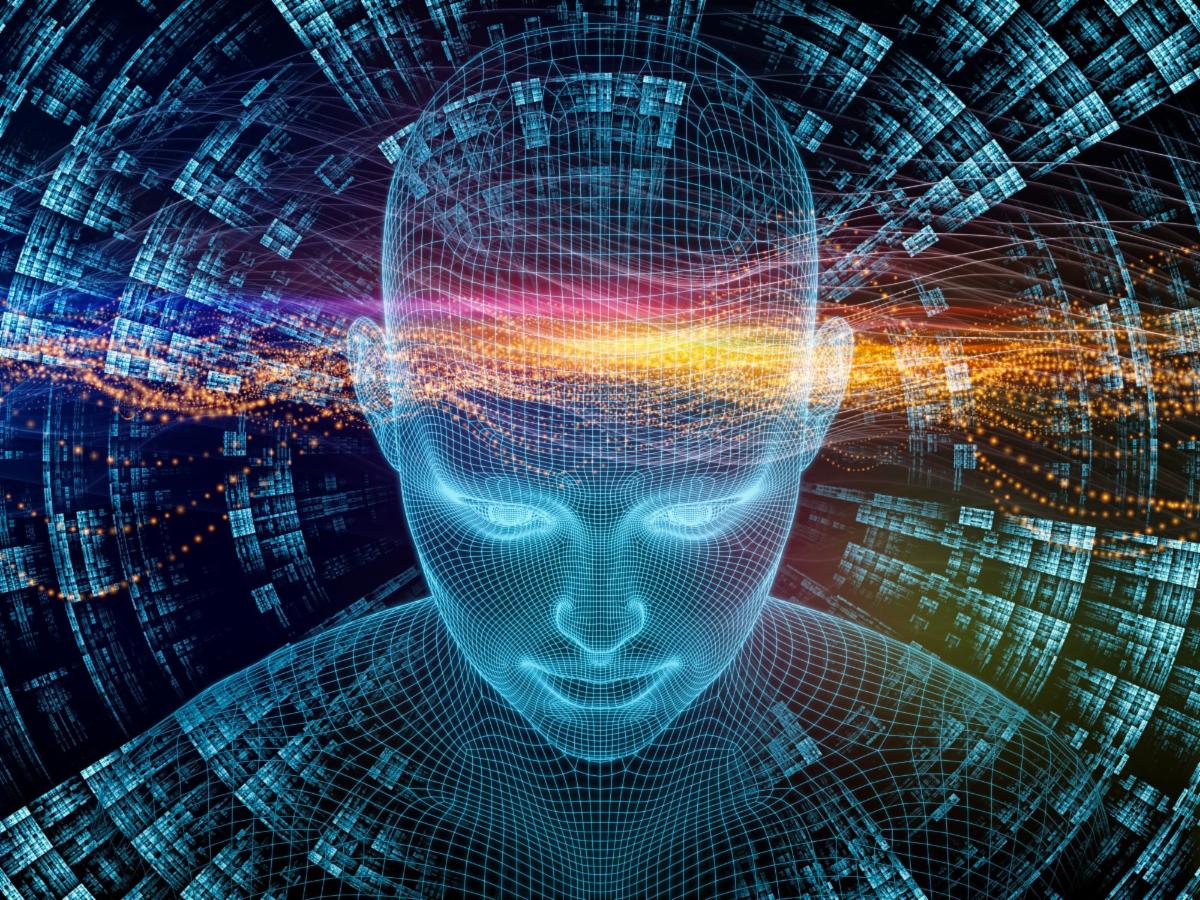
Essay Three: The Centrality and Nature of Consciousness
Summary of Previous Essays
This essay is the third in a series of essays on “The Purposeful Evolution of Consciousness.” To summarize the first two essays in this series: As a unique expression of our evolutionary universe, humans through future consciousness engage in purposeful evolution. Instead of throwing our emphasis on continuing to purposefully evolve technology and the physical world, we should focus on purposefully evolving our consciousness as a practical and inspiring approach to our contemporary problems and creating a good future. Our ethical guiding light for the future should be to thoughtfully embrace our active role in the ongoing evolution of our consciousness, and in particular our future consciousness.
Introduction to Third Essay
To realistically and thoughtfully explore how consciousness could evolve in the future we need a philosophically and scientifically sound theory of the nature of consciousness. How can we meaningfully and realistically consider the future of consciousness without some level of understanding of its nature? What is this reality of consciousness that we wish to evolve? Knowledge precedes power.
Yet understanding consciousness and its relationship with the physical universe is one of the central challenges, if not great conundrums, of science and philosophy. There are numerous and diverse competing theories regarding the nature, dynamics, and structure of consciousness, and the relationship of consciousness with our physical bodies and brains, the physical world, and the universe as a whole. I have summarized many of these diverse points of view in previous publications (Lombardo, 2009, 2011, 2012, 2014, 2016a, 2016b, 2016c, 2017). Given such uncertainty and contention, how can we build a credible and realistically grounded evolutionary vision of consciousness in the future?
Acknowledging the challenges and points of dispute in understanding consciousness, I believe certain scientifically valid and philosophically sound statements, as pieces of a solution to the overall puzzle, can be made regarding consciousness and its relationship with the physical universe. In presenting this overview of consciousness I will draw and build upon the brief introductory analysis of consciousness I provided in essay one. See also the publications cited above for additional thoughts on consciousness.
The Nature of Consciousness
To begin, I will use the term “consciousness” as synonymous in meaning with both “experience” and “awareness.” To be conscious is to be aware; to be conscious is to experience.
Consciousness is at the core of human reality and our individual existence. Each of us lives our lives within the experiential medium of our consciousness. Consciousness is the sea or ambience in which we swim. Consciousness is the medium in which everything that is meaningful to humans is manifested and understood.
Within the sphere of our consciousness we appear to ourselves as conscious beings. We possess a sense (an experienced reality) of our self—the “I” or “me—as a conscious reality within our experiences. Indeed, our self appears to us as the source or agent of our consciousness. Our normal, everyday state of consciousness appears personalized.
To be aware of oneself is to possess self-consciousness. Within normal human consciousness we experience self-consciousness—an awareness of our own existence—a consciousness of ourselves as conscious beings.*
——————————————————————————
* There are views that de-personalized consciousness can exist, as for example in forms of spiritual and metaphysical thinking that identify non-personalized consciousness as the foundation of all existence. Further, there is the view that de-personalized consciousness can be realized within us through mental or mediative practices. But the normal state of affairs appears to be that consciousness is personalized; within human consciousness there is an experiential sense of self. This normal personalization (or individuation) of consciousness appears intimately tied to the fact that as conscious beings we possess unique and individuated physical bodies specifically located in space and time. See below.
—————————————————————————
We appear to ourselves as embodied conscious beings. Our consciousness seems to manifest itself within a unique physical body. In fact, our bodies feel conscious, and there is a clear sense in which we experience ourselves as a physical body, albeit one that is conscious. Normal consciousness, aside from being personalized, appears to us as embodied.
Moreover, other intelligent beings within our world (including humans) appear to us, as we appear to them, as embodied and personalized conscious beings. The conscious human beings we perceive around us manifest their unique conscious personal identities in bodily form. In our interactions with others it appears that as embodied conscious beings with personal identities we engage in complex and meaningful relationships with other embodied conscious persons. All in all, each of us (as humans) appears as an embodied and unique personalized conscious being, and humanity appears as an interactive collective of embodied conscious beings.*
—————————————————————————
* Taking many different forms throughout human history, there is the belief that there can exist (or does exist) disembodied consciousness. But the pervasive normal state of affairs manifested in our experience of existence is that consciousness is embodied. There is an immense amount of evidence that our states of consciousness are intimately connected with states of our physical body, especially our physical brains. Moreover, as stated above, the individuation and personalization of our consciousness seems tied to the fact that as conscious beings we possess unique physical bodies specifically located in physical space and time. This is not to imply that consciousness is nothing but states of our brain or body, but it clearly appears that having a physical body is necessary in order to be conscious.
————————————————————————
Our embodied conscious reality appears to us as localized within and surrounded by a physical environment. We perceptually experience (are conscious of) the physical environment from a physical point of view, the point of view anchored by our location within the environment.
Yet, although our bodies are physically localized, we appear to be perceptually conscious of the extended surroundings of our physical environment. We see and hear what is around us.
All our knowledge of the physical environment comes through and builds upon our perceptual consciousness. We know the world through consciousness, and in particular perceptual consciousness.
Hence, aside from our consciousness of ourselves (inclusive of our conscious personal self and our body), we are also conscious of the world, and in fact, as critical to being able to function in our experienced reality, we are conscious of the complex and transforming relationships between ourselves and the world. We perceive where we are and where we are heading. As such, our perceptual consciousness is “ecological,” an awareness of ourselves as beings-in-a-world. All in all, our knowledge and understanding of ourselves and the world (including other humans) is manifested within our consciousness.
Because we are localized in both space and time, we perceptually experience the surrounding environment from particular perspectives. We are not omnipresent perceptual observers. Moreover, since our consciousness is framed in terms of our concepts, mindsets, and previous experiences, we understand and interpret what we are conscious of within such individualized mental frameworks. All in all, there is an unavoidable “subjective” dimension within our consciousness and what we are conscious of.
Still, to various degrees and in various ways we consciously strive toward objectivity, that is, we attempt—when we are being conscientious—to consciously apprehend and understand our existence and the world in a truthful and minimally subjectively biased fashion. We can, for example, take multiple conscious perspectives (either perceptual or conceptual) on whatever we are attempting to know and understand. We can self-reflect on our consciousness attempting to identify our biases and assumptions and the effect of such biases and assumptions on our perceptions, thoughts, and beliefs. We can compare our beliefs and our points of view with the perspectives of others. We can evaluate our beliefs and perspectives in terms of epistemological standards, such as principles of rationality (critical thinking) and evidence. In general, we can attend more carefully and thoroughly to whatever we perceive or believe to more conscientiously determine the validity (or truth) of our perceptions and beliefs. Although our consciousness can be defensive, rigid, narrow, and lazy, ideally consciousness is active and exploratory and seeks out the truth. To various degrees and in various ways consciousness reaches out to reality.*
————————————————————————
* A frequently argued theory in both science and philosophy is that we are not directly conscious of the external physical world, but rather are only aware of states of our brain, or of self-contained states of consciousness; in the former case, consciousness is nothing but states of our brain; in the latter case consciousness is like an impenetrable bubble—in which we live and feel our existence—that is separated from the physical world. In either case, our consciousness is absolutely private and subjective.
Yet, consciousness (whether perceptual or conceptual) appears to reach out to the world and connect with it—we look, we listen, we explore, we attend and attune, and grab hold of physical reality—and the world we perceive appears to us to be an independently existing physical reality.
Moreover, the physical universe appears constructed in such a way that its structured reality can be known and revealed to conscious observers within it; the world is built to be knowable (Lombardo, 1987, 2011). Just as our perceptual consciousness is ecological involving an awareness of ourselves in relationship with our environment, the conditions which support perceptual consciousness are ecological as well, involving an embodied conscious being interfacing and interacting with a highly structured world that reveals or manifests itself to us through structured energy.
What does seem to be the case though is that the physical universe is a vast and indeterminately rich and complex reality, and we are only able to apprehend it selectively and from perspectival points of view.
It clearly is the case that everything we meaningfully know and state about this physical universe comes through our consciousness. But consciousness can be seen as a window on an illuminate reality, rather than a self-contained spectacle within our brains or minds. One of the key powers of consciousness appears to be the capacity to apprehend and make sense of the physical world.
————————————————————————
Although within perception we are relatively limited to an experience of the immediate here and now (localized in space and time), human consciousness has the capacity to transcend the perceptual here and now. Consciously we can learn or create abstract (general) ideas, engage in abstract and hypothetical thinking, recollect memories of the past and anticipate (imagine) the future, and through imagination create all kinds of hypothetical (non-present) realities. The sphere of consciousness extends way beyond what we perceive in the moment.
Within the study of “psychic” phenomena there is the belief that “mind can affect matter,” but in normal everyday living the conscious mind continuously impacts and directs the world of physical matter. Through purposeful behavior (guided by our thoughts and wishes), communication with others, and the physical creation of imagined hypothetical realities, consciousness moves and creates the world. We not only understand the physical world through consciousness, we move and create (in part) the world through consciousness.
Consciousness is a rich and complex phenomena. Within consciousness, we experience an ongoing stream of varied thoughts, emotions, desires, feelings of our body and its movements, memories of the past, creations of imagination, multi-sensory perceptions of a physical world, intentions and acts of will, and an overall and ongoing sense of personal identity and self. In considering the future evolution of consciousness, all these features of consciousness are areas of potential evolution. (In the next essay I will go into more depth on the multi-faceted territory of consciousness.)
Yet in spite of its variegated nature, the rich and diverse tapestry of consciousness also possesses an integrative quality. All the elements come together (relatively speaking) as a whole with an ongoing sense of one person, or self, experiencing this whole. (It should be acknowledged that there are elements of ambiguity, fragmentation, and plurality in our sense of self within consciousness—more on this later.) Our perceptual consciousness apprehends a relatively integrated and coherent surrounding environment in which we are situated. Our thoughts and feelings—to degrees—form complex and coherent patterns of meaning. Consciousness is a highly differentiated unity.
Consciousness is also dynamic, flowing with new thoughts, perceptions, emotions, and images that appear and replace old ones from moment to moment; there is perpetual “becoming and passing away” within consciousness. Still, through this ongoing temporal transformation, the sense of duration, continuity, and temporal integration (to a degree) is maintained; we experience connections and relationships among our feelings, thoughts, and perceptions, and have a relative sense of personal and environmental continuation through our conscious lives.
This dynamic flow of consciousness is directional—referred to as the “experiential arrow of time”—from the present into the (becoming of the) future. Our individual streams of consciousness do not flow willy-nilly. At its core, consciousness is future-directional. Further, contextualizing this ongoing flow into the future, the experiential present is invariably interpreted in terms of memory and learning (the remembered past) and interpretively guided by anticipation and purpose. There is no pure experiential or conscious present independent of the remembered past and anticipated future (Lombardo, 2017). Without a sense of where we are coming from and where we are going, we would not appear human but rather vegetable like—existing simply “in the moment”—and at best reactive without purpose.
Further, the dynamic and directional flow of individual (personal) consciousness is evolutionary. As conscious selves we attempt to guide our thoughts and emotions and attempt to cultivate and develop in this conscious flow a sense of who we are and where we are heading. Who do we want to be and how do we achieve our personal aspirations? Based on both happenstance (unanticipated learning) and our ongoing efforts, our complex conscious reality grows and matures through our lives. Our consciousness and our conscious selves evolve; consciousness and the conscious self is a directional becoming. In particular, to a degree our conscious self is a purposefully created reality that has been molded by conscious thoughts of imagined and desirable future selves and future-oriented strategies and plans for how to achieve our personal ideals. We are dynamic conscious beings (or becomings) who purposefully create and evolve our consciousness and our personal selves.
All in all, there is both unity and diversity and relative stability and change within consciousness. Also building on the dynamic flow of experience, consciousness is self-consciously and purposefully evolutionary. I will refer to this rich, dynamic, and integrative reality of human experience as “holistic consciousness,” encompassing perceptions, thoughts, memories, imagination, emotions, and self. Consciousness is a dynamic and integrated whole with many distinctive and fluid components and possessing an overall purposeful directionality.
In summary, in this essay I have begun to outline a general theory of consciousness and its centrality in human reality. This theory is ecological and evolutionary, in resonance with the pervasive fact that everything in the universe is ecological and evolutionary (Lombardo, 2017). Consciousness is ecological in that our experiences normally and regularly involve an awareness of our embodied selves within a surrounding environment, as well as being a creation of both ourselves and the world. Consciousness is evolutionary since not only are individual streams of consciousness dynamic and transformative, but the conscious flow and sense of self is also future directional and purposefully guided by our goals, plans, and ideals. This ecological-evolutionary understanding of consciousness provides an appropriate and enlightening framework for envisioning how consciousness can and should evolve in the future.
Recommended Cited Readings: The following books and articles by me provide more in-depth discussions of various key themes and ideas included in this essay.
Lombardo, T. “Historical Evolution of Consciousness and Human Understanding,” Wisdom and the Future, https://myemail.constantcontact.com/Wisdom-and-the-Future-July--2016.html?soid=1110472547640&aid=iw7dWpn9J-g, July, 2016a.
Lombardo, T. “Knowledge, Consciousness, and the External World,” Wisdom and the Future, https://myemail.constantcontact.com/Wisdom-and-the-Future-July--2016.html?soid=1110472547640&aid=iw7dWpn9J-g, July, 2016b.
Upcoming Webinar on the Purposeful Evolution of Consciousness
Recently at the World Futures Studies Federation global conference in Berlin, Germany I gave a presentation on "The Purposeful Evolution of Consciousness." This presentation provided a first approximation overview of the new book I am writing on this topic; the series of essays being published in this newsletter is a first draft of this book. Covering the full content of this book--as it is envisioned at this point in time--I will be giving an expanded version of the WFSF presentation on December 4th, 2021 at 12 noon EST on Zoom.
New Upcoming New Webinar in Science Fiction Series: The New Culture and the New Wave
The next webinar in my Evolution of Science Fiction series will be offered in two parts beginning with the first event scheduled for December 18th, 2021. The second part will be offered on January 8th, 2022. Both events begin at 12 noon EST.
This webinar will be covering "The New Culture and the New Wave," examining the evolution of science fiction from 1965 to the late 1970s. Here's an introduction to the content of the webinar:
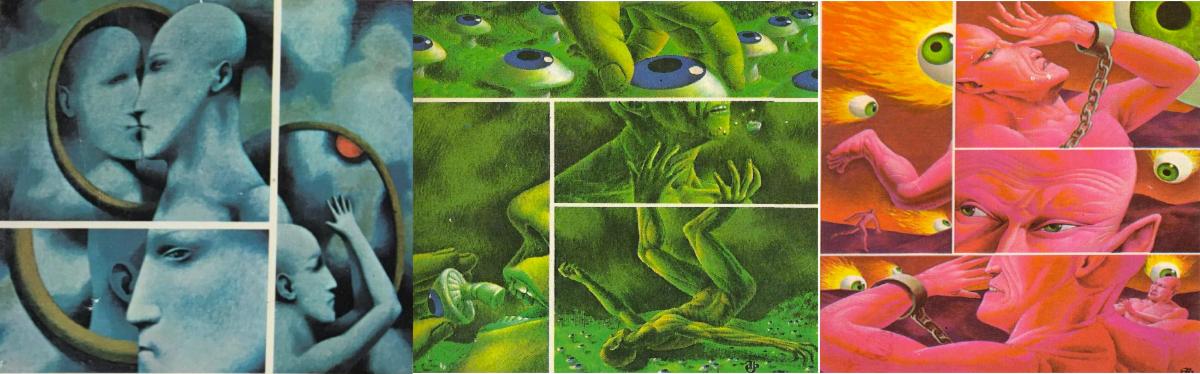
Although science fiction often attempts to anticipate the future, in the late 1960s science fiction reflected changes and new trends in human society at least as much as it foresaw them. The emerging pop counter-culture of the 1960s, which challenged traditional social norms and values, had a strong impact on science fiction, provoking a “New Wave” of revolutionary, even rebellious writers, avant-garde literary styles, and controversial narrative themes.
Science fiction became increasingly concerned with “inner space,” rather than outer space, and sexuality, gender, religion, spirituality, drugs, ethics, society, and psychology—all big concerns of the 60s culture—increasingly became the focus of New Wave science fiction. The Western ideal of unending materialistic-technological progress, attacked by the 60s culture, was severely critiqued by J. G. Ballard, a key figure of the New Wave, in his mesmeric tales of the catastrophic (such as The Crystal World and The Drowned World), and by John Brunner in his “Quartet of Dreadful Warnings,” notably in his Hugo winning Stand on Zanzibar. In his time-traveling retelling of the Crucifixion, Behold the Man, Michael Moorcock dove into the blasphemous. Harlan Ellison edited the ground-breaking Dangerous Visions and rewrote the story of the Garden of Eden in "The Deathbird;" he won the Hugo for his totally unnerving “I Have No Mouth and I Must Scream.” Philip Jose Farmer resurrected the dead—every last member of our species in To Your Scattered Bodies Go—and led the deep and at times perverse dive into science fiction sex in The Lovers, Flesh, and Strange Relations. The lyrical Roger Zelazny explored the mythic and the mystical in tales such as Lord of Light, and Robert Silverberg, one of the most popular and prolific writers of the era, went totally psychedelic and erotic in Son of Man, his novel of the far-future evolution of humanity. Joe Haldeman wrote the Vietnam-inspired, great anti-war, pot-infused Hugo-Nebula winning novel The Forever War, and in the movies Kubrick assaulted the senses, boggled the mind, and gleefully dove into hell—all done with great cinematic pizazz and aesthetics—in Dr. Strangelove, 2001, and A Clockwork Orange.
But perhaps the most significant development in the New Wave was the dramatic and powerful rise of women authors and feminist themes, beginning with Ursula Le Guin and her award winning The Left Hand of Darkness and The Dispossessed, and soon followed by Joanna Russ (The Female Man), the wondrous mystery man/woman James Tiptree, Jr. (“Love is the Plan, the Plan is Death”), and numerous other women writers and tales.
In the New Wave the mind-space of science fiction evolved.
Science Fiction: The Evolutionary Mythology of the Future
New Books:
Volumes Two and Three
An evolutionary and transformative journey through the history of science fiction, from ancient to contemporary times, exploring the innermost passions and dreams of the human spirit, the most expansive cosmic creations of thought and imagination, and the farthest reaches of the universe and beyond.
“Lombardo is just simply brilliant... you will feel overwhelmed.”
DR. ERIK ØVERLAND, President of the World Futures Studies Federation
* * *
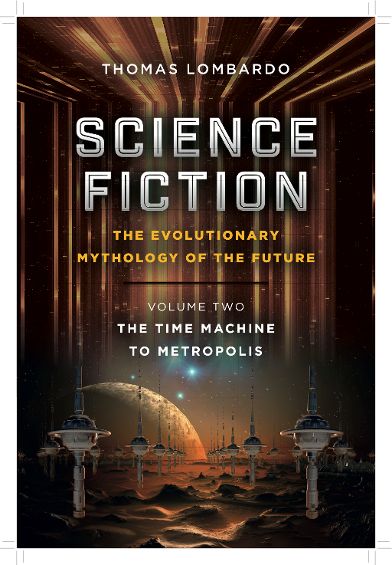
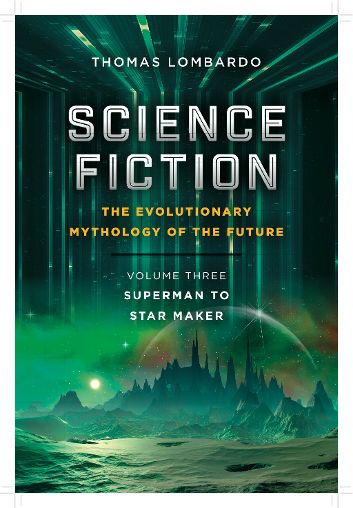
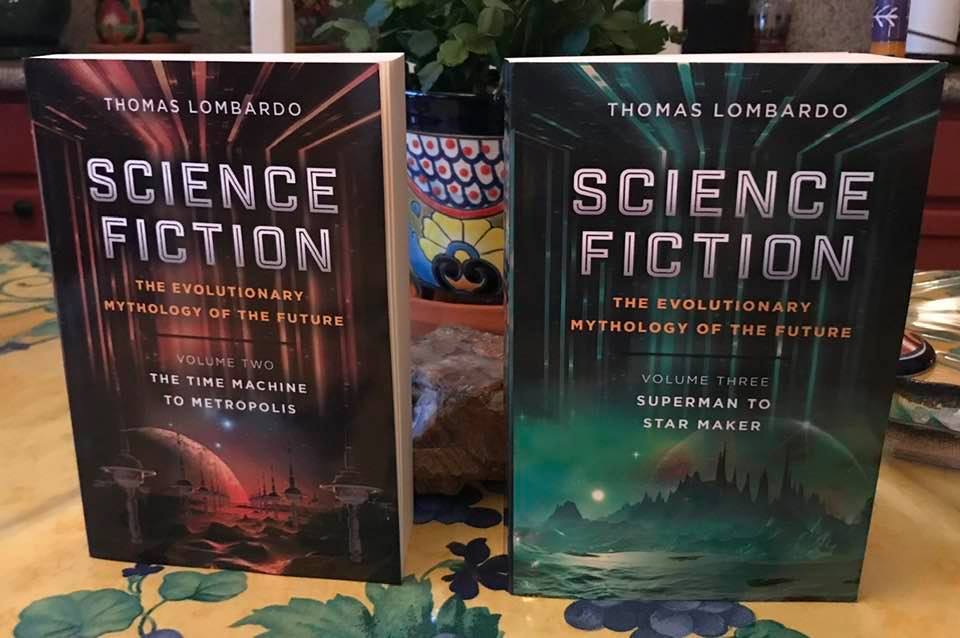
I am happy to announce the publication of two new volumes in my Science Fiction: The Evolutionary Mythology of the Future series:
Volume Two “The Time Machine to Metropolis”
Volume Three “Superman to Star Maker”
Both new volumes are available for purchase on Amazon, Barnes & Noble, and the Publisher’s website.
Continuing his in-depth evolutionary history of science fiction Tom Lombardo examines science fiction literature, art, cinema, and comics, and the impact of culture, philosophy, science, technology, and futures studies on the development of science fiction. These two new volumes also describe the reciprocal influence of science fiction on human society and the evolution of future consciousness.
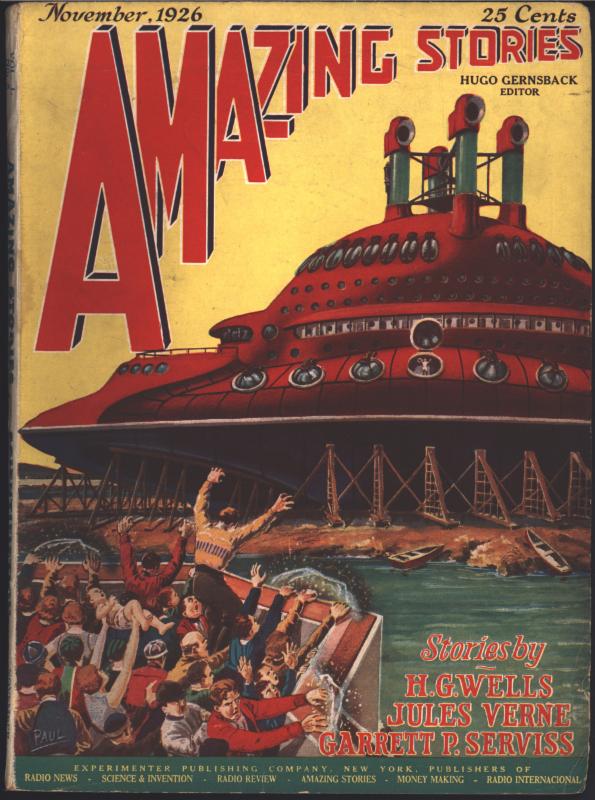
Volume Two covers the years 1895 to 1930, and includes an extensive discussion of H. G. Wells and his numerous science fiction novels and futurist publications. Also covered in-depth are Thea von Harbou and Fritz Lang’s classic silent movie Metropolis. Other key figures discussed in Volume Two include Méliès, Zamyatin, Gernsback, Burroughs, Merritt, Huxley, and Hodgson.
Volume Three primarily focuses on the 1930s, covering the phenomenon of Superman and key authors such as Čapek, Hamilton, “Doc” Smith, Campbell, Lovecraft, C. A. Smith, and Williamson. Volume Three concludes with an extensive philosophical examination of Olaf Stapledon’s Last and First Men and Star Maker.
Some of the key themes and topics addressed in the two volumes include: Dystopian and utopian visions of the future; the meaning of progress and the meaning of life; the future evolution of the human conscious mind and the possible emergence of psychic powers and collective forms of intelligence; the ethics and philosophy of space operas and super-heroes; technology, robots, and human society; technological intelligence; alien mentality and alien civilizations; time travel, time loops, and time wars; global war, catastrophes, and world-wide disasters; science and religion; fear and horror, and hope and wonder in science fiction; and the significance of the theory of evolution in the development of science fiction.
"It is unmistakably the best webinar presentation, consecutively viewed or singly viewed, that I have ever spent as a participant or a viewer. Ever!" Cedar Sarilo Leverett, MFA, Society of Consciousness Studies
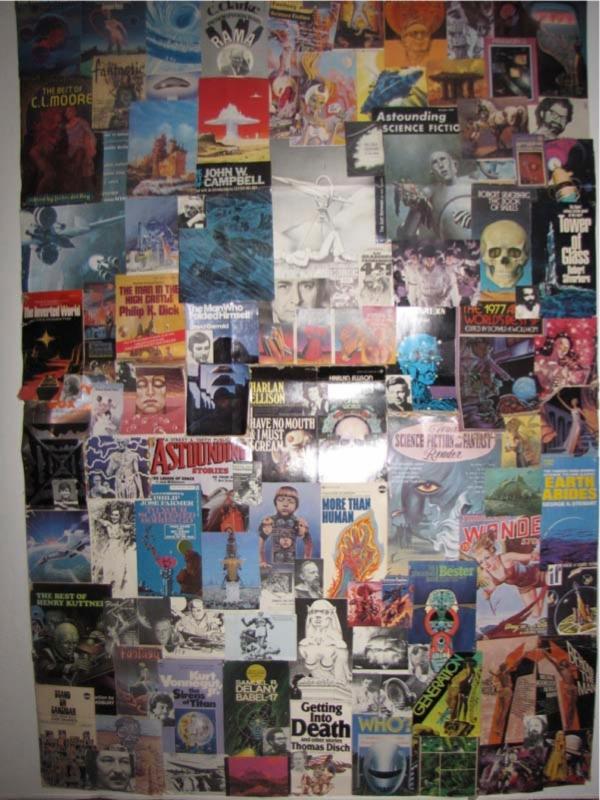
Combining colorful slide presentations and in-depth analysis, in these webinars, based on my book series Science Fiction: The Evolutionary Mythology of the Future, I examine the evolutionary history of science fiction from ancient to contemporary times. I delve into the mythological origins and dimensions of science fiction; fantasy versus science fiction; the rise of the modern scientific world view; utopias and dystopias through the ages; the Enlightenment, Romanticism, and Gothic horror; the impact of evolutionary theory on science fiction; Wells, Stapledon, and the integration of futures studies and science fiction; robots, techno-intelligence, and aliens; time travel and alternate realities; fantastical adventures, space exploration, and Space Operas; the Golden Age, the Silver Age, the New Wave, Feminist Science Fiction, Cyberpunk, Steampunk, and the "New Weird;" social, psychological, and religious science fiction; and numerous other key themes and dimensions of science fiction. Covering science fiction literature, art, cinema, and comics, I discuss in depth the appeal, value, and influence of science fiction on the modern world and the impact of intellectual and cultural trends on the evolution of science fiction.
To support our ongoing educational and publication efforts please DONATEto the Center for Future Consciousness.