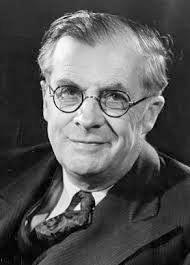
“The human species can, if it wishes, transcend itself - not just sporadically, an individual here in one way, an individual there in another way, but in its entirety, as humanity.”
Julian Huxley
In my previous essay—the first in a series of essays—I proposed that we should focus, much more than we presently do, on evolving our consciousness. Our contemporary problems and challenges, I argued, are to a great degree a result of weaknesses and failings in consciousness. I outlined the theory that as a unique expression of our evolutionary universe, humans through the capacity of future consciousness engage in purposeful evolution, both of ourselves and our surrounding physical world. To best create a good future, instead of throwing our emphasis on purposefully evolving the physical world, we should turn our attention much more so toward purposefully evolving our consciousness.
In this second essay I am going to delve more deeply into the landscape of our contemporary challenges and various proposed solutions to these problems, and how consciousness figures into this landscape. Also, I am going to further explain the significance of evolutionary theory and the concept of purposeful evolution regarding human reality and the future, with some concluding thoughts on our ethics for the future. This essay, together with essay one, lays the groundwork for the next few essays, which describe in increasing detail: the holistic nature of consciousness; current failings and weaknesses in human consciousness that powerfully contribute to our contemporary problems; and a key set of capacities of human consciousness that should serve as evolutionary goals and ideals for our future purposeful evolution.
Contemporary Theories and Paradigms
of Challenges and Solutions
“The central question of our time is what to do about the future.
And that question creates a deep divide.”
Virginia Postrel
In my book Contemporary Futurist Thought (2006), specifically in Chapter four “Theories and Paradigms of the Future,” I describe over a hundred different perspectives on future. With different points of emphasis and at times clearly opposed points of view, such theories and paradigms present descriptions of our current human state of affairs, the most important problems and challenges today, the best solutions to these difficulties, predictions for the future, and what ideals and preferable futures humanity should be striving toward. Although there are notable areas of popular agreement among these viewpoints, there are unequivocal points of disagreement and dramatic differences in emphasis on what are the key problems and challenges today, and what are the best solutions and ideals for the future. There is competition, as well as alliances, among points of view regarding the direction humanity should take into the future. As we always have been, we are debating the future as we attempt to guide and create it.
All these theories and paradigms are expressions of what I describe as future consciousness (2017). They all identify how we should think about the future and what to think. This current pluralistic diversity of ideas regarding the future is an evolutionary and interactive landscape of preferable futures, a manifestation of the ongoing global evolution of future consciousness. As has been the case throughout history, we are evolving our future consciousness through speculation, dialogue, and debate on the future. (See also my online video “Contemporary Trends and Theories and Paradigms of the Future,” 2014.)
One broad difference of opinion among approaches concerns whether we should emphasize physical problems and solutions, or instead psycho-social problems and solutions. Physicalist points of view identify economic, technological, material, and environmental challenges and solutions; psycho-social perspectives highlight psychology, ethics, culture, and spiritual and social-political dimensions of problems and solutions. All these latter perspectives spotlight, in one manner or form, the central significance of consciousness in understanding where we are and where we should be heading.
At least in modern Western civilization—with other contemporary cultures and societies following along to significant degrees—we have placed a great deal of emphasis on understanding our big problems in physical terms and proposing physical solutions to them. Although not to discount physical perspectives on human reality and our future—for as conscious beings we exist in a physical world—the approach introduced in the first essay is to view our current challenges as due to problems and limitations in consciousness. Hence from this point of view the preferable pathway forward should be to evolve our consciousness, both individually and collectively. Our future consciousness—our understanding of a preferable future—should emphasize the future enhancement of consciousness.
This fundamental difference in perspective between physical and consciousness-centered approaches to present challenges and preferable futures illustrates that what we view as problems and what we identify as solutions connect together. Different theories of preferable futures highlight different key problems, as much as different core solutions. There is, in fact, a reciprocity of problems and solutions in theories of preferable futures. Depending on what is identified as a preferable future, different current problems get emphasized and reciprocally, what are seen as the biggest challenges impact what solutions are offered. The general mindset, key concepts, and core values of a theoretical perspective on the future strongly impact both one’s understanding of problems and of solutions. (From the point of view of a hammer everything is a nail.) Among ourselves we dispute what are the biggest problems, as much as what are the right solutions. Part of our debate over the future is a debate over the present and the nature of our contemporary predicament.
“The future ain’t what it used to be, and it never was.”
Anonymous
Throughout history our visions of the future have evolved—our future consciousness has transformed. In fact, our understanding of our history and heritage (the past), and of the present and its accomplishments and problems have evolved as well. Our historical consciousness and understanding of the present have evolved interactively with our future consciousness. Past, present, and future in the human mind are knit together. Times change and so have our ways of making sense of human reality. (See Lombardo, 2017).
But regardless of whether we understand the great human drama in primarily physical or psycho-social terms, all our theories and paradigms are creations of our consciousness. Each and every point of view of past, present, or future--whether taking a physical or a consciousness-based perspective--is a conceptual framework articulated and understood within human consciousness.
One reason for proposing that we should shift our focus of emphasis in thinking about the future to consciousness is that consciousness is the creative source of all our theories and approaches to both the present and the future. By enhancing our capacities of consciousness we will heighten our abilities to understand the present and direct our future.
Evolution and Purposeful Evolution
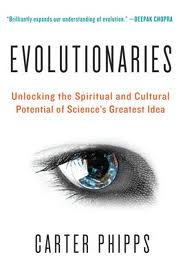
“How we think about evolution is foundational to the kinds of visions we hold for our collective future. It shapes our understanding of who we are today, how we got here, and what our role is in creating the world of tomorrow…Paradoxically, the debate about our origins is a cultural referendum on our future.” Carter Phipps
Building on my opening remarks on evolution in the first essay—that humans are evolutionary beings existing in an evolutionary universe and that we add another layer to the cosmic evolutionary process through purposeful evolution—I would add that, in resonance with the quote above from Carter Phipps, we should view evolution as applying to the full panorama of time and the entirety of the human saga. Evolution is the basic dynamic principle of the universe, providing a framework of time for understanding past, present, and future. Whatever the specific details, at its foundation our human future will be a continuation of the saga of evolution; as H. G. Wells and Olaf Stapledon recognized the human saga could include eventual extinction. Evolution is not simply about our past; it provides a general predictive framework for the future. Paraphrasing the historian Peter Watson, we live and will continue to live within “evolution…the story of us all.”
Evolutionary cosmology can be contrasted with a static or stable cosmology. The latter viewpoint conceptualizes the universe (or absolute reality) as without fundamental change. Such a view can be found both in Newtonian physics and Platonic-Christian ontologies. Evolutionary cosmology though does not imply that the entirety of existence is in a state of continuous transformation. Within our evolutionary universe there are numerous dimensions and spheres of relative stability in both the cosmos as a whole and within life and human reality on the earth. There are numerous constancies and laws of nature, and the forms in nature show relative persistence across time, different patterns and entities exhibiting various life-spans of continuation and duration. Although dynamic entities involving innumerable forms of internal change over time, galaxies and stars persist for billions of years. Similarly, although internally dynamic, individual humans have life-spans of persistence across scores of decades. Still, all in all, galaxies, stars, and living creatures emerged from more primitive constituent parts and eventually will transform and dissipate back into the plenum—everything is born and perhaps everything eventually dies.
Adding to the intermixing of stability and change in nature, evolutionary history seems to reveal relative periods of ecological stability punctuated by relatively shorter periods of abrupt transformation. At least biological evolution seems paced and pulsatory (Lombardo, 2002, 2017). In reflecting upon our personal histories and the sagas of different human societies, a similar pattern of oscillation between periods of relative stability and abrupt change seems to hold true as well. Part of the ongoing development of evolutionary thinking has been (and will continue to be) understanding the rhythmic patterns of stability and change within the evolution of life and the cosmos.
“The most extraordinary fact about public awareness of evolution is not that 50 percent don’t believe it but that nearly 100 percent haven’t connected it to anything of importance in their lives.” David Sloan Wilson
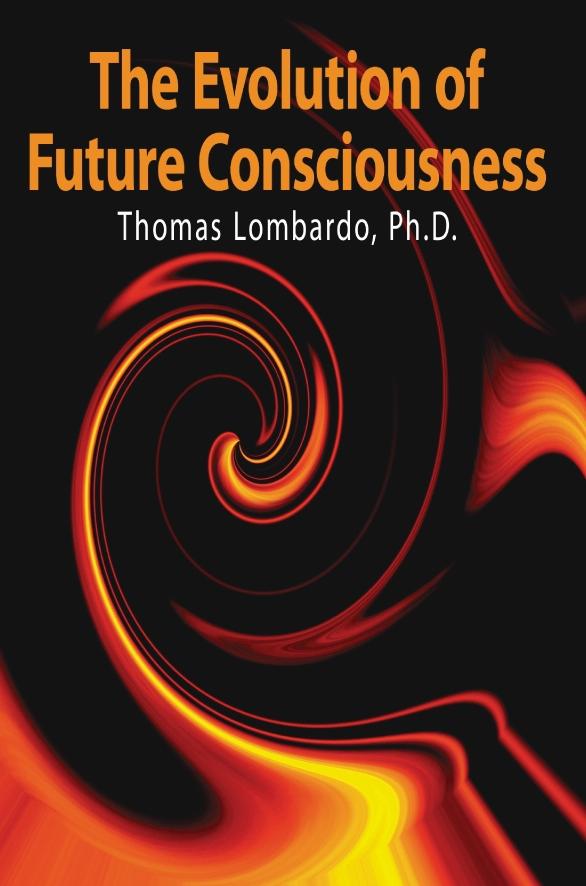
Purposeful evolution through future consciousness is responsible for the creation of human civilization. Beginning with anticipation and purposeful goal-directed behavior manifested in primitive hunter and gatherer activities and the controlled use of fire in our prehistoric ancestors, humans purposefully created and evolved (and continue to evolve) tools, artifacts, habitats, negotiated tribal and parental bonds, agriculture, settlements and cities, religion and ethics, trade, and even war and conquest. All these key features of human civilization involve goal-setting, planning, and purposeful behavior with an eye on the future (See The Evolution of Future Consciousness.)
As introduced in the previous essay, humans also engage in purposeful evolution at an individual level; we purposefully evolve our individual streams of consciousness and our sense of personal identity and self. Often this evolution of consciousness and the self occurs haphazardly or even against our will—change is forced upon us—and the same could be said regarding the evolution of civilization, but efforts at purposeful change to realize our goals and values are a recurrent and regular feature of our nature, both individually and collectively, and psychologically and socially. Wilson’s quoted statement above is clearly on target in this regard; we have failed to realize that our societies and our individual lives and conscious selves are ongoing evolutionary creations that we have orchestrated ourselves with our conscious minds. Nothing could be more relevant and important to our lives than evolution.
Of course, individual humans, as well as cultures and societies, also attempt to protect and preserve their sense of identity. There are psychological and social drives within us toward stability and continuance. Humans, in fact, exhibit two powerful and often antagonistic motivational tendencies: the preservation and protection of stability and the drive toward transformation and growth. When I proposed in essay one that humans engage in purposeful evolution I noted that humans for a number of different reasons either actively resist change, or find it difficult to accomplish. Coupled with our capacity for purposeful evolution, we evince numerous ways in which we maintain, intentionally or not, stability and relative persistence. This is a basic Yin-Yang of human psychology. Stability is safe, secure, and predictable; evolution and change is risky and uncertain. One challenge in enhancing our existing capacity for purposeful evolution will be to understand better how the human drive toward stability fits into our overall trajectory of purposeful evolution.
Due to a number of factors, when we think about the earth and our natural environment, we are also likely to see our natural surroundings as completely stable and harmonious. But the earth is not a completely stable reality—it is at best only relatively and dynamically persistent—and it would be a profound miscalculation to attempt to make it totally stable. Efforts at “sustainability” or “conservation” are unrealistic. The same would be true of humans and human society. Preserving or defending “true human nature,” or our “true inner self” are equally deep naturalistic blunders. Acknowledging the dimension of stability in nature and ourselves, what we should consider and act upon is how to thoughtfully and ethically evolve ourselves and evolve nature. We can not get around the fact though that our future will involve purposeful evolution, both within ourselves and within our surrounding environment.
It is part of our psychological nature to preserve and protect, and to perceive around us numerous forms of stability, which indeed do in fact exist, but the story of the universe, nature, and ourselves is evolutionary. And given the human capacities to anticipate, set goals and create plans, and engage in actions today with intended future consequences, we have amplified the transformational, evolutionary process of reality. Lest we destroy our higher conscious capacities and become simply reactive and living in the present, we are drawn into the evolutionary process, as orchestrators and coordinators of change.
In support of the theory put forth by Leonard Shlain in his book Sex, Time, and Power, in The Evolution of Future Consciousness I proposed that one key general direction in the evolution in life has been the expansion of both temporal and spatial consciousness and adaptability. Life evolves from sensitivity primarily to the immediate here and now toward “an ever-greater appreciation of the vectors of space and time.” With humans we find a significant amplification of both historical and future consciousness.
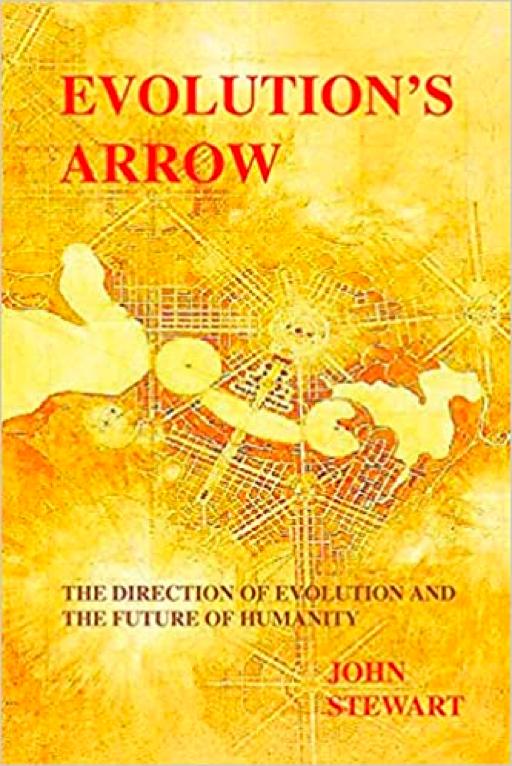
The evolutionary biologist John Stewart (2000) has proposed that there is “arrow” or direction to evolution; the arrow is the ongoing evolution of evolvability. The direction of evolution is toward becoming more capable at evolving. The capacity for evolution is evolving.
Becoming increasingly cognizant of the surrounding environment; the temporal patterns of history, stability, and change; and the diverse possibilities of the future that could impact our existence all contribute into our knowledge-base regarding how to guide our evolution. All these spheres of conscious understanding and our ability to incorporate this knowledge into our actions enhance our ability to evolve. When we engage in purposeful evolution, we incorporate all such areas of knowledge and ability—to whatever degree we comprehend and use them—into our actions and our lives. Informed purposeful evolution is an evolution in evolution (evolvability).
Throughout human history there can be found numerous theories of ethics, of what is good and how we should pursue it. One ethical theory is that we shouldn’t “play God” and attempt to meddle with nature, inclusive of human nature. Yet, what makes us distinctly human and empowers us in our evolvability is our capacity through future consciousness to purposefully evolve ourselves and the world around us. We are a clear manifestation and realization of the overall direction of evolution. As evolutionary beings in an evolutionary universe, a realistic ethics for now and the future should be to enhance, as best as possible, our capacity for purposeful evolution through future consciousness. We should get better at “meddling with nature.”
As H. G. Wells and his teacher Thomas Huxley realized, with the emergence of human culture a new level of evolution has been layered on top of natural selection and evolution (Lombardo, 2021). With learning, thinking, purpose, and conscious anticipation we have added a new dimension to evolution. It is up to us to determine the goals and values of this process of purposeful evolution; it is up to our thinking, and other abilities of the conscious mind, to guide the future of evolution. What is the good that we should pursue in the process of purposeful evolution? Indeed, part of our purposeful evolution should be evolving our notions of what is good. Again, we are the orchestrators in this endeavor and there is no other game in town. It is up to us to think out the good.
As such, it seems to me that we need to turn our attention much more so toward consciousness and its future purposeful evolution, for it is through consciousness that we formulate all our theories and approaches to “life, the universe, and everything,” including the future, and it is through certain distinctive powers of human consciousness (including future consciousness) that we are able to responsibly steer our ship. If the future is a journey (or multiple parallel journeys) that we are creating, then it is of paramount importance to understand and evolve our means of guidance and navigation.
“It is as if man had been suddenly appointed managing director of the biggest business of all, the business of evolution - appointed without being asked if he wanted it, and without proper warning and preparation. What is more, he can’t refuse the job. Whether he wants to or not, whether he is conscious of what he is doing or not, he is in point of fact determining the future direction of evolution on this earth. That is his inescapable destiny, and the sooner he realizes it and starts believing in it, the better for all concerned...” Julian Huxley
Recommended Readings: The following books, articles, and videos by me provide more in-depth discussions of various key themes and ideas included in this essay.
The Future of Science, Technology, and the Cosmos, 2002.
“Contemporary Trends and Theories and Paradigms of the Future” https://www.centerforfutureconsciousness.com/cont_trends_video.htm
Future Consciousness: The Path to Purposeful Evolution. Winchester, UK: Changemakers Books, 2017.
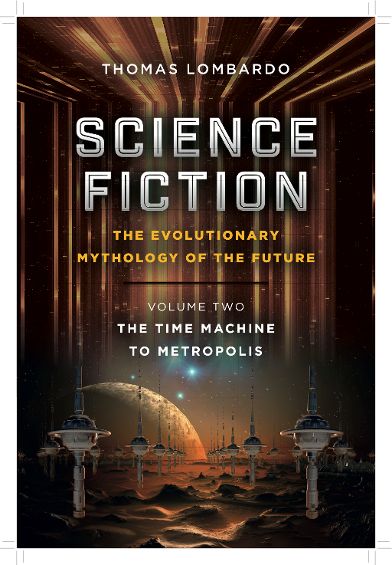
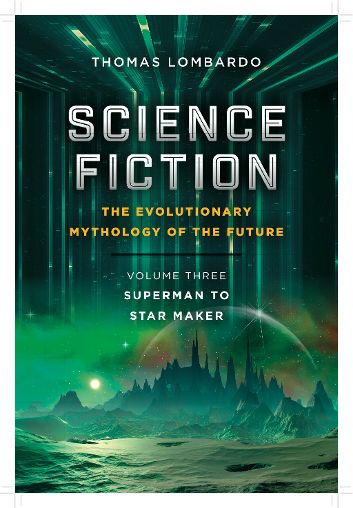
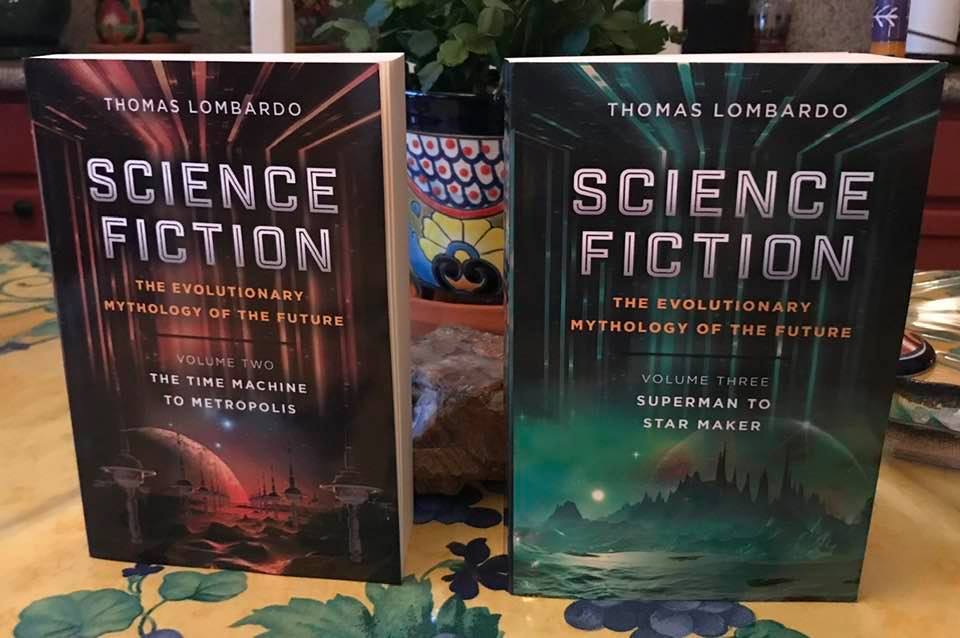
Science Fiction: The Evolutionary Mythology of the Future, Volumes 2 and 3. Bloomington, IN: AuthorHouse, 2021.
New EBook
A Dialogue on Science Fiction: How to Achieve Planetary Wisdom through Future Consciousness
This series of dialogues between Victor Motti and Thomas Lombardo begins with the intent to discuss Lombardo’s book series Science Fiction: The Evolutionary Mythology of the Future. But since science fiction deals with the “future of everything”—a key idea introduced in the first dialogue—the series as it progresses covers an immense and diverse array of topics regarding the future. Looking at science fiction literature as a source of inspiration and speculation, the dialogues examine the future of education, artificial intelligence, love and sex, human society, utopias and dystopias, consciousness and the human mind, biotechnology and space travel, ecology, and our planetary civilization. But also, on an even broader scale—since nothing is beyond the boundaries of science fiction—the dialogues also consider the nature of God, the importance of history, the value of wisdom, the theory of evolution, alien minds and alien contact, the nature of mythology and religion, and even Creation.
In this series of conversations both Motti and Lombardo highlight their own individual theoretical views regarding futurist thinking and the diverse topics covered in the dialogues. Motti advocates for a “planetary” perspective on possible and preferable futures, as he has outlined in his book A Transformation Journey to Creative and Alternative Planetary Futures. Lombardo, advocating for the value of science fiction, highlights the themes of mythology, future consciousness, and wisdom, which are all covered in depth in his books Future Consciousness and Science Fiction: The Evolutionary Mythology of the Future.
Although Motti takes the role of interviewer and at times critical interrogator of Lombardo and his views on science fiction, what becomes increasingly apparent through the dialogues is a mutual and focused interest on the issue of consciousness. Both ponder the question regarding whether computers or robots will achieve consciousness. Both consider and debate whether the universe is permeated with consciousness. Of particular importance, they explore the future and desirable possibility of expanding and heightening human consciousness. Motti advocates for a rising of planetary consciousness in the future; Lombardo argues for the evolution of future consciousness through science fiction.
In a time of numerous dystopian narratives and depressing images of both short term and long term futures spread through the media, pop culture, and the news, what emerges out of these dialogues between Lombardo and Motti is a counter-vision of the possibilities of the future that is expansive, intellectually uplifting, and realistically optimistic.
Science Fiction: The Evolutionary Mythology of the Future Part Two
Continuing our ongoing series of podcasts, Gregg Moffitt of Legalize Freedom and myself discuss my two new volumes in my series on Science Fiction: The Evolutionary Mythology of the Future.
From the site:
"Even if you think that science fiction is not for you, if you are concerned about the past, present, and future of the human species, the Earth, and the wider cosmos, you may find much of interest in this extensive interview."
New Video: Science Fiction and the Evolution of Future Consciousness
This video-recorded talk with accompanying slide show was presented online on September 27, 2021 to students and faculty at the Prince Mohammad Bin Fahd Center for Futuristic Studies (part of Prince Mohammad Bin Fahd University) in Saudi Arabia.
Aside from providing a streamlined evolutionary history of science fiction from ancient to modern times, as a unique feature of this talk, the presentation connects the early development of future consciousness (in pre-historic and ancient times) with the origins of science fiction, as well as explaining some key relations between the growth of futures studies and science fiction. The talk also highlights the impact of culture on science fiction and vice versa.
Science Fiction, Future Consciousness, and the Future(s)
Alex Fergnani of the Association of Professional Futurists interviewed me on a set of questions regarding science fiction, futures studies, and my publications on future consciousness. Here are the questions we discussed:
What are your views about using science fiction for foresight purposes with actual clients, such as organizations, communities, and institutions?
In your book "The Pursuit of Virtue", you elaborate on the limits of modernism and postmodernism, and you then propose future consciousness, seemingly as a solution to the modern-postmodern diatribe. Why is the development of future consciousness a way to transcend such debate?
In your definition of future consciousness, you include several capacities and capabilities. Although I imagine that this inclusive definition is beneficial for an advocacy standpoint, it seems to elude measurement. What is the rationale behind choosing to define future consciousness as such and how would you tackle the measurement of this construct?
In your book "Evolution of Future Consciousness", you elaborate on the origin of future consciousness as an evolutionary phenomenon, where "evolutionary" is intended as conducive to evolutionary fitness of human beings and to higher likelihood of survival. This is a crucial aspect that may be overlooked by those who are not familiar with evolutionary psychology and thus may understand "evolutionary" simply as "that which evolves". Can you elaborate on why and how future consciousness is evolutionary?
'Welcome to IMAGINE, the quarterly digital magazine celebrating the art and culture of the human imagination. Launching on the first-annual Imagination Day on October 9, 2021, in honor of John Lennon’s 81st birthday and the 50th anniversary of his song, Imagine, IMAGINE brings together many of the world’s most imaginative people to speak on the power and importance of the creative imagination."
Mark asked me to write a short essay on imagination for this opening issue of his magazine. Here it is:
"Imagination is the mental capacity to transcend the immediate here and now. Although grounded in the experiences of sensory perception, imagination takes us beyond what we see and hear into the realm of the hypothetical and possible, of what might be or could be as opposed to simply what is. Our consciousness and our mind space is colossally expanded, above and beyond perception and memory, through the capacity of imagination. Our minds breathe and set sail into the limitless realm of the indeterminable and the infinite within imagination. Imagination is the means by which the human mind experiences freedom to explore and ponder existence.
Imagination is necessary for future consciousness. Going beyond what is and what has been, imagination allows us to envision what could or can be in the future. Throughout recorded history humans have been capable of transcending the present through imagination and visualizing varied possibilities of the future. Future consciousness is our most distinctive and empowering human mental capacity and imagination provides the means to consciously explore the future.
Imagination is human creativity at work. Imagination is a creative act, drawing upon the raw material of perception and memory and constructing new realities, hypothetical and real, out of these building blocks. Without imagination there is no creativity in the human mind. All of our inventions emerge out of imagination. Our level of creativity reflects how rich, flexible, and expansive is our imagination.
Imagination can be cultivated and enhanced. We can seek out creative and imaginative works of art, literature, and other human activities and study them, and allow our minds to be stimulated by them. Practice daydreaming, read fantasy and science fiction. We can exercise our imagination, visualizing and mentally manipulating images in our minds. We can paint pictures and write songs in our minds. We can purposefully attempt acts of creation. Strengthening imagination requires work.
Imagination is the possibility space of consciousness. The power of our imagination is judged by the plurality and diversity of its creations. The imaginative mind creates many possibilities and not just one. Our minds are as closed and confined, or as open and expansive as is our imagination. In fact, in imagination we are able to break free into the impossible. As Robert Goddard, the great rocket scientist stated, 'It is difficult to say what is impossible, for the dream of yesterday is the hope of today and the reality of tomorrow.' "
Tom Lombardo
Science Fiction: The Evolutionary Mythology of the Future
New Books:
Volumes Two and Three
An evolutionary and transformative journey through the history of science fiction, from ancient to contemporary times, exploring the innermost passions and dreams of the human spirit, the most expansive cosmic creations of thought and imagination, and the farthest reaches of the universe and beyond.
“Lombardo is just simply brilliant... you will feel overwhelmed.”
DR. ERIK ØVERLAND, President of the World Futures Studies Federation
* * *
I am happy to announce the publication of two new volumes in my Science Fiction: The Evolutionary Mythology of the Future series:
Volume Two “The Time Machine to Metropolis”
Volume Three “Superman to Star Maker”
Both new volumes are available for purchase on Amazon, Barnes & Noble, and the Publisher’s website.
Continuing his in-depth evolutionary history of science fiction Tom Lombardo examines science fiction literature, art, cinema, and comics, and the impact of culture, philosophy, science, technology, and futures studies on the development of science fiction. These two new volumes also describe the reciprocal influence of science fiction on human society and the evolution of future consciousness.
Volume Two covers the years 1895 to 1930, and includes an extensive discussion of H. G. Wells and his numerous science fiction novels and futurist publications. Also covered in-depth are Thea von Harbou and Fritz Lang’s classic silent movie Metropolis. Other key figures discussed in Volume Two include Méliès, Zamyatin, Gernsback, Burroughs, Merritt, Huxley, and Hodgson.
Volume Three primarily focuses on the 1930s, covering the phenomenon of Superman and key authors such as Čapek, Hamilton, “Doc” Smith, Campbell, Lovecraft, C. A. Smith, and Williamson. Volume Three concludes with an extensive philosophical examination of Olaf Stapledon’s Last and First Men and Star Maker.
Some of the key themes and topics addressed in the two volumes include: Dystopian and utopian visions of the future; the meaning of progress and the meaning of life; the future evolution of the human conscious mind and the possible emergence of psychic powers and collective forms of intelligence; the ethics and philosophy of space operas and super-heroes; technology, robots, and human society; technological intelligence; alien mentality and alien civilizations; time travel, time loops, and time wars; global war, catastrophes, and world-wide disasters; science and religion; fear and horror, and hope and wonder in science fiction; and the significance of the theory of evolution in the development of science fiction.
"It is unmistakably the best webinar presentation, consecutively viewed or singly viewed, that I have ever spent as a participant or a viewer. Ever!" Cedar Sarilo Leverett, MFA, Society of Consciousness Studies
Combining colorful slide presentations and in-depth analysis, in these webinars, based on my book series Science Fiction: The Evolutionary Mythology of the Future, I examine the evolutionary history of science fiction from ancient to contemporary times. I delve into the mythological origins and dimensions of science fiction; fantasy versus science fiction; the rise of the modern scientific world view; utopias and dystopias through the ages; the Enlightenment, Romanticism, and Gothic horror; the impact of evolutionary theory on science fiction; Wells, Stapledon, and the integration of futures studies and science fiction; robots, techno-intelligence, and aliens; time travel and alternate realities; fantastical adventures, space exploration, and Space Operas; the Golden Age, the Silver Age, the New Wave, Feminist Science Fiction, Cyberpunk, Steampunk, and the "New Weird;" social, psychological, and religious science fiction; and numerous other key themes and dimensions of science fiction. Covering science fiction literature, art, cinema, and comics, I discuss in depth the appeal, value, and influence of science fiction on the modern world and the impact of intellectual and cultural trends on the evolution of science fiction.
To support our ongoing educational and publication efforts please DONATEto the Center for Future Consciousness.