|
In this Issue
- New Book: The Future Evolution of Consciousness - Chapter Three - Reciprocity - Part One
- Upcoming Events: AI, Film, Science Fiction, & Future Consciousness
- The Evolution of Science Fiction YouTube Series
- New CFC Website
- New Expanded CFC YouTube Channel
| |
Tom Lombardo
Director of
The Center for Future Consciousness
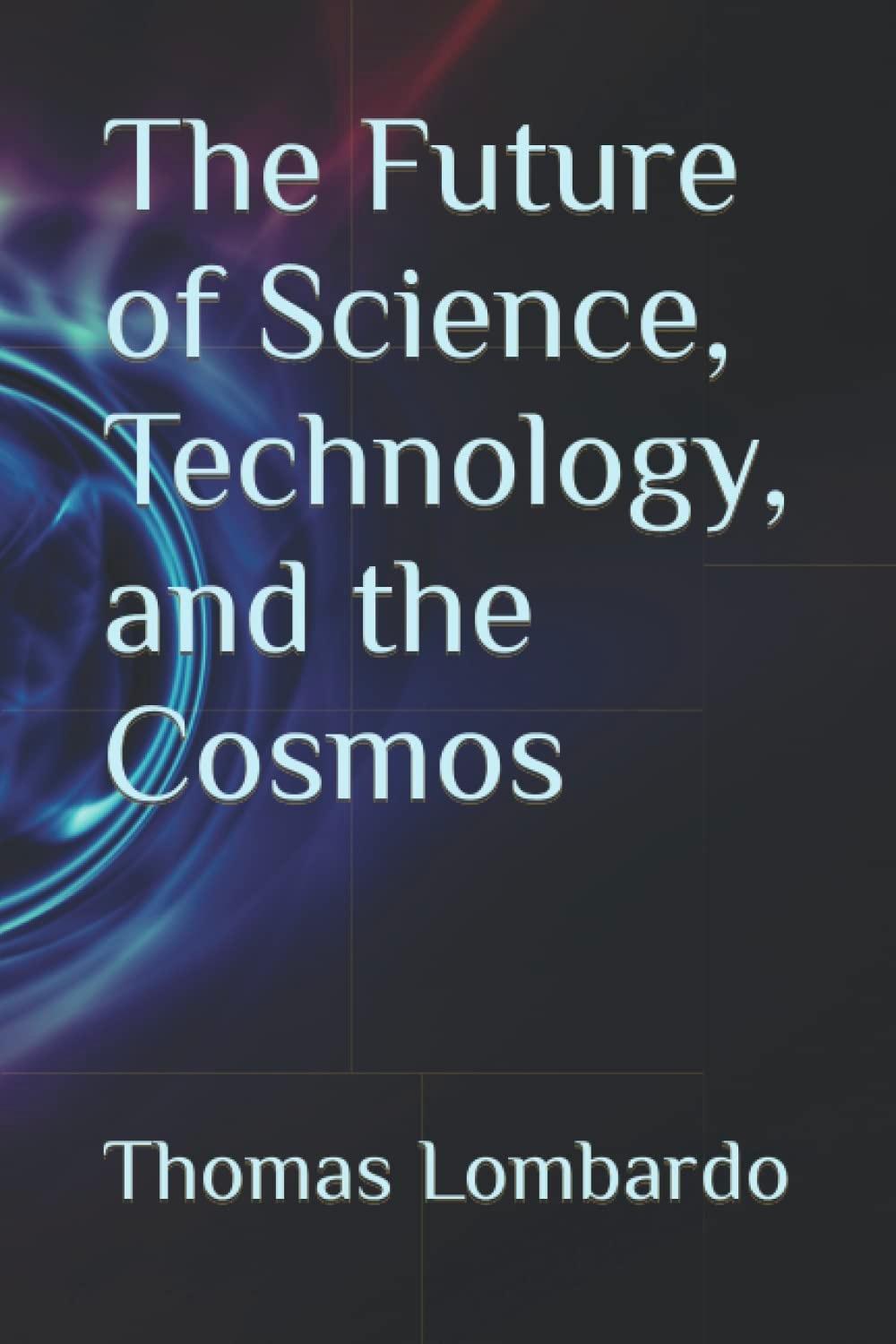
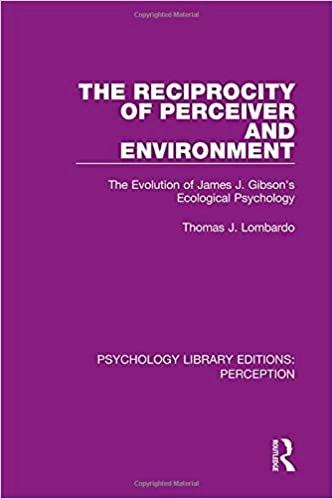
| Tom Lombardo's Books on the Future, Wisdom, Psychology, Science Fiction, and Future Consciousness |
|
|
New Book: The Future Evolution of Consciousness
|  | |
Dear Friends and Colleagues,
As introduced in the May, 2024 issue of the newsletter, over the last couple of years I’ve been working on a new book “The Future Evolution of Consciousness.”
It seems to me that the key factor to focus upon both in addressing our present problems and creating a positive future is to significantly evolve our consciousness. As such, I’ve been writing a book on this topic.
Beginning with the May issue, I have been publishing online, in Future Consciousness Insights, roughly once a month, drafts of each consecutive chapter in this new book.
In May I started with the Introduction to the book. The complete Introduction is available for viewing on my Center for Future Consciousness website:
https://centerforfutureconsciousness.com/wp-content/uploads/2024/05/evol-of-consciousness-intro.pdf.
In this issue I include Chapter 3: Part 1 Reciprocity
See https://centerforfutureconsciousness.com/wp-content/uploads/2024/10/reciprocity-chapter-3-part-one.pdf
The total published set of draft chapters of the book is available for reading on my Center for Future Consciousness website at:
https://centerforfutureconsciousness.com/the-future-evolution-of-consciousness/.
I am looking for feedback and comments on the book. After reading any parts of the draft chapters you can send any comments or feedback to my email: tlombardo1@cox.net.
|  | |
The Future Evolution of Consciousness
Thomas Lombardo
Chapter Three: Reciprocity - Part One
“Consequently he who wants to have right without wrong, order without disorder,
does not understand
the principles of heaven and earth.
He does not know how things hang together.”
Chuang Tzu
Eastern and Western Modes of Thinking:
The Circle and the Line
The process of cosmic evolution and its evolved expression of purposeful evolution provides a highly corroborated and illuminating theoretical framework for understanding reality, consciousness, and the future. But at this point I am going to focus on a second fundamental principle that I think is also essential to understanding the big picture of things. This second core principle is reciprocity. As I explain below, the dual principles of evolution and reciprocity are both necessary for understanding reality, consciousness, and the future.
This dual-principle theoretical framework of evolution and reciprocity aligns with the psycho-cultural theory of human thinking and understanding outlined in Richard Nisbett’s book The Geography of Thought. Nisbett proposed in his book that a key polarity between Eastern and Western conceptions of reality is that the East is inclined to view reality as a circle, and the West is inclined to see reality as a line. As explained below, the principle of reciprocity aligns with the Eastern idea of viewing reality as a circle, and the principle of evolution aligns with the Western idea of viewing reality as a line.
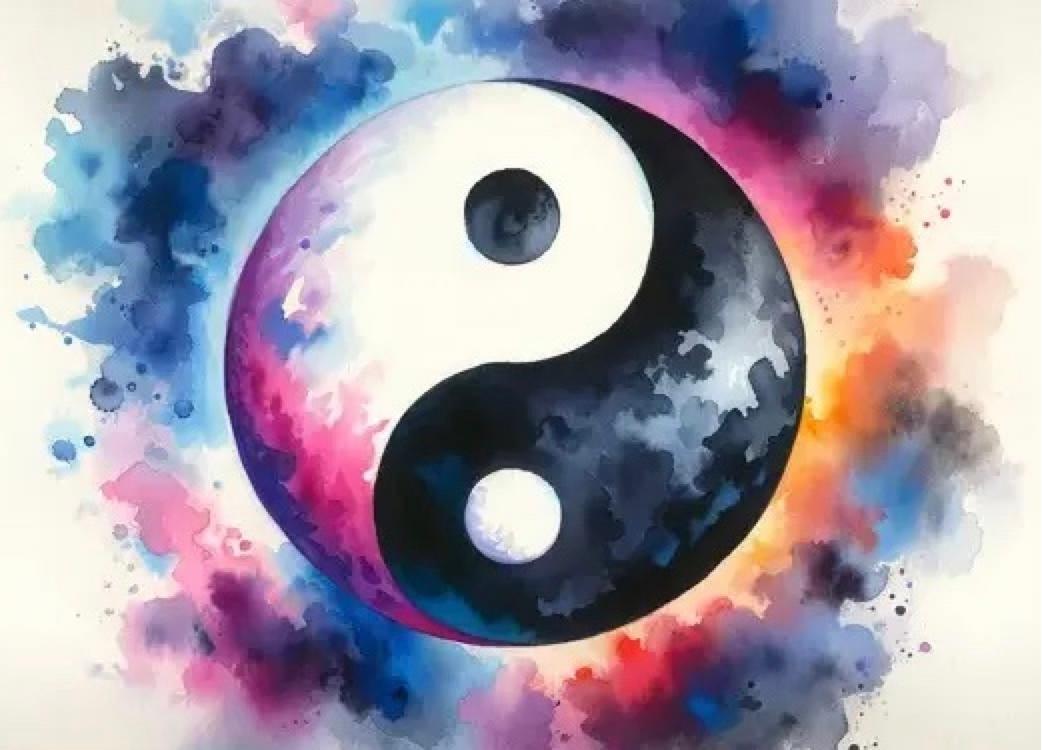
In the history of Eastern thinking, specifically originating in ancient China and the philosophy of Taoism, we find the archetypal concept of the Yin-Yang, in which reality is understood as an integrated and balanced whole of complementarities and time is viewed as a rhythmic cycle. The Taoist concept of the Yin-Yang is a paradigm example of the Eastern mindset of conceptualizing reality as a circle. The principle of reciprocity articulated in this chapter is greatly informed and inspired by the Taoist Yin-Yang.
In the history of Western thinking, conversely, we find the idea of progress—as a hypothesized positive direction in the history of civilization—in Zoroastrian, Greek, Christian, and Western Enlightenment philosophies. History is a line heading in a particular direction. As expressed in the scientific writings of Darwin and others, this linear perspective on history and time culminates in the West in the idea of natural evolution, as a hypothesized direction within the ongoing saga of life and the cosmos as a whole.
Connected with the contrasting views that reality is a circle versus reality is a line, Nisbett also notes in his study of Eastern and Western mindsets that there is an observable difference in logic between a both/and logic emphasized in the East and an either/or logic emphasized in the West. Moreover, Nisbett states that in the East it is the whole and relationships among parts that are highlighted, whereas in the West it is the distinction (or difference) and analysis into individual parts that are emphasized. These additional cultural-psychological contrasts in thinking are also of relevance in the coming discussion on reciprocity.
Although the circle and the line, as well as the other contrasts in thinking mentioned above, can be viewed as fundamental dichotomies or oppositions in human perspectives on reality, one objective in this chapter is to explain how the concepts of reciprocity and evolution—of the circle and the line—and the distinctive frameworks of understanding associated with these concepts can be integrated into a synthetic whole. As I have stated in my book Future Consciousness, pulling together these two principles provides a culturally balanced perspective on human modes of thinking and understanding. I have previously published a number of articles and books examining how to integrate the principles of evolution and reciprocity into a coherent and comprehensive picture of reality and a culturally balanced framework of understanding. It seems to me that a number of other contemporary writers and scientists have presented similar types of theoretical syntheses of these two basic principles.
Just as I believe that the evolutionary perspective is essential for understanding the nature and future of consciousness, equally so, I think that the concept of reciprocity will also significantly contribute to comprehending the nature and future of consciousness.
The Meaning of Reciprocity
I begin my examination of the principle of reciprocity with a definition of the term. One common meaning for “reciprocity” is a state or relationship of mutual exchange. In this meaning of the term, reciprocity refers to a process in which something is given to another and in turn the other gives something back that is commensurate or equivalent. A reciprocity in this sense need not be a mutually beneficial exchange. “An eye for an eye, a tooth for a tooth” is a punitive reciprocal exchange.
A second way to define the term is that “reciprocity” means “distinct but mutually supportive (interdependent) realities.” In this sense a state of reciprocity means that two or more things require each other for their individual existence.
The idea of mutuality is a key feature within both above meanings of reciprocity. In the first meaning of the term we are indicating that there exists a mutual exchange between entities; in the second case, the reality of mutuality has a stronger meaning: Two or more entities mutually require (depend upon) each other for their existence.
These two meanings though can be connected together. Reciprocity is a co-dependency of existence between two or more entities involving some kind of exchange between those entities.
One noteworthy feature, though, of the second definition is that it includes two concepts that seem on the surface opposite in meaning. The term “distinct” can mean different in qualities, or existing as separate entities (or realities), or both meanings taken together. “Interdependent” means that the realities under consideration require each other for their existence. But how can the ideas of distinct and interconnected be conceptually synthesized, since “distinct” implies the qualities of difference and separateness, whereas “interdependent” implies connection, relationship, and togetherness.? It seems as if the idea of reciprocity, as defined this second way, draws together opposite ideas. What appear to be opposites—“distinct” and “interdependent”—are coupled together in this definition.
Another important point to make regarding the meaning of reciprocity pertains to the concept of “complementary.” “To complement” means to make whole or complete, and the term “reciprocals” is sometimes used to refer to complementary concepts or entities that balance and complete each other. A reciprocity in this sense could be defined as a set of entities (or concepts) that taken together form a balanced and complete whole. In the natural sciences, the expression “complementarities” is sometimes used to refer to realities that are balanced pairs, in fact, where the meaning of one member of the pair can not be defined except relative to the other; in this sense they make each other complete and form a whole.
We can integrate all these definitions and nuances of meaning by stating that a reciprocity is a mutually dependent relationship, that can involve mutual exchange, among distinctive entities that are complements to each other. We can use this definition as a point of reference in the subsequent discussion on how the principle of reciprocity applies to the make-up, structure, and dynamics of reality, consciousness, and the future.
What I propose in this chapter is that everything in the cosmos is composed of reciprocities. Just as I think that the West is correct in viewing the universe as a pervasive evolutionary reality with a direction to the flow of time, I also think that the East is correct in seeing all of reality as one colossal circle—of complements and interdependencies—composed of circles within circles within circles of mutualities.
The Taoist Yin-Yang
| 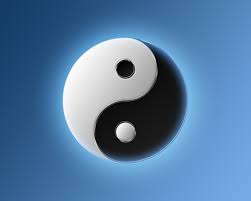 | |
Having provided an opening definition of reciprocity, I turn to the historical origins of this idea. It seems to me that the quintessential and exemplary expression of reciprocity is the ancient Chinese Taoist concept (and associated symbol presented above) of the Yin-Yang. In my mind, the concept of the Yin-Yang provides a philosophical theory and way of thinking about “life, the universe, and everything” based on the idea of reciprocity.
The concept of the Yin-Yang probably extends back in ancient Chinese history at least to 1300 BCE. Although the idea is pervasive throughout many aspects of ancient Chinese culture and diverse early philosophies (including Confucianism), the Yin-Yang is most strongly associated with Taoist philosophy. Although the identified beginning of Taoism is frequently dated around 600-500 BCE, features of Taoist philosophy in ancient China may stretch back prior to the beginnings of recorded history (ca. 3000 BCE). As the Yin-Yang, according to early Chinese philosophical writings, emerged as the governing principle of order in the universe out of undifferentiated and primordial chaos, the concept of the Yin-Yang seems to have emerged and taken form out of the misty obscurity of ancient, if not prehistoric Chinese culture and thinking.
At the onset I should note that the Yin-Yang is an Eastern philosophical idea strongly associated with mystical and intuitive traditions and ways of thinking, and as such, seems clearly at odds with the rationalist and analytical mode of consciousness and practices of Western philosophy and science. In particular, the Yin-Yang seems to be at odds with Western logic. As introduced above, Nisbett argues that the West predominantly thinks in an “either-or” mindset, whereas in the East (exemplified in the Taoist Yin-Yang) the predominant mode of thinking is a “both/and” mindset. In the West, following an “either-or” logic and the law of contradiction, either “A” or “non-A” can be true, but not both. (The law of contradiction asserts that a statement and its contradiction can not both be true; for example, “I am a man” and “I am not a man” can not both be true.) In the East, following a “both/and” logic, and contradicting (or transcending) the law of contradiction, both “A” and “not-A” can be true. From a Western point of view, the Yin-Yang is illogical; from an Eastern point of view, Western logic is too constraining and one-sided.
As such, as will become apparent as I describe the idea of the Yin-Yang below, there is a distinctive way of thinking and mode of consciousness associated with this mindset on reality. Of special note, there are the qualities of circularity and self-reflectivity in this mode of consciousness, which is notably different than the linear form of consciousness associated with Western logic, philosophy, and science.
The core idea of the Yin-Yang is that reality can be described as a set of complementarities. What appear to be opposites in the universe, such as good and evil, mind and matter, and order and chaos, are actually mutually co-dependent realities. Contrary to the long-standing dualist philosophy in Western thinking, in which reality is divided into distinct and oppositional realms, the philosophy of the Yin-Yang views all the dimensions and features of reality as inextricably connected together as complementary pairs. The philosophy of the Yin-Yang rejects dualism.
Within the Yin-Yang philosophy of reality, the archetypal and fundamental complements in the universe are identified as the Yin (the dark form in the above diagram) and the Yang (the light form). Yin can not exist without Yang and vice versa. Indeed, Yin can not be defined or understood independent of Yang and vice versa. As such, the fundamental abstract structure of reality as a whole is the interdependent complementarity of Yin and Yang. To reinforce and highlight the interdependency of Yin and Yang, in the standard diagram depicting this interdependency, at the heart of the dark Yin is a white circle, representing the idea that at the core of Yin is Yang, and conversely at the heart of the white Yang is a dark circle, representing the idea that at the core of Yang is Yin. Yin and Yang interpenetrate, and as such, there is no pure Yin or pure Yang, for of necessity each contains the other.
Yin and Yang encompass all the basic apparent polarities of existence, such as darkness and light, passive and active, and earth and sky (heaven). In traditional Taoist thinking, Yin is the earth and the feminine principle of reality, whereas Yang is heaven and the masculine principle. Yin is often associated concretely with a bird and abstractly with matter and space; Yang is associated with the dragon, and with spirit and time. All these various polarities of existence in a Yin-Yang mindset are conceptualized as interdependent.
Regarding the flow of time, time is viewed as a balanced and rhythmic oscillation between the forces of Yin and Yang. Time, as such, goes in a circle or cycle, as Yin and Yang oscillate in temporary dominance. Imagine that time is the moving form of the Yin-Yang continually spinning around. As each bulbous head of the two comets, chasing the tail of the other comet, ascends to the top of the circle, each corresponding principle ascends to dominance in influencing the course of events in time, but then continuing to rotate, the previously ascending comet descends and the other comet rises upward achieving temporary dominance. In this vision the basic form of time is oscillation of complements.
* * *
You can complete the reading of this book installment--with added references and footnotes--at Chapter Three: Reciprocity - Part One
See: https://centerforfutureconsciousness.com/wp-content/uploads/2024/10/reciprocity-chapter-3-part-one.pdf
|  | |
Upcoming Events
Tery Spataro and I will be giving a presentation at the Arizona AI Film and Art Festival in Glendale, Arizona at the Renaissance Phoenix Glendale Hotel and Spa on November 1st at 1pm. Our talk will be "AI Characters in Film and Books: Psychological and Cultural Significance."
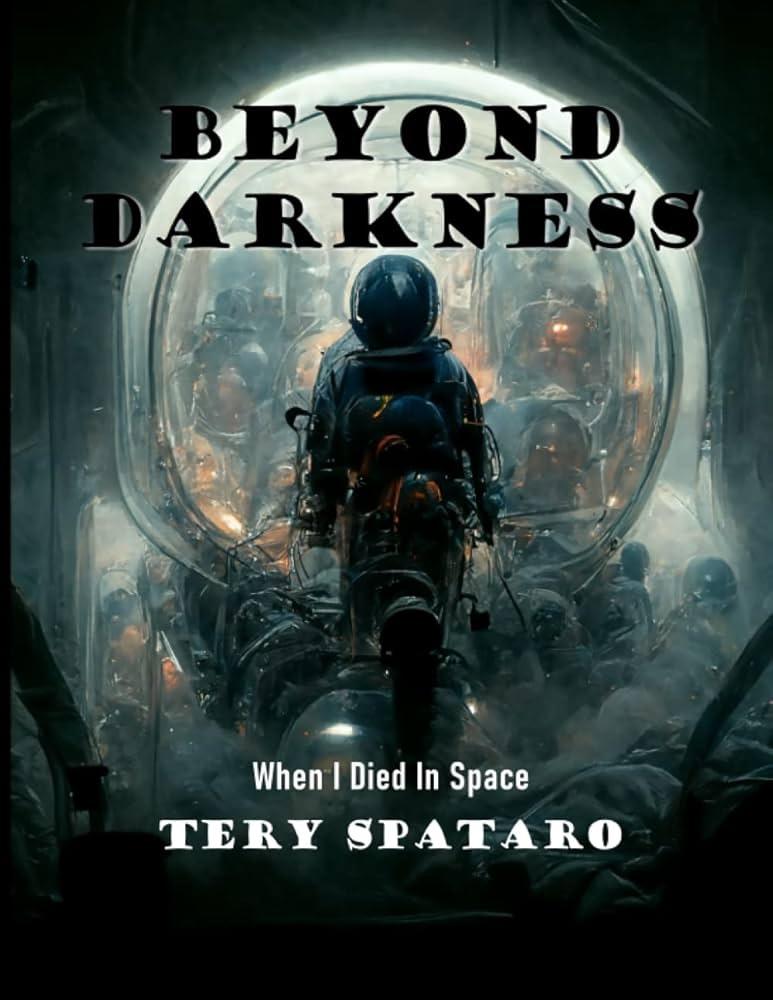
Tery will be talking on her new book and AI generated film "Beyond Darkness" from 12 pm to 1 pm, immediately preceding our dual event.
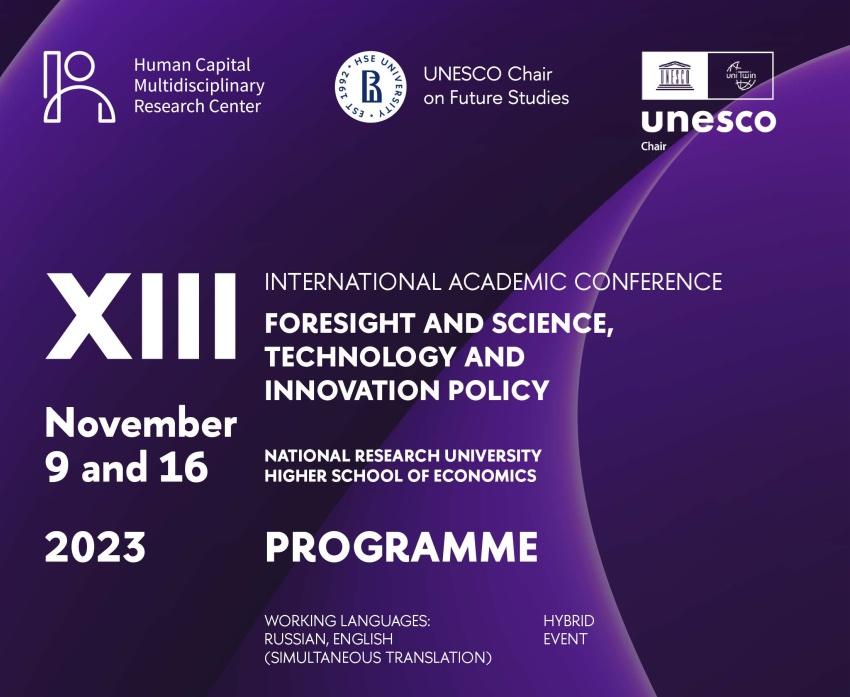
| I will also be giving a live online Zoom presentation at the XIV International Academic Conference ‘Foresight and Science, Technology and Innovation Policy’ location in Moscow, Russia. The date and time are: October 28th at 8:05 am Arizona time. The title of my talk is "The Value of Science Fiction in the Heightening of Our Consciousness of the Future." You can register for the conference at: https://issek.hse.ru/en/forsconf/2024/polls/865319216.html . (Last year conference visual below) | |
The Evolution of Science Fiction:
Complete YouTube Series
|  | |
Consisting of thirty-four videos, I recently completed, with the superb help and support of Tery Spataro, my Evolution of Science Fiction Webinar Series. All the videos on the playlist, chronologically ordered, are available for viewing on my You Tube channel at:
https://www.youtube.com/playlist?list=PLIvBA8u8-18QzwxllJrzh6OAKVAUYfNmS.
The series consists of videos covering each major period in the evolution of science fiction from ancient times to the first two decades of the twenty-first century. For those viewers interested in a condensed accelerative overview of the entire history of science fiction, you can watch the “Comprehensive History of Science Fiction” video (part of the series) at:
https://www.youtube.com/watch?v=8Dqu4YJvXrA&list=PLIvBA8u8-18QzwxllJrzh6OAKVAUYfNmS&index=30&t=9s .
For those unfamiliar with the series, here’s a quick introduction to its content:
“Combining colorful slide presentations and in-depth analysis, in these webinars, based on my emerging book series Science Fiction: The Evolutionary Mythology of the Future, I examine the evolutionary history of science fiction from ancient to contemporary times. I delve into the mythological origins and dimensions of science fiction; fantasy versus science fiction; the rise of the modern scientific world view; utopias and dystopias through the ages; the Enlightenment, Romanticism, and Gothic horror; the impact of evolutionary theory on science fiction; Wells, Stapledon, and the integration of futures studies and science fiction; robots, techno-intelligence, and aliens; time travel and alternate realities; fantastical adventures, space exploration, and the emergence of Space Operas; the Golden Age, the Silver Age, the New Wave, Feminist Science Fiction, Cyberpunk, Steampunk, and the "New Weird;" social, psychological, and religious science fiction; and numerous other key themes and dimensions of science fiction. Covering science fiction literature, art, cinema, and comics, I discuss in depth the appeal, value, and influence of science fiction on the modern world and the impact of intellectual and cultural trends on the evolution of science fiction.”
| |
New Center for Future Consciousness Website
| |
The Center for Future Consciousness website has been totally redesigned and moved to a Word Press platform allowing for continual and speedy updates and revisions in the future. The website address for the Center is still the same address (url) as before: www.centerforfutureconsciousness.com. And all the content of the previous website is still available on the new website.
Some of the most significant updates to the new website, include:
-
An updated and complete listing of all my published books (CFC Book Page) with new reviews and extended descriptions of my newest books.
-
An updated list of my Library of Best Science Fiction Novels, adding over 60 new novels to the previous list and including over twenty newly listed and ranked novels of the last two decades.
-
An updated list of my Library of Best Science Fiction Movies, adding over 100 new movies to the previous list and now covering movies up to 2024.
|
New Expanded CFC
YouTube Channel
| |
With the hard work of Tery Spataro, the CFC YouTube Channel has been greatly expanded. Among the sixty available videos and podcasts on the CFC Channel are all the previous Evolution of Science Fiction Webinars—twenty-eight two-hour videos—now free for viewing.
Go to Tom Lombardo YouTube Channel: https://www.youtube.com/@tomlombardo75/playlists for the complete listing and links for all CFC videos.
The playlists on the CFC Channel include:
- Introduction to the Center for Future Consciousness
- The Future
- Philosophy
- Contemporary Trends and Theories
- Future Consciousness & the Evolution of Consciousness
- The Evolution of Science Fiction Webinar Series
- Other Science Fiction Presentations
|
|