The mission of the Center for Future Consciousness is “to advance the purposeful evolution of humanity through the heightening of future consciousness and wisdom and the inspirational, mythic, and cosmic power of science fiction.” A key dimension in future human evolution, which I am going to highlight in the forthcoming series of essays in Future Consciousness Insights, is the purposeful evolution of consciousness.
In observing and pondering the complex current state of human affairs, both at a national and global level, with all its problems and challenges and madness and disarray, I have repeatedly thought that as a species we collectively need to evolve our consciousness. It seems that to a great degree our difficulties are a consequence of limitations and failings in our consciousness. Given how consciousness works itself into and affects all features of human life, our world in multifarious ways would transform (and hopefully for the better) if we evolved our consciousness beyond our present levels of competence and awareness. Evolving our consciousness would have great practical and beneficial value for the future of our species and the planet as a whole.
Yet also, the potential future evolution of consciousness offers fascinating, wondrous, and inspiring possibilities to explore and contemplate. Indeed, part of the appeal in thinking about the future evolution of consciousness is that such inquiry could help us to better understand the nature of consciousness itself. Consciousness is one of the great cosmic and personal mysteries of existence. Philosophy, psychology, spiritual-religious traditions, and even science fiction have all delved into the nature of consciousness, how consciousness fits into the grand picture of the universe, and what amazing and empowering potentials within its sphere could possibly be realized in the future. All in all, delving into the future of consciousness promises great enlightenment.
As a start, I am going to provide introductory descriptions of both “purposeful evolution” and “consciousness,” so as to define the territory I am going to explore in the forthcoming essays.
Let’s begin with the first expression. The idea of purposeful evolution is based on a set of connected points: As a pervasively demonstrated scientific fact, we live in an evolutionary universe and on an evolutionary earth—the cosmos and the earth have evolved and continue to evolve; humans, as well as all other life forms on the earth, are evolutionary beings embedded in our evolutionary universe, and hence humans psychologically and physically have transformed and evolved through time; and as a distinctive expression of evolution in the cosmos, humans have developed a powerful and unique mode of evolution, which involves consciously and intentionally guiding the process of change both within us and around us. With conscious intention we make things happen and we alter reality. We can and frequently do purposefully guide evolution. Everything in nature evolves, but humans engage in guiding the process of evolution and have been for thousands of years—whether we are clearly aware of what we are doing or not. In fact, I would propose that all our efforts to solve our problems and create a better world are examples of attempts at purposeful evolution, either of ourselves or the world around us.
This purposeful mode of evolution in humans is facilitated and made possible through our capacity of future consciousness: We can consciously anticipate and imagine the future, identify values and set goals for the future, and purposefully implement plans and actions for realizing our values and goals. Because we can be conscious of the future and its myriad possibilities we can intentionally with thought and motivation direct the ongoing flow of events toward envisioned and desirable futures. With an “eye on the future” we guide evolution and change.
Future consciousness is a key feature of human consciousness, but the total sphere of consciousness is a more expansive reality, also including, for example, historical consciousness (including memory) of the past, and perceptual (or sensory) consciousness of the relative here and now.
Defining the general concept of consciousness, I will use the term “consciousness” as synonymous in meaning with both “experience” and “awareness.” To be conscious is to be aware; to be conscious is to experience.
Consciousness is at the core of our personal existence. We are conscious beings that experience and who are aware. Our sense of self—the “I” or “me”—is a conscious reality.
Equally, consciousness is the sea or ambience in which we swim. Consciousness is the medium in which everything that is meaningful to humans is manifested and understood. In observing our immediate reality at a personal level, we see that we are conscious of both ourselves (our self-consciousness) and of a world around us. We also perceive that other humans appear conscious as well, of both themselves and the world. Although humans possess physical bodies and live within a physical world, human contact with and understanding of the physical world, which includes the presence of other humans, comes through perceptual consciousness.
All in all, we are conscious beings with conscious selves that consciously perceive, think, feel, desire, remember, imagine, and purposefully initiate action. Through consciousness we engage and interact with the world and others, often attempting to change (or influence) reality through consciously directed behavior. There is nothing necessarily mystical, ill-defined, or unscientific about the reality of consciousness; consciousness is integral to the natural human world and central to our very existence.
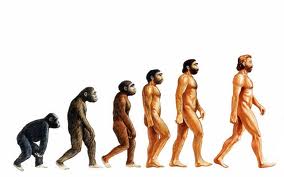
Bringing together purposeful evolution and consciousness, since we are evolutionary beings it makes perfect sense to suppose that human consciousness has evolved across time. Relics, fossils, and historical records of our brains, our tools, our habitats, our art, our behavior, and our ancient writings indicate that our conscious minds have transformed and become more advanced and complex through the ages. Human consciousness is evolutionary.
But moreover I propose that purposeful efforts by us to intentionally evolve our consciousness stretch back at least thousands of years, since the beginnings of recorded history. As conscious beings that engage in purposeful evolution, we have been attempting to purposefully evolve ourselves. Diverse practices and disciplines of study, from spirituality and religion to psychology and philosophy, have aspired toward this general goal in many different forms, grounded in many different theories regarding the nature of consciousness, the human mind, and the personal self. As evidenced in historical records, for a long time humans have demonstrated the capacities to: Engage in self-assessment and, in particular, self-consciously and introspectively observe and assess the content and flow of their consciousness; based on self-improvement goals and desires attempt through thought, imagination, and other psychological abilities to modify and enhance their consciousness; and communicate and teach ideas on such aspirations and practices to others. Sages, spiritualists, and philosophers have attempted to model such practices of self-evolution for others to observe and learn from. Through the ages, proponents of evolving human consciousness have often argued that the evolution of our conscious minds and selves is central and critical to creating a better world.
All of us, in fact, to various degrees, engage in purposeful efforts to evolve our own consciousness, and in many ways attempt to direct the evolution of consciousness in others. We may not use the word “evolution” to describe such efforts, instead using expressions such as “improving, developing, educating, enhancing, or enlightening” our minds and personalities. Regardless though of how we describe or conceptualize what we are doing, the stream of individual consciousness is an ongoing flow of personal efforts to guide our own thoughts, feelings, and states of mind in the direction of the goals, ideals, and values we embrace for ourselves. In essence, we apply self-consciousness and future consciousness to guiding the flow and direction of our own conscious minds. For both past and present, the purposeful evolution of our consciousness has been a normal and pervasive activity within human life. Evolution, in fact purposeful evolution, reveals itself in the individual streams of human consciousness.
Although we all engage in the purposeful evolution of our consciousness, we often do so haphazardly, half-heartedly, and resistantly. It is difficult to initiate and generate personal (or “inner”) change, and consciousness is often an unruly “blooming, buzzing confusion.” We may focus more on surviving, or protecting our present sense of self, rather than attempting to grow and develop as a conscious being; there is a powerful push in the human mind toward stability, protection, and persistence. Frequently we try to change others rather than evolve ourselves. Often we slight our own self-evolution in favor of attempting to change (purposefully evolve) the physical world through inventing new machines, devices, contraptions, and technologies. To paraphrase the famous positive psychologist Mihalyi Csikszentmihalyi, “It is far easier for us to imagine ourselves living among better appliances than among better human beings.”
In reviewing the diverse array of proposed and often implemented solutions to our contemporary problems a great many are technological, economic, or environmental. At least some of the time, such efforts have produced positive effects. But as stated at the beginning of this essay, it seems to me that a key factor contributing to our current difficulties is failings and deficiencies in human consciousness. Instead of throwing our emphasis upon physical solutions to our deepest challenges, what if, instead, we focus on the further evolution of human consciousness as the pivotal strategy toward creating a good future? Although embedded within and surrounded by a physical world (inclusive of all our technologies and artifacts of human civilization), our consciousness is at the center of the swirl of things, and we all contribute with our conscious minds, for good or bad, into the overall flow of reality. Our interpretations, mindsets, values, and ideas ripple out into the physical world and in numerous ways determine the direction of human society and the ecology of the earth as a whole. A profound truth we need to realize more deeply and act upon accordingly is that mind (or consciousness) moves matter. And as a corollary, to change (or evolve) the world, we should put much more emphasis on evolving ourselves.
What I am suggesting is that both individually and collectively we should put considerably more focused effort on purposefully evolving our consciousness. At the individual level, each of us can personally engage in numerous types of activities—to be examined in later essays—to enhance and empower our conscious minds. Individually we can devote much more attention and passion to the evolution of our consciousness. At a collective level, we can put more resources, thought, and systematic planning into social, cultural, and educational institutions and practices that facilitate the evolution of our communal and global consciousness. Indeed, we can guide the creation of our technologies toward ones that enhance human consciousness.
Although constructively addressing our current problems is important, it is though not enough. The absence of illness is not the same as health. We need is a positive and inspiring vision for tomorrow. Something that doesn’t just lift us out of the morass, but elevates us toward a higher plane of existence. Especially over the last century, the dominant types of visions of a “wondrous future” have been technological. We can see this ubiquitous and limiting mode of imagination by looking at early science fiction, as well as global exhibitions and world fairs; we see it now in our commercials, advertisements, and political ideologies. In all of these examples, the vision of the good future is a vision of better things.
But again turning to science fiction, besides the hi-tech imagery, we also find fantastical and cosmic visions of the future evolution of mind, consciousness, and intelligence in writers such as H. G. Wells, Arthur C. Clarke, and especially Olaf Stapledon. (Science fiction is about the future of everything and not just science and technology.) To envision conscious minds and wise and enlightened selves, which transcend the sound and fury, and the shallowness and madness of our contemporary collective consciousness, would inspire and inform us and provide a guiding light to strive toward in our lives and what is to come for later generations. Can human consciousness pull itself up by its bootstraps, realize much greater self-awareness and wisdom, and attune much more deeply to the universe that created us? It is the amazing and wondrous possibilities of the future of consciousness, driven by our own purposeful efforts to evolve ourselves, that will inform and energize the forthcoming essays, as much as the more immediate and practical concerns of today. We need an uplifting vision of the future that centers on heightened consciousness.
More to come.
Recommended Readings: The following books and articles by me provide more in-depth discussions of various key themes and ideas introduced in this essay.
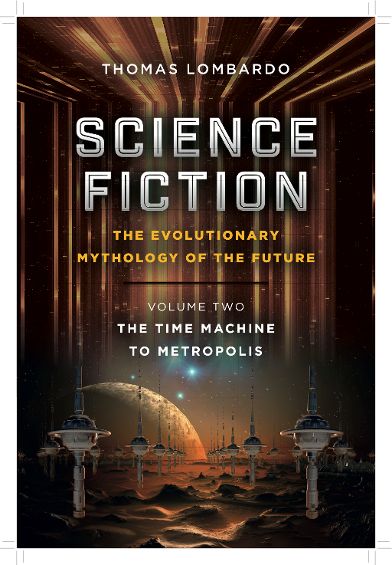
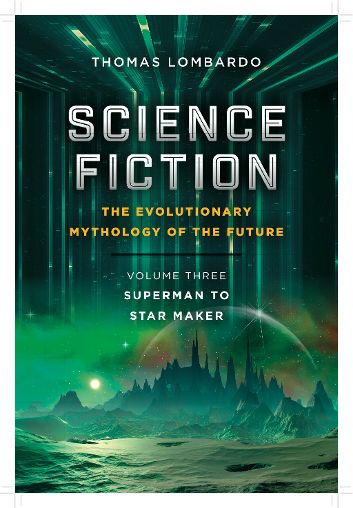
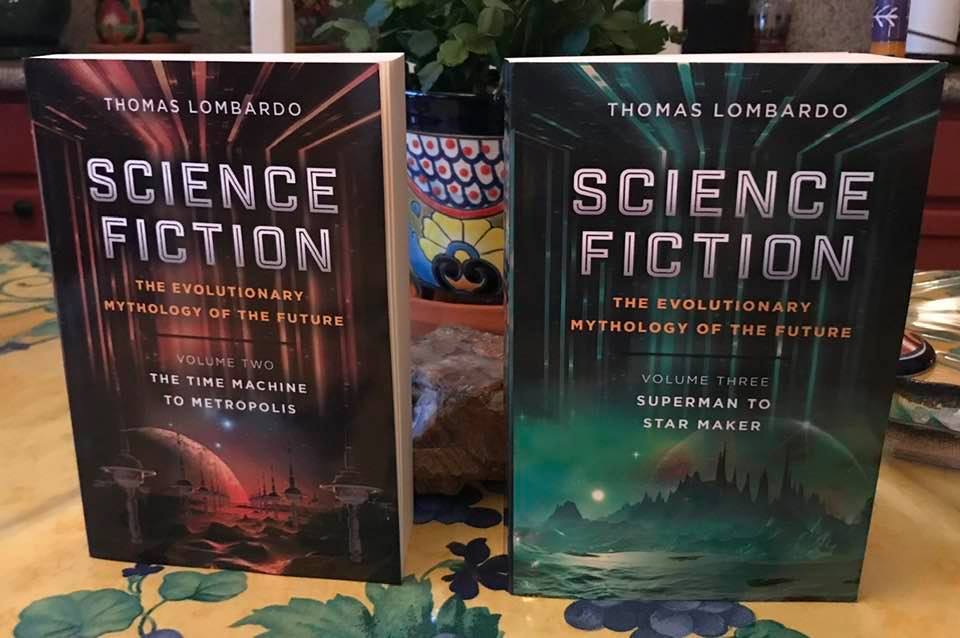
Science Fiction: The Evolutionary Mythology of the Future, Volumes 2 and 3. Bloomington, IN: AuthorHouse, 2021.
Future Consciousness: The Path to Purposeful Evolution. Winchester, UK: Changemakers Books, 2017.
“The Future Evolution of Consciousness” World Future Review, Vol. 6, No. 3, Fall, 2014.
The Evolution of Future Consciousness. Bloomington, IN: Author House, 2006.
New Podcast: The Mythology of the Future?
In this podcast Xerxes Voshmgir and I discuss the role of science fiction in understanding the nature of humanity, consciousness, and the future. We also examine at length how science fiction is our modern mythology of the future. Xerxes provided a great set of questions for the interview.
New Video: The Purposeful Evolution of Wisdom and Heightened Future Consciousness
This video presentation was part of the UNESCO Futures Literacy Summit in December, 2020, co-sponsored by the World Futures Studies Federation. The presentation is a good introduction to many of my key ideas on future consciousness and wisdom.
Here's an outline of the talk:
• Creating a Good Future - Multiple Global Challenges & Answers
• We Require an Evolutionary & Inspiring Framework & Vision
• Evolving Our Conscious Minds
• Future Consciousness - Our Most Empowering Capacity
• Purposeful Evolution through Heightening of Future Consciousness
• Holistic Virtue-Based Theory of Heightened Future Consciousness
• Synthesis of Future Consciousness Virtues -> Wisdom
• Evolutionary Future-Focused Theory of Wisdom -> Create a Good Future
• Purposeful Evolution of Wisdom -> Ideal of Education - Age of Wisdom & Wise Cyborgs
"Our view of the future of our species tends to be colored by very short term concerns. Most of us are too busy with the distractions and worries of everyday life to spend much time thinking about what lies ahead when we are no longer here. As for the future of the Earth, our solar system, and the wider cosmos, these are deemed the domain of scientific specialists and of little relevance to the urgent political, social, economic, and environmental problems which plague the present day.
However, contemplating the incomprehensible vastness of creation can help us recapture a sense of wonder and possibility, and nurture our cosmic consciousness which puts our present predicament into perspective. This evolutionary mental process may ultimately make the difference between survival and extinction for life in our remote corner of the galaxy. The discussion [with Tom Lombardo] takes as its starting point the work of English science fiction author Olaf Stapledon, specifically his novels Last and First Men and Star Maker." Gregg Moffitt
“Beside his [Stapledonʼs] stupendous panorama, his vision of worlds and galaxies, of cosmos piled upon cosmos, the glimpses of the future that Mr. Wells and others have provided for us are no more than penny peepshows.”
Science Fiction: The Evolutionary Mythology of the Future
New Books:
Volumes Two and Three
An evolutionary and transformative journey through the history of science fiction, from ancient to contemporary times, exploring the innermost passions and dreams of the human spirit, the most expansive cosmic creations of thought and imagination, and the farthest reaches of the universe and beyond.
“Lombardo is just simply brilliant... you will feel overwhelmed.”
DR. ERIK ØVERLAND, President of the World Futures Studies Federation
* * *
I am happy to announce the publication of two new volumes in my Science Fiction: The Evolutionary Mythology of the Future series:
Volume Two “The Time Machine to Metropolis”
Volume Three “Superman to Star Maker”
Both new volumes are available for purchase on Amazon, Barnes & Noble, and the Publisher’s website.
Continuing his in-depth evolutionary history of science fiction Tom Lombardo examines science fiction literature, art, cinema, and comics, and the impact of culture, philosophy, science, technology, and futures studies on the development of science fiction. These two new volumes also describe the reciprocal influence of science fiction on human society and the evolution of future consciousness.
Volume Two covers the years 1895 to 1930, and includes an extensive discussion of H. G. Wells and his numerous science fiction novels and futurist publications. Also covered in-depth are Thea von Harbou and Fritz Lang’s classic silent movie Metropolis. Other key figures discussed in Volume Two include Méliès, Zamyatin, Gernsback, Burroughs, Merritt, Huxley, and Hodgson.
Volume Three primarily focuses on the 1930s, covering the phenomenon of Superman and key authors such as Čapek, Hamilton, “Doc” Smith, Campbell, Lovecraft, C. A. Smith, and Williamson. Volume Three concludes with an extensive philosophical examination of Olaf Stapledon’s Last and First Men and Star Maker.
Some of the key themes and topics addressed in the two volumes include: Dystopian and utopian visions of the future; the meaning of progress and the meaning of life; the future evolution of the human conscious mind and the possible emergence of psychic powers and collective forms of intelligence; the ethics and philosophy of space operas and super-heroes; technology, robots, and human society; technological intelligence; alien mentality and alien civilizations; time travel, time loops, and time wars; global war, catastrophes, and world-wide disasters; science and religion; fear and horror, and hope and wonder in science fiction; and the significance of the theory of evolution in the development of science fiction.
"It is unmistakably the best webinar presentation, consecutively viewed or singly viewed, that I have ever spent as a participant or a viewer. Ever!" Cedar Sarilo Leverett, MFA, Society of Consciousness Studies
Combining colorful slide presentations and in-depth analysis, in these webinars, based on my book series Science Fiction: The Evolutionary Mythology of the Future, I examine the evolutionary history of science fiction from ancient to contemporary times. I delve into the mythological origins and dimensions of science fiction; fantasy versus science fiction; the rise of the modern scientific world view; utopias and dystopias through the ages; the Enlightenment, Romanticism, and Gothic horror; the impact of evolutionary theory on science fiction; Wells, Stapledon, and the integration of futures studies and science fiction; robots, techno-intelligence, and aliens; time travel and alternate realities; fantastical adventures, space exploration, and Space Operas; the Golden Age, the Silver Age, the New Wave, Feminist Science Fiction, Cyberpunk, Steampunk, and the "New Weird;" social, psychological, and religious science fiction; and numerous other key themes and dimensions of science fiction. Covering science fiction literature, art, cinema, and comics, I discuss in depth the appeal, value, and influence of science fiction on the modern world and the impact of intellectual and cultural trends on the evolution of science fiction.