Science Fiction: The Evolutionary Mythology of the Future
New Books:
Volumes Two and Three
Thomas Lombardo
An evolutionary and transformative journey through the history of science fiction, from ancient to contemporary times, exploring the innermost passions and dreams of the human spirit, the most expansive cosmic creations of thought and imagination, and the farthest reaches of the universe and beyond.
“Lombardo’s encyclopedic knowledge of science fiction is phenomenal. An extensive and sweeping series for readers of this exciting and thought-provoking field.”
RICHARD YONCK, Association of Professional Futurists and Author of Heart of the Machine and Future Minds
“Lombardo is just simply brilliant... you will feel overwhelmed.”
DR. ERIK ØVERLAND, President of the World Futures Studies Federation
* * *
Hello Friends and Colleagues,
I am happy to announce the publication of two new volumes in my Science Fiction: The Evolutionary Mythology of the Future series. Volume One “Prometheus to the Martians” was published roughly three years ago.
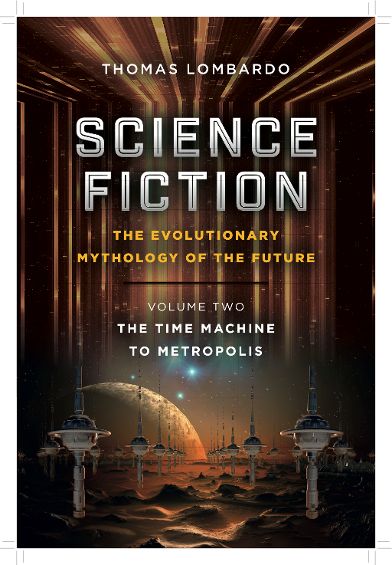
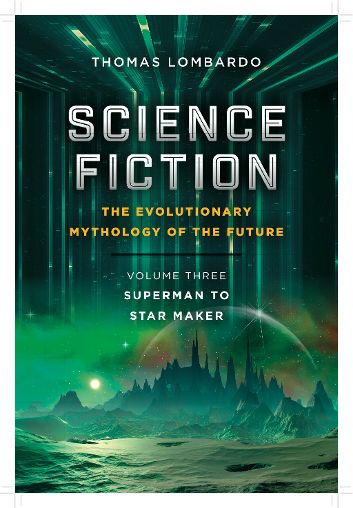
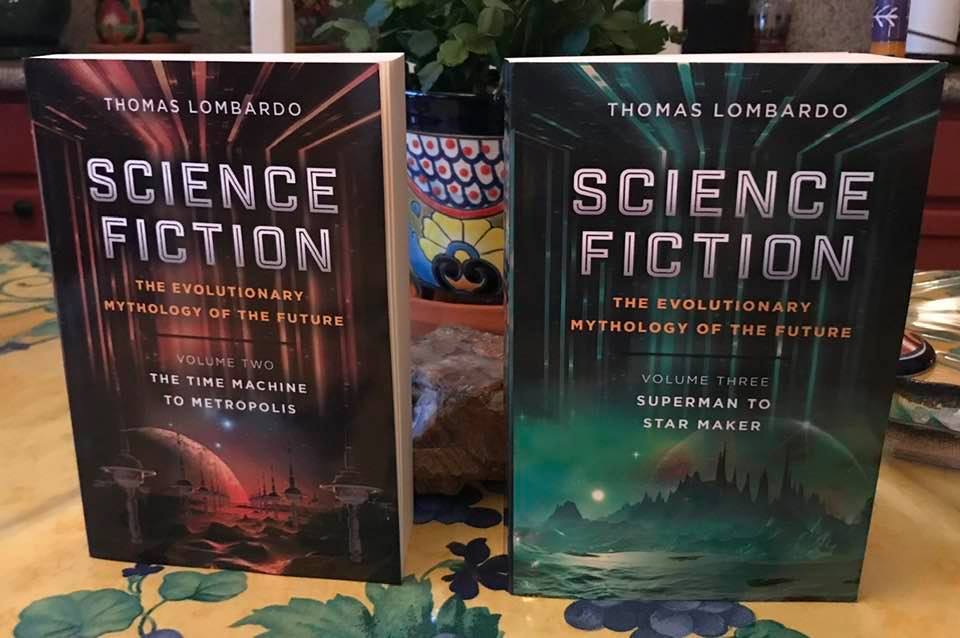
Volume Two “The Time Machine to Metropolis” has now been published. And Volume Three “Superman to Star Maker” has been simultaneously published.
Both new volumes are now available for purchase on Amazon and on the Publisher’s website.
Continuing his in-depth evolutionary history of science fiction Tom Lombardo examines science fiction literature, art, cinema, and comics, and the impact of culture, philosophy, science, technology, and futures studies on the development of science fiction. These two new volumes also describe the reciprocal influence of science fiction on human society and the evolution of future consciousness.
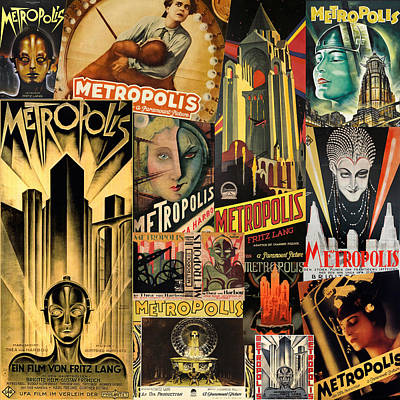
Volume Two covers the years 1895 to 1930, and includes an extensive discussion of H. G. Wells and his numerous science fiction novels and futurist publications. Also covered in-depth are Thea von Harbou and Fritz Lang’s classic silent movie Metropolis. Other key figures discussed in Volume Two include Méliès, Zamyatin, Gernsback, Burroughs, Merritt, Huxley, and Hodgson.
Volume Three primarily focuses on the 1930s, covering the phenomenon of Superman and key authors such as Čapek, Hamilton, “Doc” Smith, Campbell, Lovecraft, C. A. Smith, and Williamson. Volume Three concludes with an extensive philosophical examination of Olaf Stapledon’s Last and First Men and Star Maker.
Some of the key themes and topics addressed in the two volumes include: Dystopian and utopian visions of the future; the meaning of progress and the meaning of life; the future evolution of the human conscious mind and the possible emergence of psychic powers and collective forms of intelligence; the ethics and philosophy of space operas and super-heroes; technology, robots, and human society; technological intelligence; alien mentality and alien civilizations; time travel, time loops, and time wars; global war, catastrophes, and world-wide disasters; science and religion; fear and horror, and hope and wonder in science fiction; and the significance of the theory of evolution in the development of science fiction.
The Evolution of Science Fiction Webinar series is an extensive exploration of the history of science fiction.
Combining colorful slide presentations and in-depth analysis, in these webinars, based on my book series Science Fiction: The Evolutionary Mythology of the Future, I examine the evolutionary history of science fiction from ancient to contemporary times. I delve into the mythological origins and dimensions of science fiction; fantasy versus science fiction; the rise of the modern scientific world view; utopias and dystopias through the ages; the Enlightenment, Romanticism, and Gothic horror; the impact of evolutionary theory on science fiction; Wells, Stapledon, and the integration of futures studies and science fiction; robots, techno-intelligence, and aliens; time travel and alternate realities; fantastical adventures, space exploration, and Space Operas; the Golden Age, the Silver Age, the New Wave, Feminist Science Fiction, Cyberpunk, Steampunk, and the "New Weird;" social, psychological, and religious science fiction; and numerous other key themes and dimensions of science fiction. Covering science fiction literature, art, cinema, and comics, I discuss in depth the appeal, value, and influence of science fiction on the modern world and the impact of intellectual and cultural trends on the evolution of science fiction.
Here is the entire list of webinars available for viewing on the CFC Video School (webinars 1 through 13), plus those webinars planned for release in the near future (webinars 14 through 18).
What is Science Fiction?
Mythology, Fantasy, & Science Fiction
Ancient History through the Middle Ages (600 BCE to 1500)
The Rise of Science & Modernity (1500 to 1750)
Enlightenment, Romanticism, & the Gothic (1750-1820)
The Mysteries & Romances of Science: The Nineteenth Century from The Sandman and Poe to Jules Verne (1820-1870)
Evolution & the Later Nineteenth Century - Utopias, Robots, the Mystical, & the Martians
H. G. Wells: The Father of Modern Science Fiction - The Father of Modern Futures Studies (1890-1945)
The Early Twentieth Century - Dystopias, Disasters, Adventures, Films, & the Pulps
Space Operas, the Astounding Pulps, “Talkies,” the Horrific, & the Cosmic (ca. 1925 through the 1930s)
Olaf Stapledon: Cosmic Evolution and the Future of Humanity
The Golden Age (1938-1950) Space Operas, Aliens & Alien Worlds, Robots, Time Travel, Future Histories, & Social-Psychological Fiction
The Silver Age (1950-1965) Novels, Movies, Magazines, Art, Awards, Comics, and TV Series Galore
The New Culture & the New Wave (1965-1980) — Feminist SF
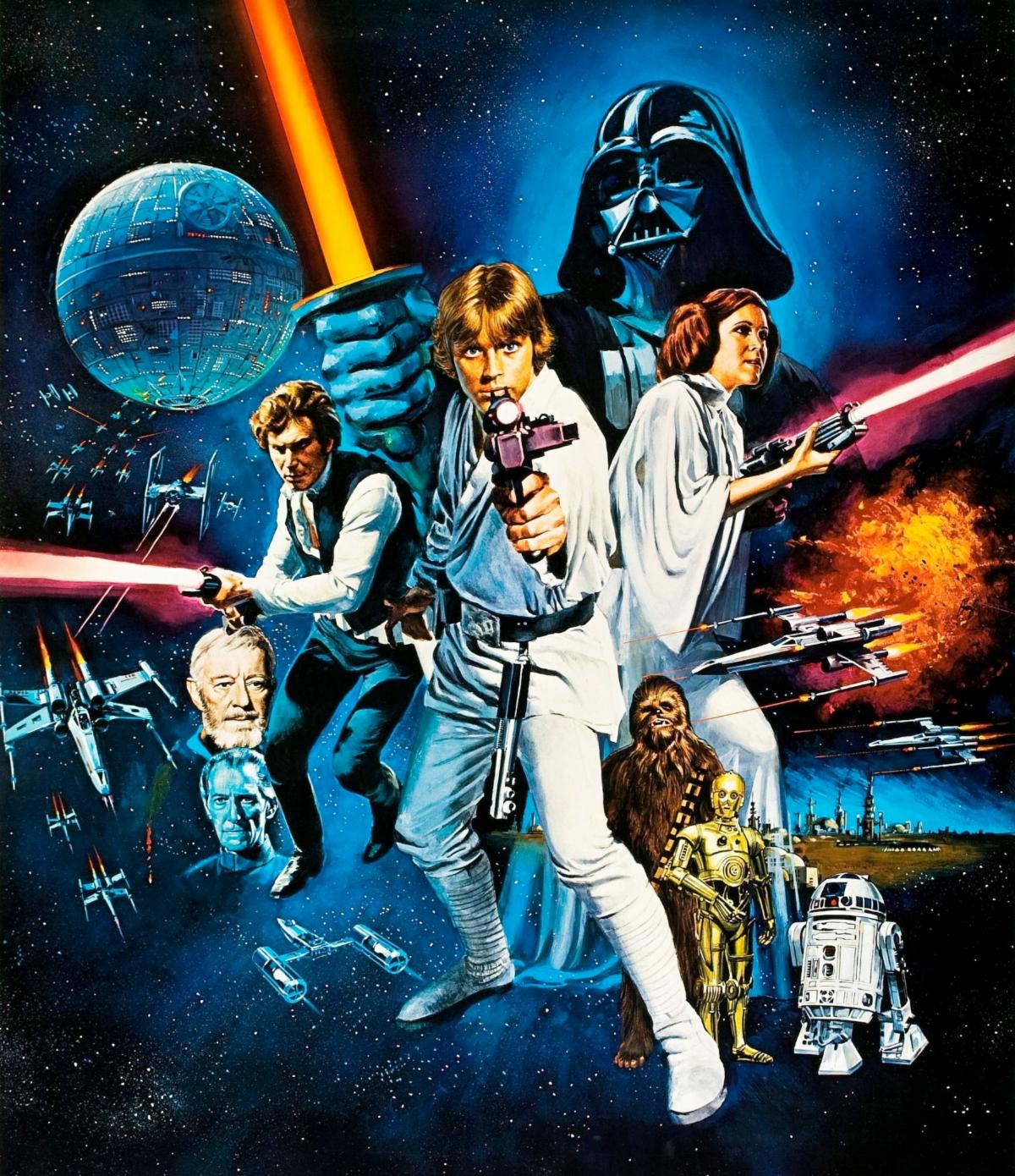
The 1980s - Star Wars & Cyberpunk
The 1990s - Steampunk, Evolution, & the Far Future
The New Millennium, the New Weird, the Singularity, & Beyond
The Future of Science Fiction
"It is unmistakably the best webinar presentation, consecutively viewed or singly viewed, that I have ever spent as a participant or a viewer. Ever!" Cedar Sarilo Leverett, MFA, Society of Consciousness Studies