|
When WineAmerica’s Jim Trezise, a longtime NGRA Board member, invited me to write a “Future Focus” feature for his weekly WineAmerica Perspectives e-newsletter on August 22, I knew immediately what I’d write about: grape genetics. It’s not a topic that most in the grape and wine industry would say applies to them or their business—at least not in any direct or tangible way. And few would find the subject very interesting. But stick with me! What may seem like a highly technical, esoteric topic could have everything to do with your business in the not-too-distant future.
As I was assembling my thoughts for this piece, Good Fruit Grower issued a story on the apple industry’s potential plunge into new genetic territory, led by Neal Carter, co-founder and CEO of Okanagan Specialty Fruits, who invented the non-browning Arctic apple, the world’s first commercially available gene-edited apple. In April, Neal published a white paper proposing the use of gene editing to make apple-growing more efficient—more like grape-growing, in fact, with a narrow fruiting zone for ease of management and harvest. “The way he sees it,” Good Fruit Grower reports, “genetics hold the key to solving the tree fruit industry’s labor and climate challenges. ‘We’ve sort of exhausted the horticulture tools,’ he said.”
Neal took the words right out of my mouth.
Genetics and grapevine improvement is one of NGRA’s priority research focus areas. But let me be clear: I’m not advocating gene editing for commercial grape production. Whether for grapes or apples, though, the twin issues of dwindling labor availability, and increasingly erratic and extreme weather (and the pests and diseases that follow) can be addressed at a genetic level, faster and more precisely than ever—which is very good news as the runway for solving these problems grows shorter. With the aid of modern molecular tools, even traditional grape breeding can now deliver improved varieties in a decade or so versus the career-spanning timeframe it took to bring the first seedless grape (Thompson Seedless) to market. Solutions to grape growers’ most intractable problems are literally in the works right now in grapevine and rootstock breeding programs across the country: heat and drought tolerance, disease resistance, pest proliferation, amenability to mechanized production. Genetic solutions have the added benefit of reducing the need for other costly inputs, like pesticides, water and labor. Even the need for expensive equipment and infrastructure, like posts and trellises, could potentially be bred out of the grape-growing equation.
Even on today’s accelerated timeline, grape breeding is slow, quiet work. Breakthroughs tend not to be headline news—except in scientific journals. In many cases, this research is initiated or supported by NGRA. But unless you’re an NGRA member (which I’d encourage you to consider), how would you know? By attending our Grapevine Improvement Workshop on November 5, presented in partnership with the Department of Viticulture and Enology at UC Davis, in the Conference Center there. The event is even titled “Grapes for the 22nd Century,” underscoring its future focus.
Join us for a full day of interactive talks by leading lights of the international grapevine improvement community, including keynoter Plant Geneticist Edward Buckler, USDA-ARS and Cornell University, the recipient of the National Academy of Science’s first ever Prize in Food and Agriculture Sciences for pioneering the use of large-scale genomic approaches to associate genes with crop traits. Hear about phenotyping robots in New York, GE chardonnay in Italy, Green Revolution varieties in Germany, drought-tolerant rootstocks in California, and yes, even Okanagan Specialty Fruits’ experience bringing GE apples to market.
Whether or not you can make it to our workshop, I’d encourage you to cultivate an interest in genetics and grapevine improvement, and grape research in general. Geneticists and grape breeders are more likely to bring to life new varieties that advance the industry with the input of stakeholders like you.
So please, use our monthly newsletter to keep up with timely research news. Get involved with and lend your voice to national (NGRA!), state or regional organizations that fund research, and attend conferences and field days to talk with scientists one-on-one. Their work—with your input—has potentially everything to do with the grapes you grow, and where and how you grow them going forward. Let it be your future focus.
| | | | |
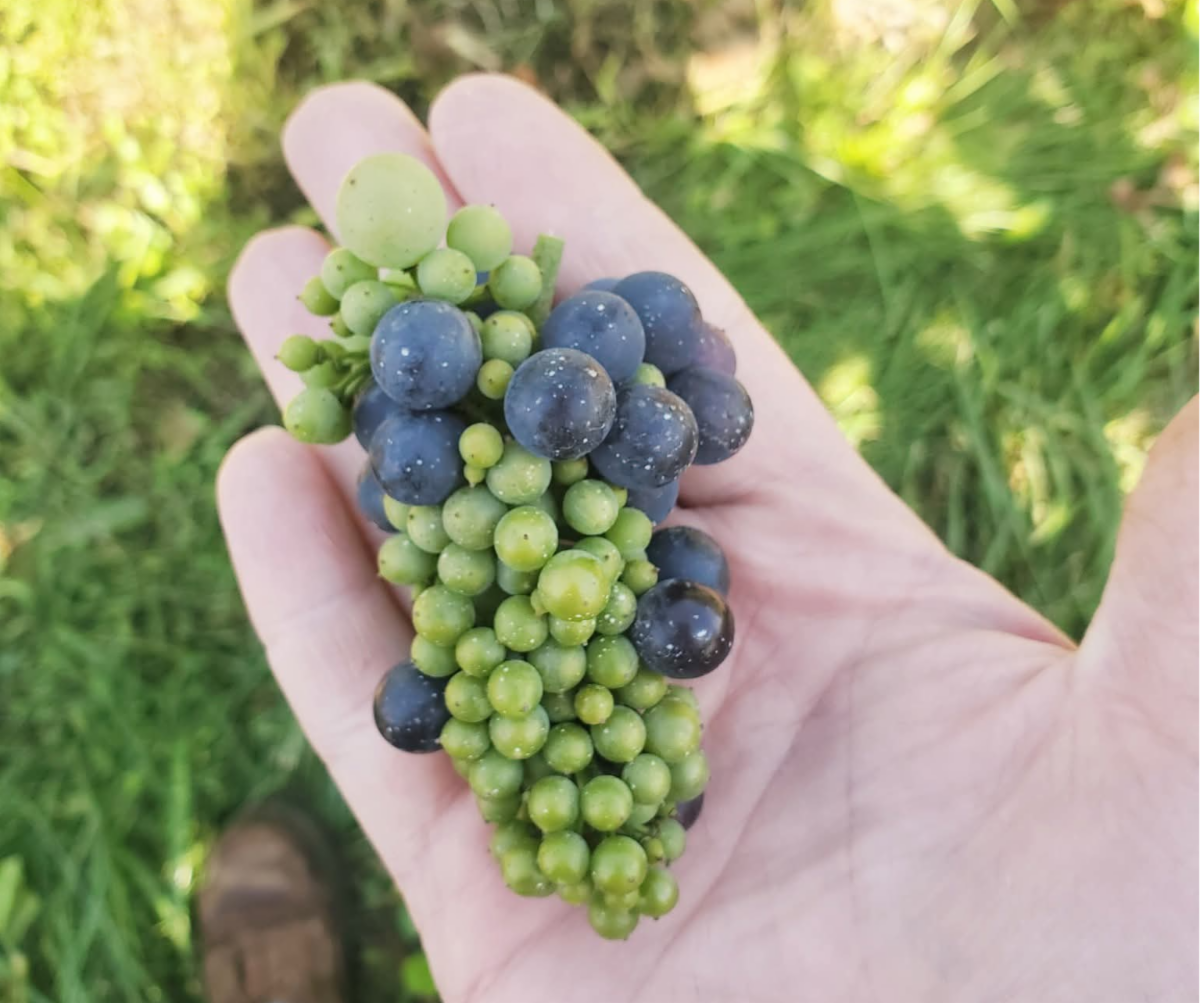
*ABOUT THE IMAGE
NGRA Board member Joe Juniper of Vermilion Valley Vineyards shared this image, taken this week, of a pinot noir cluster whose inconsistent maturation is “100% due to herbicide drift,” he says. His Ohio vineyards are surrounded by row crops like soybeans.
| | Register for the October 15 NVEELC Meeting! | | |
NGRA proudly supports the National Viticulture and Enology Extension Leadership Community (NVEELC), which regularly gathers viticulture and enology extension and industry outreach specialists for professional development, best-practice sharing, research and regional reports, collaboration and dialogue on the unique challenges in V&E extension. The goal? To lift up, connect and support the vital extension function for the American grape and wine industry.
If you work in an extension or outreach (non-sales) role, register now for the next NVEELC Virtual Meeting on October 15. Hear reports from the Midwest and Northeast Regions and learn about the latest research and extension efforts to combat the spotted lanternfly. See the agenda and sign up!
| | More Changes to the Federal Research Landscape | | |
In early July, a memo from USDA Secretary Brooke Rollins laid out new directives requiring recipients of USDA funding to disclose contracts associated with “foreign entities and certify they are not party to a malign foreign talent recruitment program.” As NPR explains, the Department “is applying more scrutiny to research done by its employees alongside noncitizens (as) part of a broader effort to increase security measures around the US food supply—especially when it comes to foreign adversaries like North Korea, China, Russia and Iran.” All USDA mission areas, agencies and offices were directed to review all contracts and awards within 30 days and report any “arrangements with any foreign person or entity or any US citizen or entity subject to foreign ownership, control or influence to the Office of Homeland Security, Office of the General Counsel and Office of the Chief Scientist for review. NPR reports that 70 researchers from “countries of concern” have been laid off as a result.
This month, a new executive order titled, “Improving Oversight of Federal Grantmaking,” mandated that political appointees must sign off on all grants and that such awards comply with administration policy. Specifically, the order stipulates that “all agencies must designate a senior political appointee to be responsible for reviewing grants, at both the announcement and award stages, to ensure they are ‘consistent with agency priorities and the national interest,’” Government Executive reports. The new process “has employees concerned over added bureaucracy and politicization.”
| | Proposed Legislation Bars States from Regulating Pesticides | | Prior to summer recess earlier this month, the US House Appropriations Committee advanced H.R.4754, the Department of the Interior, Environment and Related Agencies Appropriations Act, 2026. In it, section 453, titled “Pesticides,” prohibits the Environmental Protection Agency and related agencies from improving the rules for warning labels on pesticides based on current science. As written, it would “effectively grant immunity to all manufacturers of herbicides, pesticides, rodenticides and fungicides for failure to warn about product hazards,” Wine Business Monthly reports. “Furthermore, it prevents state and local officials from interceding to regulate up to 16,000 chemicals protected by the legislation, essentially freezing outdated science and information. As new research evolves, states will be barred from responding to any local health needs, mandating new information or updating warnings.” Anyone harmed by these chemicals would be unable to pursue legal action. The legislation will go to the House floor after Congress returns from summer recess next month. | | Legislation Introduced To Squash the Spotted Lanternfly | In late July, US Representatives Mike Kelly (R-PA), Joe Morelle (D-NY), Chrissy Houlahan (D-PA), and Nick Langworthy (R-NY) introduced bipartisan legislation to stop the spread of the spotted lanternfly. If passed, the Spotted Lanternfly Research and Development Act would designate SLF as a high-priority research and extension initiative under USDA’s National Institute of Food and Agriculture (NIFA). This designation would “authorize the Secretary of Agriculture to make competitive grants available for research projects related to the mitigation of this invasive species so we can find creative solutions to stop (its) spread,” the Congressmen said in their joint press release. “I was thrilled to see this legislation included last year in both the House and Senate drafts of the Farm Bill and remain optimistic that this year, we will be able to push this legislation forward to deliver these badly needed funds,” said Rep. Houlahan. | | America’s New AI Action Plan | | |
In July, the Trump Administration issued the White House AI Action Plan to accelerate innovation, build AI infrastructure, and lead in international diplomacy and security “to win the race…to achieve global dominance in artificial intelligence.” In response, the National Science Foundation announced it would advance the plan with a series of major initiatives, including:
- New NSF AI Research Institutes to accelerate breakthroughs in foundational AI and the application of AI to health, education, chemistry and materials science.
- A partnership to create a large language model infrastructure to develop cutting-edge capabilities to drive AI for science.
- AI Testbeds to evaluate real-world AI systems with transparency and rigor.
- The next phase of the National AI Research Resource to supercharge AI innovation through access to critical computational resources, data, software and training resources.
“These investments will help secure US leadership in AI while ensuring the benefits of this powerful technology reach across America,” said NSF Chief of Staff Brian Stone, acting NSF Director.
| | Leadership Changes at USDA-APHIS | | Late last month, USDA’s Animal and Plant Health Inspection Service (APHIS) Administrator Mike Watson announced changes to the agency’s senior team. Notably, Bernadette Juarez returned to the agency’s Animal Care (AC) division as the Deputy Administrator, following six years as the Deputy Administrator for Biotechnology Regulatory Services (BRS). She previously held the same AC leadership role from 2016-2019. Donna Lalli returned to BRS as the Deputy Administrator, where she began her APHIS career as a biotechnologist and Chief of Staff. | | Wine Institute’s Bobby Koch to Retire | | Wine Institute President and CEO Robert P. (“Bobby”) Koch this week announced his retirement at the end of 2025. Bobby has been with the advocacy organization for 33 years, 22 of them in his current role. During his tenure at Wine Institute, California wineries experienced unprecedented growth and success, capitalizing on expanded market access in the US and abroad. Under his leadership, Wine Institute transformed the policy environment for wine producers, doubled its membership and built a best-in-class staff dedicated to protecting and promoting the wine community. It was also during his tenure that Wine Institute became a longstanding member of the National Grape Research Alliance. A nationwide search will commence to find his successor. | | Tara McHugh Is a Forbes 50 over 50 | | Forbes compiled a list of 50 women over 50 “who define innovation, drive and hope,” and USDA Agricultural Research Service Pacific West Area Director Tara McHugh is one of them. A food scientist by training, Tara is listed with other leading lights in the “Impact” category. Forbes credits her with “32 years at the USDA working on making foods healthier, safer and more sustainable.” Tara has been a champion of grape research in her current leadership role at ARS. “Through her research,” the listing says, “she has developed new technologies to help American industry leaders bring innovative product ideas to fruition. Her lab successes include creating shelf-stable fruit bars from surplus produce, mushrooms with added vitamin D and protein- and fiber-rich powder from spent brewing grains.” | | James Osborne Is New ASEV Board President | James Osborne has been confirmed as President of the Board of the American Society for Enology and Viticulture (ASEV) for 2025-2026. James is Director of the Oregon Wine Research Institute and professor in the Department of Food Science & Technology at Oregon State University, Corvallis. He succeeds Michelle Moyer from Washington State University, Prosser. First Vice President is now Kristen Barnhisel, Winemaker, White Wine at J. Lohr Vineyards & Wines, a founding NGRA member-organization. | | Virginia Wine Board Grant Awards Announced | | The Virginia Wine Board (VWB), an NGRA member-organization, this month announced 15 grant awards totaling $523,093 to 12 applicants for the 2025-2026 fiscal year. Research grants represent 60% of awarded funds. Four of the eight projects focus on vineyard pests (spotted lanternfly, downy mildew, Pierce’s disease and testing for fungicide resistance) while others support the pilot of a Virginia-specific sustainability program; compare under-vine cover crops to optimize production goals; investigate the impacts of variety, vineyard and vintage on phenolics; and profile cider apples over time. Six education grants represent 30% of awarded funds and a marketing grant for a Virginia wine docu-series represents the remaining balance. See the complete list of funded projects and learn more about VWB grants. The FY 2026-27 grant program is anticipated to open for pre-proposals in October 2025. | | NYWGF Funds Impactful Research | | |
The newly released 2024–2025 reports from research projects funded by the New York Wine & Grape Foundation (NYWGF), an NGRA member-organization, reflect the outcomes of work on vineyard management, pest and disease control, varietal evaluations, sustainability strategies, consumer education and more. With a total investment of $647,188, the Foundation and its grant recipients boast advances in these highlighted areas:
- Efficacy of strobilurin fungicides as alternatives to ziram for Phomopsis control in the Lake Erie Region – PI Bryan Hed, Penn State Lake Erie Regional Grape Research and Extension Center
- Evaluating vision-guided spray technology in New York grapes – PI Lynn Sosnoskie, Cornell
- Plant protection sensing to improve sustainable grape disease management – PI Katie Gold, Cornell AgriTech
- Reduced susceptibility to powdery mildew by precision gene editing – PI Adam Bogdanove, Cornell
- Development of resilient and high-quality wine grape varieties – PI Madeline Oravec, Cornell AgriTech
The NYWGF’s research program aims to provide industry members with data-backed guidance to improve operations, protect their crops and reach new markets. See all the reports.
| | Manage the Washington Wine Commission’s Research Program | | The Washington State Wine Commission seeks a Research Program Manager to succeed Melissa Hansen, an NGRA Board member, upon her retirement. Reporting to Executive Director Kristina Kelley, the Research Program Manager will elevate the strategic importance of viticulture and enology research with stakeholders, including winemakers, growers, researchers, students, media, research grantors and government bodies. Working closely with Kristina and the Commission’s Research Committee, the RPM position plays a crucial role in managing the Washington wine industry’s research grant programs and disseminating research outcomes to constituents. Learn more and apply. | Be a Post Doc at the UC Kearney Ag Center | UC Davis Cooperative Extension Viticulture Specialist Matthew Fidelibus is seeking a highly motivated Postdoctoral Researcher to join his lab at UC Kearney Agricultural Center in Parlier, CA. The incumbent will be part of a multidisciplinary team investigating the biochemistry, gene expression and genetic traits important to raisin grape production with a focus on the economically important new “natural” dry-on-vine (NDOV) trait. Learn more and apply by September 18. | | |
Mothballing: Considerations When Taking Vineyards Out of Production
By Christopher C. Chen, PhD, UC Agriculture and Natural Resources
| | |
In 2024, the California Grape Crush Report provided data that supports what winegrape growers are experiencing: tonnage of winegrapes crushed in the state was down by approximately 21% from 2023 and about 20% when compared with the average of the previous five years. In response, it seems grape growers are lightening their load. In 2024, self-reported bearing acreage of winegrapes fell by 4% which is represented by a loss of 20,000 acres, either by removal of vines from production status or complete removal of the vines themselves. (These values likely under-represent the actual loss of productive winegrapes across California.) In extreme cases, vineyards are simply abandoned.
As grape growers search for ways to adapt their operations to current market realities, one option is “mothballing.” This term was first used by Australian grape growers in the early 2000s and refers to a form of long-term “storage” of grapevines without expectations of productivity. It can be more formally defined as “maintaining a non-producing vineyard with minimal, critical inputs to allow for a rapid return to production in the future.”
Mothballing vineyards provides an option for grape growers who can’t or don’t want to remove their grapevines entirely. However, few studies have been done to identify best practices for mothballing a vineyard. In the current downturn, it’s essential to help growers get it right.
In Mendocino County, UC Cooperative Extension is beginning to explore approaches to mothballing vineyards. By talking with growers and combing through the relevant literature, we’ve found that mothballing can be roughly categorized into three types:
-
Type I: No harvest planned with minimal management for pests only. No vine management; little to no consideration to vine recovery after mothballing. Little to no inputs (e.g., water or nutrients).
-
Type II: No harvest planned with management for pests and for later vine recovery. Vines are managed for recovery after mothballing only; often pruning is the only practice preserved. Minimal inputs to preserve vine health and growth.
-
Type III: Salvageable harvest with reduced management intensity. Most practices are continued at reduced intensity, and inputs are minimized; not true mothballing.
Regardless of how growers go about mothballing their vines, managing pests and diseases will still be essential, both to reduce pest pressure on neighboring vineyards and mitigate risk of the vineyard being declared “abandoned.” Even in the context of reducing labor hours and per-acre management costs, there are low-cost management practices that can reduce pest risks. Targeting the reduction of canopy vigor can indirectly reduce pest and disease pressure in vineyards and can be achieved in a few ways at little cost.
Integrating livestock like sheep, goats or even geese can help. Livestock rotation in mothballed vineyards allows for cover crop reduction and canopy management, limiting habitat and food sources for many pests and diseases. Livestock integration may not be an option in all grape growing regions and may be too expensive for Type I or even Type II mothballed properties.
Another option to decelerate vine vigor could be the reduction or outright elimination of inputs like water and nutrients. Reducing nutrient inputs can be relatively straightforward. Limiting macronutrient applications should help reduce vine growth over seasonal timeframes. However, growers should take care not to let the vines fall too far into specific nutrient deficiencies to avoid long-term and lasting damage. Reducing water inputs must be more carefully considered. Vines that have been cropped with ample irrigation over their lifespan may be significantly damaged from a total loss of irrigation. Likewise, vineyards on soil types with limited water holding capacity should not be completely cut off from irrigation right away. Reducing inputs can help reduce vine vigor in spring and summer and often leads to smaller canopies. Indirectly, this approach could also help lower pest pressure, especially if applied in conjunction with livestock integration.
There are risks when mothballing vineyards, including possible long-term health impacts to your vines. Losses of primary buds, reliance on latent buds, large pruning cuts and low inputs may all lower a vineyard’s production potential once it’s back online. There is little information related to the long-term impact of mothballing on vine health and productivity, on the success of various methods, or on the economic viability of mothballing on long timescales. But if you do plan to revive your vineyard in the future (Type II or III mothballing), it’s a good idea to make a plan—and budget—for its minimal management.
There are also risks to neighboring vineyards and your relationship with the growers who own them! If you’re planning to mothball your vineyard, it’s recommended that you discuss your plan with your neighbors prior to implementation. Knowing that a mothballed vineyard is nearby can help them plan for potential pest and disease pressure as your vineyard rests.
Dr. Chris Chen is the Integrated Vineyard Systems Advisor for Sonoma, Mendocino and Lake Counties, as part of UC Cooperative Extension at UC Agriculture and Natural Resources. This story is excerpted from a longer article; read the original here.
| | |
California SCBGP
The California Department of Food and Agriculture (CDFA) is accepting proposals for the 2026 Specialty Crop Block Grant Program (SCBGP). Grant awards will range from $100,000 to $500,000 per project; projects may last for up to two years and eight months. Non-profit and for-profit organizations; local, state, federal and Tribal government entities; and public and private colleges and universities are eligible to apply. The deadline for proposals is September 11. A virtual Concept Proposal Workshop is scheduled for September 3; register here.
AFRI Foundational and Applied Science
USDA-NIFA’s Agriculture and Food Research Initiative (AFRI) provides funding for fundamental and applied research, education and extension/outreach projects in the food and agricultural sciences. There are 37 funding priorities in the six AFRI program areas:
- Plant health and production and plant products
- Animal health and production and animal products
- Food safety, nutrition, and health
- Bioenergy, natural resources, and environment
- Agriculture systems and technology
- Agriculture economics and rural communities
Application deadlines vary by program, with the earliest on October 2.
There are two noteworthy changes to the AFRI request for applications for FY26:
- A new cross-cutting program area priority, called “Rapid Response to Emerging and Re-emerging Pest and Disease Events Across Food and Agricultural Systems,” has been added. Applications for this program will be accepted on a continuous basis.
- A Mentoring Plan is now required for all AFRI grant applications for projects that involve any type of education, training, or mentoring of students or other individuals. (Workshop grants, equipment grants and sabbatical grants are excluded from this requirement.)
Farm Robotics Challenge
The Farm Robotics Challenge invites undergraduate and graduate student teams to design, prototype and field-test robotics and AI-driven solutions to tackle real challenges facing modern agriculture. The Challenge is organized by UC ANR Innovate, the innovation arm of University of California Agriculture and Natural Resources, in partnership with the AI Institute for Next Generation Food Systems. The competition unfolds across several stages, beginning with the registration period starting in August, followed by a team formation and proposal research phase through October. Project proposals must be submitted by October 30.
| | |
Applying for a grant? Request a letter of support!
NGRA is pleased to provide letters of support for research projects that directly address our industry research priorities. Request a letter via our online request form at least two weeks prior to the grant deadline (or any internal deadline you may have). Requests are reviewed and approved by NGRA Research Committee leadership, so processing times may vary.
| | |
Grape Day Shows San Joaquin Valley Growers ‘What Works in Our Area, for Our Crops’
August 20, 2025 | UC ANR
At Grape Day at the UC Kearney Agricultural Research and Extension Center on August 12, wine, table and raisin grape growers in California’s San Joaquin Valley got updates on innovations in managing water, nutrients, and pests and diseases in vineyards. As part of the event’s tour of experimental vineyard blocks at the Center, UC Riverside Extension Nematologist Andreas Westphal pointed out nematode resistant and tolerant rootstocks he’s worked with breeders to develop as an efficient way of managing nematode populations. Some elite rootstocks look promising, he said.
Herbicide Drift Injury Is on the Rise
August 14, 2025 | American Vineyard Magazine
Despite some dicamba herbicides having been delisted in 2025, Dean Volenberg (University of Missouri Grape & Wine Institute) says he’s receiving more reports of herbicide drift injury to grapes. “The likely explanation,” he writes, “is another synthetic auxin herbicide, 2,4-D.” Volenberg explains, “Grapevines are much more sensitive to 2,4-D compared to dicamba. My previous research showed that grapes are sensitive to 1/100 the field application rate of dicamba and 2,4-D. That is approximately 5 teaspoons of 2,4-D/acre and 4 teaspoons of dicamba/acre.” Grapes are the “canary in the coal mine” for detecting synthetic auxin herbicides, he adds.
Phylloxera Detected in the Canary Islands
August 11, 2025 | Decanter
On August 1, phylloxera was confirmed on Tenerife, one of Spain’s Canary Islands, one the world’s few remaining winegrowing regions thought to be free of the pest. With many abandoned vineyards across the island and most vineyards in the region ungrafted, there is concern that phylloxera could spread rapidly without swift action. “Almost all of our plantings are done by massal selection, and we have this strong heritage of taking vines from our neighbors,” one local grower is quoted as saying. “We could lose a huge part of our own-rooted viticultural heritage.”
IVES Study: Review of Plant-based Methods for Assessing Vine Water Status
August 8, 2025 | Wine Industry Advisor
Vine water status can be assessed indirectly, via soil- or atmospheric-based methods, but this literature review focuses on measuring water status via plant directly. The authors take into account new research on how grapevines regulate water and how these processes affect how water status is measured, particularly in the context of drought and/or dry environmental conditions. The authors compare six plant-based methods of measuring vine water status for irrigation decision-making.
The Italian Wine Robot: Wings, Solar Panels and 72-Hour Shifts
August 5, 2025 | Forbes
A 140-year-old Chianti Classico winery is blending tradition with innovation by deploying an autonomous, hybrid-powered robot called Icaro for precision management. From foldout wings, it emits UVC light to eliminate fungal diseases like powdery and downy mildew. Its on-board sensors feed real-time wind, humidity and solar irradiance data back to the base station, where a predictive algorithm determines when and where Icaro should intervene next. The base station is equipped with solar panels that can enable runtime of up to 72 hours at a time as it monitors and manages vineyard health.
Harnessing Community Power: Using Citizen Science To Track the Invasive Tree of Heaven
August 4, 2025 | Lodi Growers Blog
LangeTwins vineyard manager Maria Zumkeller created an interactive dashboard for the Lodi AVA to track the incidence of the invasive Tree of Heaven, the primary host for spotted lanternfly. It aggregates community TOH observations posted to the iNaturalist app and displays them on a map. “This visual tool will not only help us keep track of where Tree of Heaven exists,” Maria says, “but may also help reveal patterns” related to efforts to remove it. It’s a citizen science approach to helping make Lodi an inhospitable home if/when SLF ever reaches California.
Should You Still Squash Spotted Lanternflies? Here’s What To Know
August 1, 2025 | National Geographic
National Geographic asks, “Do spotted lanternflies still present the same environmental harm as we originally thought?” Yes! So much so that lawmakers recently introduced the Spotted Lanternfly Research and Development Act, which would make competitive grants available for research related to SLF mitigation. Pennsylvania Representative Chrissy Houlahan is quoted from the press release about the bill: “Whether you're a farmer, a homeowner or just someone who enjoys the delicious produce grown by our community's farmers, the invasive Spotted Lanternfly poses a serious problem.”
From Data to Decisions: Advancing Vineyard Nutrition
August 2025 | HiRes Vineyard Nutrition Podcast
Tune into this podcast as Gallo’s Nick Dokoozlian, NGRA Research Chair, discusses his journey from family grape-growing to academia to industry powerhouse to help drive collaboration to solve real-world vineyard issues. From remote sensing to sustainability, he highlights the power of data, innovation and long-term, cross-sector research like HiRes and GrapeX to give grape growers tools for complex decision-making. Nutrition, he says, is the most site-specific vineyard challenge.
Toward Estimating the Crop Coefficient of Vineyards Using a Smartphone Camera
August 2025 | American Journal of Enology and Viticulture
A team of researchers at Cornell developed a novel machine-learning algorithm to translate video from a smartphone camera to estimate the amount of shaded area under grapevines, a parameter correlated to crop coefficient. This easy-to-use smartphone-based computer vision method of estimating crop coefficient could help grape growers estimate ET without costly sensors, potentially aiding adoption of variable rate irrigation.
Research Suggests Fresh Grapes Are a Superfood
July 31, 2025 | American Vineyard Magazine
Table grapes are underplayed in discussions of superfoods, but a resveratrol and cancer researcher argues in a new article in the Journal of Agriculture and Food Chemistry that they absolutely should be recognized as such. Grapes contain more than 1,600 compounds, including antioxidants and other polyphenols credited with the health benefits of grape consumption. “It is the whole grape and the unique matrix of these compounds within it that creates the biological effects, not a single component,” American Vineyard Magazine reports.
‘Between the Vines’ Podcast Shares Timely Viticulture Updates
July 29, 2025 | Morning Ag Clips
The Between the Vines podcast produced by the Lake Erie Regional Grape Program supports the commercial success of vineyards near and far by sharing research-based updates and expert insights. It delivers timely information on viticulture, business management and integrated pest management, allowing grower stakeholders to benefit from the research and extension work of Penn State and Cornell. Two recent episodes feature a beta version crop estimation calculator and fertilizer calculators for Concord growers.
Helping the BC Wine Industry Beat the Heat: Scientists Seek Genomic Solutions to Grapevine Heat Stress
July 29, 2025 | Cision
Researchers in British Columbia are exploring the impacts of heat stress on grapevines using purpose-built greenhouses. Simulating real-world heatwaves, they’re evaluating how vines respond to heat stress alone and with other stressors like water deficit, and how biostimulants may protect vine tissues. They hope that, by tracking small changes in the chemical composition of leaves and berries, they'll get clues to guide decision-making and management for heat stress.
Clean Vines, Strong Future: Why Clean Plant Material Matters More Than Ever
July 25, 2025 | NVG Blog
When it comes to clean plants, what does “clean” mean, exactly? It denotes plant material—scions and rootstocks—that’s been tested and verified to be free of known viral pathogens and pests of concern. It also means the nursery has followed rigorous sanitation and propagation protocols to minimize the risk of contamination from viral, bacterial, fungal or insect vectors. “Clean material isn't just about vine health,” Napa Valley Grapegrowers advises. “It’s about building resilience into our farms, our businesses and our shared agricultural landscape.”
Growing Grapes Around the World—England with Dr. Belinda Kemp
July 22, 2025 | Vineyard Underground Podcast
In this podcast, Belinda Kemp, viticulture and enology researcher at the UK’s NIAB describes England's burgeoning wine industry and emerging reputation for sparkling wine. Wine grapes, she notes, are now 36% of the country’s “soft food crop.” She touches on climate impacts reflected in the more northerly and unusual places vineyards are being planted there, and the industry's increasing focus on sustainability and innovation, including with new disease-resistant PiWi varieties.
Economic Impact of US Wine Industry Reaches $323 Billion, Supporting Family Wineries
July 15, 2025 | Forbes
In an interview with Jim Trezise, President of WineAmerica, about the organization’s 2025 Economic Impact Study, wine’s worth to the US economy is revealed to have reached $323.55 billion, even in the midst of myriad headwinds. “Wine is a tasteful economic engine that generates billions to the US economy,” Jim is quoted. “It also provides 1.75 million jobs and $102.14 billion in annual wages. Plus, it generates $53.24 billion in total taxes.” These numbers are important reminders to legislators who “love jobs, wages and taxes,” he said.
Tainted or Toasted? Decoding Smoke Markers in Wine
July 3, 2025 | Sustainable Winegrowing with Vineyard Team
Tune in to this podcast as AWRI’s Mango Parker explains the chemical process by which volatile phenols (of which there are thousands) from smoke are metabolized and bound by sugars in grape berries to become odorless glycosides. When released during winemaking or on consumption, glycosides create an unpleasant smoky aftertaste, making them reliable markers of smoke exposure. A table of concentrations for 13 smoke markers—seven volatile phenols and six glycosides—can help grape growers and winemakers get the full picture of potential exposure when they get their grapes tested.
Building Bridges: How NGRA Connects Science and Industry
July 2025 | HiRes Vineyard Nutrition Podcast
In this podcast interview, National Grape Research Alliance President Donnell Brown shares how her industry-led voluntary organization builds bridges between researchers and industry, initiating priority research like the HiRes Vineyard Nutrition project and, in the process, creating enduring, collaborative science partnerships, to solve real-world viticulture challenges. The model offers a clear path to accelerate innovation and adoption by aligning scientific inquiry with grower needs from the start.
Safeguarding the Future of Mid-Atlantic Viticulture
July 2025 | FFAR 2024 Impact Report
University of Maryland’s Mengjun Hu won a New Innovator Award from the Foundation for Food and Agriculture Research to lead research to identify the fungus causing ripe rot, a grapevine disease common to the hot, humid mid-Atlantic region (Maryland, Virginia and North Carolina). He also developed science-backed management practices, and a public disease risk model, which takes into account weather patterns, leaf wetness and crop infection susceptibility, and he disseminated his findings quickly to help growers take action. (Story on p. 26.)
Natural Insect Predators May Serve as Allies in Spotted Lanternfly Battle
March 17, 2025 | Penn State
Insect predators native to the US could help keep spotted lanternfly populations in check while potentially reducing reliance on chemical control methods, according to entomologists at Penn State. Their research shows that spined soldier bugs—a stink bug that preys on various agricultural pests—and Carolina and Chinese mantises have a taste for spotted lanternflies. Conserving and promoting populations of these natural predators could help control SLF.
This Invasive Pest Could Cost the Grape Industry Millions
March 4, 2025 | American Vineyard Magazine
Agricultural economists at Cornell’s New York State Integrated Pest Management program published the first peer-reviewed research on the economic impact of spotted lanternfly. Using data from two SLF-impacted grape-growing regions in NY--Lake Erie and the Finger Lakes--they found that pest-derived losses could reach $1.5M, $4M and $8.8M in the first, second and third years of infestation, respectively. “This is what you can lose if you do nothing,” said first author Allan Pinto. The team is working on a follow-up study to provide projections for how much the different prevention and treatment strategies will cost.
Find these stories and more, published every weekday, on our Facebook and X (Twitter) feeds. You can also find us on LinkedIn. Use #graperesearch to join and grow the conversation!
| | |
September 13, 2025
University of Minnesota Annual Grape Field Day
Chaska, MN
September 17, 2025
VINE Connect Field Day: Live AgTech Demos
Merced, CA
October 15, 2025
National Viticulture & Enology Extension Leadership Community (NVEELC) Meeting
Virtual event
October 21-24, 2025
Extension Disaster Education Network Annual Conference
Portland, ME
October 31-November 4, 2025
Old Vine Conference
Lodi, CA
November 5, 2025
Grapes for the 22nd Century:
NGRA-UC Davis Grapevine Improvement Workshop
Davis, CA
November 6, 2025
NGRA Year-End Board Meeting
Davis, CA
November 11-12, 2025
Sustainable Ag Expo
San Luis Obispo, CA
December 4, 2025
WIN Expo – North Coast Wine Industry Trade Show & Conference
Santa Rosa, CA
December 9-11, 2025
Great Lakes Great Lakes Fruit, Vegetable and Farm Market Expo
Grand Rapids, MI
| | | | |