|
Greetings!
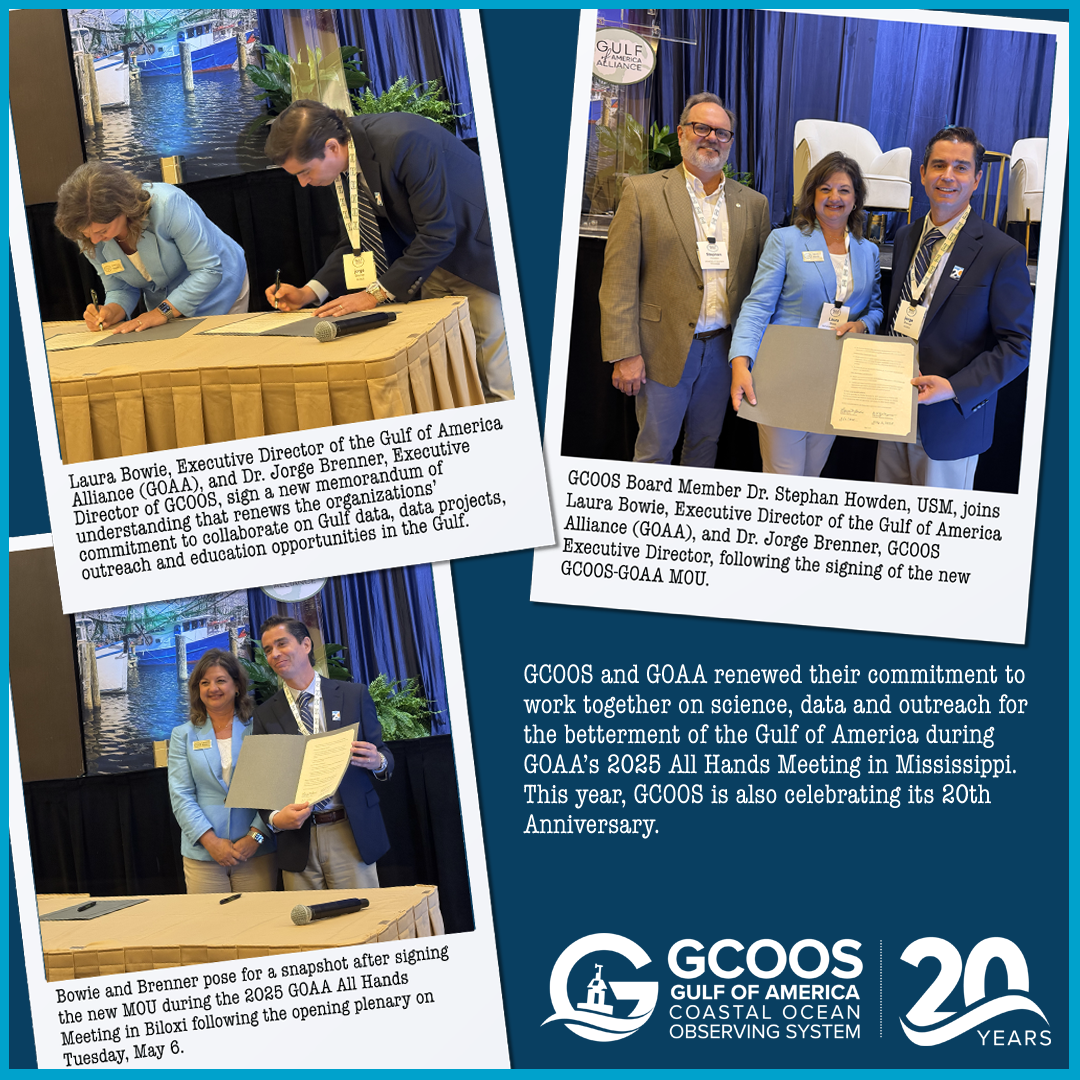
We’re just returning from this month’s successful Gulf of America Alliance (GOAA) All-Hands Meeting in Biloxi, Mississippi. It was good catching up with so many of our coastal and ocean observing partners during the meeting and I hope you were able to attend and make many new connections in the Gulf. As a bonus during this year’s meeting, GCOOS had the opportunity to renew our longtime partnership with GOAA when Executive Director Laura Bowie and I signed an updated collaboration agreement after the meeting’s opening plenary. Through this updated agreement, our organizations renewed our commitment to collaborating on data and data accessibility, outreach, education and other projects as opportunities arise. As we embark on this renewal during GCOOS’s 20th Anniversary Year, it reminds me of our long-time commitment to the Gulf and how important partnerships are to strengthening our ocean observing capabilities. (Read more here.)
Speaking of partnerships, by now you’ve probably heard of the leadership changes happening at the U.S. IOOS program office. Director Carl Gouldman and Derrick Snowden, Chief of the Operations and Communications Division, have announced their departures. At GCOOS, we have worked closely with them over the years on many initiatives that have strengthened ocean observing nationwide and especially here in the Gulf. Programs implemented under their leadership — like the National Harmful Algal Bloom Observing Network (NHABON) and the Hurricane Glider Initiative — have led to improved forecasts for tropical storms, hurricanes and HAB events, mitigating impacts on our coastal communities. Through their leadership, we’ve also seen an improved data management and cyberinfrastructure system that increases data access for stakeholders, scientists, product developers and decision makers across all sectors. They also helped develop a clearer valuation for the blue economy, helping us to show the economic value of ocean observations to the nation and here in the Gulf region.
I hope you join me in thanking them for their long service and for their support for the 11 regional associations like ours over the years. At the same time, we also would like to welcome Dr. Jeff Payne, Director of the Office for Coastal Management, who has stepped in to lead IOOS in the interim, alongside long-time U.S. IOOS Deputy Director Krisa Arzayus. We look forward to continuing our strong IOOS partnerships under their leadership.
Before I leave you this month, I also wanted to ask for your help. The proposed federal budget for FY2026 defunds IOOS — an action that would shut down regional networks like GCOOS and hobble communities that depend on the products we develop and the data we gather and disseminate.
Without our network, disaster forecasting and preparedness in Gulf states will suffer and the 67 million residents in our states — including some 15 million who live directly along the coast —will face greater risks from flood, wind and HAB events that threaten public health and safety. Our offshore energy and maritime shipping sectors will suffer without the real-time information on ocean conditions that we gather and the QA/QC we perform on the data we collect and disseminate. We will also lose the real-time ocean current data gathered through the high frequency radar network that helps the U.S. Coast Guard respond quickly and effectively to emergencies at sea and carry out search and rescue missions.
As the nation’s eyes on the ocean, IOOS regional associations like GCOOS provide critically important services to our communities and we hope you will share information about how and what we do — and its importance and benefits to you — with your friends, neighbors and elected representatives. (This is a handy tool for contacting your elected officials and here is a fact sheet about the services GCOOS provides that might help.)
The IOOS Association has created a toolkit of information that you can access here. Please also consider sharing your story with us: Has the data we collect or the tools and products we develop helped you or your community? Please share your testimonial with the IOOS Association here.
Times may be uncertain right now, but we remain committed to providing the ocean data and services that the Gulf relies on every day — something that grows even more important as we head into hurricane season!
Until next month,
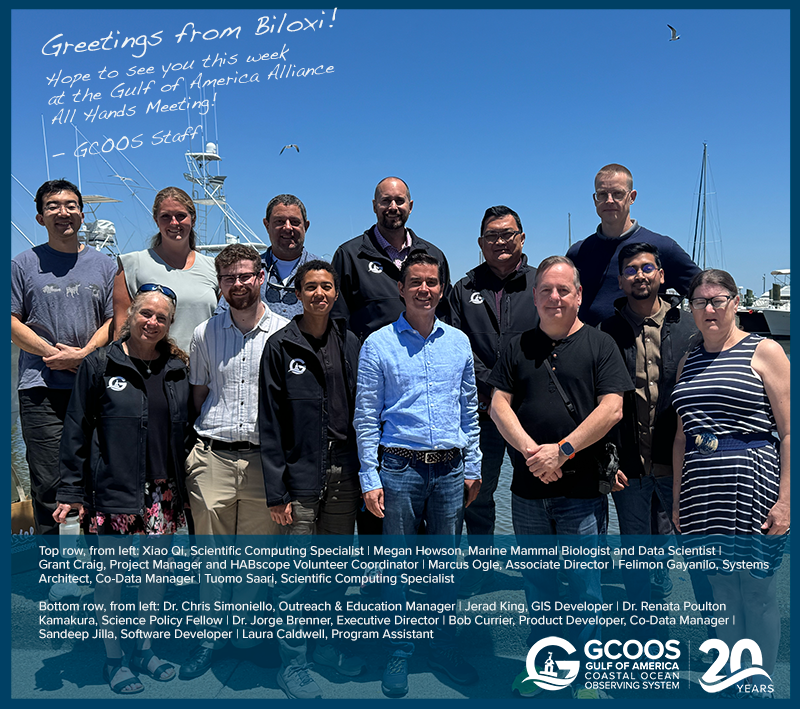
| | GCOOS staff were able to arrive early for the GOAA All Hands meeting to spend some time together exploring Biloxi during a mini-retreat. | | GCOOS Board Member Dr. Stephan Howden joined Laura and me for the MOU signing. | | GCOOS Board Election Results | | |
We’re pleased to welcome some new and returning members to the GCOOS Board of Directors following our Spring election. “We want to offer a warm welcome and many thanks to our newly elected and re-elected members of the Board of Directors for their commitment to the GCOOS mission,” said GCOOS Board Chair Dr. Kim Yates. “We appreciate the expertise, perspective, and dedication that all of our GCOOS members contribute to help deliver accurate information about the Gulf and its resources.”
The directors will officially take their seats during our Fall Meeting; in the meantime, please join us in thanking them for their commitment and welcoming them to the Board!
Newly Elected Members:
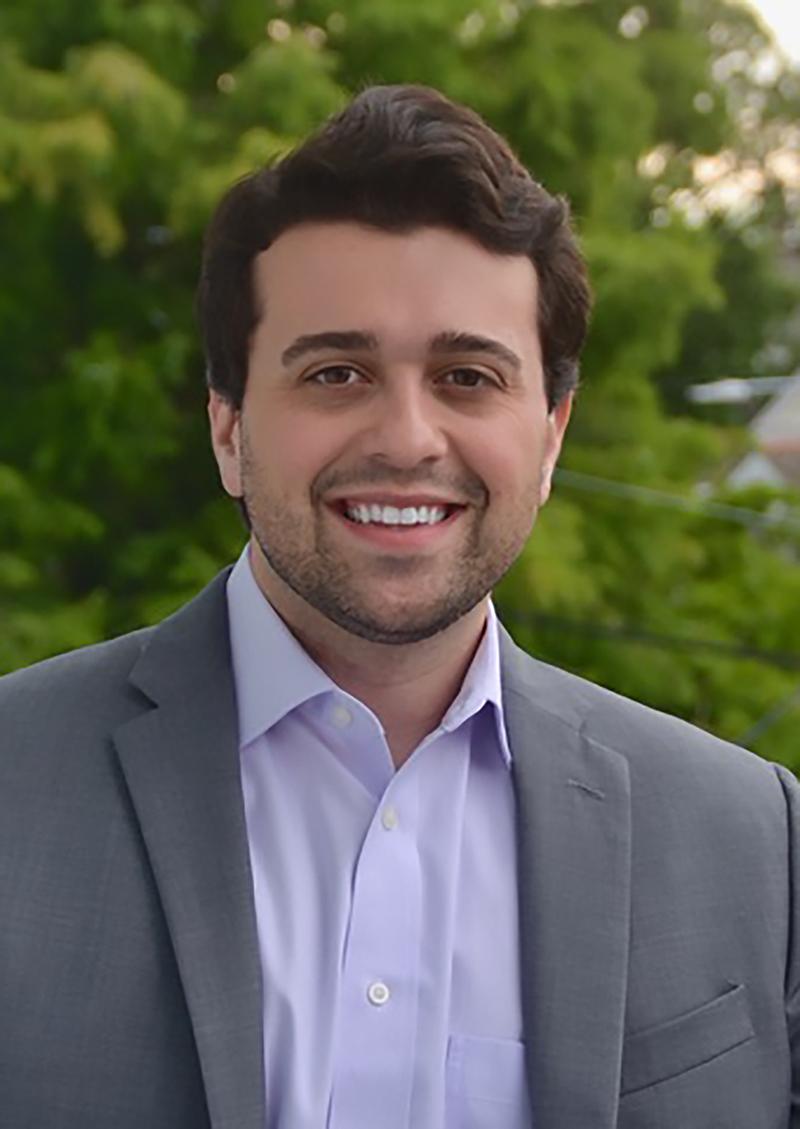
|
- Private Sector: Nick Gagliano works in business development at Sofar Ocean, where he partners with ocean and coastal industries on innovative environmental monitoring solutions. As a resident of New Orleans, he has developed a passion for monitoring, protecting and restoring the valuable, yet vulnerable, coastal and marine resources of the U.S. Gulf region. Nick melds this passion with his background in physical oceanography and geospatial analytics to advise researchers, government agencies, and maritime industries on Sofar’s affordable, real-time ocean data solutions.
|
- Government Sector: Dr. James “Jim” Kendall serves as the Regional Director of the Bureau of Ocean Energy Management’s (BOEM) New Orleans Office. Before moving back to Louisiana, he served 11 years as the BOEM Alaska Regional Director. Dr. Kendall started his career in 1989 with the Gulf Office’s Studies program and then moved to headquarters where he was, as he remains, a proponent for knowledge-informed decision-making, including the use of science, indigenous knowledge and ocean exploration. While in headquarters, Dr. Kendall was fortunate enough to participate in the early years of the program when the National Office for Integrated and Sustained Ocean Observations, IOOS’s predecessor, was housed at Ocean.US. When he moved to Alaska, Dr. Kendall served for many years on the AOOS Executive Committee.
| |
Returning Board Members:
- Private Sector: Dr. Ruth Perry, Marine Scientist and Regulatory Policy Specialist for Shell Exploration and Production Americas teams.
- Government Sector: Dr. Pat Hogan, oceanographer serving as the Ocean Sciences Branch Chief for NOAA’s National Centers for Environmental Information.
- Academic Sector: Dr. Stephan Howden, Associate Professor in the Department of Marine Science at the University of Southern Mississippi, where he has directed the Central Gulf of Mexico Ocean Observing System since 2003.
- Outreach and Education Sector: Dr. Nan Walker, Director, Louisiana State University’s Earth Scan Laboratory.
| | Register Today for Our Spring Meeting | | |
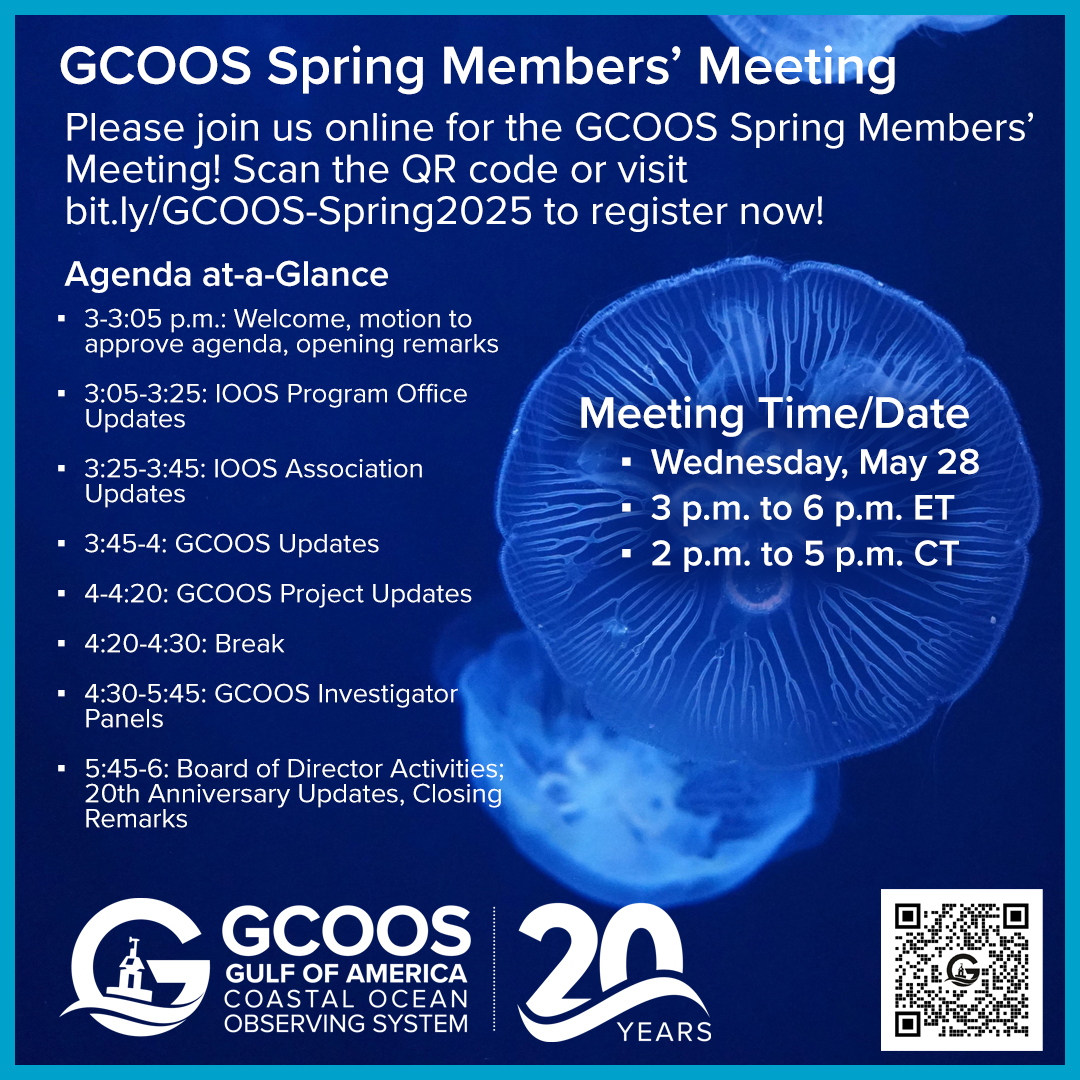
We’ve developed our agenda for the Spring Meeting. Please don’t forget to register today by clicking here or scanning the QR code below.
-
Click here for the detailed agenda.
| | Register Now: GCOOS Summer Webinar Series | |
Our summer webinar series for 2025 will focus on marine heat wave (MHW) science and impacts. The location, season, size, duration and intensity of an MHW influences its impacts. For animals, summer and fall events are especially concerning because animals are already at temperatures closer to their upper heat tolerances. Sessile species like corals face greater risks than mobile species. For coastal weather, MHWs can lead to dangerously hot and humid conditions. They also contribute to rapid hurricane intensification. Join GCOOS in June and July as we focus on the science and impacts of MHW.
- When: Noon-1 p.m. CT | 1 p.m.-2 p.m. ET on June 12 and 26 and July 10
June 12: Marine Heat Waves and Marine Species, featuring Elizabeth Harris, Texas Parks and Wildlife Department | Megan Howson, GCOOS | Jerad King, GCOOS.
MHW, periods of higher-than-normal temperatures in the ocean, can have significant impacts on marine species. The Gulf alone is home to more than 15,000 species ranging from highly migratory whales and sea turtles to fish that live their whole lives on a single coral reef. In this lunch & learn webinar, hear from experts about how environmental data, including temperature data, is used to sustainably manage marine species, as well as some new GCOOS tools being developed to make marine-species data more accessible.
June 26: Marine Heat Waves and Oysters, featuring Andrea Tarnecki, Auburn Shellfish Lab | Jeff Plumlee, Louisiana State University/Louisiana Sea Grant | Blair Morrison, Mobile Bay National Estuary Program.
MHW can have especially high impacts on less-mobile marine species like oysters, which provide critical habitat for other species, aid water filtration in estuaries, reduce coastal erosion and provide food for humans. Oyster aquaculture is also a growing industry, with 2023 landings valued at $77 million by NOAA Fisheries. In this lunch & learn webinar, hear from experts who study oyster production, MHW impacts on oyster recruitment and general stressors for oyster reefs.
July 10: Marine Heat Waves and Coastal Weather, featuring Brian Dzwonkowski, University of South Alabama/Dauphin Island Sea Lab | Shawn Milrad, Embry-Riddle Aeronautical University | Coral Lozada, Houston Methodist Academic Institute.
What happens in the ocean doesn’t just impact marine species, it also impacts coastal weather. In the Gulf region, hurricanes are a frequent and damaging reality. The Gulf also continues to experience very high summer temperatures that can be dangerous for local communities. In this lunch & learn webinar, hear from experts about how marine heatwaves impact hurricanes and coastal temperatures and what that means for all of us along the Gulf coast.
| | GCAN Welcomes New Interim Coordinator | | |
Please join us in welcoming GCAN’s new Interim Coordinator, Siobhan Kassem, Ph.D. student at Texas A&M University. Kassem is a Ph.D. student in the Department of Oceanography at Texas A&M University (TAMU). Kassem earned her master’s degree in Oceanography from TAMU in 2024. Her master’s focused on seawater carbonate chemistry along seamounts in the North Pacific Ocean, specifically analyzing the aragonite saturation horizon and its implication to deep sea coral reefs. She also earned her Bachelor’s degree in Chemistry from California Polytechnic State University, San Luis Obispo, with research focused on estuarine total alkalinity dynamics. Kassem is passionate about better understanding anthropogenic contributions to the ocean carbonate system and its impacts to the marine environment.
| | Webinar Recording: Improving Consistency in Carbonate Chemistry Measurements | | |
GCAN hosted a special webinar earlier this week that provided a recap of the 2025 Wepal-Quasimeme Workshop with interim GCAN Coordiantor Siobhan Kassem, which focused on improving consistency in carbonate chemistry measurements. Better consistency is critical for climate and ocean acidification research and the 2025 Wepal-Quasimeme workshop emphasized the need for inter-laboratory comparisons, discussed limitations of current CRMs, and elaborated on the need for regional reference material distribution hubs.
Additional focus areas included variability in mCP purity, advances in instrumentation and CO2SYS. The workshop emphasized the need of international collaboration and standardization to ensure high quality, comparable data across monitoring networks.
- Click the image to watch the webinar now.
| | State of Mid-Atlantic OA Science Workshop | | |
The Mid-Atlantic Coastal Acidification Network’s (MACAN) biennial State-of-the-Science and Technical Assistance workshop is scheduled for July 15-17 at the Smithsonian Environmental Research Center. Hosted in partnership with the NOAA Ocean Acidification Program, this workshop will highlight new research on acidification monitoring in estuarine and ocean waters, risk and vulnerability assessments, multi-stressors, mCDR and permitting considerations, and nature-based solutions. It will also feature hands-on training, with a field trip to SERC's Global Change Research Wetlands and lab demonstrations of carbonate chemistry monitoring and QA/QC.
| | Leading the Way in Glider Ops for Ocean Observing | | |
With 1,730 data sensors on a variety of platforms, it's easy to take for granted the carefully curated, robust information provided by GCOOS. But the evolution of the regional association has been more than two decades in the making — nearly all of it on the cutting edge of data aggregation and integration, technology innovations and user-driven service delivery.
The growing list of operations in the Gulf and beyond that incorporate autonomous underwater vehicles is a case in point.
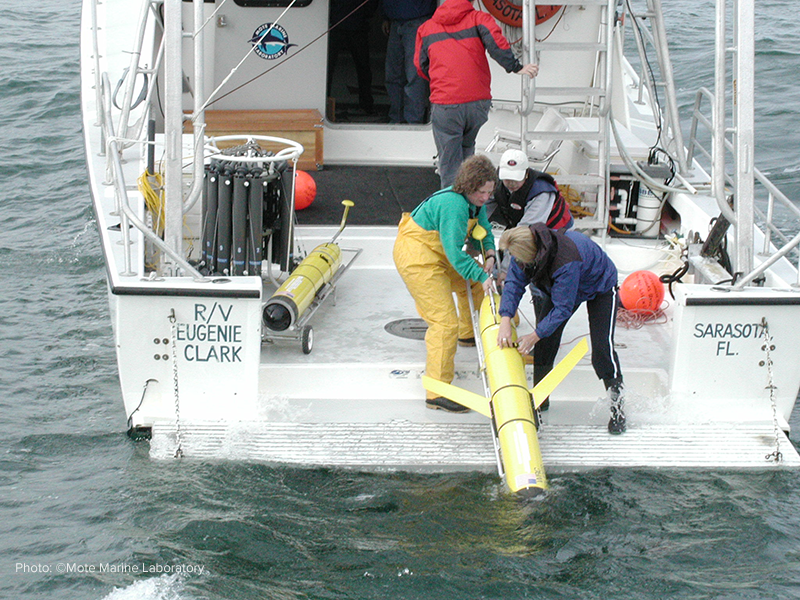
| | Mote Marine Laboratory staff launch a glider from the R/V Genie Clark in the early 2000s. | | |
The concept of the Slocum glider was proposed in 1989 — around the same time the Global Ocean Observing System was ramping up. Open water testing took place in the late 1990s at the Long-term Ecosystem Observatory (LEO-15) off the coast of New Jersey. By 2003, Webb Slocum electric gliders were starting to be widely deployed.
GCOOS recognized early on the value of these mobile platforms and the sensors they can carry and articulated mission priorities in the first Build Out Plan. These included:
- Testing the ability of gliders to detect hypoxic conditions, especially at depth;
- Using to measure heat flux for hurricane/storm intensity forecasts; and
- Filling data gaps in numerical models, especially SST, to get at Loop Current position, associated eddies/cyclones, and thermocline depth and extent.
Back then, GCOOS investigators were also starting to explore applications related to HAB detection and tracking acoustically-tagged marine life. By 2012, GCOOS had it’s first Gulf Glider Task Team charged with providing a forum for scientists, manufacturers and others interested in developing a community of practice as part of the Gulf component of IOOS. The team and their affiliations at the time included David Driver, BP; Stephan Howden, University of Southern Mississippi; Gary Kirkpatrick, Mote Marine Laboratory; Sherwin Ladner, Naval Research Lab; Chad Lembke, University of South Florida; Nancy Rabalais, Louisiana Universities Marine Consortium; Nick Shay, University of Miami; Ray Toll, Coastal Services Center; Rodney Riley and Lex LeBlanc, National Data Buoy Center; and Texas A&M University's Steve DiMarco, Matt Howard and Ruth Perry.
These pioneers developed conceptual plans for Gulf glider operations and infrastructure using an integrated approach to resources and personnel, developed protocols for data sharing and visualization, and participated in national glider plan development. Fast forward to 2025 and the group, now called the Underwater Glider User Group (UG2), continues building on this foundation and GANDALF, the GCOOS glider piloting dashboard, remains among the most widely used GCOOS products. In addition to Slocum gliders, the dashboard now serves data from other autonomous vehicles, including Saildrones, Seagliders and ARGO floats.
| | |
About the History Spotlight
This year, GCOOS is celebrating its 20th Anniversary. Throughout the year, we’ll be highlighting historic data and activities from the Gulf’s ocean observing community in our enewsletter, on our website and through social media. Have a slice of Gulf data history that you’d like to share? Please email Nadine Slimak at Nadine@VettedCommunications.com with details — there might even be prizes!
| | Automating Data Processes for GIS Users | | |
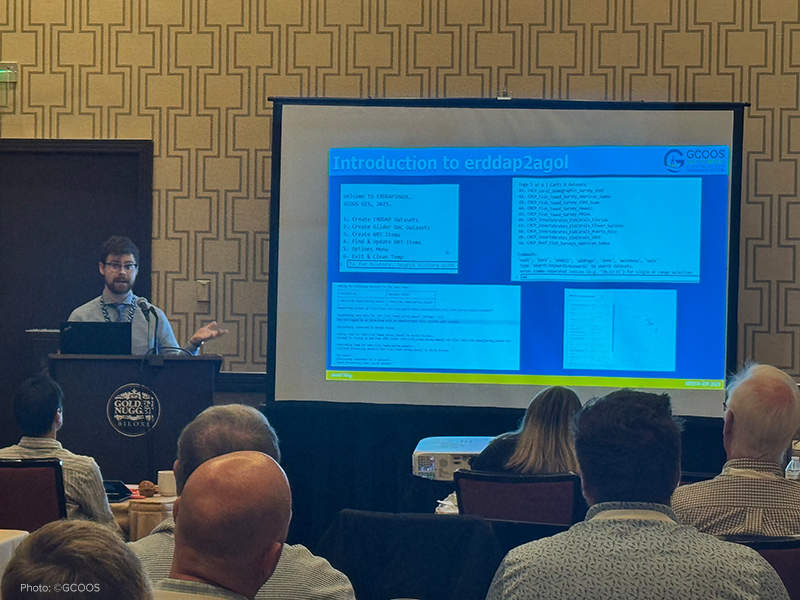
During the 2025 Gulf of America Alliance All-Hands Meeting in Biloxi, GCOOS GIS Manager Jerad King gave a presentation on the tools that GCOOS has developed to automate and scale the GCOOS GIS.
The process of adding ERDDAP data to ArcGIS Online has been automated with the open-source Python package, erddap2agol. Recent improvements include the addition of an options menu that offers users greater control over the program’s processes and outputs.
-
Users can explore the latest version of erddap2agol at https://github.com/GCOOS/gis_autoadmin.
- Additionally, to enhance internal and external collaborative ArcGIS processes, GCOOS has developed the Python package “GIS AutoAdmin.”
-
This program is now available at https://github.com/GCOOS/gis_autoadmin and may be freely used by any ArcGIS Organization that seeks to automate the process of bringing in-development data services to production.
-
View King’s presentation slides here
| | Hurricane Awareness Webinars | | |
The NOAA Southeast and Caribbean Regional Collaboration Team (SECART) has been sponsoring a series of hurricane awareness webinars for the 2025 season. The remaining webinars in the series are:
The Social Value of Forecasting Hurricanes, 10 a.m. EST Wednesday, May 21. Improvements since the Hurricane Forecast Improvement Project in 2007 have reduced hurricane-related damages total costs by 19%, averaging $2 billion per hurricane. These benefits far exceed the annual budget of the policy, as well as for all federal weather forecasting. Speaker Dr. Renato Molina is an engineer and economist specializing in environmental and resource economics.
Guidelines and Strategies for Effective Risk Communication, 1 p.m. EST Wednesday, May 28. Speakers will outline guidelines to maximize
communication effectiveness: use simple clear messages, and repeat them often through a variety of trusted sources. The webinar will also introduce a framework for analyzing and designing risk communication that meets audiences where they are. Speakers are Dr. Margaret Orr Hoeflich, an S2S Program Coordinator with the Weather Program Office in NOAA, and Dr. Ian Weaver, Associate Professor of technical communication, Department of English, at the University of North Carolina Wilmington.
| | Monitoring Hurricane Evolution with Mobile Measurements | | |
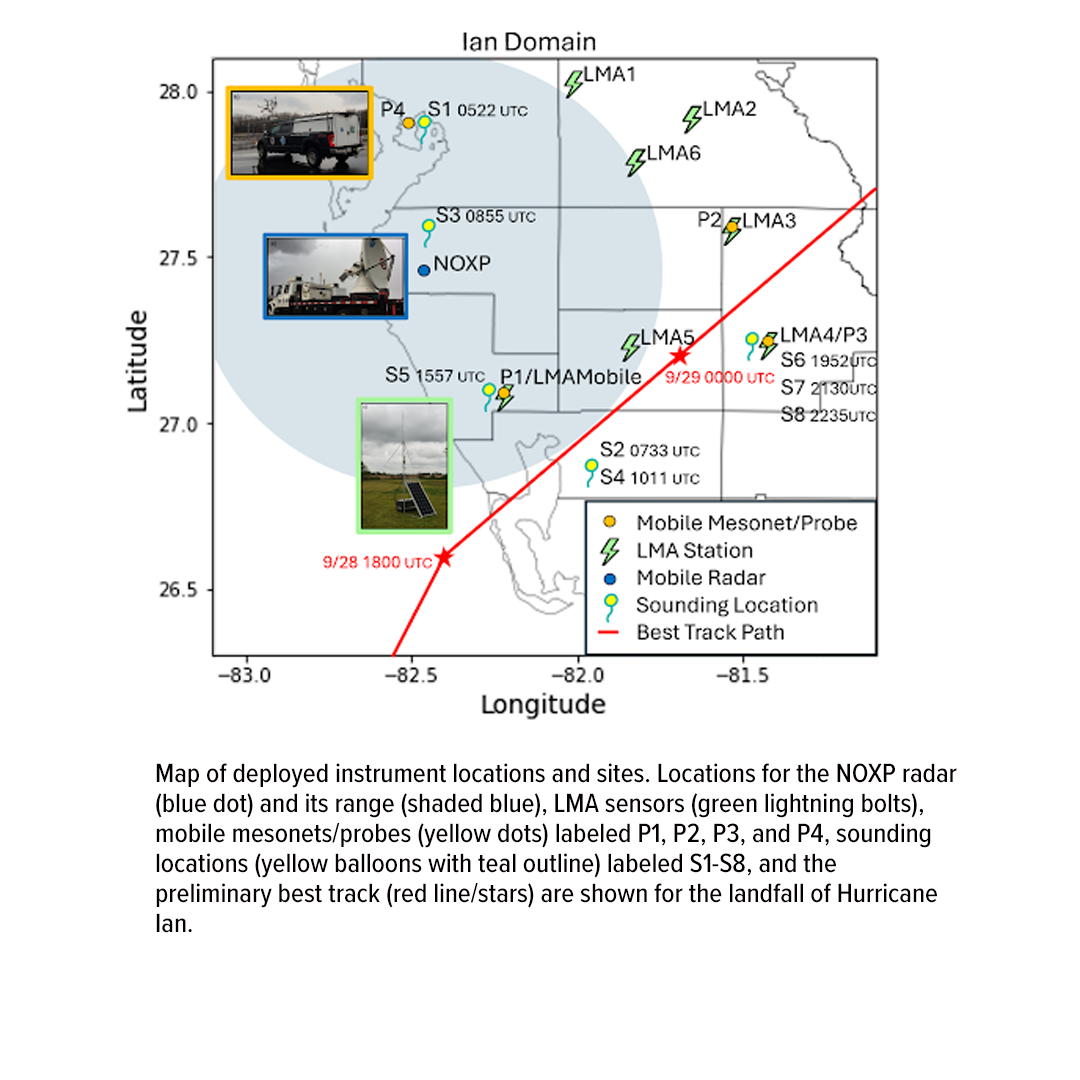
A new paper on data collection during Hurricane Ian authored by the NOAA National Severe Storms Laboratory (NSSL) and the Cooperative Institute for Severe and High-Impact Weather Research and Operations (CIWRO) shows how a targeted network of mobile measurements provide unique insight into the electrical and precipitation structure of a hurricane surrounding landfall.
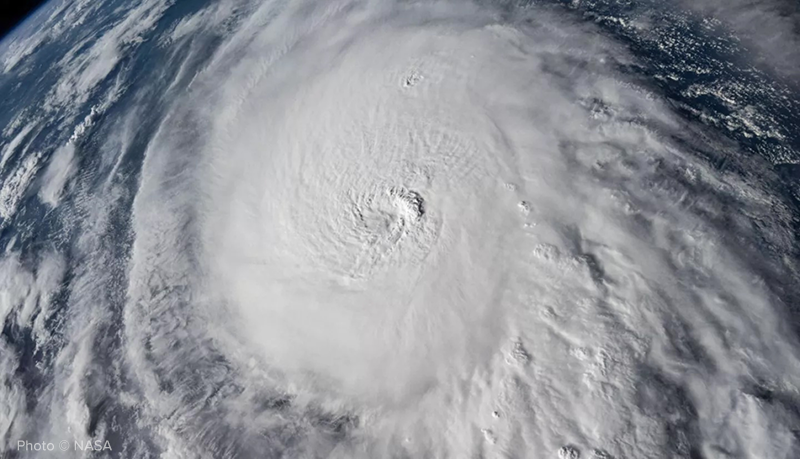
The mobile measurements used to monitor 2022’s Hurricane Ian included mobile radar, mesonets and soundings, with the addition of a mobile Lightning Mapping Array (LMA) network to map 3-D structure and propagation of lightning inside hurricanes. This is the first use of targeted mobile LMA measurements taken during a hurricane and is helping to monitor hurricane evolution in a new way. The system sampled was Hurricane Ian, a Category 5 hurricane that caused devastating damage and loss of life across several states.
A more in-depth understanding of the environment and electrification of Ian could help in future representation and prediction of hurricane hazards surrounding landfall.
-
Citation: Ringhausen, J., A. Alford, N. Brauer, K. Calhoun, V. Chmielewski, and S. Waugh, 2025: Measurements from Inside Hurricane Ian using a Mobile Instrumentation Network. Bull. Amer. Meteor. Soc., https://doi.org/10.1175/BAMS-D-23-0319.1, in press.
| | Deepwater Horizon: 15 Years Later | | |
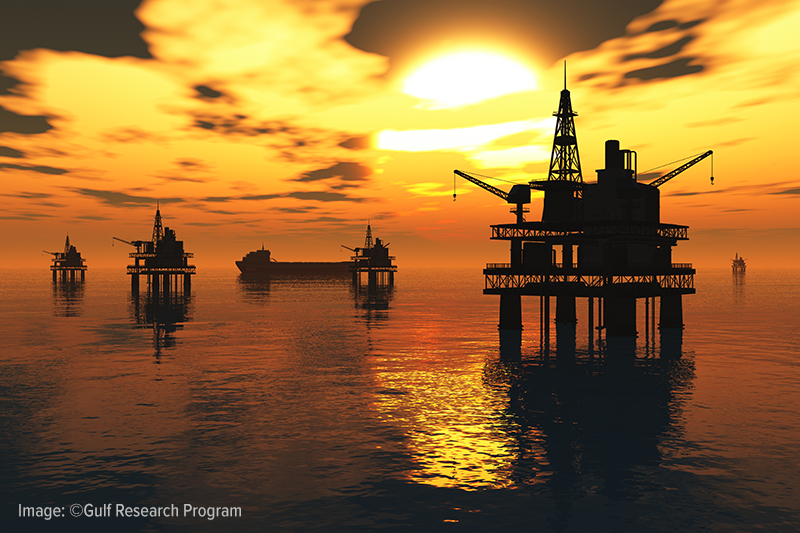
In the aftermath of the Deepwater Horizon blowout and resulting oil spill, $500 million in criminal penalties were set aside in an endowment at the National Academy of Sciences for the Gulf Research Program to “carry out studies, projects, and other activities” focused on offshore energy production, human health and environmental protection in the Gulf region and along the U.S. Outer Continental Shelf. It’s been 15 years, is the offshore energy industry any safer? Gulf Research Program Executive Director Lauren Alexander Augustine explores the topic in “Offshore Energy in the Gulf 15 Years after Deepwater Horizon.”
| | Updated “State of the Science” for HABs | | |
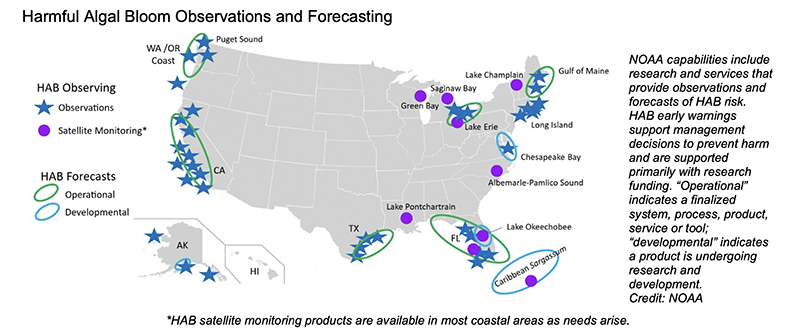
Economic impacts from are multi-faceted, including increased public health expenditures, decreased profit from recreation and tourism, commercial and recreational fisheries losses, and increased costs for HAB monitoring and management. The 2015 West Coast Pseudonitzschia HAB resulted in $97.5 million in lost Dungeness crab landing revenue. Tourism-related businesses experienced an estimated $2.7 billion loss associated with the 2018 Karenia brevis HAB in Florida.
NOAA has released a new State of the Science Fact Sheet focused on harmful algal blooms (HABs), which provides an overview of the socioeconomic impacts and a snapshot of the research, monitoring and response programs.
| | HAB Identification Course | | |
The Bigelow Laboratory is offering training in marine harmful algae identification through the Karen A. Steidinger Marine Harmful Algae Taxonomy Course, which provides expert training and a certificate of proficiency in harmful algae identification using light microscopy and provides familiarity with alternate identification technologies. The course aims to meet an increasing need for comprehensive training for U.S. harmful algae managers, scientists and technicians.
- When: Aug. 10-22 (inclusive of travel days)
- Deadline: Apply by June 1
- Where: Bigelow Laboratory for Ocean Sciences Research and Education campus in East Boothbay, Maine
- Cost: $3,750 (covers course material, housing and meals, but not travel)
-
Click here for details & registration guidance
-
Questions: Email CAI-education@bigelow.org; call (207) 315-2567 ext. 1.
| | April Sargassum Sets New Record | | |
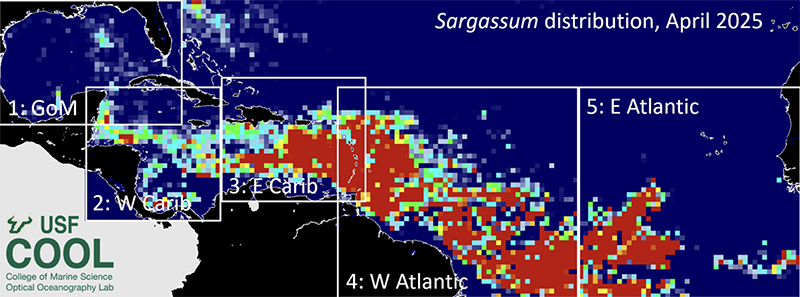
In April 2025, the total Sargassum amount set a new record exceeding the all-time high in June 2022. Since 2011, large amounts of Sargassum seaweed appeared in the Caribbean Sea every summer except 2013, creating many environmental, ecological and economic problems in many regions. The seaweed originated from the tropical Atlantic, and is believed to be a result of climate variability and other natural and unnatural processes. Based on satellite observations and statistics of historical events, in early February 2018 the University of South Florida’s (USF) Optical Oceanography Lab developed the first one-page Sargassum outlook bulletin for the Caribbean Sea. Since then, the bulletins have been generated and distributed to subscribers by the last day of the month.
The latest bulletin documents record-setting Saragassum in the eastern Caribbean Sea and west Atlantic that were 200% higher than their historical records, with May expected to see continued increases in most regions.
| | |
Healthy Ecosystems & Living Resources
| | New Technologies Support Vital Data Collection in the Gulf | | |
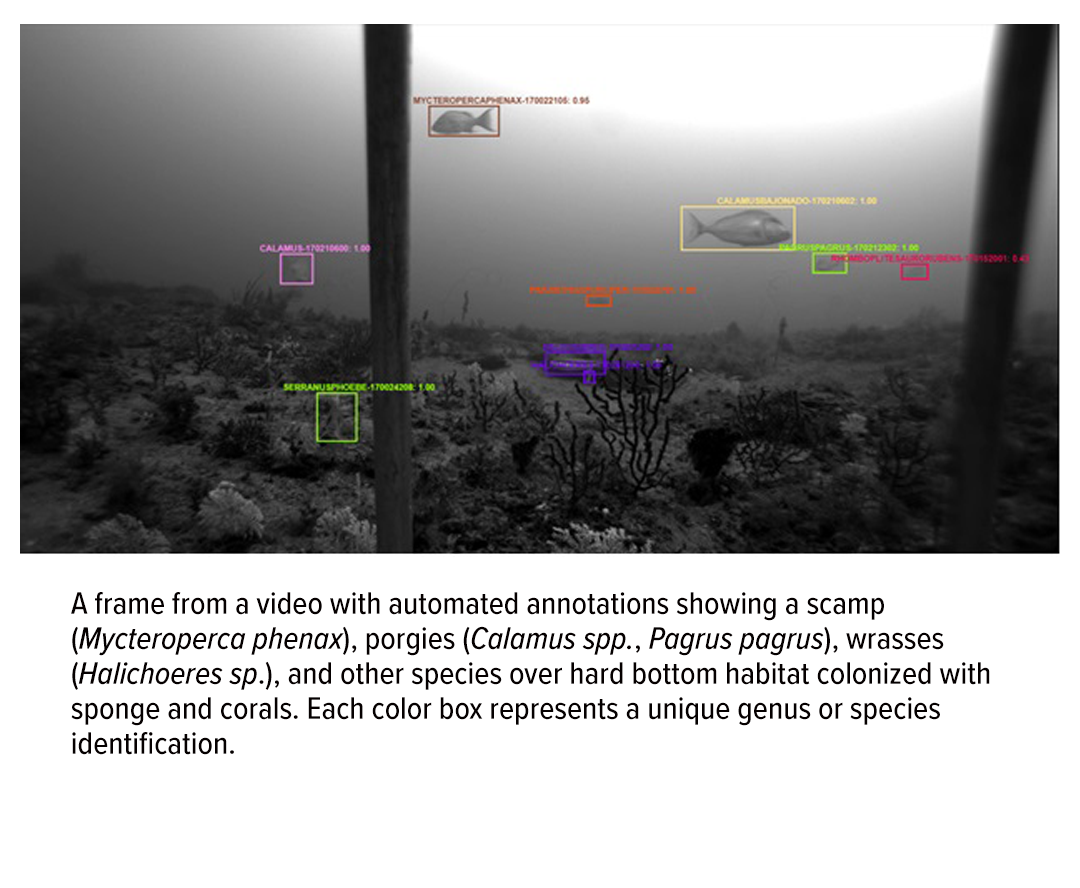
The NOAA RESTORE Science Program is leveraging cutting-edge technologies and collaboration to deepen understanding of the Gulf of America’s complex ecosystem, providing vital data to natural resource managers. Across a diverse portfolio of projects funded by the Science Program, project teams are using artificial intelligence, genetic tools, submersibles, drones, and satellite tags to monitor marine life and habitats, enhancing resource management and restoration in the region.
| | Next UG2 Webinar Features Early-Career Spotlight | |
The next webinar in the Underwater Glider User Group (UG2) series will be an early career science spotlight to highlight the glider-related research being conducted by early career glider users around the country.
- When: 2-3:30 p.m. ET Thursday, May 29
-
Webinar link
| | USF Podcast Features GCOOS PI | | |
Underwater gliders are helping transform ocean science. From hurricane forecasting to whale migration, find out how these robust research machines provide important data about oceans and marine life during The Rising Tides podcast featuring special guest Chad Lembke, assistant research professor and project engineer at the USF College of Marine Science and GCOOS PI on the project “Maritime Transportation, Satellite Earth Observations, and Glider Deployments for the GCOOS-RA.”
- Click here to listen now
- Interested in Gulf gliders and what they’re monitoring? Click here to visit the GCOOS-developed autonomous vehicle dashboard GANDALF to view current deployments and the data operators are gathering
| | Monitoring Sea Bed Changes | | |
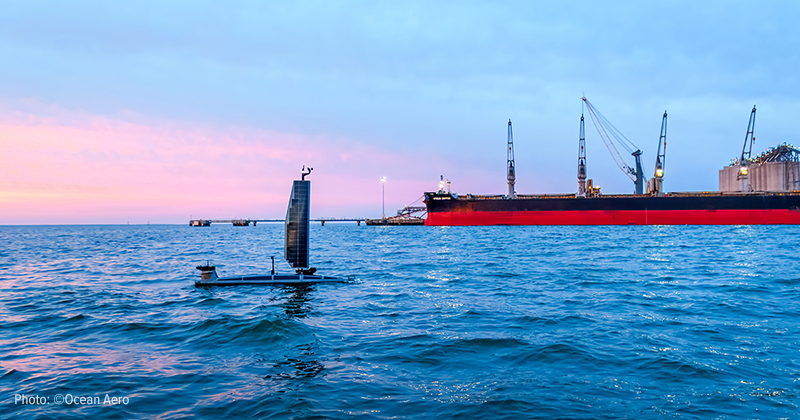
From ECO Magazine: The Port of Gulfport is implementing continuous autonomous subsea surveillance using Ocean Aero’s Triton AUSV to run ongoing scans using a variety of subsea payloads, including bathymetry, side-scan sonar, and magnetometers to produce high-resolution comparative datasets for real-time change detection. The initiative is designed to detect irregularities in both port traffic and infrastructure.
| | Comments Sought: Oil and Gas Leasing Program | | |
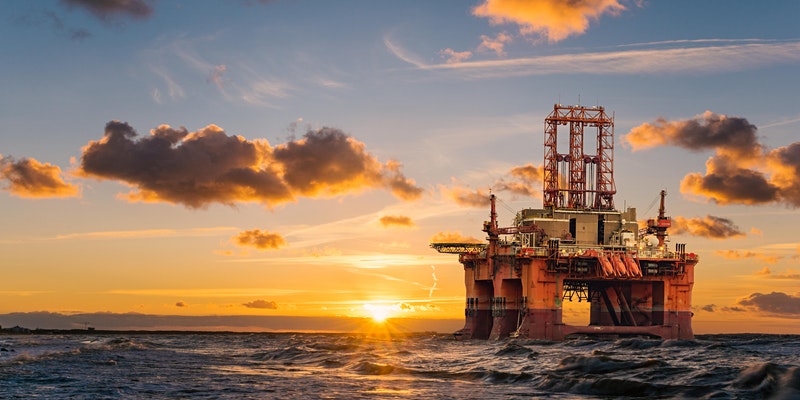
The Bureau of Ocean Energy Management (BOEM) has opened a Request for Information and Comments on the preparation of the 11th National OCS Oil and Gas Leasing Program, initiating a 45-day public comment period in the multi-year planning process.
BOEM’s jurisdiction on the OCS has recently changed with a new planning area offshore Alaska — the High Arctic —being established as the 27th OCS planning area. Additionally, boundaries of other existing planning areas are being updated to align with BOEM’s revised jurisdiction.
As mandated by the Outer Continental Shelf Lands Act, the Department of the Interior must solicit input from interested and affected parties during development of the National OCS Program. Consistent with prior efforts, BOEM will request information on all OCS planning areas at this initial stage. Once finalized, the 11th National OCS Program will replace the current 10th Program (2024–2029)
- Deadline: The comment period ends June 16
-
Comment here
| |
|
Flower Garden Banks National Marine Sanctuary (FGBNMS)
Documentary Features FGBNMS and Moody Gardens
| |
“Garden in the Gulf: A Reef Rescue Mission” by Houston-based KPRC-TV featured the station’s Chief Meteorologist Anthony Yanez as he joined teams from Moody Gardens, the Sanctuary and NOAA on an underwater journey into the vibrant Flower Garden Banks National Marine Sanctuary — just 100 miles off the Galveston coast.
| | |
Sanibel-Captiva Conservation Foundation (SCCF)
Documentary to feature SCCF During Fort Myers Film Festival
| | |
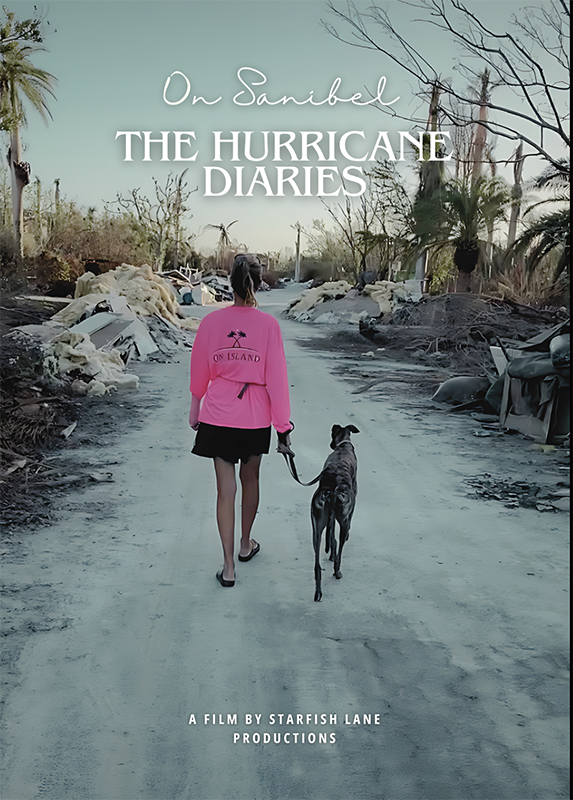
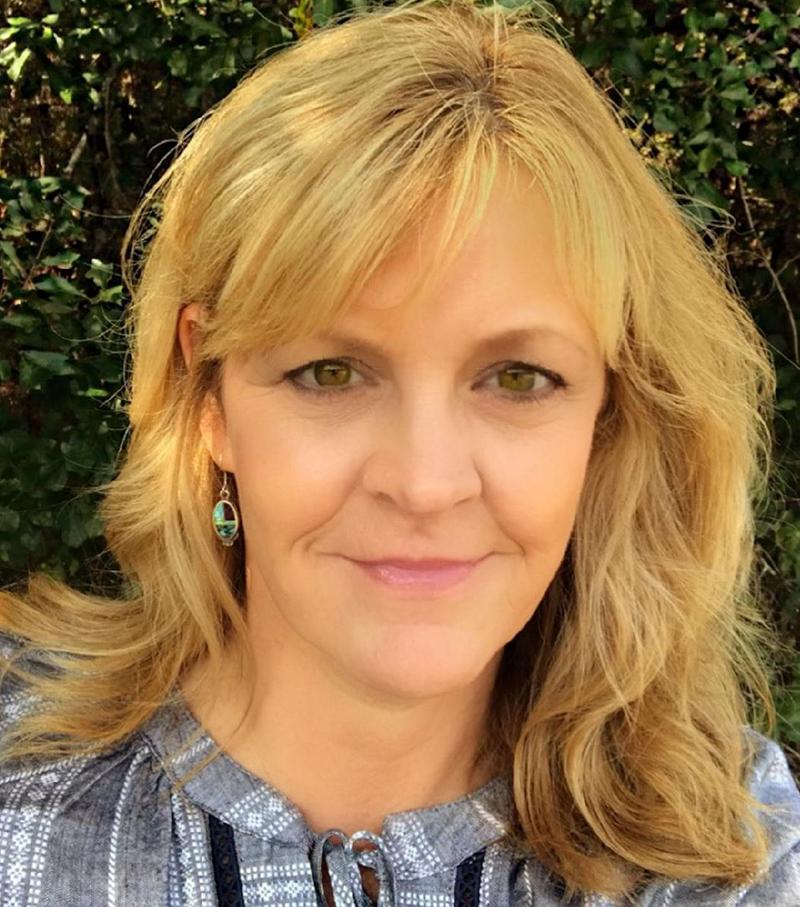
“On Sanibel: The Hurricane Diaries,” a documentary that highlights SCCF’s conservation efforts after Hurricane Ian and captures the Sanibel community's resilience, premieres this month at the Fort Myers Film Festival. Directed and produced by Sanibel resident and former SCCF Trustee Laura DeBruce, the film features dramatic, first-hand footage from islanders who stayed during the Category 4 storm in 2022, which severed the Sanibel Causeway and left the island devastated. The film also examines the hurricane’s impact on the island’s ecosystems and wildlife.
| | |
Texas Sea Grant
New Associate Director of Extension
| | |
Christine Hale has joined Texas Sea Grant as the new Associate Director of Extension, who will oversee and grow the extension, education and engagement portfolio of the Texas Sea Grant College Program. In collaboration with the Director and extension staff, as well as in consultation with stakeholders and in response to community needs, Hale will set the strategic vision and long-term implementation and evaluation plan for Texas Sea Grant extension initiatives, advancing integration of research with extension and promote community-engaged programs that align with the Sea Grant mission to improve the understanding, wise use and stewardship of coastal and marine resources. Hale joins Sea Grant from the Harte Research Institute where she led the research endeavors of the Community Resilience and Socio-Economics Groups.
| | |
Office of Science and Technology Policy (OSTP)
Updating AI R&D Plans
| |
The OSTP and the Networking and Information Technology Research and Development (NITRD) National Coordination Office (NCO) is seeking public input on how the National Artificial Intelligence Research and Development Strategic Plan (2023 Update) can be “rewritten so that the United States can secure its position as the unrivaled world leader in artificial intelligence by performing R&D to accelerate AI-driven innovation, enhance U.S. economic and national security, promote human flourishing, and maintain the United States' dominance in AI while focusing on the Federal government's unique role in AI research and development (R&D) over the next 3 to 5 years.”
| |
-
Hello.gov - Sr. Cloud and Data Engineer
-
National Academies of Science, Engineering and Medicine; Gulf Research Program: Program Officer - Environmental Protection and Stewardship Board
-
University of Miami: Assistant Professor in Physical Oceanography
- Mote Marine Laboratory
-
University of Louisiana at Lafayette – Research Associate; Water Quality Monitoring
Postdoctoral Positions:
-
Monterey Bay Aquarium Research Institute: Postdoctoral Fellowship
-
National Research Council: Research Associateship Programs Postdoctoral and Senior Research Awards
-
Mississippi State University: Postdoctoral Associate
-
Downeast Institute: Research Scientist
Fellowships:
-
National Academies of Science, Engineering and Mathematics: Early Career Fellowships
- Department of Defense: Visualization of Coastal Data, Coastal Vulnerability Assessment Fellow
| | |
-
National Academies of Sciences, Engineering and Medicine, Gulf Research Program: Environmental Literacy for Community Resilience
-
National Academies of Sciences, Engineering and Medicine, Gulf Research Program: Empowering K-8 Through Place Based Education
-
Gulf of Mexico Alliance: Increasing Participation in Clean and Resiient Marine Programs
-
Seagrant: Addressing Priority Research, Extenision and Education Needs
-
The National Academies of Sciences, Engineering, and Medicine: Early Career Research Fellowship
| | 3-5: Gulf Resilience Community of Practice Annual Meeting, Houma, Louisiana, contact Tracie Sempier at tracie.sempier@usm.edu for more details | | 29 June - 3 July: NMAE 2025, Lafayette, Louisiana | | 18-20: UG2 Underwater Glider User Group, St. Petersburg, Florida, Details coming soon. | | GCOOS is the Gulf of America regional component of the U.S. Integrated Ocean Observing System (IOOS) and the only certified system dedicated solely to the Gulf. Our mission is to provide on-demand information about the Gulf’s coastal and open ocean waters that is accurate, reliable and benefits people, ecosystems and the economy. https://ror.org/024q01f72 | | Dr. Jorge Brenner, Executive Director • Marcus Ogle, Associate Director • Dr. Uchenna Nwankwo, Oceanographer • Dr. Chris Simoniello, Outreach & Education Manager • Dr. Renata Poulton Kamakura, Science Policy Fellow • Felimon Gayanilo, Systems Architect, Co-Data Manager • Bob Currier, Product Developer, Co-Data Manager • Tuomo Saari, Scientific Computing Specialist • Xiao Qi, Scientific Computing Specialist • Megan Howson, Marine Mammal Biologist and Data Scientist • Jerad King, GIS Developer • Sandeep Jilla, Software Developer • Siobhan Kassem, Interim GCAN Coordinator • Grant Craig, Project Manager and HABscope Volunteer Coordinator • Nadine Slimak, Public Relations & Content Marketing, Vetted Communications, LLC • Laura Caldwell, Program Assistant | | | | |