|
Greetings!
We’re wrapping up 2025 on a high note after this year’s GCOOS Outreach and Education Council
meeting in Alabama. The two-day meeting included discussions of marine heatwave activities and a new rip current merit badge for Girl Scouts that the council is developing. We also learned of opportunities to help engage students and the public in ocean science and heard updates from our council members on the activities taking place at their organizations (see a summary of the meeting below). The meeting was a great opportunity to engage with the Gulf’s education and outreach sector and the productive discussions will help guide our activities in 2026.
We’re also working to finalize our annual report (we’ll share it via email soon!) — the year was a productive one and I want to thank you all for your participation in and support of GCOOS. As an umbrella organization for coastal and ocean observing systems throughout the Gulf region, GCOOS relies on your partnership to strengthen and improve access to vital and life-saving data and we can’t thank you enough for your partnerships!
No doubt we’ve faced some challenges in 2025, but we continue to work with the IOOS Association, U.S. Rep. Mike Ezell and others in Congress to ensure that IOOS is reauthorized and that our nation’s ocean and coastal observing capabilities continue unabated. We’re readying our proposal for the next IOOS funding cycle and will be ready to submit when the official notice of federal funding opportunity has been released.
As we head full on into the holiday season, we at GCOOS are wishing you all the best for a productive and happy New Year!
Until next month,
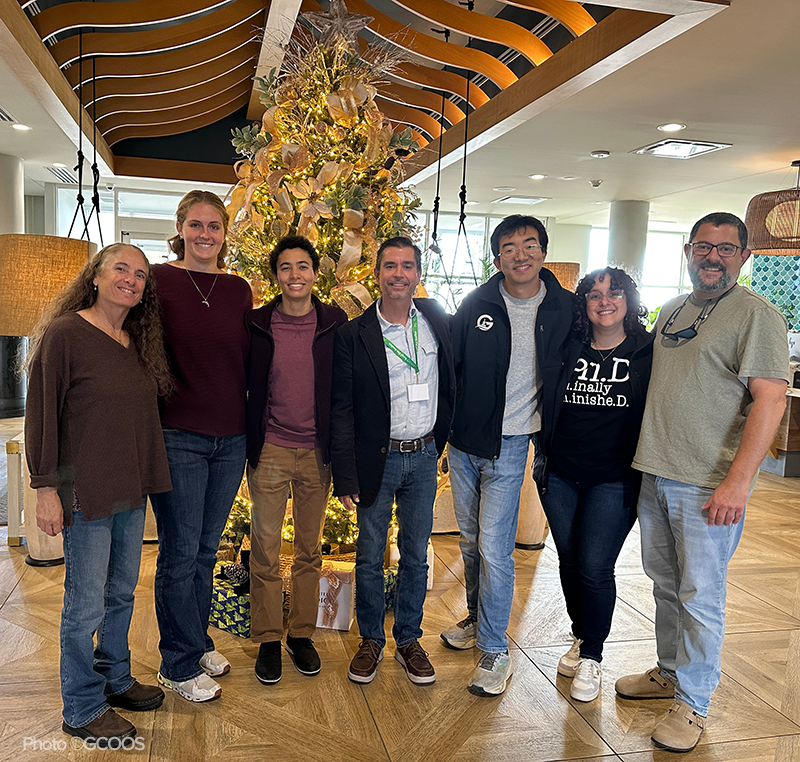
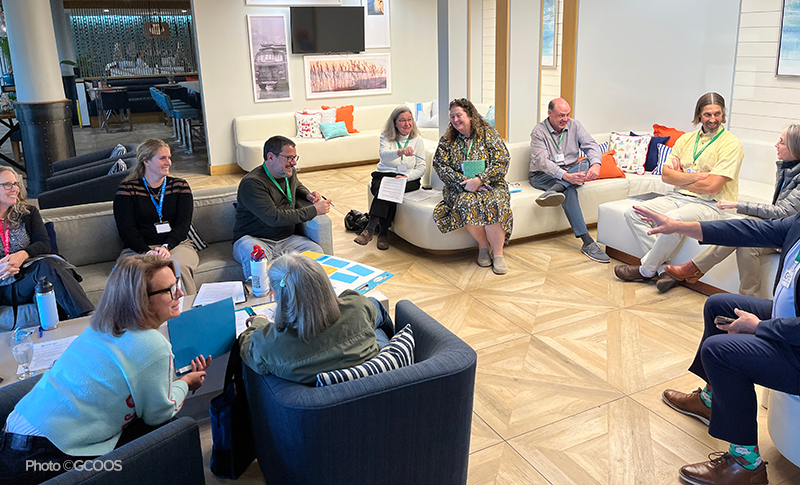
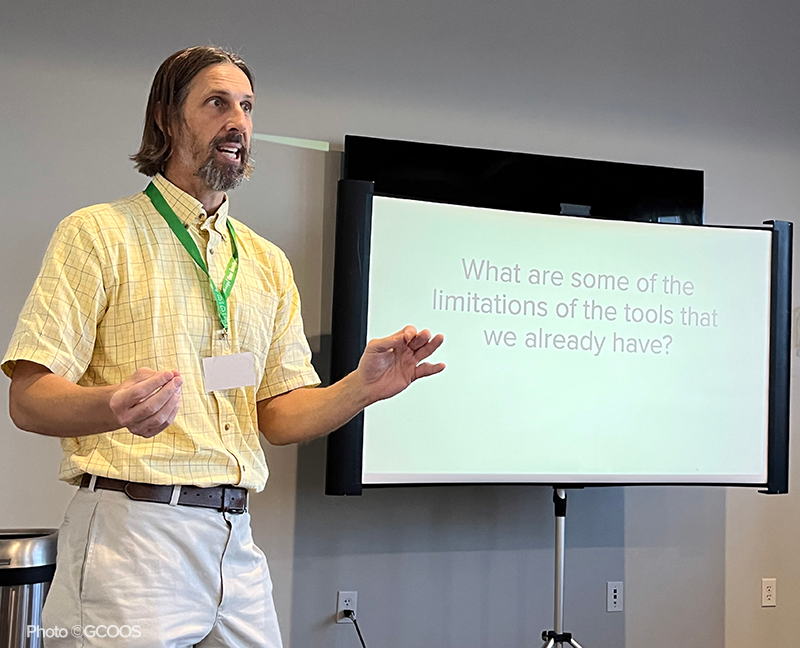
| | GCOOS at the OEC meeting, from left to right: Dr. Chris Simoniello, Outreach and Education Manager; Megan Howson, Marine Mammal Biologist and Data Scientist; Dr. Ren Kamakura, former GCOOS Gulf Science Policy Fellow and GCAN Coordinator; Dr. Jorge Brenner, Executive Director; Xiao Qi, Scientific Computing Specialist; Dr. Natalia López Figueroa, Gulf Science Policy Fellow and GCAN Coordinator; and Grant Craig, Project Manager. | | GCOOS OEC Meeting Wraps Up | | Breakout session during the OEC meeting (above). Dr. Brian Dzwonkowski (below) discusses marine heatwaves. | | |
GCOOS hosted its Outreach and Education Council (OEC) meeting Dec. 11-12 in Orange Beach, Alabama, where we spent time identifying implementation priorities for GCOOS outreach and education efforts. We hosted two panels on the meeting’s first day:
- Panel I focused on Marine Heatwave activities and included panelists Dr. Jorge Brenner, Dr. Brian Dzwonkowski, Xiao Qi, Dev Rao and Dr. Ren Kamakura.
- Panel II focused on development of a rip current-themed merit badge for Girl Scouts of the USA and Scouting America and included Dr. Dzwonkowski, Jonathan Howell, Carol Lutken, Tom Lutken, Allison Marlow and Karlyn Edmonds. Badge content development was motivated by the 146 fatalities caused by rip currents along the Gulf Coast over the past 30 years — that’s more than the combined number of deaths from floods, tornadoes, tropical storms and lightning over the same time period. Jonathan Howell with the National Weather Service office in Mobile, Alabama (NWS Mobile), presented on local rip current forecasting, modeling and public safety outreach. He highlighted how NWS Mobile provides publicly available rip current predictions and warnings along the Alabama and western Florida Panhandle coastlines to reduce rip current fatalities. Jonathan also explained how additional wave data from GCOOS-funded buoys recently deployed within NWS Mobile's coastal forecast area has enhanced rip current predictions, modeling validation and warning efforts.
During the meeting’s second day, Dr. Rusty Low, Deputy Director for Science at the Institute for Global Environmental Strategies, presented opportunities for participatory science. The team learned about the NASA Response Mappers project, Global Observations to Benefit the Environment (GLOBE) protocols , Firewise activities using PurpleAir sensors to monitor smoke and air quality, and water quality monitoring opportunities through GaiaXus.
The meeting concluded with OEC members and invited guests sharing updates from their respective organizations to identify areas of collaboration to continue building synergy across Gulf education programs. “I am so grateful for the vision and leadership the council provides in championing initiatives that provide exemplary environmental education opportunities,” said GCOOS Outreach and Education Manger Dr. Chris Simoniello. “It is thanks to this collective effort that the next generation is being inspired to make informed and responsible decisions regarding natural resources of the Gulf.”
| | Earlier this month, GCAN hosted a webinar with Dr. José Gilberto Cardoso Mohedano, Investigador Titular A, Laboratorio de Modelado Ecológico and Estación del Carmen-ICML, UNAM, focused on “Hidden Carbon Sources: How Karst Geology Drives Extreme COz Variability in Mexico's Largest Coastal Lagoon.” The webinar is now available on the GCOOS YouTube channel for those who were unable to attend. Click the image to watch now. | | |
Abstract: Karstic groundwater flowing through the limestone-rich Yucatán Peninsula delivers large amounts of dissolved carbon to Términos Lagoon, the largest tropical estuarine-lagoon system in the southern Gulf of Mexico. Measurements along river-to-coast transects during dry and rainy seasons revealed strong seasonal shifts: alkalinity and dissolved inorganic carbon were highest in the dry season, while CO₂ levels nearly doubled and pH dropped during the rainy season.
The Palizada River became an extreme CO₂ hotspot during the rainy season, reaching 4,000–8,000 µatm — far above typical river values and up to four times higher than the Mississippi-Atchafalaya system. These findings show that karst groundwater discharge and organic matter oxidation make the Yucatán Peninsula a major CO₂ source with important implications for Gulf carbon budgets and coastal acidification monitoring.
| January Webinar: Ocean Acidification Day of Action | |
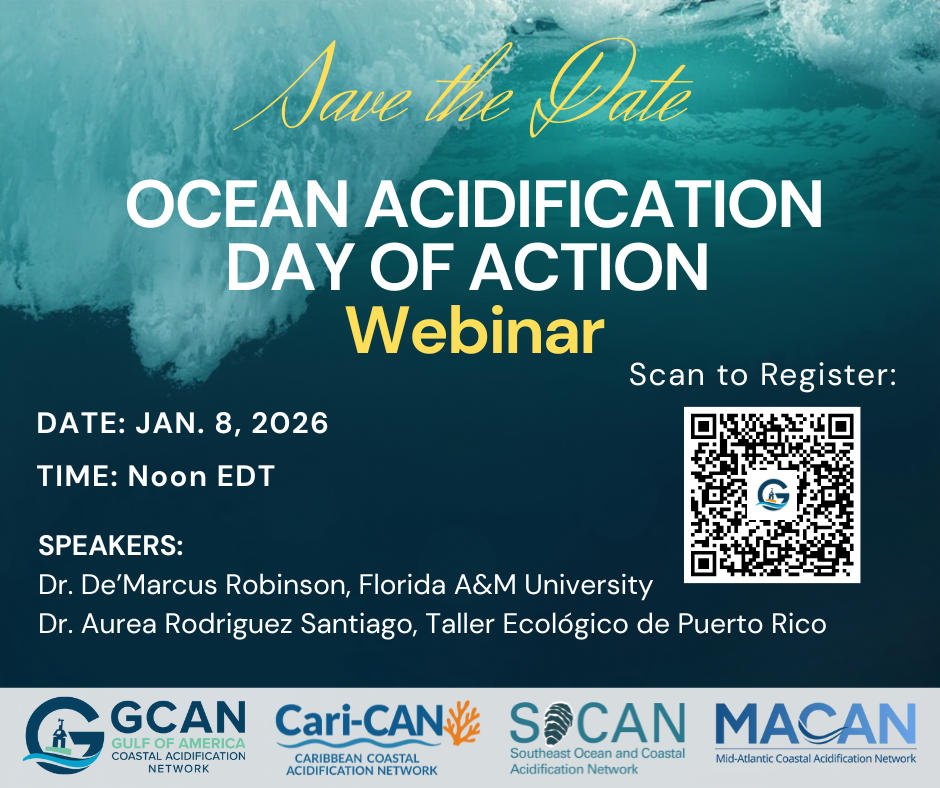
The Coastal Acidification Networks (CANs) of the Mid-Atlantic, Gulf of America, Southeast and Caribbean are pleased to host a webinar in recognition of the Ocean Acidification Day of Action on Jan. 8.
Dr. Aurea Rodríguez Santiago, Founder and Director, Taller Ecológico de Puerto Rico, and Dr. De’Marcus Robinson, Postdoctoral Fellow, Florida A&M University, and the CAN coordinators will deliver presentations highlighting their work and the actions they are taking to better understand and address the impacts of ocean acidification (OA). The webinar will conclude with a public panel discussion and Q&A, creating space for dialogue on research, community engagement and collaborative actions to advance ocean acidification awareness and solutions.
This webinar is open to researchers, managers, educators, students and community members interested in learning more about OA and pathways for action.
The OA Day of Action was established by the NOAA Ocean Acidification Program (OAP) to raise awareness about OA and the significance of the global average seawater pH of 8.1. While seawater remains alkaline, the decline from approximately 8.2 over the past 250 years reflects a 26% increase in acidity, driven largely by increased atmospheric carbon dioxide. Now recognized as an international event, the OA Day of Action highlights ongoing efforts to understand, mitigate and adapt to OA impacts on marine ecosystems and coastal communities and economies. Click here for more.
- What: OA Day of Action Webinar
- When: Noon-1:30 p.m. ET Thursday, Jan. 8
-
Register here
| | Save the Date: Code Sprint 2026 | |
GCOOS is pleased to be co-hosting the 2026 IOOS Data Management and Cyberinfrastructure (DMAC) code sprint, so please be sure to save the date: Nov. 3-5, 2026 in Corpus Christi, Texas. We’re co-hosting at Texas A&M University in partnership with the Harte Research Institute. We’ll share updates here as registration and planning get under way.
| |
The Stokes School of Marine and Environmental Sciences at the University of South Alabama and Dauphin Island Sea Lab deployed a new AWAC — A WAve And Current profiler — at Middle Bay Light Station in the Alabama Real-time Coastal Observing System (ARCOS). The AWAC, located next to the shipping channel, will collect real-date data to improve marine safety.
The AWAC, housed inside the trawl-resistant yellow circular dome was deployed off the RV E.O. Wilson to sit on the seafloor. The AWAC “looks” upward, emitting sound from transducers; from the doppler shift in the backscattered sound it can gather data on surface waves and currents. The instrument will collect surface wave and water current velocities at several depths, with the data displayed on the ARCOS webpage and pushed out to GCOOS and the National Data Buoy Center (NDBC) to provide real-date information for Mobile Bar Pilots, charter captains, commercial fishers and others navigating the area.
|
| Protecting Species Diversity | | |
The loss of biodiversity is critical with alarming declines in wildlife populations and suitable habitat and increasing threats from climate change. But there is hope as the global community works to protect terrestrial and aquatic resources.
MBON activities support the United Nations 2030 Agenda for Sustainable Development, adopted in 2015, with scientists, technicians, managers and stakeholders working to understand and protect the birth-to-death connections within and across species. These connections support the fundamental ecosystem services needed for human survival and quality of life.
Need clean air? Thank phytoplankton for more than half the oxygen on Earth. Hungry for a protein-loaded meal? Seafood accounts for more than 50% of animal protein in some nations. Afflicted with a disease or severe pain? Drugs derived from sponges, snails and tunicates may save your life.
Advances in observing techniques like NASA’s PACE satellite that let researchers see centimeter-sized plankton from 420 miles above Earth, and eDNA that is used to identify organisms from a few drops of water when they aren’t physically observed, are expanding the space and time over which marine life can be monitored.
| | Hurricane Season by the Numbers | | |
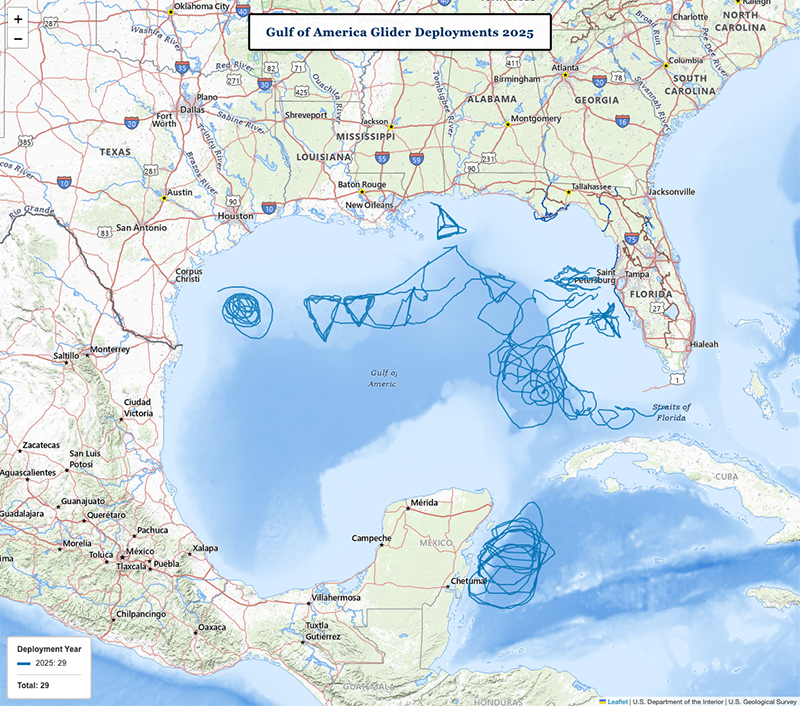
For the first time in 10 years, there was no U.S. landfalling hurricane thanks to a persistent upper-level trough over the eastern U.S. that pushed the jet stream south, helping to curve storms parallel to the East Coast and then out to sea. The season included three category five storms. Four gliders were actually in the forecast zone of one of them: Hurricane Erin, which intensified from a tropical storm to a category five storm in just 24 hours.
This year, GCOOS orchestrated 39 autonomous underwater vehicle deployments across the Gulf of America, Caribbean and Atlantic coastal waters during missions that accumulated 2,324 days at sea — that’s more than six years of continuous ocean observation compressed into a single calendar year! The average deployment was 62 days and deployments supported 21 research projects, with a particular focus on hurricane related prediction and monitoring.
The Gulf of America AUV Network, Data Archive and Layer Fusing (GANDALF) operated by GCOOS provides mission planning, real-time piloting, and data management services for autonomous underwater vehicle operations. GANDALF services, provided at no cost to operators, are particularly valuable to institutions with limited IT support resources.
2025 showcased unprecedented collaboration among 11 leading oceanographic institutions, including the Atlantic Oceanographic and Meteorological Laboratory (NOAA/AOML), Centro de Investigación Científica y de Educación Superior de Ensenada (CICESE-Mexico), University of South Florida, Texas A&M University, Mote Marine Laboratory, Skidaway Institute of Oceanography, the U.S. Navy, Rutgers University, and the Caribbean Coastal Ocean Observing System (CARACOOS).
“Deployments represent the democratization of ocean observation technology,” says GCOOS Product Developer Bob Currier, who created the GCOOS piloting portal, GANDALF (Gulf of America AUV Network, Data Archive and Layer Fusing). “By providing a unified platform for managing diverse autonomous systems, we're enabling institutions of all sizes to contribute to our understanding of critical ocean processes.”
| | |
Healthy Ecosystems & Living Resources
| | Declining Sargassum but Increased Abundance | | |
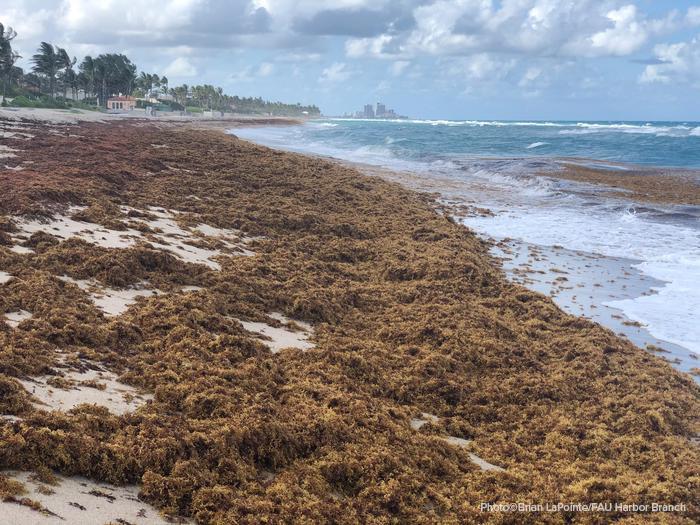
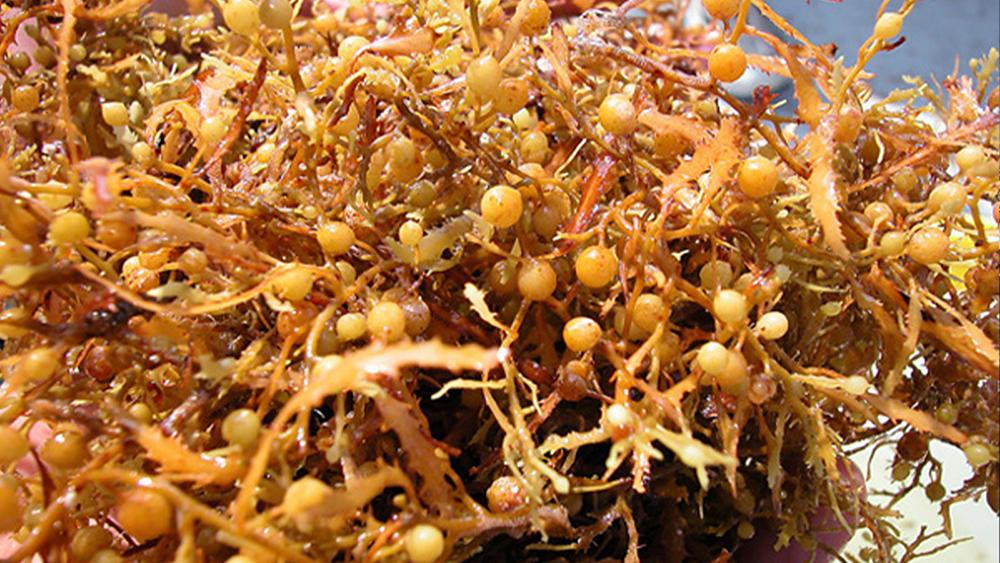
A new study “Dramatic decline of Sargassum in the north Sargasso Sea since 2015” in the journal Nature Geoscience led by researchers at the University of South Florida’s College of Marine Science has found that certain populations of the seaweed Sargassum have experienced a significant decline over the past decade, even as increased abundance of Sargassum in the tropical Atlantic has caused large mats of the seaweed to inundate beaches across the Caribbean and Gulf regions. “What is fascinating is that two opposite patterns occurred in the Atlantic Ocean,” said Chuanmin Hu, professor of oceanography at the USF College of Marine Science, senior author of the study and a GCOOS principal investigator.
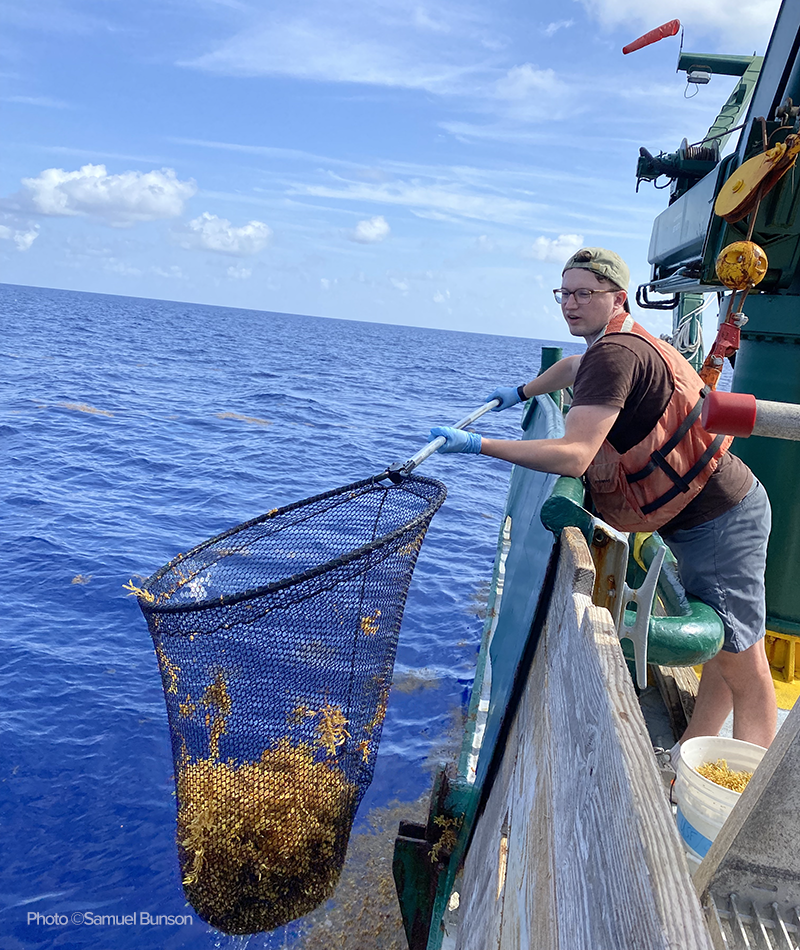
| | Samuel Bunson, a graduate student at the University of South Florida’s College of Marine Science, uses a net to gather sargassum in the Gulf in May 2023. Samples collected from the field were key to informing the findings of the new study in Nature Geoscience. | | Study Quantifies Sargassum Inundation Costs | |
In 2025, nearly 38 million metric tons of Sargassum were observed in the Caribbean, the Atlantic and the Gulf of America. Now, a new study in the journal Harmful Algae conducted by a team of social scientists and economists from the Woods Hole Oceanographic Institution and the University of Rhode Island shows that Sargassum events in Puerto Rico, the U.S. Virgin Islands and coastal Florida have been increasing since 2011 with annual economic losses estimated to be in the billions.
The study was designed to provide resource managers with evidence-based economic data to help guide funding decisions and policy responses to sargassum inundation events and the research examined direct and indirect costs — especially impacts on coastal tourism, recreation, and fisheries.
Results show that Sargassum events are expected to cost multimillion dollars each year, including billions of dollars lost along Florida’s Atlantic coast. These results provide important input to the planning process in deciding the investments in future sargassum response and cleanup and facilitate targeted data collection and valuation efforts to develop more accurate measures of economic losses.
-
Read “Economic impacts of Sargassum events in Puerto Rico, USVI, and coastal Florida” here
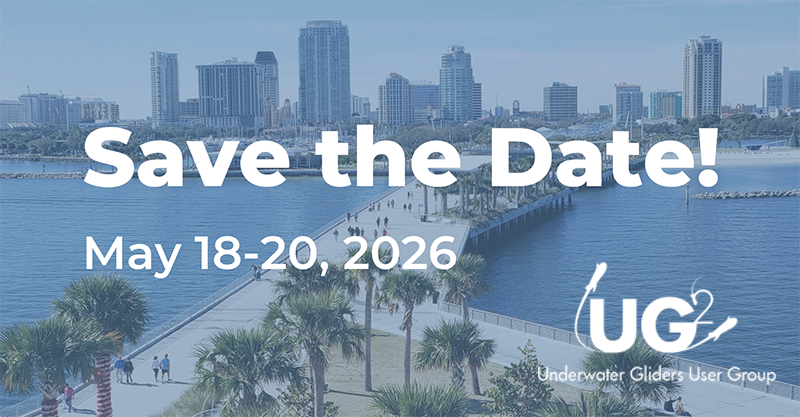
| | Save the Date: UG2 2026 Workshop | | The Underwater Glider User Group (UG2) has chosen the date for its 2026 workshop: May 18-20 at the University of South Florida in St. Petersburg, Florida. Meeting registration and the call for workshops will officially open in January. In the meantime, if you have an idea for a session or topic, please click here to share it with UG2 organizers. | | Using Uncrewed Systems to Deliver Deep Ocean Data | | |
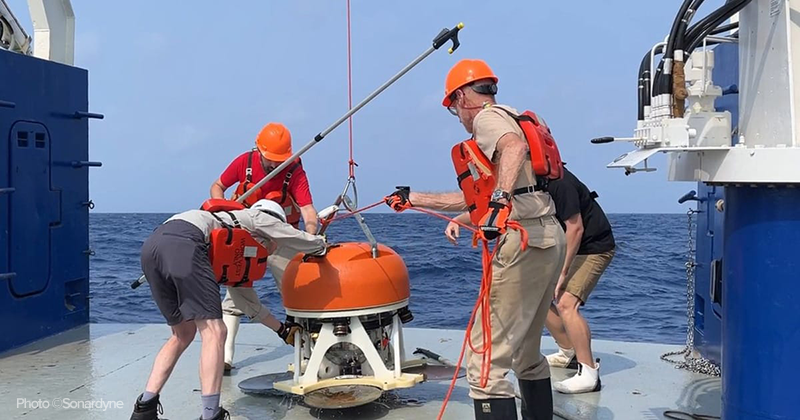
Sonardyne and SeaTrac Systems used advanced sensors and uncrewed surface vehicles (USVs) to deliver science-ready deep ocean current data on the Gulf’s Loop Current System, direct to scientists’ desks in near real-time. The project, commissioned and in collaboration with the University of Rhode Island (URI), opens the door to reliable, on-demand, and sustained high-resolution observations of powerful and dynamic ocean systems, without the need to send people offshore. The study took place this fall and was funded by the National Academies of Sciences, Engineering, and Medicine’s Gulf Research Program.
| | Retrieval of one of the Origin 65s aboard the R/V Pelican. | | Gulf Terminal Vital to Liquid Natural Gas Operations | | |
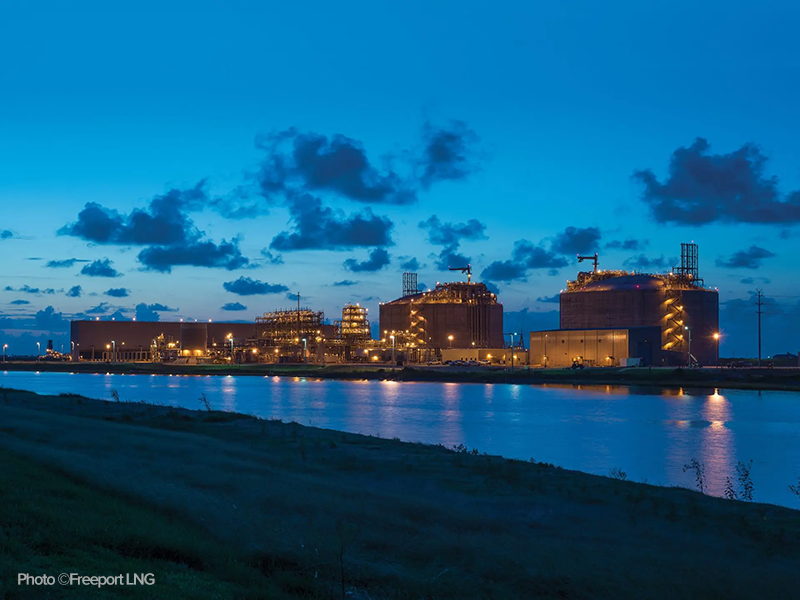
The importance of real-time observations in the Gulf continues to grow as the need for navigational technology in support of maritime operations increases. In an announcement made earlier this month by Japan’s city gas supplier and LNG importer, Osaka Gas, new operations at the Freeport LNG terminal in Texas will soon make it a vital link in the international supply chain.
Osaka Gas has signed a deal to buy biomethane produced in the U.S. by BPs Archaea Energy, liquefy it at the Freeport LNG terminal, and ship the fuel to Japan from there. The project is aimed at transitioning the Japanese market from conventional LNG to low-carbon alternatives like renewable biomethane and potentially e-methane, a synthetic, renewable substitute for fossil natural gas. The effort is part of Japan’s approach to meeting their 2050 carbon neutrality goals. The Freeport LNG Terminal started exporting Liquified Natural Gas (LNG) globally in 2019 after beginning as an import terminal and now plays an important role in the global energy supply.
| | |
Gulf of America Alliance (GOAA)
Investing in Capacity to Improve Ocean and Coastal Health
| | |
The Gulf of America Alliance is investing $1.96 million in funding from the National Oceanic and Atmospheric Administration (NOAA) Office for Coastal Management to increase regional collaboration and support priorities identified by the five Gulf states. The funds are being used to increase capacity and implement projects that improve the health of ocean and coastal ecosystems, enhance the resilience of coastal communities, and increase regional data sharing.
| | Registration for GulfCon Open | | |
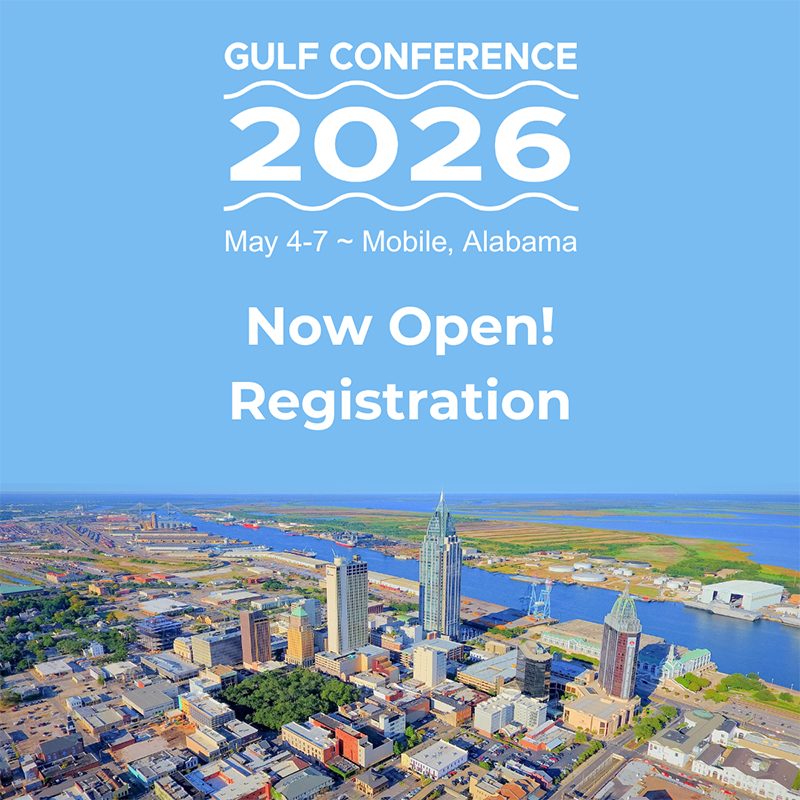
Early bird registration is open for GulfCon 2026, May 4-7, 2026, in Mobile, Alabama, through Feb. 4. Group hotel rates are available at the Renaissance Mobile Riverview Plaza Hotel, 64 South Water Street, across the street from the conference location at the Mobile Convention Center, and the Battle House Renaissance Hotel, 26 North Royal Street, a short walk to the convention center.
| |
|
New Directors
Mississippi-Alabama Sea Grant
| | |
The Mississippi-Alabama Sea Grant Consortium Board of Directors has named Dr. Steve Sempier as the consortium’s next director; he will step into the position on Jan. 1. Sempier, Mississippi-Alabama Sea Grant’s deputy director and outreach director, joined the program in 2007. Over the years, he has served in several Sea Grant roles including regional research planning coordinator, hydrological restoration project manager, oil spill science outreach manager, outreach director and deputy director. He has also been a valuable member of several GCOOS committees and task teams, most recently serving on the Products and Services Advisory Council.
Sempier assumes the role from LaDon Swann, who is retiring after decades of leadership in the Sea Grant network. Swann will continue to work part-time with Sea Grant as the National Sea Grant aquaculture liaison.
Congratulations, Steve and LaDon!
| | |
Dr. Laura Picariello has been appointed as the new director of the Texas Sea Grant College Program. Picariello joined Texas Sea Grant in 2018 and has served in a series of leadership roles, including fisheries specialist, sustainable fisheries and aquaculture program manager, sustainable fisheries and aquaculture program director and co-extension lead, and interim director. She has overseen major applied research initiatives, supported partnerships with industry and coastal communities, and advanced Sea Grant’s mission to deliver science that supports the people of Texas.
Congratulations Laura!
| | |
Integrated Ocean Observing System (IOOS)
Next Advisory Committee Meeting
| | |
Please mark your calendar for the next meeting of the U.S. IOOS Federal Advisory Committee: Jan. 20-21 in Silver Spring, Maryland.
-
Click here for registration
-
Details and updates will be posted here
| | |
Gulf Research Program (GRP)
Applications Open for GRP Fellowship
| | |
The application process is open for the GRP Science Policy Fellowship, which helps scientists hone their skills by putting them to practice for the benefit of Gulf Coast communities and ecosystems. Fellows gain first-hand experience as they spend one year on the staff of federal, state, local, or non-governmental agencies in the Gulf region.
| | Call For Proposals & Post-Docs | | |
Applications are now open for synthesis science working groups and postdoctoral research projects from the Gulf Ecosystem Initiative, a partnership between the National Center for Ecological Analysis and Synthesis (NCEAS) and the NOAA RESTORE Science Program. Working groups of scientists and decision makers will collaborate to solve pressing questions related to fisheries, climate change and the ecological impacts of management across the Gulf of America. Application deadline is Feb. 20.
|
| |
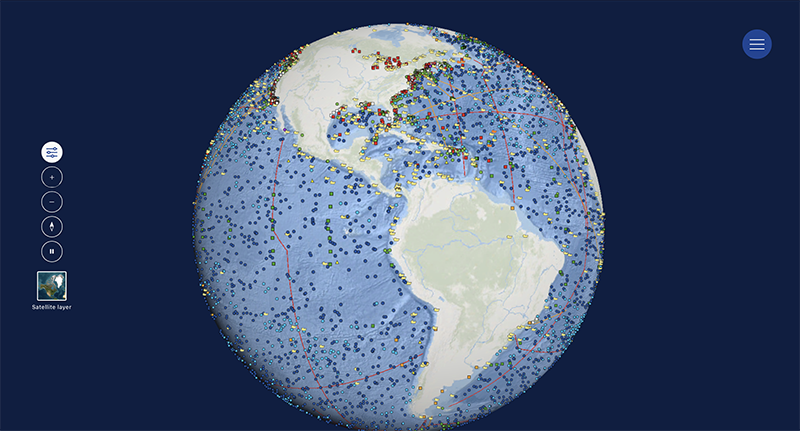
That the Global Ocean Observing System (GOOS) includes 64 participating countries operating 17 global ocean observing networks with 9,389 ocean observing platforms collecting more than 120,000 ocean observations every day? This month, GOOS released its 2025 Status Report.
| | Little Buoy Lost — and Data Found | | |
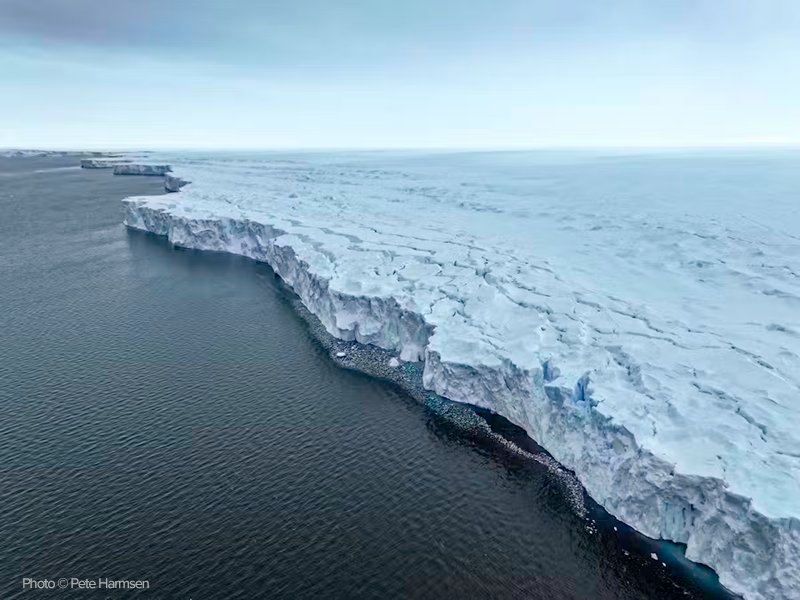
When Antarctic researchers from Australia dropped an Argo float near the Totten Glacier, they were hoping for temperature and salinity profiles to help determine how much, and how quickly, Antarctica will contribute to sea-level rise. Instead, the float floated away from the Totten Glacier, ending up where no ocean measurements had been taken before.
When the float disappeared under Denman and Shackleton ice shelves, the team feared it was lost. But nine months later, it reappeared and brought some interesting data with it.
| |
-
GOAA Program- Coordinator (O&E)
-
Sarasota Bay Program - Science and Restoration Manager
-
University of West Florida - Associate Professor
-
The Nature Conservancy - Texas State Director
-
Hello.gov - Sr. Cloud and Data Engineer
- Mote Marine Laboratory
-
University of South Florida - Faculty Position in Aquatic Exotoxicology
Postdoctoral Positions:
-
Monterey Bay Aquarium Research Institute: Postdoctoral Fellowship
-
National Research Council: Research Associateship Programs Postdoctoral and Senior Research Awards
-
Mississippi State University: Postdoctoral Associate
-
Downeast Institute: Research Scientist
Fellowships:
-
National Academies of Science, Engineering and Mathematics: Early Career Fellowships
- Department of Defense: Visualization of Coastal Data, Coastal Vulnerability Assessment Fellow
| |
-
2026 US HAB CTI: Funding Opportunity
-
National Oceanic and Atmospheric Administration: Ernest F. Hollings Undergraduate Scholar
-
National Academies of Sciences, Engineering and Medicine, Gulf Research Program: Empowering K-8 Through Place Based Education
-
Gulf of Mexico Alliance: Increasing Participation in Clean and Resiient Marine Programs
-
The National Academies of Sciences, Engineering, and Medicine: Early Career Research Fellowship
| | 23-26: Marine Technology Society Buoy 2026, St. Petersburg, Florida | | 18-20: UG2 Underwater Glider User Group, St. Petersburg, Florida, Details coming soon. | | Dr. Jorge Brenner, Executive Director • Marcus Ogle, Associate Director • Dr. Uchenna Nwankwo, Oceanographer • Dr. Chris Simoniello, Outreach & Education Manager • Dr. Natalia López Figueroa, GCAN Coordinator and GCOOS 2025-26 Gulf Science Policy Fellow with the National Academies of Sciences, Engineering and Medicine • Felimon Gayanilo, Systems Architect, Co-Data Manager • Bob Currier, Product Developer, Co-Data Manager • Pallavi Tummeti, GIS Administrator and Developer • Tuomo Saari, Scientific Computing Specialist • Xiao Qi, Scientific Computing Specialist • Megan Howson, Marine Mammal Biologist and Data Scientist • Sandeep Jilla, Software Developer • Grant Craig, Project Manager and HABscope Volunteer Coordinator • Nadine Slimak, Public Relations & Content Marketing, Vetted Communications, LLC • Laura Caldwell, Program Assistant | | | | |