|
Greetings!
We’ve had quite a busy few weeks — first our Spring Members’ Meeting, then GulfCon2026. It was great seeing everyone in person and getting the opportunity to make new connections with colleagues throughout the Gulf.
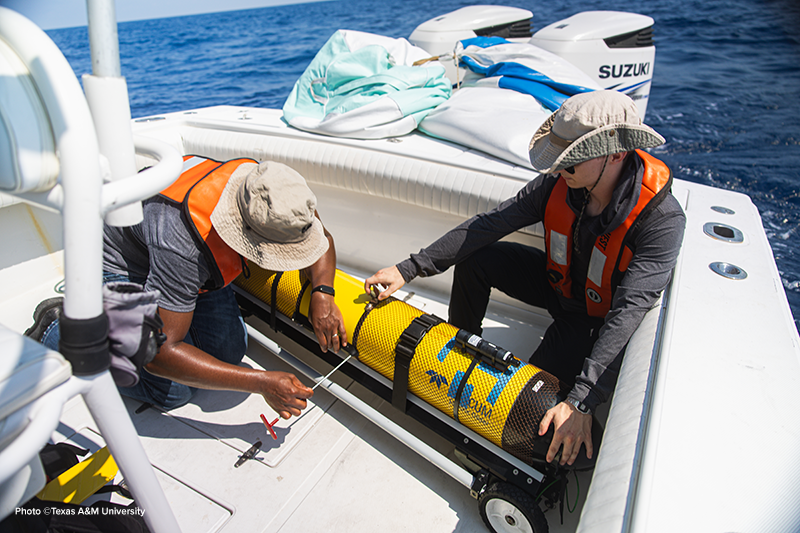
At GCOOS, we’re getting ready to head into our “busy” time of the year, with hurricane season just around the corner in June. The glider team is making plans for deployments and we’ve been working with the IOOS Association and our federal lawmakers to share information about the crucial work the ocean observing community undertakes to help keep communities safe.
This week, we’ll be at the Underwater Glider User Group (UG2) workshop in St. Petersburg, Florida. This gathering offers an opportunity for the glider national and international communities to exchange best practices and collaborate on new ways to work together, and we’re looking forward to the opportunities it presents.
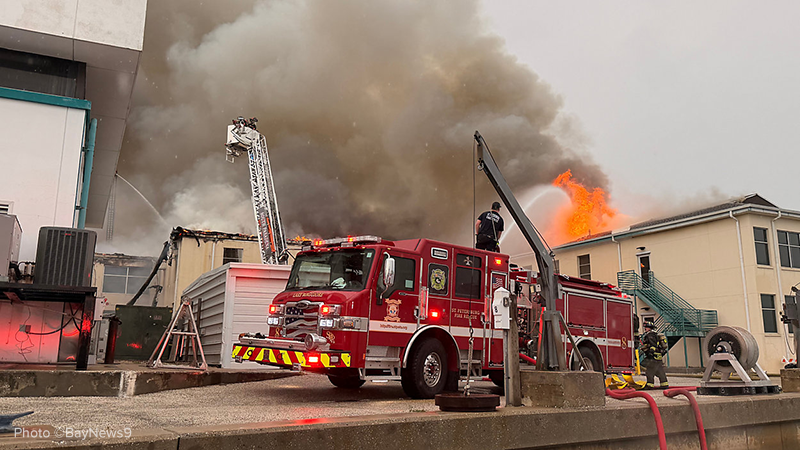
While we are in St. Pete, we’ll also have an opportunity to meet with our colleagues and GCOOS PIs who have been affected by the devastating fire that destroyed the Marine Science Lab building at the University of South Florida on May 2. USF Professor of Optical Oceanography Dr. Chuanmin Hu and Faculty Researcher Chad Lembke, who conduct GCOOS-funded satellite observations and glider operations in the Gulf, respectively, are in the process of assessing losses, testing the viability of recovered equipment and working to rehouse their teams so that their important work can continue.
We’re still working out the long-term impacts, but in the meantime, we want to reiterate our support for the USF marine research community — our colleagues and friends — as they recover from the loss of equipment and data. If you’d like to make a donation in support of the fire recovery and rebuilding effort, USF has created a special fund “The Marine Science Operating Fund” and is accepting donations here.
Until next month,
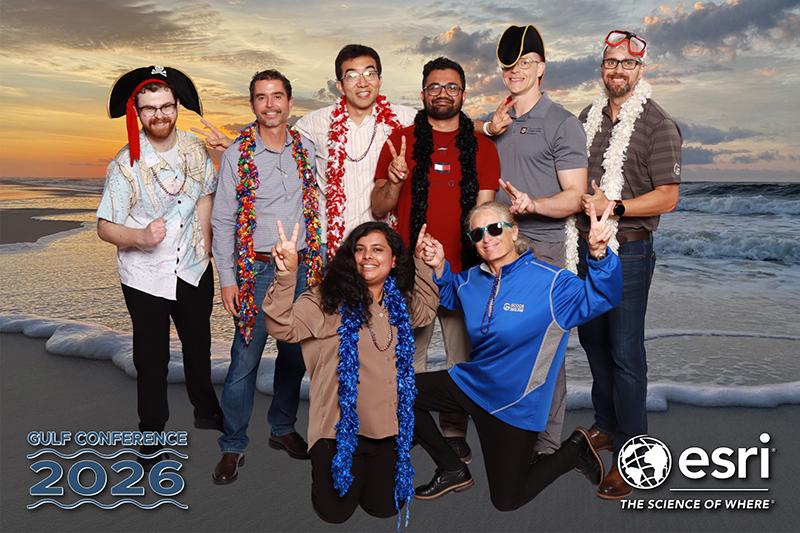
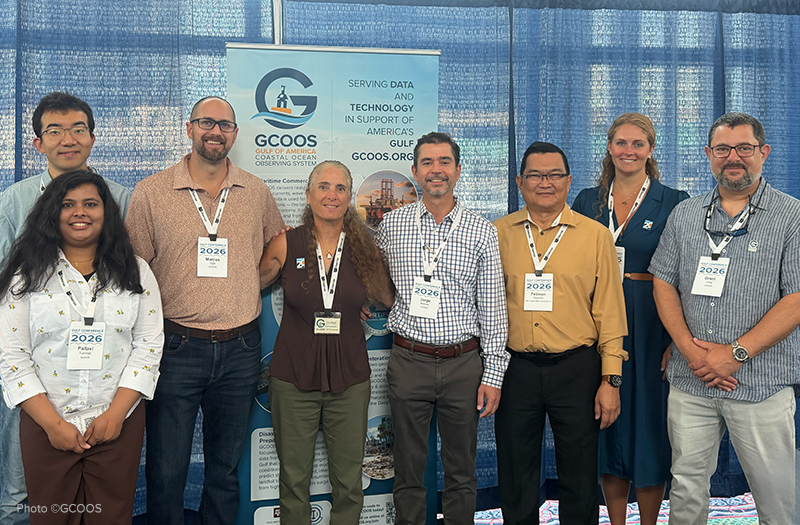
| | Just a little fun during GulfCon2026! | | GCOOS Spring Meeting 2026 Archive | | |
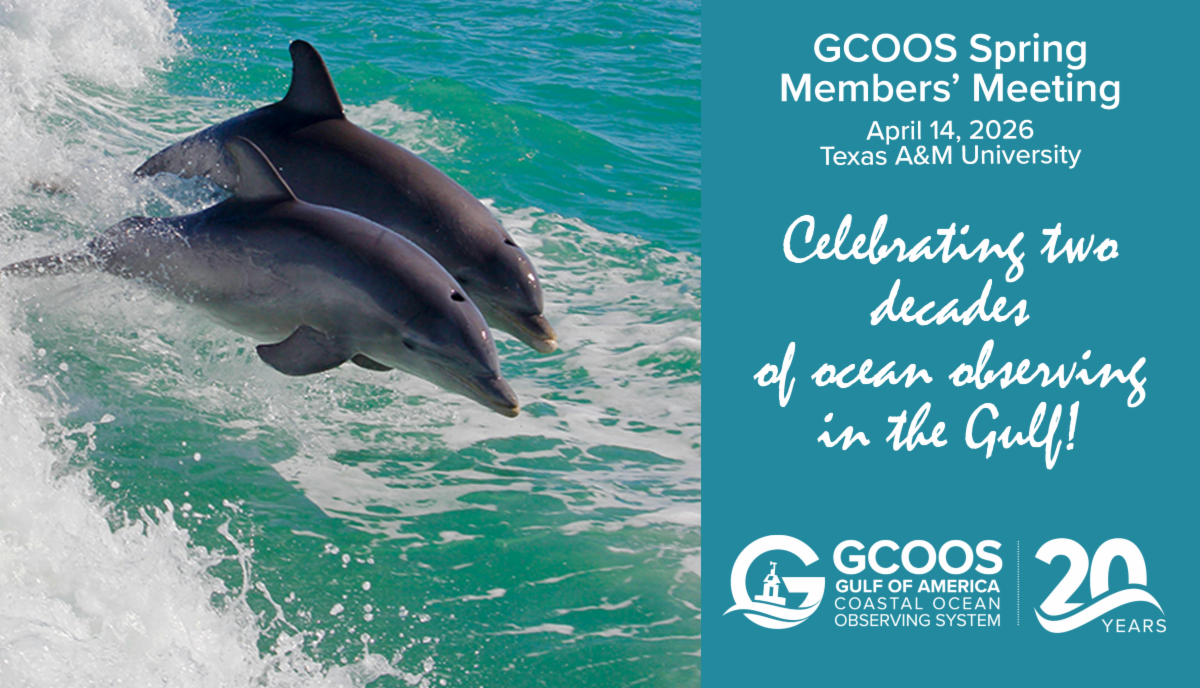
Were you unable to join us at Texas A&M University in College Station where the Department of Oceanography hosted the GCOOS Spring Members’ Meeting and 20th Anniversary Celebration? We’re happy to share the news that the meeting recordings are now archived on our website, allowing you to check out all the updates from around the Gulf and beyond.
| | Aid for USF College of Marine Science | | |
Many of you have heard from friends and colleagues about the fire that has caused catastrophic damage to the University of South Florida College of Marine Science Marine Science Laboratory (MSL). For those looking for ways to support the students, faculty and staff impacted by the disaster, the USF Foundation has launched the Marine Science Operating Fund to support rebuilding. From observations from buoys and gliders to monitoring biodiversity and sargassum inundation, USF colleagues have been an integral part of GCOOS since its inception. Please share this link with your network partners so that together we can ensure that the vital scientific research that has taken place at USF for nearly six decades can continue well into the future.
| | GCAN Hosts Workshop at OAP Community Meeting | | |
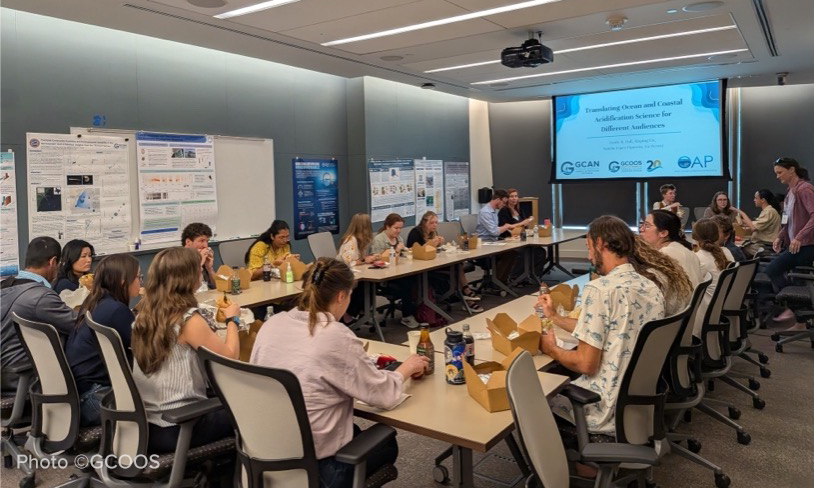
On May 6, 2026, the Gulf of America Coastal Acidification Network (GCAN) hosted its first science communication workshop — “Translating Ocean and Coastal Acidification Science for Different Audiences” — during the NOAA Ocean Acidification Program Community Meeting during the NOAA Center for Weather and Climate Prediction in College Park, Maryland.
The in-person lunch workshop was coordinated by Dr. Natalia López-Figueroa, GCAN Coordinator and NAS Fellow, and facilitated by GCAN Steering Committee Members Drs. Xinping Hu and Emily Hall, and Dr. Liz Perotti, NOAA Ocean Acidification Program Communication and Education Lead. It brought together some 25 attendees to build practical skills for communicating ocean and coastal acidification (OA/COA) science clearly, accurately and in a way that is accessible across audiences.
During the workshop, participants had the opportunity to practice identifying target audiences, learn how to reduce the use jargon, frame key messages and translate technical research into plain language without losing scientific accuracy.
A central component of the workshop invited participants to tailor OA/COA messages for different real-world audiences, including coastal managers, shellfish farmers, Tribal communities and K–5 teachers. These scenarios encouraged participants to consider what each audience values most, from management relevance and shellfish production to cultural stewardship and classroom engagement. Participants also joined an "elevator speech" speed round where they practiced delivering concise, audience-specific messages and refined their communication through peer feedback. By the end of the workshop, participants left with a clearer understanding of how to adapt their science for different communities, decision-makers and educational settings.
| |
Congratulations to the First Cohort of GCAN Fellows! | |
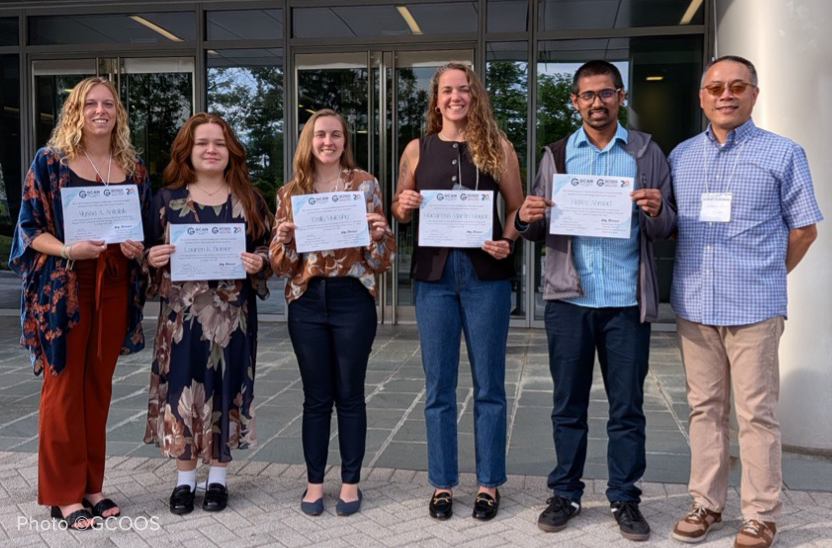
GCAN is proud to celebrate the first cohort of GCAN Fellows: five graduate students representing Gulf-region ocean and coastal acidification (OA/COA) research. With support from GCAN and the NOAA Ocean Acidification Program, these fellows attended the 2026 NOAA Ocean Acidification Program Community Meeting, where they presented their research, engaged with OA/COA scientists and practitioners and expanded their professional networks across the broader acidification community.
The GCAN Fellowship was created to support the next generation of OA/COA leaders in the Gulf by connecting early-career researchers with opportunities for professional development, science communication, and regional collaboration.
Fellows presented projects related to Gulf OA/COA science and participated in networking opportunities designed to strengthen connections among students, researchers, managers and members of regional Coastal Acidification Networks. As part of the GCAN network, fellows are now invited to continue engaging through GCAN meetings, activities and other member opportunities.
-
What was the experience like for the fellows? Read more here
| | |
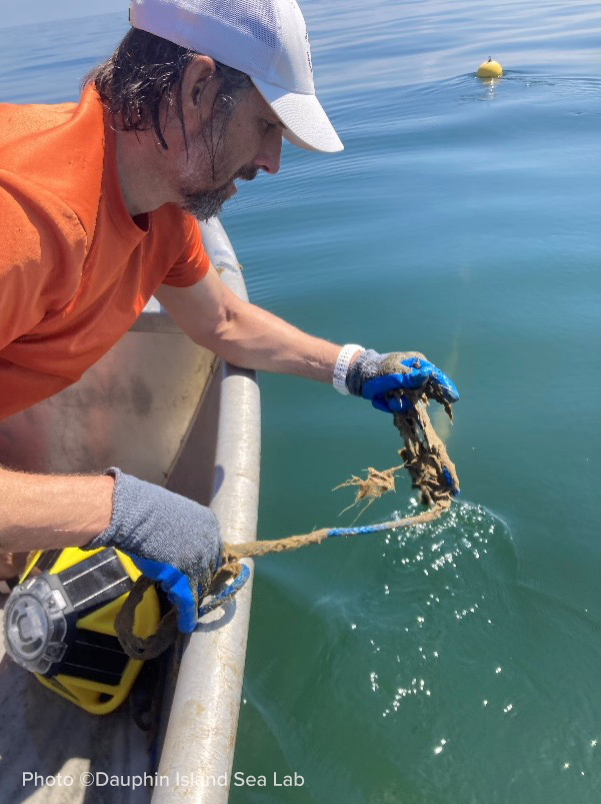
Congratulations to Dr. Brian Dzwonkowski, University of South Alabama and the Dauphin Island Sea Lab, and his team for reaching a one-year milestone of gathering wave data from the Sofar Spotter Wave Buoy supported by Inflation Reduction Act funding via GCOOS.
The buoy was deployed to expand the availability of real-time wave data to support rip current predictions in the Mississippi Bight. Across the nearly 95 miles of coastline extending across south Alabama and the western Florida panhandle, there were 141 rip current fatalities documented since 1996, more than double the 61 fatalities that occurred with floods, tornadoes, lightning and tropical cyclones combined. Many of these rip current deaths were visitors vacationing at area beaches.
Data from the diminutive Spotter buoy, which measures about 16 inches in diameter and weighs less than 20 pounds, is not only used to aid rip current forecasts around Dauphin Island, Alabama, but also help with other hazard conditions in the surf zone such as wave runup events that cause coastal flooding.
An extension of this important work to reduce overall danger and save lives is co-development of a rip current safety merit badge with the GCOOS Outreach and Education Council, NOAA National Weather Service, the Girls Scouts of the USA and Scouting America.
And good news for residents and visitors to Pensacola Beach, Florida, is that a second Sofar Spotter Buoy will soon be deployed to collect hourly wave and water characteristics in real-time to further enhance local forecasts.
-
Find the data here
-
It is also posted to the GCOOS data portal here and at NDBC here
| | Gliders Integrated into 2026 National Hurricane Operations Plan | |
Forecasting relies heavily on atmospheric data, but what’s happening beneath the ocean surface is just as critical for understanding cyclone intensification. That’s where ocean gliders are playing a critical role. Deployed by GCOOS, other members of the U.S. IOOS and academic and industry partners, these autonomous systems that continuously monitor subsurface conditions have demonstrated countless contributions to storm forecasting.
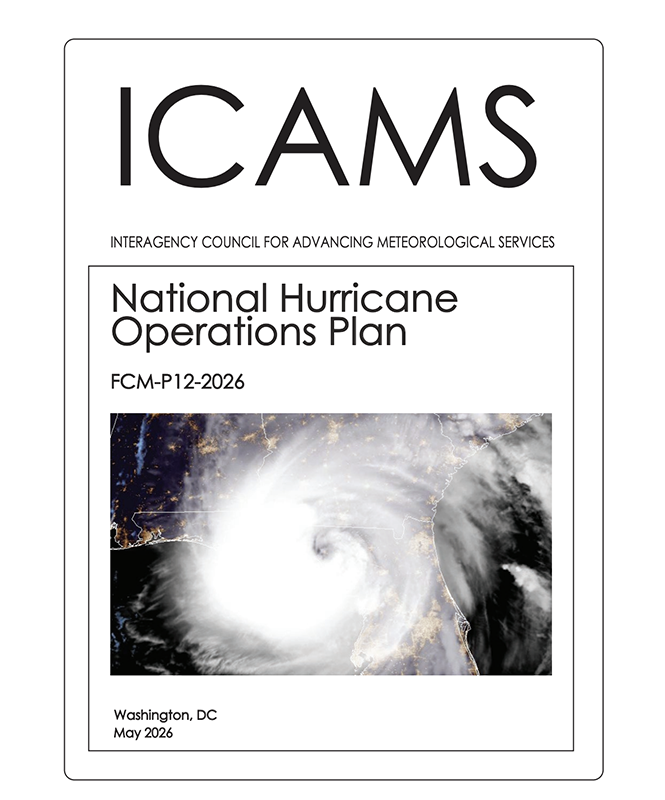
Now, the Interagency Council for Advancing Meteorological Services (ICAMS) has integrated ocean gliders into their 2026 National Hurricane Operations Plan (NHOP), reinforcing the value of sustained real time ocean observing systems. The Plan is published annually prior to hurricane season and documents interdepartmental efforts to provide the United States and designated international recipients with forecasts, warnings and assessments concerning tropical and subtropical weather systems.
The GCOOS glider dashboard — nicknamed GANDALF — tracks autonomous vehicles in the Gulf and beyond, allowing visitors a look at the data and information being collected in near real-time.
-
Bookmark this page to visit the dashboard throughout the season.
| The National Ocean Economics Program Survey | |
The National Ocean Economics Program website is where researchers and the public can go for free, timely and reliable data on the Blue Economy. The Center for the Blue Economy has partnered with Bigelow Laboratory for Ocean Sciences as the new home for this public-good data set. The goal is to maintain this valuable asset as a public resource for data and insight and develop a new vision for linking understanding of the natural and economic health of the ocean and coastal communities locally, nationally and globally.
As the Lab charts the future for the NOEP, they are interested in information from all sectors on what would best serve your needs.
| Department of the Interior Begins Transition to Marine Minerals Administration | |
The Department of the Interior has announced the start of a phased plan to establish the Marine Minerals Administration, bringing together the functions of the Bureau of Ocean Energy Management and the Bureau of Safety and Environmental Enforcement. The action is intended to improve coordination and increase efficiencies across offshore leasing, permitting, inspections and environmental oversight, while maintaining rigorous safety standards.
|
|
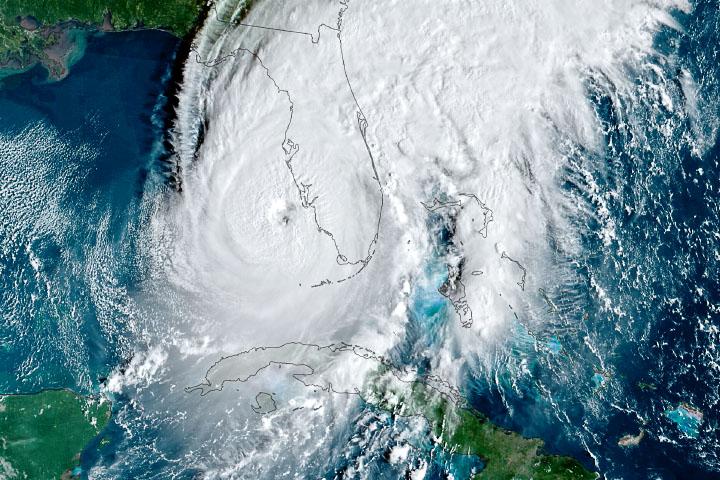
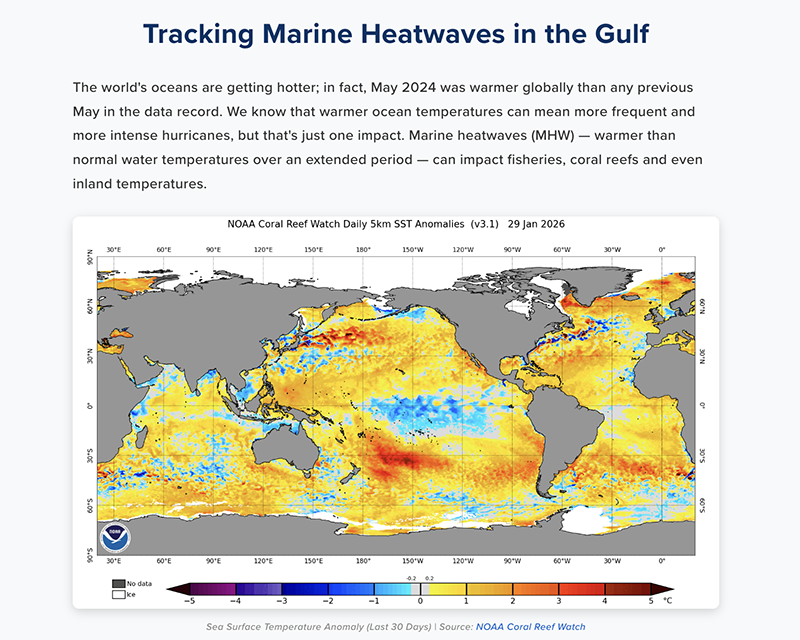
New research shows tropical cyclones that intensify over marine heat waves (MHW) are significantly more destructive, driving 60% more billion-dollar disasters than storms without that added ocean heat. According to a new paper in Science Advances, tropical cyclones intensified over MHW cause significantly higher damages than their counterparts, confirming that their enhanced intensity characteristics amplify economic impacts beyond what would be expected from exposure alone. These findings underscore the critical need for improved disaster preparedness as MHWs increasingly supercharge tropical cyclones’ intensity, leading to more frequent billion-dollar disasters.
Did you know that GCOOS has developed an interactive marine heat wave dashboard for the Gulf? By partnering with researchers at the University of South Alabama/Dauphin Island Sea Lab (DISL), we’re developing a framework for expected heatwave impacts and a heatwave alert system, offering communities the tools needed for better detection of marine heatwaves — both at the surface and in the water column — to help stakeholders and resource managers mitigate impacts on coastal communities, ecosystems and industries.
| | Applications Open for Travel/ Registration Fee Waivers | | |
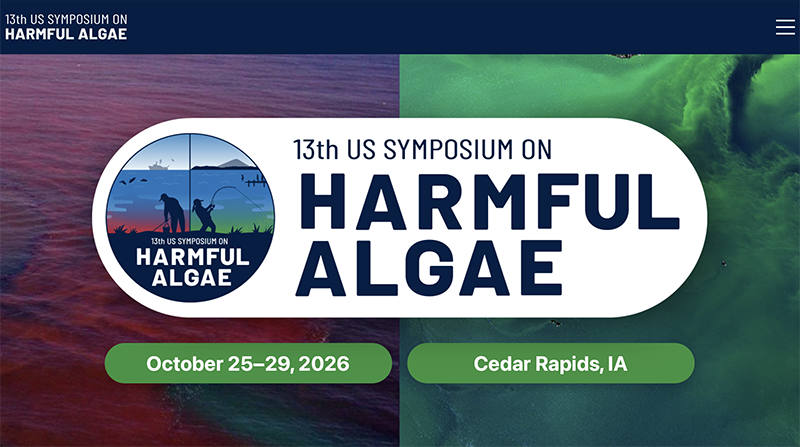
Applications are now being accepted for fee waivers and/or travel support to attend the 13th U.S. Symposium on Harmful Algae, scheduled for Oct. 25-29, 2026, in Cedar Rapids, Iowa. The biennial event is attended by those involved in the study, management or mitigation of harmful algal blooms (HABs) as well as those addressing the impacts of HABs on ecosystems, public health, or communities.
Funding for fee/travel waivers is being provided by the National Oceanic and Atmospheric Administration National Centers for Coastal Ocean Science (NOAA/NCCOS) and is intended to help defray travel costs for:
- U.S.-based graduate students and postdoctoral researchers, and
- Public health and resource managers, particularly those from state, local, and tribal agencies who would otherwise be unable to attend.
Students and postdoctoral applicants must be enrolled or employed at a U.S. university at the time of application. A limited number of students and postdocs will receive registration fee waivers, depending on funding availability and the number of applicants. Recipients should demonstrate that they have additional funds to cover other travel expenses.
Funding for resource managers is intended to support the attendance of approximately 5-10 individuals and to promote technology transfer and information exchange among researchers, public health officials and resource managers. Partial travel reimbursement of up to $2,000 will be issued post-conference to support participation. Recipients will be required to provide detailed receipts and complete a travel reimbursement request form upon conclusion of the symposium.
- Before you apply, confirm you have permission to travel and attend.
- You will be notified of the decision regarding your application by July 31.
- Approved recipients will be required to register by August 7.
- Travel awards and fee-waivers are non-transferable.
-
Apply here
Interested in sponsoring the conference? Click here for opportunities.
And don’t forget, you can advance your expertise and connect with leaders at the forefront of harmful algal bloom (HAB) science through three optional pre-conference workshops. Click here to learn more.
| | |
Healthy Ecosystems and Living Resources
| | 2027 Bays and Bayous Symposium | | |
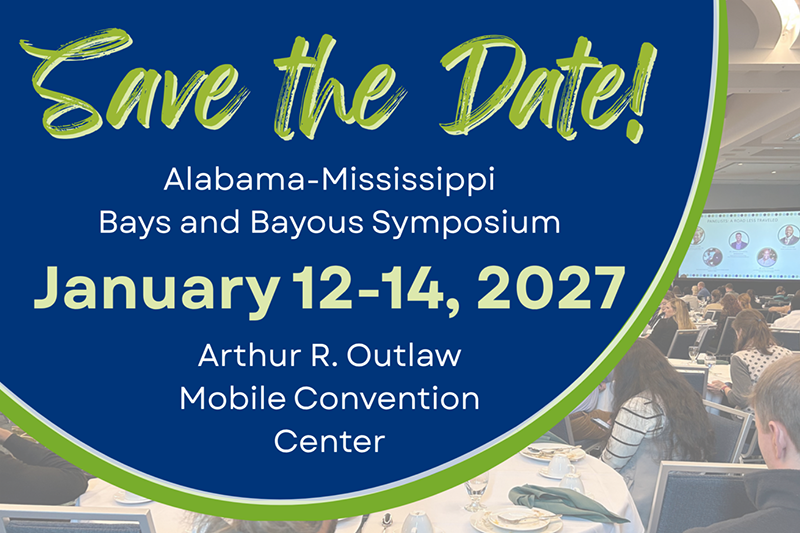
The Alabama-Mississippi Bays and Bayous Symposium will be held Tuesday through Thursday, Jan. 12-14, 2027, at the at the Arthur R. Outlaw Mobile Convention Center in Mobile, Alabama.
The symposium, organized by the Mobile Bay National Estuary Program with assistance from the Mississippi-Alabama Sea Grant Consortium and a group of dedicated volunteers from several agencies and groups, will focus on coastal science research and application, engagement, education and more. During the two-and-a-half-day event, people will gather to present their research, showcase their projects, exchange ideas and learn about the latest developments and challenges in the northern Gulf of America.
| | New Coral Reef Resilience Strategy Released | | |
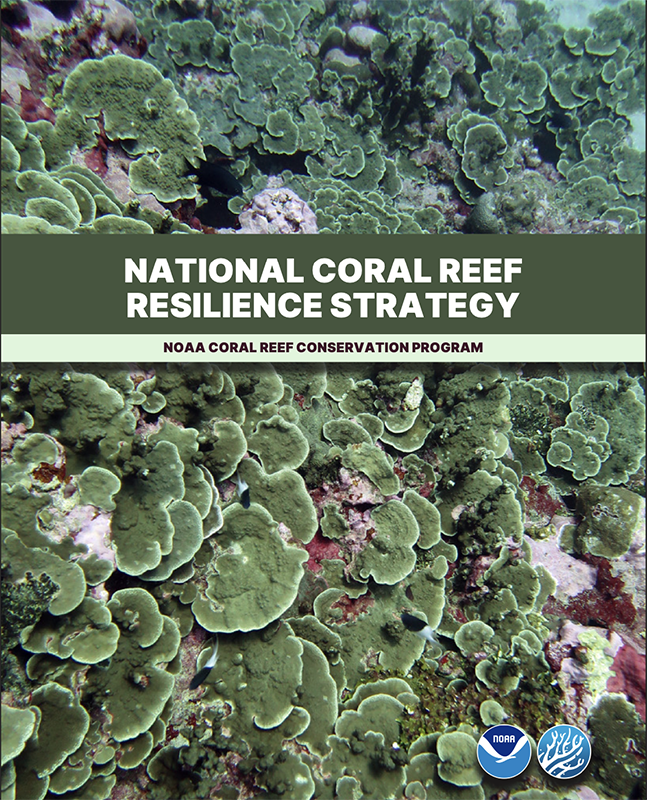
NOAA, along with its partners, has developed a National Coral Reef Resilience Strategy that will guide the actions of the US coral reef conservation community through 2040, with the goal of healthy, resilient coral reef ecosystems in the United States that provide a variety of valuable services to current and future generations.
This strategy is ambitious, covers far more work than a single organization can achieve alone, and seeks to inspire and catalyze action for positive change. The strategy’s multidisciplinary approach includes capacity building, research, monitoring, mapping, social science, and communication. It uses an adaptive management framework and resilience-based management to provide a broad context for how the coral reef conservation community will achieve the goals outlined in this document. Specific strategies under six focus areas will drive the research, monitoring, and management actions needed to achieve the vision of thriving, diverse, resilient coral reefs that are able to sustain valuable ecosystem services for current and future generations.
| | |
Gulf of America Alliance
GulfCon2026 is a Wrap!
| | |
More than 1,000 attendees convened over four days at the Mobile Convention Center for GulfCon2026. “We are so proud of the work we achieved at GulfCon, which gets bigger, better and more exciting each time. Last week was a testament to the power of collaboration, engagement, and conversation,” reports Laura Bowie, Executive Director.
The week’s highlights included:
- Opening Plenary remarks by Laura Bowie, Gov. Kay Ivey, State of Alabama; Commissioner Chris Blankenship, Alabama Department of Conservation and Natural Resources; Deputy Under Secretary Laura Grimm, National Oceanic and Atmospheric Administration; and Mayor Spiro Cheriogotis, City of Mobile;
- Nearly 500 scientific talks and poster presentations across 32 sessions on topics including community resilience, restoration, environmental education, and resource management — including presentations by GCOOS staff on the marine heat wave analysis tool, CETACEAN, the Sea Turtle Atlas, scaling the ePredictor for Texas coast sampling sites and visualizing numeric regional hydrodynamic models;
- Wednesday’s “New Faces, New Voices: The Future of Science, Policy, and Management,” plenary panel, moderated by Ali Robertson, Alliance Program Director, and featuring Hanna Bauer, Texas Parks and Wildlife Department; Marcy Cockrell, National Oceanic and Atmospheric Administration; Bradley Lewis, Thompson Engineering; Franziska Trautmann, Glass Half Full; and Charles Wallace, The Water Institute;
-
The largest Tools Café in the event's history, with organizations presenting 45 tools that support partner and stakeholder engagement while enhancing our regional capacity to share and integrate data. GCOOS showcased many of our tools, including the CETACEAN, Sea Turtle Atlas and Marine Heat Wave dashboards, GUARDIAN (the acoustic database for Rice’s whales), the NTL data repository and registry and the regional model handler/viewer.
As always, GCOOS was proud to be a sponsor, and we congratulate the organizing committee on a conference well done!
| | |
Florida Sea Grant
Celebrating 50 Years
| | |
For more than half a century, Florida Sea Grant has served at the heart of coastal and marine discovery. To celebrate the program’s 50th anniversary, Sea Grant presents “Decades of Advancing Coastal & Marine Science,” a curated seminar series spotlighting the incredible research and student talent within its statewide network. In this special commemorative webinar series, Florida Sea Grant is spotlighting some of its core university partners across the state. Each session offers an inside look at these unique research hubs that work with Florida Sea Grant to help protect, sustain and grow coastal resources and dependent coastal communities.
-
Click here for details and to see what’s coming up next
|
| Will Global Sea Level Rise Faster than Predictions? | | |
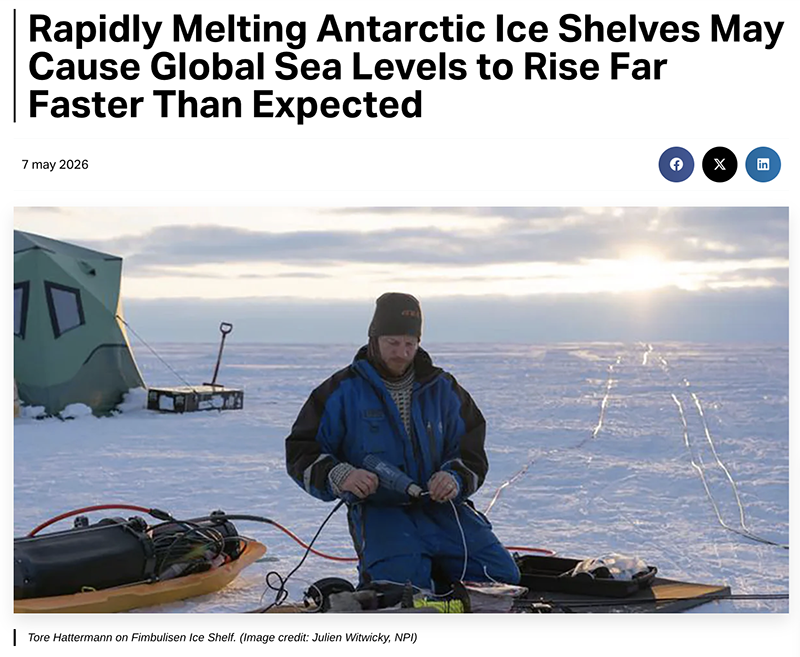
Global sea levels may rise faster than previously expected, a new study published in Nature Communications suggests. The reason is that warming oceans appear to be melting Antarctic ice shelves from below much more rapidly than expected.
| | Marine Heatwaves Turn Beneficial Relationship Toxic | | |
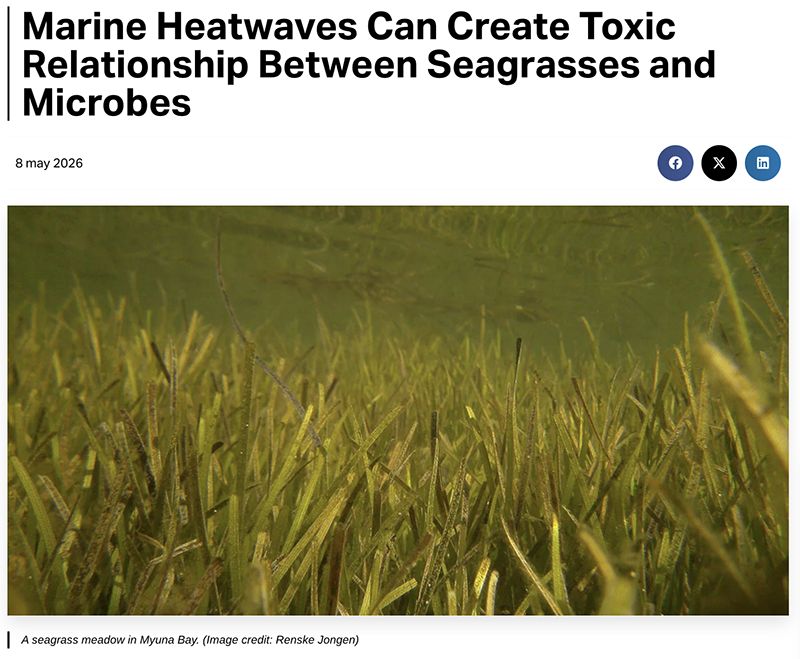
Heat stress from marine heatwaves can create a toxic relationship between seagrasses and a hidden ecosystem of bacteria, transforming a previously beneficial co-existence between marine plants and microbes into a harmful one, a University of Sydney and UNSW study published in New Phytologist has found.
| | |
-
University of Southern Mississippi – Visiting Instructor or Assistant Teaching Professor
-
Hello.gov: Sr. Cloud and Data Engineer
- Mote Marine Laboratory
-
CODAR Ocean Sensors seeks to fill an algorithm and software engineering role.
Postdoctoral Positions:
- Sustainable Marine Solutions is seeking a postdoctoral researcher to play a leading role in a five-year project, "Cooperative Research and Management for Fish Spawning Aggregations in the Gulf of America
- Knauss Marine Policy Fellowship
- Marine Research Scientist / Postdoctoral Scientist
-
Monterey Bay Aquarium Research Institute: Postdoctoral Fellowship
-
National Research Council: Research Associateship Programs Postdoctoral and Senior Research Awards
-
Mississippi State University: Postdoctoral Associate
-
Downeast Institute: Research Scientist
Fellowships:
- ARL Distinguished Postdoctoral Fellowships
-
National Academies of Science, Engineering and Mathematics: Early Career Fellowships
- Department of Defense: Visualization of Coastal Data, Coastal Vulnerability Assessment Fellow
| |
-
Gulf of America Alliance: Biodiversity Net Positive Impact
-
2026 US HAB CTI: Funding Opportunity
-
National Oceanic and Atmospheric Administration: Ernest F. Hollings Undergraduate Scholar
-
National Academies of Sciences, Engineering and Medicine, Gulf Research Program: Empowering K-8 Through Place Based Education
-
Gulf of Mexico Alliance: Increasing Participation in Clean and Resiient Marine Programs
-
The National Academies of Sciences, Engineering, and Medicine: Early Career Research Fellowship
| | 4-7: Gulf Conference 2026, Mobile, Alabama, Registation is now open | 5-7: Radiowave Operators Working Group Workshop, Hatfield Marine Science Center, Newport, Oregon. Hybrid event. Submit workshop ideas here. | | GCOOS Fall Meeting (date TBD) | | 7-11: AGU 2026, San Francisco, California | | Dr. Jorge Brenner, Executive Director • Marcus Ogle, Associate Director • Dr. Uchenna Nwankwo, Oceanographer • Dr. Chris Simoniello, Outreach & Education Manager • Dr. Natalia López Figueroa, GCAN Coordinator and GCOOS 2025-26 Gulf Science Policy Fellow with the National Academies of Sciences, Engineering and Medicine • Felimon Gayanilo, Systems Architect, Co-Data Manager • Bob Currier, Product Developer, Co-Data Manager • Pallavi Tummeti, GIS Administrator and Developer • Tuomo Saari, Scientific Computing Specialist • Xiao Qi, Scientific Computing Specialist • Megan Howson, Marine Mammal Biologist and Data Scientist • Sandeep Jilla, Software Developer • Grant Craig, Project Manager and HABscope Volunteer Coordinator • Nadine Slimak, Public Relations & Content Marketing, Vetted Communications, LLC • Laura Caldwell, Program Assistant | | | | |