GLIFWC member tribes urge the Wisconsin Natural Resources Board to follow best available science
FOR IMMEDIATE RELEASE
January 14, 2021
Contact:
Travis Bartnick
Wildlife Biologist
tbartnick@glifwc.org
715-685-2166
218-398-0083
GLIFWC Tribes Stress Conservative Omashkooz Management for 2021
GLIFWC member tribes urge the Wisconsin Natural Resources Board
to follow best available science
Odanah, Wis.—
With an eye on the present and future health of the Clam Lake omashooz (elk) herd, GLIFWC member tribes declared five bull elk for the 2020 season but chose a more conservative harvest approach out of concern for the population. To date, the tribes have not harvested any elk from the Clam Lake herd for the 2020 season. The decision to limit hunting is rooted in heeding the best available science and an abundance of caution for the long-term success of elk, known as omashooz in the Ojibwe language.
“We have been a part of elk restoration work for many years, and we want to see omashkooz populations thrive again. The best way we will achieve this is if we listen to the advisory committee that was established to help us follow the best available science. We are always thinking of future generations to come,” said GLIFWC Voigt Intertribal Task Force Chairman John Johnson Sr.
In the spring of 2020, the Wisconsin Elk Advisory Committee recommended a safe harvest quota of six bull elk, based upon the most recent data and management goals. Comprised of biologists with the US Forest Service, Wisconsin Department of Natural Resources, the Ho Chunk Nation, and GLIFWC, as well as other partners, the Elk Advisory Committee meets regularly and is tasked with making recommendations on the reintroduction and management of wild elk. Following the recommendation, however, the Wisconsin Natural Resources Board overturned the Committee’s decision and chose to enact a quota of 10 bull elk.
Elk Advisory Committee member and GLIFWC wildlife biologist Travis Bartnick said their original recommendation was based upon multiple factors. “Maximizing herd growth and maintaining an appropriate sex ratio of adult bulls to cows have both been objectives agreed upon by the members of the Committee,” Bartnick said. “The Committee also agreed that reducing the bull elk quota in 2020 would help prevent the need to recommend a reduced quota in subsequent years. There was support for this recommendation based on population model projections under different harvest scenarios.”
Ojibwe Tribes exercise their sovereign rights under their own rules and regulations to harvest half of each year’s allowable quota. In 2018, population estimates indicated omaskooz had achieved a harvestable population in the Wisconsin Ceded Territory. This allowed the state and the tribes to begin a limited hunt, in which the state and tribes successfully harvested elk from the Clam Lake omashkooz (elk) range.
Ojibwe tribes have been elk reintroduction partners since 1995 with the goal of restoring the population to sustainable levels. The continuation of these efforts from all partners involved will hopefully lead to future harvesting opportunities for both State and Tribal hunters.
Great Lakes Indian Fish & Wildlife Commission is an intertribal agency comprised of eleven member Ojibwe bands, located throughout Wisconsin, Michigan, and Minnesota. GLIFWC works with member bands to both manage and preserve off-reservation treaty reserved rights and resources. Please visit
www.glifwc.org
for more information about GLIFWC.
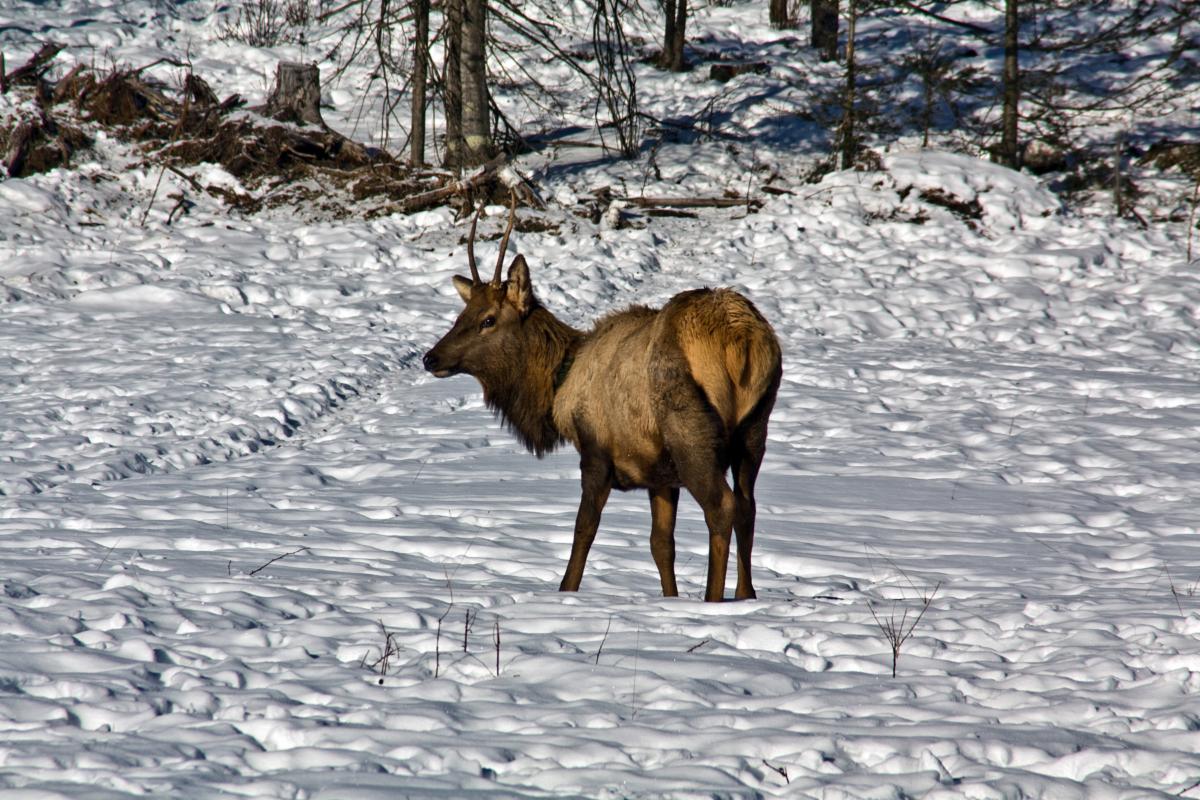
Photo: Spike bull elk near Clam Lake in northern Wisconsin. (C Rasmussen/GLIFWC photo)
Great Lakes Indian Fish & Wildlife Commission
Connect with us