GLOBE News Brief – February 2026 | | 2026 Virtual Science Symposium (VSS) | |
Thank You Virtual Science Symposium (VSS) Participants!
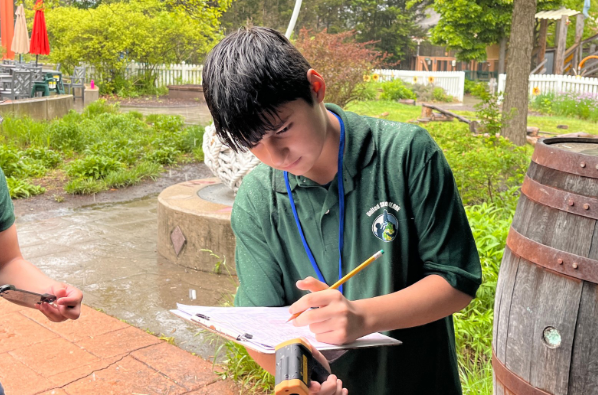
The 2026 Virtual Science Symposium (VSS) submission window closed on 30 January with an impressive 340 projects submitted from teams across all six GLOBE regions. Thank you to all participants, especially the dedicated educator mentors, STEM professionals, and volunteer STEM reviewers who make this program possible. Research teams can expect feedback in early March. Learn more about 2026 VSS participants and projects.
| Secchi Disk Water Transparency: Protocol Change and Curated Dataset | |
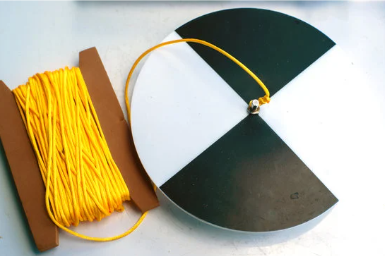
The GLOBE Implementation Office (GIO) did a quality check on the 62,000+ Secchi Disk Water Transparency measurements submitted through August 2025. This resulted in revised instructions for taking Secchi Disk depth. Previously, the instructions for Secchi Disk depth factored in, but did not require, the distance from the observer to the water surface, leading to negative values in the database. The removal of approximately 20,000 measurements with values that did not make sense resulted in a curated Water Transparency Secchi Disk dataset that will soon be published in the GLOBE Zenodo Community, GLOBE’s hub for curated datasets.
| | New Accessible eTraining Material Now Available | | |
GLOBE now offers accessible PDF versions of the GLOBE Protocol eTraining PowerPoints. These easy-to-use PDFs are available for download and provide an alternative option for users who prefer PDF over PowerPoint or use screen readers, text-to-speech programs, and/or braille displays. Learn more.
| | GLOBE Data in Downloadable CSV Format | | |
GLOBE community members can now download all protocol datasets (1995–August 2025) in CSV format. Each protocol dataset is organized by year, though high-volume protocols are subdivided by month to allow for easier access. The dataset also includes information on all GLOBE sites created during the same period with site metadata being organized by sphere. The DIS team maintains the capability to update these files as new data become available. Learn more.
| |
Upcoming Session: Register Today!
Designing Actionable Approaches and Resources for GLOBE Alumni Engagement (Working Session)
27 March, 9 am ET (13:00 UTC)
Register now to join us for a working Learning Session on engaging GLOBE alumni to promote, support, and sustain the GLOBE Program. During this webinar, which concludes our series on alumni engagement, we will briefly review some of the insights and advice offered in the first two sessions before joining breakout rooms to discuss participants’ experiences, plans, challenges, and questions related to engaging alumni in their communities.
Session Materials and Recordings
Please continue to visit the GLOBE Annual Meeting webpage for updates on GLOBE Learning Sessions and new opportunities to participate, as well as access to annual meeting recordings and materials.
Most Recent Learning Sessions
| | Additional Paper Data Sheets for Hydrology Updated | |
As we shared in the January News Brief, the GLOBE protocol paper data sheets are being updated by the GLOBE U.S. Coordination Office in collaboration with the GIO. Six additional data sheets have been updated since then. See the full list of updated paper data sheets.
The updated data sheets can be found in the Data Sheets sections of the protocol pages (look for "2026" in the file name). The eTraining modules also link to the new data sheets, where applicable.
| | BPA–GLOBE Partnership Expands National CTE & Workforce Development Impact in U.S. | | |
The partnership between Business Professionals of America (BPA) and the GIO is expanding nationally in the U.S., connecting career and technical education (CTE) students and educators with real-world environmental science and emerging technologies. BPA brought GLOBE to its members through a GLOBE-focused competition, “Smart Solutions for a Healthier Planet: A GLOBE Community’s Journey with IoT.” Participants created 2D animations demonstrating how communities use smart sensors and Internet of Things (IoT) tools to collect and share environmental data while addressing challenges such as air quality, soil moisture, and water systems. Judging is underway on the 64 animations submitted. Winners will attend the National BPA Conference in May.
| |
Blowing Snow Pilot
Call for Observations Extended Through March
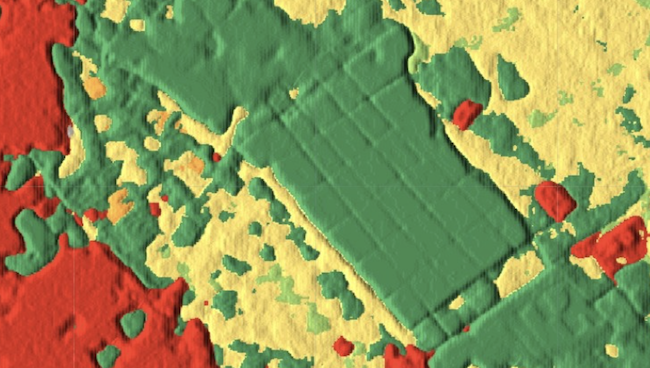
Help scientists locate a phenomenon after a snow event. The best time to observe blowing snow is when the snow stops falling and strong winds arrive—typically in the afternoon. At this time, blowing snow can be lifted tens to hundreds of meters off the ground. If you experience such conditions, take photos of the sky and the horizon using the GLOBE Observer app’s Clouds tool. Horizon photos should be feature photos. In the caption or comments, state what cardinal direction the photo is facing and the approximate distance to something barely visible (e.g., Looking NW. Flagpole is approximately 50 meters.). BONUS! Tell us about the winds by using the Land Beaufort Scale. For example, if large branches on trees are in motion and using an umbrella would be difficult, the winds are 22–27 knots (25–31 miles per hour). Be safe when observing, especially in strong winds. Learn more.
| |
Trees Around the GLOBE
Upcoming Webinar
-
Presenting and Archiving Your Forest and Land Cover Observations | 24 February at 1 pm ET (18:00 UTC; 19:00 CET) This webinar features students from Croatia as they present their 2026 VSS project, “Monitoring Environmental Changes Through Satellite Imagery;” a discussion on the importance of archiving your observations for future research; and a talk by Professor Peder Nelson about his recent conference presentation, “Integrating GLOBE Observer Tree and Land Cover Data with NASA Earth Observations for Environmental Monitoring.”
-
Trees, Land Cover, Mangroves, Carbon: Featuring 2026 VSS Student Research Projects from Colombia, Italy, and Uruguay | 17 March at 1 pm ET (17:00 UTC, 18:00 CET) This webinar features 2026 GLOBE VSS presentations from students and educators from GLOBE schools in Colombia, Italy, and Uruguay, followed by a discussion on the NASA Moon Tree effort and how this ties into the Apollo-Artemis legacy and the new Artemis II Mission.
| |
Urban Heat Island (UHI)
Join GLOBE Mission Earth for the March UHI IOP!
GLOBE Mission Earth invites educators, citizen scientists, and students all over the world to participate in the Urban Heat Island Intensive Observation Period (UHI-IOP) throughout the month of March. Participants can be part of this important data collection by collecting surface temperature, air temperature, and cloud observations.
| |
GLOBE Observer Connect
Upcoming Webinars
-
Exploring Data Entry – Water Quality | 26 February at 12 pm ET (17:00 UTC) Join us to hear from our guest expert, Peggy Foletta, GLOBE partner, GLOBE trainer, and educator at Elkhorn Slough National Estuarine Research Reserve in California, who will describe the GLOBE activities and protocols she uses with teachers and students in the slough habitats, and why collecting water quality data is important. We will also briefly go over the options for getting training for all GLOBE protocols.
-
Bringing Your Observations to Meteorologists | 19 March at 12 pm ET (16:00 UTC) Join us for a conversation with staff from the GLOBE Program Office, NOAA, and Synoptic Data, who will discuss how GLOBE data benefit the meteorological community, share insights into this exciting milestone, describe examples of how the data are used, and demonstrate how the data in MADIS can be accessed.
-
Using Your Blowing Snow Ground Photos to Verify a Satellite Product | 26 March at 12:00 pm ET (16:00 UTC) Join us for a session with Bill Line (NOAA NESDIS) and Christina Buffington (GIO and University of Alaska Fairbanks), who will share the results from the Blowing Snow pilot project, how it works, and how GLOBE observations can continue to support it.
Webinar Recording | Impacts of NASA Response Mapper
In January's GLOBE Observer Connect webinar, members of the NASA Disaster’s Program shared what they learned from the NASA Response Mappers pilot project and how the project impacted disaster impact mapping. View the webinar recording.
| | Regional Campaigns and Highlights | |
Asia and Pacific
Event
-
Save the Date! 2026 GLOBE Asia and Pacific Regional Meeting | 16–17 March
Stay tuned for more details.
| |
Near East and North Africa
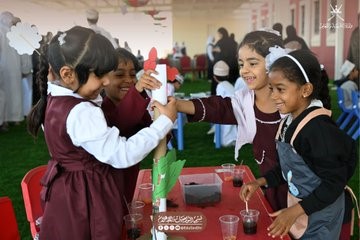
Stars Story
| |
North America
Spring Phenology Campaign
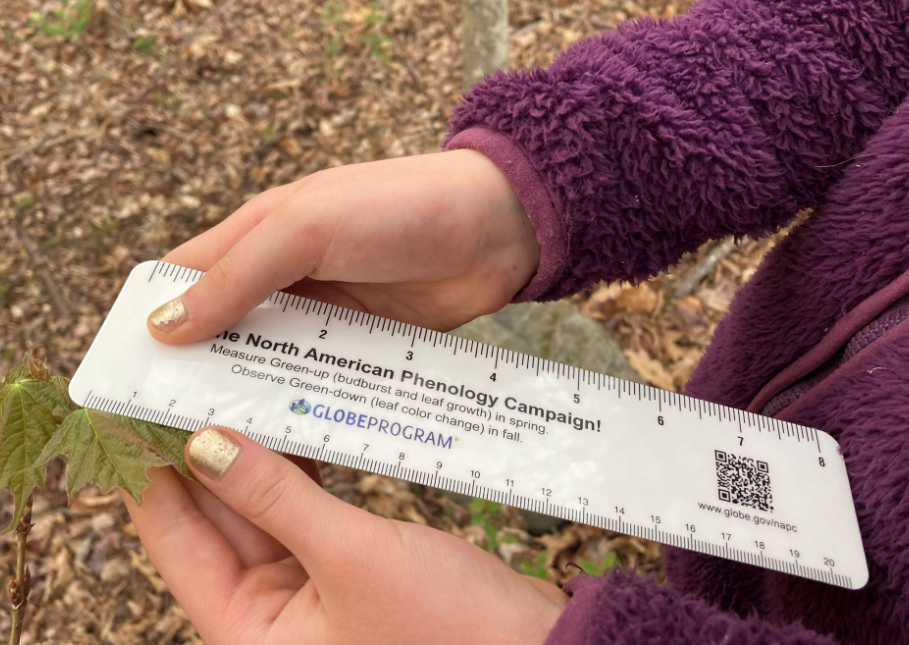
The North American GLOBE community is encouraged to collect Green-Up data between February and June—whenever plant buds are changing from dormant to fully grown leaves in your location! Learn more and join the campaign.
News
|
| |
Find more events and opportunities on the Events page of the GLOBE website. Read more Stars Stories under News and Events.
| | Additional News and Information | |
YLACES Grants Open
The YLACES grant application is now open! YLACES grants equip new generations of scientists with instruments and supplies to facilitate environmental research and data collection. To learn more about YLACES and to apply for a grant, visit the YLACES website. The YLACES grant application will close on 31 March.
|
NASA Science GLOBE Green-Down Article
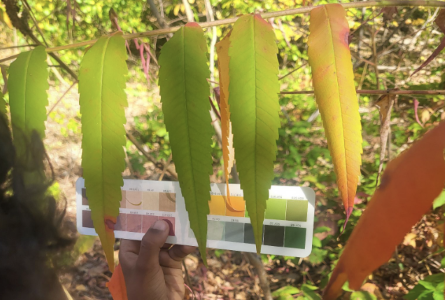
Over 1,500 students and 50 educators from the northern tip of Maine to southern New Hampshire took part in the Gulf of Maine Research Institute’s GLOBE Green-Down field season, hosted by the Science Activation project called Learning Ecosystems Northeast. Learn more in this NASA article.
|
Introducing NISAR: A Virtual Alaska Weather Symposium Recording
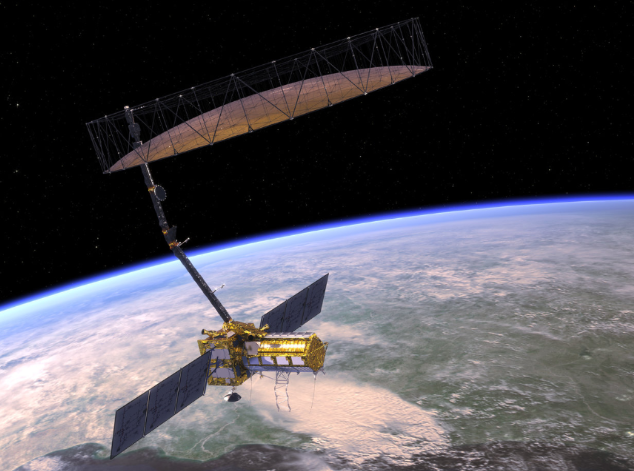
In case you missed it, Dr. Franz Meyer, professor at the University of Alaska Fairbanks, provided an overview of NISAR (NASA–ISRO Synthetic Aperture Radar) and highlighted Alaska’s important role in the mission. The GIO's Christina Buffington facilitated this Virtual Alaska Weather Symposium (VAWS), hosted by the Alaska Center for Climate Assessment and Preparedness (ACCP). Watch the recording.
|
2026 NASA Calendar and Wallpaper Backgrounds
If you need to update your calendar for the new year, check out the 2026 NASA Science Calendar. Discover the science behind every image featured throughout the months and find your favorite, which you can download as a wallpaper background for your desktop or mobile device.
| |
Reminders
Upcoming My NASA Data Events
Are you interested in using authentic NASA Earth and/or environmental data to engage students with scientific practices and enhance their data literacy? Consider registering for the upcoming My NASA Data webinars. Learn more and register.
GLOBE International STEM Network (GISN)
If you're not already a member, the GISN welcomes scientists and STEM professionals to increase participation across all six GLOBE regions. Visit the GISN webpage to learn more and apply for membership.
GLOBE Publications
Have you written a GLOBE-related paper? Submit your publication(s) and browse the collection of recent and past submissions.
| | | | |