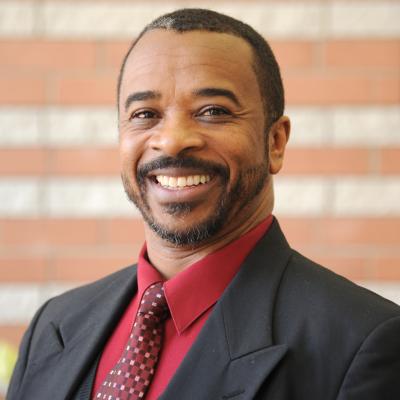
| | Dr. Gregory S. Broughton, Associate Professor of Music, was awarded the General Sandy H. Beaver Teaching Professorship in 2011. He was appointed to the Hugh Hodgson School of Music faculty in 1988. He is a member of the UGA Teaching Academy, a UGA Senior Faculty Teaching Fellow and a recipient of the UGA Sarah Moss Fellowship. He received both the Doctor of Musical Arts and the Master of Music in Vocal Performance from the University of Michigan. He earned the Bachelor of Science in Education from the University of Tennessee at Knoxville where his concentration was in voice and choral music. Dr. Broughton's discography includes Montage for Martin with members of the Seattle Symphony; The Lily of the Valley with the American Spiritual Ensemble; Love Letters, a compilation CD of original works by UGA composer Roger Vogel and he appears on the original soundtrack for the musical Yes, Lord! by Ja Jahannes. Broughton also has a modest list of operatic engagements with the Mid-Michigan Opera, Onyx Opera/Atlanta and Chautauqua Opera. He has performed leading tenor roles in Puccini's La Rondine, Verdi's Falstaff and La Traviata, Mozart's Cosi fan tutte, William Grant Still's A Bayou Legend and Scott Joplin's Treemonisha. Broughton's duties include graduate and undergraduate applied voice instruction and graduate academic advising for vocal music majors. His duties also include conducting the University of Georgia African American Choral Ensemble. This student organization's mission is the performance of works composed and/or arranged by African American composers. Following many triumphal performance successes, the group has been invited to perform at several national music conferences. In 2011 the group was invited to perform for the Georgia Music Educators Conference World Music Session in Savannah, GA. In 2013 they were engaged and perform as part of the Smithsonian Institute’s “Southern Harmonies” Traveling Exhibition. The most recent conference presentation was the opening concert for the Organization of American Kodaly Educators in 2014 convening in Atlanta, GA.
Currently, Broughton has students performing in major professional venues throughout the United States and abroad in major opera houses, musical theater on and off Broadway. A significant number of students from the private studio as well as from the African American Choral Ensemble are recording contemporary Christian and numerous popular music styles. Quite a large number of his students are currently college and university professors, secondary school educators and private voice teachers. Broughton is a much sought after and effective teacher for pre and post collegiate singers. His expertise is also sought after as clinician and adjudicator for vocal master classes, choral clinics, workshops and competitions.
What led you to become a professional musician?
My childhood was filled with music and musicians in my home. My mother sang, my father played the harmonica, my sister sang and my three brothers were singers and brass players. I joined the ranks as the youngest and followed in their footsteps with singing and playing instruments from.
Who influenced you to become an educator?
My earliest music teachers were my parents and siblings, and my first official music teacher in grade school was Mrs. Cecelia Dean. In 7th grade, I joined the band and played through high school under the same band director who became my mentor/musical parent, Mr. Dale Mann. He was also my choral director who coached solos and quartet performances. During my senior year in high school, I was able to join him in the afternoons to teach beginning band at the middle school. I was drum major for the marching band and was permitted to conduct even during concert season. I also became a church musician at the age of 15. These opportunities led me t follow the path of an educator when I considered college.
How did you balance being an active vocal performer and an educator at the University level?
In the early years, I was very excited to perform and discover works by many composers from various genres. Upon accepting the teaching position at UGA in 1988, I discovered that I could find rewarding success with my student. I think it was seeing exceptional success from my students that led me to really embrace the role of the voice pedagogue over being the one who is always on the stage doing the performance. While I love performing, my heart is really excited when I see others learning and performing beyond what they thought was possible. Facilitating the learning process for young people brings me greatest appreciation for the process. I have quite a number of highly successful former students who are leading professionals in the field of performance of many styles and genres, in the fled of education from elementary to university level teaching and those who are professional music therapists.
How do you measure progress in your applied lessons and in your ensembles?
What does success look like?
Cultivating great rapport with my students is an absolute must. A well-established relationship wherein there is mutual respect for each other and the art and craft of music making is the very first step toward success in applied lessons and in ensembles. I work to cultivate an environment where there is trust that there may be an ease with comfort to honestly share native endowments of gifting. There is no pretending until we are playing characters and roles. We must always and in all ways first establish the personal vocal identity that we might have a platform and foundation of truth to build upon. I am careful to respect each student's cultural differences and personal tastes while introducing them to repertoire than many may have never tried to sing or even listen to. I am also careful to explore how they have already learned to use their gifts. I embrace what they know and walk with them as we discover and experiment with new or different vocal exploits.
For me success looks like joy of the faces of those who seem to be smitten with the experiences which bring such joy that I never have to ask them to practice. They approach the process with an excitement that brings joy to others who witness their engagement. When the students are motivated or inspired to go beyond the bare minimum that I have suggested. When I feel like I am coming along for the ride because they are so inspired to go beyond their previous perceived limitation. When I see them progressing independently and thriving in their craft is when I know there is success in the room.
What advice do you have for vocal students who are torn on whether to pursue performance or education?
Because I have found such joy in facilitating the educational experiences of others, I believe that one learns far more from teaching than from being the performer. I also feel we are all lifetime learners and teachers so let's prepare to be so well informed that we may have something to share with generations to come. Yes, education is very demanding and very time-consuming with the number of courses one must successfully pass in order to qualify for certification. At the same time, if one does not have a genuine passion for practicing and rehearsing to secure the skill set necessary to be considered a highly successful professional performer, you are headed into an richly anxiety ridden life experience. I do believe the performance major must be extraordinarily gifted with a performance prowess that clearly separates them from one who seeks to learn the functional participatory fundamentals.
What are your favorite resources for voice teachers?
I believe some of my favorite resources for voice teachers would include other exceptional voice teachers and collaborative artists. I value video and audio recordings of performances and master classes of seasoned professionals from days gone by up until the present-day performers. There is so much to be gleaned from these sources. Today we have access readily at our fingertips via the worldwide web. I believe we need to access as many top- quality scores as possible from a wide variety of genres and styles, whether digital or hard copies. These should include translations, IPA transcription and as much historical information about the piece and composer as possible. Language dictionaries, books on diction, song interpretation (varied styles and genres), recital building materials, books on marketing your craft, becoming a young artist.
Do you have any favorite works for choir or for soloists that you could share with us?
In the realm of classical music, my personal favorite are oratorios. I do love art songs and while Italian, German and French are the standards for most people, I highly value works written by American composers on subject matter that speaks to the hearts of all people. I feel we need to celebrate our own culture and language. If we are going to refill the concert halls, I believe we need to do it by presenting top quality performances of ALL MUSICS.
Because I have spent the last 35 years teaching them, I have a tremendous passion for the African American Spiritual. I believe this is one of the most beautiful and underrated bodies of music birthed on earth. I may be accused of being biased but it is not the only thing I am guilty of. I very much so prefer the vintage arrangements and even those of our contemporary composers. My heart is warmed by vintage recordings of performances rendered by excellent choral groups who invested time in cultivating oral expressions consistent with the time periods of the messages.
What do you love about the African American Choral Ensemble at UGA?
AACE has been a treasured family of choral music makers for me since 1988. The relationship I have with the organization is one of family. Within this group, I am able to connect with exceptional students from all walks of life, Most are not music majors and many have never sung in a choir. We meet at ground zero and launch into the depths of discovery and we find their honest voices and then we learn music based in messages birth in African American history. This brings us closer as a family and has become a vehicle that motivates and moves students forward in all their pursuits. The goal is always success in life and we use the music to achieve this success as best we can.
Do you have any advice for those who work with similar ensembles and literature?
Learn, know and love who you are! Learn, know and love what you do! Do the research necessary to always be as authentic as possible. Ask for assistance. Collaborate!
|