Music Educator Spotlight
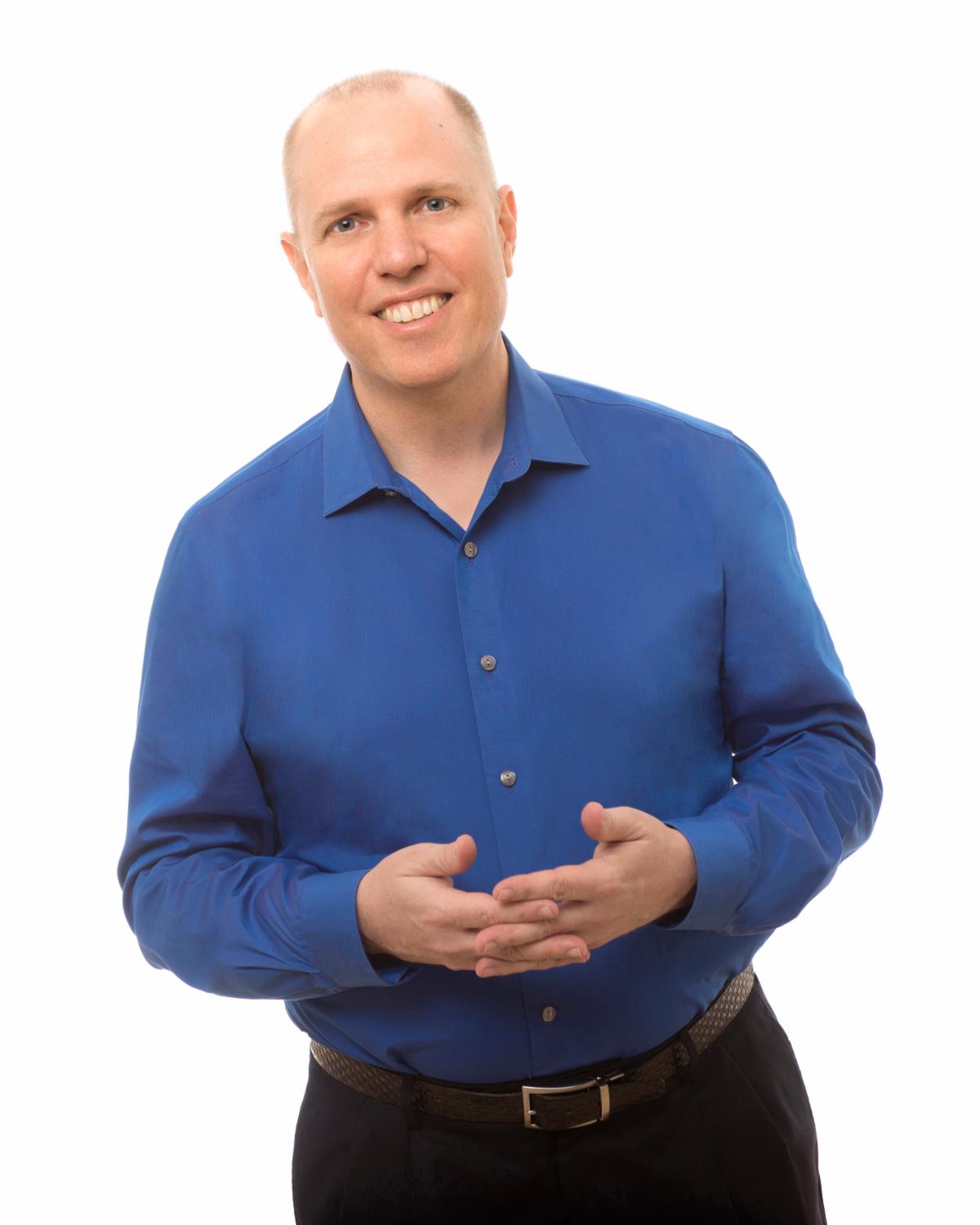
Paul Hostetter is The Ethel Foley Distinguished Chair in Orchestral Conducting for the Schwob School of Music at Columbus State University and the Principal Conductor of the Florida Lakes Symphony and Ensemble Flageolet. As a guest conductor he has appeared with the New York City Opera, Opera Theatre of Pittsburgh, Peak Performances, New Jersey Symphony Orchestra, Orlando Philharmonic, American Composers Orchestra, Philharmonia Virtuosi, Naples Philharmonic, Syracuse Symphony, San Francisco Contemporary Music Players, Music from China, Stony Brook Summer Music Festival, PAI Festival Orchestra, Da Capo Chamber Players, Washington Square Contemporary Music Society, Columbus Ballet, Delaware Symphony Orchestra, and has served an assistant conductor to James Levine at the Metropolitan Opera. His discography includes 54 commercially released recordings on the Telarc, Koch, Mode, CRI, Albany, Tzadick, Naxos, Argo, Decca, Delos, Deutsche-Grammaphon, New World, Polygram, Pro-Arte, RCA Victor, Sony Classical, and Warner Brothers labels, and these have received numerous honors including a Grammy Award, a Downbeat Critics Award, five stars for performance in the BBC Music Magazine, and two NY Times Top Five annual listings. His book, OnMusic Conducting: Connect to the Sound is used by over 30 universities nationally and his conducting students have won positions around the world.
When did you know you wanted to become an orchestral conductor?
It took a while for me to decide to be a conductor honestly! I was a band captain at Winter Park High School in Florida and was given conducting lessons by my school teachers. They gave me a chance to be on the podium with my peers, which I did enjoy, but at that time, I was more interested in playing, as physically making the sound was what I found appealing. A few years later I played timpani at FSU for Robert Shaw, and he brought me into his office after a Symphony of Psalms performance and told me that I should be a conductor. This hit me squarely, but still I wanted to play. So - after eight years of performing professionally in New York City, I had an opportunity to conduct a contemporary music group of Juilliard alums that was terrific (our conductor got sick and I stepped in), and this led to an opportunity to conduct Candide on Broadway (fortunately I played piano reasonably!). Out of nowhere, I had this incredible opportunity to lead a multi-million-dollar production and found it absolutely intoxicating! My colleagues in the pit and on stage were supportive, and because of a recommendation from our Cunegonde, I received an opportunity to take an audition to be on the staff of the Metropolitan Opera. Once there, I worked with perhaps the greatest opera conductor of the 20th century, James Levine, who was encouraging. This support gave me the confidence to start moving my career toward conducting, even though all of my friends thought I was crazy to leave what I was doing, as it was going well. But I got hooked!
Who were your influences when you were a young musician?
Joey Wise, my amazing high school band/orchestra director, Laura Fischer, the incredible timpanist of the Florida Symphony, and my Mother, who was a terrific collaborative pianist on the faculty of UCF. These three were generously supportive of my path toward being a musician and provided such needed mentorship!
Where did you grow up? What is your earliest/fondest memory of loving music and being involved in music?
My father was a pilot in the Air Force, so we moved a lot. When I was in 2nd grade in Plattsburgh, NY, I saw a friend play drumset to Crocodile Rock by Elton John at a school assembly, and everyone in our small auditorium went crazy after hearing him perform. I thought – this is for me! So I asked my parents for lessons and a kit. My fondest memory (beyond playing to recordings of rock music) was when I joined the Fort Worth Youth Symphony as a 7th grader. Because I played piano and read music fairly well, these skills gave me the ability to play mallet parts beyond what I had done with drum lessons. At the time, the FWYS was desperate for percussionists, and even though I had no experience with an orchestra, they threw me into a performance playing The Pines of Rome. I was so taken by the sound an orchestra could make, and after this experience, shifted my focus to playing orchestral music, which I immediately loved!
What advice do you have for high school music directors preparing musicians for college auditions?
If you are willing, please encourage your students to take private lessons and be organized in their practice – most students don’t know how to practice, so structure and a sequential approach is deeply important. Listen to their auditions and give them advice – they need your three cents! Encourage them to play with as many groups as possible. On the college side, I recommend that students take a lesson with a prospective university teacher to make sure the relationship feels good. If you can visit prospective schools too, it’ll help give you first person experience for your advice, or go online and listen to a school’s ensembles – believe what you hear! Definitely ask about the prospective school’s graduates and where they go. Advise your students to sit in on an ensemble rehearsal and class if they can and get a sense of the students at the school – your kids will spend a lot of time with these people! Honestly, your students can go anywhere and be successful as long as they work hard, listen, and treat people respectfully!
What advice do you have for music majors who want to become orchestral conductors? What did that path look like for you as a percussionist?
Firstly, play the piano. Hearing vertical structure is a must for any aspiring conductor and piano skills help enormously. Secondly, listen to recordings of everything; knowing the repertoire and loving the music is so key to everything. When music majors are with people who play other instruments, ask questions and learn. Take composition and orchestration classes. Take an acting class. Take a psychology class. I believe that vocal training is super important, as all music is vocal in nature. Learning diction (IPA), languages, songs, and operatic repertoire helps as well for long term success. Most great conductors spend time in an opera house, and you can do this as an intern usually if you ask. Find a mentor in that world and be inquisitive – shadow them a few times. When I finally made the switch to conducting, I had no idea how an opera house worked, what the soft velum was, what saltando meant, never mind the psychology of working with musicians. Observing rehearsals, both with singers and instrumentalists helps so very much. If a musician wants to do this professionally, they also need to play an instrument or sing at a world class level. Otto Werner Mueller, one of my teachers at Juilliard told me that, unless you can play chamber music with amazing musicians and give them advice that they take, you should not get on the podium.
When I started trying to become a conductor, it all came at me fairly quickly, so my transition was hard and I was deservedly fearful of being, as Simon Rattle told me, “found out!” But I had a ferocious work ethic, asked a million questions, and when I was given opportunities to conduct professionally, even though I did make a few mistakes along the way, there was thankfully enough grace I had built with ensembles and companies that people would forgive me. Failure is going to happen, and we have to be prepared to do so in a most public manner!
What is one thing that conductors can do to be more musical in their approach with their ensembles?
I might offer two things; firstly, all of our gestures come from how well we know a score, and to really hear every detail of every line both in a micro manner as well as looking at larger structure and flow takes time. We want to have something to say about a work of art, and this is a challenge, so I encourage everyone to make the time for technical and emotional diligence. Secondly, everyone should be engaged in somatic development. I see way too much tension on the podium, from the grips on batons to alignment to breath to balance to facial expression to the ability to connect emotionally to the material. Tension is the enemy of music, and so I insist that all of my students are actively doing either Yoga, Body Mapping, Alexander Technique, Pilates, Feldenkrais, or Traeger Method (Approach) - or all of them! Meditation is good too! Working constantly to battle tension in our bodies is key to being more musical and connected.
What is an element of your score study and preparation that might help orchestra and band conductors?
I think we all develop individual pathways that help us hear with acuity, feel with specificity, and shape with confidence. To share, here’s what I do: I start with a phrase analysis using a nod to antecedent and consequent; I do a harmonic analysis, both in terms of function and quality; I do a formal analysis; I analyze tempi (including between movements), articulations, texture/sonority and associated dynamics/color, and special effects; I develop emotional adjectives for every moment; I do musicological research; I sing/solfège every line (starting with viola usually!); I talk to my librarian friends about errata; and then finally I listen to as many recordings as possible, believing that there are tremendous players and conductors who have great ideas from whom I can learn. I do all I can to hear the score internally with precision, and then hopefully I’ve practiced my gestural language enough that I can forget all of it and just respond to what I hear in the live space as well as what I hear in my head. I need to be able to acknowledge the great work being done by singers/players, but also move an ensemble to a more cohesive place musically and technically.
If I’ve studied enough, I can lead a score from memory, and this gives me even more freedom to be expressive, but it does take work, as I have to see and hear the notes so if something goes wrong, I can fix it in the moment!
Anything else that you want to share with the GMEA community?
I’m deeply grateful for the work teachers do every day to inspire musicians. In my own journey, I was truly blessed by mentors who helped me in every way! So, I try to honor these life changing people by being a lifelong learner and by always loving music and musicians, even when circumstances become challenging! This is what I see from teachers across our state, and it inspires me.
Thank you from my heart for all you do, and I hope to see each of you again soon!
|