|
Narcissism has been recognized and written about since the days of early Greek mythology. Books, film, paintings, music – and now, social media - have portrayed and explored the disorder and its effect on those who suffer from it directly and indirectly.
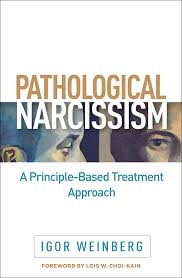
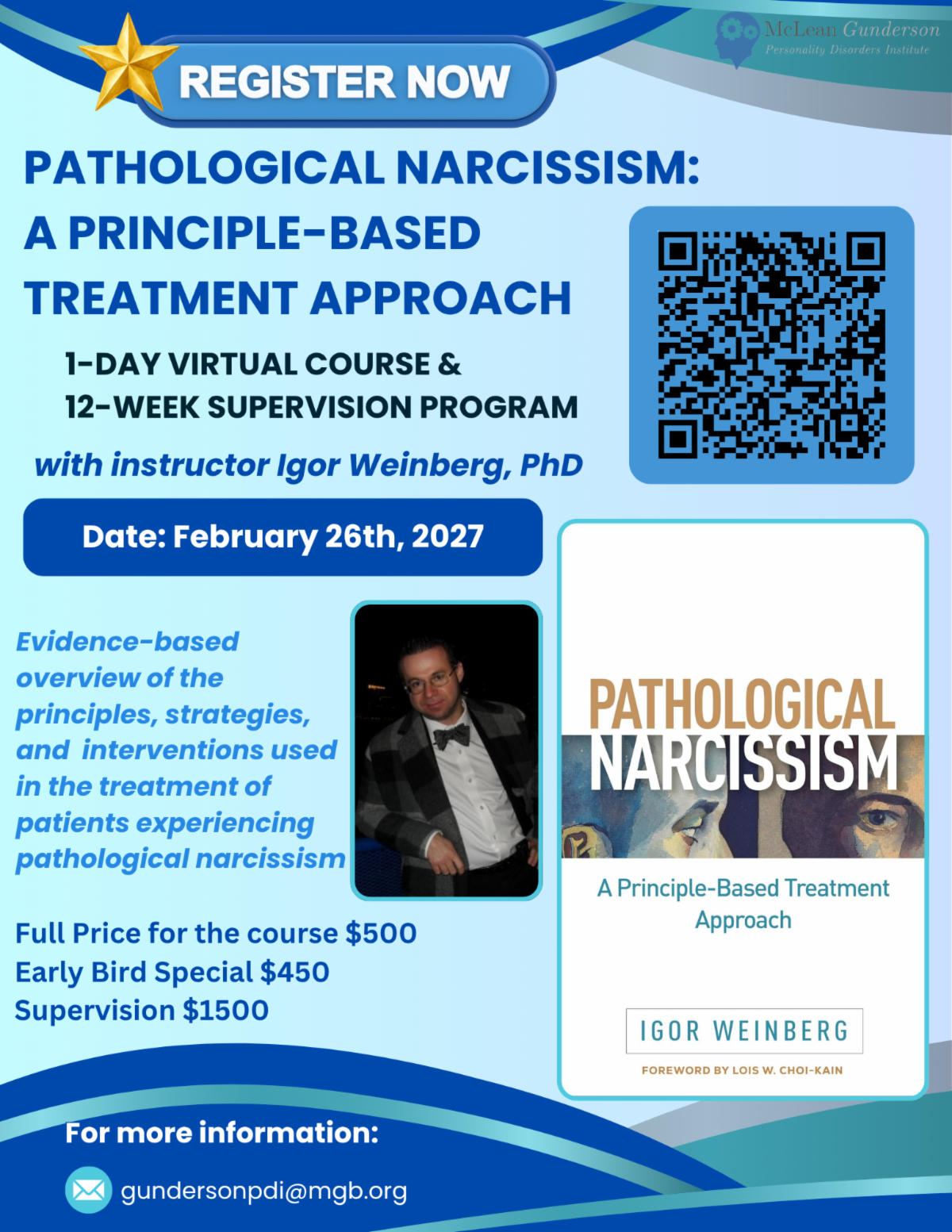
Released this coming November, 2026, Pathological Narcissism: A Principle-Based Treatment, by Igor Weinberg, PhD, addresses this condition from a therapeutic standpoint.
The book outlines strategies for addressing different presentations of pathological narcissism - grandiose and vulnerable, overt and covert - as well as ways to assess and intervene with co-occurring disorders, suicidality, or psychopathy.
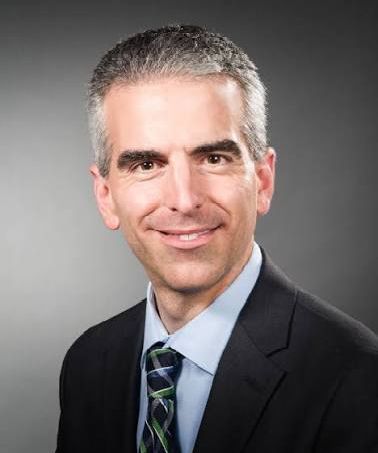
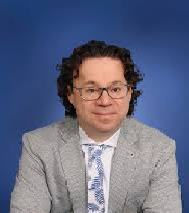
Our new business manager Marjorie Overhiser interviewed Dr. Weinberg to learn more about his research and insights into this challenging and often misunderstood diagnosis.
You have published extensively, but this is your first book. Was there a specific patient or clinical experience that pushed you toward writing this?
I was blessed to have mentors that encouraged me to write because they thought I could, and they also thought it would be a good experience for me. And in fact, I usually do enjoy writing. It becomes a very organizing experience, like putting a jigsaw puzzle together. It helps me to make sense of things, but also to find or identify things that don't make sense. So, this was a constructive and creative process.
I decided to write this book because I had a lot of material and thoughts accumulated specifically about pathological narcissism and how to treat it. My interest in that area was really stimulated by a number of patients that I had been seeing that were challenging to treat. I had great difficulty with some of them initially and was hoping at that time that my training in working with other personality disorders, primarily borderline personality disorder, might result in some traction with patients with pathological narcissism. But I realized that a lot of my interventions were falling flat. And that led to my interest in this area. So, I said, “If what I know doesn't work, maybe I can find out what could.”
Can you describe the difference between self-centeredness, narcissism, narcissistic personality disorder, and pathological NPD?
There are a lot of terms that developed over the last couple of decades around the subject of what narcissism and what pathological narcissism are. Not every type of narcissism is pathological. It’s important to note that there is what's called healthy narcissism, related to healthy ambition, constructive competition, or such traits as charisma and leadership, the ability to deal with disappointments and setbacks. Some forms of resilience, such developmental achievements as wisdom, are also expressions of healthy narcissism. These can be great assets for individuals throughout their lives because they may motivate progress, hard work, and development of something new.
But there is another side of that spectrum, related to pathological narcissism, when people essentially regulate self-esteem in a way that is maladaptive, meaning that it's causing distress and dysfunction to them or to other people (usually both). That would be one way to define pathological narcissism. The issue here is that those things are not mutually exclusive. Some people might have a little bit of healthy narcissism and a little bit of pathological. In treatment, what we're trying to accomplish is to help people make use of their narcissism in a constructive way: re-channeling from pursuing maladaptive ways of sustaining self-esteem to finding more adaptive strategies to accomplish this. That's one of the paradoxes of narcissism in treatment: that it can motivate maladaptive and destructive behaviors or progress and creative ambition.
People could rely on strategies to regulate self-esteem that may not be the most adaptive. This becomes increasingly pathological when those cause distress to oneself or other people, and dysfunction. In essence, this is what distinguishes it from being a personality style to pathological narcissism.
Interviewer: Narcissism is not something therefore you can simply cut out of your life, but rather want to cut back, but rather regulate. In substance use disorder treatment, cutting substances out are one path, but moderation or harm reduction is another.
Yeah, the analogy with substance use is an interesting one because some people might say that there's a sort of addictive quality to some of those behaviors associated with narcissism. People get hooked on the “high” they get. The problem with this interpretation is that the internal experience of people with pathological narcissism is far from being as glamorous as experiencing one high after another. It's usually quite miserable. People are not feeling the positive self-esteem and the grandiosity we attribute to them; the flip side of that is constant self-doubt, an inability to live up to one's own expectations, persistent self-criticism, self-shaming, self-loathing, and even self-contempt. So, it may appear that they're enjoying one high after another, but in reality, it's more like they're gasping for air. They're chasing after very short-lived experiences of admiration and self-esteem that usually dissipate quickly.
And that's one of the tragedies that these patients experience — what they're chasing doesn't stick. So, they keep repeating the cycle, they collapse, and then they resort to more frantic efforts to regulate self-esteem. That's sometimes when we see more aggressive behaviors coming out, severe depressive reactions, suicidality, or substance use.
How would you describe what you most hope to accomplish through this work?
There are three things I'm hoping will come out of this project. One is the destigmatization of narcissism, which today is one of the most stigmatized conditions in psychiatry (and maybe for a reason). But certainly one of the problems with stigmatization is that it distorts the actual issue. It creates a certain narrative that doesn't correspond to what pathological narcissism really is. This makes it difficult for patients to seek treatment but also makes it harder for clinicians to listen to their patients without being distracted by those ideas. And again, those ideas exist for a lot of reasons, many of which may be valid. But we must figure out a more accurate representation of what pathological narcissism is. Another result of this mischaracterization is self-stigma, when patients internalize a sense of stigma. When that happens it becomes difficult for patients to come to treatment, because they feel enormous shame about who they are.
The second goal would be to promote research that helps integrate different domains and understandings of narcissism, with the hope of understanding how research findings can help with treatment, which really leads to the most important contributions in care.
The third thing has to do with the way that the book spells out several principles that can promote change. Because it's a flexible approach, it invites clinicians to use those principles flexibly, in a way that makes sense for individual patients. It's not prescriptive. It doesn't require clinicians to strictly adhere to those principles. But at the same time, I'm hoping that these principles can be introduced into clinical work, so it will become an accepted part of the common practice and helpful to individual patients.
And that's really what the book is promoting: this is not a one-size-fits-all. Treatment should be tailored to the patient, and clinicians should continue to make alterations to the treatment for a better “fit” for each patient as they go along.
Has completing this book changed your perspective on PN, or even on yourself?
I enjoyed writing this book. It was a lot of work, but I liked the process of putting things together and seeing what fits, what doesn't fit, identifying areas that we don't know much about. It was helpful to create a sort of “map” of what I find helpful with my own patients, when I can say, “Okay, well, I have experience with a certain number of patients and I integrated this experience with particular type of empirical findings, and now it's helping with new patients.” That map becomes a resource and gives some structure for thinking about patients in a more constructive way. That was helpful for me - to see that this work could be useful, I guess. And it was important for me to find out that all those hundreds of publications that exist on a subject can actually be used in practice. It's not just dead knowledge sitting on the shelf.
I hope that some of my optimism and enthusiasm about this subject comes through in book and hopefully will give some hope to others: patients, therapists, and researchers, so they can think in a different way about the subject.
|