On Global Trade & Investment
Published Three Times a Week (with occasional bonus quotes) by
The Global Business Dialogue, Inc.
Washington, DC 20006
|
|
TUESDAY, SEPTEMBER 29, 2020
Click HERE for last Tuesday's quote on the lifting of the U.S. tariffs on Canadian aluminum.
|
|
STOP: AMERICA AND WTO DISPUTE SETTLEMENT
“[W]e would not be having this discussion … if the United States had not taken strong action to force others … to acknowledge the long-standing, bipartisan US critique of WTO dispute settlement.”
Thomas R. Graham
July 29, 2020
|
|
On July 29, the Senate Finance Committee held a hearing on the WTO. The title was WTO Reform: Making Global Rules Work for Global Challenges. The problems with the WTO’s dispute settlement system – notably the fact that the Appellate Body is no longer functional – were not the sole focus of the hearing. Other issues were discussed as well, and the witness list included an agricultural expert and an executive with the World Wildlife Fund, who spoke to the issue of fishing subsidies. That said, the problems with the dispute settlement system were at the top of the agenda, and, indeed, the first two witnesses, Jennifer Hillman from the Council on Foreign Relations and Thomas Graham with the law firm of Cassidy Levy Kent, had both served as members of the WTO Appellate Body.
Lacking a quorum, the Appellate Body, in effect the WTO’s final arbiter, has been unable to function since December 2019. Deeply concerned about these developments, Ms. Hillman, who spoke first, argued that the United States should help put the system back on track, writing in her opening statement that:
The surest way for the United States to achieve its various goals is to work to reform the Appellate Body first—both as a sign of good faith and because a reformed Appellate Body is in the United States’ interest.
Ms. Hillman’s testimony was rich both in detail and in insight. (See the link below.)
|
|
Our focus today, however, is with the somewhat different approach taken by Thomas Graham. Mr. Graham served on the Appellate Body for eight years and was its chairman when “the Appellate Body effectively came to an end.” Here is the full paragraph with today’s featured quote. Mr. Graham:
I want to start with a comment on something that was said just now in the first opening statement. I'm not here as a defender of the Trump Administration, but on this issue -- WTO reform -- we would not be having this discussion, and our trading partners would not be talking seriously about WTO reform, if the United States had not taken strong actions to force others, including the European Union, to acknowledge the long-standing, bipartisan US critique of WTO dispute settlement. They are now listening.
Mr. Graham followed that with several succinct points, each of which carried his argument further. Here are five of them. We have changed the order and the paragraphing a bit, but the points are his.
MR. GRAHAM:
1. For 20 years, spanning three Administrations—Republican and Democratic—the United States has consistently called out the Appellate Body for exceeding its role, and asked for corrections.
2. [But other members, including the EU, “have been slow to acknowledge the depth and bipartisanship of the US critique.”]
3. [Many of the key cases involving U.S. trade remedy laws have involved China.]
4. China is the elephant in the room of WTO reform. China is a difficult fit in a WTO system based on rules for market competition. I don’t really see how the dispute settlement system can be reformed – or the Appellate Body restarted – until a core of WTO members have come to grips with how China is to fit.
5. Reforms of WTO dispute settlement and reforms and updating of the WTO should be done together. There should be no rush to restart the Appellate Body, and the US should certainly not do that as a “price” for serious negotiations to update the rules.
|
|
As thorough as the Finance Committee’s July hearing was, no single discussion could cover all of the issues, much less all of the relevant ways of looking at each of them. We, for example, would listen with interest to a discussion of the question, Does the WTO need an Appellate Body? Or, alternatively, should such a body be the final arbiter of trade disputes? To be fair, the latter point was touched upon briefly at the Finance Committee hearing, but essentially those are issues for another day. We shall close this entry with two thoughts.
The first is Mr. Graham’s elaboration on a familiar theme. The U.S. Trade Representative, Robert Lighthizer, has often lamented what he sees as a fundamental change in the character of the World Trade Organization, namely, its perceived shift from a being negotiating forum to one that is dominated by legal proceedings. The argument is that too many countries see little point in trying to achieve through negotiations what they can more easily attain through adjudication and the pronouncements of the Appellate Body.
Mr. Graham’s take on that theme focused less on the idea that members find trade cases the easier path and more on the consequences of so-called “gap filling” by adjudicators for later negotiators. Responding to a question from Senator Portman (R. Ohio) about the effects of “judicial activism,” Mr. Graham said:
As we all know, gaps or ambiguities exist in agreements because the parties couldn’t agree often, and they agreed not to agree. When … the Appellate Body fills those gaps, it makes negotiations in the future more difficult because negotiators worry about, how will those silences be filled? And so they don’t want to leave them. They have to cross every ‘”t” and dot every “i”. …
So, there is an interaction between judicial activism and the difficulty of reaching agreements. [This passage begins roughly 1 hour and 30 minutes into the Senate Finance Committee hearing on July 29.]
***
The WTO Appellate Body is clearly not functioning, and there is no change in sight. The question is, did the United States impetuously or unwisely throw sand in the gears of an international system that was working pretty well?
Or, alternatively, is this trade policy’s version of the andon manufacturing system? In that system, perfected and made famous by Toyota, any worker who sees a quality control issue or other serious problem can stop the line until the problem is fixed.
We tend to take the latter view, but the jury is still out. All we can say now is that there is a wide range of opinion, with different experts adhering to different, often strongly held views. That situation is not likely to change for any time soon. Meanwhile, there is a Director-General to be chosen, various other issues to be settled, Brexit/UK-EU trade, for example, and, oh yes, a U.S. election.
|
|
From the Last Chairman is a link to the opening statement of Thomas R. Graham at the Senate Finance Committee hearing on July 29. This was the source for today’s featured quote.
Hillman’s Advice to America is a link to the testimony of Jennifer Hillman at the Senate Finance Committee hearing on July 29.
The Hearing takes you to the page on the website of the Senate Finance Committee that is devoted to the hearing on WTO reform which the committee held on July 29. This includes links to all of the written statements submitted and to a full video recording of the event.
Andon is a link to the Wikipedia entry on this approach to manufacturing.
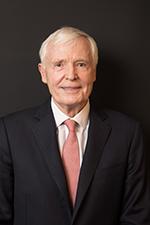
Photo Credit. The picture of Mr. Graham above is from a biographical note about Mr. Graham on the WTO website.
|
|
TO GET THE TTALK QUOTES IN YOUR INBOX
Or Other GBD Notices, click below.
|
|
©2020 The Global Business Dialogue, Inc.
1717 Pennsylvania Ave., NW, Suite 1025
Washington, DC 20006
R. K. Morris, Editor
Joanne Thornton, Associate Editor
|
|
|
|
|
|
|