MEMORANDUM


TO:        College of Medicine Faculty


FROM:   Teresa M. Reyes, PhD

                Senior Associate Dean of Basic and Translational Research


                Brett M. Kissela, MD, MS

                Senior Associate Dean for Clinical Research


DATE:   April 22, 2026


RE:      Gallery of Awardees


The CoM Office of Research understands the challenges of successfully competing for funding to support faculty research programs. We publicize those faculty who have been awarded external grants of $100,000/yr. or more in direct costs in a Gallery of Awardees. The Gallery is displayed in the CARE/Crawley Atrium and electronic posters will be posted on CoM digital signage.


Please note that it may take 2-3 months before the Gallery of Awardees recognizes new awards due to the processing of data.


Researchers currently featured are:

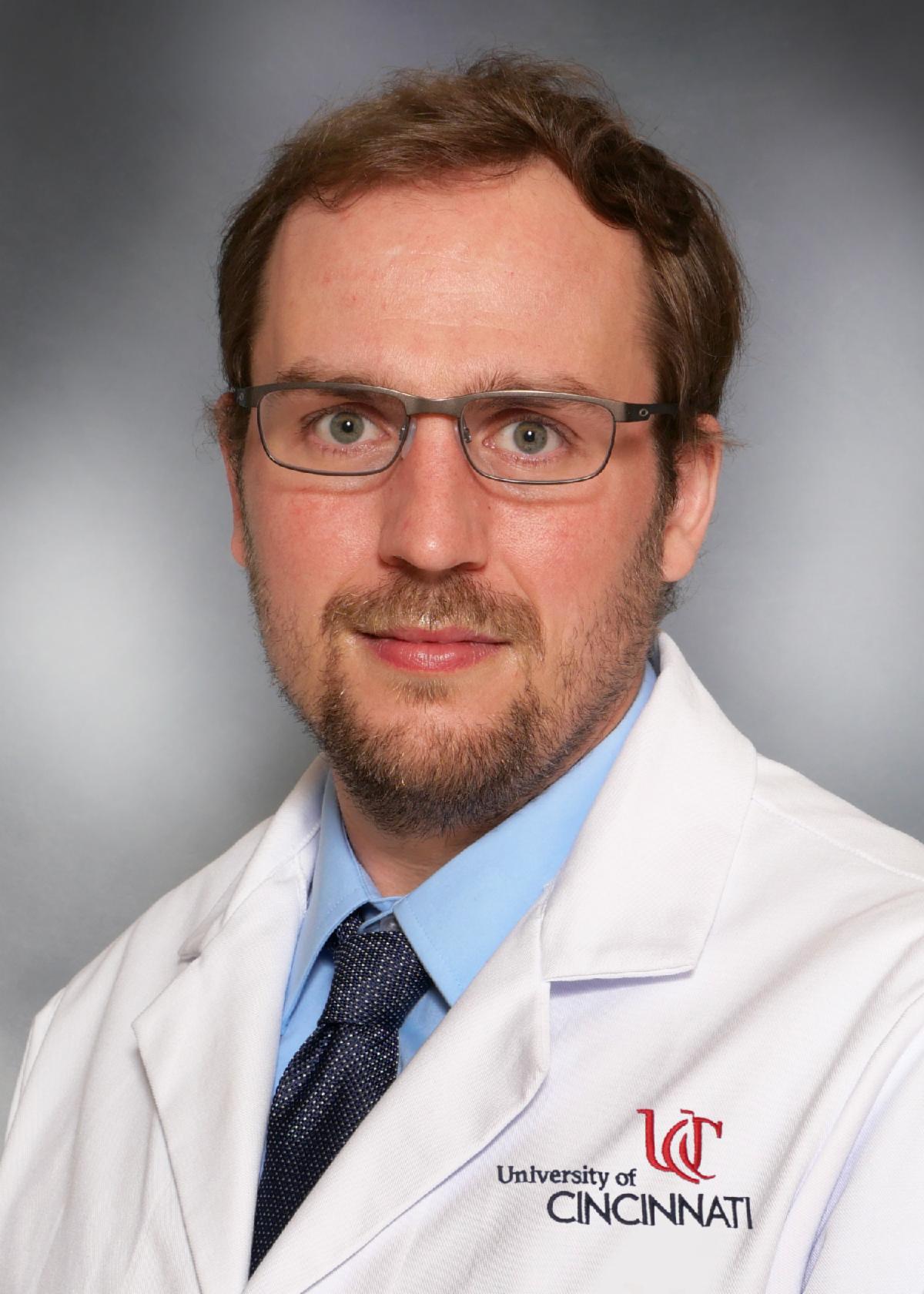
Tyler W. Benson, PhD, Postdoc Fellow

Department of Internal Medicine


Award: National Heart, Lung and Blood Institute K99


Project Title: Hematopoietic Cells and Chemokine Regulation in Abdominal Aortic Aneurysm Associated Thrombosis 


Project Period: 8/1/2025-6/30/2027


Summary: Abdominal aortic aneurysm (AAA) is a life‑threatening disease responsible for over 167,000 deaths worldwide each year, with women facing a significantly higher risk of rupture despite lower incidence rates. This research investigates how hematopoietic cells, inflammatory pathways, and genetic differences across sexes and ethnic groups contribute to AAA progression, with the goal of identifying new, targeted therapeutic strategies.

Christy K. Holland, PhD, Professor

Department of Internal Medicine

Division of Cardiovascular Health and Disease


Award: National Heart, Lung and Blood Institute R01


Project Title: Echogenic Targeted Liposomes: Transfection/Drug Delivery


Project Period: 9/8/2025-5/31/2029


Summary: This project develops an ultrasound‑guided therapy using pioglitazone‑loaded echogenic liposomes to enhance targeted drug delivery during vascular stent placement. By integrating with the FDA‑approved EKOS™ system, the approach to stabilize atherosclerotic plaques safely and improve long‑term blood flow in peripheral arterial disease.

Michelle Kossack, PhD, Assistant Professor

Department of Environmental and Public Health Sciences


Award: National Institute of Environmental Health Sciences Award


Project Title: Identifying Critical Mediators of Ovarian and Cardiovascular Health


Project Period: 11/1/2025-10/31/2028


Summary: Environmental contaminant exposure contributes significantly to heart disease and infertility, yet its combined effects on cardiac and ovarian health remain poorly understood. This research examines how early‑life exposure to the toxin TCDD disrupts ovarian function and estrogen signaling, leading to long‑term cardiovascular harm. By identifying shared molecular targets in the heart and ovary, the study aims to inform new strategies for preventing heart disease and infertility linked to environmental exposures. 

William E. Miller, PhD, Professor

Department of Molecular and Cellular Biosciences


Award: National Heart, Lung and Blood Institute Award


Project Title: Role of the SFTA2/ADGRF5 Signaling Axis in Alveolar Homeostasis


Project Period: 9/1/2025-6/30/2029


Summary: This project investigates how the receptor ADGRF5 and surfactant‑binding protein SFTA2 regulate lung surfactant production and pulmonary homeostasis. Leveraging complementary expertise across National Jewish Health and the University of Cincinnati, the work integrates advanced signaling, biophysical surfactant analysis, and translational insight to identify mechanisms relevant to lung injury and therapeutic surfactant replacement.

Diego Perez-Tilve, PhD, Associate Professor

Department of Pharmacology, Physiology, and Neurobiology


Award: Indiana Biosciences Research Institute Award


Project Title: Development of Multi Receptor Agonists from the Treatment of Metabolic Diseases


Project Period: 11/10/2025-5/9/2026


Summary: The goal of this project is to evaluate in preclinical rodent models the feasibility of applying recent advances in medicinal chemistry and structural biology to the development of molecules exhibiting agonist activity on different G-protein coupled receptors, and their suitability for the treatment of obesity and related co-morbidities

Nina G. Steele, PhD, Assistant Professor

Department of Internal Medicine, Division of Gastroenterology and Hepatology


Award: National Cancer Institute Sub Award


Project Title: Investigating Cellular Communication in the Tumor Microenvironment in Pancreatic Cancer


Project Period: 7/26/2025-8/31/2026


Summary: Pancreatic tumors rely on blood vessels for growth, yet anti‑angiogenic therapies benefit only a subset of patients. Emerging evidence shows that SLIT‑ROBO signaling—altered in human pancreatic cancer—originates from fibroblasts and pericytes and targets the tumor vasculature. This research highlights SLIT‑ROBO signaling as a promising, patient‑specific pathway for improving vascular‑targeted therapies in pancreatic cancer.

Laurah Turner, PhD, Assistant Professor

Department of Medical Education


Award: American Medical Association Award


Project Title: Transforming Lifelong Learning Through Precision Education Grant Program


Project Period: 1/1/2026-12/31/2029


Summary: This project advances AI‑enabled, workplace‑based assessment by extending the proven 2‑Sigma platform—an AMA‑funded, UC‑developed system used in over 7,500 virtual patient encounters—into real clinical environments. By analyzing real clinician‑patient conversations captured via ambient audio (smart glasses and smartphones), the platform augments human feedback with continuous, personalized performance insights to transform clinical training.


Award: American Board of Internal Medicine Artificial Intelligence Award


Project Title: Using Artificial Intelligence to Explore Clinical Reasoning Behaviors


Project Period: 6/15/2025-6/14/2027


Summary: Assessing clinical reasoning is difficult due to limited direct observation, unclear standards, and bias‑prone methods. AI enables large‑scale analysis of simulated clinical encounters, offering precise insights into how learners make decisions. This approach supports earlier, more objective identification of gaps and targeted feedback to improve clinical reasoning.

Tongli Zhang, PhD, Associate Professor

Department of Pharmacology, Physiology, and Neurobiology.


Award: U.S. Army Contracting Command


Project Title: Developing an Effective Protocol to Build Credential Biomedical Models


Project Period: 2/1/2026-1/31/2029


Summary: This project aims to close a critical gap in biomedical modeling by developing a credible protocol for building and validating coagulation control models that reduce decision risk in military and civilian settings. Using a “learn by doing” approach, the work will integrate existing coagulation models with experimental data, Approximate Bayesian Computation, machine learning, and best practices in verification, validation, and uncertainty quantification. The resulting models and generalizable protocol will support informed decision‑making, advancing military readiness as well as personalized medicine, drug development, and biomedical research.